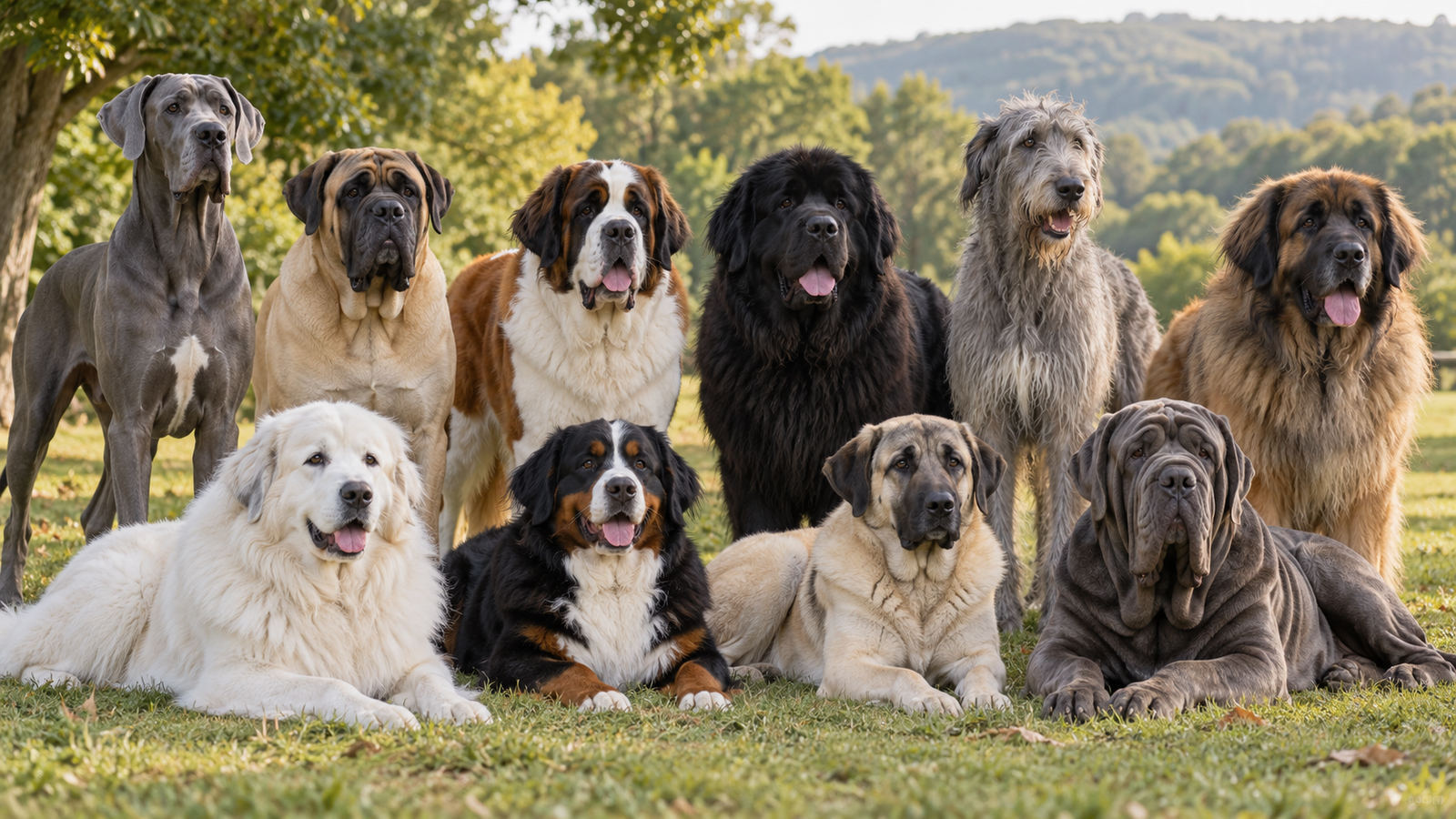
Big dogs have a special kind of charm. They can look powerful, majestic, and even a little intimidating. Yet many of the biggest dog breeds are known for being gentle, loyal, and affectionate with their families.
If you are searching for the top 10 big dog breeds, size is only one part of the decision. A giant dog also needs the right home, training, exercise, food, grooming, and veterinary care.
Some big dogs are calm home companions. Others need more activity or have strong guarding instincts. Some shed heavily, while others have shorter coats that are easier to manage.
This guide covers 10 impressive large and giant dog breeds. You’ll learn about their size, personality, exercise needs, grooming, training, and important ownership considerations.
Quick note: “Top 10” here means 10 notable big and giant breeds worth considering. It is not a ranking of which breed is universally best.
Table of Contents
Quick Comparison of the Top 10 Big Dog Breeds
| Breed | Typical Adult Size | Personality | Grooming | Activity |
| Great Dane | Up to 175 lbs. | Patient, friendly, dependable | Low to moderate | Moderate |
| Mastiff | 30+ inches; very heavy | Dignified, good-natured, protective | Low to moderate | Low to moderate |
| Saint Bernard | Up to 180 lbs. | Playful, charming, patient | Moderate to high | Moderate |
| Newfoundland | Up to 150 lbs. | Sweet, devoted, patient | High | Moderate |
| Irish Wolfhound | Tallest AKC breed | Calm, dignified, kind | Moderate | Moderate |
| Leonberger | Up to 170 lbs. | Friendly, playful, gentle | High | Moderate |
| Great Pyrenees | Can exceed 100 lbs. | Mellow, independent, protective | Moderate to high | Moderate |
| Bernese Mountain Dog | Up to 115 lbs. | Calm, affectionate, strong | High | Moderate |
| Anatolian Shepherd Dog | Up to 150 lbs. | Independent, loyal, protective | Moderate | Moderate |
| Neapolitan Mastiff | Up to 150 lbs. | Loyal, watchful, calm | Low to moderate | Moderate |
Breed size, lifespan, and care needs can vary between individual dogs. The figures above are based primarily on AKC breed information.
1. Great Dane
The Great Dane is one of the most recognizable giant dog breeds. Its height alone can make it stand out in almost any room.
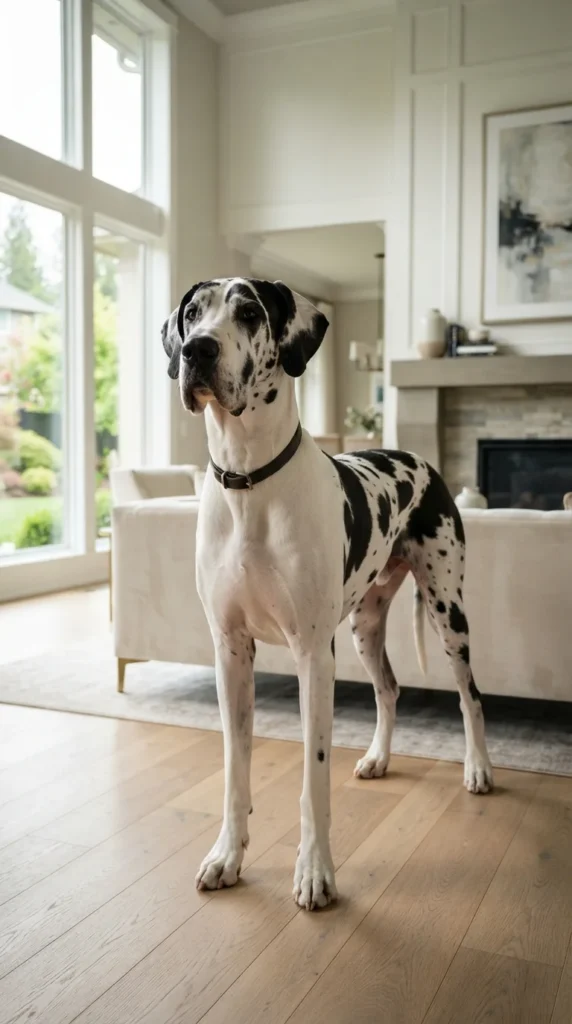
Male Great Danes typically stand 30–32 inches tall and weigh about 140–175 pounds. Females are generally 28–30 inches and weigh about 110–140 pounds. AKC lists the breed’s life expectancy as 7–10 years.
Despite their enormous size, Great Danes are often described as patient, friendly, and dependable. They can be affectionate family companions and are usually eager to interact with their people.
Want More Detail About Dogs Breed: https://dogsdailycare.com/category/dog-breeds/
Exercise and training
Great Danes still need daily exercise, even though they may appear relaxed at home. Walks and age-appropriate activity can help keep them healthy.
Training is especially important because an adult Dane has tremendous strength. Early puppy training and socialization can help teach good manners before the dog reaches its full size.
Grooming
Their short, smooth coat is relatively simple to maintain. Weekly brushing is generally useful, with more brushing during heavier shedding periods.
Keep in mind: A Great Dane needs enough space to move comfortably. Its food, veterinary care, equipment, and other expenses can also cost more because of its size.
2. Mastiff
The Mastiff is a truly massive breed with an impressive combination of strength and calmness.
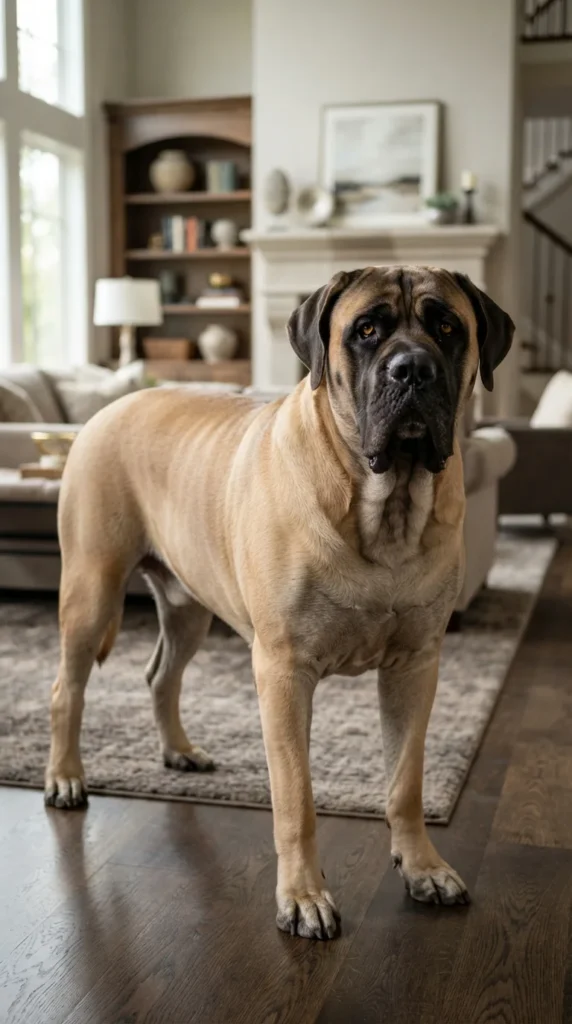
An adult male stands at least 30 inches at the shoulder, according to the AKC. The breed is heavy-boned, muscular, and powerful.
Mastiffs are known for being dignified and good-natured. They can be loving family companions while also having a natural protective instinct.
Exercise and training
Mastiffs generally have lower exercise needs than many athletic large breeds. Daily walks and free play can provide useful activity.
However, young Mastiffs need special care while growing. Too much strenuous exercise can place stress on developing joints.
Early socialization and obedience training are important. A dog this powerful needs to learn good manners while it is still young.
Grooming
The short, dense coat is fairly easy to maintain. Regular brushing can help control shedding.
Mastiffs are also known for drooling. Keeping towels nearby may become part of everyday life.
Good choice if you want: A huge dog that tends to enjoy a calmer lifestyle.
3. Saint Bernard
The Saint Bernard is famous for its massive body, friendly expression, and long history as a working mountain dog.
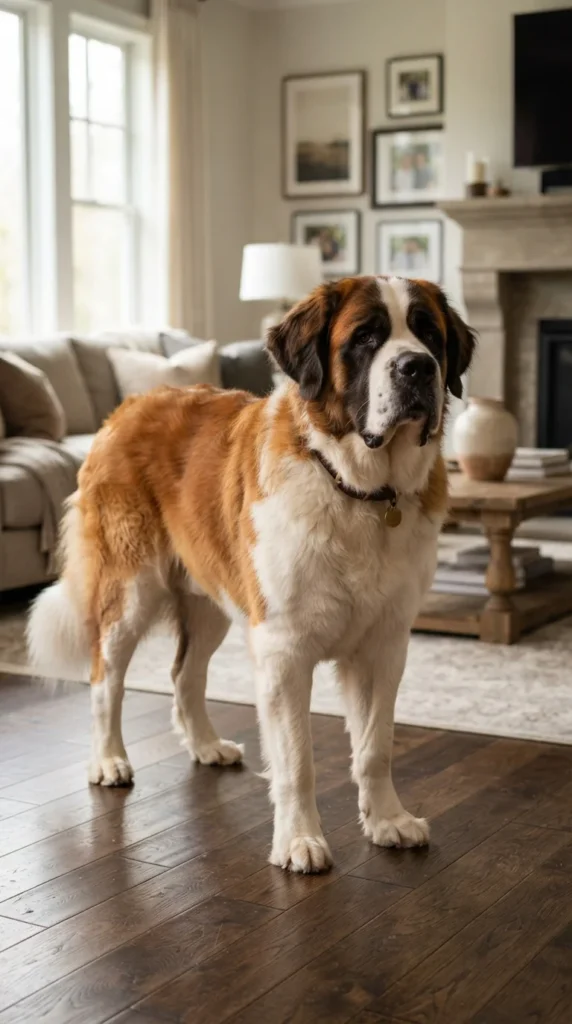
Male Saint Bernards typically stand 28–30 inches tall and weigh 140–180 pounds. Females generally stand 26–28 inches and weigh 120–140 pounds. AKC lists a life expectancy of 8–10 years.
Saint Bernards can be playful, charming, and affectionate. Their size makes proper manners especially important.
Exercise and training
They need regular activity, but they are not built for endless high-speed exercise.
Puppies also need careful handling while growing. Large and giant breeds can be vulnerable to problems when young dogs are pushed too hard.
Training should start early. A calm, consistent approach helps a Saint Bernard learn how to behave around people, children, and other animals.
Grooming
Saint Bernards can have substantial coats and may shed. Regular brushing helps keep loose hair under control.
Keep in mind: Their size can make everyday tasks more demanding. Everything from beds and crates to transportation needs to accommodate a very large dog.
4. Newfoundland
The Newfoundland is a giant working breed known for its sweet and patient nature.
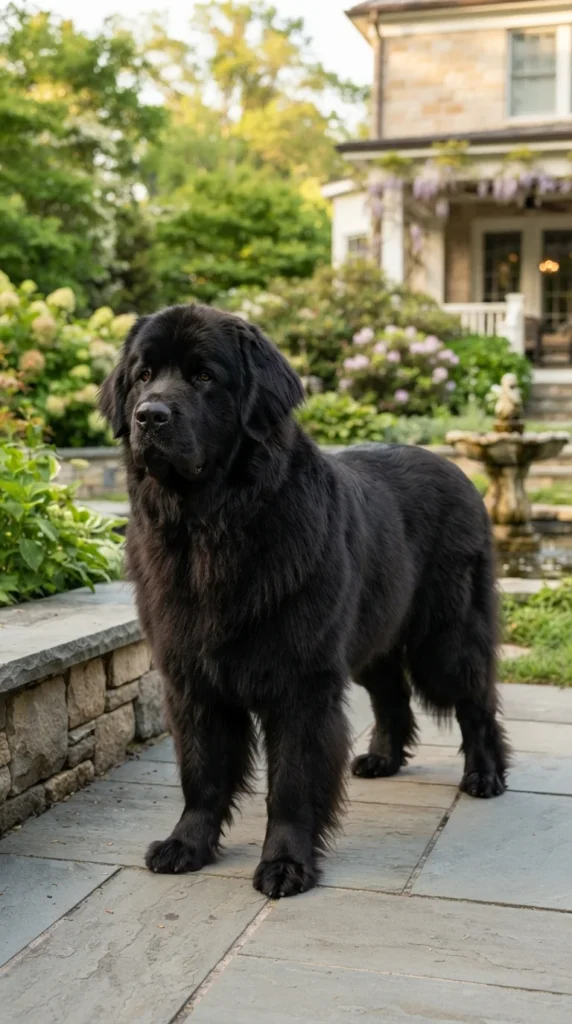
Male Newfoundlands typically weigh 130–150 pounds and stand about 28 inches tall. Females generally weigh 100–120 pounds and stand about 26 inches. AKC lists a life expectancy of 9–10 years.
Newfoundlands are especially known for their gentle character. Their history includes work in and around water, and the breed is also associated with lifesaving abilities.
Family life
A Newfoundland can be a devoted family companion. AKC describes the breed as sweet-tempered, patient, and trainable.
However, no giant breed should be left unsupervised with young children. Their size alone can cause accidental knocks or injuries.
Grooming
The Newfoundland’s thick coat needs regular attention. Weekly brushing is recommended, with more frequent brushing during shedding seasons.
Good choice if you want: A large, gentle companion and don’t mind regular grooming.
5. Irish Wolfhound
The Irish Wolfhound is famous for its incredible height. AKC identifies it as the tallest breed recognized by the organization.
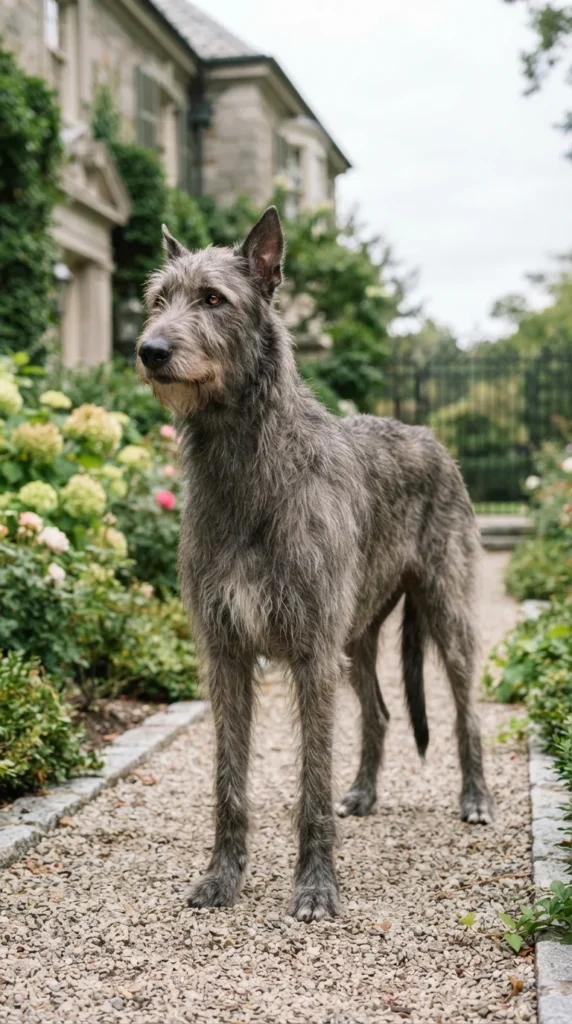
Despite their impressive appearance, Irish Wolfhounds are known for a calm, dignified, and kindly nature.
These dogs were historically used for hunting large game. Today, they are primarily admired as gentle companion dogs.
Personality
Irish Wolfhounds are not typically chosen as guard dogs. Their calm nature does not match the aggressive image that their size might suggest.
They can form strong bonds with their families and often enjoy being near their people.
Exercise and training
They need regular age-appropriate activity and enough room to stretch their long legs. Puppies require special care because they grow very quickly.
Training should focus on manners, socialization, and reliable everyday behavior.
Lifespan
AKC lists an average life expectancy of 6–8 years for the Irish Wolfhound on its breed information, while its general large-breed information places Irish Wolfhounds around 8–10 years. Lifespan can vary between individual dogs.
Keep in mind: Their short lifespan compared with many smaller breeds is an important consideration for potential owners.
6. Leonberger
The Leonberger looks almost like a lion because of its large frame and thick coat.
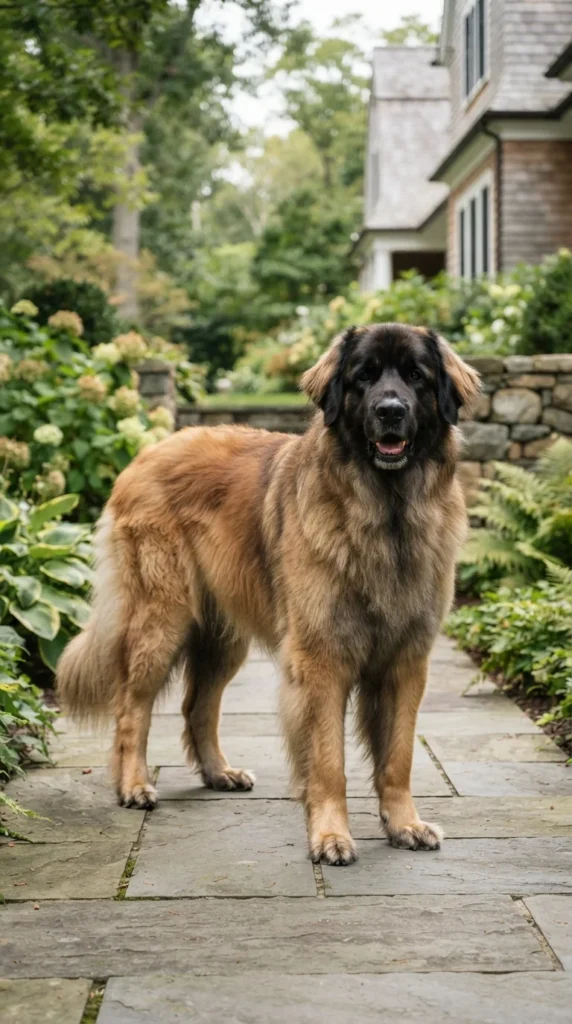
Male Leonbergers typically stand 28–31.5 inches tall and weigh 110–170 pounds. Females are generally 25.5–29.5 inches and weigh 90–140 pounds.
The breed is known for being friendly, playful, and gentle. Leonbergers were originally developed as companions and later became versatile farm and working dogs.
Grooming
This is not a low-maintenance coat.
Leonbergers shed heavily, with even heavier shedding periods twice a year. AKC recommends frequent brushing, including daily attention to areas that can mat behind the ears and on the legs.
Training and lifestyle
Leonbergers benefit from early socialization and consistent training. Their size means poor manners can quickly become difficult to manage.
They are often happiest when they can participate in family life rather than being isolated.
Good choice if you want: A giant, gentle family companion and are prepared for significant grooming.
7. Great Pyrenees
The Great Pyrenees is a large, powerful mountain dog with a beautiful white coat.
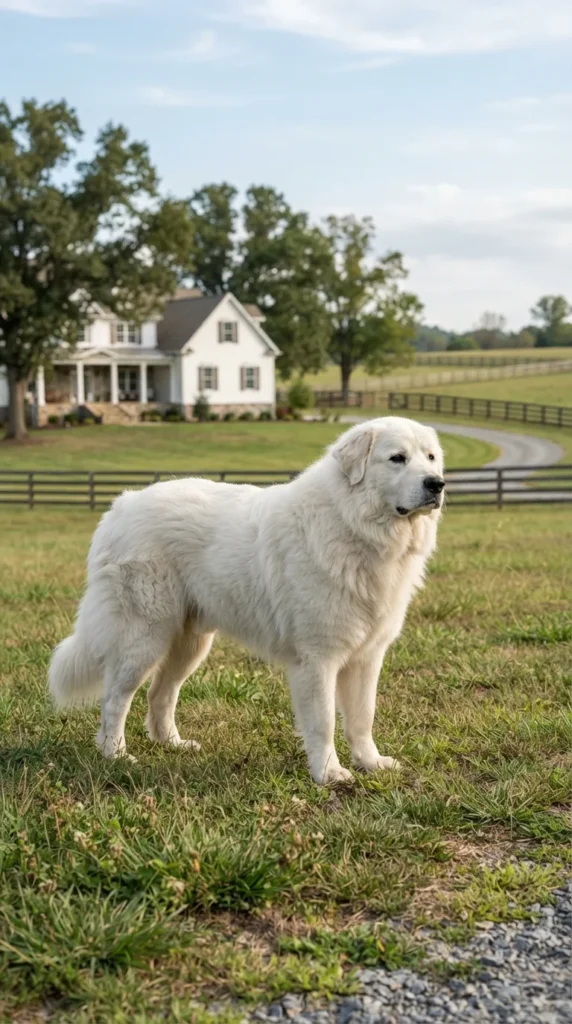
The breed was developed to protect livestock from predators. Today, many Great Pyrenees live as family companions and property guardians.
Great Pyrenees can stand as high as 32 inches at the shoulder and often weigh more than 100 pounds.
Personality
They are often mellow with their families but can be independent and protective.
That independent nature comes from their working history. A Great Pyrenees was developed to make decisions while guarding livestock, so it may not behave like a dog that constantly waits for human instructions.
Grooming
Their thick double coat needs regular brushing. The coat is naturally resistant to dirt and tangles, but seasonal shedding can be substantial.
Training
Early socialization is important. Owners should also understand that a livestock guardian may be more independent than a highly people-focused companion breed.
Keep in mind: A secure fence and good management are especially important for this large guardian breed.
8. Bernese Mountain Dog
The Bernese Mountain Dog combines a large, powerful body with a sweet and affectionate personality.
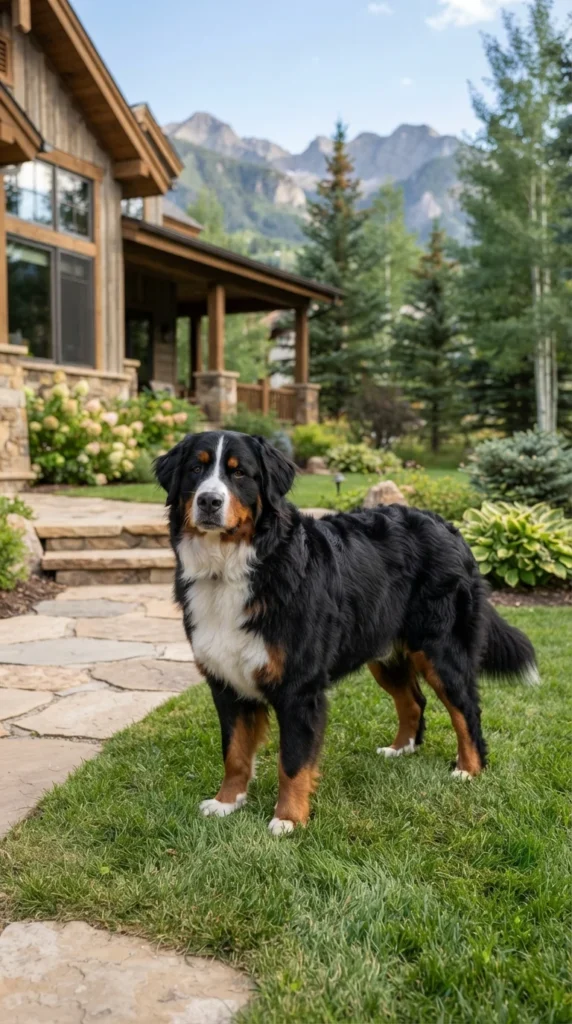
Male Bernese Mountain Dogs typically stand 25–27.5 inches tall and weigh 80–115 pounds. Females are generally 23–26 inches and weigh 70–95 pounds. AKC lists a life expectancy of 7–10 years.
Berners are strong working dogs with a beautiful black, white, and rust coat.
Family life
They are generally affectionate and eager to please. Many enjoy being close to their families and participating in outdoor activities.
They can be good companions for owners who enjoy walks, hikes, camping, and similar activities.
Grooming
Their long double coat sheds regularly. Weekly brushing is recommended, with more frequent brushing during shedding seasons.
Training
Early socialization and obedience training are important. Bernese Mountain Dogs tend to respond well to positive training because they are intelligent and eager to please.
Harsh corrections are not a good fit for this sensitive breed.
Good choice if you want: A big, affectionate dog for an active family lifestyle.
9. Anatolian Shepherd Dog
The Anatolian Shepherd Dog is a powerful livestock guardian with a very different personality from some of the more social giant breeds.
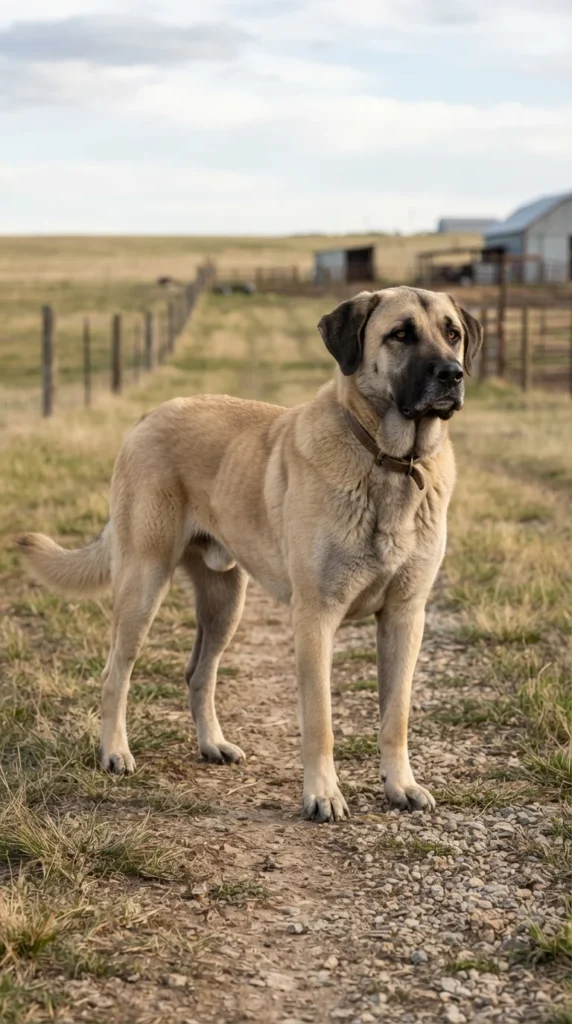
Male Anatolians typically stand around 29 inches and weigh 110–150 pounds. Females generally stand around 27 inches and weigh 80–120 pounds. AKC lists a life expectancy of 11–13 years.
This breed is known for being reserved, independent, and loyal.
Personality
Anatolian Shepherds were bred to protect livestock and make decisions independently. That background strongly influences their behavior today.
They can be deeply devoted to their families but may be cautious around strangers.
Training
Early socialization and obedience training are essential. Their independent nature can make training more challenging than it is with highly eager-to-please breeds.
AKC specifically notes that the breed should not receive protection or guard-dog training because its natural protective instincts are already strong.
Grooming and exercise
Their coat generally needs weekly brushing, with more attention during seasonal shedding. They need moderate exercise, such as walks and secure outdoor time.
Good choice if you want: A serious working guardian and understand independent dog behavior.
10. Neapolitan Mastiff
The Neapolitan Mastiff is one of the most distinctive giant breeds. Its massive body, loose skin, deep wrinkles, and large head give it a unique appearance.
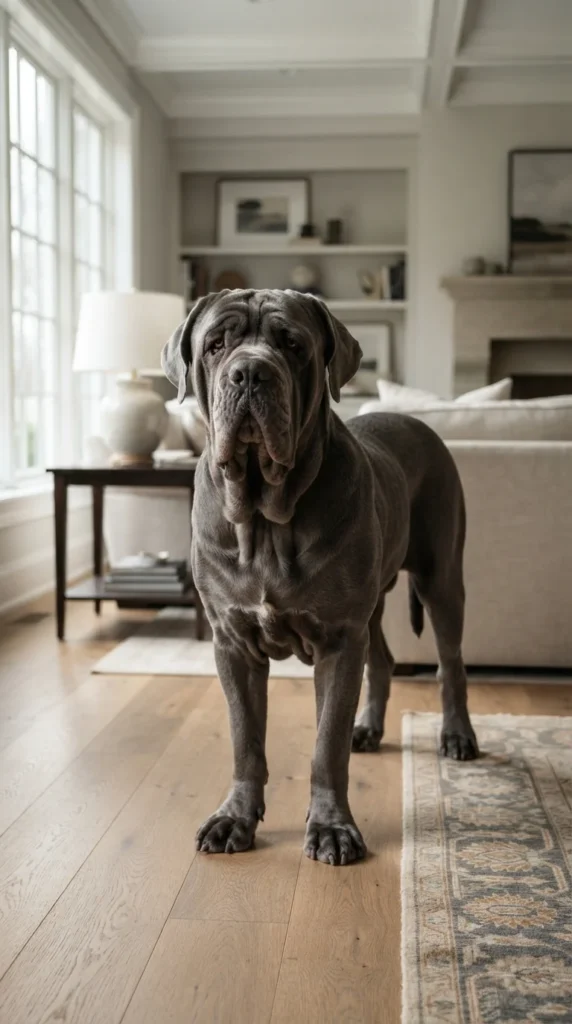
Male Neapolitan Mastiffs typically stand 26–31 inches and weigh around 150 pounds. Females generally stand 24–29 inches and weigh around 110 pounds. AKC lists a life expectancy of 7–9 years.
Personality
The breed is known for being loyal, watchful, and devoted to its family.
Neapolitan Mastiffs can be wary of strangers. Early socialization helps them learn how to respond appropriately to people and different situations.
Exercise
This is a heavily built breed. It needs regular activity, but excessive running, jumping, and sharp turns should be avoided, especially while the dog is growing.
Warm weather also deserves attention because this large breed can overheat.
Grooming
The short coat is relatively easy to maintain. However, the dog’s wrinkles, ears, eyes, and facial folds need regular attention.
And yes, drool can be part of the package.
Keep in mind: This is an extremely powerful breed. Consistent training and responsible handling are essential.
What Should You Consider Before Getting a Big Dog?
A giant dog can be wonderful, but size changes everyday life.
Before bringing one home, think beyond appearance.
1. Your living space
A large dog needs enough room to walk, turn, rest, and move safely.
That does not automatically mean you need a huge house. Some giant breeds have relatively low exercise needs and can adapt to smaller homes. However, their physical size still needs to fit your space and lifestyle.
2. Food costs
Big dogs generally eat more than smaller dogs.
That means your monthly food budget may be higher. Puppy nutrition also deserves special attention because giant breeds grow rapidly.
3. Veterinary expenses
Size can affect veterinary costs. Medications, procedures, anesthesia, equipment, and boarding may cost more when a dog weighs well over 100 pounds.
The AKC also notes that large and giant breeds tend to have shorter average lifespans than smaller dogs.
4. Training matters even more
A 10-pound dog jumping on a visitor is one problem.
A 150-pound dog doing the same thing is a much bigger problem.
Start training while your puppy is small. Teach basic skills such as walking politely, coming when called, settling down, and greeting people appropriately.
5. Socialization is important
Socialization means carefully introducing a young dog to different people, environments, sounds, animals, and experiences.
This can help puppies develop into more confident adult dogs.
Large dogs can be especially difficult to manage if they become fearful or reactive because of their strength.
6. Grooming can take time
Not every big dog has a difficult coat.
Great Danes have relatively short coats. Mastiffs are also fairly simple to brush.
Newfoundlands, Bernese Mountain Dogs, and Leonbergers require much more coat care.
Think about how much brushing, shedding, bathing, and cleaning you are comfortable managing.
Are Big Dogs Good Family Pets?
Many big dogs can make loving family companions, but breed size alone does not determine whether a dog will fit a family.
Temperament, training, socialization, exercise needs, and individual personality all matter.
Some giant breeds are especially people-oriented. Others were developed as independent guardians and may be more reserved with strangers.
Children should always be supervised around dogs, including gentle giant breeds. A large dog can accidentally knock over a small child simply because of its size.
Are Big Dogs Hard to Train?
Big dogs are not automatically difficult to train.
Many large breeds are intelligent and eager to please. Great Danes and Bernese Mountain Dogs, for example, can respond well to consistent training.
However, some giant breeds are more independent.
Mastiffs and Anatolian Shepherd Dogs may think for themselves instead of immediately following every command.
The key is starting early and using consistent, reward-based training.
Do Big Dogs Need Lots of Exercise?
Not necessarily.
This is one of the biggest myths about giant dog breeds.
Some big dogs are surprisingly calm. Mastiffs, for example, generally have lower exercise needs than many athletic breeds.
Other large breeds need much more activity.
The right amount depends on the breed, age, health, and individual dog. Puppies also have different exercise needs from healthy adults.
Avoid assuming that a giant dog should be taken on long, intense runs. Growing giant-breed puppies need particular care because their bones and joints are still developing.
How Long Do Big Dogs Live?
Large dogs generally have shorter average lifespans than small dogs.
The AKC reports an average lifespan of about 8–12 years for large breeds overall. Giant breeds often average around 8–10 years, although individual breeds and dogs vary.
For example, AKC lists:
- Great Dane: 7–10 years
- Bernese Mountain Dog: 7–10 years
- Newfoundland: 9–10 years
- Saint Bernard: 8–10 years
- Anatolian Shepherd Dog: 11–13 years
These are breed-level estimates, not guarantees for individual dogs.
Common Health Considerations for Giant Dogs
Large and giant breeds can have health concerns related to their size and genetics.
Some breeds are screened for hip or elbow problems. Others may have concerns involving the heart, eyes, thyroid, or other systems.
Bloat, also called gastric dilatation-volvulus, is another important concern for some deep-chested dogs. It can become life-threatening quickly. Great Danes, Mastiffs, Leonbergers, Great Pyrenees, and Neapolitan Mastiffs are among the breeds whose AKC information discusses bloat risk.
Learn the warning signs and discuss breed-specific health concerns with your veterinarian.
Frequently Asked Questions
What is the biggest dog breed?
The answer depends on whether you mean height, weight, or overall body mass. The Irish Wolfhound is recognized by AKC as the tallest breed, while breeds such as the Great Dane and Mastiff are also among the largest dogs.
What is the tallest dog breed?
The Irish Wolfhound is the tallest breed recognized by the American Kennel Club. Its long legs and large frame give it an especially impressive height.
What is the heaviest big dog breed?
Several giant breeds can reach very high weights. Saint Bernards, Great Danes, Mastiffs, Newfoundlands, Leonbergers, and other giant breeds can weigh well over 100 pounds. Individual weight varies by sex, genetics, health, and body condition.
Are giant dogs good with children?
Some giant breeds can be affectionate and patient with children. However, no breed should be considered automatically safe with children. Training, socialization, individual temperament, and adult supervision all matter.
Do big dogs need a big yard?
Not always. Exercise needs differ between breeds. Some giant dogs have relatively low exercise requirements, while others need more daily activity. A secure outdoor area can be useful, but it does not replace walks, training, and family interaction.
Are big dogs expensive to own?
They can be. Larger dogs usually require more food and larger equipment. Veterinary procedures, medications, boarding, beds, crates, and transportation can also cost more because of their size.
Which big dogs are easier to groom?
Short-coated breeds such as the Great Dane and Mastiff generally need less coat maintenance than long-coated breeds such as the Newfoundland, Bernese Mountain Dog, and Leonberger.
Are big dogs good for first-time owners?
It depends on the individual breed and the owner’s preparation. A first-time owner should consider training ability, exercise needs, grooming, strength, independence, and guarding instincts before choosing a giant breed.
The Bottom Line
The top 10 big dog breeds offer a wide range of personalities and lifestyles.
Great Danes can be friendly and patient. Newfoundlands are known for their sweet nature. Bernese Mountain Dogs are affectionate and active. Mastiffs can be calm and protective, while Anatolian Shepherd Dogs are more independent guardians.
The right choice depends on what you can realistically provide.
Before choosing a giant dog, consider your space, budget, activity level, grooming tolerance, training experience, and family needs. A big dog is a major commitment, but with the right match and responsible care, these gentle giants can become deeply loved members of the family.