Large dogs have an undeniable pull—a strong, steady presence, an easy sense of protection, and for many owners, an unmistakable companionship that feels different from a smaller dog. Plenty of large breeds are calm, affectionate, and genuinely family-oriented. But size changes the practical realities of ownership in ways that are easy to underestimate before you actually live with one.
Being “big” doesn’t automatically mean high-energy, aggressive, or hard to manage. It does mean more physical space, more strength to handle, more food, more equipment, and more long-term planning. This guide walks through what large dog breeds are realistically like to own — not a ranked list of “the best” ones — so you know what you’re actually signing up for before you bring one home.
Table of Contents
What Counts as a Large Dog Breed?
“Large” and “giant” are general size categories rather than one fixed standard. Sources vary somewhat on exact weight thresholds, but broadly:
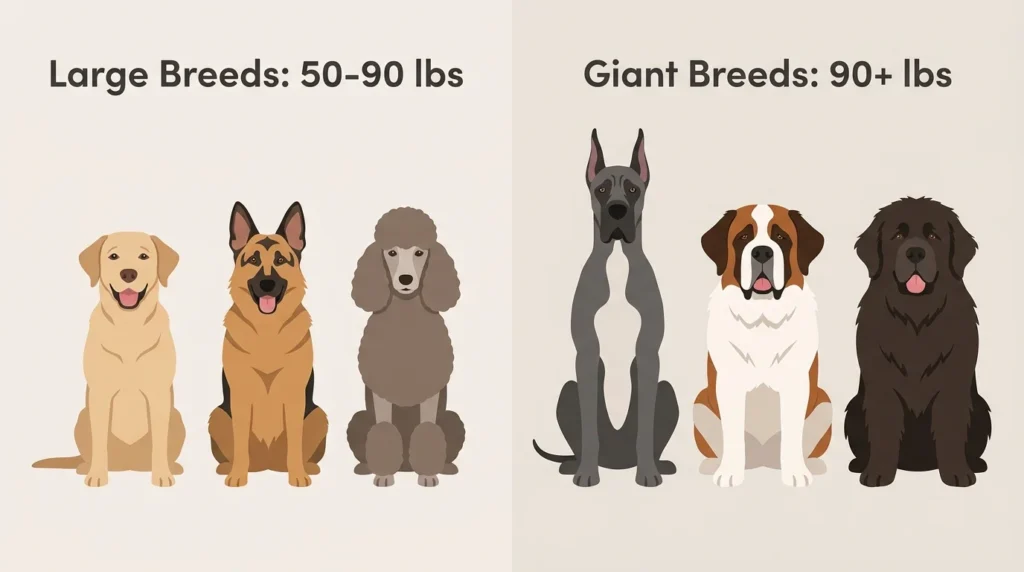
Large Breeds
Large breeds are generally in the roughly 50–90 pound range (Labrador Retrievers, German Shepherds, Standard Poodles).
Giant Breeds
Giant breeds typically exceed about 90–100 pounds (Great Danes, Mastiffs, Saint Bernards, Newfoundlands).
Height, body mass, and overall physical strength matter more than the label itself. A tall, lean dog and a stocky, heavily built dog of similar weight can feel very different to live with day to day — strength, not just size on a scale, is what actually shapes handling.
Common Traits of Large Dog Breeds
Physical size brings a few practical tendencies that apply broadly across large breeds, even though temperament itself varies enormously:
- Larger physical presence. A big dog occupies more space simply moving through a room, getting on furniture, or greeting guests — something worth considering regardless of temperament.
- Stronger handling requirements. Even a well-behaved large dog requires more physical strength to manage on a leash, in a vehicle, or during an unexpected pull toward something exciting.
- Variable maneuverability. Some large breeds move with notable athleticism; others, especially certain giant breeds, tend to be more deliberate and less agile.
- Calm tendencies in some types. Many large and giant breeds — Newfoundlands and Great Danes are often cited examples — tend toward a steady, low-key indoor demeanor, though this varies by breed and individual.
- Wide energy variation. Energy level in large breeds spans a genuinely broad range, from highly driven working dogs to comparatively laid-back companions.
- Amplified impact of poor manners. A jumping or pulling habit that’s a minor annoyance in a 20-pound dog becomes a real physical challenge in an 80-plus-pound one.
- Greater space and transport needs. Larger beds, crates, vehicles, and doorways all factor into daily logistics in a way that’s easy to overlook until you’re living with it.
Large Dog Temperament: Bigger Does Not Mean More Aggressive
One of the most common misconceptions about large breeds is that size correlates with aggression. It doesn’t. Temperament depends on breed history, individual genetics, socialization, and training — not physical size.
Many large breeds, including Golden Retrievers, Labrador Retrievers, and Newfoundlands, are generally known for calm, sociable, affectionate temperaments. Others, like certain guardian breeds, may be more reserved or protective by nature, which reflects breed purpose rather than inherent aggression.
What does change with size is how intensely normal behavior can feel. An excited jump, an enthusiastic greeting, or a startled lunge is simply more physically forceful coming from a large dog than a small one, even when the underlying temperament is entirely typical and non-aggressive. This is a practical handling consideration, not a behavioral guarantee about any individual dog.
How Much Space Do Large Dogs Really Need?
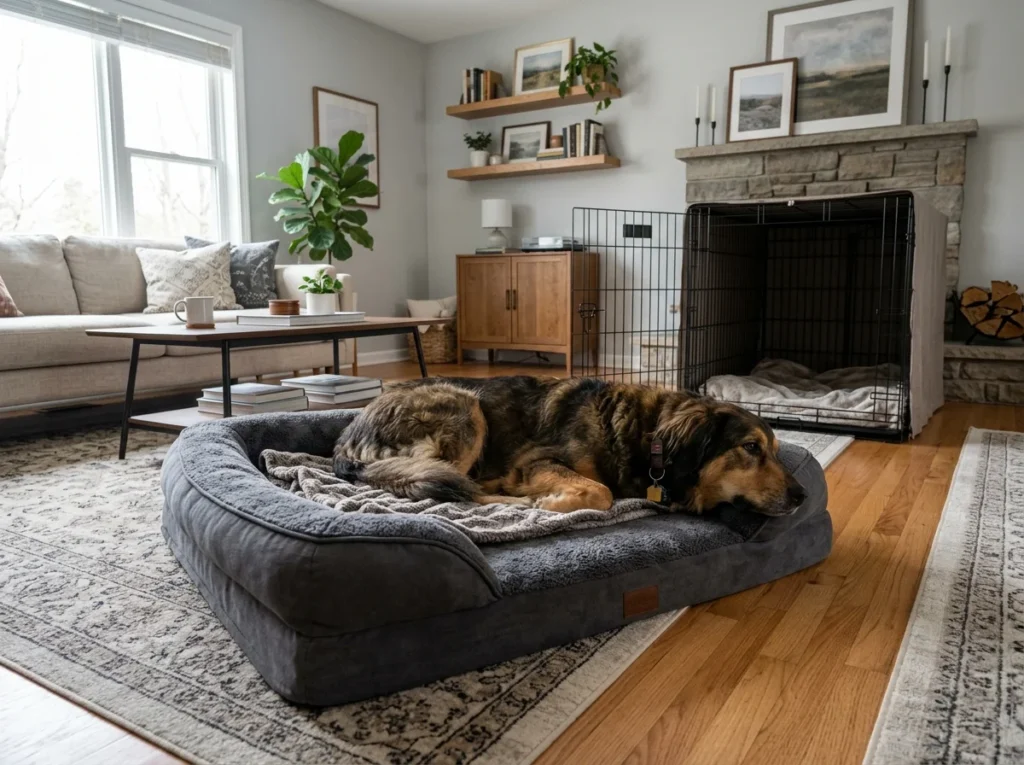
Space matters for large breeds, but not always in the way people assume.
Indoor floor space affects how comfortably a large dog can move, turn around, and rest without feeling cramped. Furniture, doorways, and stairs are all worth considering — some giant breeds, in particular, can struggle with tight turns or steep stairs as they age.
A yard is often assumed to be the deciding factor for large-breed suitability, but a yard alone doesn’t meet a dog’s exercise or mental stimulation needs. Many large dogs left in a yard without engagement still develop boredom-related behaviors. Apartment living isn’t automatically off the table for every large breed either — some calmer large dogs adapt reasonably well to smaller homes if their activity needs are met elsewhere, while some more active large breeds would struggle regardless of yard access.
Large Dog Energy Levels Vary More Than People Expect
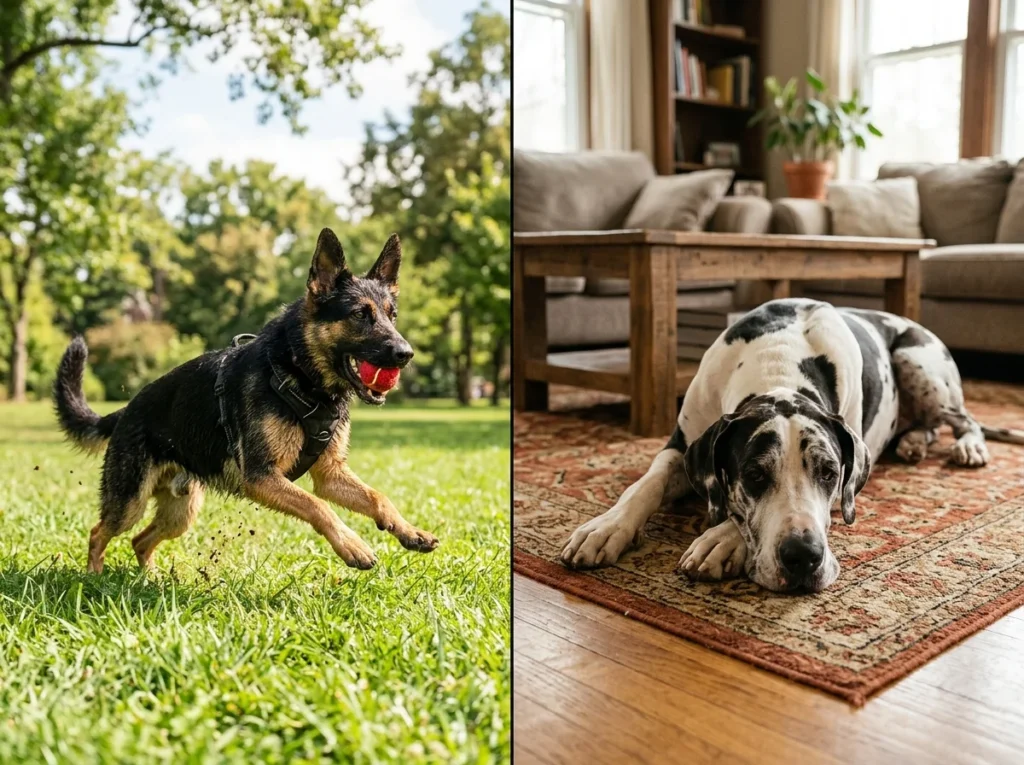
Size and energy level are frequently assumed to be linked, but that’s not a reliable pattern. Some large breeds, like German Shepherds or working-line Labradors, tend to be highly active and need substantial daily exercise and mental engagement. Others, like many giant breeds such as the Great Dane or Saint Bernard, are often comparatively calm once past puppyhood, with lower intensity exercise needs than their size might suggest.
Breed history plays a significant role here — herding and working breeds generally carry higher activity requirements than breeds developed primarily as companions or guardians. Daily routine and individual dog matter more than assumptions based on size alone.
Physical Handling Is a Bigger Responsibility
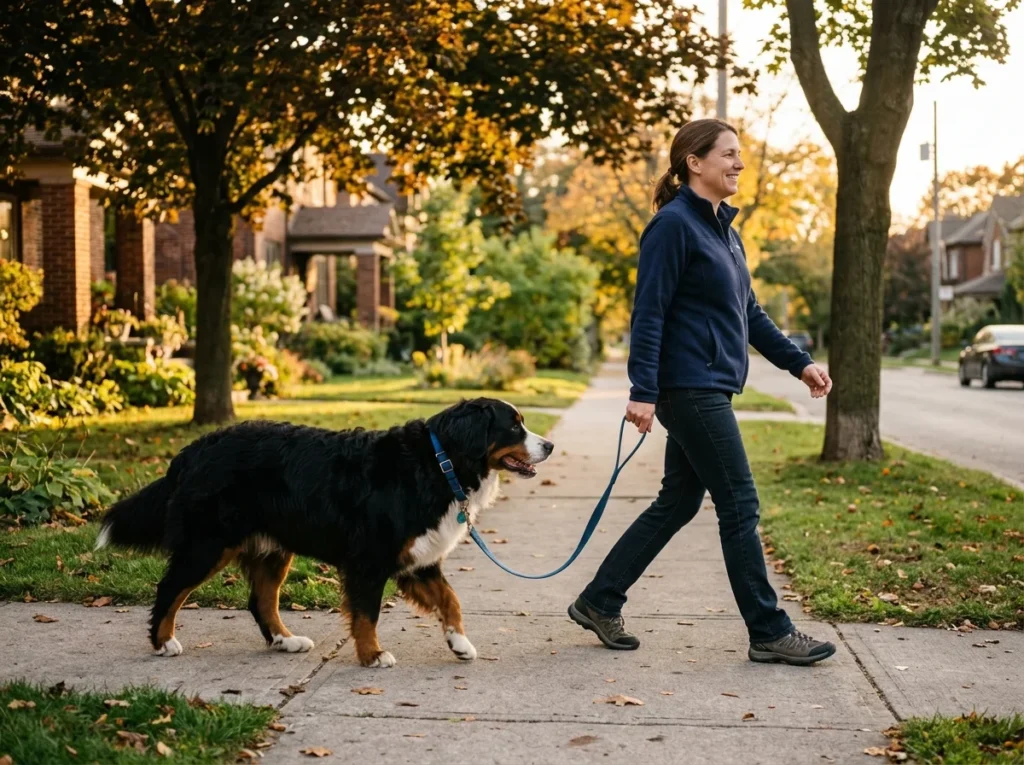
This is one of the most practical realities of large-breed ownership. Leash control, jumping, and pulling all require more physical strength and consistency to manage safely in a large dog than in a small one. A large dog that hasn’t learned good leash manners can genuinely pull an adult off balance.
Getting into vehicles, navigating stairs, and general mobility assistance also become more physically demanding tasks — something worth considering, especially as a dog ages or if an injury requires lifting or support. Managing a large dog’s size around guests, children, or other pets during greetings or excitement also takes more consistent structure than it would with a smaller breed.
None of this means large dogs are harder to train — it means that inconsistent training has a bigger physical consequence.
The Real Cost of Owning a Large Dog
Size affects the budget side of ownership in several practical ways:
- More food. Larger dogs generally eat significantly more than small or medium breeds, which adds up over a dog’s lifetime.
- Larger equipment. Beds, crates, carriers, and some medications or supplements may cost more at larger sizes.
- Grooming costs. Depending on coat type, grooming a large or giant breed can take more time and cost more than grooming a small dog, even with similar coat maintenance needs.
- Travel and boarding logistics. Transporting and boarding a large dog often costs more and requires more planning than with a smaller breed.
- Veterinary and emergency planning. Medication dosing and some procedures scale with body weight, and emergency care for a large dog can involve higher costs.
Exact figures vary too much by region and individual dog to generalize reliably, but the overall pattern is consistent: larger dogs generally cost more to own over a lifetime than smaller ones.
Large Dogs and Family Life
Large Dogs and Children
Family compatibility depends on temperament and training, not size alone. Many large breeds are genuinely well-suited to family life — sturdy, patient dogs can often tolerate the physical unpredictability of an active household better than a more fragile small breed might.
That said, size introduces its own considerations. A large dog can accidentally knock over a small child during normal play, even with entirely good intentions. Supervision, structured introductions, and consistent training remain important regardless of how calm or gentle a specific large breed tends to be. Calmer large breeds may be an easier fit for households with young children than higher-energy large breeds, but this depends on the individual dog as much as the breed.
Large Dogs and Other Pets
Compatibility with other pets varies significantly across large breeds and depends heavily on individual history and socialization. Some large breeds, particularly certain guardian or hunting breeds, may carry a stronger prey drive toward smaller animals. Others are known for being highly social with other dogs and generally adaptable around cats when properly introduced. As with most multi-pet situations, gradual, supervised introductions matter more than broad breed generalizations.
Gentle Giant Dog Breeds: What the Term Really Means
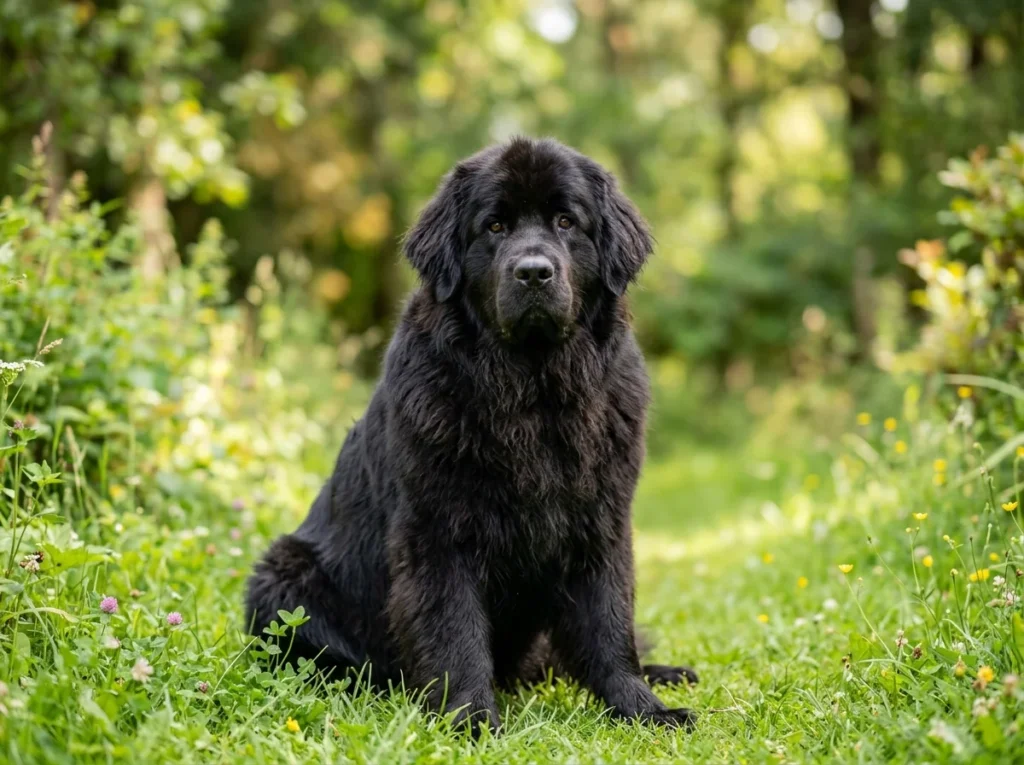
“Gentle giant” is a phrase commonly used to describe large or giant breeds known for calm, affectionate, or steady temperament tendencies — breeds like the Newfoundland, Great Dane, or Bernese Mountain Dog are frequently described this way.
It’s important to understand what this phrase does and doesn’t mean. A gentle temperament doesn’t remove the practical realities of owning a large, physically powerful dog. These breeds still need enough space to move comfortably, consistent training, adequate exercise, and careful handling — a calm disposition doesn’t equal an effortless dog. “Gentle giant” describes a general temperament tendency, not a guarantee about any individual dog’s behavior.
Pros and Challenges of Large Dog Breeds
Pros of Choosing a Large Dog
- A strong, reassuring companionship presence many owners value
- Can suit active, outdoor-oriented lifestyles well when matched to an active breed
- Many large and giant breeds are notably calm indoors despite their size
- Generally physically sturdy, which can suit active households
- Often a good fit for families wanting a larger, more substantial companion
- Many large breeds are highly people-oriented and social
Potential Challenges of Large Dog Breeds
- Requires real physical strength to manage, especially during leash work
- Greater indoor and outdoor space needs
- Transport and travel logistics become more involved
- Higher food and supply costs over the dog’s lifetime
- Harder to lift or physically assist, particularly as the dog ages
- Some giant breeds tend to have shorter average lifespans than smaller breeds
- Poor training has a larger physical impact than with a small dog
- Larger equipment and storage requirements at home
Is a Large Dog Right for You?
Who May Be a Good Fit
- Experienced owners, or well-prepared first-time owners willing to invest in training
- Active adults who can meet a higher-energy large breed’s exercise needs
- Families with adequate indoor and outdoor space
- People comfortable physically managing a strong, powerful dog
- Owners with time available for consistent leash and manners training
- Households with a realistic budget for food, supplies, and veterinary costs
A yard isn’t an absolute requirement — some calmer large breeds do reasonably well without one, provided their exercise and space needs are met elsewhere.
Who Should Think Carefully Before Choosing One
- Very limited indoor space that would make comfortable movement difficult
- Physical limitations that make handling a strong dog genuinely difficult
- A tight budget that can’t reasonably absorb higher food and care costs
- Frequent travel without reliable large-dog boarding or care options
- Difficulty managing a physically strong, high-energy dog
- Choosing a breed primarily for appearance rather than fit
- Expecting a yard alone to replace structured exercise and training
Common Myths About Large Dog Breeds
Myth: Large dogs need huge houses.
Reality: Space matters, but temperament and activity needs matter just as much — some large breeds adapt to modest homes if their needs are met.
Myth: Big dogs are always high-energy.
Reality: Energy varies significantly by breed; some giant breeds are notably calm.
Myth: Large dogs are dangerous.
Reality: Behavior depends on breed tendencies, socialization, training, and individual temperament — not size alone.
Myth: Gentle giants are easy dogs.
Reality: A calm temperament doesn’t remove the practical challenges that come with size and strength.
Myth: A yard is enough exercise.
Reality: Large dogs still need active engagement, mental stimulation, and companionship beyond yard access.
Quick Large Dog Breed Checklist
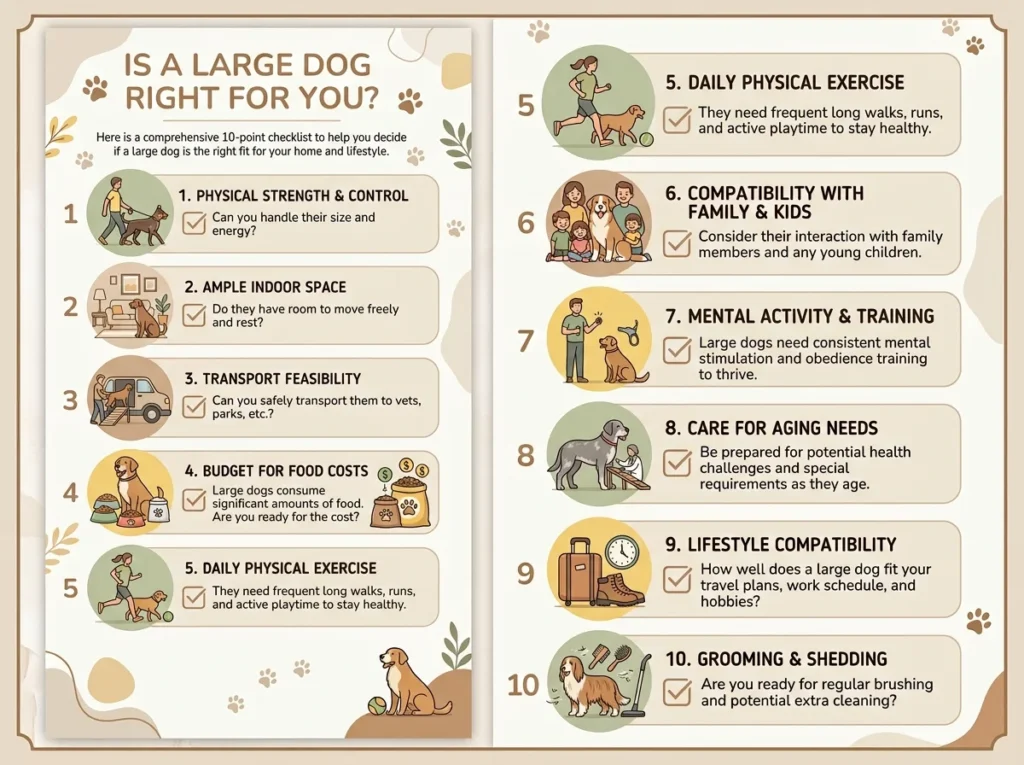
- Can I physically manage a strong dog?
- Do I have enough indoor space for a large bed or crate?
- Can I transport a large dog safely?
- Can I afford higher food and supply costs?
- How much daily activity can I realistically provide?
- Are there small children or older adults in the home to consider?
- Am I comfortable with a dog that may weigh more than many people expect?
- Can I commit to consistent leash manners and training?
- Am I prepared for aging and mobility needs later in the dog’s life?
- Am I choosing this breed for lifestyle fit rather than appearance alone?
How to Narrow Down Which Large Breed Fits You
Once you understand the general realities of large-breed ownership, compare specific breeds using:
- Temperament: calm and steady, or more active and driven
- Energy level: high-activity working breed or comparatively low-key companion
- Coat type: grooming demands can vary significantly even among large breeds
- Family setup: children’s ages, other pets, household activity level
- Handling ability: your own strength and experience managing a large, strong dog
- Home size: indoor space and layout, not just yard access
- Budget: food, supplies, grooming, and veterinary costs over the dog’s lifetime
- Experience: some large breeds are more forgiving of a less experienced owner than others
- Travel needs: how often you’ll need to transport or board the dog
Breeds like the Labrador Retriever, Golden Retriever, and Standard Poodle illustrate large breeds with generally high trainability and moderate-to-high energy. Giant breeds like the Great Dane, Newfoundland, and Great Pyrenees often demonstrate calmer indoor temperaments despite their size, while the German Shepherd shows how a large breed can combine strong trainability with higher activity needs. The Bernese Mountain Dog and Saint Bernard are commonly cited “gentle giant” examples, illustrating that calm temperament and significant size can coexist — without one eliminating the practical demands of the other.
Final Thoughts
Large dog breeds vary widely in temperament and energy, and size alone doesn’t determine whether a dog will be calm, active, easy, or challenging to manage. What size reliably changes is the practical side of ownership — space, strength, cost, and long-term physical care. Choosing a large breed well means being honest about your ability to meet those practical demands, not just being drawn to the idea of a bigger dog. The right large breed is the one that realistically fits your space, budget, handling ability, and daily routine — not simply the one that looks the part.