
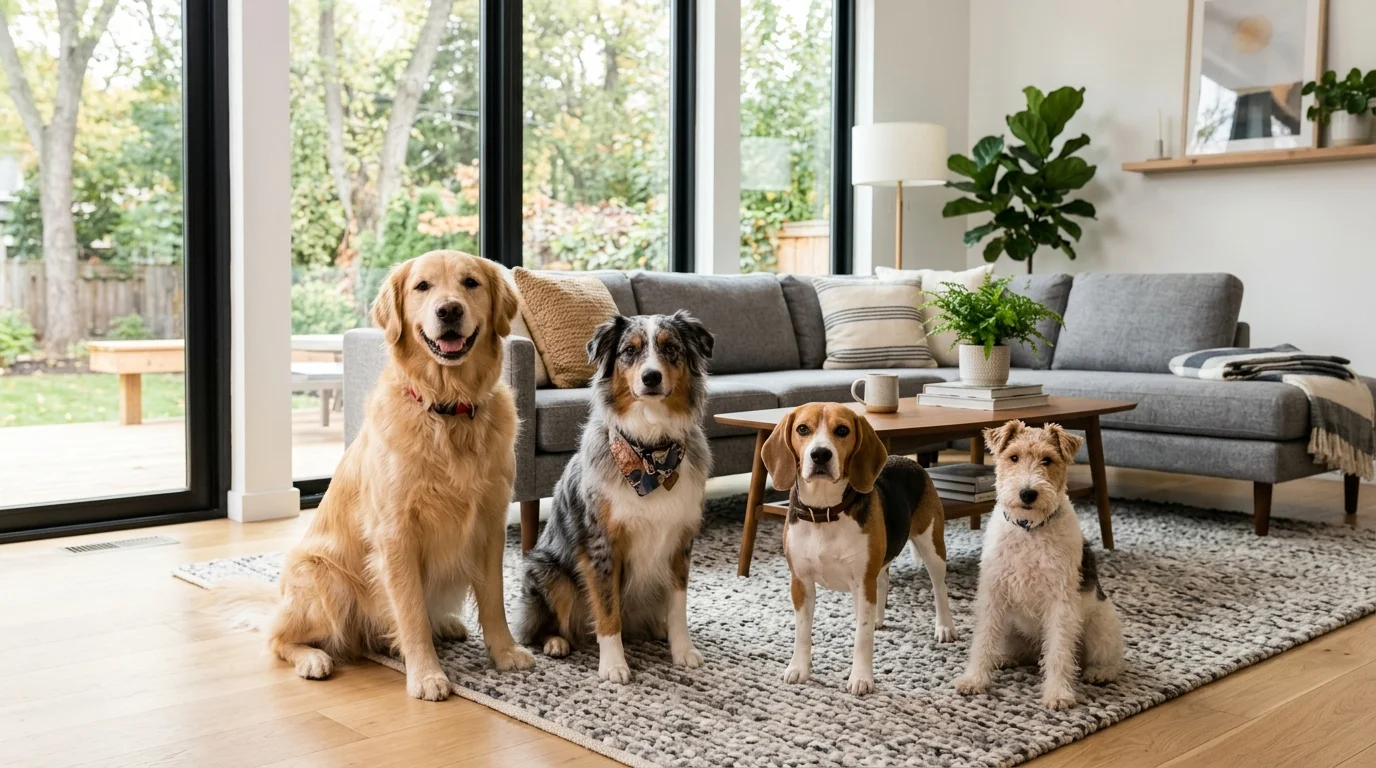
Choosing a dog is a long-term decision that shapes your daily life for 10 to 15 years or more. There is no single “best” breed. The right dog is the one whose needs align with the space you actually have, the energy you can realistically offer, the household you live in, and the experience and budget you bring to the table. Popularity, Instagram photos, and childhood nostalgia are poor guides. A practical decision framework based on living space, energy, experience, allergies, household makeup, and cost is far more useful.
This guide shows you how to choose a dog breed by working through that framework step by step, so you can answer the real question: “What type of dog fits my life?” rather than “Which breed looks cutest right now?”
Table of Contents
Why Breed Fit Matters More Than Breed Popularity
A breed that ranks high in registration numbers or social media likes is not automatically a good match for every home. Appearance drives many early choices—fluffy coats, big eyes, or a specific size can feel irresistible. Those traits do not predict whether the dog will thrive in an apartment, tolerate a busy schedule, or coexist peacefully with kids or other pets.
Daily lifestyle carries more weight than trends. A high-energy working breed may look striking but will struggle in a low-activity household. Even within a breed, individual dogs vary because of genetics, early socialization, and training. Treating any breed as a guarantee of certain behavior is a common source of later frustration. Matching the dog’s typical needs to your actual routine reduces the risk of mismatch and supports a healthier, happier relationship for both of you.
Step 1: Assess Your Living Space

Start with the physical environment. Apartment, condo, townhouse, or single-family home changes the practical options. Indoor square footage matters, but so does access to secure outdoor space, whether that is a fenced yard, a nearby park, or regular walks on leash.
Stairs can be hard on older dogs and dogs with joint problems. Urban settings often mean more noise, closer neighbors, and stricter rules about barking or size. Suburban or rural homes may offer more room but still require secure fencing for dogs that like to roam. Landlord or HOA restrictions frequently limit size, breed type, or number of dogs—check those early.
Size alone does not determine suitability. Some medium and larger breeds adapt well to smaller spaces when their exercise needs are met outside the home. Conversely, a small but high-drive dog can feel confined and restless in a large house if mental and physical outlets are missing. Evaluate the full picture of space, access, and daily management rather than measuring square footage in isolation.
Step 2: Be Honest About Energy Level — Yours and Theirs

Energy mismatch is one of the most common reasons people struggle after bringing a dog home. Dogs generally fall along a spectrum from low-energy (content with moderate daily walks and indoor rest) to moderate (need consistent activity and some mental work) to high-energy (require substantial exercise, play, and often a job or sport to stay settled).
Your own lifestyle sets the realistic ceiling. An active household that runs, hikes, or plays outdoors most days can support higher-energy dogs. A quieter routine with desk work, limited free time, or preference for evenings at home suits lower-energy dogs better. Be honest about weekday schedules, not just weekend ideals. A dog that needs two vigorous outings daily will not thrive if those outings regularly get skipped.
Mismatched energy often shows up as restlessness, destructive chewing, excessive barking, or difficulty settling. It is not a character flaw in the dog; it is a signal that needs are not being met. Matching the typical energy range of a breed type to your actual capacity prevents many of those problems.
Step 3: Consider Your Experience Level
First-time owners and experienced handlers often do best with different temperament and trainability profiles. Some dogs respond quickly to consistent, positive training and have relatively straightforward needs. Others require more structure, stronger leadership, or specialized handling because of independent streaks, high drive, or sensitivity.
Trainability and temperament matter more than raw intelligence rankings. A highly intelligent dog that is also independent may frustrate a novice who expects rapid compliance. A dog that is eager to please and moderately energetic can be a smoother entry point. Experience also affects your ability to manage potential challenges such as strong prey drive, guarding tendencies, or high exercise demands.
The point is to match the dog’s typical learning style and management needs to the consistency and knowledge you can provide.
Step 4: Factor In Allergies and Shedding
Shedding and coat type influence daily life more than many people expect. Double-coated breeds often shed heavily seasonally and require regular brushing to manage loose fur and undercoat. Single-coated or low-shedding breeds may leave less hair on furniture but can still need professional grooming or frequent maintenance to prevent matting.
Allergies are individual. No breed is guaranteed allergy-free. Some people react less to certain coat types or to dogs that shed less, but reactions depend on the person’s specific sensitivities, the dog’s saliva and dander, and the home environment. Spending time with dogs of the type you are considering is the most practical test.
Keep grooming expectations realistic. A coat that looks low-maintenance in photos may still need weekly brushing or periodic professional care. Factor that time and cost into your decision rather than assuming appearance equals ease.
Step 5: Think About Your Household

Household composition shapes what temperament and size tend to work best. Homes with young children often do better with dogs that are generally tolerant, sturdy enough for occasional rough play, and not overly reactive to noise or sudden movement. Older adults may prefer lower-energy dogs that are easier to handle on walks and less likely to pull hard. Multi-pet homes require attention to typical compatibility with cats or other dogs, though individual socialization and management always matter more than breed averages.
Activity level of the household, frequency of visitors, and noise sensitivity also play roles. A quiet apartment with thin walls favors dogs that are not typically high barkers. A busy family with frequent guests may need a dog that settles well amid activity.
No breed is guaranteed good with children, cats, or seniors. Use careful language: many dogs of a given type are often successful in certain homes when raised and managed appropriately, but individual variation is the rule. Early socialization and ongoing training remain essential regardless of breed.
Step 6: Match Your Budget to the Dog
Breed selection has ongoing cost implications. Larger dogs generally eat more food. Some coats require professional grooming several times a year. Size and structure can influence the scale of basic supplies, crates, and veterinary care over a lifetime. Pet insurance or an emergency fund becomes more important when you choose a dog with known breed-related health tendencies.
These are selection considerations, not a full cost breakdown. Focus on whether the typical recurring expenses of a given size and coat type fit comfortably within your budget. Food quantity, grooming frequency, and preventive veterinary care are the main levers.
Health is part of the decision too. Ask breeders or rescues what health testing or history is available, and talk with a veterinarian about the health tendencies of the types of dogs you are considering.
Step 7: Look Beyond Appearance
Appearance is the easiest filter and the least reliable long-term predictor. A striking coat or endearing face does not tell you about exercise needs, trainability, or household fit. Prioritize temperament, energy, size relative to your space, and the realistic daily commitment you can make.
Dogs are not accessories. The decision is a multi-year responsibility that includes training, socialization, veterinary care, and companionship through different life stages. Choosing primarily for looks increases the chance that the dog’s actual needs will collide with your lifestyle. Revisit the earlier steps and let the practical factors drive the shortlist.
Quick Dog Breed Decision Checklist

Answer honestly. The pattern that emerges points toward the type of dog most likely to fit. In text form, ask yourself:
- Space: Do I have room, and permission, for a dog of this size? Where will my dog exercise every day?
- Energy: Can I meet this dog’s exercise needs on my busiest weekday, not just on weekends?
- Experience: Am I ready for this dog’s typical training and management needs?
- Allergies and shedding: Has anyone in my home reacted to dogs, and am I comfortable with the grooming this coat needs?
- Household: How will this dog fit with children, older adults, other pets, visitors, and noise levels?
- Budget: Can I comfortably afford food, grooming, supplies, and veterinary care, including unexpected costs?
- Looks: Would I still choose this dog if its appearance were not part of the decision?
Use Your Answers to Narrow Down the Right Breed Type
Your checklist responses create a practical filter. Limited space and moderate energy often point toward smaller or adaptable medium breeds. High daily activity and outdoor access open the door to higher-energy types. First-time owners frequently benefit from breeds known for relative trainability and moderate needs. Households with children or other pets prioritize temperament and compatibility indicators.
Do not jump straight to a long list of individual breeds. Start with the type of dog that fits your answers, then research specific breeds in that range. If you are drawn to larger dogs, our guide to the top 10 big dog breeds covers size, temperament, grooming, and exercise needs for each breed.
Once you have a shortlist of types, research reputable sources for health tendencies, meet dogs in person when possible, and plan ahead for the early weeks at home.
Visit To Home: https://dogsdailycare.com/
Frequently Asked Questions
How do I choose the right dog breed for me?
Start with your lifestyle, not the dog’s looks. Consider your living space, how much exercise you can provide, your training experience, allergies, household members, and budget. Then look for dogs whose typical needs fit those answers.
Is a small dog always better for an apartment?
Not always. Some larger breeds are calm indoors when their exercise needs are met, while some small breeds are very active or vocal. Energy level, noise tendencies, and your daily routine matter as much as size.
Are mixed-breed dogs a good choice?
Many mixed-breed dogs make great companions. Because their traits can be harder to predict, spend time with the individual dog and ask the shelter or rescue about its temperament, energy, and history.
Is there a truly hypoallergenic dog?
No breed is guaranteed allergy-free. Reactions depend on the person and the individual dog, so spend time with the dog you are considering before deciding.
Can I trust breed descriptions to predict a dog’s personality?
Breed descriptions describe tendencies, not guarantees. Genetics, early socialization, training, and the individual dog all shape behavior, so treat breed information as a starting point.
Final Thoughts
The best dog breed for your lifestyle is the one whose typical needs line up with the space, energy, household, experience, and budget you actually have—not the one that looks best in a photo. Use the framework, answer the checklist questions honestly, and let the practical fit guide you toward a companion that can thrive alongside you for years.