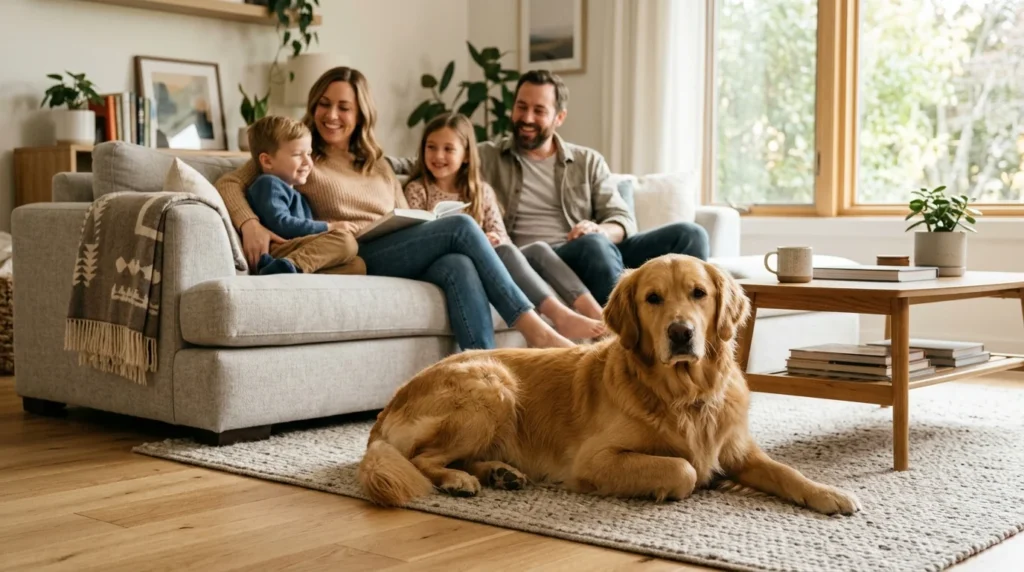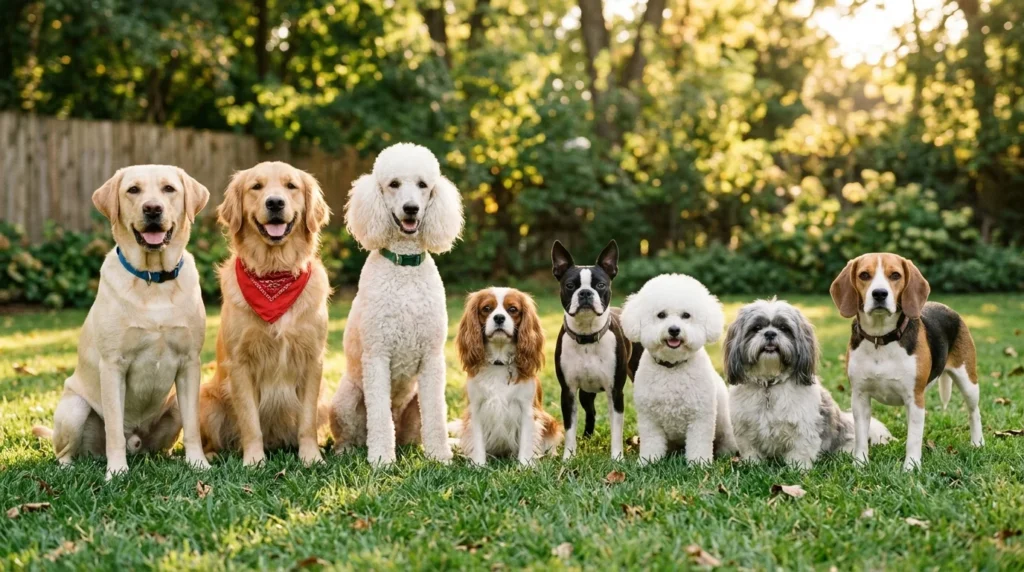
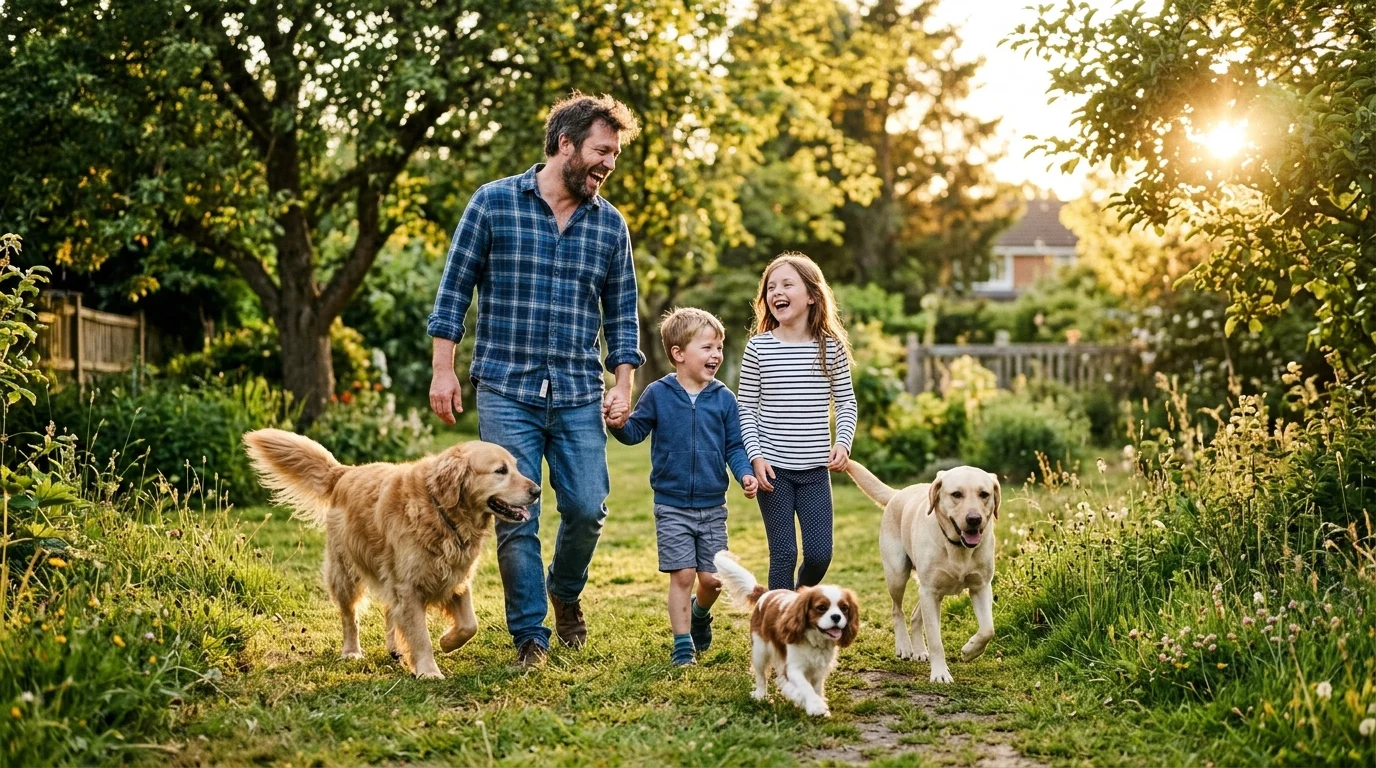
Choosing a dog for a family isn’t just about finding a friendly breed — it’s about finding one that fits your specific household. A dog that thrives with teenagers who go on long hikes may not be the right match for a home with a toddler still learning how to move gently around animals.
There’s no single “best family dog breed” that works for every household. The right fit depends on your children’s ages, your family’s activity level, the size of dog you can comfortably manage, and how much time you can dedicate to training and supervision. Breed tendencies can point you in a good direction, but they’re not guarantees — individual temperament always varies.
This guide breaks down some of the best family dog breeds by the age of the children in the home, so you can find options that realistically match your day-to-day life, not just a generic “good with kids” list.
Table of Contents
What Makes a Dog Breed Family-Friendly?
Before looking at specific breeds, it helps to understand what actually makes a dog a good fit for a household with children. Popularity isn’t a reliable indicator — these traits are:
Patience. Family-friendly dog breeds tend to tolerate the unpredictability of a busy household — sudden noise, quick movements, and inconsistent routines — better than breeds bred for more singular, focused work.
Sociability. A dog that generally enjoys human company and adapts well to different family members tends to integrate more smoothly into daily life.
Manageable energy. Energy level should match your family’s actual activity level, not your aspirational one. A dog with unmet exercise needs can become restless or reactive.
Trainability. Breeds that respond consistently to basic training are usually easier for parents to manage alongside the demands of raising children.
Size and handling. Larger dogs require a family member capable of controlling them on a leash. Smaller dogs may need extra care around younger children to avoid injury during rough play.
Resilience. Some breeds tend to tolerate normal household chaos — dropped toys, sudden hugs, unpredictable noise — more comfortably than breeds that prefer a calmer environment.
Ability to settle indoors. A dog that can relax at home between activity periods tends to fit family life more easily than one that needs constant stimulation.
No breed trait replaces supervision, socialization, or training — especially with younger children.
Best Family Dog Breeds for Toddlers and Preschoolers
Homes with toddlers benefit from breeds generally known for steady temperaments, sturdiness, and tolerance for noise and sudden movement. Even so, adult supervision during any interaction between a young child and a dog remains essential, regardless of breed.
Golden Retriever
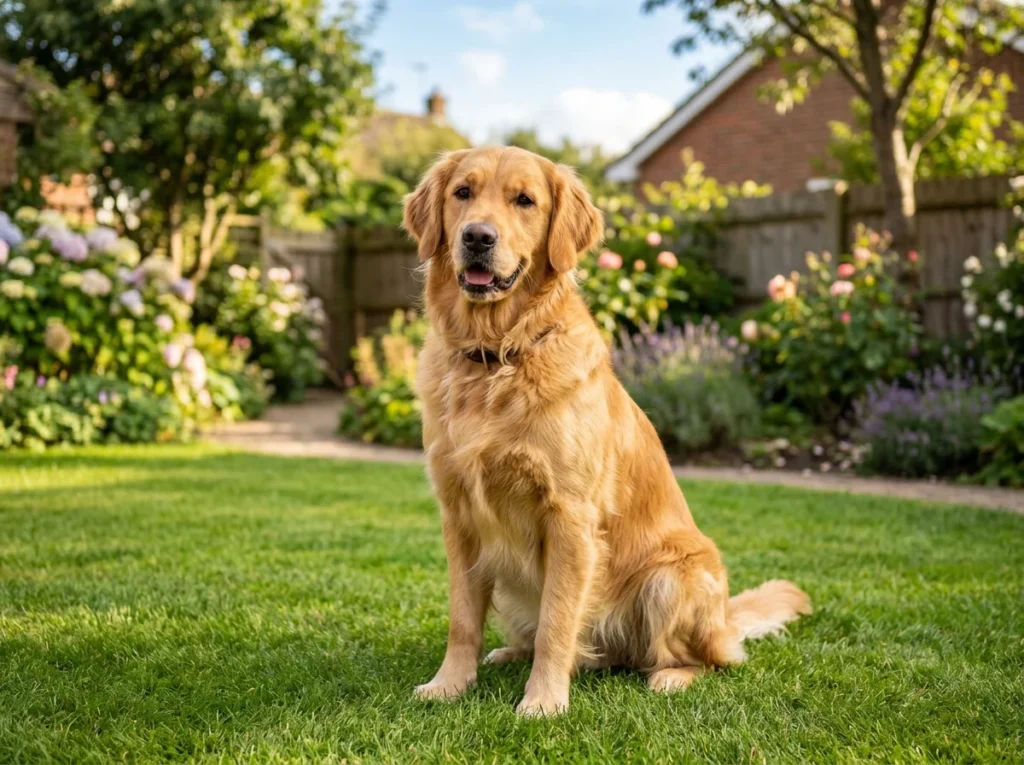
Best For: Families wanting a patient, affectionate dog
Size: Large
Typical Energy: Moderate to high
Temperament: Gentle, sociable, eager to please
Golden Retrievers are often mentioned among the best dogs for households with children because of their generally patient and steady disposition around unpredictable toddler behavior. Their sturdy build also tends to handle normal household bumps and noise reasonably well.
What to Know: They’re a large, energetic breed that needs consistent daily exercise, and their size means close supervision matters around very small children.
Labrador Retriever
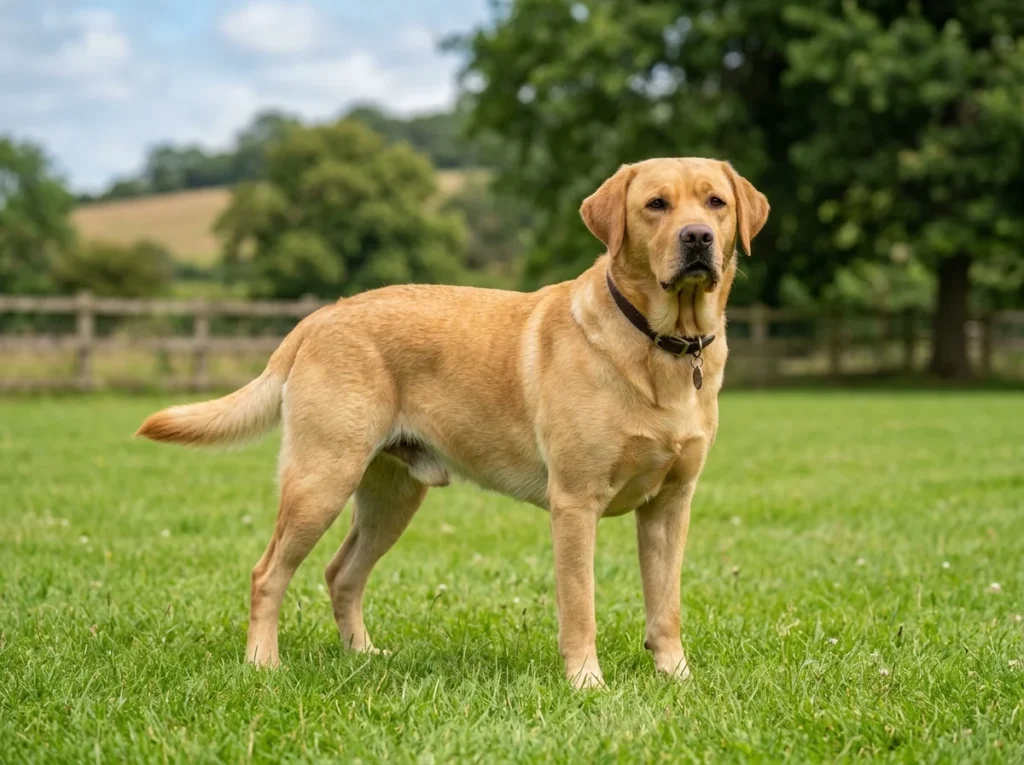
Best For: Active families wanting a resilient, easygoing dog
Size: Large
Typical Energy: Moderate to high
Temperament: Friendly, adaptable, generally tolerant
Labradors tend to be resilient and food-motivated, which often makes basic training more manageable even amid the distractions of a busy household with young kids.
What to Know: Their sturdy size can accidentally knock over a small child during play, so supervised, structured interactions matter early on.
Bichon Frise
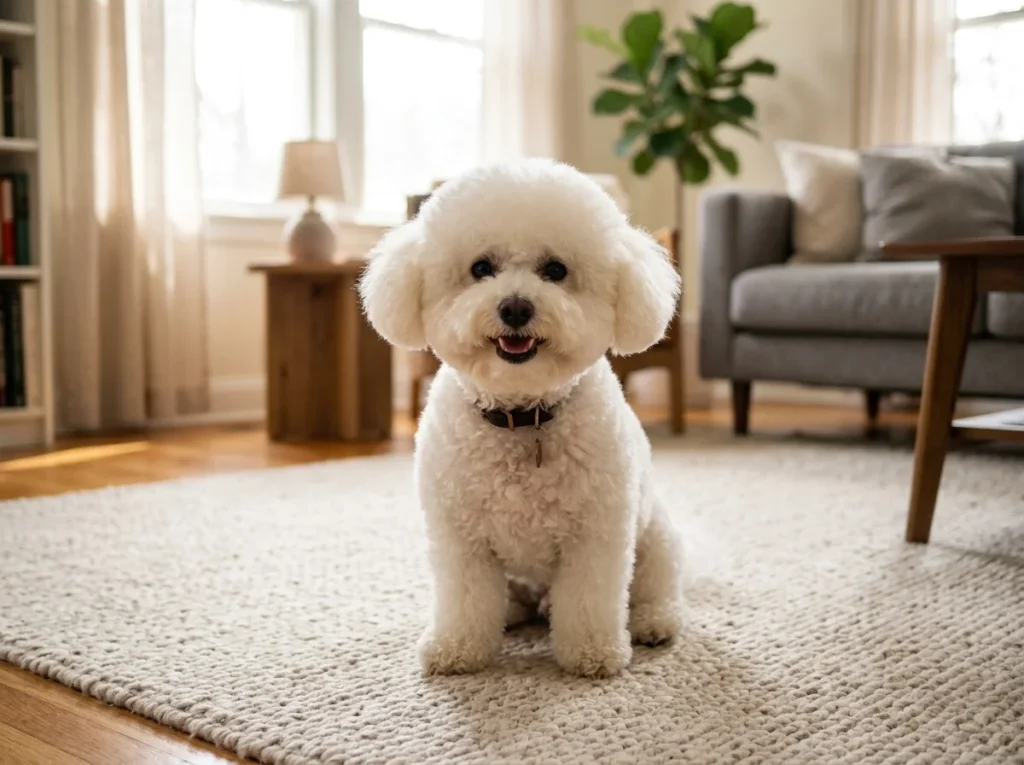
Best For: Families wanting a smaller, cheerful dog for a calmer home
Size: Small
Typical Energy: Moderate
Temperament: Sociable, affectionate, generally good-natured
Bichons are often considered a gentle dog breed for children because of their friendly, adaptable temperament. Their compact size can work well in smaller homes with younger kids.
What to Know: Because they’re small, they can be more sensitive to rough handling, so teaching gentle touch matters as much as choosing the breed itself.
Best Family Dog Breeds for School-Age Kids
Once children can follow simple rules around a dog — like not pulling ears or approaching calmly — families often have more flexibility with breeds that enjoy interactive play and outdoor activity.
Beagle
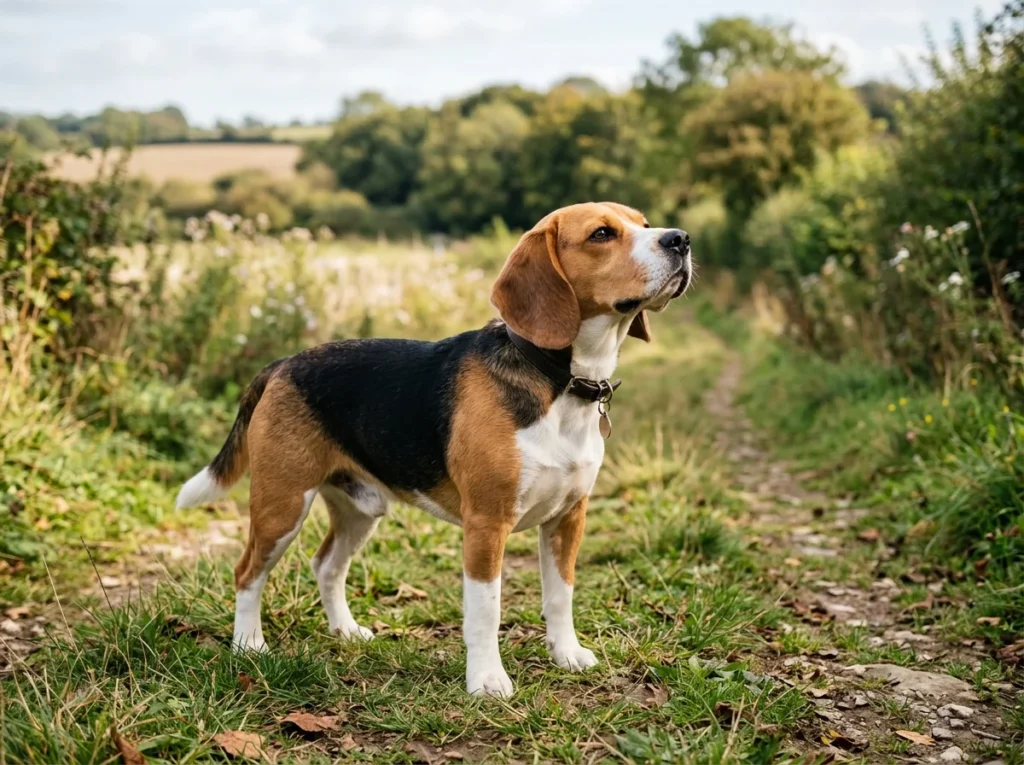
Best For: Families wanting a playful, compact companion
Size: Small to medium
Typical Energy: Moderate to high
Temperament: Curious, friendly, sociable
Beagles tend to enjoy active play and generally do well with kids who can join in games like fetch. Their compact size makes them manageable for school-age children to help walk under supervision.
What to Know: Their strong nose can make recall training tricky, and consistent leash habits matter, especially in unfenced areas.
Boxer
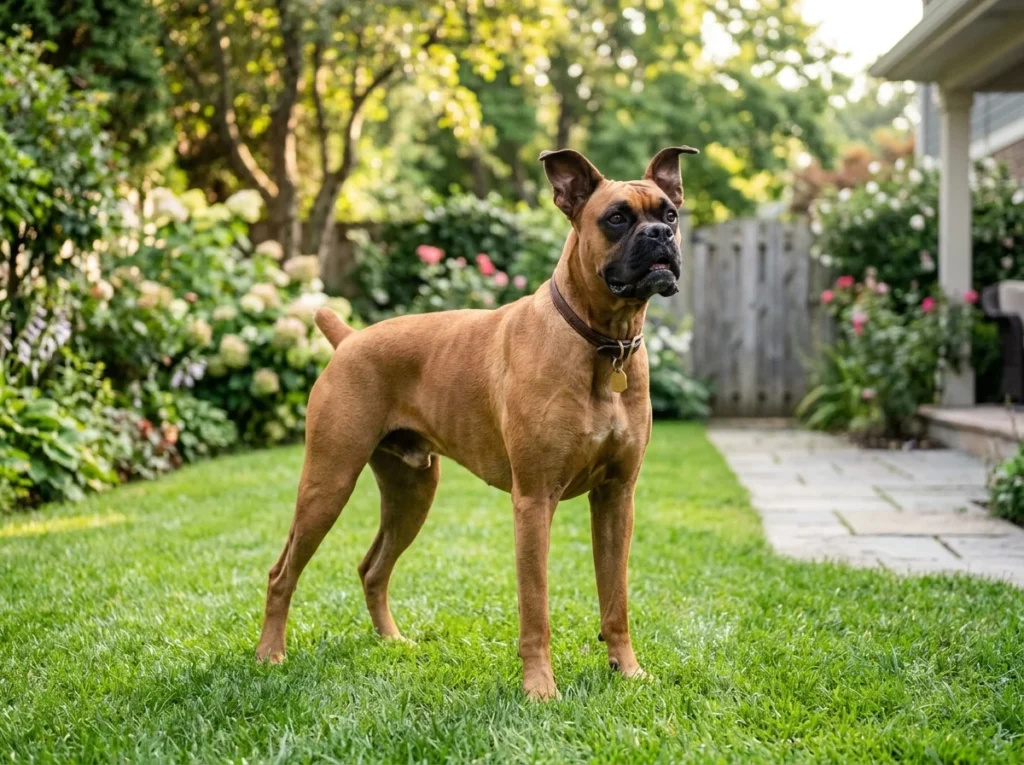
Best For: Active families with children who enjoy energetic play
Size: Large
Typical Energy: High
Temperament: Playful, loyal, protective of family
Boxers are often noted for their playful, patient nature with school-age kids who can keep up with their energy. Many families find their loyalty and enthusiasm a good match for interactive daily play.
What to Know: Their high energy and enthusiasm mean they need consistent training and daily exercise to prevent overly exuberant behavior indoors.
Cocker Spaniel
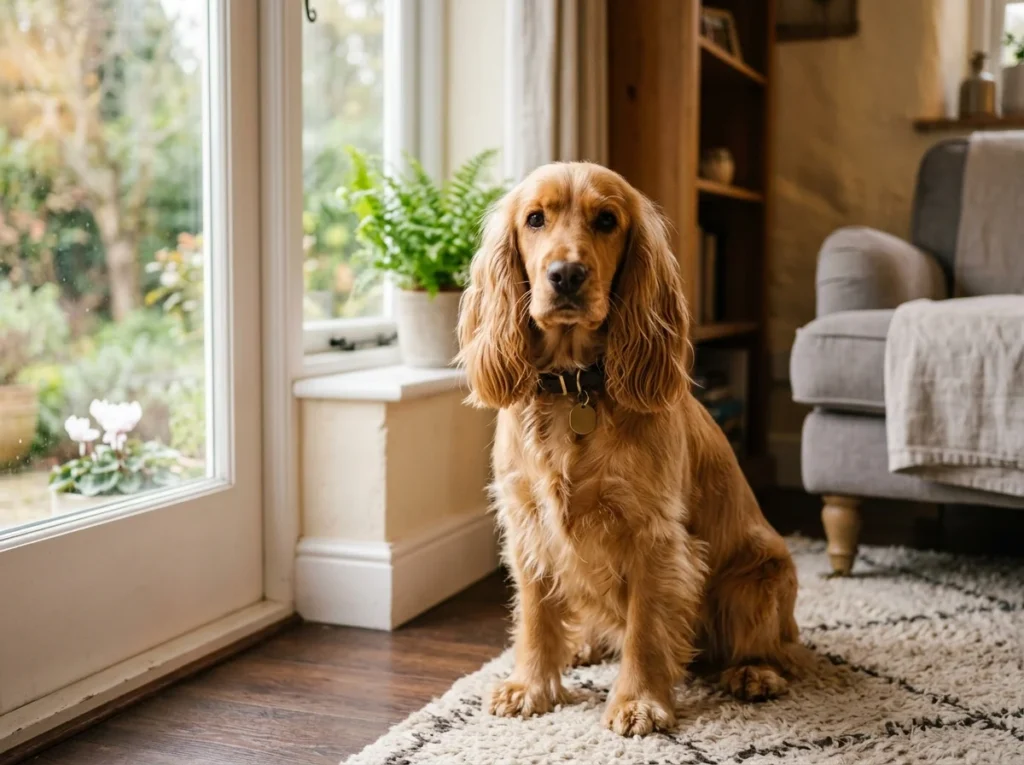
Best For: Families wanting a moderate-energy, affectionate breed
Size: Small to medium
Typical Energy: Moderate
Temperament: Gentle, affectionate, eager to please
Cocker Spaniels are frequently mentioned as good dogs for kids because of their generally sweet, adaptable temperament and manageable size for children to help care for.
What to Know: Their long, silky coat needs regular brushing and periodic grooming, which is worth factoring into your family’s routine.
Best Family Dog Breeds for Older Kids and Teens
Households with older children or teens who can participate in daily walks, structured training, or even dog sports often have room to consider more active breeds — as long as the family can provide the exercise and consistency these dogs need.
Australian Shepherd

Best For: Active families with teens interested in training or dog sports
Size: Medium to large
Typical Energy: High
Temperament: Intelligent, loyal, work-driven
Australian Shepherds tend to thrive in households where older kids or teens can help provide structured exercise, training, or activities like agility. Their intelligence often makes them highly responsive to consistent training.
What to Know: This is not a low-maintenance breed — without adequate mental and physical stimulation, that intelligence can turn into problem behaviors like herding or nipping at fast-moving kids.
Standard Poodle
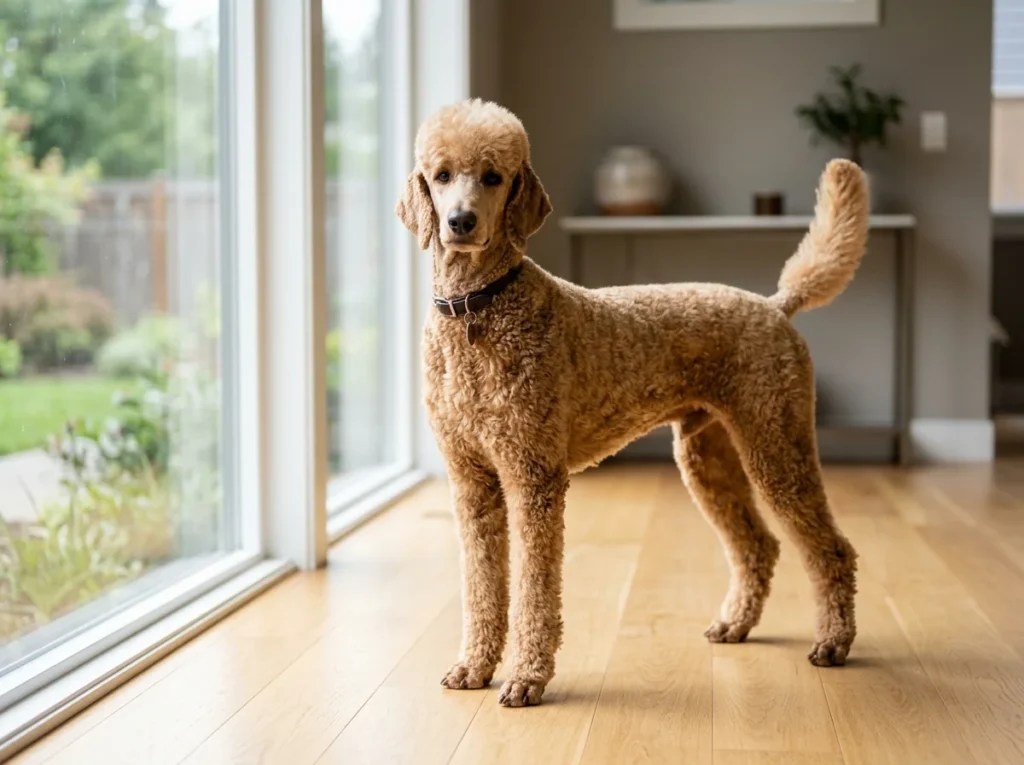
Best For: Active families wanting a highly trainable, low-shedding dog
Size: Large
Typical Energy: Moderate to high
Temperament: Intelligent, alert, generally good-natured
Standard Poodles are often a strong fit for families with older children because of their high trainability and generally patient temperament, and teens can be meaningfully involved in structured training routines.
What to Know: Their coat requires regular professional grooming, an ongoing cost and time commitment worth planning for.
Vizsla
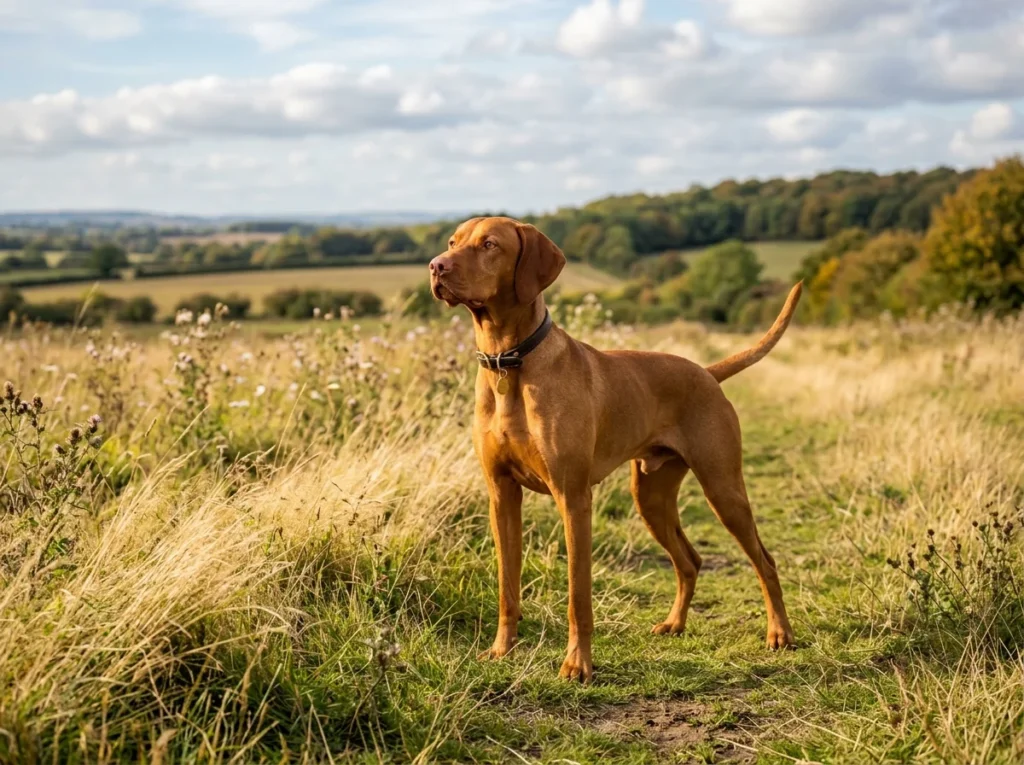
Best For: Highly active families, teens who enjoy running, hiking, or outdoor sports
Size: Medium to large
Typical Energy: Very high
Temperament: Affectionate, energetic, people-oriented
Vizslas tend to bond closely with their families and do well with older kids who can match their high activity needs through running, hiking, or active play.
What to Know: This breed generally needs substantial daily exercise and doesn’t tend to do well left alone for long periods — a good fit only for genuinely active households.
Adaptable Family Dogs for Homes With Children of Different Ages
Some breeds tend to be flexible enough to suit households with a wider age range of kids, adjusting their energy to the situation reasonably well.
Cavalier King Charles Spaniel
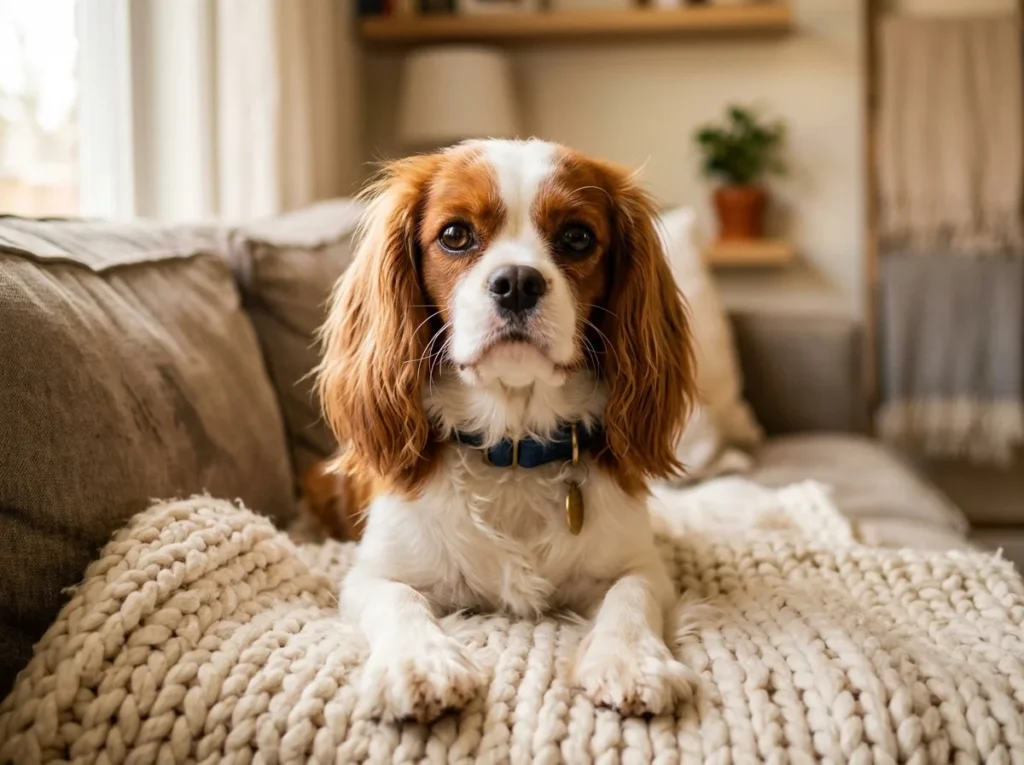
Cavaliers are often described as adaptable family dog recommendations because they tend to be equally comfortable curling up with a younger child or joining older kids on a walk. Their moderate energy and affectionate nature make them broadly compatible, though their small size still calls for gentle handling around toddlers.
Border Collie Mix (Non-Purebred Herding Mixes)
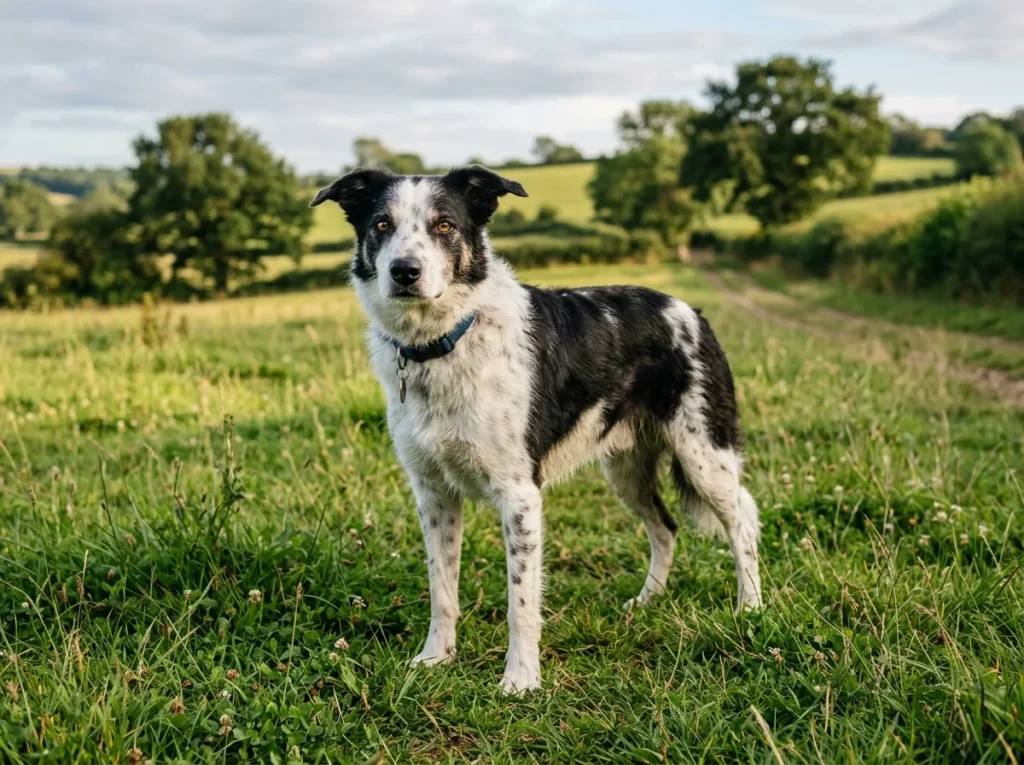
Herding mixes, when raised in a structured environment, can adapt across a range of ages if the family commits to consistent exercise and mental stimulation. Their intelligence often makes them responsive to training regardless of which family member is working with them, though purebred Border Collies specifically tend to need more experienced handling.
Mixed-Breed Shelter Dogs
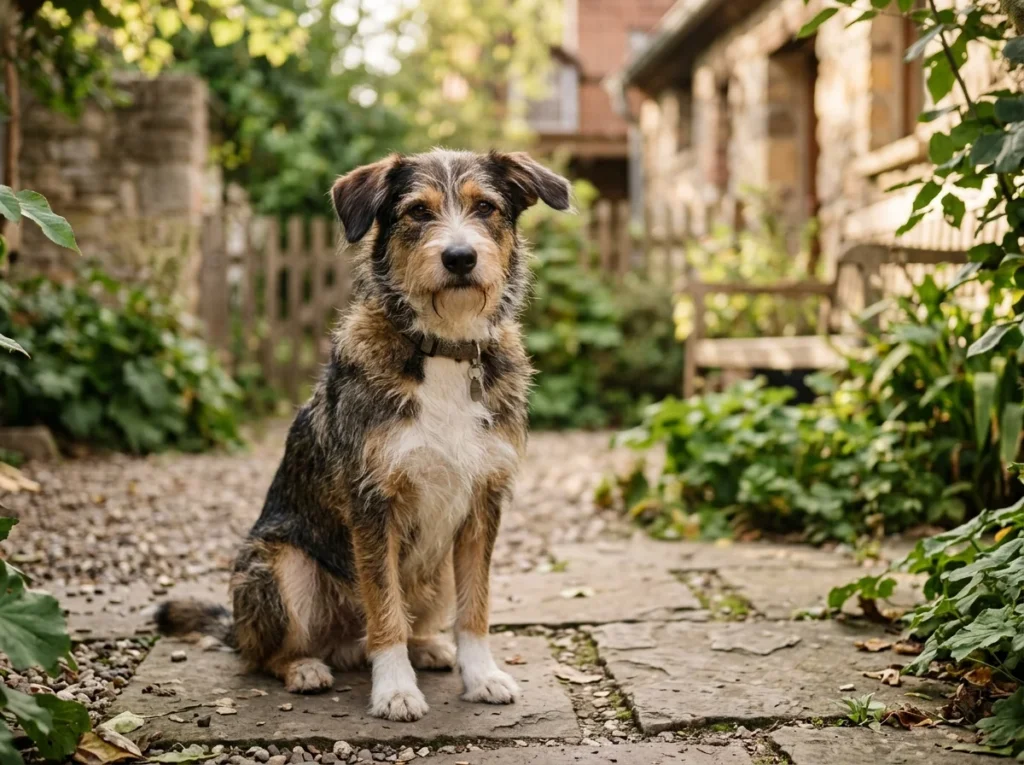
Many adaptable family dogs available through shelters and rescues don’t fit a single-breed profile at all. Staff at reputable shelters can often provide useful insight into an individual dog’s temperament, energy level, and history with children — sometimes offering more reliable guidance than breed alone.
How to Choose the Right Family Dog for Your Household
Once you have a shortlist, narrow it down based on your actual situation:
- Age of children: Younger kids generally benefit from steadier, sturdier breeds; older kids can often handle more energetic dogs.
- Activity level: Match the dog’s exercise needs to what your family can realistically provide, not what you hope to provide.
- Home size: Larger, high-energy breeds typically need more space than a small apartment offers.
- Dog size: Consider who in the family will be walking and physically managing the dog.
- Time available: Training, exercise, and grooming all require ongoing time investment.
- First-time vs. experienced ownership: Some breeds are more forgiving of a family’s first attempt at dog ownership than others.
- Grooming tolerance: Be honest about how much brushing or professional grooming your family is willing to manage.
- Health history: Ask breeders or rescues what health testing or history is available, and talk with your veterinarian about the health tendencies of the breeds you are considering.
If you are leaning toward larger dogs, our guide to the top 10 big dog breeds covers size, temperament, grooming, and exercise needs for each breed.
Common Mistakes Families Make When Choosing a Dog
- Choosing based only on looks. A breed’s appearance says nothing about its energy level or temperament.
- Assuming small dogs are automatically easier. Some small breeds are more sensitive to rough handling or more high-strung than larger, sturdier ones.
- Ignoring energy level. A mismatch between a dog’s exercise needs and the family’s routine is one of the most common sources of behavioral issues.
- Underestimating supervision needs. No breed eliminates the need for adult supervision with young children.
- Taking on a demanding breed without enough time. High-energy or highly intelligent breeds need real daily investment.
- Expecting breed stereotypes to guarantee behavior. Individual temperament, socialization, and training always play a role.
Quick Family Dog Checklist
- How old are the children?
- How active is the family day to day?
- How much daily exercise can we realistically provide?
- What dog size can we comfortably handle?
- Are we first-time dog owners?
- How much grooming are we willing to manage?
- Is our household usually calm or busy?
- Are there other pets at home?
- Can an adult consistently supervise interactions with younger children?
- Are we prepared for the long-term costs and responsibility of dog ownership?
Frequently Asked Questions
What is the best family dog breed?
There is no single best breed for every family. The right choice depends on your children’s ages, your activity level, your home, and how much time you can give to training and exercise. Golden Retrievers and Labrador Retrievers are often suggested, but many other breeds and mixed-breed dogs can be a great fit.
What are the best dogs for toddlers?
Breeds with steady, tolerant temperaments, such as Golden Retrievers, Labradors, and Bichon Frises, are often mentioned for homes with toddlers. No breed is automatically safe with young children, so an adult should always supervise any time they are together.
Are small dogs better for families with kids?
Not necessarily. Small dogs can be more fragile and more sensitive to rough handling, while larger, sturdier dogs may be more tolerant but can knock over a small child. Temperament and individual personality matter more than size alone.
Are mixed-breed dogs good family pets?
Many are. Because mixed-breed traits can be harder to predict, spend time with the individual dog and ask the shelter or rescue about its temperament, energy level, and history with children.
Should a family get a puppy or an adult dog?
Both can work. Puppies need a lot of time for training and socialization, while an adult dog’s temperament and energy are often easier to assess before you commit. Choose based on the time and experience your household has.
Final Thoughts
The best family dog breed depends less on popularity and more on your children’s ages, your household’s activity level, and how much time you can realistically commit. A breed that’s a great match for a home with teenagers may be too much for a house with toddlers, and vice versa. Whatever breed you choose, temperament tendencies are a helpful starting point — but supervision, socialization, and consistent training remain what actually shapes how a dog behaves around your family.