
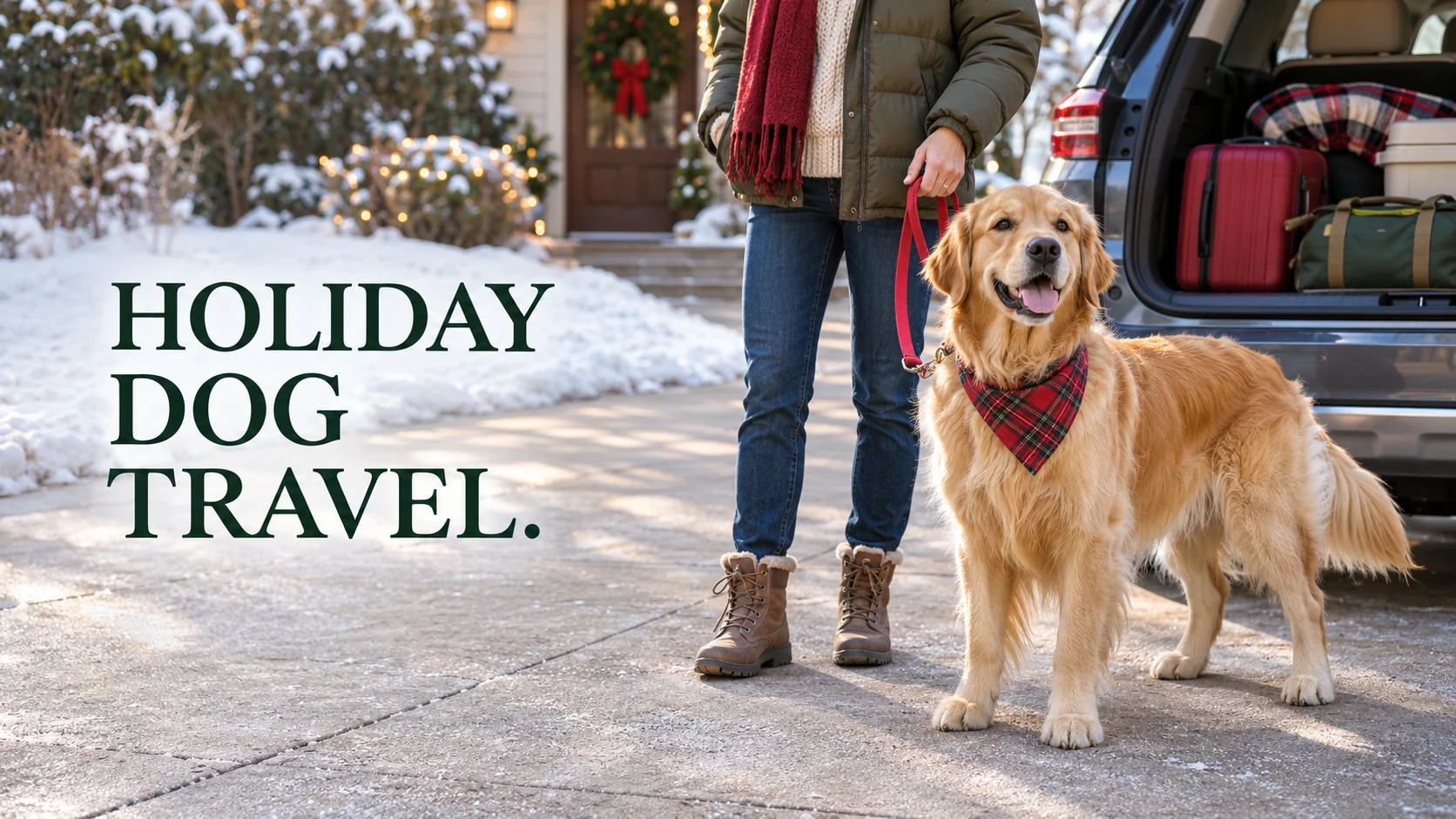
A holiday road trip can look simple on a calendar: load the bags, pick up the dog, and drive to family. The difficult parts usually happen between those steps. Someone opens the car door before the leash is attached. Dinner runs late while the dog waits for a bathroom break. A guest assumes a tired dog wants another cuddle.
Traveling with a dog over the holidays works better when you plan for those ordinary moments. This guide focuses on family visits and road trips, with a separate section on flights and international paperwork. The aim is a manageable trip that respects your dog’s comfort, rather than squeezing your dog into every activity.
Table of Contents
Quick Answer
Before leaving, confirm that your dog can join you at your accommodation, prepare an appropriate vehicle restraint, and pack familiar food, medication, identification, and records. Build in bathroom and water breaks. At your destination, arrange a quiet resting space and agree on door and food rules with your hosts. Discuss travel sickness, anxiety, or medical needs with your veterinarian before departure.
Decide whether this trip suits your dog
Start with the actual itinerary. A weekend with relatives who welcome your dog is different from a trip filled with restaurants, shopping, and events where dogs cannot go. Write down where your dog will be during each main activity. If the answer repeatedly depends on leaving them somewhere unfamiliar, consider a trusted sitter or another care arrangement.
Think about how your dog handles the whole experience: confinement, car movement, strange rooms, children, other animals, and interrupted sleep. A dog who enjoys a short ride may still struggle with a crowded holiday house. Senior dogs and dogs with ongoing health problems may need more accommodation than your usual schedule allows.
For example, imagine a dog who normally naps after lunch but will be staying beside a busy kitchen. The useful adjustment is a quiet room and a predictable break, not a longer list of entertainment. Ask your hosts whether that space really exists before you commit.
Confirm the details before booking
“Pet-friendly” can mean very different things. Ask the hotel or rental about size or breed restrictions, fees, allowed areas, cleaning rules, and whether a dog may remain in the room without you. Get the relevant policy in writing. A booking note is easier to check than a remembered phone conversation.
For a family visit, agree on sleeping arrangements, furniture rules, resident pets, and who will supervise the dog when the house gets busy. Ask about a usable outdoor toilet area and safe walking routes. Do not assume a fenced yard is secure; gates, gaps, or low sections may matter for your individual dog.
Keep the accommodation address and a nearby veterinary clinic’s contact details accessible offline. Plan an alternative if weather delays your arrival or your accommodation cannot accept the dog. A modest buffer in the itinerary is more useful than a schedule that depends on every stop going perfectly.
Practice the car setup before departure
Cornell’s canine travel guidance recommends securing dogs with suitable crash-tested equipment and introducing travel gradually. Check the instructions for the specific restraint or crate, your dog’s measurements, and the vehicle installation. A walking harness is not automatically a vehicle safety restraint. Check evidence for the exact model and size rather than relying on a broad safety claim.
Try the equipment while parked, then on a short familiar journey. Notice whether the dog can settle comfortably and whether straps twist or the crate shifts. Address a fit problem before the long drive. Keep bags, presents, and loose equipment secured separately so they cannot fall into the dog’s space.
If your dog is uncomfortable, step back to an easier practice session rather than using departure day as training. For a dog still learning everyday handling, our leash-training guide can help with the skills you use when getting out at stops.
Pack one dog bag you can reach
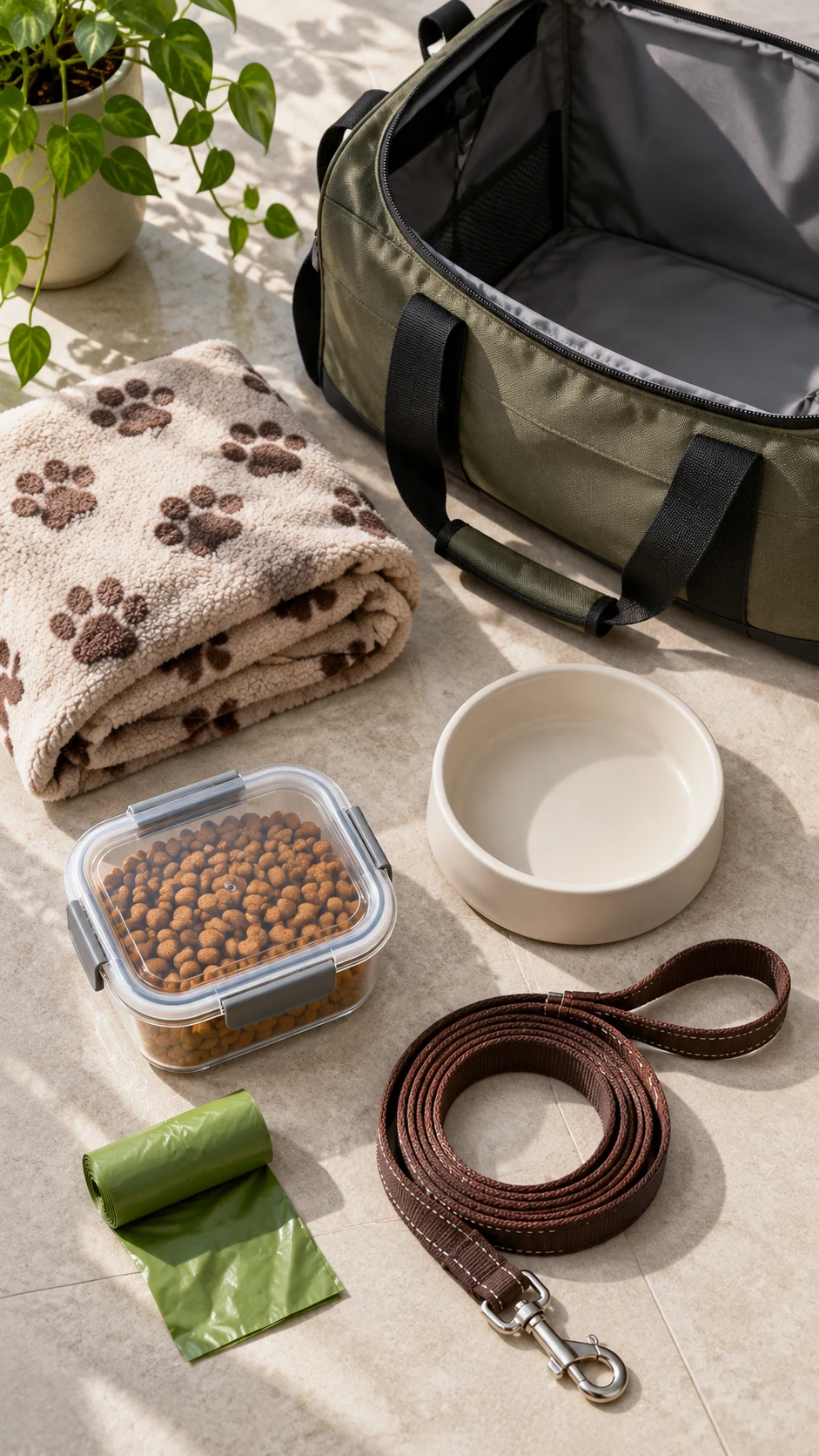
Put the items needed during the journey together, rather than underneath the luggage. Use this as an organizing list and adapt it to your dog:
- Usual food, measured portions, and a little extra for delays.
- Drinking water, a familiar bowl, waste bags, and cleaning supplies.
- A well-fitting collar or harness, leash, current identification, and a recent photo.
- Prescribed medication in its labeled packaging, with instructions and enough for the trip.
- Relevant veterinary records and any required travel documents.
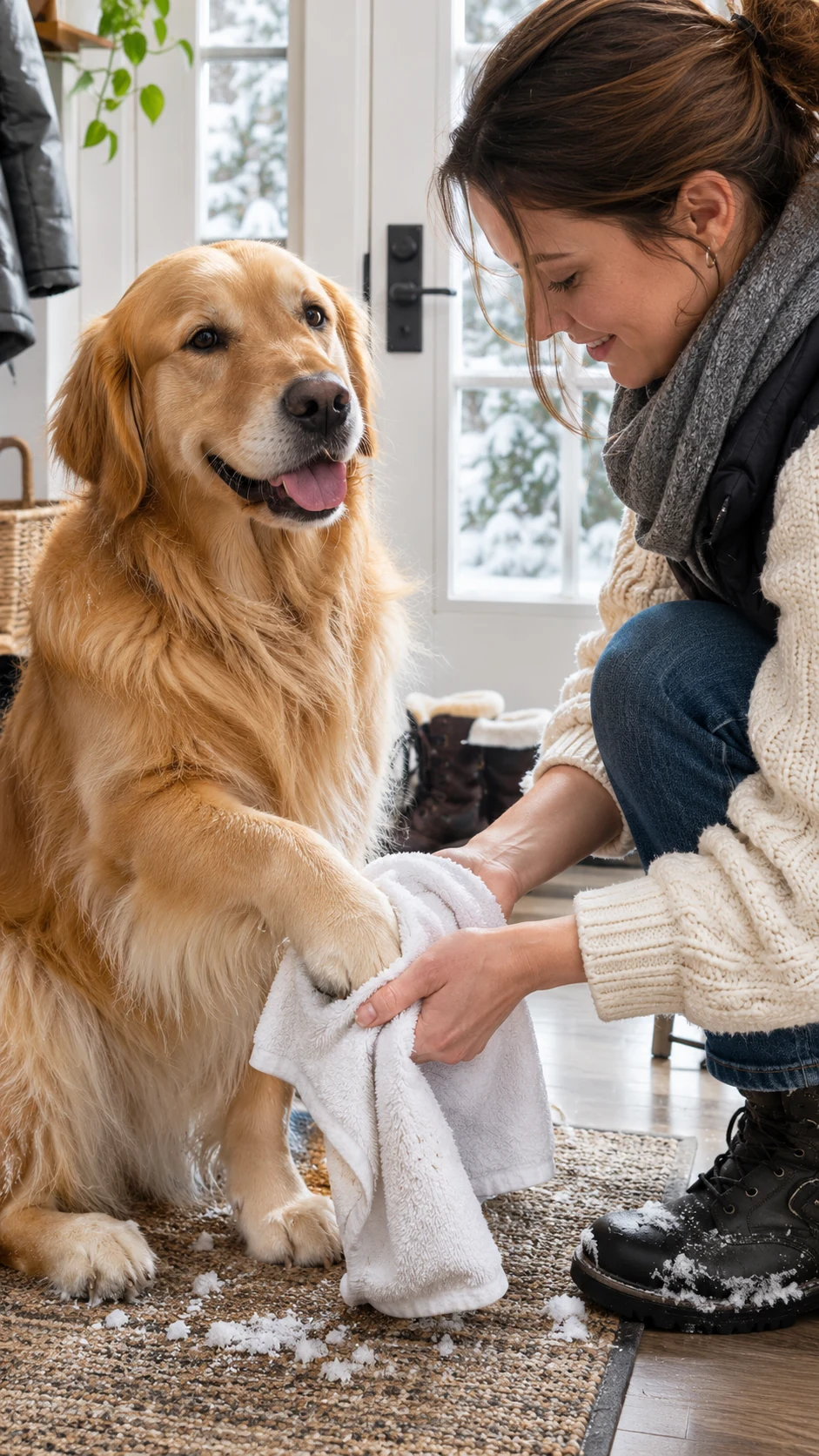
- A familiar washable bed or blanket, plus a towel for wet paws.
- The crate or resting equipment your dog already uses comfortably.
Check the bag against your routine the evening before departure. If you normally give medication with breakfast, put a reminder with the breakfast supplies. Keep sensitive documents protected, but make sure the person traveling with the dog can find them quickly.
A useful final check is to ask, “Could I manage a delayed arrival without buying unfamiliar food or missing a prescribed dose?” If not, change the packing plan before adding decorative extras.
Plan stops around your dog
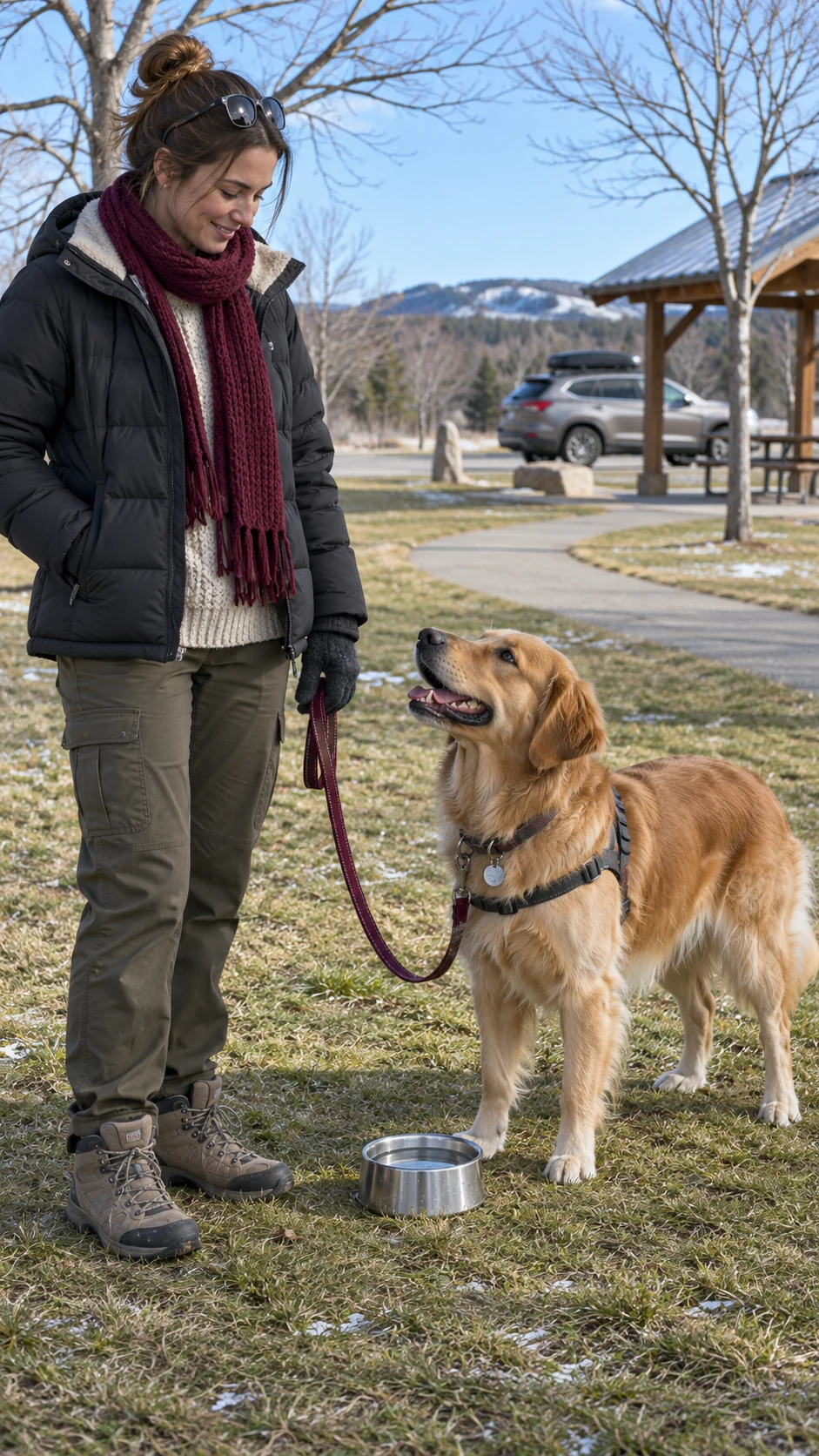
Choose possible stopping places before you leave. Look for a practical walking area away from moving traffic, and keep an alternative in mind if a rest area is crowded or closed. Allow enough time for a calm break rather than expecting your dog to toilet immediately beside a busy parking lot.
There is no single break interval that suits every dog. Use your dog’s normal bathroom needs, age, health, and behavior to plan regular opportunities to drink, stretch, and relieve themselves. Stop sooner if they appear uncomfortable. Do not make the longest driving segment the one where you are also most likely to rush.
At each stop, check where the leash is attached before opening a door or carrier. One adult should take responsibility for the dog while another handles bags or children. Never leave your dog alone in a parked vehicle; the ASPCA warns that both hot and cold conditions can be dangerous.
Handle nausea and anxiety before the trip
If your dog has previously drooled heavily, vomited, or shown distress during rides, contact your veterinarian before travel. Describe what happened, how long the journey lasted, and any medication your dog already takes. Do not improvise a dose of human medication or use another animal’s prescription.
Ask for a feeding and medication plan suited to your dog. Puppies and dogs with medical needs should not be given a blanket fasting rule copied from a general travel checklist. Bring the agreed instructions so another family member does not accidentally feed or medicate twice.
For a dog distressed by the equipment or car, allow preparation time. If the problem remains significant near departure, reconsider the journey with your veterinarian. A holiday deadline does not make an unsuitable travel arrangement comfortable.
Make the arrival calm and predictable
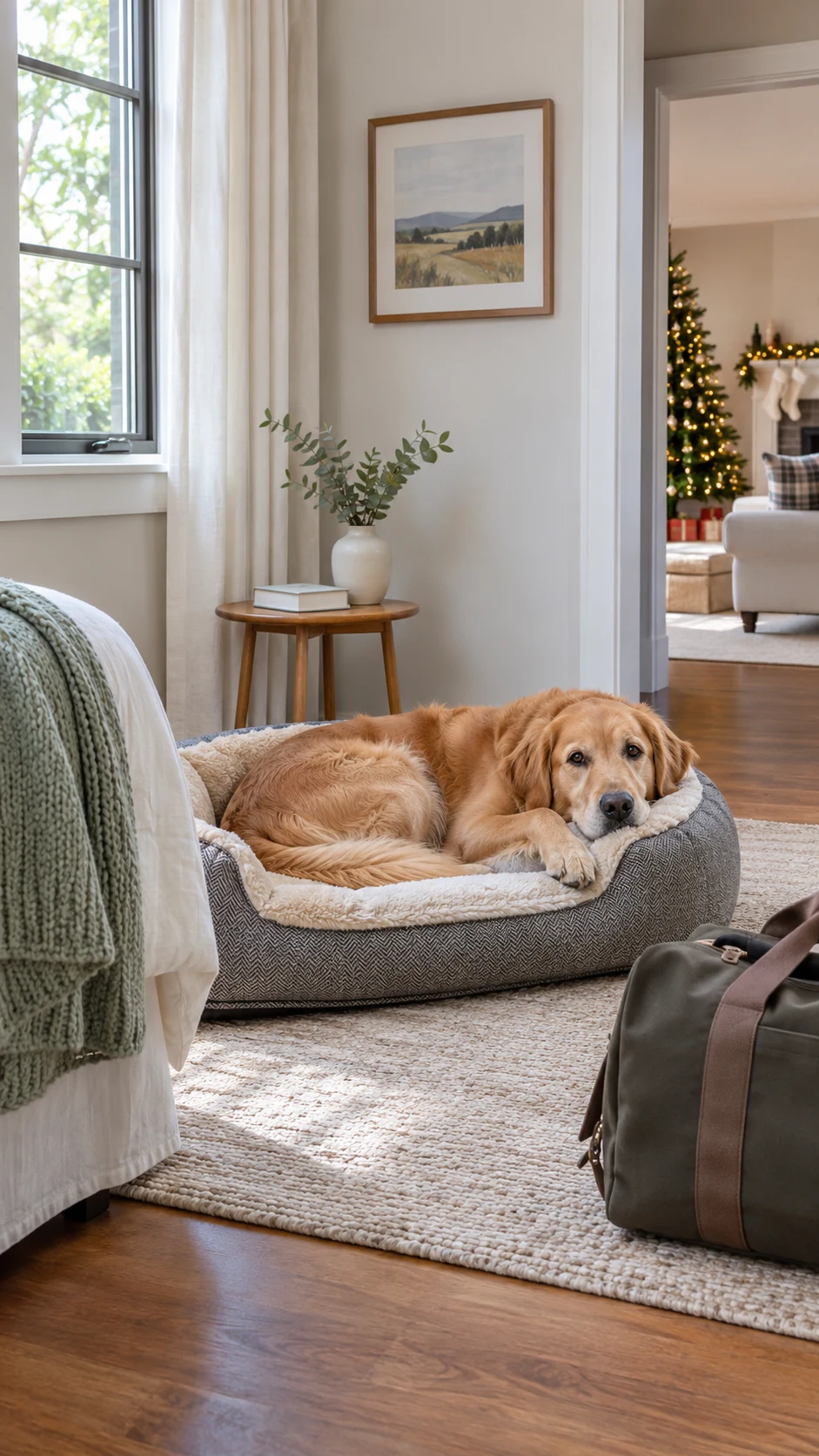
Before carrying presents inside, give your dog a supervised bathroom opportunity and bring them to the resting area you agreed on. Keep the first introductions brief. Let the dog observe rather than placing them in the middle of a group of excited visitors.
Show everyone where the dog’s food, leash, and bed belong. Choose a clear rule for doors: the dog is secured before luggage, shopping, or guests move through an open entrance. Ask one adult to check that rule during busy arrivals. A sign beside the handle can help visitors remember.
If other pets live in the house, discuss introductions and separate spaces with the hosts in advance. Do not assume the animals will share bowls, beds, or resting areas. Supervise carefully and use separation when needed. Children also need an adult to help them respect a dog who is resting or moving away.
Keep Christmas food and decorations out of reach
Explain the household food rule before the meal: guests should ask you rather than sharing scraps. Keep your dog’s usual meal ready so the dinner schedule does not depend on when everyone finishes eating. Put food gifts and used plates somewhere the dog cannot reach, including overnight.
Use our existing guide to Christmas foods dogs should not eat for the food-specific precautions. If flowers or seasonal greenery are arriving with guests, check our Christmas plant safety guide before deciding where to display them.
Keep an eye on the room as it changes. Wrapping paper, ribbons, bags, and dropped food accumulate during celebrations, even if the space was tidy when you arrived. Do a quick floor check before the dog comes back into the room. Give them a quiet alternative when the gathering becomes too busy.
Adjust for winter weather
Check the forecast for your route as well as your destination. Pack the walking equipment your dog already tolerates, and leave extra time to dry them after wet outings. Keep the sleeping space away from drafts and somewhere your dog can rest without constant foot traffic.
For snowy or treated walking surfaces, use our winter paw-care guide to plan for salt and ice. Our broader winter dog-care tips cover seasonal comfort. These guides support the travel plan; they do not replace watching your own dog’s response to unfamiliar conditions.
If you are flying or crossing borders
Speak with the airline before booking and confirm that your particular dog and carrier can travel on your intended route. Ask about cabin versus cargo arrangements, connection policies, paperwork, and temperature restrictions. Recheck the rules for the return journey too.
USDA APHIS explains that international requirements depend on the destination and may involve vaccination, testing, a health certificate, and endorsement. Contact an accredited veterinarian early and check the current destination requirements. Do not assume one certificate deadline works for every country or trip. For interstate travel, ask your veterinarian whether a certificate is required for your route.
For dogs with breathing problems, other health concerns, or significant travel distress, discuss whether flying is appropriate before paying for the ticket. This article is an initial planning guide; airline and destination requirements must be checked for your actual journey.
Optional travel supplies to consider
Affiliate disclosure: As an Amazon Associate, DogsDailyCare earns from qualifying purchases. We have not personally tested these products. Check the selected model, sizing, seller and current availability before buying.
- Sleepypod Clickit Sport car harness: A vehicle-restraint option to assess against the manufacturer’s fit and installation instructions. The linked listing is the X-Large, Robin Egg Blue variant; it is not a universal fit. Check the manufacturer’s breed restrictions and the Center for Pet Safety’s size-specific certification information. Find on Amazon.
- Ruffwear Quencher collapsible dog bowl: The linked option is Medium in Coastal Mountains. A packable bowl can make it easier to offer water at planned stops; empty it and let it dry before packing. It is not a sealed water container. Find on Amazon.
- Petmate Sky Kennel: The linked listing is the 28-inch version. Measure your dog and check the selected model’s interior space rather than choosing by weight alone. Confirm acceptance with your airline; this is not a claim of universal airline approval or independent vehicle crash certification. Find on Amazon.
Existing equipment that fits the trip may be all you need. For other everyday items, browse our dog-product guide. Inclusion in a general catalog does not establish suitability for vehicle restraint.
Frequently Asked Questions
Should I feed my dog immediately before leaving?
Ask your veterinarian for a plan if your dog experiences motion sickness or has special feeding needs. Avoid assuming that a long fast is appropriate for every dog. Keep the agreed meal and medication instructions with your travel bag.
Can my dog ride on a passenger’s lap?
Use appropriate, correctly installed restraint equipment instead. A passenger’s arms are not a substitute for securing the dog, and a loose dog can distract the driver.
What if my relatives want to give treats?
Set aside a small allowance from treats your dog already tolerates and ask guests to check with you first. Keep the food-safety rule the same for everyone, including children and visitors arriving later.
What should I do if my dog becomes ill away from home?
Contact a local veterinary clinic and share the medical records and medication list you packed. Seek emergency help promptly for trouble breathing, collapse, or suspected poisoning. Do not postpone needed care until the drive home.
Before you close the front door
Check the dog, the restraint, the accessible travel bag, and the accommodation details. Make sure another adult understands the plan if you are traveling together. Keep the first day simple enough that you can respond to your dog rather than racing the itinerary. For the wider routines behind a comfortable trip, explore more DogsDailyCare guides.
Sources and further reading
- ASPCA: Travel Safety Tips — vehicle precautions and preparation.
- Cornell University College of Veterinary Medicine: Traveling Safely With Your Dog — restraint, acclimation, and travel-related concerns.
- USDA APHIS: Pet Travel Process Overview — destination-specific international planning.