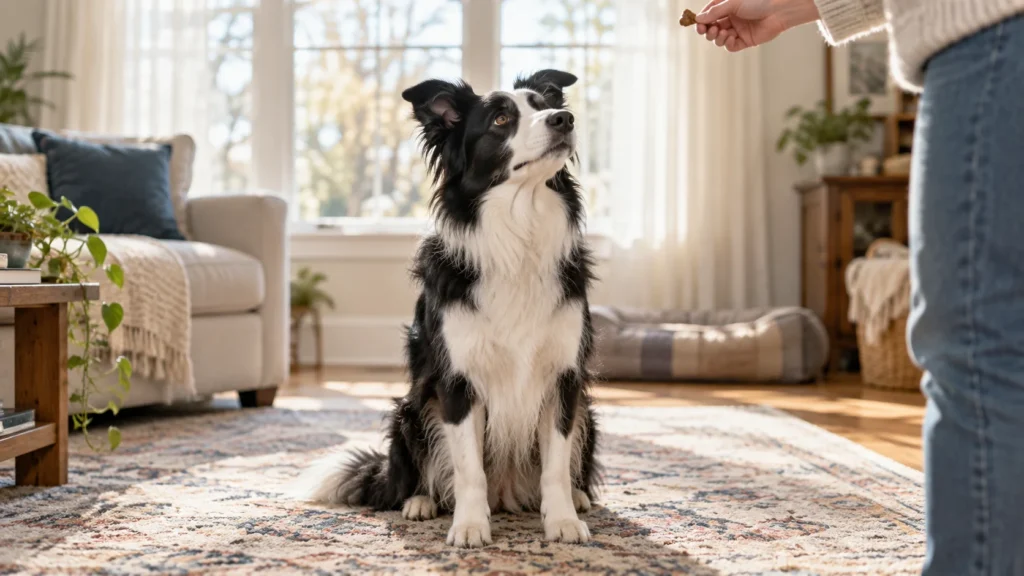
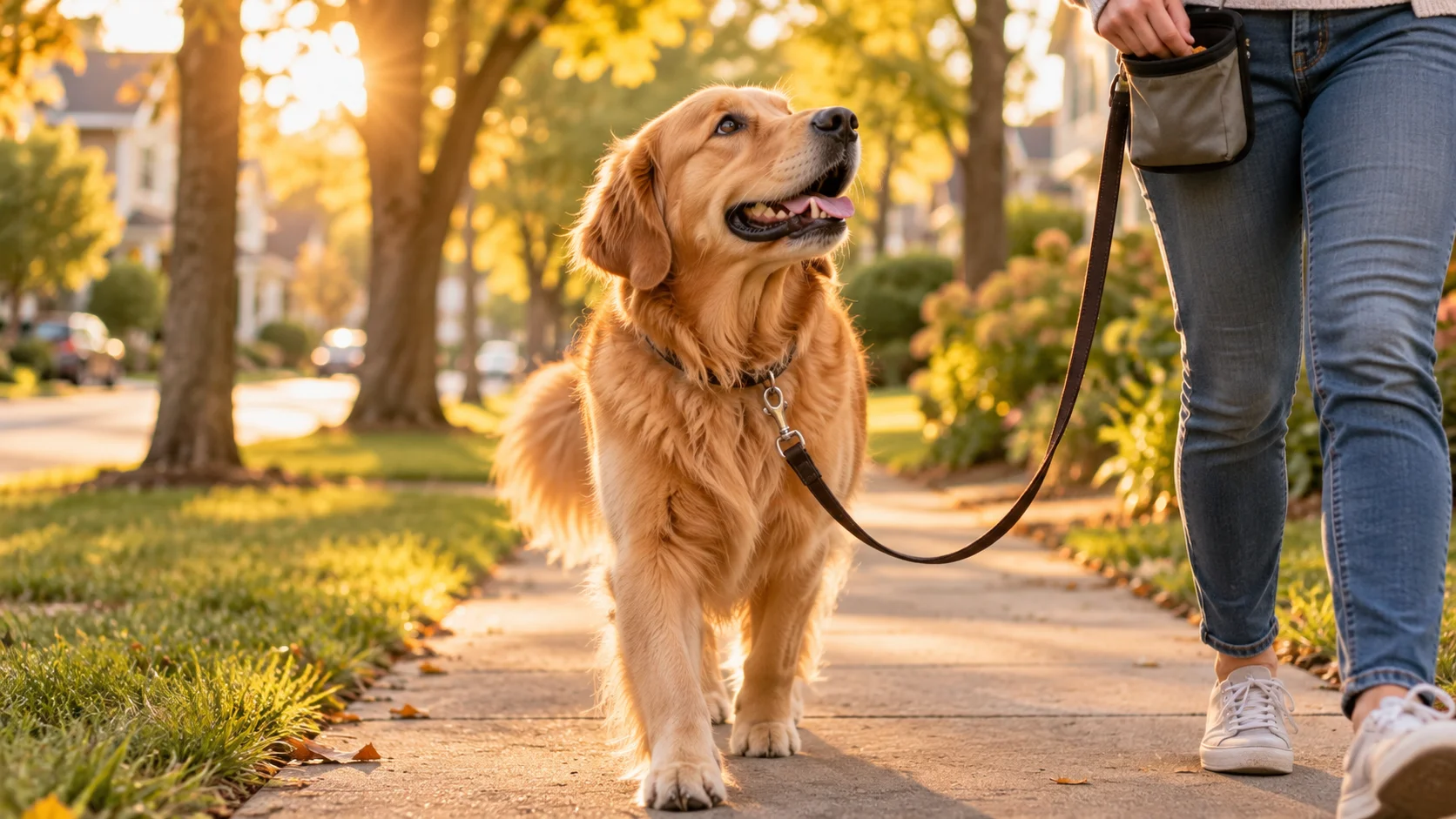
If your daily walk feels more like a tug-of-war than a stroll, you are not alone. Pulling, lunging, and zigzagging are some of the most common problems new dog owners face, and they are almost always fixable. Leash training for beginners comes down to a simple idea: teach your dog that walking beside you is the way to get where they want to go, and make that choice rewarding.
This step-by-step guide covers the equipment you need, a practical training plan that starts at home, and solutions to common walking problems. It works for puppies and adult dogs alike, and it relies on rewards rather than corrections.
Table of Contents
Quick Answer: How Do You Leash Train a Dog?
Start in a quiet place and help your dog get comfortable wearing a leash. Reward your dog for walking beside you with a loose leash, and stop moving whenever the leash goes tight. Begin indoors, then add distractions slowly. Keep sessions short, stay consistent, and reward often, especially early on.
When Can You Start Leash Training?
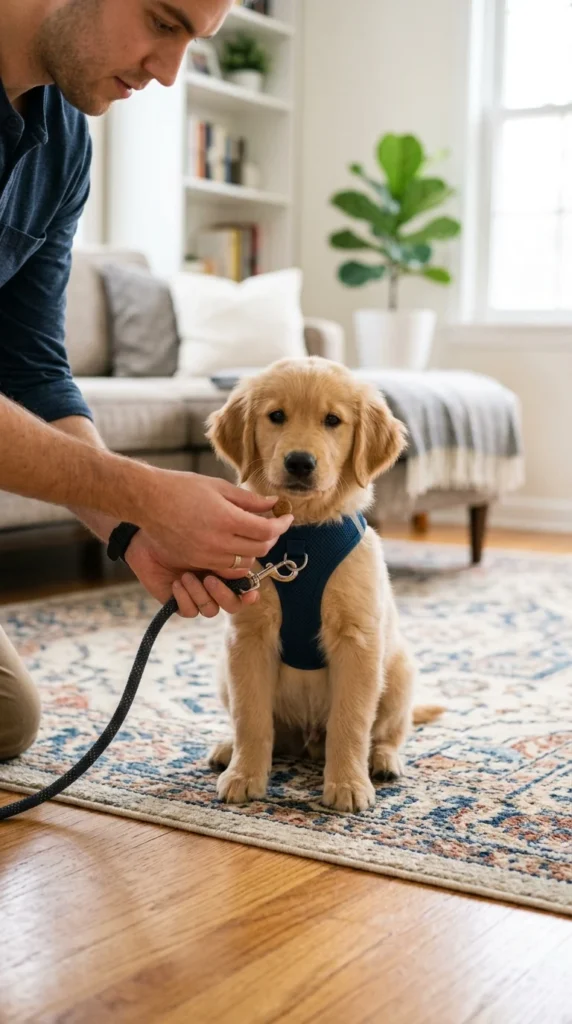
You can start leash training a puppy at around 8 weeks old, when most puppies come home. At that age, the goal is simply to let your puppy get used to a collar or harness and leash, not to expect perfect walking. Adult dogs can learn too, though dogs with years of pulling habits may need more patience.
Puppies who have not finished their vaccinations should stay away from high-risk areas such as dog parks and busy public sidewalks. Ask your veterinarian where it is safe to walk, and practice in your home, driveway, or backyard in the meantime.
Gear for Beginners
You do not need much, but a few good choices make training easier.
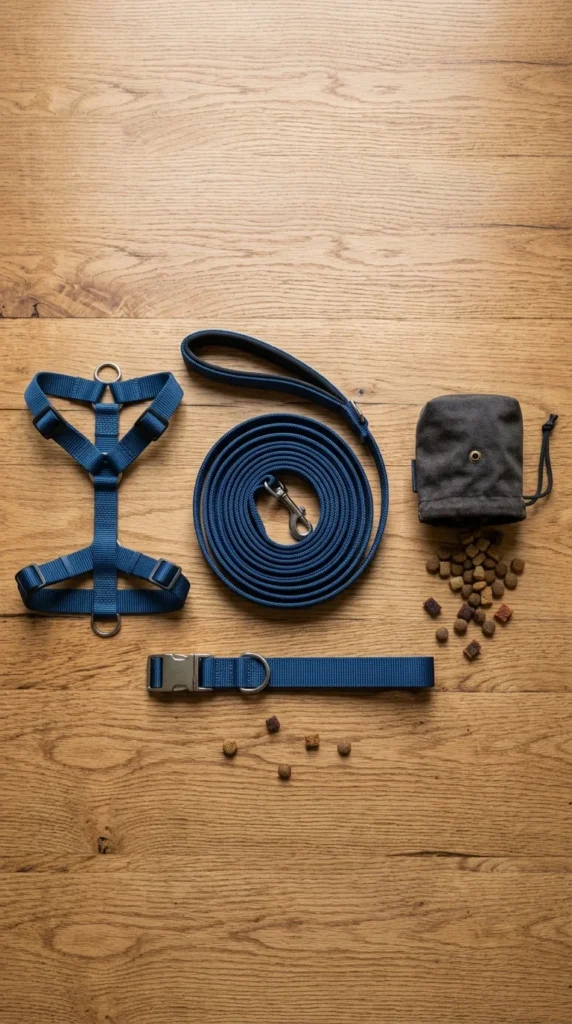
- A standard 4- to 6-foot leash. A fixed-length leash gives you clear communication and control. Retractable leashes encourage pulling and make it hard to teach a consistent rule, so most trainers avoid them for training.
- A comfortable, well-fitted collar or harness. A flat buckle collar works for many dogs. If your dog pulls hard, a front-clip harness may help reduce the pulling while you train. Standard back-clip harnesses can sometimes encourage pulling.
- Small, tasty treats. Use soft, pea-sized rewards your dog can eat quickly. Treats should be more appealing than the distractions around you.
- A treat pouch. It keeps rewards handy so you can pay your dog at the right moment.
Recommended leash: PetSafe Nylon Dog Leash (6 ft) — a standard fixed-length leash for loose-leash practice. Choose an appropriate width for your dog.
Recommended front-clip harness: PetSafe Easy Walk Harness — a front-attachment option for dogs that pull. Check the fit and size before using it.
Recommended treat pouch: PetSafe Treat Pouch Sport — keeps small training rewards within easy reach.
Equipment helps, but it does not replace training. Skip tools designed to cause discomfort or pain, since they can create fear and damage the bond with your dog. If you are unsure about gear, ask your veterinarian or a qualified positive-reinforcement trainer.
Leash Training for Beginners: Step by Step
Step 1: Get Your Dog Comfortable with the Leash
Let your dog sniff the leash, then clip it on at home while you give treats and praise. Let your dog drag it around briefly under supervision, then pick it up and hold it. The goal is for your dog to think “leash means good things.” Keep these first sessions short and cheerful.
Step 2: Teach Your Dog Where to Walk
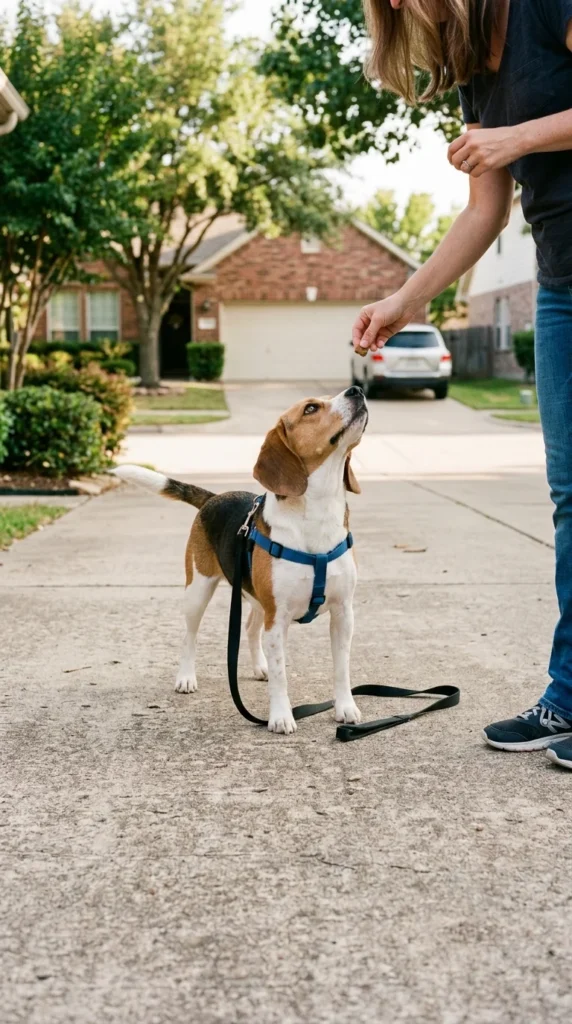
Pick a side, usually your left or right, and reward your dog whenever they are next to you. Hold treats at your side so your dog learns that the reward happens right by your leg. Start with a few steps in a quiet room, rewarding every step or two at first.
Step 3: Reward a Loose Leash
Walk forward with your dog on a loose leash. When your dog stays beside you or the leash hangs in a relaxed “J” shape, mark the moment with praise and give a treat. Try to reward before the leash gets tight, so your dog learns what you want, not just what you do not want.
Step 4: Stop When the Leash Tightens
If your dog pulls and the leash goes tight, stop walking. Stand still like a tree, without yanking or leaning. The moment your dog loosens the leash, even a little, praise, then continue walking. Your dog learns that pulling gets them nowhere, while a loose leash gets them moving.
Step 5: Change Direction
If your dog gets distracted or forges ahead, calmly turn and walk the other way. When your dog catches up and walks beside you, reward them. This teaches your dog to keep an eye on you and follow your lead.
Step 6: Build Up Distance and Distractions
Once your dog walks well in a quiet room, move to the hallway, backyard, or driveway, then quiet streets. Increase distractions gradually. If your dog suddenly struggles, go back to an easier setting and rebuild.
Step 7: Vary Your Rewards
As your dog gets better, gradually ask for more steps between treats. Mix it up, such as 3 steps, then 1, then 5, then 2, rather than always asking for more. Keep rewarding often, and add other rewards like sniff breaks or permission to greet a friend.
Optional training book: The Power of Positive Dog Training by Pat Miller offers more reward-based training exercises for everyday manners.
How Long Should Training Sessions Be?
Short and frequent beats long and exhausting. Aim for sessions of about five to ten minutes, especially with puppies, and end on a success. Loose-leash walking is a skill that builds over weeks, so it is normal for progress to be uneven. Practice daily, and be consistent: every time your dog pulls and gets rewarded by moving forward, it sets training back.
Solving Common Leash Problems
My Dog Pulls Constantly
Go back to a quieter place, use higher-value treats, and reward more often. Make sure everyone who walks your dog follows the same rule of stopping when the leash goes tight. A front-clip harness may help while you train.
My Dog Wants to Sniff Everything
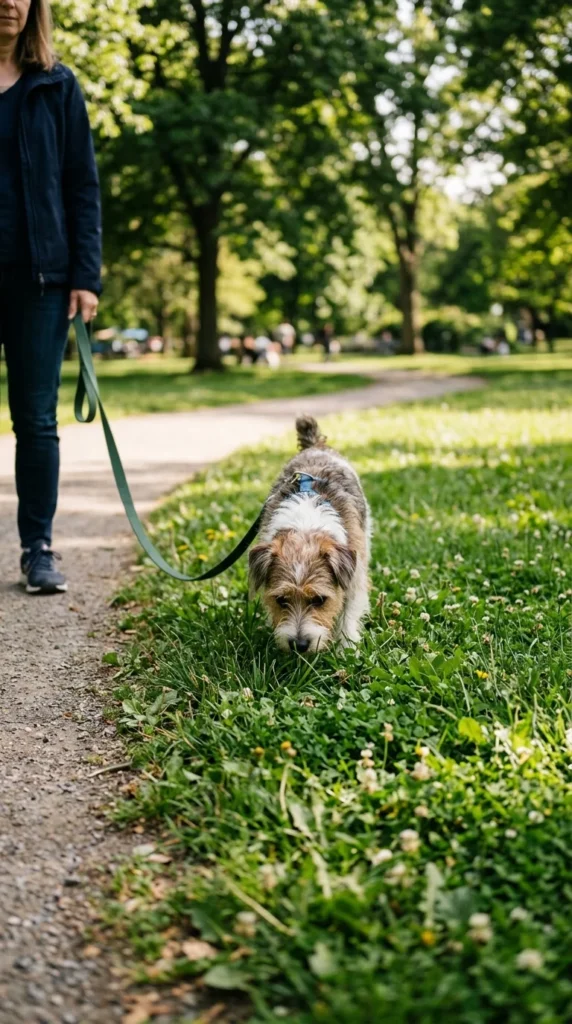
Sniffing is natural and mentally enriching, so do not ban it. Instead, build it in as a reward: “walk nicely for 20 steps, then you can sniff.” Many owners also set aside a relaxed “sniffari” walk where the dog sets the pace.
My Dog Stops or Refuses to Walk
Do not drag your dog. Stay calm and make walking rewarding: take a few steps back, use a happy voice, and reward movement. If your dog is a puppy, they may be overwhelmed, so shorten the outing or carry them past the scary spot. If a normally eager dog suddenly refuses to walk or seems to be in pain, contact your veterinarian.
My Dog Lunges at Dogs, People, or Squirrels
Increase distance from the trigger, reward calm behavior, and avoid close encounters while you train. Cross the street or turn around when needed. If your dog barks, lunges, or growls out of fear or frustration, work with a qualified trainer or a veterinary behaviorist rather than trying to push through on your own.
My Dog Bites the Leash
This is common in puppies. Give a toy or treat to hold or redirect, and stop moving when the chewing starts, then reward once the leash is dropped. Keep sessions short and fun.
Leash Training Mistakes to Avoid
- Yanking or jerking the leash. It can hurt your dog’s neck and create fear of walking.
- Letting your dog pull sometimes. Inconsistent rules slow learning.
- Starting in a busy place. Build skills where it is easy first.
- Forgetting to reward. Good behavior that goes unrewarded fades.
- Using retractable leashes for training. They teach dogs that pulling extends their range.
- Skipping exercise. A dog with lots of pent-up energy finds it harder to focus, so play or run in a safe space before a training walk.
- Getting frustrated. If you feel impatient, end the session and try again later.
Walk Safety Basics
- Make sure your dog wears identification and that tags and microchip details are up to date.
- Check pavement temperature in warm weather, since hot surfaces can burn paws.
- Bring water on longer walks.
- Keep puppies away from high-risk areas until your vet says vaccinations are sufficient.
- Check that the collar or harness fits well and that your dog cannot slip out.
AKC Reunite, Loose Leash Walking Tips: https://www.akcreunite.org/looseleashwalking/
Frequently Asked Questions
How long does it take to leash train a dog?
It varies. Many dogs show improvement within a couple of weeks of daily practice, but reliable walking around distractions can take longer. Age, breed, temperament, and consistency all matter.
Should my dog walk on the left or right?
Either is fine. Pick one side and stay consistent, especially while your dog is learning.
Is a harness or collar better for leash training?
It depends on your dog. A flat collar works well for many dogs, and a front-clip harness can help reduce pulling. Ask your vet or trainer about the best fit for your dog’s body and habits.
Can I leash train an older dog?
Yes. Adult and senior dogs can learn new skills, though undoing a long habit of pulling may take more time and patience.
Do I have to use treats forever?
No. Rewards become less frequent as skills grow, but occasional treats, praise, and real-life rewards such as sniffing keep good walking strong.
When should I hire a trainer?
Consider help if your dog is fearful, lunges at people or dogs, shows aggression, or if you are not making progress. Check with your vet first if the behavior is new or you suspect pain.
Final Thoughts
Leash training for beginners is about patience, repetition, and rewards. Start somewhere quiet, reward your dog for staying close, stop when the leash goes tight, and build up distractions slowly. Your next step is to practice a five-minute session at home today, with treats ready, and celebrate every loose-leash step.
This article is for general education and is not a substitute for veterinary or professional training advice. If your dog shows fear, aggression, or sudden changes in walking behavior, consult your veterinarian or a qualified trainer.