
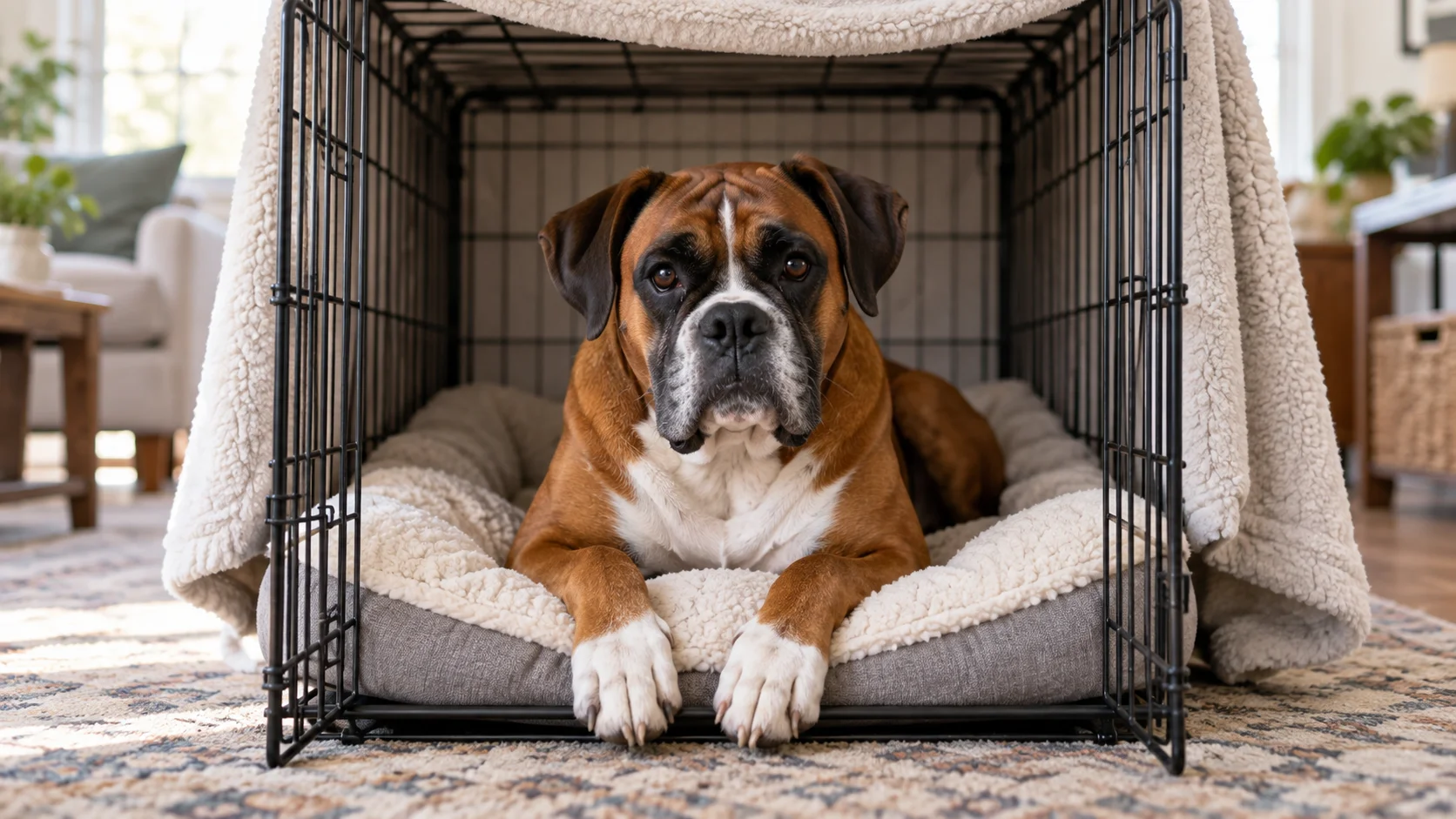
Crate training is usually talked about in terms of puppies, but plenty of adult dogs need to learn it too. You may have adopted a rescue, you may be preparing for travel or a recovery after surgery, or you may simply want your dog to have a quiet place of their own. The good news is that crate training an adult dog is very doable. It simply takes a slower, more patient approach than it does with a puppy.
This guide explains how adult dogs differ, how to introduce the crate step by step, how long your dog can stay inside, and how to spot the signs that a crate may not be the right fit. The goal is a dog who walks in on their own because it feels safe, not one who is forced.
Table of Contents
Quick Answer: Can You Crate Train an Adult Dog?
Yes. Most adult dogs can learn to accept a crate when it is introduced gradually with treats, meals, and chews, and never used as punishment. Expect weeks or even months rather than days. Dogs with anxiety, a stressful crate history, or signs of cognitive decline may need help from a veterinarian or behavior professional.
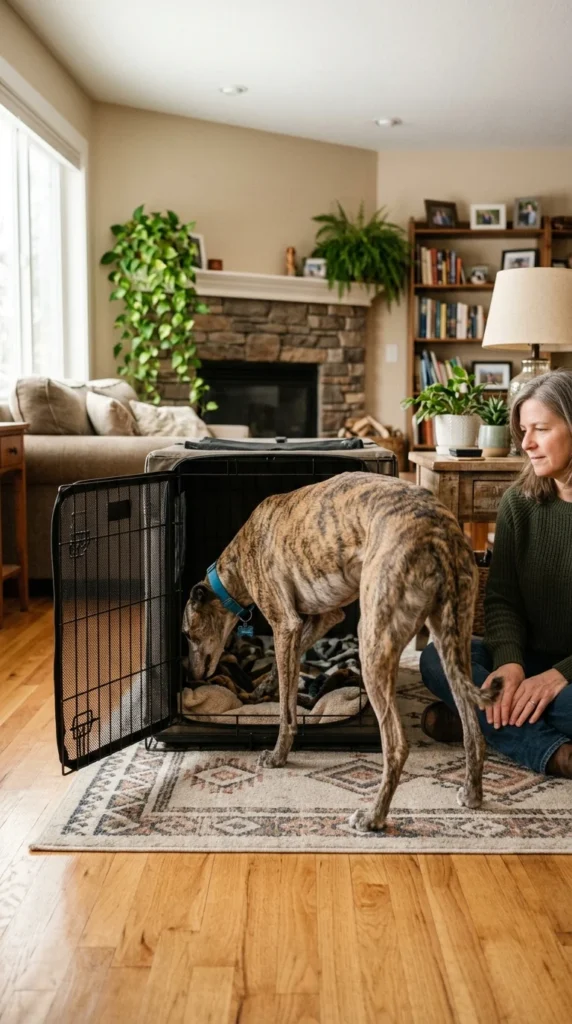
How Crate Training an Adult Dog Differs from a Puppy
Puppies are usually blank slates, while adult dogs arrive with habits, preferences, and sometimes baggage. A few key differences:
- Longer timeline. Adult dogs often need more time to change habits and feel comfortable in a new space.
- Prior experiences matter. A dog who has been crated for long hours, or who has had a bad experience, may be wary or fearful.
- Better bladder control. Adult dogs can usually wait longer between breaks than puppies, but they still need regular opportunities to go out.
- Different goals. Many adult dogs are being crate trained for travel, vet visits, recovery rest, or managing a new household, not for house training.
Because of these differences, the best approach is to let your dog set the pace and never force them in.
Is Crate Training Right for Your Dog?
Most dogs can learn to use a crate comfortably, but some situations call for extra care or a different plan.
- Dogs with separation anxiety or confinement distress. Panic in a crate, self-injury, or extreme drooling and escape attempts are not something you can train through. Confining a dog in this state can make symptoms worse, so talk to your veterinarian or a veterinary behaviorist.
- Dogs with a negative crate history. Some rescues were crated for long periods in a previous home and may have a strong aversion. You may need to go much slower or consider alternatives, such as a gated room or exercise pen.
- Senior dogs with cognitive changes. A confused or frightened senior dog may hurt themselves in a crate. Ask your vet before starting.
- Dogs with joint pain or mobility problems. Entering and lying down in a crate should be comfortable, so check with your vet if your dog seems stiff or sore.
If you are unsure, a quick conversation with your veterinarian can save you and your dog a lot of stress.
Choosing the Right Crate and Setting It Up
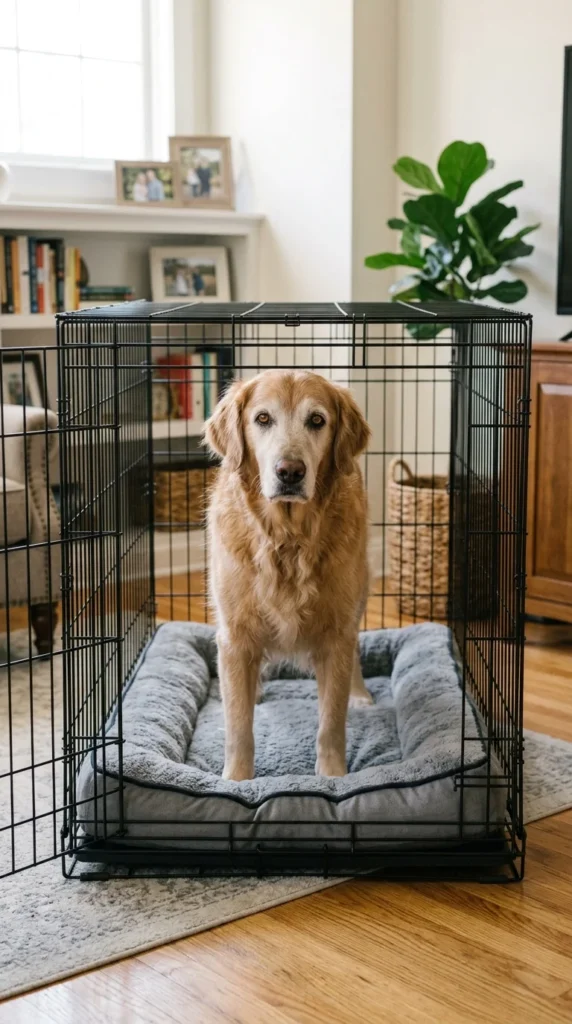
Choose a crate big enough for your dog to stand up, turn around, and lie down comfortably. Wire crates offer visibility and airflow, while plastic crates feel more enclosed and are common for travel. Many dogs like a cover over part of a wire crate for a den-like feel, though some prefer an open view, so watch what your dog likes.
Place the crate in a social spot, such as a corner of the living room, where your dog can see the family. Add a comfortable bed, and make sure the entry is easy for older dogs. Leave the door open, or remove it, at the start so the crate becomes a normal part of the room.
Crate Training an Adult Dog: Step by Step
Go slowly, and move to the next step only when your dog looks relaxed at the current one. If your dog shows signs of stress, go back a step.
- Let your dog explore. Leave the crate open and let your dog sniff it at their own pace. Do not push or lure them with pressure.
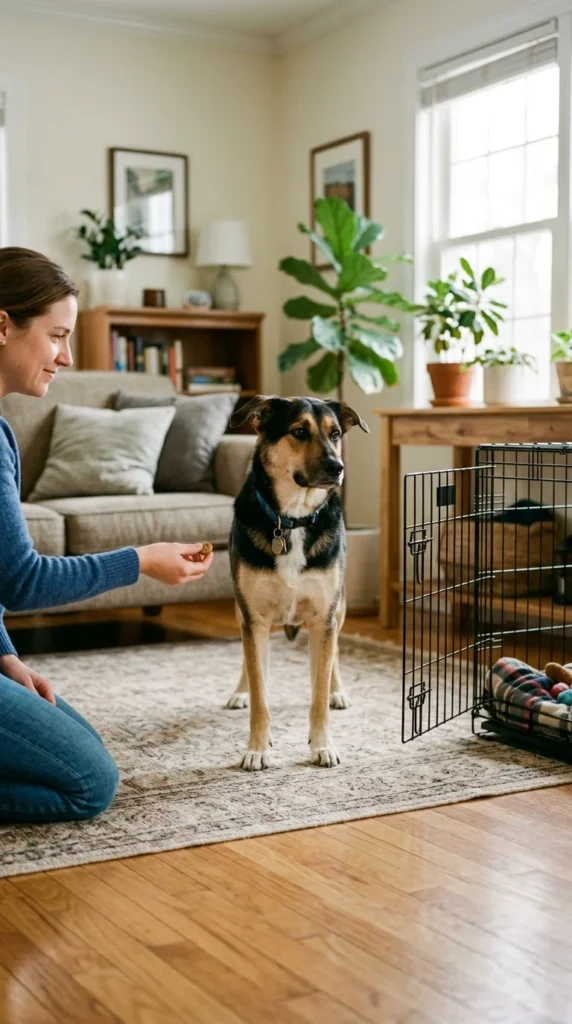
- Make it rewarding. Toss treats near the entrance, then just inside, then toward the back. Praise any interest and let your dog leave whenever they want.
- Feed meals near and then in the crate. Gradually move the bowl inside so your dog links the crate with something good.
- Add a cue. Say a short word, such as “crate” or “bed,” as your dog steps in, then reward.
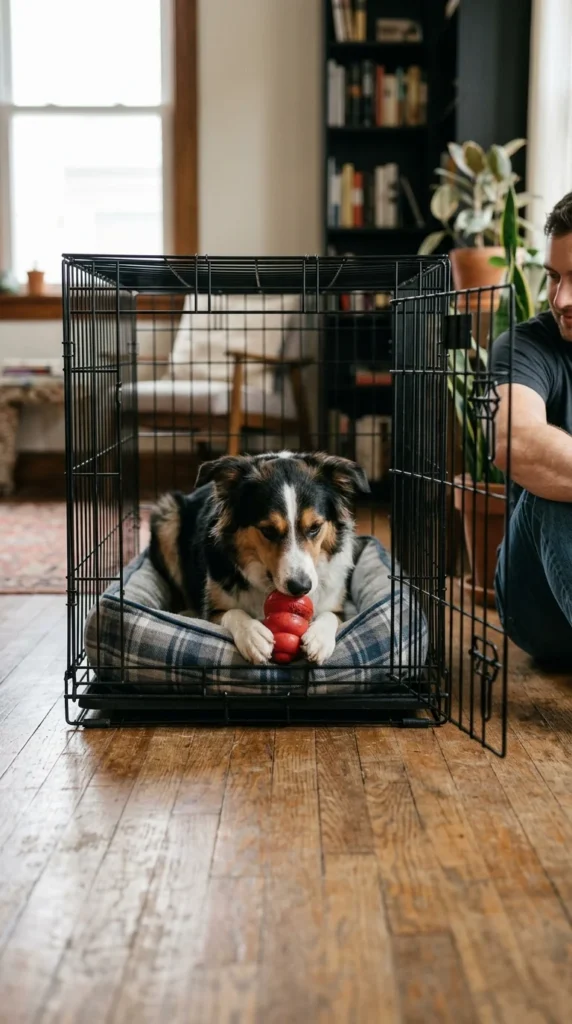
- Introduce a long-lasting chew. Offer a stuffed toy or chew inside the crate while the door is still open, and supervise at first.
- Close the door for a moment. Shut it for a few seconds while your dog is busy with a treat, open it, and calmly let them out. Build to a minute or two.
- Stay nearby, then step away. Gradually extend the time and add short periods where you move out of sight, returning quietly before your dog gets upset.
- Increase duration slowly. Work up in small steps, such as 5 or 10 minutes to half an hour while you are home, long before leaving the house.
Let your dog out before they become bored or unhappy, especially early on. Ending on a good note builds trust.
How Long Does It Take?
There is no set timeline. Many adult dogs need weeks, and dogs with a stressful history may need months. Progress is rarely a straight line, so celebrate small wins, like walking in on their own, relaxing with the door closed, or settling with a chew.
How Long Can an Adult Dog Stay in a Crate?
A healthy, house-trained adult dog can generally manage a few hours at a time, and some sources put the upper limit around four to six hours during the day. Treat that as a ceiling, not a goal, and keep it much shorter when your dog is just learning. Senior dogs, dogs with medical conditions, and dogs who drink or urinate a lot may need more frequent breaks, so ask your vet what is right for yours.
Many dogs also sleep in a crate overnight, which is different from being crated while awake and alone. Even so, check in with your veterinarian if your dog has trouble holding it through the night.
A crate should never be a full-day solution. Dogs need exercise, social time, and regular bathroom breaks, so arrange a midday visit from a family member, a walker, or daycare if your schedule is long.
Crate Training an Adult Dog at Night
- Place the crate near your bed at first so your dog feels less alone, then move it later if you prefer.
- Give a final potty trip and some quiet time before bed.
- Use a comfortable bed, and make sure the room is a comfortable temperature.
- If your dog whines, check whether they need to go out. If they do not, wait for a pause before opening the door, but never leave a dog in obvious panic.
Purina, Dog Training: How to Crate-Train an Older Dog: https://www.purina.com/articles/dog/behavior/training/how-to-crate-train-adult-dog
What to Do If Your Dog Whines or Refuses to Enter
Refusing to Go In
This is common at the start. Go back to tossing treats near the crate, make it more inviting, and avoid pushing or carrying your dog in. If they remain fearful, shorten the steps and take more time.
Whining or Barking Once Inside
Mild fussing is normal. Ask yourself whether your dog needs a bathroom trip, is bored, or is genuinely scared. If it continues for more than a minute or so, your dog may not be ready for that length of time yet, so go back to an easier step. Try to reward calm moments and avoid opening the door only when your dog is protesting loudly.
Signs of Real Distress
Stop and get help if your dog shows any of these signs:
- Frantic scratching, biting the crate, or trying to escape
- Heavy drooling, panting, or trembling
- Injuring themselves
- Soiling the crate despite being house trained
- Panic that does not ease with gradual training
These can point to separation anxiety or confinement distress, which need professional support.
Common Crate Training Mistakes with Adult Dogs
- Using the crate as punishment. It should always be a safe, positive place.
- Only crating when you leave. The closed door then predicts your departure. Crate your dog at other times too, while you are home.
- Rushing the process. Jumping from minutes to hours can make dogs scared.
- Big goodbyes and hellos. Keep comings and goings calm.
- Ignoring past history. If your dog was crated for long hours before, go especially slowly.
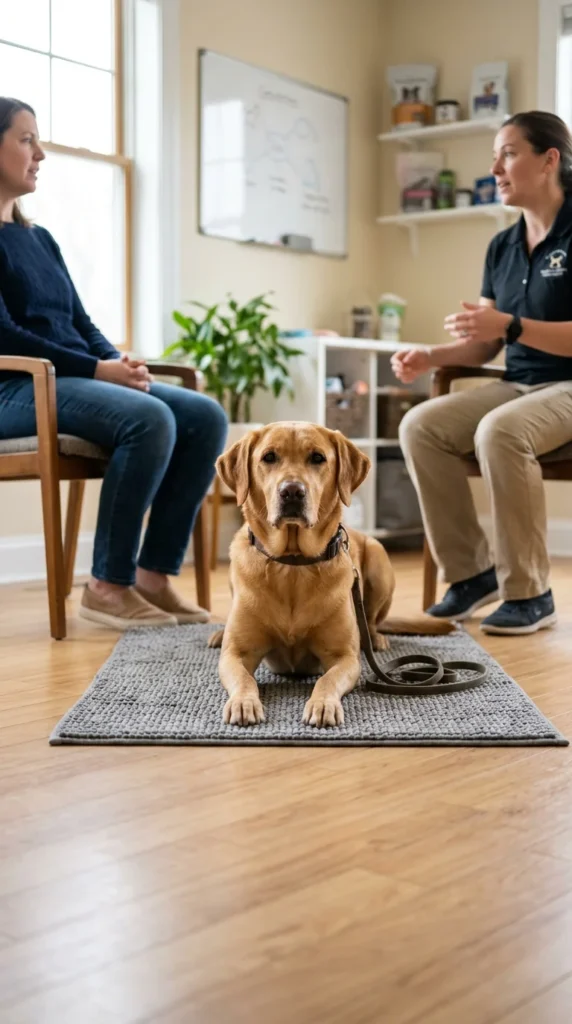
- Forcing a dog who panics. If the crate is not working, ask a professional rather than pushing on.
- Leaving unsafe items inside. Remove anything that could be swallowed, and supervise new chews until you know how your dog handles them.
When Can You Give More Freedom?
Crate training is not meant to last forever for every dog. Once your dog is calm, reliable, and comfortable, you can gradually allow more freedom, starting with short periods in a dog-proofed room. Many dogs keep using their crate by choice as a safe place to rest, which is a good sign that training worked.
Frequently Asked Questions
Is it too late to crate train an older dog?
No. Many older dogs learn to use a crate, though it can take more time. Check with your vet first if your dog is a senior, has health issues, or has never been crated.
How do I crate train a rescue dog?
Find out what you can about your dog’s history, go slowly, and let your dog choose to enter. If your rescue seems fearful of the crate, consider a gated room or exercise pen, and seek advice from a trainer or veterinary behaviorist.
Should I put my adult dog’s crate in the bedroom?
Many owners do for the first few weeks, since it helps dogs settle in a new home. You can move it later.
What if my dog cries every time I leave?
Crying right after you leave can be a sign of separation distress rather than a crate problem. Ask your veterinarian or a veterinary behaviorist for help rather than relying on the crate.
Can I crate my adult dog while I’m at work?
Some dogs manage a few hours, but a full workday is too long for most. Arrange a midday break, a walker, or daycare, and build up gradually.
Do I need to crate train a house-trained dog?
Not always, but it is a useful skill for travel, vet visits, and recovery rest, so many owners find it worth teaching.
Final Thoughts
Crate training an adult dog is about patience and choice. Make the crate a pleasant place, go slowly, respect your dog’s history, and get professional help if you see real distress. Your next step is to set up the crate in a quiet corner with the door open, and let your dog explore it with a few treats today.
This article is for general education and is not a substitute for veterinary or professional training advice. If your dog shows panic, self-injury, or signs of separation anxiety, consult your veterinarian or a veterinary behaviorist.