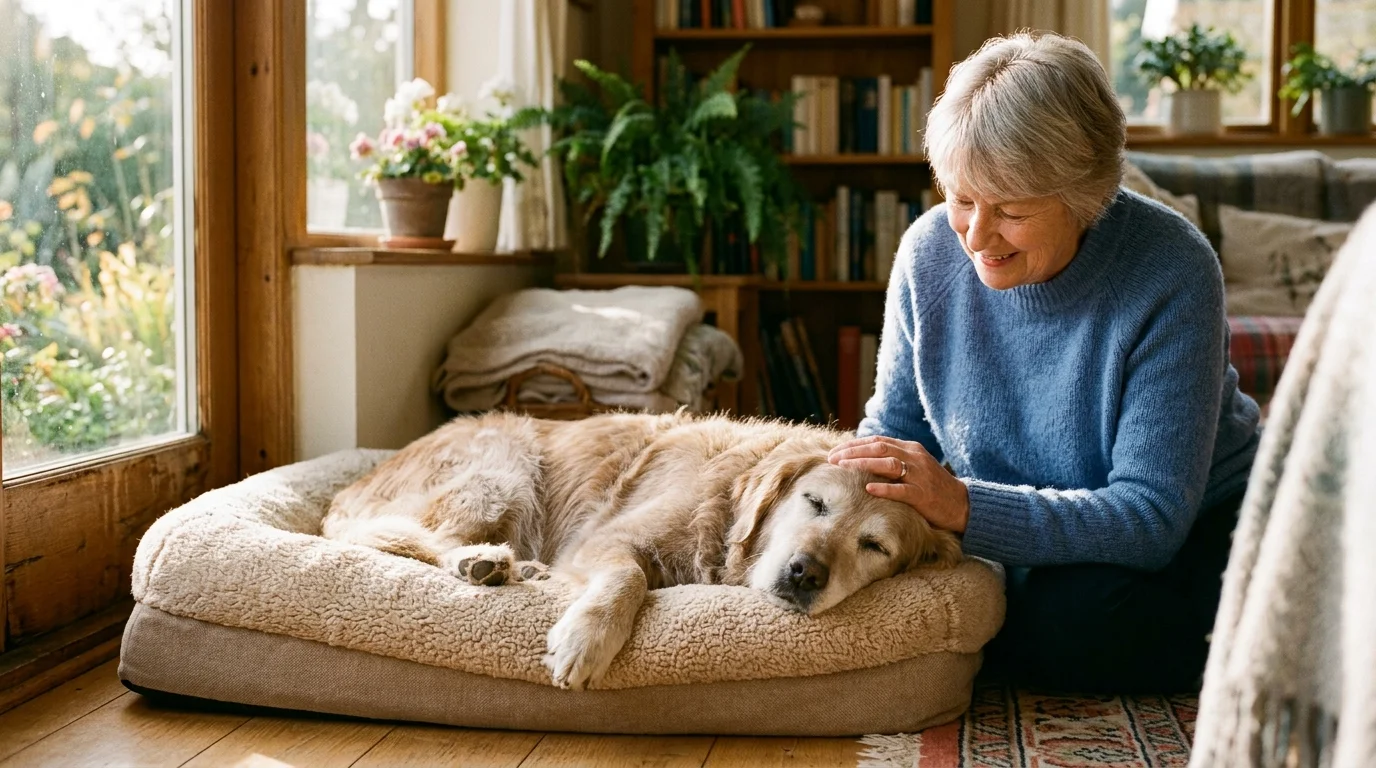
One day you notice it. Your dog takes a little longer to get up. The walks are slower. Maybe there’s some gray around the muzzle.
Senior dog care is about helping your dog stay comfortable, active, and happy as they get older. The basics are regular vet checkups, a healthy weight, gentle exercise, a home that’s easy on sore joints, and close attention to changes. Many problems in older dogs can be managed better when they’re caught early.
This guide covers when a dog is considered senior, how to adjust daily care, and which changes to watch for. You’ll also learn when to call your vet.
Table of Contents
When Is a Dog Considered Senior?
There’s no single age. It depends on your dog’s size and breed.
The American Animal Hospital Association (AAHA) describes the senior stage as roughly the final 25% of a dog’s expected lifespan. Larger dogs tend to age faster, so a large or giant breed may become senior earlier than a small breed.
Not sure where your dog fits? Ask your vet. They can tell you based on your dog’s breed, size, and health.
One more thing to know. Veterinary experts say old age is not a disease. Slowing down a little is normal. But big changes deserve attention, and many can be treated.
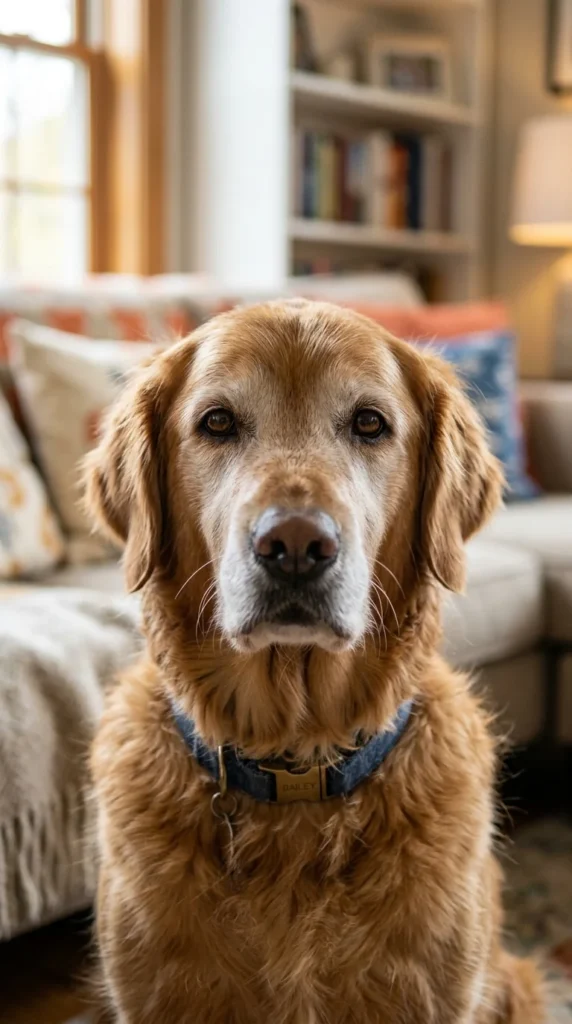
Common Changes in Older Dogs
Aging looks different in every dog. Here are changes many owners notice, and what they might mean.
- Stiffness, slow to stand, trouble with stairs: This could be joint pain or arthritis. Tell your vet about it.
- Bad breath, dropping food: This could be dental disease. Book a dental check.
- Confusion, staring, pacing at night: These may be cognitive changes. Talk to your vet.
- Weight gain or weight loss: This could be a diet or health issue. Ask your vet for a plan.
- Drinking or peeing more: This could be a health problem. Call your vet soon.
- Not hearing or seeing as well: These are often age-related sense changes. Adjust the home and go slow.
This list is for general information. Only your vet can tell you what’s causing a change.
Regular Vet Checkups
Senior dogs need more frequent vet visits. AAHA says older dogs need more frequent wellness visits, health screenings, and diagnostic tests than younger dogs, because chronic conditions become more common with age.
Many vets suggest checkups at least twice a year for senior dogs. Your vet may recommend more often if your dog has health problems.
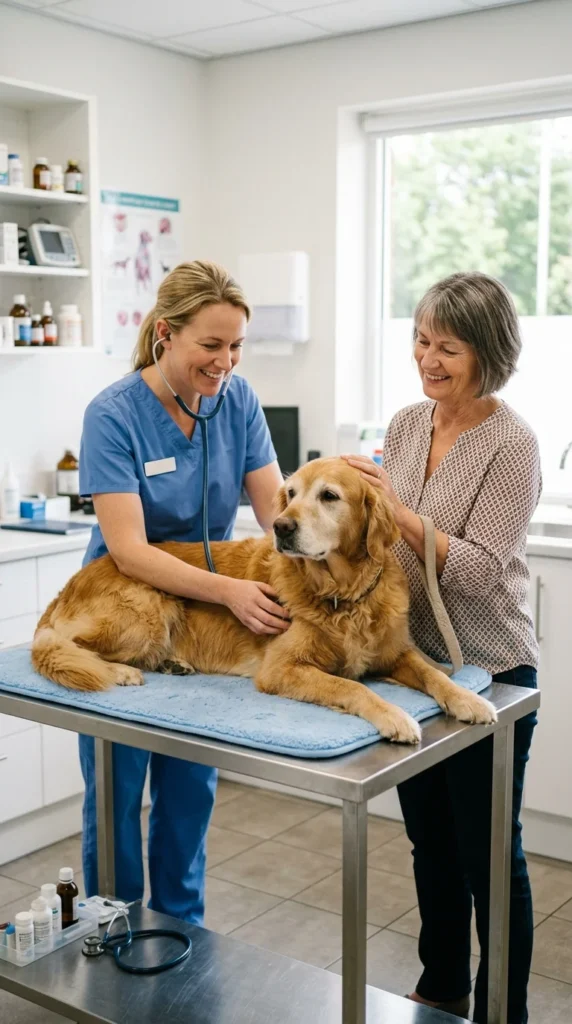
A senior exam may include:
- A full physical check, from nose to tail
- Blood and urine tests
- A look at mobility and pain
- A check for signs of memory or behavior changes
- A talk about weight, diet, and supplements
Before the visit, jot down what you’ve seen at home. Note changes in appetite, thirst, sleep, energy, and how your dog moves. AAHA encourages owners to tell the vet about mobility and activity at home, since this helps find arthritis early.
Nutrition and Weight
Extra weight makes almost everything harder for an older dog. It puts more stress on sore joints and can make it harder to move.
But older dogs can also lose weight or muscle. Both changes matter.
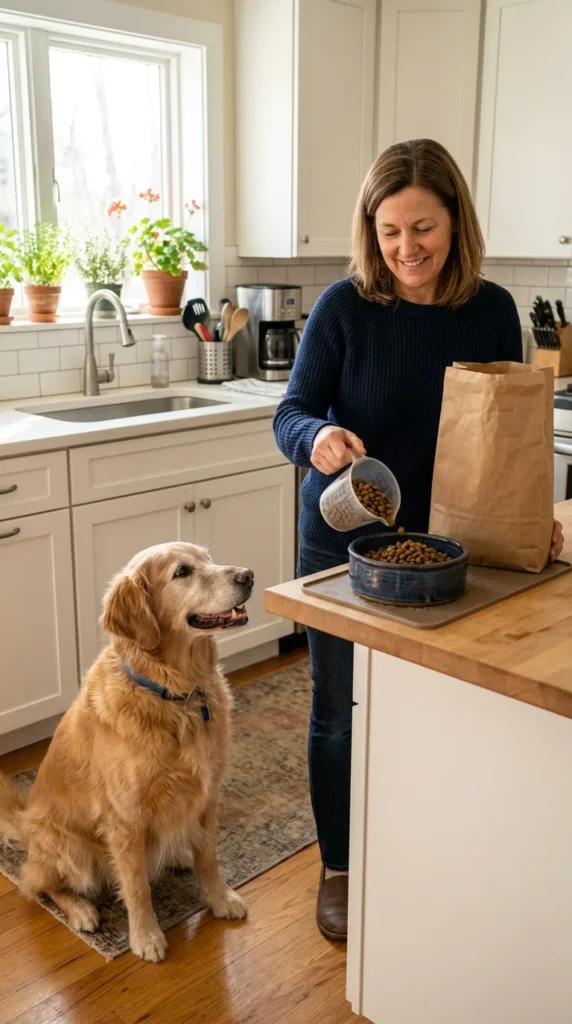
How to Support a Healthy Weight
- Ask your vet what your dog’s ideal weight is.
- Measure food instead of guessing.
- Count treats as part of the daily food.
- Weigh your dog regularly, or ask your vet to do it at visits.
- Learn to feel your dog’s ribs. You should be able to feel them under a light layer of fat, without pressing hard.
Do Senior Dogs Need Special Food?
Not always. Some senior dogs do well on their regular diet. Others need changes.
Your vet may suggest a different diet if your dog has kidney problems, arthritis, or digestive trouble. A lower-calorie food may help dogs who gain weight easily. Don’t switch foods on your own if your dog has a health condition. Ask your vet first.
Supplements
You may hear about joint supplements, fish oil, and other products. Some may help. Others may not, or may not be safe with your dog’s medicines. Always check with your vet before adding one.
Gentle Exercise
Older dogs still need to move. Movement helps keep muscles strong and joints working.
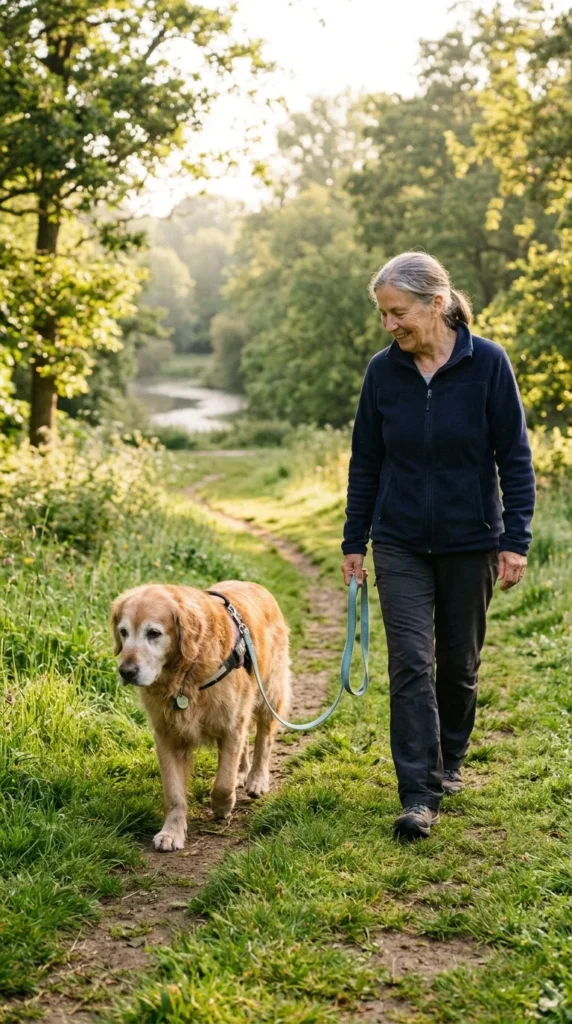
The goal is gentle and steady, not hard and fast.
- Shorter, more frequent walks. Two or three short walks can be easier than one long one.
- Softer ground. Grass is kinder to joints than pavement.
- Slow pace. Let your dog sniff. Sniffing is good exercise for the brain.
- Low-impact activity. Swimming can be great for some dogs, but ask your vet first.
- Avoid sudden, hard play. Jumping and quick turns can strain old joints.
Watch your dog during and after exercise. Heavy panting, limping, or stiffness the next day may mean you did too much.
You can also check out this: https://dogsdailycare.com/diy-dog-grooming-at-home/
Keep the Brain Active Too
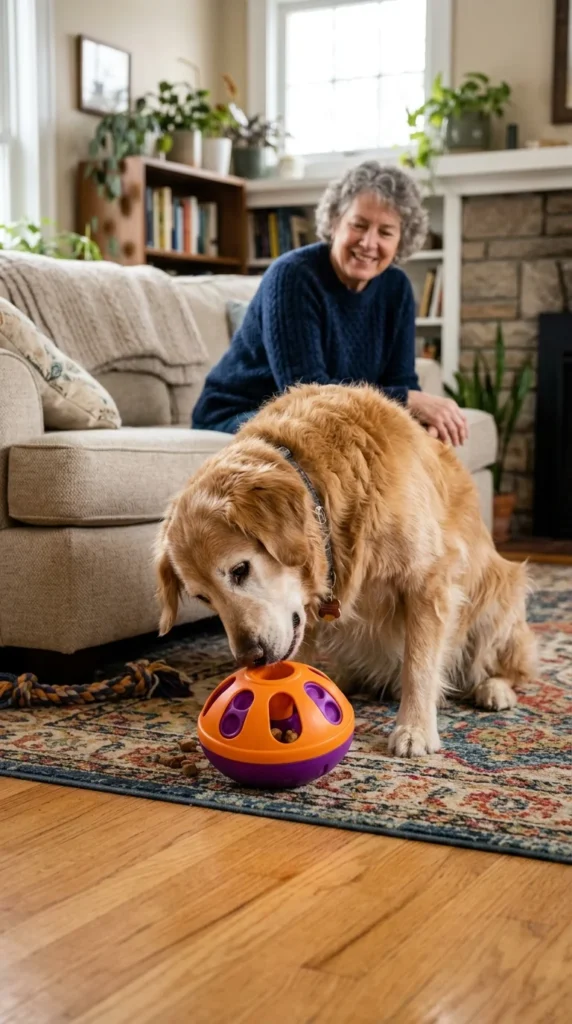
Older dogs can get bored. Mental activity helps them stay engaged.
Try:
- Food puzzles and treat-dispensing toys
- Short, easy training sessions
- New smells on walks
- Gentle games of hide-and-seek with treats
Even a few minutes a day helps. Keep it fun and low-pressure.
Make Your Home Senior-Friendly
Small changes can make a big difference for stiff, tired legs. AAHA notes that little changes in a senior dog’s home can go a long way.
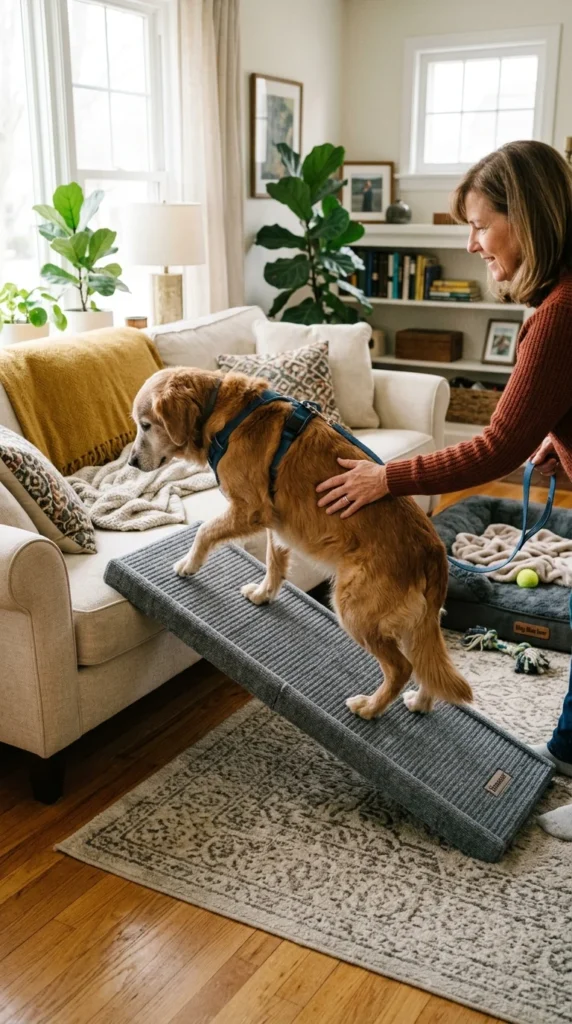
Try these:
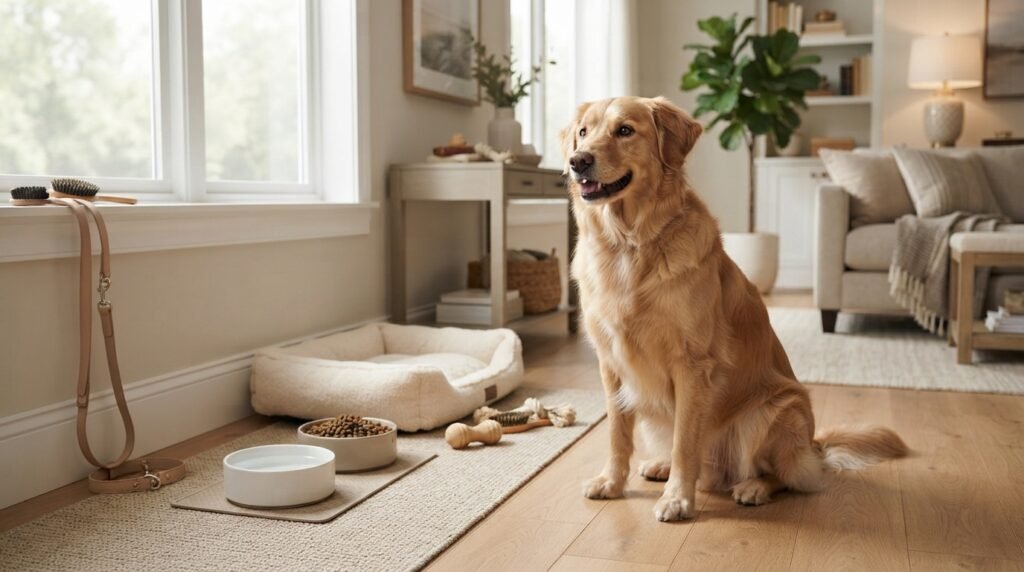
- Non-slip surfaces. Put rugs or yoga mats on slick floors.
- Ramps or steps. Use them for the car, couch, or bed.
- A supportive bed. Choose a thick, comfortable bed in a warm, draft-free spot.
- Easy access. Keep food, water, and beds on the main floor if stairs are hard.
- Night lights. These help dogs with poor eyesight.
- Raised bowls. Some dogs find them easier to reach. Ask your vet if this suits your dog.
Keep furniture in the same place. Dogs with vision trouble rely on memory to get around.
Watch for Arthritis and Pain
Arthritis is common in older dogs. It causes sore, stiff joints.
Dogs often hide pain. They may not cry or limp. Instead, you might see subtle signs:
- Slow to get up
- Trouble with stairs or jumping
- Less interest in walks or play
- Licking a joint
- Being grumpy when touched
- Sleeping more than usual
Never give your dog human pain medicine. Many, like ibuprofen and acetaminophen, can be dangerous for dogs.
If you think your dog is in pain, call your vet. AAHA notes pain can seriously harm a senior pet’s quality of life, and there are often several ways to help.
Dental Care Still Matters
Dental disease is common in older dogs. It can cause pain, and it can make eating harder.
Look out for bad breath, red gums, loose teeth, and dropping food. Ask your vet to check your dog’s mouth at each visit.
If you brush your dog’s teeth, go gently, since gums may be sore. Brushing can still help, and it’s never too late to start.
Memory and Behavior Changes
Dogs can experience cognitive decline as they age. It’s sometimes called canine cognitive dysfunction. It’s similar to dementia in people. AAHA says dogs can experience confusion, anxiety, and behavior changes with age.
Signs may include:
- Getting lost in familiar places
- Staring at walls
- Being awake and restless at night
- House-training accidents
- Not recognizing people
- More anxiety or clinginess
These signs can also come from pain or other health problems. That’s why a vet visit matters. Don’t assume it’s “just old age.”
Ways to Help at Home
- Keep a steady daily routine.
- Offer gentle, easy games.
- Make sure your dog has a comfortable place to rest.
- Be patient. Confused dogs can get scared.
Your vet may suggest treatments or diet changes that can help.
Hearing and Vision Loss
Many older dogs slowly lose some hearing or eyesight. It happens gradually, so dogs often adapt well.
You can help by:
- Approaching your dog gently, so you don’t startle them.
- Using hand signals along with words.
- Keeping the layout of your home the same.
- Using a leash in unfamiliar places.
- Tapping the floor or walking heavily so they can feel you coming.
If your dog’s eyes look cloudy, red, or painful, call your vet.
This article for dogs health: https://dogsdailycare.com/dog-dehydration-signs/
Common Senior Dog Care Mistakes
- Thinking it’s “just old age.” Many changes have treatable causes.
- Skipping vet visits. Problems often start quietly.
- Letting weight creep up. Extra pounds make everything harder.
- Stopping exercise. Gentle movement helps.
- Pushing too hard. Overdoing it can cause pain.
- Giving human medicine. It can be harmful.
- Changing food suddenly. Do it gradually and with vet advice.
- Ignoring pain signs. Dogs hide discomfort.
When to Call Your Vet
Some changes need fast attention. Call your vet right away if your dog:
- Stops eating or drinking
- Has trouble breathing
- Collapses or can’t stand
- Has a seizure
- Strains to pee or can’t pee
- Vomits or has diarrhea that won’t stop
- Seems to be in sudden, severe pain
Call soon (within a day or two) if you notice:
- Drinking or peeing much more than usual
- Big weight changes
- New lumps
- Confusion or big behavior changes
- Ongoing limping
When in doubt, call. Vets would rather hear from you early.
Quality of Life and Hard Decisions
As dogs get older, the goal becomes comfort and joy. Good days matter most.
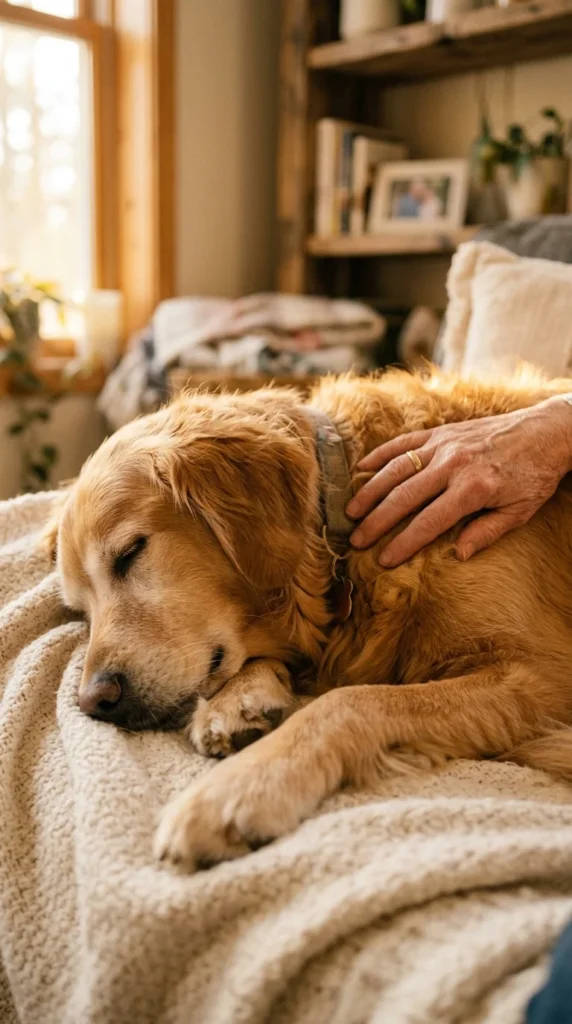
Ask yourself:
- Does my dog still enjoy food, walks, and time with us?
- Can my dog move around comfortably?
- Is my dog in pain that isn’t well controlled?
- Are there more bad days than good ones?
AAHA’s senior care guidelines include palliative and hospice care as part of caring for older pets. If you’re facing tough choices, talk to your vet. They can help you understand your options and make the kindest decision for your dog.
FAQs
At what age is a dog considered a senior?
It depends on size and breed. AAHA describes the senior stage as roughly the last 25% of a dog’s expected lifespan. Large dogs usually become seniors earlier than small dogs.
How often should a senior dog see the vet?
Many vets recommend at least twice a year. Older dogs can develop health problems quickly, so more frequent checks help find issues early. Your vet can suggest the right schedule.
How much exercise does a senior dog need?
It varies by dog. Most seniors do best with gentle, regular activity, such as shorter walks. Watch for limping, heavy panting, or stiffness after exercise, and ask your vet what’s right for your dog.
Do senior dogs need a special diet?
Not always. Some do fine on their regular food, while others benefit from changes. Ask your vet, especially if your dog has kidney disease, arthritis, or weight problems.
How can I tell if my older dog is in pain?
Dogs often hide pain. Watch for slowness, trouble with stairs, less play, licking joints, or grumpiness when touched. If you notice these, call your vet.
Is my old dog confused or just slowing down?
Slowing down is normal. But getting lost, staring, restlessness at night, or new accidents may signal cognitive changes or another health issue. Tell your vet.
How can I make my home easier for an older dog?
Add non-slip rugs, ramps, and a soft bed. Keep food and water easy to reach. Use night lights if your dog’s eyesight is going.
Can I give my senior dog human pain medicine?
No. Many human medicines are dangerous for dogs. Only give medicine your vet prescribes or approves.
The Bottom Line
Caring for an older dog is mostly about paying attention. Keep up with vet visits, watch their weight, stay active in gentle ways, and adjust your home to make life easier.
Don’t write off changes as “just aging.” Many can be managed, and early help makes a real difference. Your dog gave you years of love. These small steps help make their later years comfortable and happy.