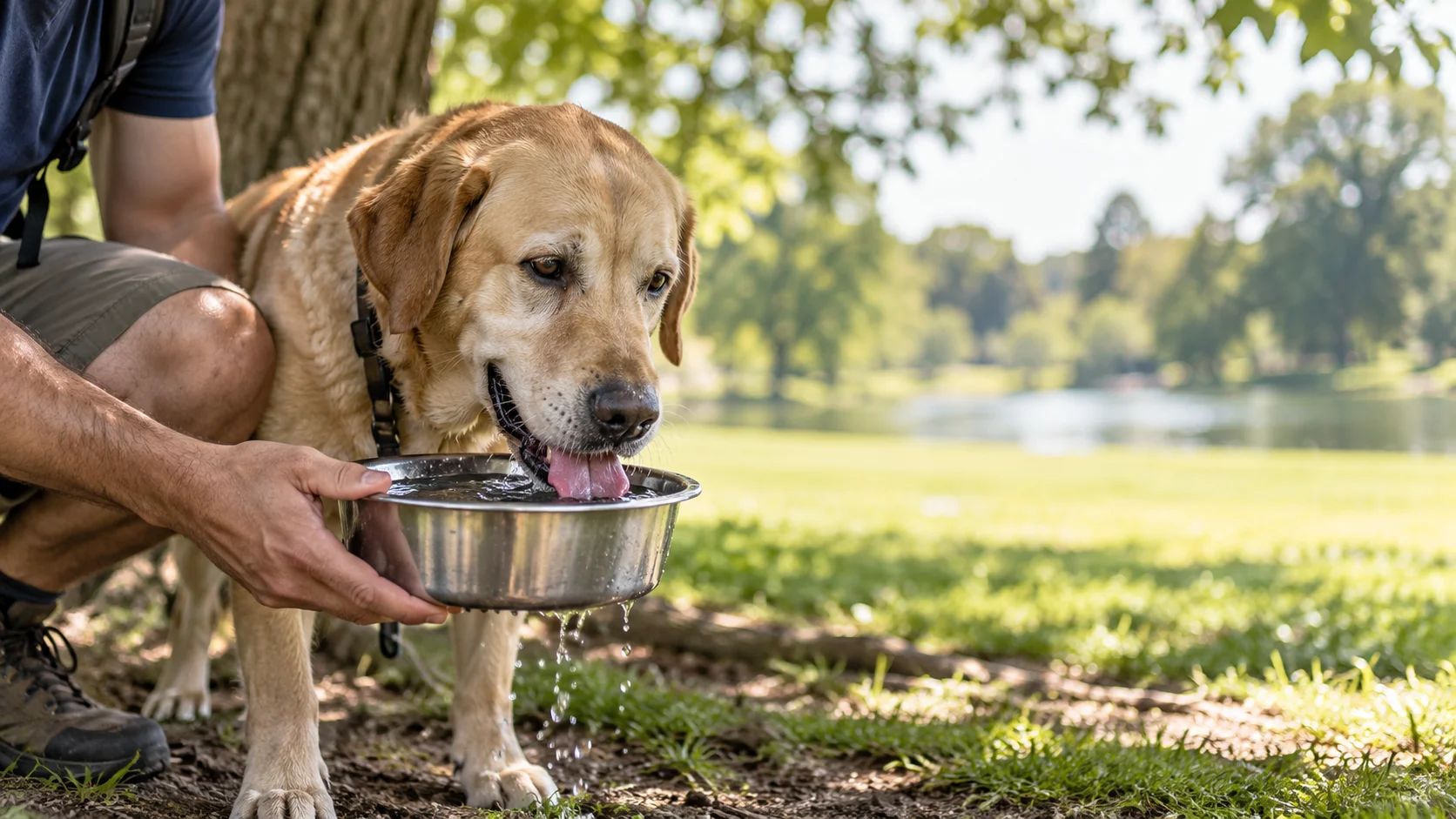
Dogs can’t tell you they are thirsty, and they often keep playing or walking even when they are running low on fluids. That is why knowing the dog dehydration signs matters. Dehydration happens when a dog loses more fluid than they take in, and it can develop quickly after hot weather, hard exercise, vomiting, or diarrhea.
This guide explains what dehydration looks like, how to check your dog at home, what to do right away, and when it becomes an emergency. Home checks are only rough guides, so if you are worried, call your veterinarian.
Table of Contents
Quick Answer: What Are the Signs of Dehydration in Dogs?
The most common signs of dehydration in dogs are dry or sticky gums, loss of skin elasticity, lethargy, and a dry nose or mouth. As it gets worse, you may see sunken eyes, weakness, and slow capillary refill. Sunken eyes, collapse, pale gums, or refusing to drink need veterinary care right away.
What Is Dehydration in Dogs?
Dehydration means the body does not have enough water. The AKC explains that it occurs when a dog loses more fluid than they take in, and that it also involves a loss of electrolytes such as sodium, chloride, and potassium. Those minerals help muscles, nerves, and the heart work properly, which is part of why significant dehydration is a medical concern and not just a thirsty dog.
Dog Dehydration Signs to Watch For
Early or Mild Signs
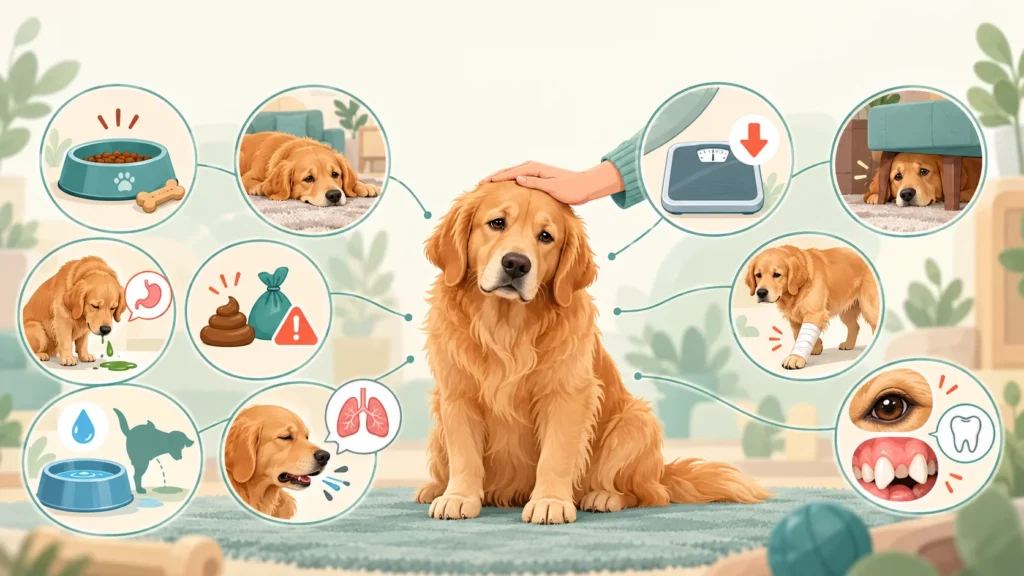
Mild dehydration can be easy to miss, and some dogs show few obvious symptoms. Possible early signs include:
- Dry, tacky, or sticky gums
- Reduced skin elasticity
- Lower energy or lethargy
- A dry nose or mouth
- Less interest in food
- Heavy or persistent panting
Moderate to Severe Signs
As fluid loss increases, the signs become harder to ignore:
- Sunken eyes
- Marked weakness or wobbliness
- Skin that stays tented or slow to settle
- Slow capillary refill time
- Pale, very dark red, or dry gums
- Rapid heartbeat or collapse
- Vomiting or inability to keep water down
If you see severe signs, skip the home checks and head to a veterinarian or emergency clinic.
How to Check a Dog for Dehydration at Home
These quick checks can give you useful information to share with your vet. They are not precise, so treat them as clues rather than a diagnosis. The AKC suggests testing your dog when you know he is well hydrated, so you know what normal looks like for him.
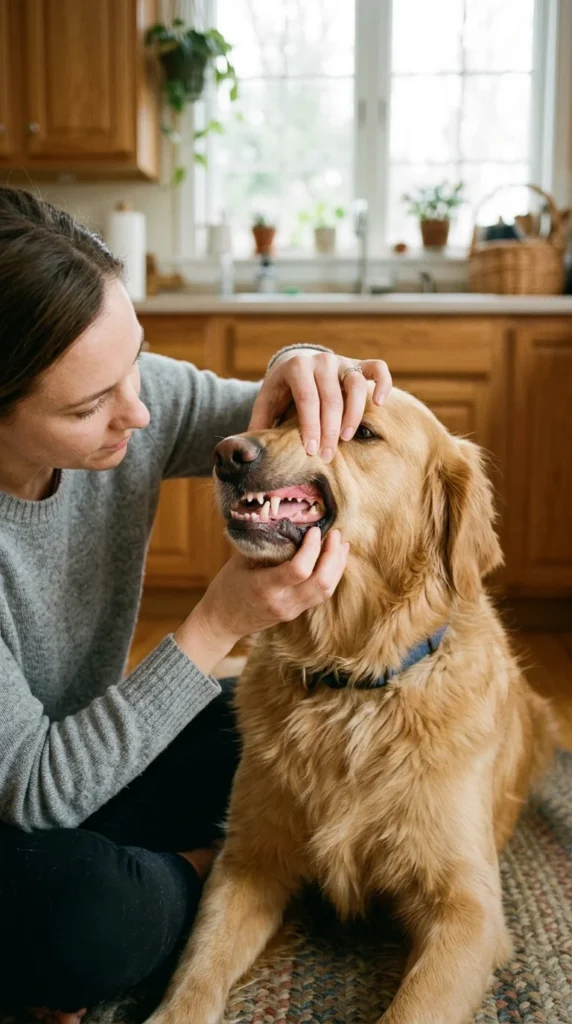
The Gum Check
- Gently lift your dog’s lip.
- Look at the color. Healthy gums are usually pink.
- Touch them lightly. Healthy gums feel moist and slick. Dry, sticky, or tacky gums are a warning sign.
Dogs with dark pigmented gums can be hard to assess. In that case, look for a lighter patch, or use the inner lower eyelid or another area your vet has shown you.
Capillary Refill Time
- Press a finger firmly against the gum until the spot turns white.
- Release it.
- Count how long it takes for the pink color to return.
The color should return in about two seconds. A slower refill can point to dehydration or poor circulation, and warrants a call to your vet.
The Skin Tent Test
- Gently lift a small fold of skin between the shoulder blades.
- Release it.
- Watch how quickly it settles back.
In a well-hydrated dog, the skin springs back almost immediately. In a dehydrated dog it returns more slowly. Veterinarians note that the test is less reliable in very thin or overweight dogs, older dogs, and dogs with loose or wrinkled skin such as Bulldogs and Shar-Peis, because their skin naturally behaves differently. Never pinch hard.
Common Causes of Dehydration in Dogs
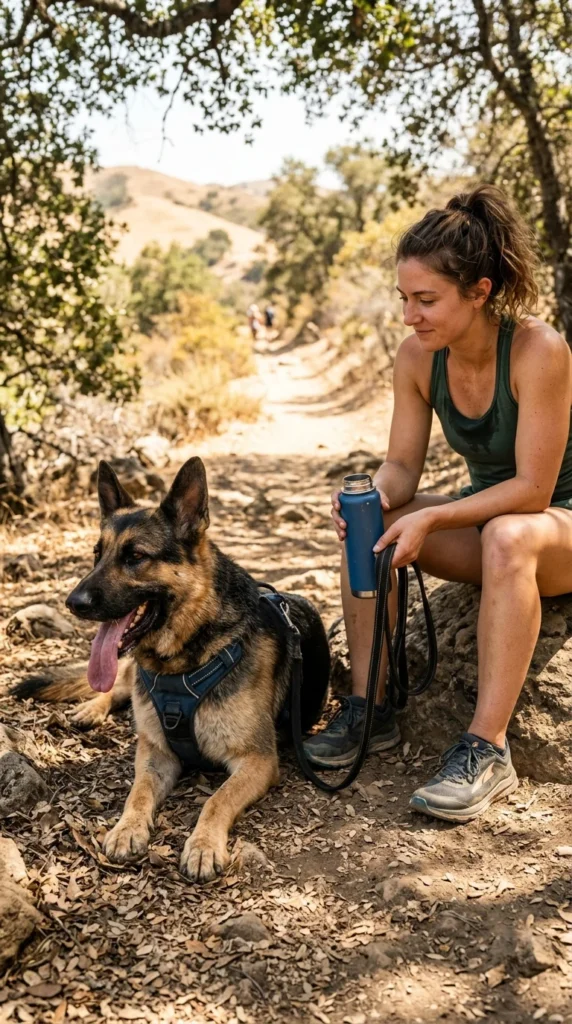
- Hot weather and heavy exercise: Dogs lose water through panting, and they may not stop playing even when they need a break.
- Vomiting and diarrhea: Fluids are lost faster than they can be replaced.
- Fever or illness: Sick dogs may drink less while losing more fluid.
- Not drinking enough: Some dogs are simply picky, distracted, or have limited access to fresh water.
- Medical conditions: Kidney disease, diabetes, and other conditions that increase urination can make dogs prone to dehydration.
- Heatstroke: Overheating and dehydration often go together and can both become emergencies.
Which Dogs Are at Higher Risk?
Dehydration can become serious quickly in puppies, small dogs, and seniors, who have less reserve. Overweight dogs and flat-faced breeds can also overheat more easily. Dogs with chronic illness, and dogs that exercise hard in warm weather, deserve extra attention.
What to Do If You Think Your Dog Is Dehydrated
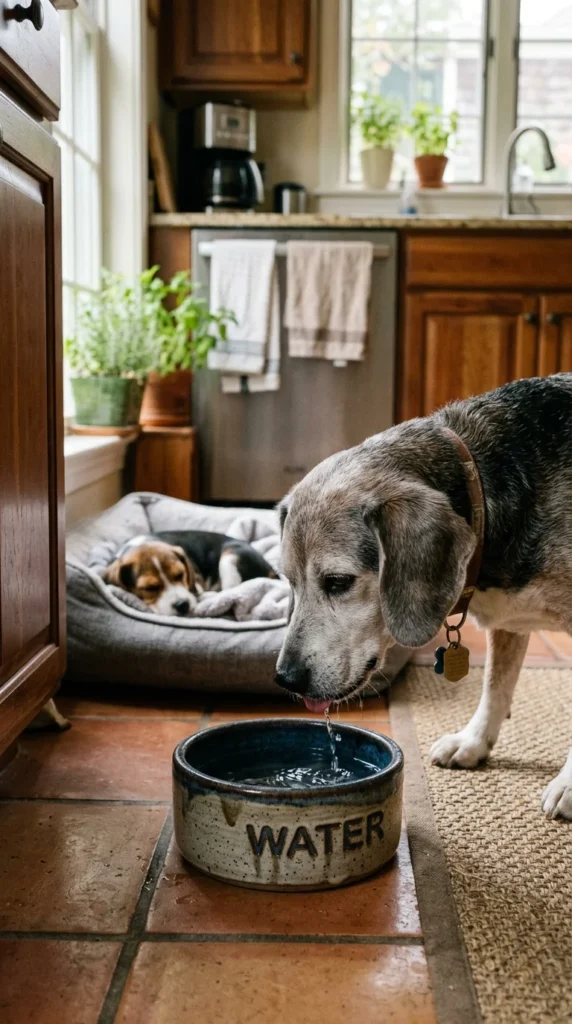
- Move your dog somewhere cool and calm. Shade or an air-conditioned room is ideal.
- Offer fresh, cool water. Let your dog drink small amounts. Gulping a lot at once can lead to vomiting, which loses more fluid.
- Do not force water. Forcing liquid into a dog’s mouth can cause choking.
- Check the gums and skin. Note what you see to tell your vet.
- Call your veterinarian. Describe the signs, how long they have lasted, and any vomiting, diarrhea, or heat exposure. Ask whether your dog should be seen.
If your dog may be overheated, move them to shade or air conditioning and use cool (not ice-cold) water on the body while you contact a vet. Do not give electrolyte drinks made for people unless your vet approves, since some contain ingredients such as xylitol that are toxic to dogs.
When to Go to the Vet or Emergency Clinic
Seek immediate veterinary care if your dog has:
- Sunken eyes, extreme weakness, or collapse
- Pale, white, bright red, or very dry gums
- Slow capillary refill or a skin tent that does not return
- Repeated vomiting or inability to keep water down
- Persistent diarrhea, especially with blood
- Refusal to drink
- Signs of heatstroke, such as heavy panting, drooling, disorientation, or vomiting
- Any dehydration signs in a puppy, senior, or sick dog
Call your vet promptly even for mild dehydration if your dog has other illness signs, or if symptoms do not improve quickly. When you are unsure, call.
AKC, Warning Signs of Dehydration in Dogs: https://www.akc.org/expert-advice/health/warning-signs-dehydration-dogs
How Veterinarians Treat Dehydration
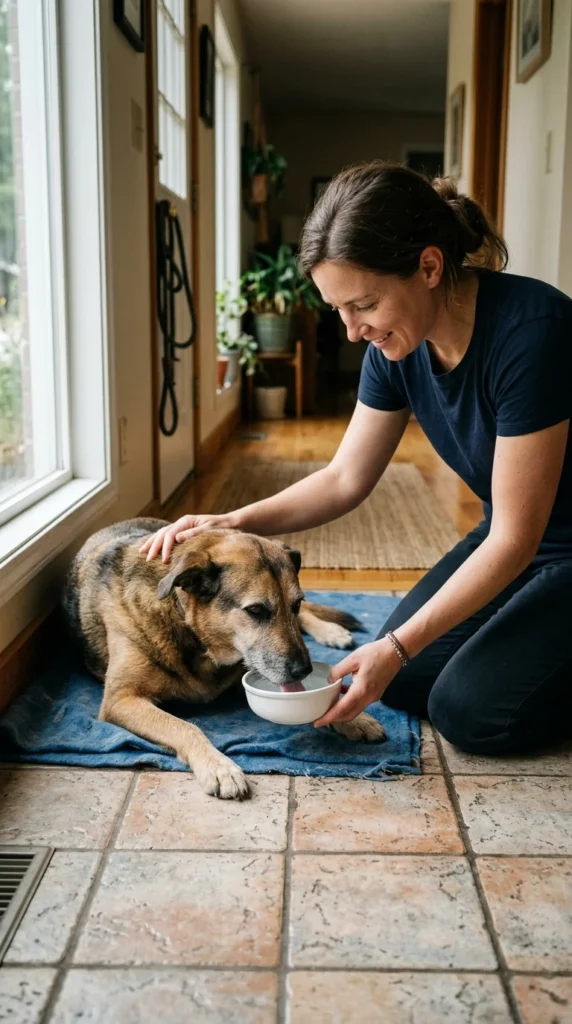
Your vet will examine your dog, assess how dehydrated they are, and look for the underlying cause. Treatment often involves giving fluids, either under the skin or through an IV, and addressing whatever caused the fluid loss, such as vomiting, infection, or heat. Because the cause matters, giving water alone is not always enough.
How to Prevent Dehydration in Dogs
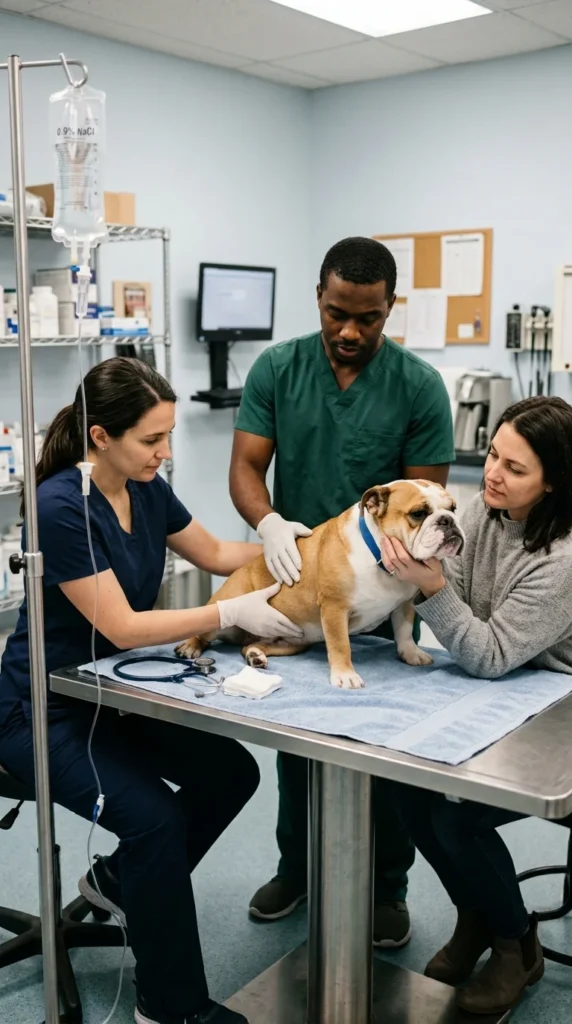
- Offer fresh water at all times: Clean bowls daily and refill them often. Never restrict water unless your vet tells you to.
- Place more than one water bowl around the house: This helps dogs who are less motivated to drink.
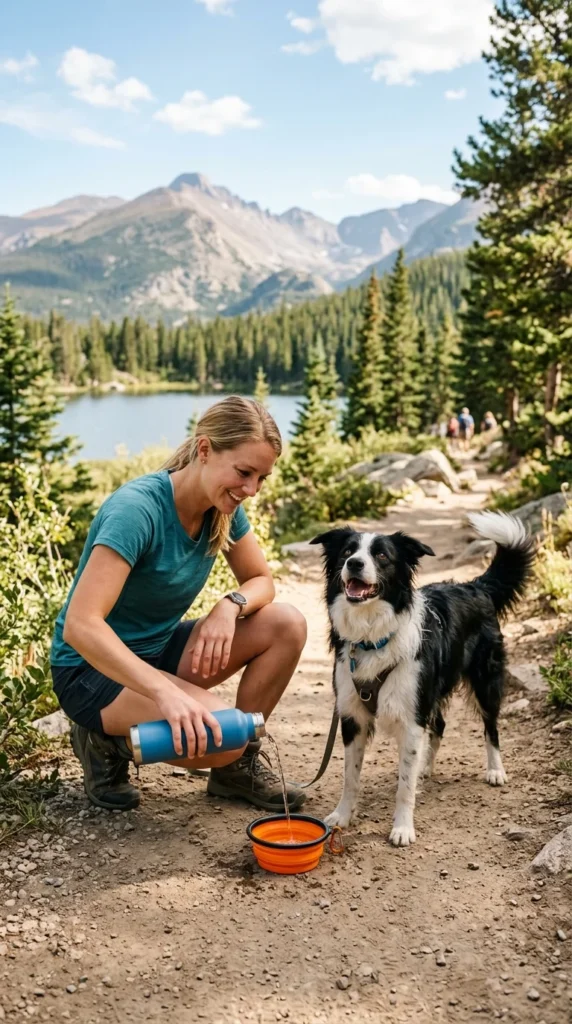
- Bring water on outings: Carry a portable bowl and offer drinks during walks, hikes, and car trips.
- Be careful in the heat: Exercise in the cooler morning or evening, give shade, and rest often. Never leave your dog in a parked car.
- Watch dogs who don’t drink much: Ask your vet whether moistening food or other strategies suit your dog.
- Don’t ignore vomiting or diarrhea: Call your vet early, especially for puppies and seniors.
- Learn your dog’s normal: Check gums and skin when your dog is well so you can compare later.
Mistakes to Avoid
- Relying only on the skin test: It is unreliable in many dogs.
- Letting a dog gulp huge amounts at once: Offer small sips.
- Waiting too long with puppies and seniors: They can get worse quickly.
- Giving human sports drinks without vet approval: Some contain unsafe ingredients.
- Assuming a drinking dog is fine: A dog who is vomiting or very ill can still be dehydrated.
- Ignoring excessive thirst: Drinking far more than usual can signal a medical problem and deserves a vet check.
Frequently Asked Questions
How can I tell if my dog is dehydrated?
Check for dry or sticky gums, slow capillary refill, reduced skin elasticity, lethargy, and a dry nose or mouth. These are clues, not a diagnosis, so contact your vet if you are worried.
How long can a dog go without water?
There is no safe number to rely on. Dehydration can develop faster in hot weather, during illness, or with vomiting and diarrhea. Always keep fresh water available.
Can I give my dog Pedialyte or electrolytes?
Ask your veterinarian first. Products made for people can contain ingredients that are unsafe for dogs, and the right choice depends on your dog’s condition.
Is a dry nose a sign of dehydration?
It can be, but a dry nose alone is not reliable. Healthy dogs can have a dry nose at times. Look at gums, energy, skin, and other signs together.
Why is my dog drinking so much water?
Heat, exercise, and diet can all increase thirst. But a persistent, unexplained increase in drinking can point to a medical condition, so mention it to your vet.
Are puppies more at risk of dehydration?
Yes. Puppies, small dogs, and seniors can become dehydrated quickly, especially with vomiting, diarrhea, or heat. Call your vet promptly if they show any signs.
Final Thoughts
Knowing the dog dehydration signs lets you act early. Learn your dog’s normal gum and skin feel, keep fresh water within reach, and take extra care in the heat and during any stomach upset. If you see sunken eyes, weakness, pale or very dry gums, or your dog won’t drink, get veterinary help right away.
This article is for general education and is not a substitute for veterinary advice. If you are concerned about your dog’s health, contact your veterinarian or an emergency clinic.