
Quick answer: Measure each weight-bearing paw, compare the numbers to the exact manufacturer chart, and inspect the fit before winter walks. Start with the simplest safe step and adapt to your dog’s size, health, experience and comfort. This guide explains what to watch, what to do next and when professional help matters.
Dog owners often look for one fast fix, but the sensible plan begins by understanding why the problem happens. Small adjustments in preparation, environment and expectations can make the experience safer and more comfortable. The goal is progress without forcing a frightened, uncomfortable or unwell dog to continue.
This guide is written for everyday U.S. dog owners. It is educational rather than a substitute for veterinary care. For more background, explore Dogs Daily Care and the trusted resources linked at the end.
Table of Contents
What to know first
Measure each weight-bearing paw, compare the numbers to the exact manufacturer chart, and inspect the fit before winter walks. Keep a simple record of what triggers the difficulty and which gentle changes help. If signs are sudden, severe or painful, contact your veterinarian rather than assuming a training or home-care issue.
1. Measure paws rather than guessing from weight
Two dogs at the same weight can have different paw shapes, and front paws are often wider than rear paws. A manufacturer’s size number also does not necessarily match another brand. The reliable starting point is the precise measurement called for by the maker, taken while the dog is standing.
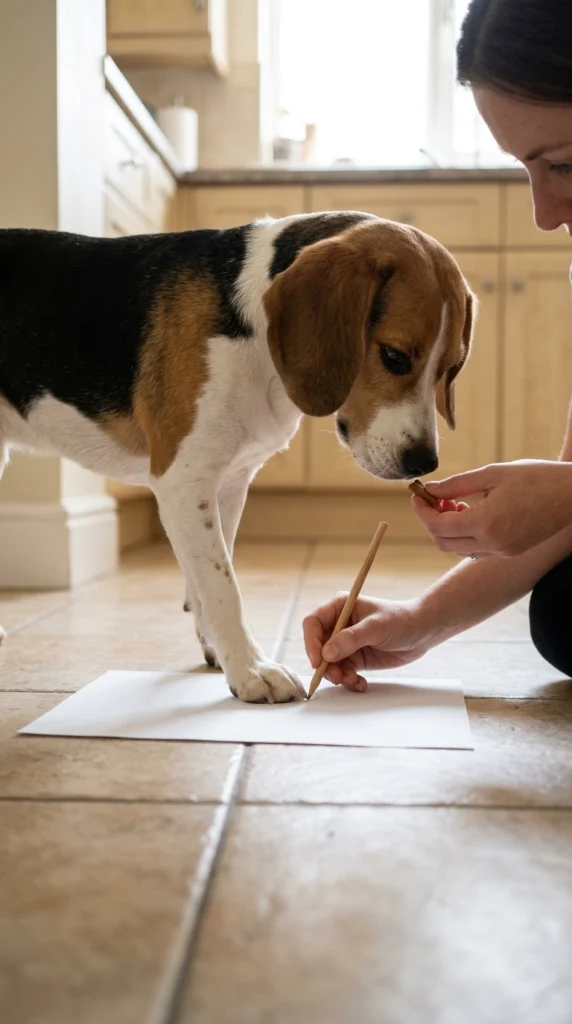
Gather blank paper, a ruler, a vertical pen, treats and a non-slip floor. A helper can reward calm standing; do not hold a frightened dog in position.
2. Read the chosen boot maker’s instructions
Most width-based designs ask for the widest part of a front paw while the dog bears weight. Other products require length, girth or additional leg measurements. The difference matters: a length measurement entered into a width chart creates an unreliable fit.
Before shopping, locate the size chart for the exact model, not merely the brand. Note whether the maker sells boots in pairs so front and back sizes may differ.
3. Set your dog up on a firm surface
Put the paper over a hard, flat floor and have your dog stand naturally. Avoid thick carpet because the foot can sink into it. Help the dog stay calm with a reward on the nose level rather than by lifting the whole paw off the ground.
If your dog has trouble standing comfortably or resists foot handling, pause. A painful paw should be examined by a veterinarian before trying new footwear.
4. Mark the widest part of the paw
Hold the pen straight up and down next to each outside edge of the weight-bearing paw. Draw two short parallel marks or carefully trace the paw outline. Do not squeeze the toes together or measure a paw while it is curled in your hand.
For an active dog, practice simply standing on paper before adding the pen. The most useful measurement comes from a natural stance.
5. Repeat on all four feet
Measure both front and both rear paws. Record each width in inches and millimeters if possible, along with length if required. A front paw that is larger than a rear paw is not unusual.
Use the measurements for each pair rather than assuming every foot needs the same boot. This is particularly useful with models sold in pairs.
6. Convert units carefully
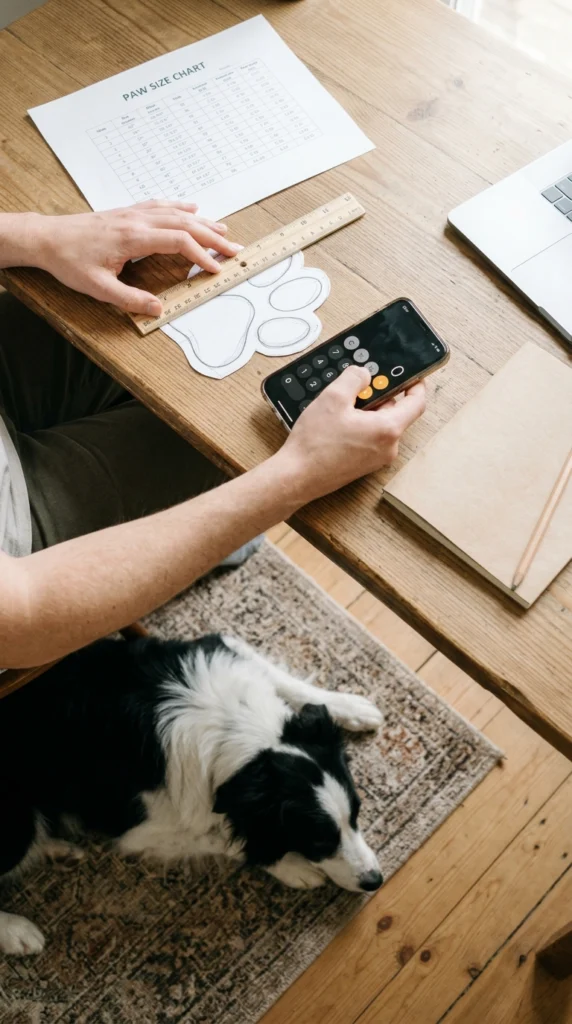
Some charts display measurements in inches; others use centimeters or millimeters. One inch equals 25.4 millimeters. Keep the measurement in the units shown on the manufacturer’s chart to avoid rounding too early.
For example, a 2.5-inch paw is approximately 63.5 mm wide. That does not automatically make every brand’s size labeled 2.5 an ideal fit; match the model-specific chart.
7. Handle between-size cases by the brand’s rule
If the number lies between two sizes, follow the maker’s guidance, not a universal rule. Ruffwear describes choosing the smaller size when between its boot widths, while another manufacturer may advise a different method for its material and design.
Do not automatically buy a larger size for growth or a smaller size to keep it from falling off. Either can create friction or gait problems.
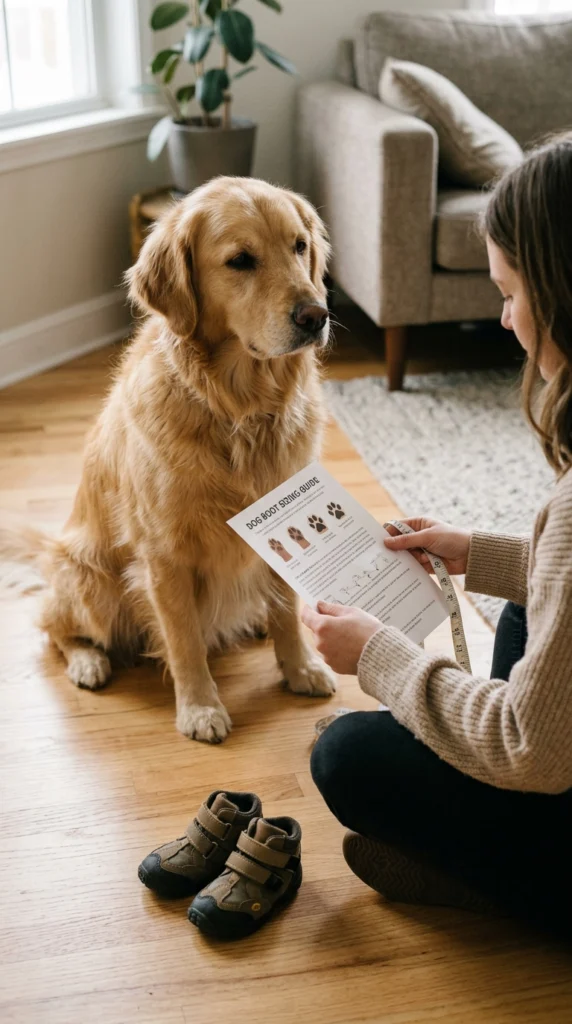
8. Perform the indoor fit test
Fasten each boot according to the instructions. Have your dog stand, walk a few steps on a non-slip surface, and turn slowly. Look for slipping, sideways twisting, paw dragging, pinching or rubbing around the wrist.
Remove the boot and inspect the skin immediately. A comfortable walking test is essential even when the paw measurement matches the size chart.
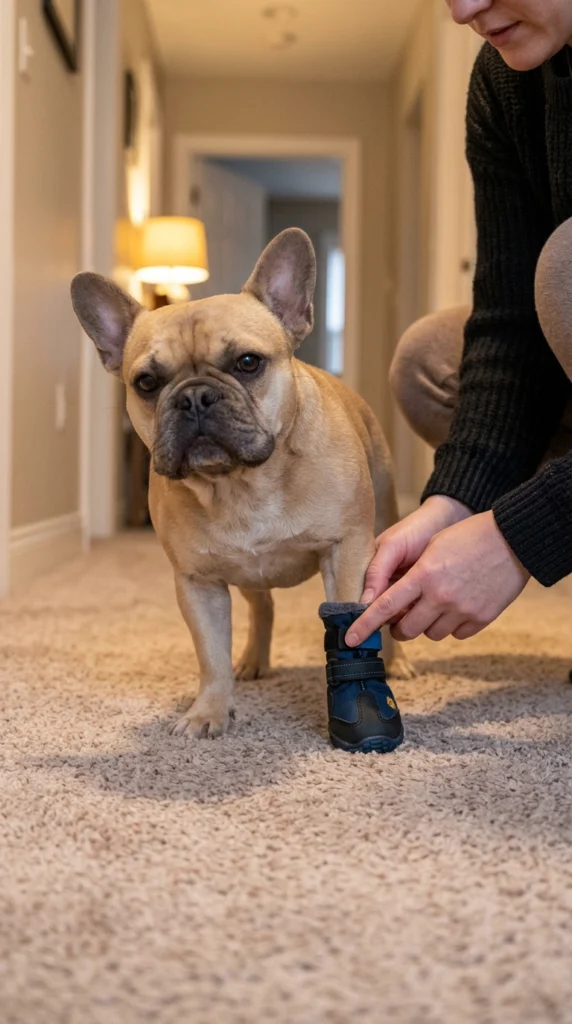
9. Recheck fit after a short trial walk
After a short, safe trial outdoors, feel for moisture and inspect toes and ankle areas. Winter slush can change how fabric sits; a boot that stays on indoors may loosen outdoors. Dry the boots and paws between outings.
If the dog limps or repeatedly stops, take the boots off and reassess. Review our winter-care resources before planning long outings.
Common mistakes to avoid
- Rushing to the final step before the dog understands the easy version.
- Restraining, dragging or punishing a dog who is worried or uncomfortable.
- Ignoring a poor fit, painful paw, or another physical reason for resistance.
- Training during a stressful outing rather than in a quiet, safe setting.
Helpful resources and optional supplies
For a broader selection of owner-approved gear, visit our Recommended Dog Products page. Readers who prefer detailed learning can browse our Dog Books library. Explore the Dog Care Tools hub for the live breed-matching and age resources. These links are optional and do not replace the steps above.
Winter care is not one-size-fits-all. See senior dog care advice for age-related adjustments, particularly when movement or comfort has changed.
No product-specific Amazon affiliate recommendations are included in this guide because a suitable exact product listing was not sufficiently verified for the topic. The related product and book resource pages above remain available.
A measurement worksheet you can copy
This practical reference turns the advice above into manageable actions:
- Front left: Record the widest weight-bearing paw width, plus length if the maker requests it.
- Front right: Take a separate measurement rather than assuming the two front paws are identical.
- Rear left: Record width and required additional dimensions; rear paws may be narrower.
- Rear right: Repeat the reading and check any major left-to-right difference.
- Brand/model: Write down the exact product and link to its size chart; do not substitute a similar boot.
- Fit notes: Record whether the boot twists, slips or causes any rubbing during the indoor trial.
Measure twice on two separate calm stands if the first reading seems odd. A paper record prevents mixing up the left and right feet when ordering two different boot sizes.
Frequently asked questions
Can front paws and rear paws need different sizes?
Yes. Front paws are frequently wider than rear paws, and some brands sell boots in pairs to accommodate different sizes.
Should I measure paw length or width?
Use whatever the exact manufacturer requires. Width-based and length-based charts are not interchangeable.
Is a dog’s weight enough to determine boot size?
No. Two dogs of the same weight may have different paw widths, toe shapes and limb proportions.
What if boots twist while walking?
Twisting can suggest poor fit, a loose closure, or incompatible boot shape. Remove the footwear and reassess before continuing.
Final thoughts
Measure each weight-bearing paw, compare the numbers to the exact manufacturer chart, and inspect the fit before winter walks. Keep the routine kind, predictable and appropriate for your dog. A few careful, comfortable steps are usually more useful than a dramatic one-day transformation. If a problem continues or feels medically concerning, your veterinarian or a credentialed reward-based professional can provide individualized help.