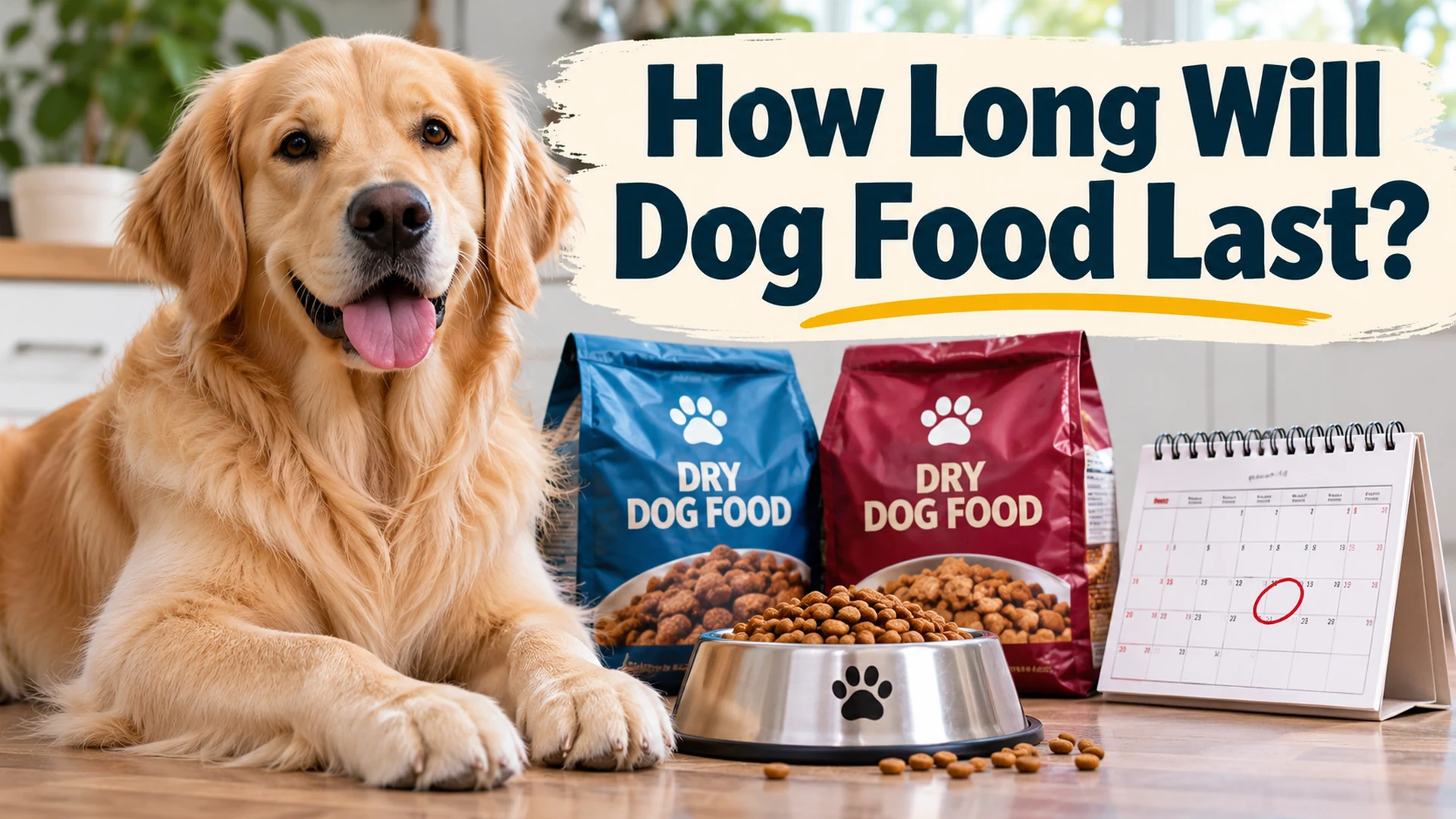
A large bag of kibble can last days or weeks depending on how much your dog eats. Instead of guessing from bag size or breed alone, use a simple weight-based calculation. This guide gives a quick formula, a sample chart, measurement tips, and storage considerations so your purchase fits your dog's actual feeding plan.
Quick answer: Convert the bag weight and daily food amount to the same unit, then divide: days = bag grams ÷ grams eaten daily. For example, a 15-pound (6,804 g) bag lasts about 23 days at 300 g per day. Use your dog's actual feeding amount, not a generic breed estimate.
Helpful references for this topic include FDA pet food storage, FDA pet food safety, PetMD food storage guide. This article offers general education, not a diagnosis or individualized veterinary or training plan.
Table of Contents
The quick formula for dog food bag duration
The simplest calculation uses the same units in both places: bag weight divided by the amount of dry food your dog eats per day. A 15-pound bag contains 6,804 grams because each pound is approximately 453.6 grams. If the dog eats 300 grams of that food per day, the bag should last about 22.7 days.
Formula: Days = (bag pounds × 453.6) ÷ grams fed per day.
If you measure in ounces: Days = (bag ounces) ÷ (ounces fed daily). The result is an estimate, not a guarantee, because spillage, treats, household sharing, feeding changes, and label rounding can all affect how long the bag lasts.
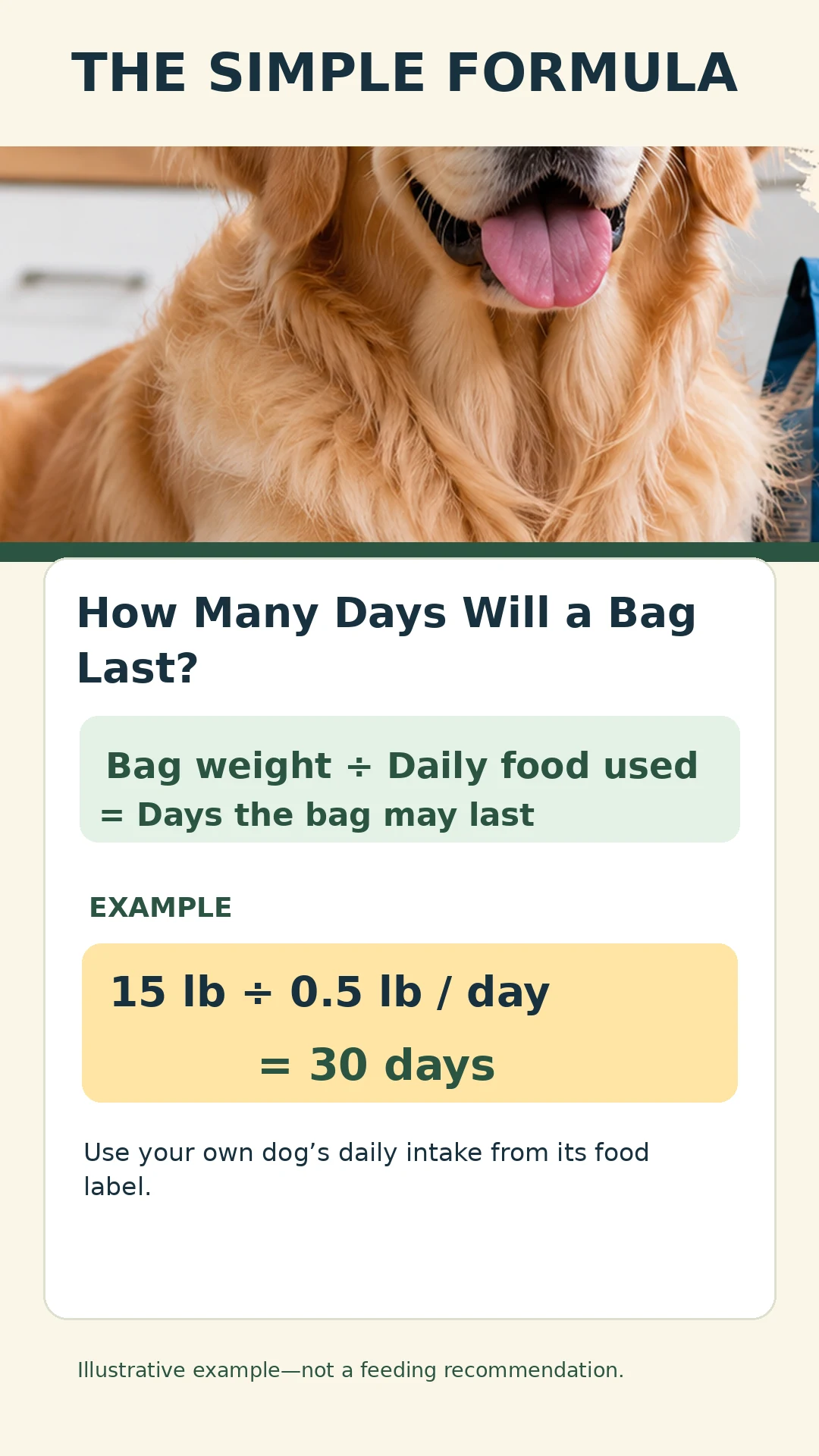
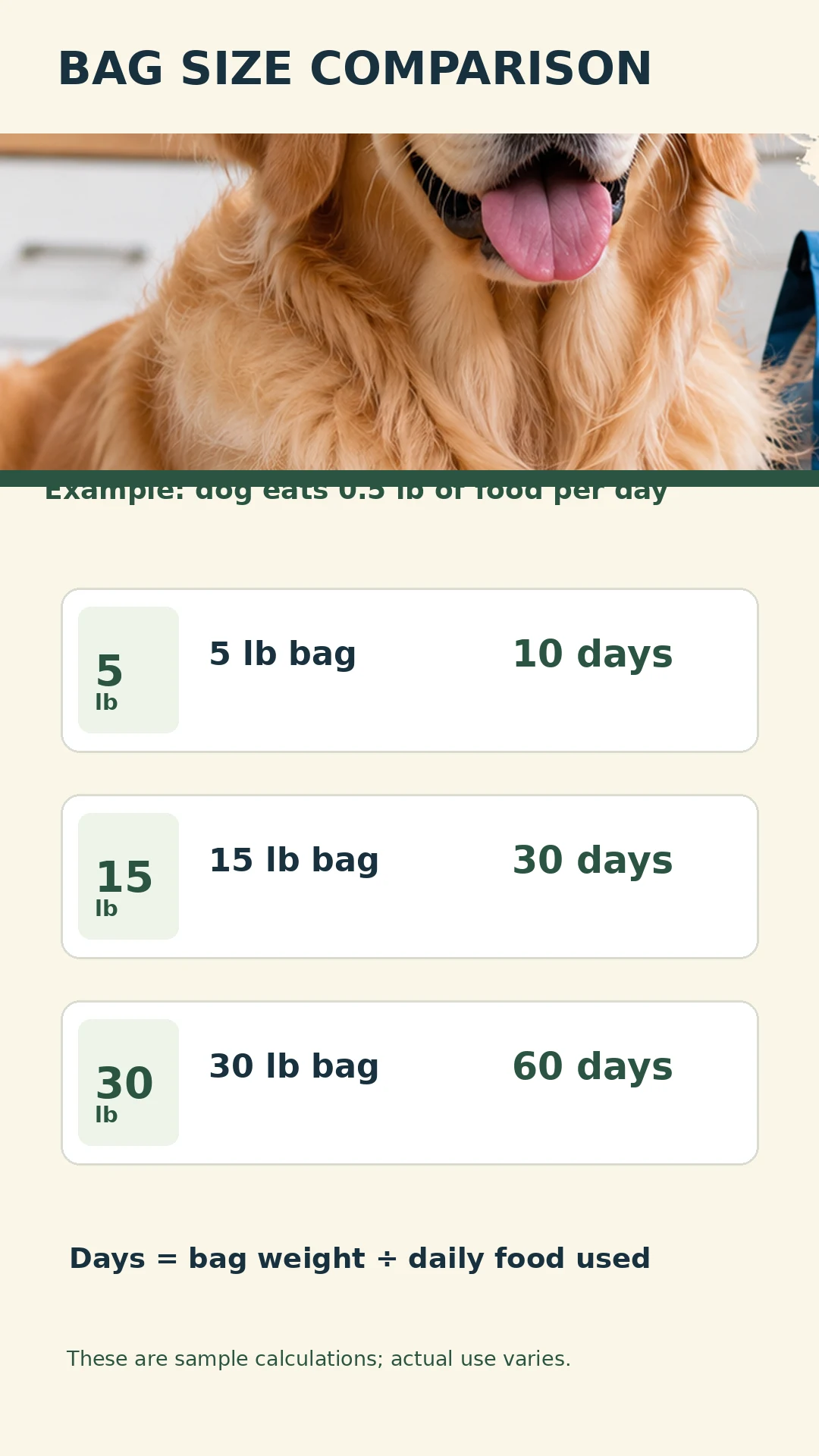
Example chart: 5-, 15-, and 30-pound bags
The table below uses illustrative daily portions. These are not recommended amounts for a particular breed or weight; feeding must be based on the food label, your dog's needs, and veterinary advice when applicable.
| Bag weight | 150 g/day | 250 g/day | 350 g/day | 500 g/day |
|---|---|---|---|---|
| 5 lb | ~15 days | ~9 days | ~6 days | ~5 days |
| 15 lb | ~45 days | ~27 days | ~19 days | ~14 days |
| 30 lb | ~91 days | ~54 days | ~39 days | ~27 days |
A small dog eating 150 g/day may use a five-pound bag in roughly 15 days. A different dog eating 500 g/day may use the same bag in about four or five days. That is why a chart without the daily portion cannot answer the question reliably.
How to measure your dog’s actual daily portion
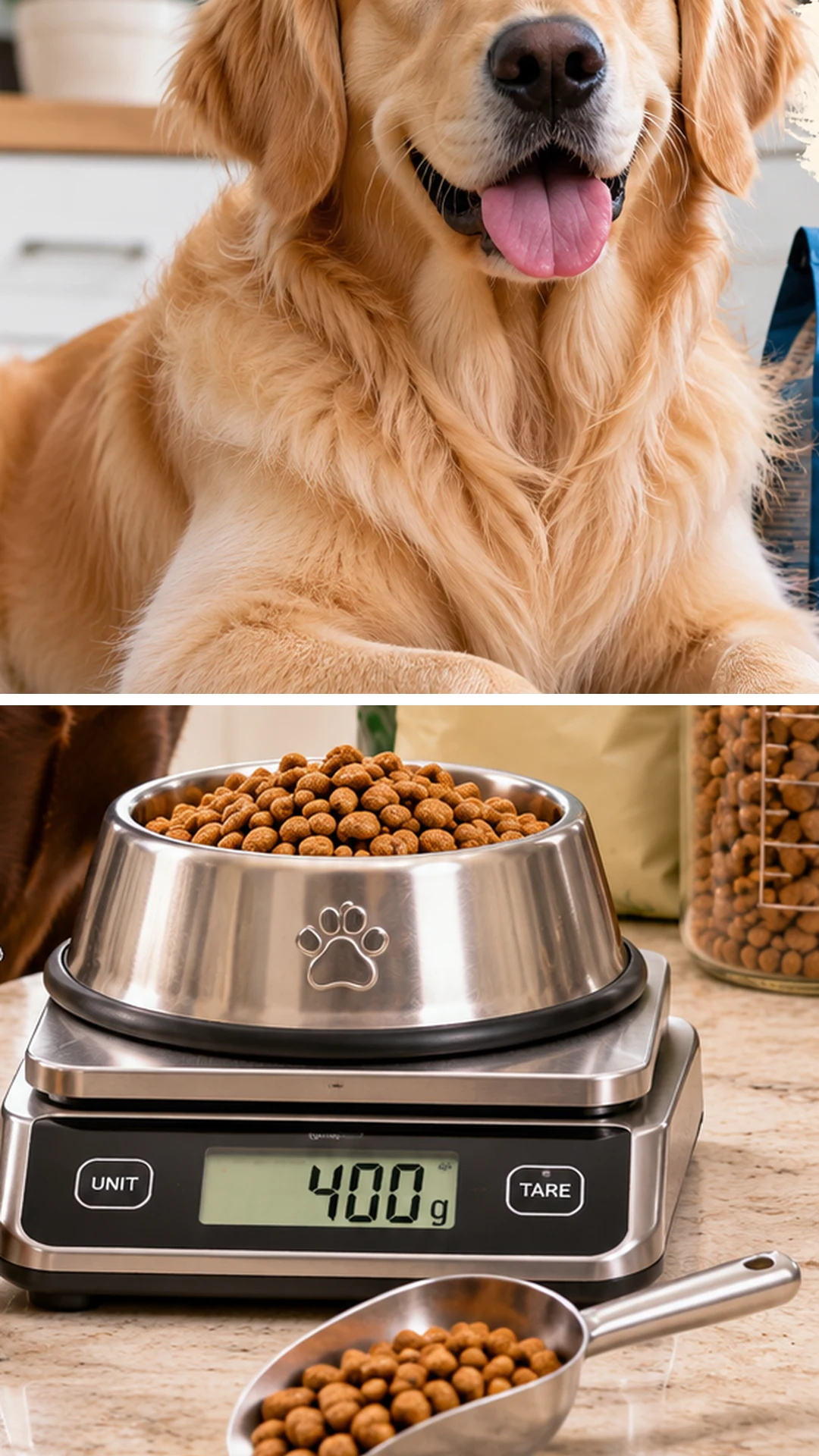
Read the feeding directions on the specific bag and account for your dog's life stage, body condition, activity, and other diet components. For a more precise estimate, weigh your usual scoop using a kitchen scale. Put an empty bowl or scoop on the scale, zero it, and add the kibble amount used for one feeding.
Multiply a single meal’s weight by the number of meals given daily. Include kibble used for training or puzzle feeders if it comes from the same bag. Treats and canned food may change the amount of dry food needed, but they should not be converted into arbitrary scoops.
Why cups do not always translate to the same weight
A cup of one kibble can weigh less or more than a cup of another because the pellets differ in shape and density. Use the bag’s grams-per-cup information if given, or weigh a level cup for the exact food. Do not assume every cup is four ounces or that a food scoop is a standardized measuring cup.
For an example, if your particular product measures 110 g per cup and your dog eats 2.5 cups a day, the daily total is 275 g. A 15-pound bag may then last approximately 24.7 days. Those numbers describe a sample calculation, not feeding guidance.
Bag-size decision: smaller is sometimes smarter
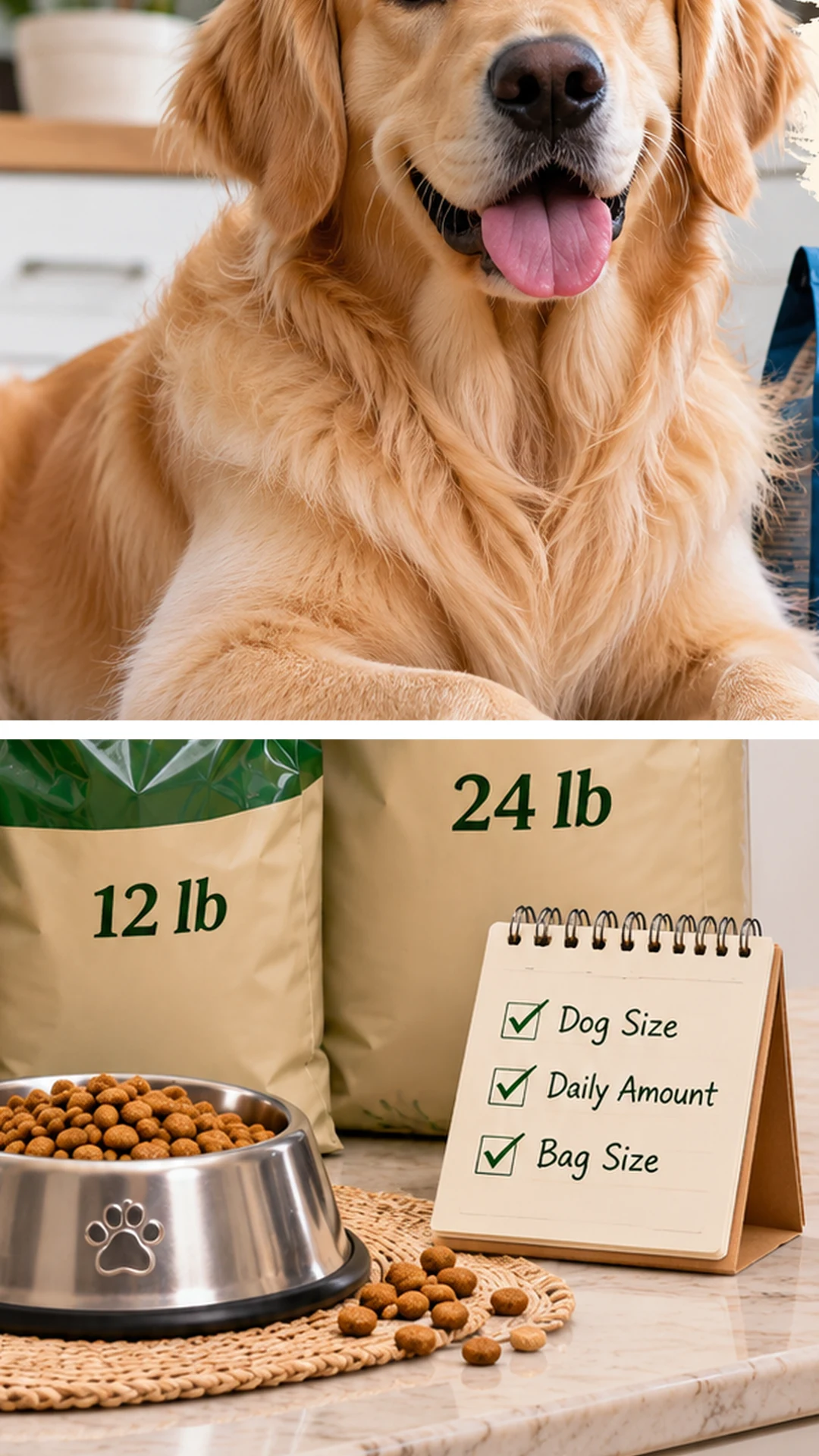
Buying the largest bag may lower the price per pound, but it is not always the sensible choice for a household with one small dog. Consider how quickly the bag will be finished after opening, how much safe storage space you have, and the manufacturer's after-opening instructions. A large bag that sits open for months may lose its economic advantage if food must be discarded.
Select a bag that is practical to lift, seal, store in a cool dry location, and finish while still in good condition. The FDA favors retaining the original bag, including its lot code and storage directions, even when you place it inside a protective bin.
How to estimate food cost per day
Divide the purchase price by the calculated number of days. For example, if a bag costs $48 and lasts 24 days, the dry food costs about $2 per day, excluding treats and any other food. Price comparisons across brands can be misleading when calories differ, so also consider the recommended daily portion and nutritional suitability.
Recalculate if your dog changes foods, moves from puppy to adult feeding, gains or loses weight, or receives a revised veterinary feeding plan. A formula only reflects the numbers entered; it does not tell you how much the dog should be eating.
Keep the estimate accurate over time
Mark the date you open each bag. After finishing it, record the actual number of days and compare it with your estimate. If the bag lasted much less time than expected, check for extra training treats, other household members feeding, measuring-cup differences, or a diet adjustment.
Avoid reducing a dog's meals simply to make a large bag last longer. Feeding decisions should support healthy body condition and energy needs. If your dog's appetite or weight changes unexpectedly, talk with your veterinarian.
Frequently asked questions
How long should a 30-pound bag last? It depends on daily usage. At 350 g/day it lasts about 39 days; at 500 g/day it lasts about 27 days.
Is a cup of kibble always eight ounces by weight? No. A cup is a volume unit, and kibble density varies. Use grams per cup on the package or a scale.
Can I use the feeding chart as a prescription? No. The chart estimates bag duration from a chosen feeding amount; it does not determine an appropriate ration.
Should I store several opened bags at once? It is usually simpler to finish one appropriately stored bag at a time unless your feeding needs require otherwise. Always follow each package’s directions.
Example calculation for a two-dog household
Suppose two adult dogs eat the same formula and together consume 550 grams per day. A 30-pound bag weighs about 13,608 grams. Divide 13,608 by 550 to get approximately 24.7 days. If the dogs eat different formulas, however, you cannot combine their amounts in one calculation: calculate each food separately. It also matters whether you use kibble during training or add canned food. The useful input is the true daily weight removed from that particular bag, not how many bowls you put on the floor.
How to estimate a monthly purchase schedule
Once you know how many days a bag lasts, you can estimate bags used over a typical thirty-day month. Divide thirty by the bag duration. For example, a twenty-day bag means you will use about one and a half bags per month on average, which does not mean buying half a bag at the store. Look ahead to the point at which your current food will run out, account for delivery delays, and keep enough of the same food for a gradual transition if your veterinarian recommends one. Avoid relying on last-minute substitutions.
Adjust the math when the daily ration changes
A puppy may grow rapidly and need changing meal amounts, while an adult dog’s ration may change after weight-management advice, activity changes, or a formula switch. Recalculate rather than assuming a bag will always last the same number of days. If you use a scoop, weigh it again after changing brands because pellet size and density can shift markedly. When comparing food costs, distinguish price per pound from price per day and remember that nutritional appropriateness matters more than stretching a bag. Never cut meals solely to meet a budget calculation.
Related Dogs Daily Care guides
Before buying a large bag, review Should Dog Food Be Stored in the Original Bag?. For young dogs whose daily ration changes quickly, Puppy Feeding Schedule explains why feeding needs evolve.
Sources and further reading
- U.S. Food and Drug Administration — proper storage
- U.S. Food and Drug Administration — safe handling of pet food
- PetMD — how to store dog food
Editorial note: This guide is for educational purposes and is not a substitute for advice from your veterinarian or qualified professional.