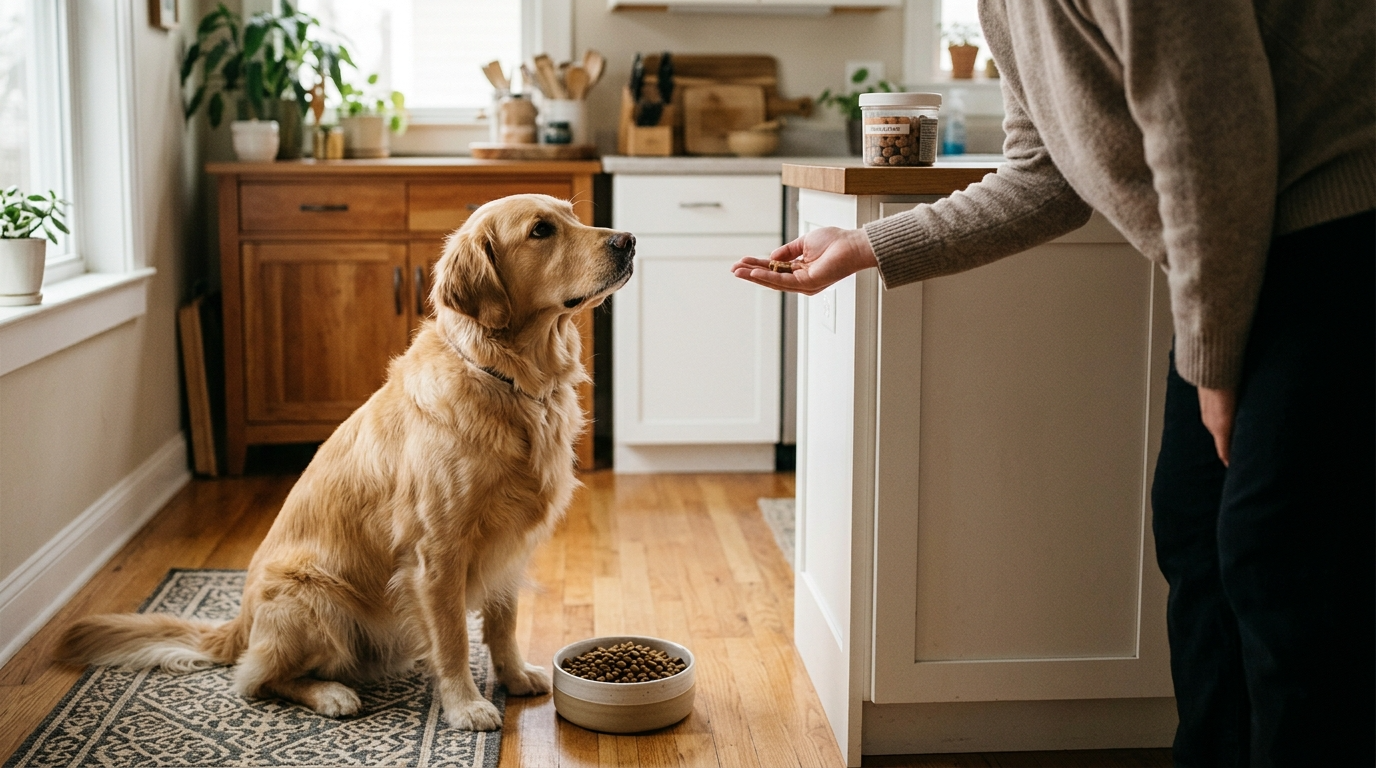
Your dog runs to the kitchen when you open the treat bag. But when you serve dinner, your dog sniffs the kibble and walks away. Sound familiar? If your dog won’t eat kibble but eats treats, it can leave you worried and frustrated. You may wonder if your dog dislikes the food or if something is wrong.
Sometimes, dogs learn to hold out for tastier snacks. However, dental pain, nausea, stress, and other health problems can also change eating habits. This guide explains why dogs refuse kibble, what you can safely try at home, and when to contact your veterinarian. You will also learn how to build a more reliable feeding routine without turning every meal into a battle.
Table of Contents
Quick Answer: Why Does My Dog Eat Treats but Refuse Kibble?
A dog may refuse kibble but accept treats because treats smell stronger, taste better, or feel easier to chew. Your dog may also have learned that refusing dinner brings tastier options.
Still, eating treats does not prove your dog is healthy. Some dogs with dental pain or an upset stomach accept certain foods while avoiding their usual meals.
First, check your dog’s energy, water intake, bathroom habits, and comfort while chewing. If this behavior started suddenly, lasts more than a short time, or comes with other symptoms, contact your veterinarian. Puppies, diabetic dogs, and dogs with existing medical conditions may need help sooner.
1. Rule Out Dental Pain and Other Health Problems
Before assuming your dog is picky, consider whether eating has become uncomfortable. A dog may still want food but struggle to chew or swallow it.
Dental problems can make hard kibble uncomfortable. Broken teeth, gum inflammation, mouth injuries, and other oral problems can affect eating. A dog might accept a soft treat while avoiding crunchy food.
Other possible causes include nausea, digestive upset, stress, medication effects, and underlying illness. You cannot reliably identify the cause from eating behavior alone.
Watch for these warning signs:
- Dropping kibble while trying to eat.
- Chewing on one side of the mouth.
- Drooling more than usual or pawing at the mouth.
- Vomiting, diarrhea, or unusual stools.
- Low energy, weakness, or noticeable weight loss.
- Changes in drinking or urination.
What to do: Contact your veterinarian if your dog suddenly changes eating habits, seems uncomfortable, or repeatedly refuses meals. Do not force your dog’s mouth open or give human pain medicine.
Seek urgent veterinary care for severe weakness, breathing trouble, a swollen abdomen with repeated unproductive retching, or other signs of an emergency.
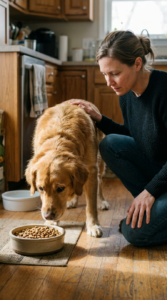
Image alt text: Dog sniffing dry kibble beside a food bowl while its owner checks for signs of discomfort
Dog Won’t Eat Kibble but Eats Treats? Discover common causes, safe feeding tips, and simple ways to help your dog enjoy regular meals again.https://dogsdailycare.com/find-my-dog/
2. Check Whether Your Dog Is Filling Up on Treats
Treats are small, but their calories add up quickly. Frequent snacks can reduce your dog’s interest in regular meals, especially when treats arrive throughout the day.
Dogs can also learn patterns. If refusing kibble leads to chicken, cheese, or a favorite snack, your dog may start waiting for that reward.
This does not mean your dog is being naughty. Your dog is responding to a pattern that seems to work.
Start by reviewing the whole day’s food. Count training treats, table scraps, dental chews, food used for medication, and snacks from other family members.
Veterinary nutrition guidance generally recommends keeping treats and other extras at no more than 10% of daily calories. The main diet should provide the remaining nutrition. Your veterinarian can help set an appropriate target for your dog.
Try this:
- Measure your dog’s normal meals.
- Offer treats mainly during training.
- Ask family members to follow the same rules.
- Avoid offering snacks right before mealtime.
- Record food and treats for several days.
Do not suddenly restrict food to force a dog to eat. If your dog is already eating very little, is underweight, or has a health condition, ask your veterinarian for a feeding plan.
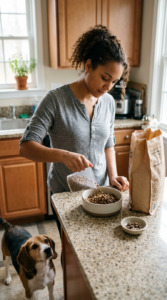
Image alt text: Dog owner measuring kibble and organizing small training treats for a balanced feeding routine
3. Make Sure the Kibble Is Fresh and Suitable
Sometimes, the food itself is the problem. Dogs can notice changes in smell, flavor, texture, and freshness.
Think about what changed before the refusal began. Did you buy a new bag? Switch brands? Change the kibble size? Move the food bowl? Did the food sit open for weeks?
Dry food can lose freshness when you store it poorly. Heat, moisture, and air can affect its quality. Check the expiration date and inspect the food for unusual smells, moisture, insects, or visible mold.
Store kibble properly:
- Keep it in its original bag when possible.
- Place the sealed bag inside a clean, airtight container.
- Store food in a cool, dry location.
- Follow the package instructions for storage and use.
- Discard food that looks or smells spoiled.
If you recently changed foods, the new recipe may not suit your dog’s preferences. When your dog is otherwise well, and your veterinarian approves a change, transition gradually over several days to reduce digestive upset.
Do not keep buying different foods every few days. Frequent changes can make it harder to identify what your dog tolerates and enjoys.
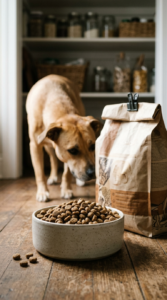
Image alt text: Fresh dry dog kibble in a clean bowl beside a properly sealed bag of dog food
Why does your dog refuse kibble but happily eat treats? Learn about picky eating, food preferences, and possible health concerns every dog owner should know. https://dogsdailycare.com/dog-age-calculator/
4. Create a Calm and Consistent Feeding Routine
A noisy kitchen, a busy household, or an uncomfortable feeding area can distract some dogs. Others eat better when they follow a predictable schedule.
Choose a quiet place where your dog can eat without being disturbed. Keep the bowl clean, and use a size and shape that lets your dog reach the food comfortably.
Offer meals at consistent times. Follow your dog’s recommended daily food amount and divide it into suitable portions based on age, size, health, and your veterinarian’s advice.
For a healthy adult dog, a veterinarian-approved scheduled feeding routine may help. You can offer a meal for a limited period, then put it away until the next scheduled meal.
Do not use a strict waiting rule when your dog may be ill. Puppies, diabetic dogs, small or medically fragile dogs, and dogs showing other symptoms need individual guidance. Never make a dog go hungry for an extended period to prove a point.
Keep mealtimes calm. Praise relaxed behavior, and avoid scolding your dog for refusing food. Pressure can make an already stressful situation worse.
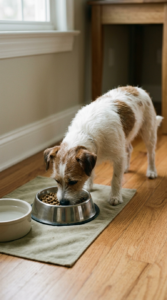
Image alt text: Dog eating from a clean bowl in a quiet home feeding area with natural window light
5. Make Kibble More Appealing Without Overdoing It
If your dog seems well and your veterinarian has ruled out medical concerns, small changes may make regular food more appealing.
Start with the simplest option: add a little warm water to the kibble. Let it soften briefly, check the temperature, and serve it fresh. This may release more aroma and create a softer texture.
You can also ask your veterinarian whether a small amount of complete and balanced wet dog food would suit your dog’s diet. Mix it thoroughly rather than offering a separate pile of treats beside the bowl.
Keep these rules in mind:
- Introduce only one change at a time.
- Use dog-safe ingredients approved for your pet.
- Count toppers toward daily calories.
- Remove moistened food promptly instead of leaving it out for hours.
- Avoid seasoning, excess fat, and rich table scraps.
Never use onion, garlic, grapes, raisins, chocolate, or products containing xylitol as food toppers. Some human foods can seriously harm dogs.
Avoid repeatedly adding more exciting ingredients every time your dog refuses a meal. That approach can make the feeding routine harder to manage.
Pro Tip: If your dog has allergies, pancreatitis, kidney disease, diabetes, or another condition requiring a special diet, ask your veterinarian before adding toppers.
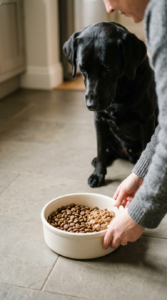
Image alt text: Softened kibble in a dog bowl with a small amount of veterinarian-approved wet food
6. Know When Home Troubleshooting Is Not Enough
Watching your dog refuse food can make you want to try every trick you find online. But persistent appetite changes need attention, not endless experiments.
Contact your veterinarian promptly if your dog refuses meals repeatedly, eats much less than usual, loses weight, or seems uncomfortable while eating. A sudden change deserves extra attention even if your dog still accepts treats.
Seek urgent help if your dog has repeated vomiting, severe diarrhea, marked weakness, breathing difficulty, a painful or swollen abdomen, or repeated retching without bringing anything up.
Do not wait for a routine feeding schedule to work when your dog seems unwell. Call sooner if your dog is a young puppy, has diabetes, takes medication that requires food, or has an existing medical condition.
When you contact the clinic, share useful details:
- When your dog last ate a normal meal.
- Which foods your dog still accepts.
- Whether your dog drinks and urinates normally.
- Any vomiting, diarrhea, coughing, or behavior changes.
- Recent food changes and current medications.
A veterinarian may examine your dog’s mouth, check hydration, review the diet, and recommend further tests when needed. Treatment depends on the cause.
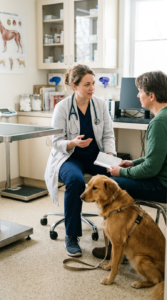
Image alt text: Dog owner discussing a feeding diary and appetite changes with a veterinarian during a clinic visit
Help your picky dog get back to regular meals with practical feeding tips. Learn when to adjust food habits and when to contact your veterinarian.https://dogsdailycare.com/how-many-times-a-day-should-dogs-eat/
Frequently Asked Questions
Why does my dog eat treats but not kibble?
Your dog may prefer the taste or texture of treats, or may have learned to wait for better options. Dental pain, nausea, and other medical problems can also cause this pattern. If the change started suddenly or continues, contact your veterinarian instead of assuming your dog is simply picky.
Should I stop giving treats if my dog refuses kibble?
Reduce unnecessary treats and avoid using snacks to replace balanced meals. Treats should generally provide no more than 10% of daily calories. However, do not use hunger as punishment or abruptly restrict food when your dog is eating very little. Ask your veterinarian for advice if appetite loss continues.
Can I add water to dry dog food?
Yes, adding a little warm water can soften kibble and make its aroma more noticeable. Check the temperature before serving, and remove moistened food promptly. If your dog still refuses food or appears uncomfortable chewing, seek veterinary advice rather than relying on softened kibble alone.
How long can a dog go without eating before seeing a vet?
There is no single safe waiting period for every dog. Contact a veterinarian promptly if your dog has not eaten for around 12 hours, especially if the refusal is unusual. Puppies, diabetic dogs, and dogs with medical conditions may need earlier care. Symptoms such as weakness, vomiting, or abdominal swelling require urgent attention.
Should I switch dog food when my dog refuses kibble?
Not immediately. First check food freshness, recent changes, feeding habits, and possible health concerns. If your veterinarian agrees that a different food may help, choose a complete and balanced diet suitable for your dog’s life stage and needs. Introduce it gradually when medically appropriate.
Conclusion
If your dog won’t eat kibble but eats treats, start by checking your dog’s health, food freshness, and daily snack intake. A calm feeding routine and small, sensible changes may help a healthy picky eater.
But remember, treats do not rule out pain or illness. Do not force your dog to eat or wait too long when appetite changes persist. Your veterinarian can help you find the cause and choose a safe feeding plan.
Has your dog started refusing kibble recently, or has your dog always been a picky eater? Keep a short food diary and share your observations with your veterinarian.
Related reading: [INTERNAL LINK: How Much Should My Dog Eat?] | [INTERNAL LINK: How to Choose the Right Dog Food]