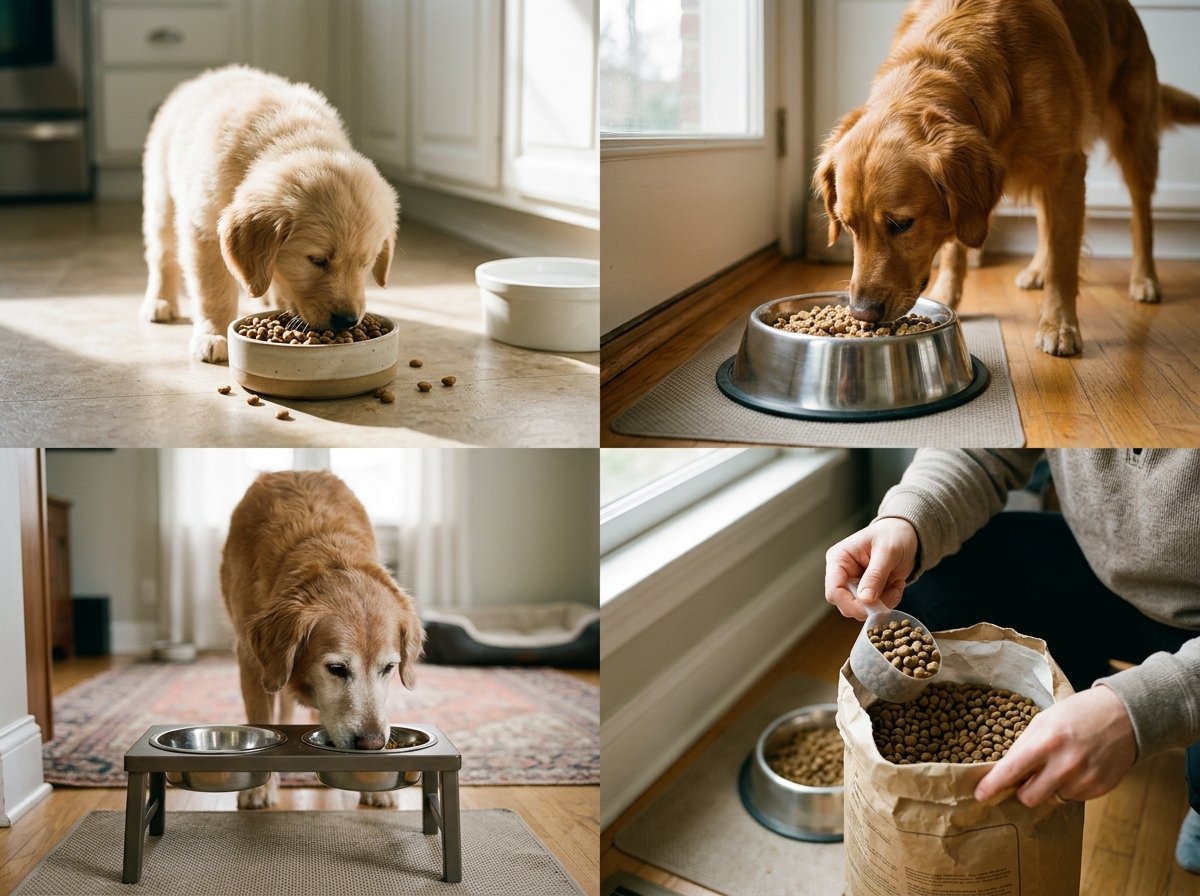
Knowing how many times a day dogs should eat can make daily care much easier. A good feeding routine helps you manage portions, support healthy growth, and notice changes in your dog’s appetite.
However, every dog has different needs. A young puppy needs more frequent meals than most adult dogs. An older dog may also need a different routine because of health changes or a lower activity level.
So, how often should you feed your dog? Most healthy adult dogs do well with two meals a day. Puppies usually need three or four smaller meals, depending on their age and size. Your veterinarian can help you adjust this routine to your dog’s needs.
In this guide, you will learn how often to feed dogs at different ages, how to build a daily feeding schedule, and which feeding mistakes to avoid.
Table of Contents
How Many Times a Day Should Dogs Eat?
Most healthy adult dogs should eat twice a day. Feeding breakfast and dinner gives you two regular opportunities to provide measured portions and check your dog’s appetite.
Puppies need more frequent meals because they grow quickly and have smaller stomachs. Senior dogs may continue eating twice daily, although some need a different schedule because of medical conditions.
Here is a simple starting guide:
- Young puppies: Usually three or four meals daily, with some very small breeds needing more frequent meals.
- Puppies around three to six months: Often three meals daily.
- Puppies around six to twelve months: Usually two meals daily, depending on breed and development.
- Healthy adult dogs: Usually two meals daily.
- Senior dogs: Often two meals daily, adjusted when needed.
These are general guidelines, not strict rules. Your dog’s breed, weight, health, activity, and food type can affect the best schedule. Ask your veterinarian if you are unsure which routine fits your pet.
Adult Dog Food & Nutrition https://dogsdailycare.com/large-dog-lifespan/
How Often Should You Feed a Puppy?
Puppies need food that supports their growing bodies. They use energy for development, play, and learning. Their small stomachs also make several smaller meals helpful during early growth.
Choose a complete and balanced puppy food made for growth. Large-breed puppies may need a diet designed specifically for their expected adult size.
6 to 12 Weeks Old
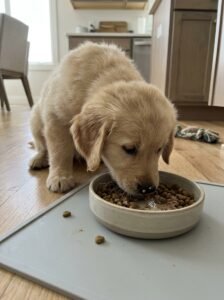
Many puppies in this age group do well with four small meals a day. A regular schedule helps them get enough nutrition throughout the day without relying on one large meal.
For example, you might feed your puppy early in the morning, late in the morning, during the afternoon, and in the evening. Adjust the times to fit your household and your veterinarian’s advice.
Very small breeds may need more frequent meals. Ask your veterinarian for a plan if your puppy is tiny, weak, or struggling to eat enough.
3 to 6 Months Old
Many puppies can move to three meals a day during this stage. Their stomach capacity grows, and their feeding routine becomes easier to manage.
Try breakfast, lunch, and dinner at consistent times. Keep measuring the total daily food amount rather than adding a full portion at every meal.
Watch your puppy’s growth and body condition. Feeding too much can lead to excess weight and unhealthy growth, especially in large breeds.
6 to 12 Months Old
Many puppies can transition to two meals a day during this period. However, the right timing depends on their breed, adult size, and development.
Small breeds may mature earlier than large and giant breeds. Some large dogs continue growing well beyond their first birthday, so they may need puppy food for longer.
Do not switch to adult food just because your puppy looks bigger. Ask your veterinarian when to change diets and how to make the transition gradually.
How Many Times a Day Should Adult Dogs Eat?
For most healthy adult dogs, two meals a day are a practical choice. You can offer breakfast in the morning and dinner in the evening.
This routine creates predictable mealtimes. It also makes it easier to measure food, notice appetite changes, and keep track of how much your dog eats.
Some adult dogs may do well with a different schedule. For example, a veterinarian may recommend smaller, more frequent meals for a dog with a particular medical condition.
Why Two Meals Often Work Well
- Portion control: You can divide the daily food allowance into two measured meals.
- Routine: Regular mealtimes help you build consistent daily habits.
- Appetite monitoring: You can notice when your dog suddenly eats less or refuses food.
- Weight management: Measuring meals makes it easier to avoid giving too much food.
Remember that meal frequency does not determine the total amount your dog needs. A dog eating twice daily can still gain weight if each portion is too large.
How Often Should Senior Dogs Eat?
Older dogs do not all need the same feeding schedule. Many healthy senior dogs can continue eating two meals a day, just as they did during adulthood.
However, aging can bring changes in activity, appetite, digestion, dental health, and body weight. Some older dogs gain weight more easily, while others lose muscle or struggle to maintain their weight.
Consider these steps when feeding a senior dog:
- Keep a regular meal schedule if your dog tolerates it well.
- Measure food instead of estimating portions by eye.
- Watch for changes in body weight and appetite.
- Choose a complete diet that suits your dog’s age and health.
- Ask your veterinarian whether smaller meals or a different food would help.
Do not assume that every senior dog needs less protein or fewer calories. Their nutritional needs vary. A veterinary examination can help identify the right food and feeding plan.
What Is the Best Feeding Schedule for Dogs?
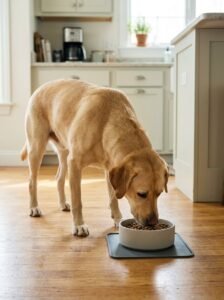
The best feeding schedule is one that meets your dog’s nutritional needs and fits your daily routine. Consistency matters more than following an exact clock time.
For a healthy adult dog eating twice daily, you could try this example schedule:
- 7:00 AM: Breakfast.
- 12:00 PM: Optional small training treats from the daily food allowance.
- 6:00 PM: Dinner.
This is only an example. You can choose different times that work for your family and dog. Puppies may need additional meals spread across the day.
Keep fresh drinking water available at all times. Also, avoid intense exercise immediately before or after meals, especially for dogs at risk of bloat. Ask your veterinarian about suitable activity timing for your breed.
Puppy Nutrition Tips https://dogsdailycare.com/why-is-my-dog-vomiting-yellow/
Should Dogs Eat at the Same Time Every Day?
Yes, a consistent routine is helpful for most dogs. Regular meals make it easier to monitor appetite and manage portions. They can also help you predict when your dog may need a bathroom break.
If your work schedule changes, choose meal times you can maintain most days. You do not need to follow the example schedule exactly.
How Much Food Should You Give Your Dog Each Day?
How much your dog eats matters just as much as how often you feed them. The correct amount depends on body weight, age, activity, body condition, and the food’s calorie content.
Start by checking the feeding guide on your dog’s food package. Treat that guide as a starting point, not a perfect measurement for every dog.
Follow these steps to manage portions:
- Check your dog’s weight. Use a recent, accurate measurement.
- Read the food label. Look for the recommended daily amount for your dog’s weight.
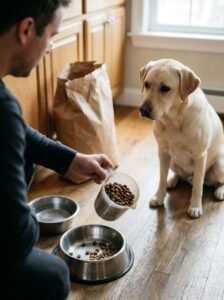
- Measure each serving. Use a measuring cup or kitchen scale for better consistency.
- Divide the daily amount. Split it between the planned meals.
- Count treats. Include snacks and training rewards in the daily calorie total.
- Monitor body condition. Adjust portions with veterinary guidance if your dog gains or loses too much weight.
For example, if the daily food allowance is one cup and your dog eats twice a day, you would generally offer half a cup per meal. The actual amount must come from the food’s feeding instructions and your dog’s individual needs.
Choose a complete and balanced food appropriate for your dog’s life stage. If your dog has a medical condition, ask your veterinarian whether a therapeutic diet or a specific calorie target is necessary.
Should You Leave Dog Food Out All Day?
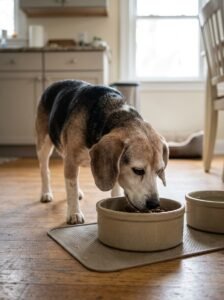
Leaving food available all day is called free-feeding. Some dogs can manage their intake well, but many dogs eat more than they need when food stays available.
Scheduled, measured meals make it easier to monitor food intake and prevent unwanted weight gain. They also help you notice when a dog suddenly loses interest in food.
Free-feeding can be especially difficult in homes with multiple pets. One dog may eat another dog’s food, making it hard to track each pet’s intake.
If your dog prefers to graze, talk with your veterinarian about a suitable routine. You can also try offering measured meals for a set period and removing uneaten food afterward, following advice suited to your dog’s age and health.
Never restrict a very young puppy’s meals without professional guidance. Small puppies and dogs with certain health conditions may need special feeding arrangements.
Signs Your Dog’s Feeding Schedule May Need to Change
Even a routine that worked well before may need adjustment as your dog grows or its health changes. Watch your dog’s eating habits and body condition rather than relying on age alone.
Consider asking your veterinarian for advice if you notice:
- A sudden loss of appetite or repeated refusal to eat.
- Unexplained weight gain or weight loss.
- Repeated vomiting or diarrhea around mealtimes.
- Unusual hunger or a sudden increase in thirst.
- Difficulty chewing or swallowing food.
- Low energy or other changes in normal behavior.
These signs do not always mean the feeding schedule is wrong. They may indicate a health problem that needs attention.
Contact a veterinarian promptly if your dog stops eating and seems unwell. Seek urgent veterinary care for a swollen abdomen with repeated unsuccessful retching, collapse, breathing difficulty, or severe weakness. Do not wait for the next scheduled meal if your dog shows emergency signs.
Common Dog Feeding Mistakes to Avoid
A healthy feeding routine does not need to be complicated. A few simple habits can help you avoid common problems.
1. Feeding Too Much at Each Meal
Large portions can cause unwanted weight gain over time. Measure the daily allowance and divide it between meals instead of filling the bowl by eye.
2. Giving Too Many Treats
Treats can help with training, but they add calories. Veterinary nutrition guidance generally recommends keeping treats below 10% of daily calories, with the main diet providing the rest.
3. Changing Food Too Quickly
A sudden diet change can upset some dogs’ stomachs. Unless your veterinarian advises otherwise, transition to a new food gradually over several days.
4. Ignoring Your Dog’s Life Stage
Puppies, adults, and senior dogs may have different nutritional needs. Choose food suitable for your dog’s stage of life and expected adult size.
5. Following One Schedule for Every Dog
A schedule that works for one dog may not suit another. Breed, size, activity, medical conditions, and medications can all affect feeding needs.
Frequently Asked Questions
Can I feed my dog once a day?
Some adult dogs may tolerate one meal daily, but two meals are a common practical choice for healthy adult pets. Ask your veterinarian before switching to once-daily feeding, especially if your dog has health concerns or is prone to stomach problems.
Dog Feeding Schedule https://dogsdailycare.com/how-much-should-my-dog-eat/
Is feeding a dog twice a day enough?
For most healthy adult dogs, yes. Puppies generally need more frequent meals, while some dogs with medical conditions may need a different plan.
Should dogs eat before or after a walk?
Keep exercise and meals sensibly separated, especially if your dog is at risk of bloat. Avoid vigorous activity immediately before or after eating. Ask your veterinarian about the safest routine for your dog’s breed and health.
What if my dog is hungry between meals?
First, check that you are feeding the right daily amount. You can use part of that allowance for training treats or ask your veterinarian whether the schedule needs adjustment. Begging alone does not always mean your dog needs more food.
Do small dogs need to eat more often than large dogs?
Some toy-breed puppies need more frequent meals than larger puppies because of their small size and risk of low blood sugar. Healthy adult dogs of different sizes often do well with two meals daily, but individual needs vary.
Should senior dogs eat twice a day?
Many senior dogs do well with two meals daily. However, dental problems, appetite changes, or medical conditions may call for a different routine. Your veterinarian can recommend suitable portions and meal frequency.
Final Thoughts: Build a Healthy Feeding Routine
If you are wondering how many times a day dogs should eat, start with your dog’s age. Young puppies generally need several small meals, while most healthy adult dogs do well with two meals daily. Senior dogs often continue this routine unless their health needs require a change.
Focus on measured portions, complete and balanced food, fresh water, and consistent mealtimes. Monitor your dog’s weight and appetite so you can spot changes early.
Most importantly, remember that no single feeding schedule suits every dog. Work with your veterinarian to create a routine that supports your dog’s age, size, activity, and health. A little planning can make mealtimes easier and help your best friend stay healthy.