Quick answer: Know which winter paw cracks can be monitored briefly, which signs require a clinic, and what first aid to avoid. Start with the simplest safe step and adapt to your dog’s size, health, experience and comfort. This guide explains what to watch, what to do next and when professional help matters.
Dog owners often look for one fast fix, but the sensible plan begins by understanding why the problem happens. Small adjustments in preparation, environment and expectations can make the experience safer and more comfortable. The goal is progress without forcing a frightened, uncomfortable or unwell dog to continue.
This guide is written for everyday U.S. dog owners. It is educational rather than a substitute for veterinary care. For more background, explore Dogs Daily Care and the trusted resources linked at the end.
Table of Contents
What to know first
Know which winter paw cracks can be monitored briefly, which signs require a clinic, and what first aid to avoid. Keep a simple record of what triggers the difficulty and which gentle changes help. If signs are sudden, severe or painful, contact your veterinarian rather than assuming a training or home-care issue.
1. Understand why paw pads crack
Winter dryness, salt and repeated contact with rough or frozen pavement can stress a dog’s paw pads. Small superficial rough patches may appear before a painful split forms. Allergies, infection, abnormal wear and other medical problems can also affect paws, so weather is not always the full explanation.
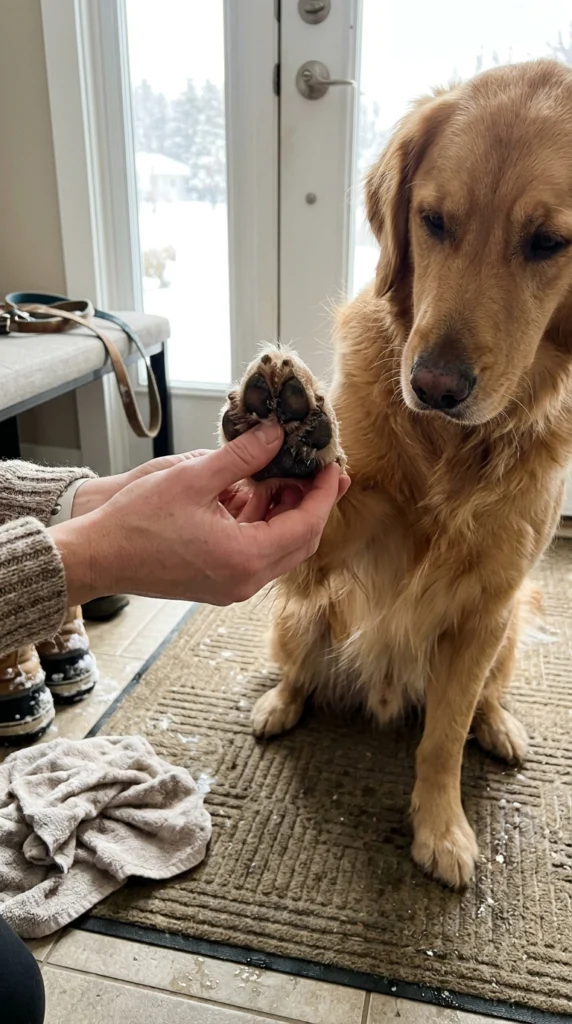
Inspect all four feet and compare them. Sudden one-sided pain, intense licking or a deep fissure should not be dismissed as routine dryness.
2. Check for immediate red flags
Call a veterinarian promptly for bleeding, deep or gaping cracks, pus, a bad smell, swelling, marked redness or limping. Discolored, very cold or numb-looking tissue after exposure may indicate frostbite and needs urgent assessment.
Seek urgent care if your dog is severely weak, cannot bear weight or shows signs of hypothermia such as profound lethargy or trouble moving. Do not delay professional care while trying balms.
3. Clean gently without harsh products
For a mildly dirty paw without a deep wound, rinse away salt and debris using lukewarm water. Pat dry with a clean towel. Avoid alcohol, hydrogen peroxide, essential oils and household disinfectants, which can sting or damage tissue.
Do not pry apart a painful crack or scrape away scabs. If a wound is present, ask the clinic whether to cover it during transport.
4. Prevent licking and chewing
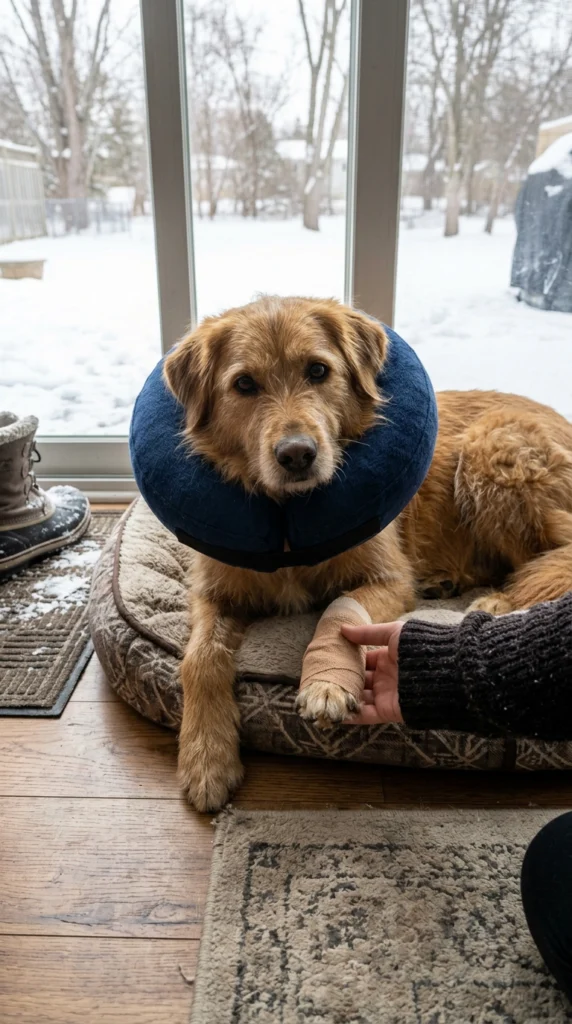
Excess licking can reopen tissue and introduce more irritation. Calmly supervise the dog and use a veterinarian-recommended protective collar or covering if necessary. A sock can become wet or be swallowed if left unsupervised.
If the dog persistently licks one spot, assess for pain, foreign material or infection instead of assuming a habit.
5. Be cautious with paw balms
A pet-safe barrier product may help intact dry pads, but it cannot close a deep wound or treat infection. Products should be labeled for dogs; follow directions and avoid anything that encourages excessive licking.
Ask a veterinarian before applying balm to bleeding, infected or severely cracked pads. Never substitute a human medicated cream without professional guidance.
6. Reduce exposure while healing
Switch to short bathroom breaks on cleared, nonslip ground. Rinse off de-icers after each outing. Avoid salt-heavy streets and jagged ice. If approved by your vet, comfortable, well-fitted boots may provide an added barrier.
Continue gentle indoor enrichment while outdoor exercise is reduced, but do not make a painful dog work through limping.
7. Notice related symptoms
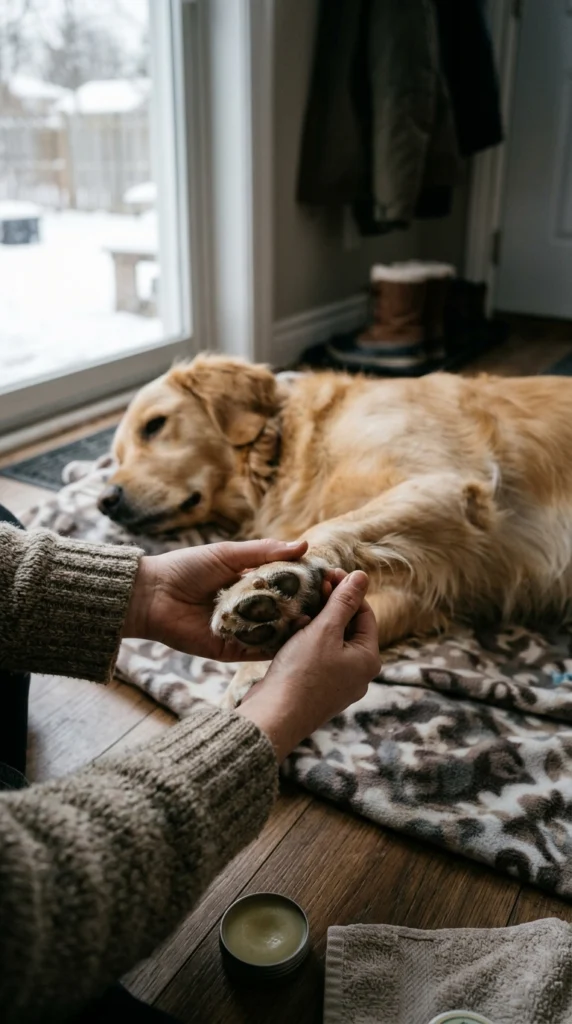
Cracked pads plus itching, ear problems, recurrent redness or hair loss may suggest an underlying skin issue. Excessive thirst, weight change or unusual lethargy also deserve a veterinary conversation.
Make notes about when the cracks started, products used on the floors and how much the dog walks outdoors; this history helps identify triggers.
8. Prepare useful information for the clinic
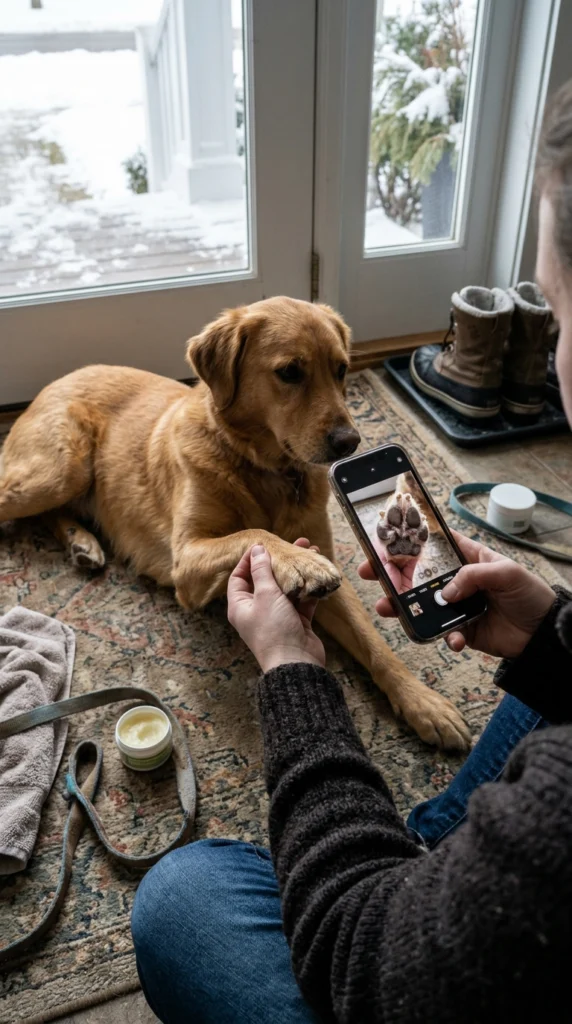
Photograph each affected paw in good light, note bleeding and limping, and list any ointments or cleaning agents already used. Tell the vet about salt exposure, recent grooming and changes in activity.
The veterinarian may examine for infection, injury or another condition and recommend appropriate wound care or medication. Treatment depends on the cause.
9. Plan safer winter maintenance
Make paw checks a routine at the door, keep grooming gentle and remove de-icers after walks. Store antifreeze securely; exposure or ingestion is an emergency. The goal is consistent prevention rather than thick coatings of multiple products.
If cracks keep returning, request a veterinary evaluation even if they seem mild on individual days.
Common mistakes to avoid
- Continuing an outing when the dog is uncomfortable or injured.
- Using hot water, sharp tools or harsh products on tender tissue.
- Skipping careful drying and follow-up checks.
- Treating persistent pain or unusual symptoms as ordinary winter discomfort.
Helpful resources and optional supplies
For a broader selection of owner-approved gear, visit our Recommended Dog Products page. Readers who prefer detailed learning can browse our Dog Books library. Explore the Dog Care Tools hub for the live breed-matching and age resources. These links are optional and do not replace the steps above.
Winter care is not one-size-fits-all. See senior dog care advice for age-related adjustments, particularly when movement or comfort has changed.
No product-specific Amazon affiliate recommendations are included in this guide because a suitable exact product listing was not sufficiently verified for the topic. The related product and book resource pages above remain available.
What to tell the veterinarian
This practical reference turns the advice above into manageable actions:
- Timeline: When did the rough pad first appear, and when did the crack begin to hurt or bleed?
- Location: Which feet are affected? Include a clear photograph of each paw in good light.
- Walking conditions: Were streets treated with salt, was the ground icy, or did the dog step on sharp debris?
- Behavior: Mention limping, licking, reduced activity, appetite changes and whether your dog will bear weight.
- Products used: List paw balms, cleaners, wipes and any attempted bandages or medication.
- Previous episodes: Note allergies, recurring infections or other skin problems your veterinarian should consider.
Do not give a dog aspirin, ibuprofen, acetaminophen or other human painkillers unless prescribed by a veterinarian. The correct treatment depends on the cause and severity of the tissue damage.
Frequently asked questions
When should a cracked paw pad be treated as urgent?
Deep bleeding splits, swelling, pus, persistent limping or discoloration after cold exposure need prompt veterinary care.
Can I use Vaseline on my dog’s paws?
Pet-safe protective products may help intact dry skin, but do not put home ointments into a deep or infected crack without advice.
Should I bandage a cracked paw at home?
Ask a clinic first. Improper bandages can become wet, tight or damaging, especially around toes.
Why are only one or two paws affected?
A single affected paw may reflect an injury or foreign material rather than generalized winter dryness.
Final thoughts
Know which winter paw cracks can be monitored briefly, which signs require a clinic, and what first aid to avoid. Keep the routine kind, predictable and appropriate for your dog. A few careful, comfortable steps are usually more useful than a dramatic one-day transformation. If a problem continues or feels medically concerning, your veterinarian or a credentialed reward-based professional can provide individualized help.