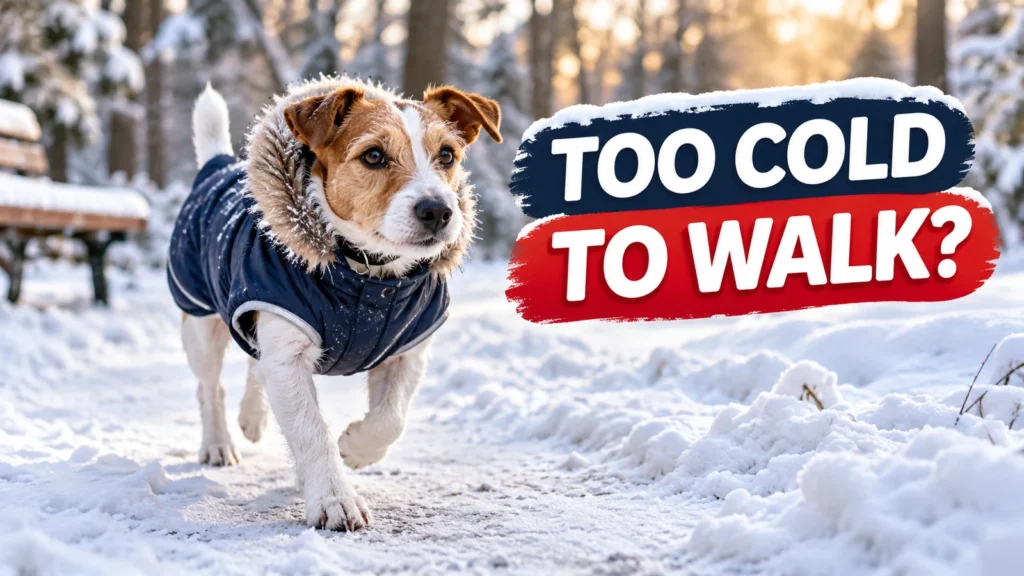
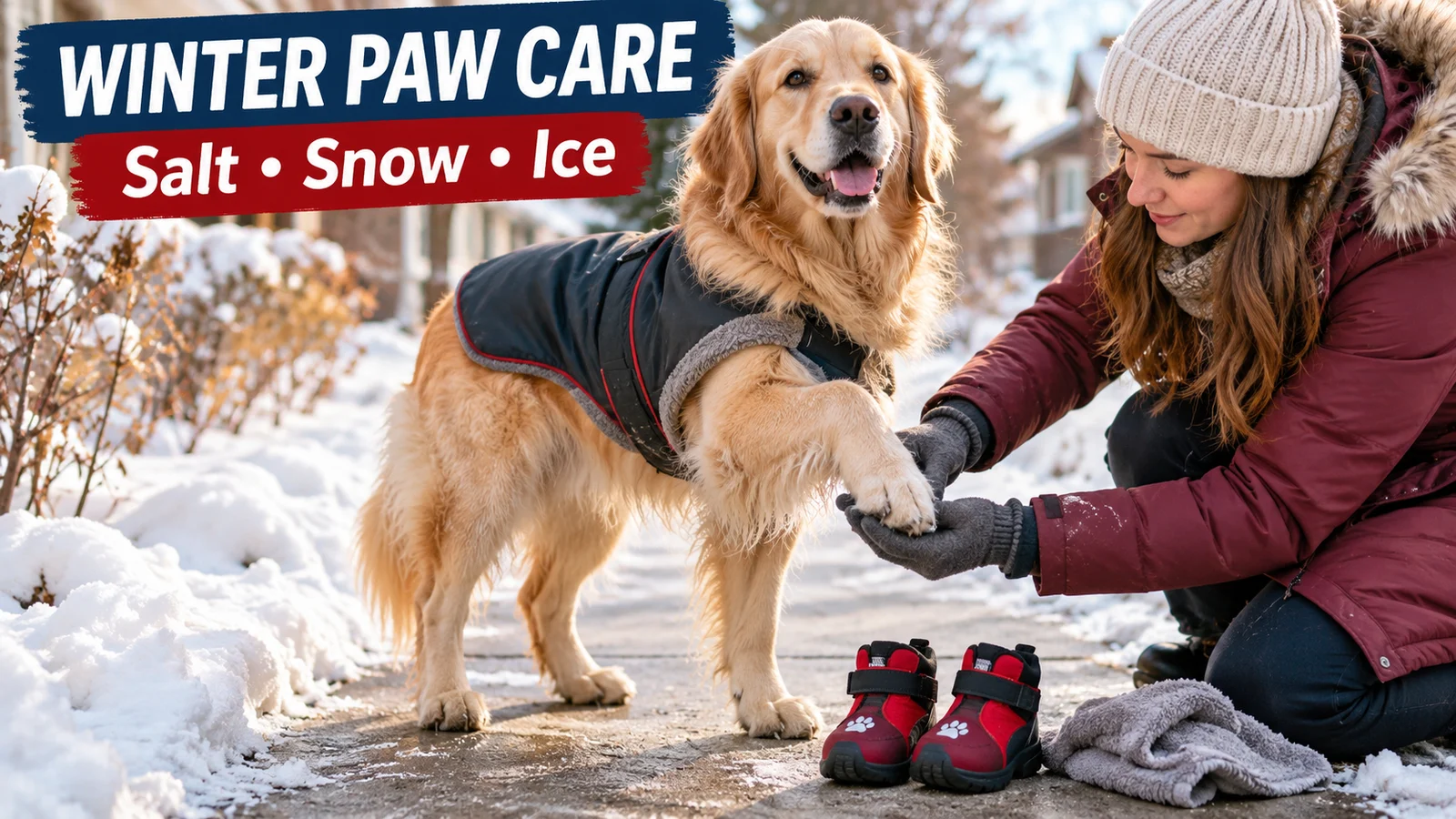
Quick answer: The safest winter paw-care routine is simple: check your dog’s feet before going outside, use well-fitting boots or a veterinarian-approved paw protectant when conditions call for it, avoid heavily salted surfaces, and rinse and thoroughly dry every paw after the walk. Watch for redness, cracks, limping, or repeated paw lifting. Road salt and de-icers can irritate skin and become harmful if your dog licks them off.
Snowy walks can be wonderful. The tricky part is what you cannot always see: gritty de-icer on the sidewalk, hard ice hidden under slush, and damp fur that traps little snowballs between the toes. Fortunately, a few consistent habits protect your dog without turning every bathroom break into a complicated grooming session.
Table of Contents
Why winter is rough on dog paws
A dog’s paw pads are tough, but they are not indestructible. Cold and dry indoor air can contribute to rough skin; frozen ground may have sharp edges; and snow can pack between the toes. De-icing products add another problem. Common formulations contain sodium chloride, calcium chloride, potassium chloride, or magnesium chloride. These substances can sting irritated skin, and swallowing them by licking paws or eating slush may cause illness.
Even products marketed as “pet-friendly” should not be treated as edible or completely risk-free. Their ingredients vary, and the sidewalk outside your home may have been treated with a different product. The ASPCA’s de-icer guidance explains why limiting exposure and cleaning paws matters.
Before you head outside: a 60-second paw check
Look at each paw while your dog is calm. Spread the toes gently and inspect the pads, nails, and skin between them. Notice any redness, tenderness, small cuts, or existing cracks. If one paw already looks sore, consider a short protected bathroom break instead of a full walk, and call your veterinarian if pain or damage is significant.
Choose a route with less salt, less packed ice, and reliable traction. Snow-covered grass can be easier on some dogs than a chemically treated sidewalk, provided the ground is safe and you can see where your dog is stepping. A leash helps you steer around suspicious slush and prevent snow eating. If your dog pulls or darts across icy pavement, our leash training for beginners guide offers useful skills to practice indoors before winter walks.
Dog boots: when they help and how to fit them
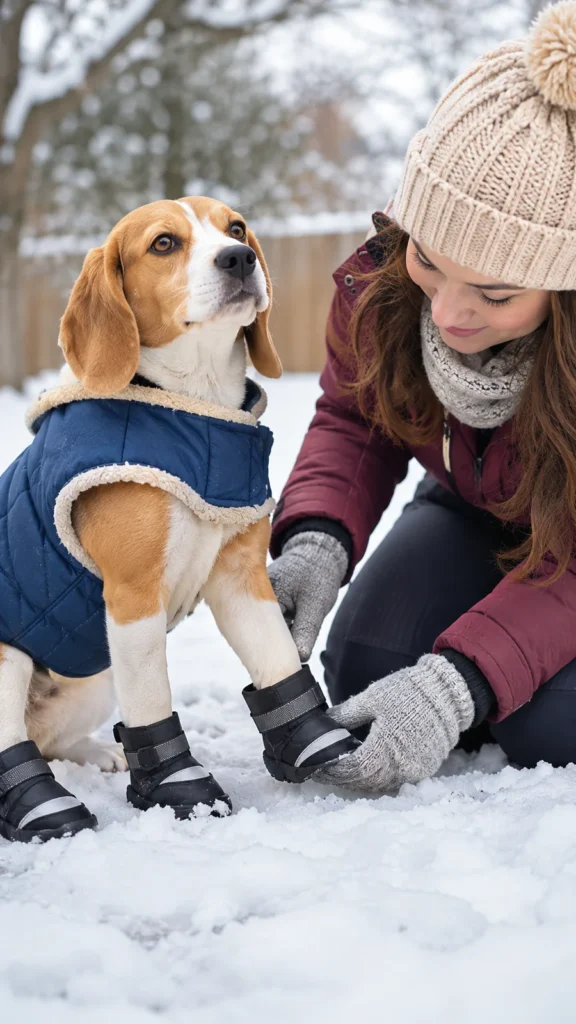
Boots can reduce contact with salt and abrasive ice. They are particularly useful for dogs whose paws become irritated quickly or for walks on heavily treated paths. Measure the paw while your dog is standing, using the boot manufacturer’s chart; a boot that twists or rubs can create a new problem. Look for a flexible sole, secure closure, and traction suited to your walking surface.
Introduce boots inside the house, one paw at a time. Reward a brief, calm step, then remove them. Gradually work toward all four boots and a few minutes of walking. A funny high-stepping gait is common at first, but persistent distress or rubbing means you should stop and reassess the fit. Remove boots promptly after the outing and check for dampness and pressure marks. Boots are protection, not permission to stay outside indefinitely in bitter weather.
Paw wax and balm: useful but not a substitute for cleaning
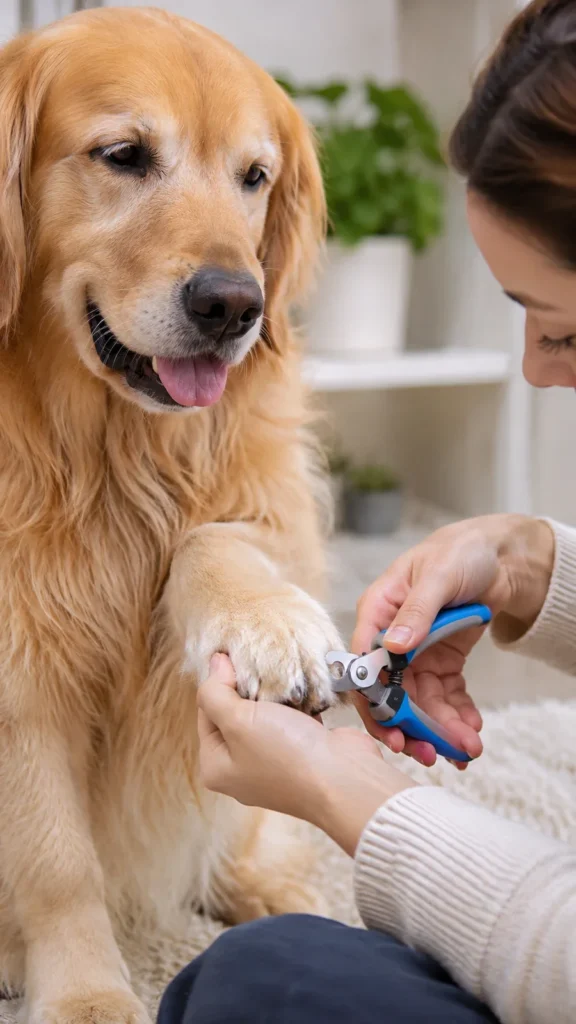
A thin layer of dog-safe paw wax may help create a temporary barrier against moisture and salt. Apply it to clean pads according to the product directions before heading outside. Wax can wear off, especially during long walks or in wet slush, so do not rely on it as complete protection. Some dogs also lick products, so use only products appropriate for dogs and ask your veterinarian about allergies or skin disease.
After the walk, wash away road residue before applying a moisturizing balm. Never seal grit or de-icer under a thick coating. If a pad is deeply split, bleeding, or infected-looking, skip cosmetic treatments and get veterinary advice. For broader winter itchiness, see our dog dry skin care guide.
After every walk: clean, dry, inspect
- Pause at the door. Keep your dog from licking dirty feet until they are clean.
- Rinse or wipe. Use lukewarm water and a clean, damp cloth to remove salt and slush. For heavy buildup, a shallow basin or portable paw washer can help.
- Clean between the toes. Gently separate them to remove grit and hidden salt crystals. Do not scrub raw skin.
- Dry carefully. Pat the pads and spaces between the toes with a soft towel. Leaving moisture trapped there may worsen irritation.
- Look again. Check for redness, cracks, bleeding, swelling, or a new limp.
If your dog has long fur around the feet, wet snow may form hard clumps. Soften them with a warm, damp towel rather than pulling at the fur. Ask a groomer to tidy excess hair between the pads if it regularly collects ice; avoid cutting close to the skin yourself. The AKC paw-cleaning guide also emphasizes cleaning between toes and drying thoroughly.
What to do if salt or ice irritates your dog’s paws
If your dog suddenly lifts a foot, hops, or refuses to walk, stop and check the paw immediately. Move to a safe spot, remove visible salt or ice with lukewarm water, and dry the area. For a minor irritation that settles quickly, monitor the paw and avoid treated paths until the skin looks normal. Do not use alcohol, harsh disinfectants, or human medicated creams without veterinary guidance.
Call your veterinarian for persistent limping, marked swelling, open wounds, bleeding, discharge, or pain when touched. Seek urgent help if your dog appears weak, severely cold, or has swallowed a de-icer or antifreeze. Do not induce vomiting unless a veterinary professional instructs you to. The ASPCA Animal Poison Control Center is available at (888) 426-4435 in the United States; fees may apply.
Paw protection choices: what fits your dog?
| Option | When it helps | Important limitation |
|---|---|---|
| Dog boots | Salted sidewalks, rough ice, sensitive paws | Must fit well; check for rubbing and slipping |
| Dog-safe paw wax | Short outings where a temporary barrier is useful | Can wear off; still rinse after walking |
| Water and soft towel | Everyday post-walk cleaning | Reach between toes and dry completely |
| Professional paw-hair trim | Long-haired dogs with frequent ice balls | Avoid cutting or nicking delicate pad skin |
For very cold days, also consider whether the outing should happen at all. Our guide to walking a dog at 20°F explains how wind, age, coat, and behavior affect that decision. A warm coat helps the body, but it does not replace paw protection.
Winter paw-care supplies worth considering
Affiliate disclosure: As an Amazon Associate, DogsDailyCare.com earns from qualifying purchases. If you buy through qualifying Amazon links below, we may earn a commission at no extra cost to you.
Musher’s Secret Dog Paw Wax — 60 g
This wax-based paw protectant is designed to condition pads and provide a temporary barrier during walks on snow, salt, and rough ground. It is not a treatment for an infected or bleeding paw, and you still need to rinse off de-icer afterward. The 60 g product identity is matched to ASIN B0002IJQDC; confirm the listing before publication.
Find Musher’s Secret on Amazon
Dexas MudBuster Portable Dog Paw Cleaner
A portable paw-washing cup can be handy for slushy walks. Fill with water, gently guide in one paw, clean, then towel-dry. Select the correct size for your dog. Amazon product listing not verified: use the manufacturer information below and add an affiliate product URL only after confirming the exact size and listing.
View Dexas manufacturer information
Winter dog boots with non-slip soles
Look for a measured fit, adjustable fastening, and a flexible traction sole. A product is only useful if your dog tolerates it and the boot does not twist. Amazon product listing not verified: do not add a tracking link until the chosen model and size are checked.
Do not describe any of these products as personally tested by our editorial team unless that testing has actually occurred.
Simple routine for puppies, seniors, and sensitive dogs
Puppies may need frequent outdoor bathroom trips but can have less cold tolerance than healthy, acclimated adult dogs. Keep breaks brief, choose the clearest route, and reward calm paw handling indoors. Our puppy potty training guide can help you plan a consistent schedule without forcing long walks in bad weather.
Senior dogs, dogs with arthritis, and dogs recovering from injury may have trouble on slippery ground. A stable surface and a shorter route often matter more than fancy gear. If your dog has diabetes, allergies, recurrent paw infections, or chronic skin problems, ask your veterinarian about a personalized care plan.
Frequently asked questions
Should I wash my dog’s paws after every snowy walk?
Yes, especially if the route may have been treated with de-icer. A quick lukewarm rinse or thorough damp wipe followed by drying is usually enough. You do not need to give your dog a full bath after every walk. For bathing frequency and skin care, see how often to bathe a dog.
Can road salt burn a dog’s paws?
De-icing salts can irritate paw pads and the skin between the toes. Contact with already cracked skin may be particularly painful. Rinse promptly, and contact a veterinarian if pain or redness persists.
Is “pet-safe” ice melt completely safe?
No. Labels and ingredients vary, and even products intended to be gentler around pets should not be eaten. Store them securely, follow label directions, and prevent dogs from licking treated snow or slush.
What if my dog refuses to wear boots?
Practice indoors in tiny sessions with rewards, then try a short outdoor walk. If boots still cause distress, choose safer routes, shorten outings, consider a dog-safe wax if appropriate, and clean paws carefully afterward.
Can I use human lotion on cracked dog paws?
Avoid applying random human creams, especially medicated or fragranced products that your dog might lick. Choose a dog-specific product and consult your veterinarian if pads are painful, split, or not improving.
Final thoughts
Winter paw care does not have to be complicated. The biggest difference comes from doing a few small things consistently: check before the walk, protect when needed, stay away from suspicious slush, and clean and dry paws afterward. When your dog changes their gait or wants to go home, listen. A shorter walk today is better than a sore paw tomorrow.
Editorial note: This article provides general pet-care information, not a veterinary diagnosis. Seek individualized advice from your veterinarian for persistent pain, injuries, or suspected chemical ingestion.