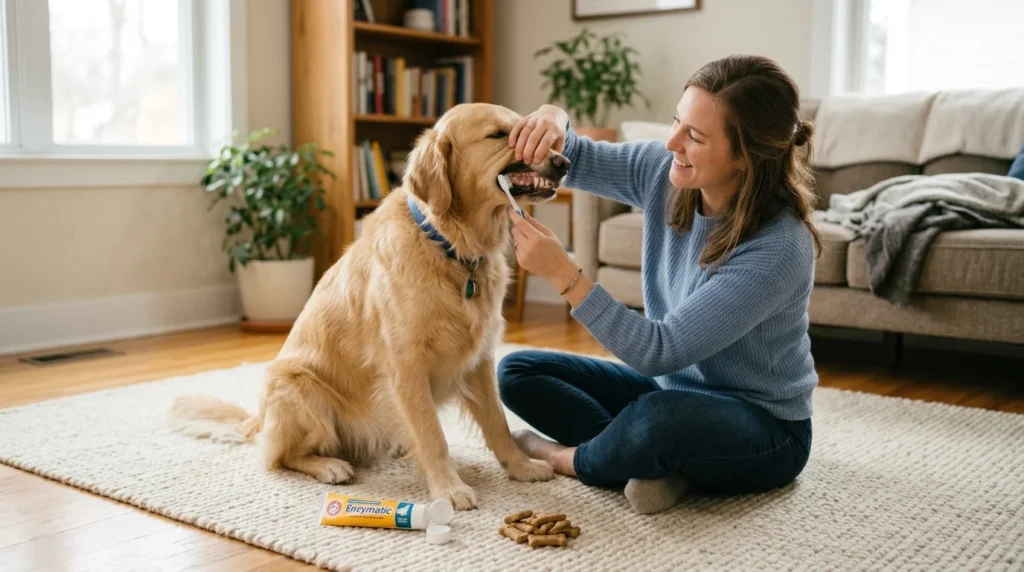

Flakes on your dog’s bed, a dusting of dandruff along the back, or scratching that never seems to stop can leave you wondering what is going on. Dog dry skin care starts with a simple idea: dry skin is a symptom, not a diagnosis. It can come from something as simple as winter air or over-bathing, or from allergies, parasites, or a medical condition.
This guide explains the signs of dry or itchy skin, the most common causes, what you can safely do at home, what to avoid, and when to book a vet visit. It is meant to guide you, not to replace an exam.
Table of Contents
Quick Answer: How Do You Care for a Dog With Dry Skin?
Start by identifying the cause with your veterinarian, since treatment depends on it. At home, bathe only as often as needed with a dog-specific, vet-approved shampoo, brush regularly, keep up flea and parasite prevention, and add moisture to dry indoor air. Avoid human lotions and essential oils, and see your vet if the skin does not improve.
Signs of Dry or Itchy Skin in Dogs
Dry skin can look different from dog to dog. Common signs include:
- White flakes or dandruff, especially along the back
- Scratching, licking, or chewing
- Rough, dull, or brittle-looking coat
- Red, irritated, or scabby patches
- Hair thinning or loss
- A noticeable odor
- Rubbing against furniture or rolling on the carpet
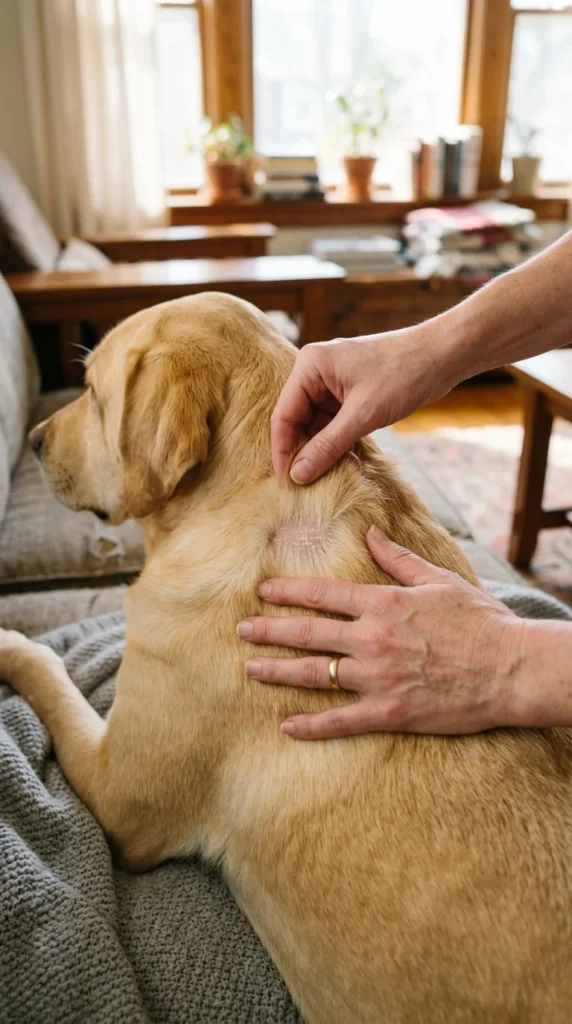
Part the fur and look at the skin itself. Healthy skin is generally pale pink or pigmented, smooth, and free of crusts and sores. Dry skin that is also red, oozing, or smelly may involve an infection and should be checked.
Common Causes of Dry and Itchy Skin in Dogs
Many different problems can lead to dry skin, which is why guessing is risky. The AKC notes that there are many potential causes and that diagnosis can be tricky. Here are the most common ones.
Dry Air and Seasonal Changes
Low humidity, especially in winter when indoor heating runs, can dry out your dog’s skin just as it does yours. If the problem shows up every cold season and your dog is otherwise healthy, the environment may be a factor.
Over-Bathing or the Wrong Products
Frequent baths and harsh or human shampoos can strip natural oils from the skin. PetMD notes that bathing too often can disrupt the skin’s natural balance and lead to dry, itchy skin. Cutting back or switching to a gentler dog formula sometimes makes a visible difference.
Allergies
Environmental, food, and flea allergies are among the most common causes of itchy, flaky skin. The AKC explains that untreated allergies can progress to atopic dermatitis, which causes dry skin, itching, redness, and inflammation, and can lead to secondary infections. If scratching centers on the paws, ears, belly, or face, allergies are a good question to raise with your vet.
Fleas, Mites, and Other Parasites
Parasites can cause dry, irritated skin and intense itching. Because some mites are hard to see, diagnosis requires a veterinary visit. Even a dog on a flea preventive may need a check if the itching is severe.
Nutrition
Diet affects skin and coat. Essential fatty acids such as omega-3 and omega-6 help maintain the skin barrier, and some dogs may benefit from more than their food provides. Do not start supplements on your own. Your vet can tell you whether one is appropriate and how much, since fish oil can upset some dogs’ stomachs.
Medical Conditions
Hormonal disorders such as hypothyroidism, autoimmune diseases, and other illnesses can show up as dry, flaky skin. The AKC lists autoimmune diseases and even cancer among possible causes, which is why dry skin that persists should not be brushed off. Your vet can run the right tests.
Infections
Constant scratching can break the skin and allow bacteria or yeast to take hold. These infections can look like dry skin at first but need their own treatment, so a dog with redness, odor, pimples, or crusts should be seen.
Breed and Individual Differences
Some dogs simply have drier skin than others, and certain breeds are prone to skin conditions. Genetics, age, and coat type all play a role.
When to See Your Veterinarian
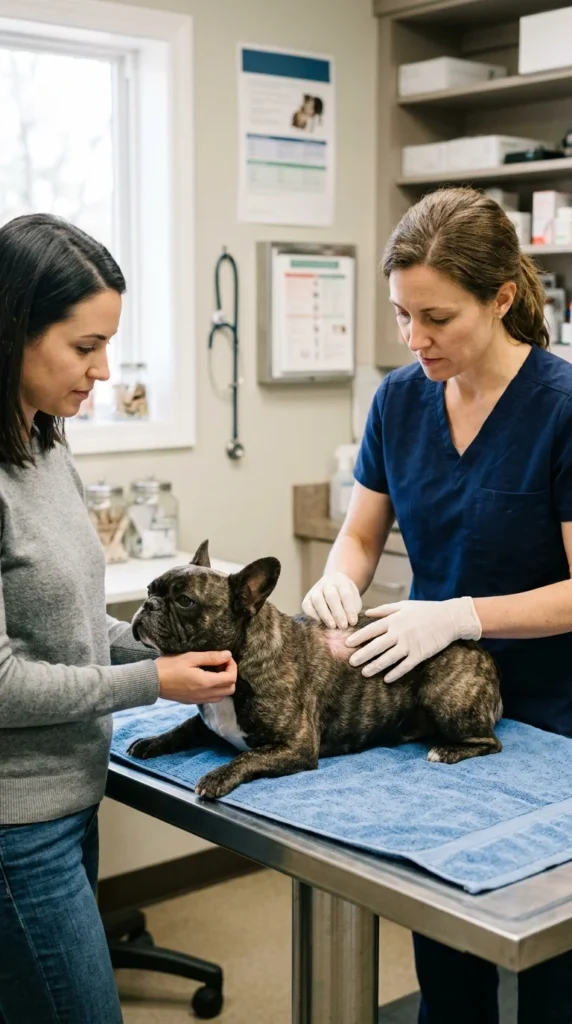
It is reasonable to book a non-urgent visit when you first notice dry, flaky skin, because the cause shapes the treatment. Call your vet sooner if you notice:
- Constant scratching or licking, or trouble sleeping
- Red, raw, oozing, or painful skin, or hot spots
- A strong or musty smell
- Hair loss or changes in skin color
- Recurring ear problems or paw chewing
- Signs of illness such as lethargy, weight change, or increased thirst
- No improvement after about a month of home care, or any worsening
Seek urgent care if your dog has facial swelling, hives, trouble breathing, or widespread severe skin damage.
Dog Dry Skin Care at Home: What You Can Do
These steps are generally gentle and useful for many dogs, but they work best alongside a diagnosis. If your vet has prescribed a plan, follow it first.
1. Rule Out Parasites
Check for fleas and keep your dog on a vet-recommended preventive year-round. Parasite control is a basic step for any itchy dog.
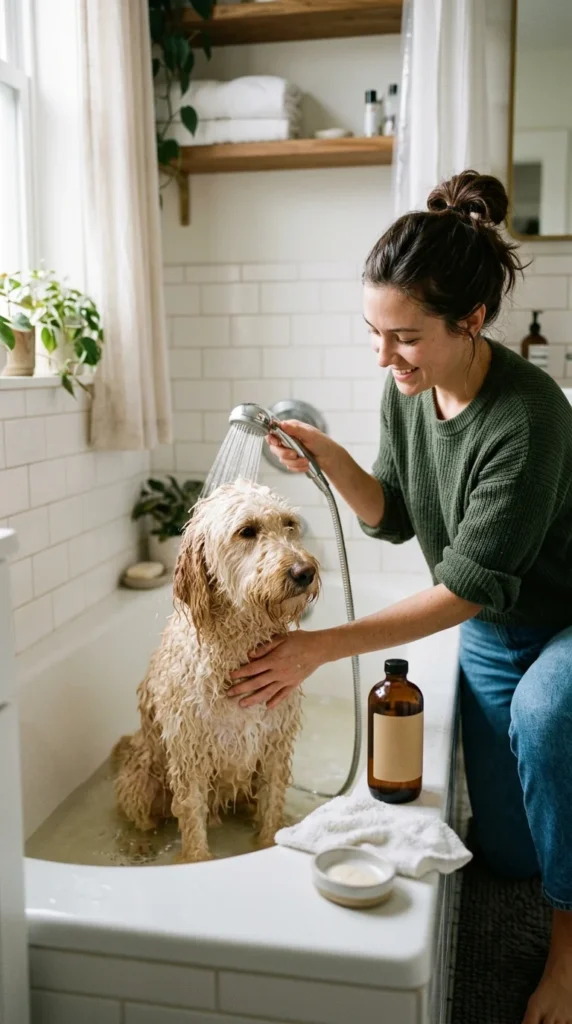
2. Bathe Smartly
- Choose a dog-specific shampoo. A mild formula, often oatmeal-based, is commonly suggested. Your vet may recommend a medicated shampoo for certain conditions.
- Use lukewarm water. Hot water can irritate skin.
- Rinse thoroughly. Leftover shampoo can cause itching.
- Follow the product directions. Some medicated shampoos need several minutes of contact time.
- Dry well. Pat the coat dry and make sure damp skin folds are not left wet.
How often to bathe depends on your dog’s coat, activity level, and skin condition. Many sources suggest routine bathing every few weeks at most for healthy dogs, and dogs with skin problems may need a different schedule, so ask your vet.
If you would like a dog-specific oatmeal formula to talk over with your vet, Burt’s Bees for Dogs Oatmeal Shampoo is one option available on Amazon.
3. Brush Regularly
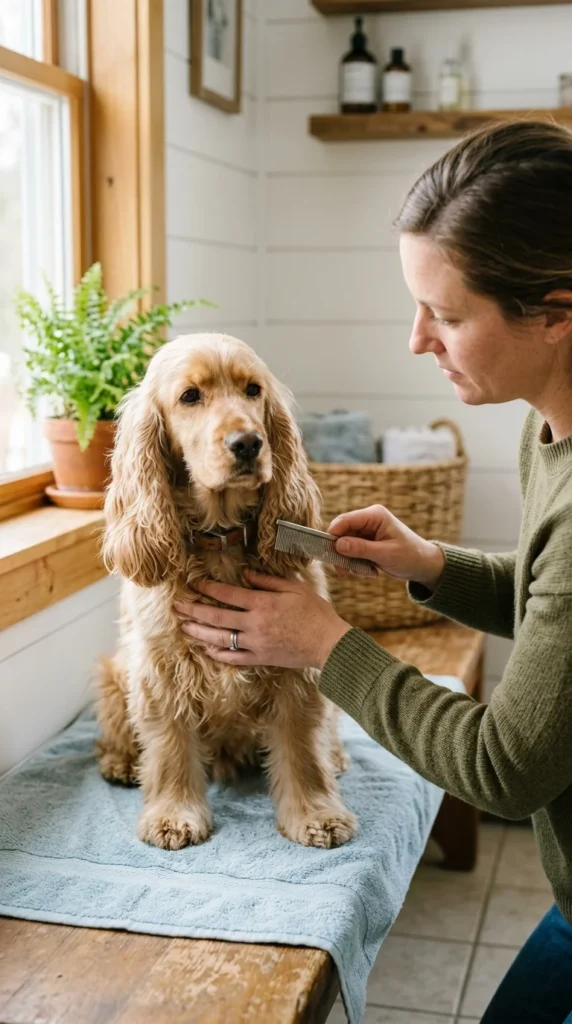
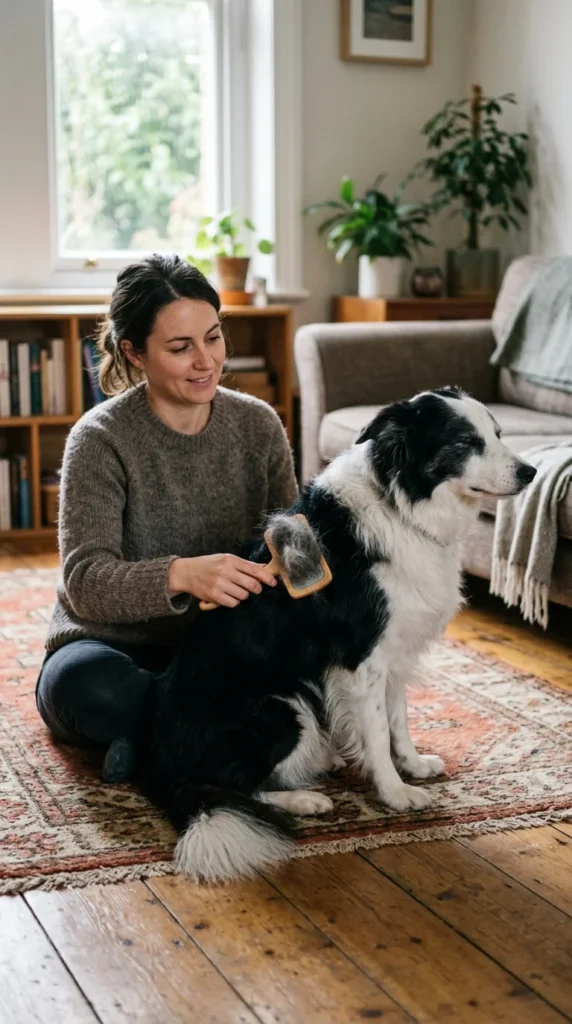
Brushing spreads natural oils through the coat, removes loose hair and flakes, and lets you spot problems early. Use a brush suited to your dog’s coat and be gentle on irritated areas.
For everyday coat care, the Hertzko Self-Cleaning Slicker Brush is one option on Amazon, but skip any wire brush on red or sore areas.
4. Add Moisture to the Air
In dry weather, a humidifier in the room where your dog sleeps can help. The AKC lists using a humidifier in dry weather among options for managing dry skin.

5. Support Skin Health Through Diet, With Your Vet
Feed a complete and balanced diet suited to your dog’s age and size. If your vet recommends an omega-3 supplement or a skin-support diet, follow their guidance on product and amount. Do not combine supplements without checking first.
6. Stop the Scratch Cycle
Constant scratching can cause hot spots and infections. Keep nails trimmed, and ask your vet about safe ways to protect irritated areas. Do not use a cone or wrap unless your vet advises it.
What Not to Do
- Don’t use human lotions, creams, or shampoos. Dogs’ skin differs from ours, and dogs lick what is put on them.
- Don’t use essential oils. PetMD warns that pure tea tree oil is not safe for dogs and that no essential oil should be put directly on a dog’s skin. Veterinary toxicology groups report that undiluted tea tree oil can cause serious poisoning.
- Don’t bathe more to “treat” itchiness. Over-bathing can make dry skin worse.
- Don’t give human medications. Many are unsafe for dogs.
- Don’t switch foods repeatedly. It muddies the picture if a food reaction is suspected.
- Don’t wait out a worsening problem. Early treatment is easier than treating an infected rash.
AKC, Dry Skin on Dogs: Causes, Symptoms and Treatment: https://www.akc.org/expert-advice/health/dry-skin-on-dogs/
Winter Skin Care Tips
- Run a humidifier and keep your dog away from heating vents.
- Wipe paws and belly after walks to remove salt and de-icing products.
- Skip unnecessary baths during the driest months.
- Keep brushing, since it helps distribute oils.
For a general home reference that includes a chapter on skin and coat, see the Dog Owner’s Home Veterinary Handbook by Debra M. Eldredge, Liisa D. Carlson, Delbert G. Carlson, and James M. Giffin.
Frequently Asked Questions
Why does my dog have dandruff?
Dandruff can come from dry air, over-bathing, allergies, parasites, nutrition, or a medical condition. Because the causes vary, have your vet check persistent flaking.
Is oatmeal shampoo good for dogs with dry skin?
Mild oatmeal shampoos made for dogs are commonly suggested for dry, itchy skin. Check with your vet first, especially if your dog has a skin condition or takes medication.
Can I give my dog fish oil for dry skin?
Omega-3 supplements are often discussed for skin health, but they can upset some dogs’ stomachs and are not right for every dog. Ask your vet whether and how to use them.
How often should I bathe a dog with dry skin?
It depends on your dog. Over-bathing can strip natural oils, so most healthy dogs do not need frequent baths. Your vet can set a schedule if your dog has a skin condition.
Can I use coconut oil or human lotion?
It is best to avoid them unless your vet approves. Dogs lick their skin, and products made for people may not be safe for dogs.
How long until dry skin improves?
It varies with the cause. If you see no improvement after about a month of home care, or if the skin gets worse, return to your vet.
Final Thoughts
Good dog dry skin care means looking beyond the flakes. Check for parasites, bathe gently, brush regularly, add humidity in dry weather, and bring your dog to the vet to find the underlying cause. Take photos and notes about when the itching happens, because they help your vet. With the right plan, most dogs get relief and a healthier coat.
This article is for general education and is not a substitute for veterinary advice. If you are concerned about your dog’s skin or health, contact your veterinarian.