

Fleas, ticks, intestinal worms, and heartworm can all cause real harm to dogs, and some can spread to people. The good news is that most of these problems are preventable. Dog parasite prevention is one of the simplest and most effective ways to protect your dog’s health, and it works best as a year-round habit planned with your veterinarian.
This guide explains what each parasite does, how to spot warning signs, how to remove a tick safely, how testing works, and what to consider when choosing preventives. It is general education, not a treatment plan, so your vet should choose the right products for your dog.
Table of Contents
Quick Answer: How Do You Prevent Fleas, Ticks, and Worms in Dogs?
Most veterinary groups recommend year-round, vet-approved preventives that cover fleas, ticks, heartworm, and intestinal worms, along with yearly heartworm testing and regular stool exams. Check your dog for ticks after outdoor time, keep your home and yard tidy, and never use a product labeled for another species.
Why Parasite Prevention Matters
Parasites are more than a nuisance. The Companion Animal Parasite Council (CAPC) notes that fleas and ticks cause illness through blood loss, irritating saliva proteins, and the infectious agents they carry. Intestinal parasites can make puppies seriously ill, sometimes before they can be diagnosed with a stool test. Heartworm disease, spread by mosquitoes, is serious and costly to treat.
Prevention is also about your household. Some parasites, including certain roundworms, hookworms, and ticks, can affect people, so keeping your dog protected helps keep the whole family safer.
Fleas: Signs and Prevention
Fleas are tiny, fast-moving insects that feed on blood. A flea problem can build quickly because a female flea lays many eggs, and these end up in carpets, bedding, and furniture, not just on your dog.
Signs Your Dog May Have Fleas
- Frequent scratching, chewing, or licking
- Tiny dark specks in the coat (“flea dirt”)
- Red, irritated skin or scabs, often near the tail base and lower back
- Hair loss in itchy areas
- Pale gums in heavy infestations, especially in puppies
Some dogs are allergic to flea saliva, so a single bite can set off intense itching. By the time you see fleas, the problem may already be established.

Ticks: Checks, Removal, and Prevention
Ticks attach to the skin and feed on blood, and they can transmit disease. The CAPC points out that ticks can pass infectious agents to a pet before they are found and removed. They are most active in warm weather, but they can be a risk in other seasons too, depending on where you live.
Where to Check
After walks in grass, woods, or brush, run your hands over your dog’s whole body. Check between the toes, around the ears, under the collar, in the armpits and groin, and around the face and tail.

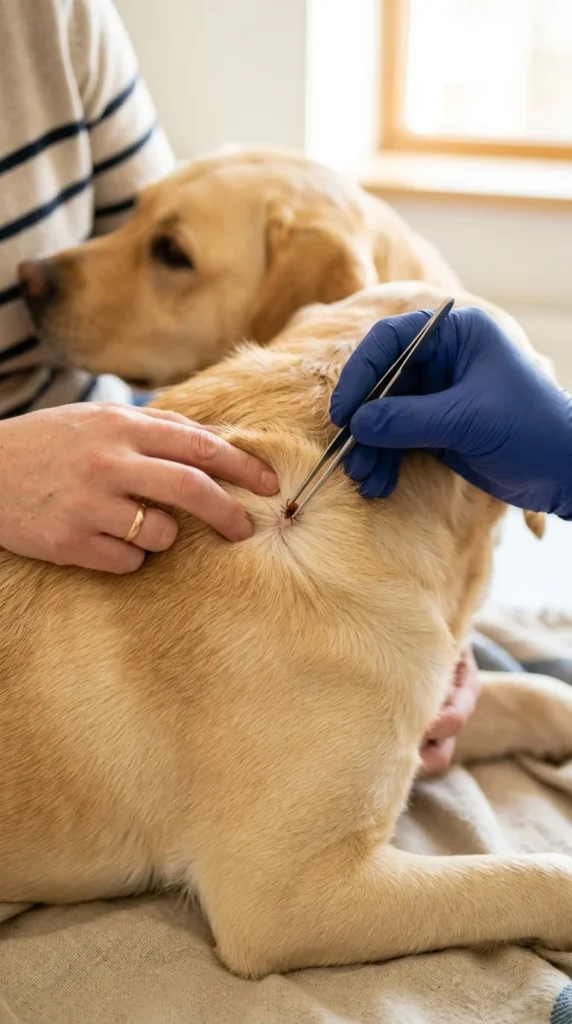
How to Remove a Tick
- Use fine-tipped tweezers or a tick removal tool. Wear gloves if you can.
- Grasp the tick as close to the skin as possible. Avoid squeezing the body.
- Pull straight up with steady pressure. Do not twist or jerk.
- Clean the area and wash your hands.
- Save the tick in a sealed container or bag in case your vet wants to identify it.
- Watch the spot and your dog over the next weeks.
Call your vet if the head seems to be left behind, the skin looks very irritated, or your dog develops fever, lameness, loss of appetite, or lethargy. Avoid folk remedies such as burning the tick or covering it in petroleum jelly or alcohol.
Intestinal Worms: What to Know
Common intestinal parasites of dogs include roundworms, hookworms, whipworms, and tapeworms, plus microscopic parasites such as giardia and coccidia. Dogs can pick them up from contaminated soil or feces, from nursing, from swallowing infected fleas (tapeworms), or through other routes.
Possible Signs
- Diarrhea or soft stool, sometimes with blood or mucus
- Vomiting
- Weight loss or poor growth
- A pot-bellied look in puppies
- Dull coat
- Rice-like segments near the tail or in stool (tapeworms)
- Scooting
Many intestinal parasites cannot be seen with the naked eye, so a normal-looking stool does not rule them out. That is why fecal testing matters. CAPC recommends fecal exams at least four times in the first year of life and at least twice a year for adult dogs, depending on health and lifestyle.
Heartworm Disease
Heartworms are spread by mosquito bites. The worms live in the heart and nearby blood vessels, and early infection often has no obvious signs. Later signs can include coughing, tiredness with exercise, and weight loss. Because it is hard to spot at home and costly to treat, prevention is strongly emphasized.
CAPC recommends yearly heartworm testing in dogs, and testing before starting a heartworm preventive, with a repeat test months later when starting or switching medications. Heartworms have been found in all 50 states, according to the American Heartworm Society, so ask your vet about local risk.
Should Parasite Prevention Be Year-Round?
Many veterinary groups say yes. AAHA and AVMA preventive guidelines support year-round broad-spectrum parasite control for heartworm, intestinal parasites, and fleas, and CAPC recommends year-round, lifelong prevention of fleas and ticks. Reasons include:
- Transmission seasons differ by parasite and region, and they change from year to year.
- Fleas can survive indoors through winter.
- Year-round dosing avoids gaps that can happen when owners try to predict the season.
- Intestinal parasites can infect dogs throughout the year.
Some veterinarians tailor plans to climate and lifestyle, so ask your vet what makes sense where you live.
Choosing Parasite Preventives With Your Vet
There are many options, including monthly chewables, topical liquids, long-lasting collars, and in some cases injections. Which products suit your dog depends on age, weight, health, local parasite risks, and your household. Here are some points to discuss with your vet.
Match the Product to Your Dog
- Age and weight: Products have minimum age and weight requirements printed on the label.
- Coverage: Ask what the product covers (fleas, ticks, heartworm, intestinal worms), since many do not cover everything.
- Health history: Tell your vet about seizures, other medications, pregnancy, or breeding plans.
- Your lifestyle: Hiking, swimming, boarding, and multi-pet homes can all change the best choice.
Know the Safety Considerations
The FDA considers flea and tick products in the isoxazoline class to be safe and effective for dogs and cats. It has also alerted owners and veterinarians that these products have been associated with neurologic adverse events, including muscle tremors, uncoordinated movement, and seizures in some pets, even without a prior history. Most animals have no such reactions. If your dog has a history of seizures, or you are concerned, talk to your vet about the best option.
General safety rules:
- Never use a product labeled for another species. Some dog products are dangerous to cats.
- Follow the label for weight range and timing.
- Watch your dog after a new product and call your vet about vomiting, tremors, or unusual behavior.
- Report suspected problems to your vet and the manufacturer, as the FDA encourages.

Puppies and Senior Dogs
Puppies: Puppies are especially vulnerable to intestinal parasites and fleas. CAPC says infections in puppies can cause serious illness before they can be diagnosed with fecal tests. Ask your vet for a deworming and prevention schedule and the earliest age each product can be used.

Seniors: Older dogs may have other health conditions or take medications, so prevention products should be reviewed with your vet. They still need protection from parasites.
Home and Yard Habits That Help
- Wash your dog’s bedding regularly in hot water.
- Vacuum floors, rugs, and furniture often, and empty the vacuum outside.
- Pick up feces promptly from the yard and walks.
- Keep grass trimmed and clear leaf litter and brush where ticks live.
- Remove standing water that breeds mosquitoes.
- Treat all pets in the household as your vet advises, since fleas move between animals.

Mistakes to Avoid
- Stopping prevention in winter without asking your vet: Gaps can leave dogs unprotected.
- Using over-the-counter products without veterinary advice: Not all products are equally effective or safe.
- Using cat products on dogs or dog products on cats: This can be dangerous.
- Skipping fecal tests because stool looks normal: Many worms are invisible.
- Skipping heartworm testing: Yearly testing is recommended even for dogs on prevention.
- Treating only the dog for fleas: Eggs and larvae live in the home.
- Using home remedies for ticks: Stick to proper removal.
When to Call Your Veterinarian
Contact your vet if you notice:
- Fleas, flea dirt, or intense itching
- An attached tick you cannot remove, or signs of illness after a tick bite
- Diarrhea, vomiting, weight loss, or visible worms
- Coughing, tiring easily, or reduced stamina
- A skin reaction, tremors, or other unusual signs after a new preventive
Seek emergency care for seizures, collapse, severe weakness, pale gums, or heavy bloody diarrhea, especially in a puppy.
You can also check this article: https://dogsdailycare.com/dog-dehydration-signs/
Frequently Asked Questions
Does my dog need flea and tick prevention in winter?
Many veterinary groups recommend year-round prevention, since fleas can survive indoors and tick activity can vary. Ask your vet what is best for your area.
How often should my dog have a fecal test?
CAPC recommends at least four times in the first year and at least twice a year for adults, depending on health and lifestyle. Your vet may adjust this for your dog.
Can my dog get heartworm even if I use prevention?
Prevention is highly effective when given correctly, but missed doses or vomiting after a dose can leave gaps. That is why yearly testing is recommended.
Can I use natural or essential-oil flea remedies?
Ask your vet first. Some essential oils are harmful to dogs and cats, and “natural” does not always mean safe or effective.
Can humans catch parasites from dogs?
Some can. Certain roundworms and hookworms can infect people, and ticks can bite people too. Good hygiene and regular prevention help protect your family.
What should I do if I find a tick on my dog?
Remove it carefully with fine-tipped tweezers or a tick tool, pulling straight up. Save the tick, clean the area, and call your vet if your dog shows signs of illness.
Final Thoughts
Good dog parasite prevention is a routine, not a one-time fix. Work with your veterinarian to choose year-round protection, schedule yearly heartworm tests and regular fecal exams, check your dog after time outdoors, and keep your home and yard clean. A short conversation at your next visit can set up a plan that protects your dog and your family.
This article is for general education and is not a substitute for veterinary advice. If you are concerned about your dog’s health or about a parasite product, contact your veterinarian.