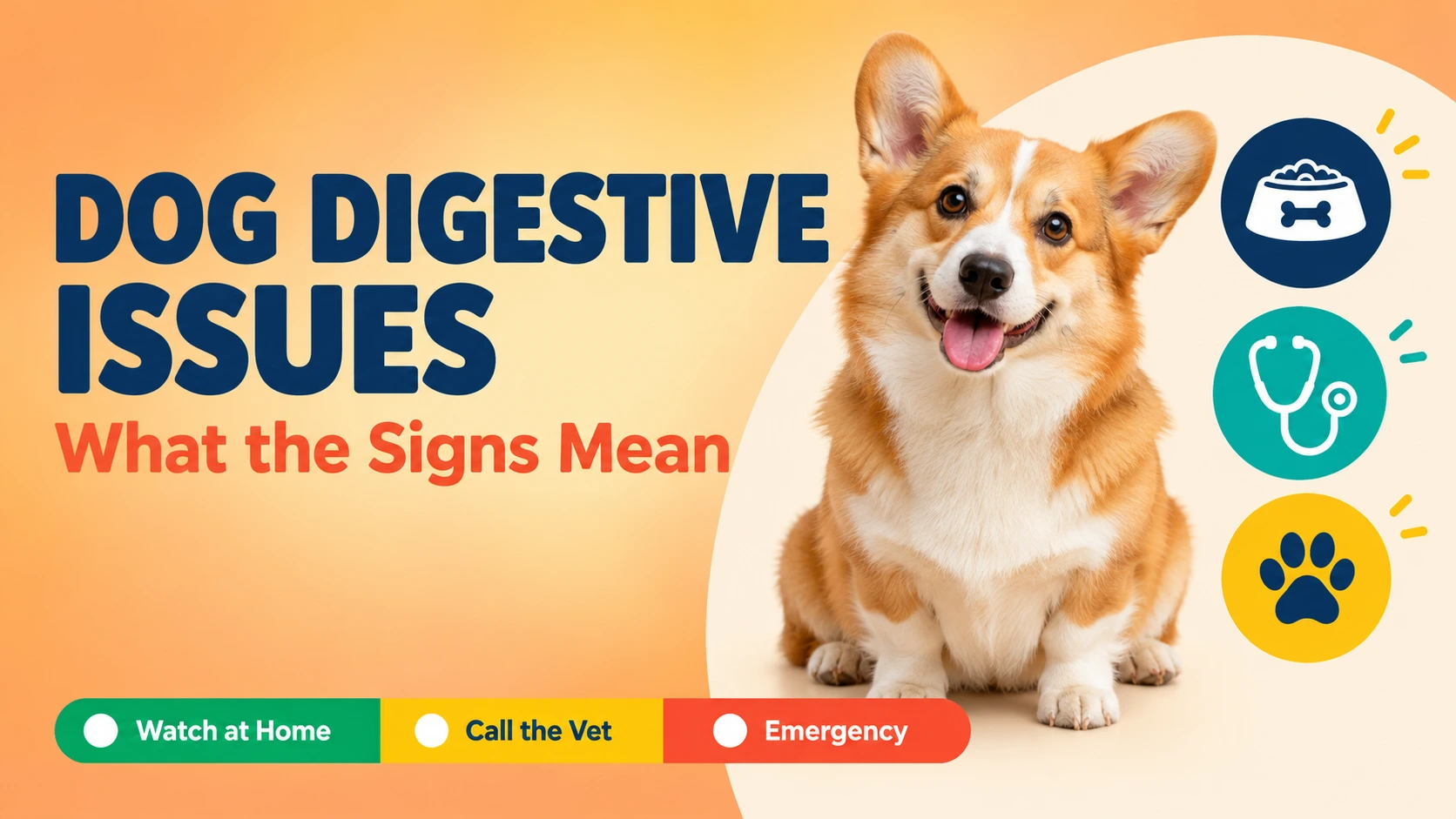
Almost every dog has an upset stomach at some point. Most episodes are short-lived, like a day of loose stool after a stolen snack. Others are the first sign of something more serious. The tricky part is that very different problems can look alike, so a vomiting dog can be dealing with anything from a gulped-down meal to a blockage.
This guide explains the most common dog digestive issues, what the signs may mean, how to read clues in your dog’s vomit and stool, and when it is time to call your veterinarian or head to an emergency clinic. It is meant to help you act sensibly, not to diagnose your dog.
Table of Contents
Quick Answer: What Causes Digestive Problems in Dogs?
The most common cause is dietary indiscretion, meaning your dog ate something they should not have. Other causes include sudden food changes, intestinal parasites, infections, pancreatitis, stress, and blockages. A single mild episode may settle quickly, but repeated vomiting, blood, severe lethargy, or a swollen belly needs prompt veterinary care.
Common Signs of Dog Digestive Issues
Digestive trouble does not always mean vomiting or diarrhea. Watch for:
- Vomiting or retching
- Loose, watery, or unusually frequent stool
- Constipation or straining to poop
- Excess gas or a gurgling belly
- Drooling, lip licking, or eating grass more than usual
- Loss of appetite
- Belly discomfort, such as a hunched posture or restlessness
- Lethargy
Because many conditions look similar, the pattern matters more than any single sign. Note how long it has been going on, how often it happens, and whether your dog is still eating, drinking, and acting like themselves.
Common Causes of Dog Digestive Issues and What They Mean
Dietary Indiscretion
This is the veterinary term for eating something that does not agree with your dog, such as garbage, spoiled food, table scraps, or an unfamiliar treat. The AKC lists it as one of the more common causes of diarrhea. Signs usually include vomiting, loose stool, and reduced appetite, and they often appear within hours of the snack.
Mild cases may pass quickly. But some things dogs swallow, such as certain foods, plants, and medications, are toxic, so call your vet or a pet poison hotline if you suspect your dog ate something harmful.
Sudden Diet Changes and Food Intolerance
Switching foods abruptly can upset the gut. Some dogs also react to certain ingredients. Food intolerance and food allergy can cause chronic soft stool, gas, or vomiting, sometimes along with itchy skin or ears. A veterinarian can help sort this out, often with a carefully controlled diet trial, so avoid switching foods repeatedly on your own.
Intestinal Parasites
Worms and other parasites, including giardia, hookworms, roundworms, coccidia, and whipworms, can cause diarrhea, weight loss, and a dull coat. Puppies and dogs that visit dog parks, daycare, or boarding facilities are often at higher risk. Your vet can check a stool sample, and year-round parasite prevention helps lower the risk.
Infections
Viruses and bacteria can inflame the gut. Parvovirus is a serious example, especially for puppies and unvaccinated dogs, and it can cause severe vomiting and bloody diarrhea. The AKC notes that vaccination helps prevent potentially life-threatening causes of diarrhea in young dogs. A puppy with vomiting and diarrhea should be seen quickly.
Pancreatitis
Pancreatitis is inflammation of the pancreas. The AKC describes it as a potentially life-threatening condition that can cause diarrhea, and it often also brings vomiting, belly pain, and loss of appetite. It is commonly linked with fatty foods, though it can have other causes. Call your vet promptly if your dog has vomiting with abdominal pain or lethargy.
Foreign Objects and Blockages
Dogs swallow socks, toys, bones, corn cobs, and other objects. A blockage can cause repeated vomiting, no appetite, belly pain, straining, or little to no stool. Blockages are emergencies and usually need veterinary imaging or surgery, so do not wait it out.
Bloat (Gastric Dilatation-Volvulus)
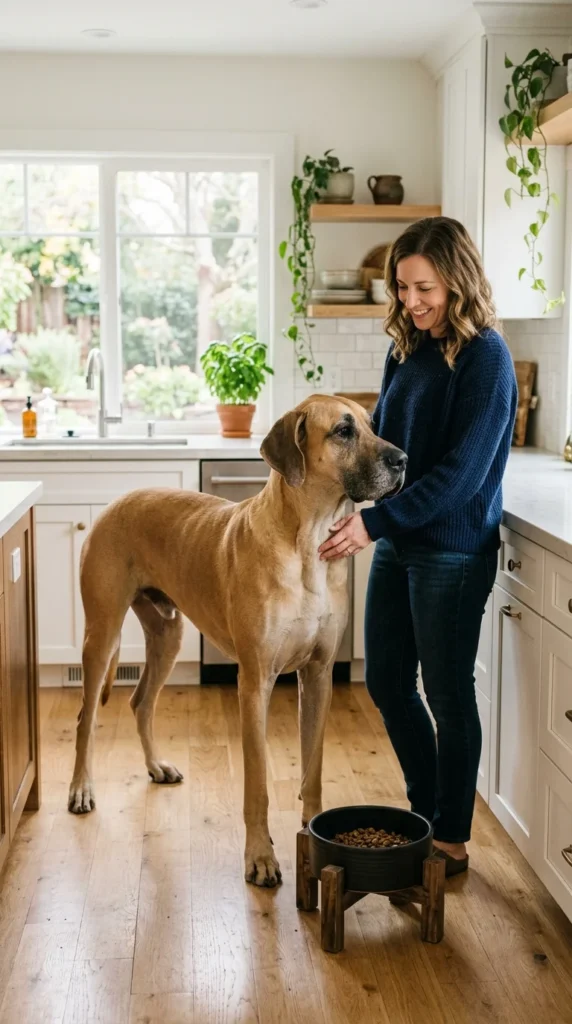
Bloat occurs when the stomach fills with gas and food, and it can twist (GDV). The University of Florida’s small animal hospital describes it as a rapidly progressive, life-threatening condition that requires emergency stabilization and surgery. The classic early signs are unproductive retching (trying to vomit with nothing coming up), restlessness, and a swollen or uncomfortable belly.
It is most common in large, deep-chested breeds such as Great Danes, Irish Setters, Newfoundlands, Rottweilers, Akitas, Bloodhounds, and German Shepherds, but it can affect smaller breeds too. According to AAHA, it is seen more often in middle-aged to older dogs. If you suspect bloat, go to an emergency veterinarian immediately and call ahead on the way.
Stress and Routine Changes
Boarding, travel, moving, or a new pet can bring on soft stool or an upset stomach. Stress-related diarrhea often settles once things calm down, but if it lingers, have your vet check for other causes.
Chronic Digestive Conditions
When vomiting or loose stool keeps coming back over weeks or months, causes such as inflammatory bowel disease, food allergies, or organ problems may be involved. These need a proper workup rather than guesswork.
What Your Dog’s Vomit and Stool May Tell You
Vomit and stool give your vet useful clues. Take a photo if you can, and do not hesitate to describe what you see.
- Watery stool: Common with many causes, and dehydration can follow quickly if it continues.
- Soft, mucus-coated stool: Can accompany colon irritation, stress, parasites, or diet problems.
- Bright red blood in stool: Often comes from the lower digestive tract. Call your vet.
- Black, tarry stool: Can signal bleeding higher in the digestive tract and needs prompt attention.
- Vomit with blood or coffee-ground material: Seek veterinary care right away.
- Undigested food hours after eating: Can be vomiting or regurgitation, and your vet can tell you which.
- Straining with little or no stool: Can mean constipation or a blockage, and needs a check if it continues.
These clues point toward possibilities, not diagnoses. Only an exam and tests can confirm the cause.
AKC, Dog Diarrhea: https://www.akc.org/expert-advice/health/dog-diarrhea/
When to Watch at Home, Call the Vet, or Go to the ER
Often Reasonable to Monitor Closely
An adult dog who vomits once or has one soft stool, then returns to normal and stays bright, alert, and willing to drink, may only need close observation. Keep a log of what happens, and call your vet if things change.
Call Your Veterinarian Soon If
- Vomiting or diarrhea happens repeatedly or lasts more than a day
- Your dog refuses food or water
- Your dog is lethargic or seems painful
- Your dog is a puppy, a senior, or a small breed, since they can dehydrate quickly
- There is mucus, a strong change in stool, or weight loss
- Problems keep recurring
Seek Emergency Care Right Away For
- Unproductive retching or a swollen, tight belly
- Vomit or stool with blood, or black tarry stool
- Repeated vomiting with weakness or collapse
- Suspected poisoning or swallowed objects
- Severe abdominal pain
- Vomiting and diarrhea together in a puppy
- Pale gums or trouble breathing
The AKC advises an emergency vet visit when diarrhea contains blood or occurs with vomiting, lack of appetite, or significant lethargy. When you are unsure, a quick call to your vet or emergency clinic is always reasonable.
What You Can Do at Home While You Wait
- Pick up access to trouble: Secure trash, remove chewed objects, and keep an eye on what your dog sniffs and eats.
- Keep fresh water available: Dehydration is a real risk with vomiting and diarrhea.
- Take notes: Record times, how often it happens, appearance, and whether your dog is eating and drinking.
- Call before changing food: Ask your vet before fasting, giving a bland diet, or starting any supplement, since the right choice depends on your dog’s age, size, and health.
- Avoid human medications: Many are unsafe for dogs. Give nothing unless your vet tells you to.

How Veterinarians Find the Cause
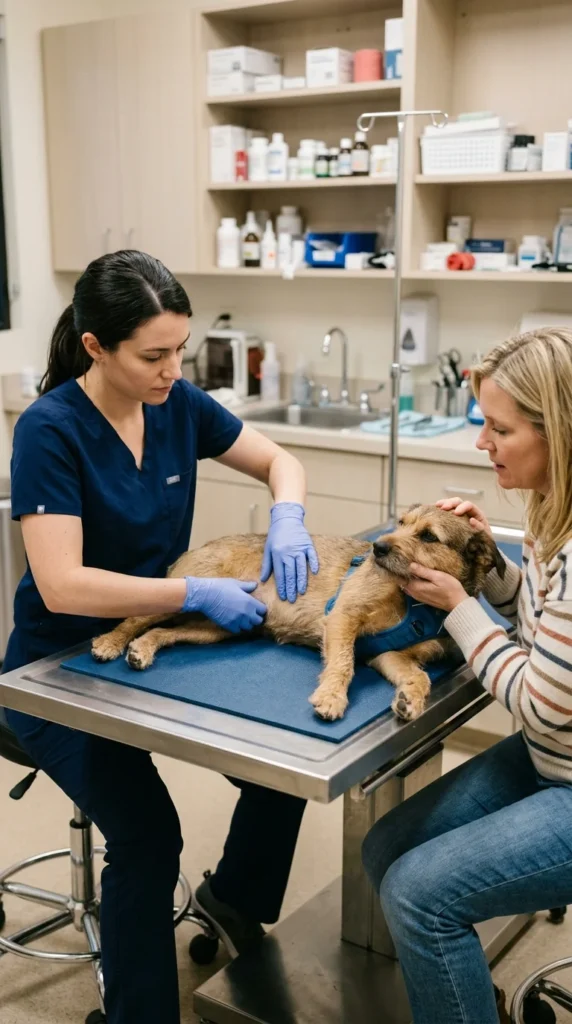
Your vet will start with a history and a physical exam, including feeling the abdomen. Depending on the signs, they may check a stool sample for parasites, run bloodwork, or take X-rays or ultrasound to look for foreign objects or other problems. Treatment depends on the cause and might include fluids, anti-nausea or antiparasitic medication, dietary changes, or surgery.
For a general home reference to keep on your shelf, Dog Owner’s Home Veterinary Handbook by Debra M. Eldredge and co-authors covers common canine ailments and offers guidance on when to see a vet. It is a reference, not a replacement for a veterinary exam.
How to Help Prevent Dog Digestive Issues
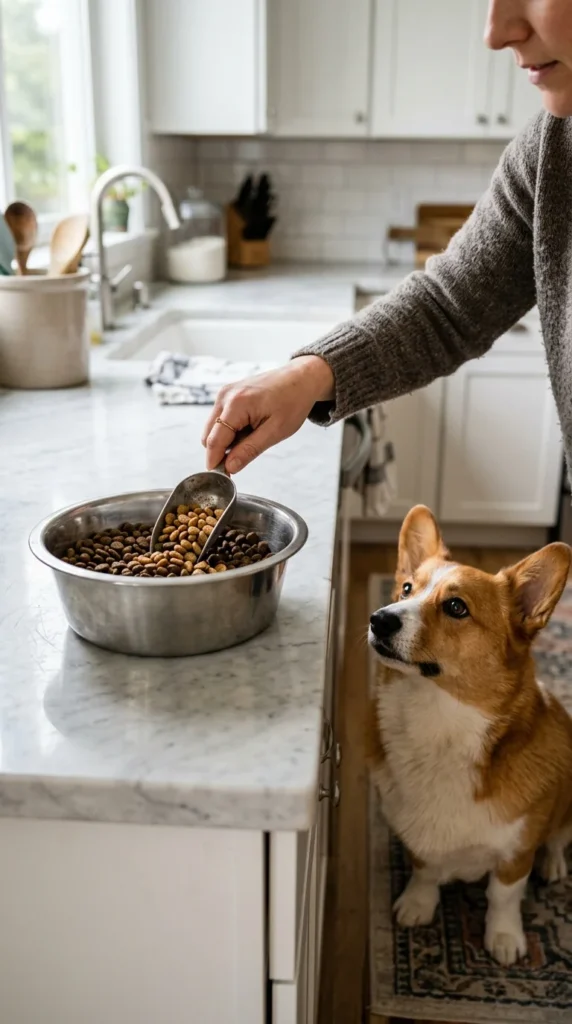
- Change food gradually: Mix the new food into the old over several days to a week or more, and follow your vet’s advice.
- Limit rich table scraps: Fatty human foods are a common trigger for stomach upset.
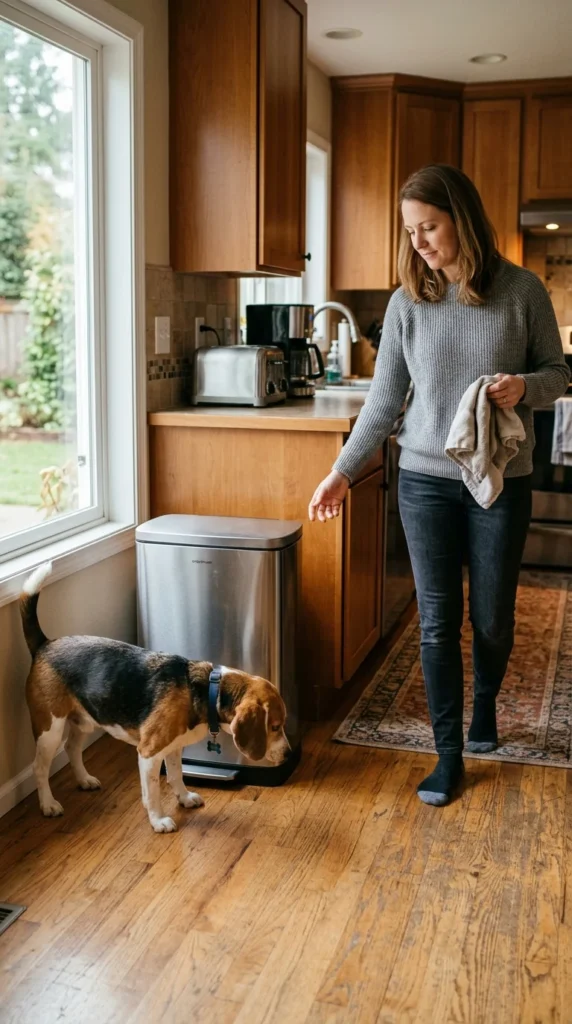
- Secure trash and dangerous items: Use lidded cans and put away socks, small toys, and toxic foods.
If your dog keeps raiding the kitchen bin, a lid that locks can help. One option is the simplehuman 13-Gallon Semi-Round Step Trash Can, which has a slide lock designed to help keep pets out of the trash.
- Keep up with vaccines and parasite prevention: This is especially important for puppies.
- Pick safe chews and toys: Match them to your dog’s size and chewing style, and replace damaged ones.
- Ask about bloat risk: If you have a large, deep-chested breed, talk to your vet about feeding habits and about preventive options such as gastropexy.
- Stay consistent: A steady routine helps stress-sensitive dogs.
Mistakes to Avoid
- Waiting too long: A vet would rather hear from you early.
- Treating with human medicine: Many common drugs are dangerous to dogs.
- Switching foods repeatedly: This makes it harder to find the cause.
- Ignoring recurring problems: “Just a sensitive stomach” can hide a treatable condition.
- Assuming a swollen belly is just gas: It can be an emergency.
Frequently Asked Questions
How long should I wait before calling the vet for vomiting or diarrhea?
For a healthy adult dog with a single mild episode, watching for a day is reasonable. Call sooner for repeated episodes, blood, lethargy, pain, or any signs in puppies, seniors, and small dogs.
Why is my dog eating grass and vomiting?
Dogs eat grass for many reasons, and not all of them are medical. If it happens often or comes with other signs such as poor appetite or repeated vomiting, mention it to your vet.
Is bloody diarrhea always an emergency?
Not every case is life-threatening, but blood is a reason to call your vet promptly. The AKC advises emergency care when diarrhea contains blood or comes with vomiting, lack of appetite, or significant lethargy.
Can stress really cause diarrhea in dogs?
Yes. Travel, boarding, or changes at home can upset a dog’s digestion. If symptoms last more than a day or two, have your vet look for other causes.
What is the difference between vomiting and regurgitation?
Vomiting usually involves retching and effort, while regurgitation tends to be passive, with food coming up quickly without much effort. Your vet can tell them apart, so describe or film what you see.
Do certain breeds have more digestive problems?
Some breeds are more prone to specific conditions, such as bloat in large, deep-chested dogs. Any dog can develop digestive issues, so focus on your own dog’s pattern.
Final Thoughts
Most dog digestive issues are mild and short-lived, but a few are true emergencies. Learn your dog’s normal appetite and stool, secure the things they should not eat, and keep a short log when something changes. If you see blood, repeated vomiting, a swollen belly, or unproductive retching, call your veterinarian or an emergency clinic right away.
This article is for general education and is not a substitute for veterinary advice. If you are concerned about your dog’s health, contact your veterinarian.