Bringing home a puppy is exciting, but repeated indoor accidents can test your patience. The good news is that learning how to housebreak a puppy does not require harsh corrections or complicated training methods. Your puppy needs a predictable routine, close supervision, and clear rewards for using the right potty spot.
Young puppies have small bladders and are still learning to control their bathroom habits. Some begin developing reliable habits within weeks, while others need several months of practice. The key is to give your puppy frequent opportunities to succeed and respond calmly when accidents happen. With a practical schedule and consistent rewards, you can reduce messes and help your puppy become a more confident housemate.
Table of Contents
Quick Answer: How to Housebreak a Puppy
Take your puppy to the same potty area frequently, especially after waking, eating, drinking, and playing. Reward them immediately after they finish eliminating in the correct spot. Supervise closely indoors, clean accidents thoroughly, and avoid punishment. Gradually increase your puppy’s freedom as their bathroom habits become more reliable.
When Should You Start Housebreaking a Puppy?
Start housebreaking as soon as your puppy comes home. You do not need to wait for a particular age. Early routines help your puppy learn where to go and what to expect in your home.
Very young puppies need frequent bathroom breaks because their bladder control is still developing. An eight-week-old puppy cannot be expected to follow the same schedule as an older puppy. Small puppies may also need extra opportunities, depending on their individual needs.
Housebreaking is a learning process, not a test of obedience. Your puppy may have several successful days and then experience an accident. That does not mean training has failed.
Focus on three basic goals:
- Give your puppy frequent opportunities to use the correct potty area.
- Prevent unsupervised wandering that leads to accidents.
- Reward the behavior you want your puppy to repeat.
Consistency matters more than expecting perfect behavior from a very young dog.
How to Housebreak a Puppy Step by Step
1. Choose a Consistent Potty Spot
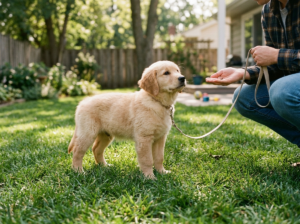
Choose an outdoor area that is easy to reach and appropriate for your puppy. Take your puppy to this same spot for most bathroom breaks. Familiar smells and a consistent location may help your puppy understand the purpose of each visit.
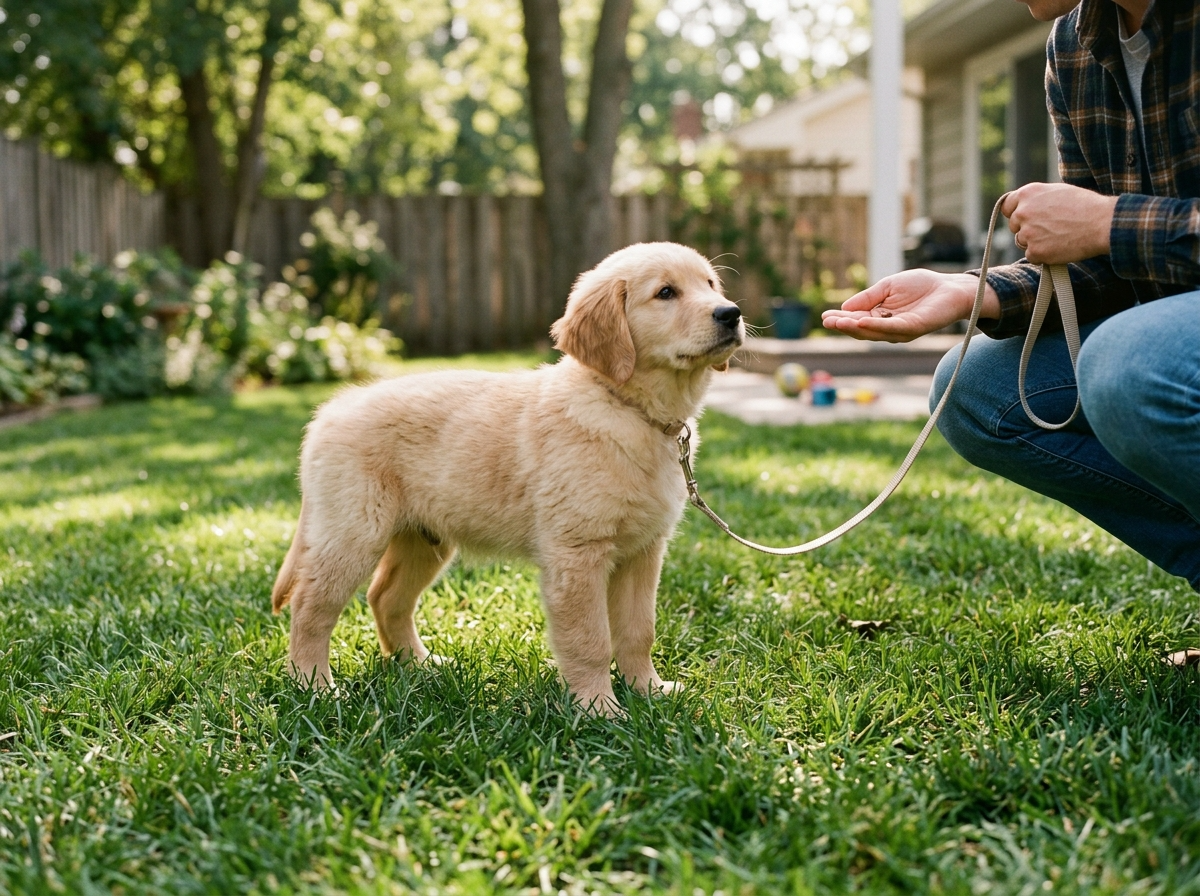
Use a leash to guide your puppy to the area. Keep the first few minutes calm and focused. Exciting walks, games, and distractions can make it harder for your puppy to settle down and go.
Choose a short verbal cue, such as “go potty.” Say it calmly as your puppy begins eliminating. With repetition, your puppy may learn to associate the phrase with the action.
If you live in an apartment, choose an accessible outdoor area that follows your building’s pet rules. Ask your veterinarian about safe potty locations if your puppy is not fully vaccinated. Public dog areas can carry disease risks for young puppies.
Learn more about puppy training, dog food and nutrition, and everyday dog care with our helpful guides. https://dogsdailycare.com/why-is-my-dog-vomiting-yellow/
2. Take Your Puppy Outside Frequently
Frequent potty trips are one of the most important parts of housebreaking. Do not wait for your puppy to ask to go outside, especially during the early weeks.
Offer a potty break:
- Immediately after waking up.
- After every nap.
- Shortly after meals.
- After drinking water.
- After active play or excitement.
- After coming out of a crate or other confined area.
- Before bedtime.
- Whenever you notice signs that your puppy needs to go.
Many young puppies need bathroom opportunities about every one to two hours while awake, sometimes more often. This is a starting point, not a strict rule. Your puppy’s age, size, activity, health, and previous routine all affect how often they need to go.
If accidents happen between scheduled trips, shorten the interval. As your puppy grows and stays dry more consistently, gradually adjust the schedule.
3. Reward Your Puppy Immediately
When your puppy finishes eliminating in the correct spot, reward them right away. Use warm praise and a small, puppy-safe treat if treats suit their diet.
Timing matters. If you wait until you return inside, your puppy may not connect the reward with going outside. Keep a few treats near the door or in a pocket so you can reward the behavior immediately.
After your puppy goes potty, offer playtime or a short walk when appropriate. This can help prevent your puppy from learning that bathroom trips always end the fun.
Never punish your puppy for an accident. Shouting, frightening them, or rubbing their nose in a mess does not teach the correct bathroom location. It can make your puppy fearful or encourage them to hide when they need to go.
Create a Puppy House Training Schedule
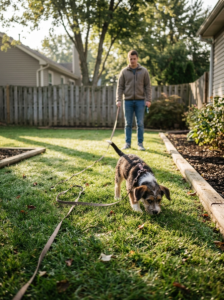
A predictable daily routine makes housebreaking easier for you and your puppy. You do not need a perfect timetable. Start with regular meals, frequent potty trips, naps, and playtime.
Here is an example schedule for a young puppy. Adjust it to your household and your puppy’s needs.
Example Daily Schedule
- 6:30 a.m.: Take your puppy outside immediately after waking.
- 7:00 a.m.: Serve breakfast, then offer another potty trip.
- Morning: Provide supervised play, naps, and frequent bathroom breaks.
- Midday: Offer lunch if it is part of your puppy’s feeding plan, followed by a potty trip.
- Afternoon: Alternate supervised activity, rest, and regular potty breaks.
- Evening: Serve dinner at the usual time and take your puppy out afterward.
- Before bed: Offer one final quiet potty trip.
- Overnight: Take your puppy out when needed, based on age and ability to stay comfortable.
Young puppies may need several overnight breaks. Do not expect a very young puppy to remain comfortable for an entire night without eliminating.
Keep a simple record of meals, drinks, potty trips, accidents, and successful outdoor visits. After a few days, you may notice a pattern. For example, your puppy might need to poop shortly after breakfast or pee soon after a nap.
Use these patterns to plan ahead rather than waiting for an accident.
How to Recognize When Your Puppy Needs to Go
Puppies cannot always tell you clearly that they need a bathroom break. Learning their signals helps you act before an accident happens.
Watch for these common behaviors:
- Sniffing the floor repeatedly.
- Walking in small circles.
- Suddenly stopping play.
- Restlessly moving from one spot to another.
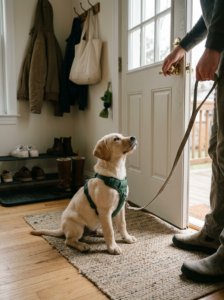
- Whining or scratching near a door.
- Heading toward a corner or a previously soiled area.
Some puppies give obvious signals, while others barely pause before squatting. Do not rely on whining or scratching alone. Young puppies may not know how to ask to go outside.
When you notice a possible signal, calmly take your puppy to the potty area. If your puppy has just woken up or finished playing, offer a break even if you have not noticed any signs.
Should You Use a Crate to Housebreak a Puppy?
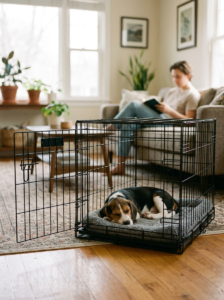
A properly introduced crate can help with housebreaking because many dogs prefer to keep their sleeping area clean. However, a crate is a management tool, not a replacement for potty trips, exercise, supervision, or social interaction.
Choose a crate that allows your puppy to stand up, turn around, and lie down comfortably. It should not be so large that your puppy can easily use one end as a bathroom and the other as a sleeping area.
Introduce the crate gradually with treats, meals, and calm positive experiences. Never use it as punishment. Puppies need regular opportunities to move, interact, and eliminate.
Do not confine a young puppy longer than they can comfortably manage. If you need to be away for an extended period, arrange for a trusted person to provide bathroom breaks. A puppy pen with a separate approved potty area may be a better temporary option in some homes.
If your puppy repeatedly soils the crate despite frequent breaks, review the schedule and setup. A veterinarian can help rule out health concerns, and a qualified trainer can help with persistent training difficulties.
Are Puppy Pads a Good Idea?
Puppy pads can be useful when outdoor access is difficult, such as in some apartment settings or when an owner cannot arrange frequent outdoor breaks. They may also help when weather or other practical barriers make outdoor trips challenging.
However, pads can make the transition to outdoor-only potty habits more complicated. Your puppy may learn that certain indoor surfaces are acceptable bathroom spots.
If your long-term goal is outdoor housebreaking, keep your approach consistent. When transitioning from pads to outside, gradually move the approved potty area closer to the exit if your setup allows. Then reward outdoor elimination generously.
For puppies that are not fully vaccinated, ask your veterinarian about safe outdoor potty options. Avoid heavily used dog areas until your veterinarian advises that it is appropriate.
Discover helpful dog training tips, puppy care advice, and nutritious dog food options for your furry friend. https://dogsdailycare.com/stop-dog-jumping-on-people/
What to Do When Your Puppy Has an Accident Indoors
Accidents are a normal part of housebreaking. What matters is how you respond and what you change afterward.
If You Catch Your Puppy in the Act
Interrupt gently without frightening your puppy. Quickly guide them outside or to the approved potty area. If they finish there, reward them immediately.
Do not shout, chase your puppy, or make a dramatic scene. The goal is to redirect the behavior, not to make your puppy afraid of you.
If You Find an Accident Later
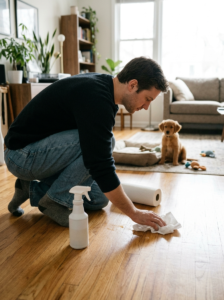
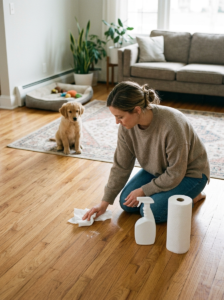
Clean it up without scolding your puppy. They are unlikely to understand punishment delivered after the event.
Use an enzymatic pet cleaner suitable for the affected surface, following the product instructions. Ordinary cleaning may leave odors that encourage your puppy to revisit the same spot.
Then review what happened. Was your puppy left alone too long? Did they wake from a nap without going outside? Were they playing in another room without supervision?
Use the answer to adjust the routine. If accidents continue, shorten the time between potty trips and limit access to areas where you cannot watch your puppy.
How to Prevent Repeated Indoor Accidents
Preventing accidents is usually easier than cleaning up after your puppy. Until housebreaking is reliable, manage your puppy’s access to the home carefully.
- Supervise closely: Keep your puppy in the same room when possible.
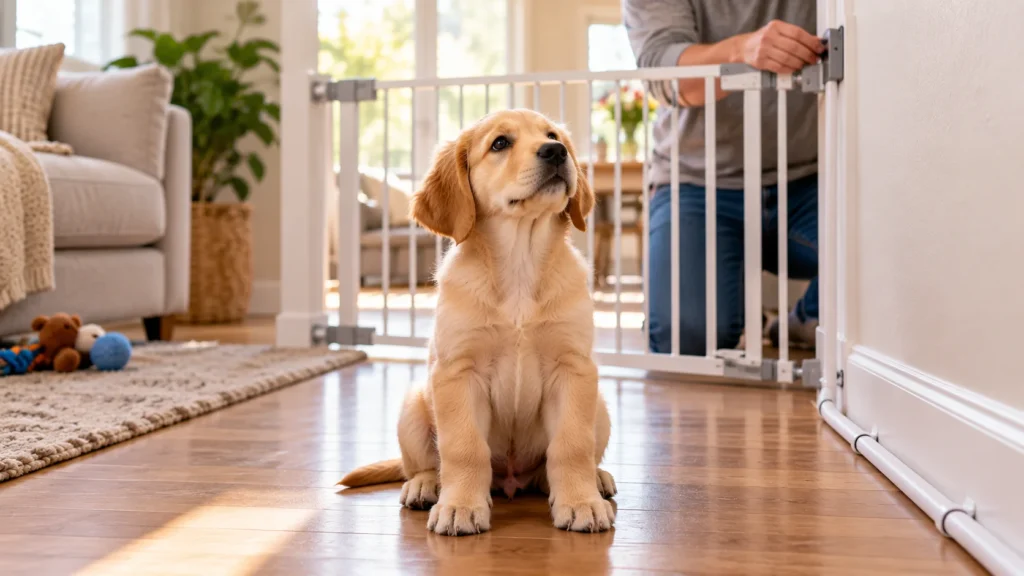
- Use baby gates: Block off rooms that are difficult to monitor.
- Offer frequent breaks: Do not stretch the schedule too quickly.
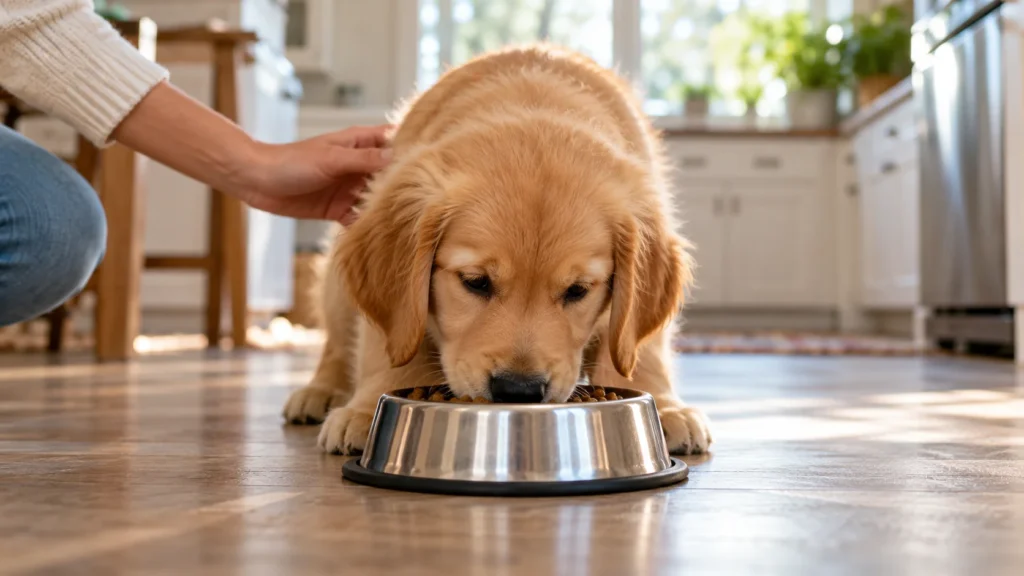
- Keep meals predictable: Follow a feeding routine appropriate for your puppy.
- Clean thoroughly: Remove lingering odors from accident spots.
- Expand freedom slowly: Allow access to more rooms as your puppy succeeds consistently.
When you cannot supervise, use a puppy-safe, appropriately sized confinement area. Make sure your puppy has enough space, rest, and timely bathroom breaks.
Do not restrict water simply to prevent accidents. Puppies need access to fresh water. If frequent urination or excessive thirst seems unusual, discuss it with your veterinarian.
How Long Does It Take to Housebreak a Puppy?
There is no exact timeline that fits every puppy. Some begin developing reliable habits within a few weeks, while others need several months of consistent training.
Progress depends on age, health, previous experiences, the household routine, and how consistently your puppy is rewarded for going in the right place. A puppy that stays dry for a few days may still need supervision for quite some time.
Look for steady improvement instead of expecting a specific finish date. Your puppy may have fewer accidents, start heading toward the door, or stay dry for longer periods as they mature.
If accidents return after a period of success, reduce your puppy’s freedom and offer more frequent potty breaks. Changes in routine can temporarily disrupt habits.
Common Housebreaking Mistakes to Avoid
- Waiting too long between trips: Young puppies need frequent opportunities.
- Rewarding too late: Praise and treats should follow successful elimination immediately.
- Punishing accidents: Fear can make training harder and may encourage hiding.
- Giving too much freedom too soon: Unsupervised access makes accidents easier.
- Changing the rules: Keep the approved potty area and routine consistent.
- Expecting overnight perfection: Young puppies may still need nighttime breaks.
- Ignoring sudden changes: New accidents in a previously house-trained dog can have a medical cause.
Your puppy is learning a new skill. Patience, good timing, and a suitable routine are more helpful than strict corrections.
When Should You Contact a Veterinarian?
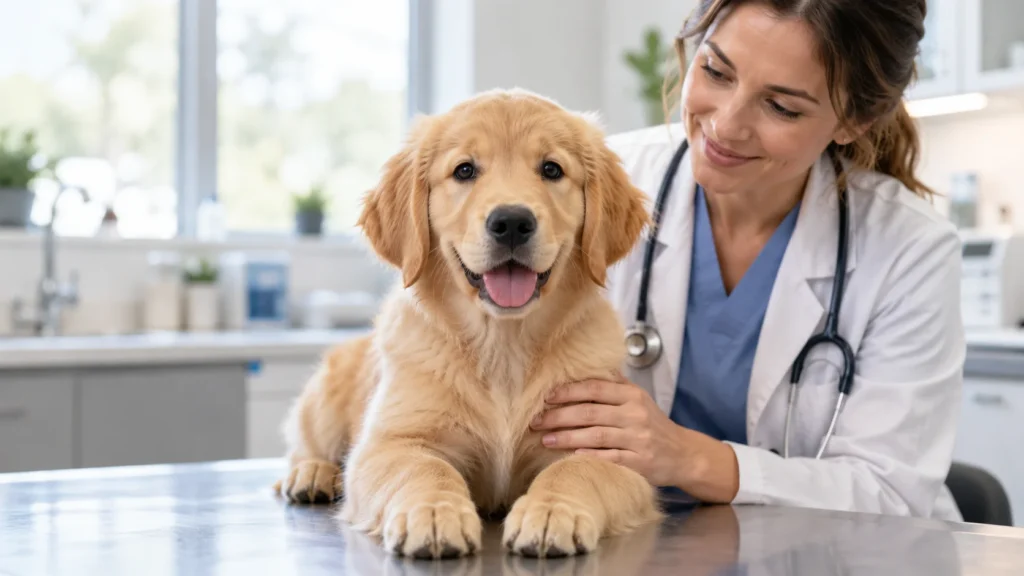
Housebreaking problems sometimes have a medical cause. Contact your veterinarian if your puppy repeatedly urinates unusually often, seems to strain, has blood in the urine, develops persistent diarrhea, or suddenly begins having accidents after making progress.
Seek prompt veterinary advice for concerning symptoms. If your puppy repeatedly tries to urinate but produces little or no urine, treat that as an emergency and seek immediate veterinary care.
Persistent accidents despite a consistent routine also deserve attention. Your veterinarian can assess possible health concerns. If no medical issue is found, a qualified, reward-based trainer can help identify gaps in your training plan.
This article provides general training information and does not replace advice from your veterinarian. Seek professional guidance for unusual symptoms or persistent housebreaking difficulties.
Explore our puppy care, dog training, and dog food guides to help your puppy grow happy and healthy. https://dogsdailycare.com/how-to-stop-puppy-biting/
Frequently Asked Questions
How often should I take my puppy outside to pee?
Many young puppies need a potty trip every one to two hours while awake, plus trips after sleeping, eating, drinking, and playing. Some need more frequent breaks. Adjust the schedule to your puppy rather than relying on the clock alone.
Should I wake my puppy up at night to pee?
Very young puppies may need overnight bathroom breaks. Your puppy’s age, bedtime routine, and ability to stay comfortable will help determine the schedule. If your puppy wakes, whines, or seems restless, offer a quiet potty trip.
Can you housebreak a puppy without a crate?
Yes. You can use close supervision, baby gates, a puppy pen, and a regular outdoor schedule. A crate can help some households, but it is not essential. Your puppy still needs frequent bathroom breaks and positive rewards.
Why does my puppy pee inside right after coming inside?
Your puppy may have been distracted outdoors, may not have fully emptied their bladder, or may need another break soon afterward. Keep outdoor trips calm and focused. If your puppy does not go, supervise them closely indoors and try again shortly.
Should I scold my puppy for peeing on the carpet?
No. Scolding does not teach your puppy where to go. Clean the area thoroughly, review the timing of the last potty trip, and reward outdoor success. If you catch an accident beginning, calmly redirect your puppy outside.
When can my puppy be trusted alone in the house?
There is no universal age. Increase freedom gradually as your puppy demonstrates reliable habits. Start with one easy-to-monitor area and expand access over time. Continue using supervision and safe confinement whenever needed.
Final Thoughts
Learning how to housebreak a puppy comes down to consistency, supervision, and rewarding the right behavior. Take your puppy outside frequently, use a predictable routine, and clean accidents without punishment.
Your next step is simple: begin tracking your puppy’s meals, naps, and potty trips today. A few days of observation can help you build a schedule that fits your puppy and makes successful bathroom trips easier to repeat.