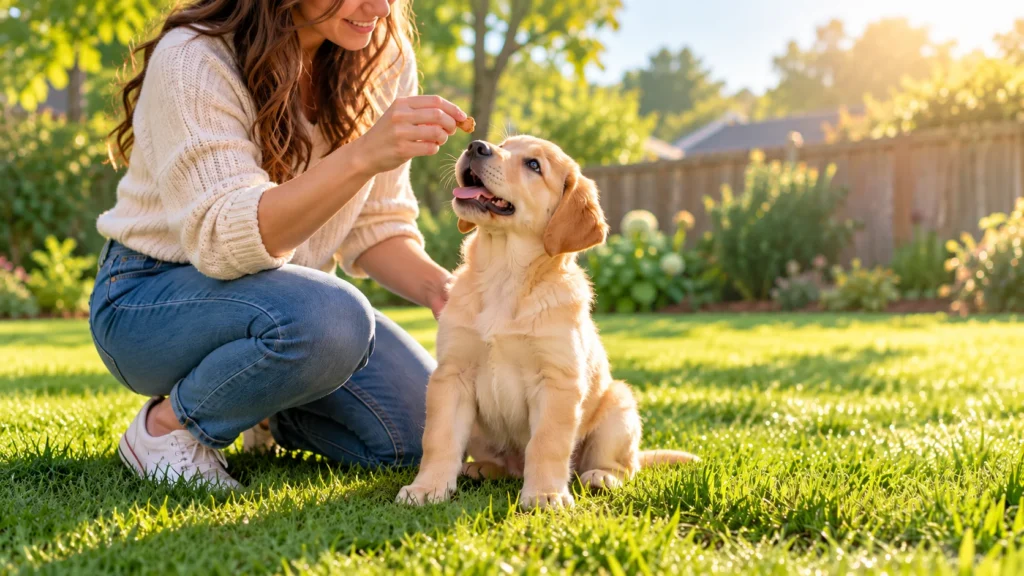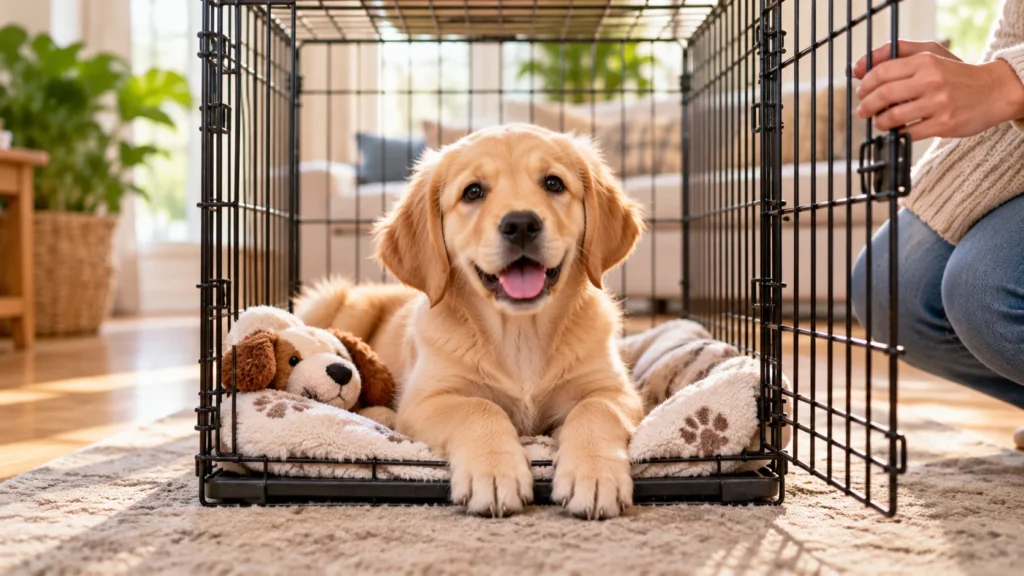
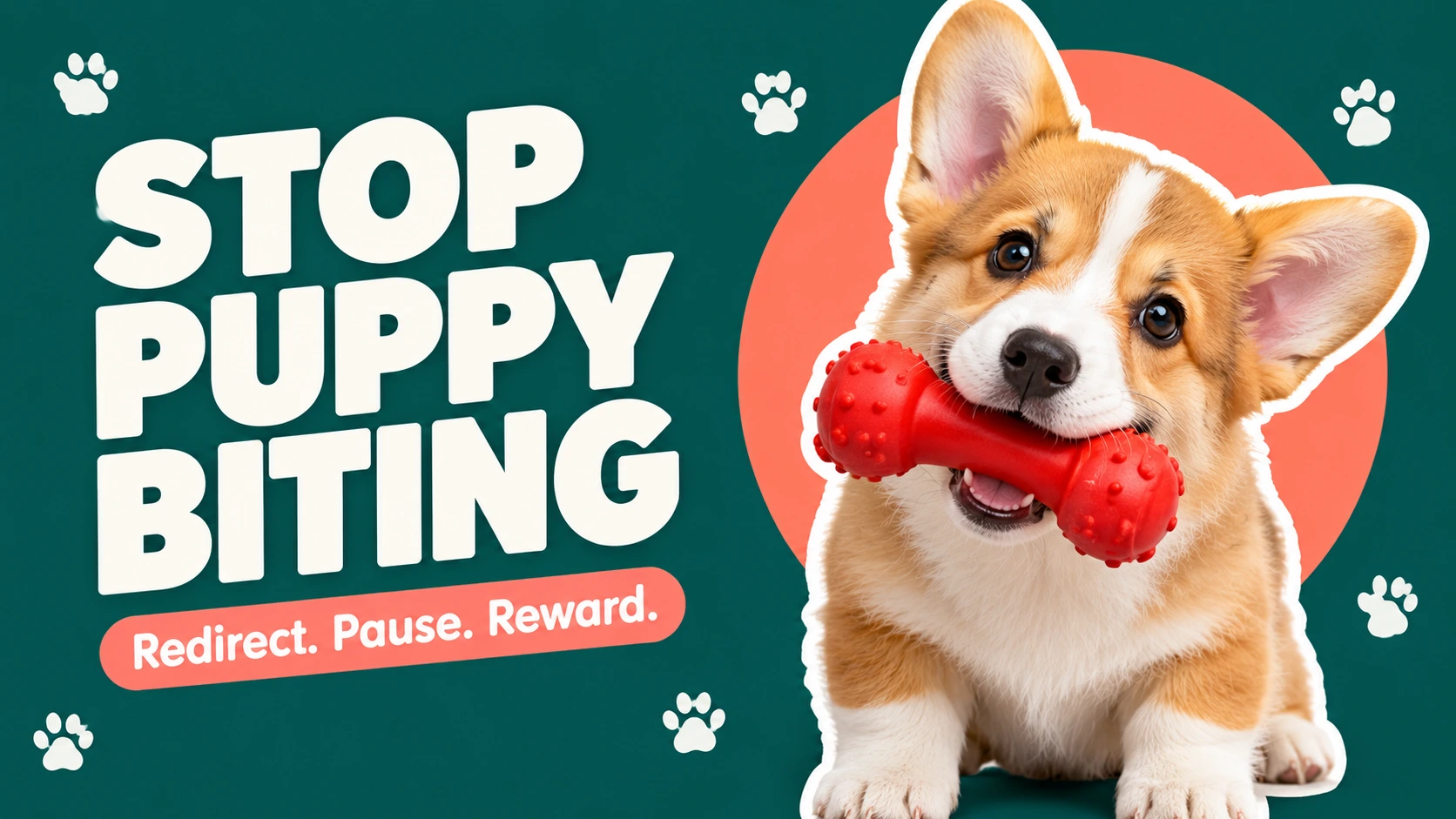
Learning how to stop puppy biting requires consistent redirection and patience as your young dog explores the world with their mouth. Puppies naturally nip during play and teething, and calm, consistent responses can help teach comfortable play as they grow.
When your puppy bites too hard, immediately stop all interaction and redirect their attention to an appropriate chew toy. If mouthing persists, calmly remove yourself from the room for a brief timeout so your puppy learns that biting causes playtime to end instantly.
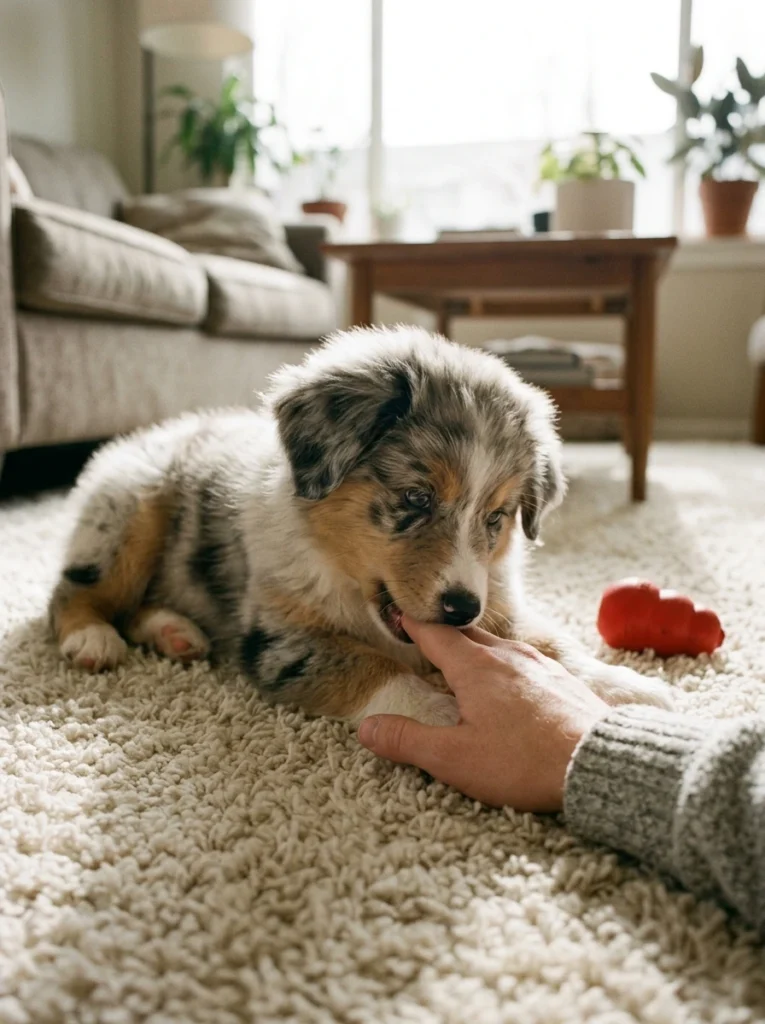
Table of Contents
Why Puppies Bite and Mouth
Bringing home a new puppy brings endless joy, but it also comes with plenty of sharp little teeth. Understanding why your puppy bites is the foundational step toward effective communication and behavior modification. Just like human infants, puppies often use their mouths to investigate new textures, temperatures, and objects in their environment.
Mouthing is a completely normal part of early canine development rather than a deliberate attempt to challenge people. The primary biological and social drivers behind this behavior include:
- Teething discomfort: Between three and six months of age, permanent adult teeth push through sensitive gums, creating an intense, soothing urge to chew.
- Tactile exploration: Puppies test everything in their surroundings using their teeth to learn what is edible, safe, or interactive.
- Littermate play dynamics: Young dogs naturally wrestle, chase, and mouth each other to practice crucial social boundaries and bite inhibition skills.
While normal exploratory nipping is expected, hard biting that does not improve with consistent, calm redirection requires a closer look. If nipping escalates into fearful or aggressive snapping, consult your veterinarian or a certified, reward-based dog trainer to rule out medical discomfort and ensure a positive approach.
Mastering the Redirect Technique
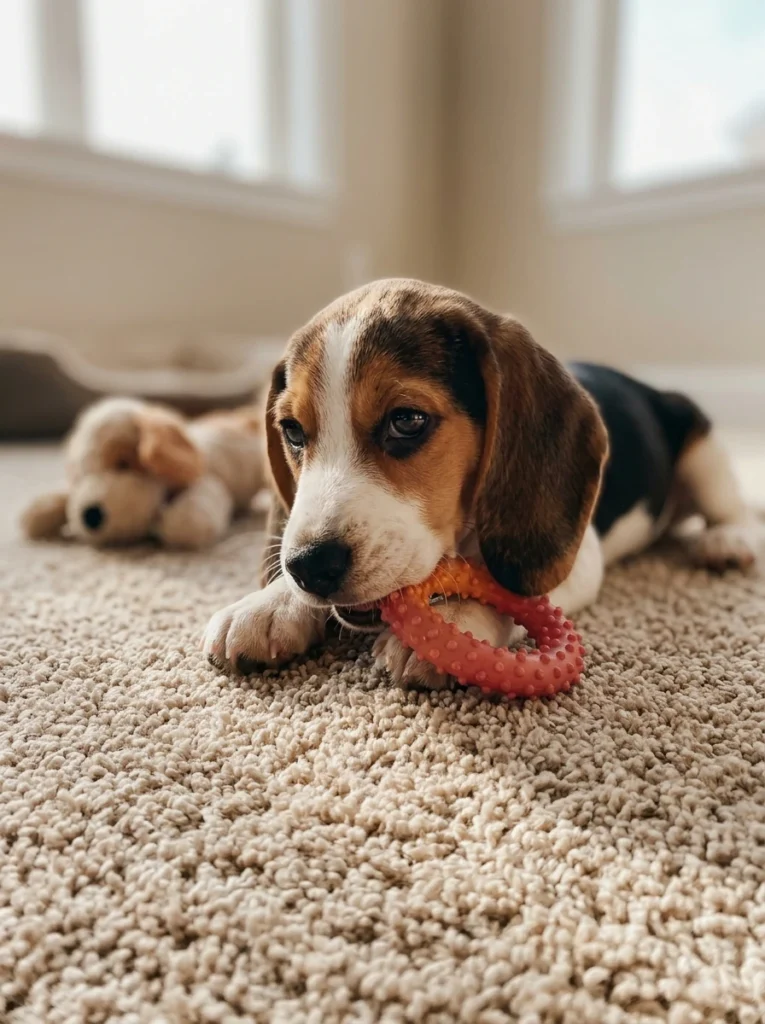
When your puppy sinks their needle-sharp teeth into your fingers or pant legs, the most effective response is a seamless redirection. Keep a stash of durable chew toys or small rubber bones in every room of your house so you can react instantly without scrambling for a substitute.
The moment teeth touch skin, calmly interrupt the behavior and offer the appropriate item instead. To make the toy more enticing than your clothing, try these simple tactics:
- Wobble or wiggle the toy to mimic lively prey movement.
- Offer a puppy-safe treat-dispensing toy if food rewards help maintain interest. Check treats and toy sizes for safety.
- Praise your puppy softly the exact moment they grip the toy instead of you.
If your puppy continues to target your hands despite consistent redirection, or if biting feels increasingly aggressive rather than playful, consult a qualified, reward-based dog trainer or your veterinarian for personalized guidance.
Using Calm Feedback and Brief Play Breaks
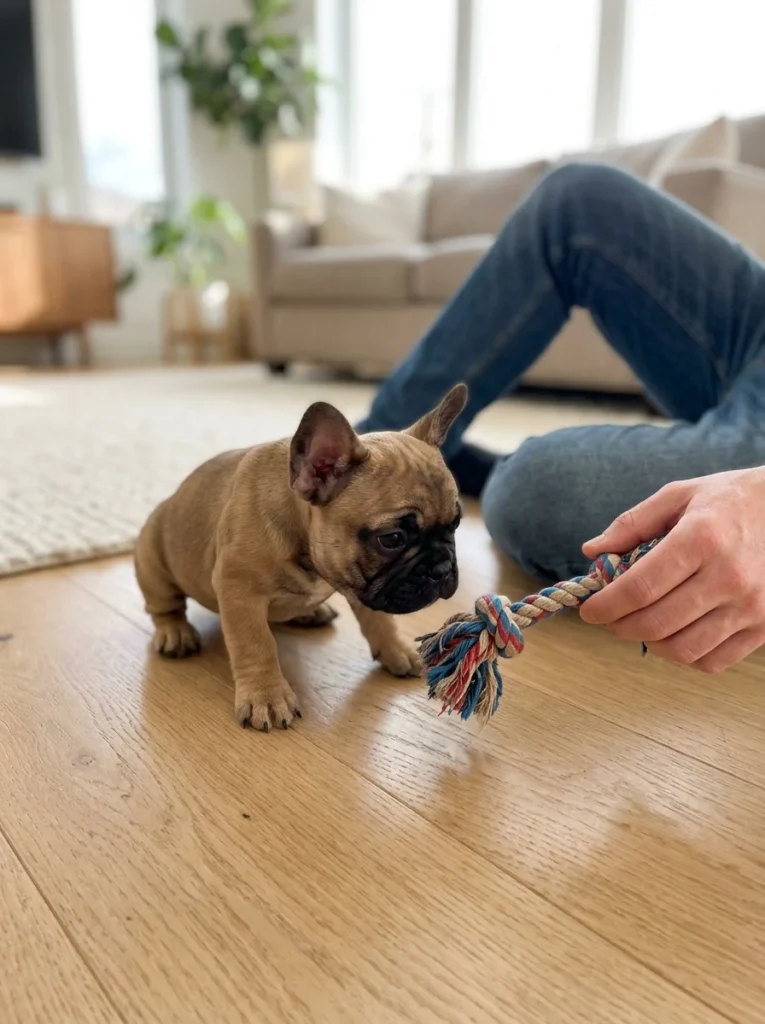
If your puppy keeps nipping after you offer a toy, make the next step simple: calmly stop the game. Loud squeals or scolding can excite some puppies, so you do not have to yelp. A neutral word such as “oops” is optional; the important signal is that play briefly ends when teeth touch skin.
Try this repeatable approach during supervised play:
- Pause: Keep your hands still and avoid tugging your clothing away.
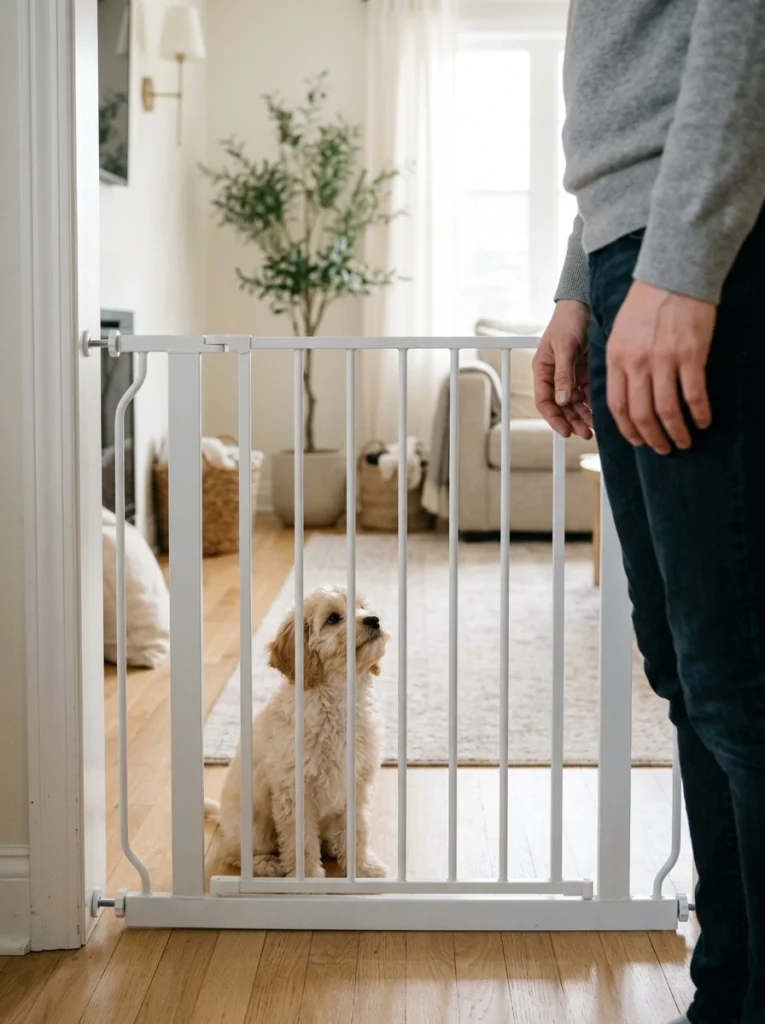
- Step away: If biting continues, stand up and calmly move behind a baby gate or out of reach for about 10 to 30 seconds.
- Try again: Return when your puppy is calmer and invite them to interact with an appropriate toy.
- Reward the alternative: Praise gentle play and give attention when your puppy chooses a toy instead of your hands.
Keep these breaks brief and predictable. Do not shout, hit, hold the puppy’s mouth shut, or use the crate as punishment. If stepping away repeatedly makes your puppy more frustrated, stop the session and consider whether they need a quiet rest, a bathroom break, or a less exciting activity.
You can also read our puppy socialization tips to help your puppy develop good behavior.
Progress usually takes repetition rather than a single trick. Pay attention to when biting happens, especially during evening excitement, and prepare toys and rest opportunities before your puppy becomes overwhelmed. Seek individual guidance from your veterinarian or a qualified reward-based trainer if biting is severe, breaks skin repeatedly, or comes with fear or stiff body language.
Managing Household Triggers and Overstimulation
Even with consistent training, puppies often turn nippy when they become overtired or overstimulated. Just like human toddlers, young dogs quickly lose their ability to regulate their behavior when their nervous systems are overloaded by chaotic household environments, excessive handling, or marathon play sessions. Recognizing these hidden environmental triggers helps you proactively prevent biting frenzies before they disrupt your day.
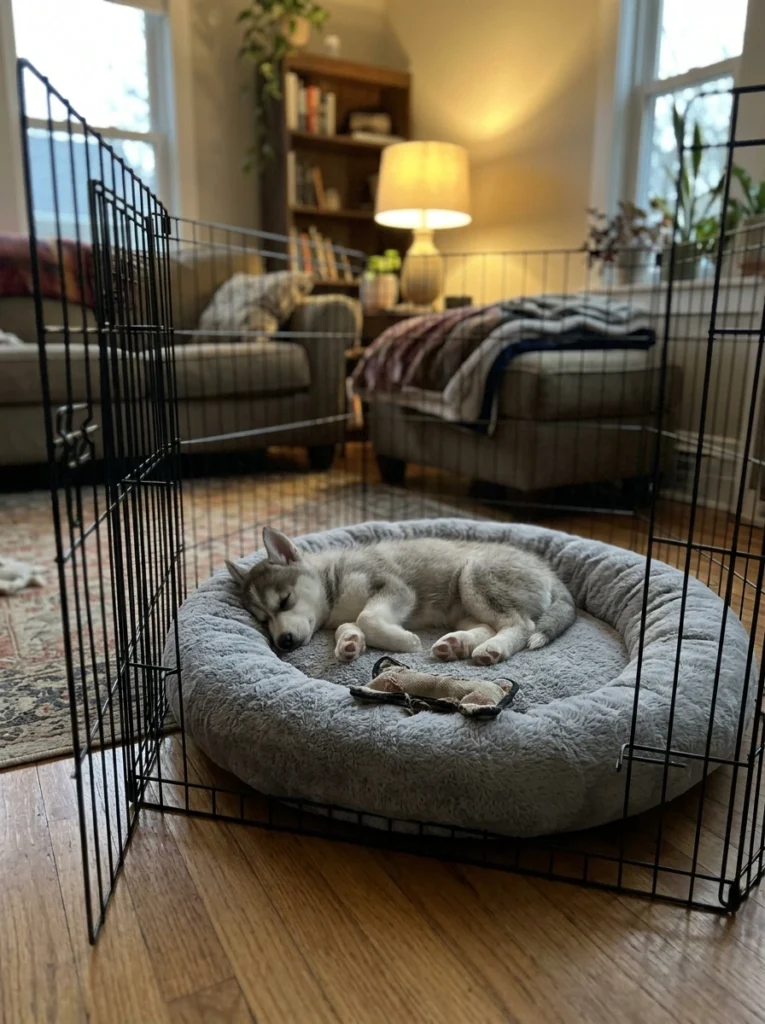
- Create a quiet, low-traffic zone using a pen or crate for predictable resting periods throughout the day.
- Keep interactive tug or fetch sessions short and end them calmly before your puppy reaches a frenzied state.
- Dim lights and lower overall household noise levels during the common late-afternoon witching hour.
If your puppy’s biting feels increasingly frantic, deeply painful, or is accompanied by stiff body language rather than loose, playful postures, it is wise to seek professional guidance. Consult a qualified, reward-based dog trainer or your veterinarian to rule out underlying discomfort, address persistent behavioral hurdles, and refine your overall management strategy safely.
You can also check our guide on puppy chewing and teething tips.
AKC: https://www.akc.org/expert-advice/training/how-to-stop-puppy-biting/
Consistency and Socialization Best Practices
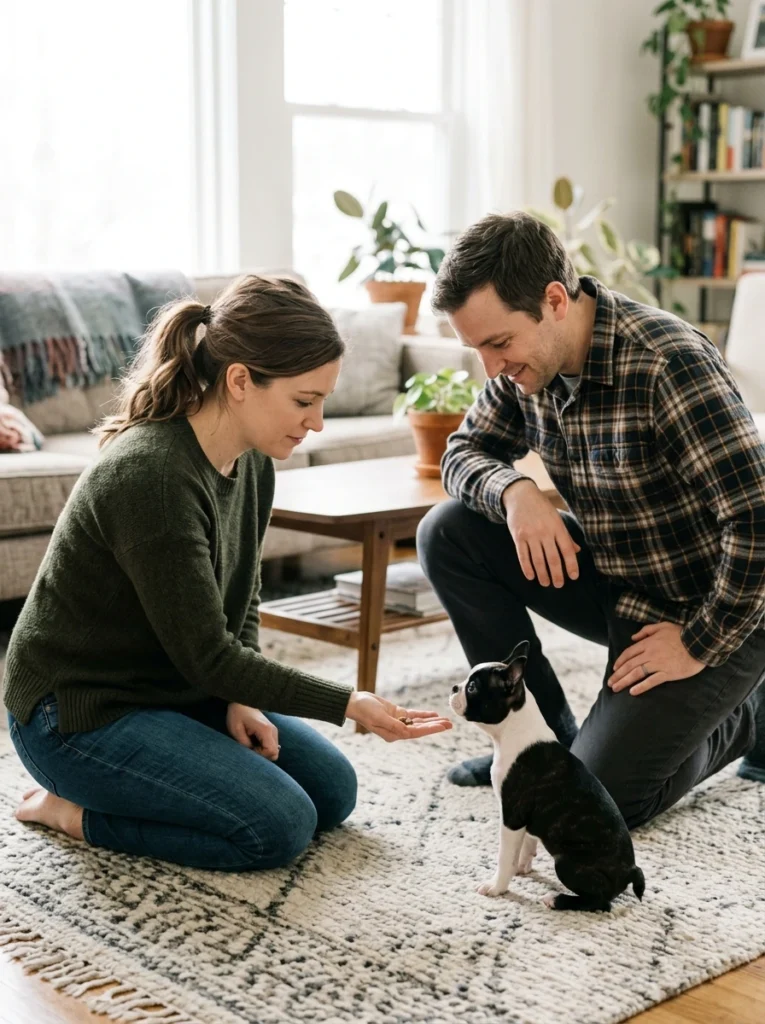
Successfully curbing puppy mouthing relies heavily on the entire household staying on the exact same page. If one family member allows gentle nibbling while another strictly forbids teeth on skin, your puppy will become utterly confused. Every person living in your home must use identical cues, boundaries, and reward systems every single day.
Alongside uniform household rules, proper socialization plays a massive role in preventing defensive or fear-based nipping. Exposing your puppy to new people, sounds, and environments safely builds their confidence and prevents reactive behaviors.
- Keep rules uniform across all family members and regular visitors.
- Expose your puppy to novel sights, friendly strangers, and gentle handling daily.
- Consult a certified, reward-based trainer or your veterinarian if biting seems driven by genuine aggression or intense fear.
By pairing unwavering consistency with positive socialization experiences, your puppy will learn that interacting with the world requires calm, polite behavior rather than sharp teeth.
You can also explore basic obedience commands every dog should know for more training tips.
Frequently Asked Questions
Why does my puppy bite my hands and ankles?
Puppies explore the world through their mouths, much like human babies. Biting and nipping are also natural behaviors from littermate play. They often target moving hands and ankles because this simulates prey movement, but consistent redirection helps them learn appropriate boundaries quickly.
What should I do if yelping makes my puppy bite harder?
If high-pitched yelping excites your puppy and increases biting, stop using that method immediately. Instead, remain completely still and silent for a few seconds to remove all attention. Once your puppy calms down, calmly resume interaction and reward gentle behavior.
How can I redirect my puppy when they start nipping?
Keep appropriate chew toys easily accessible in every room. The moment your puppy begins to nip your skin, gently interrupt them, offer an approved toy and allow them to take it. Praise them when they choose to chew the toy instead.
When do puppies usually outgrow the biting phase?
Most puppies significantly improve their mouthing habits between four and six months of age as their adult teeth finish coming in. However, consistent training, proper socialization, and regular outlets for their energy are essential while teaching safer and more comfortable play habits.
Final Takeaway
Mastering how to stop puppy biting requires patience, consistency, and clear boundaries every single day. By redirecting sharp teeth to appropriate chew toys and immediately pausing play when nipping occurs, your puppy will quickly learn what behavior is acceptable.
Implement these positive reinforcement techniques consistently across all family members as part of a gradual learning process. With a calm approach and dedicated daily practice, you can help your puppy build better habits over time.