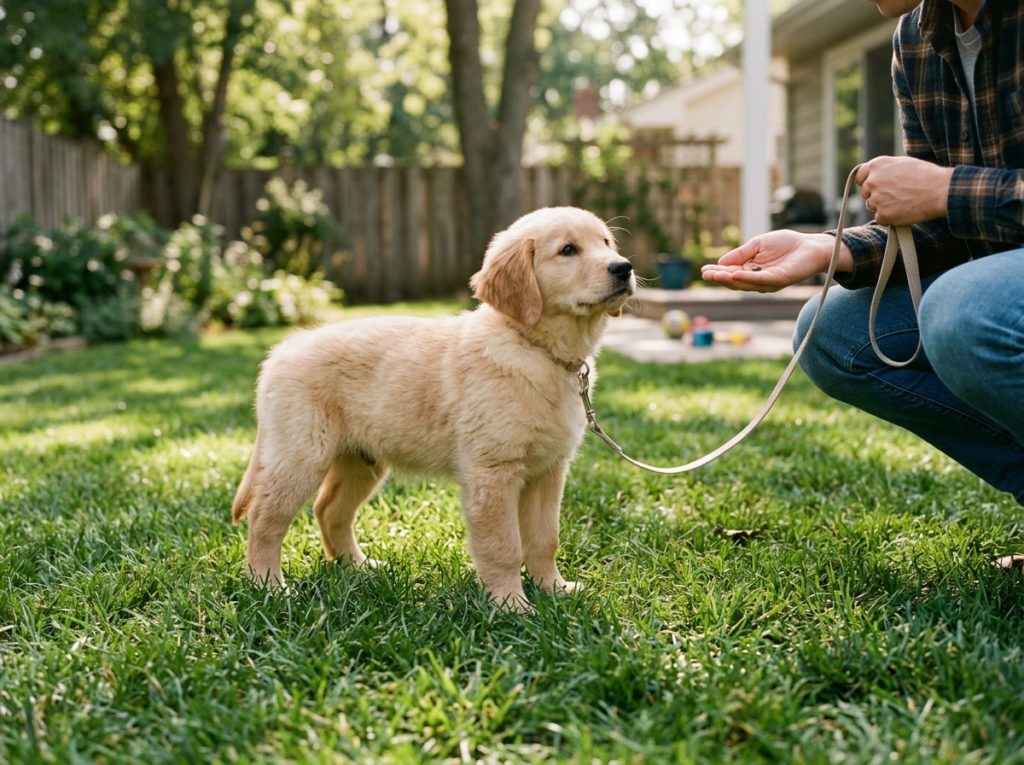
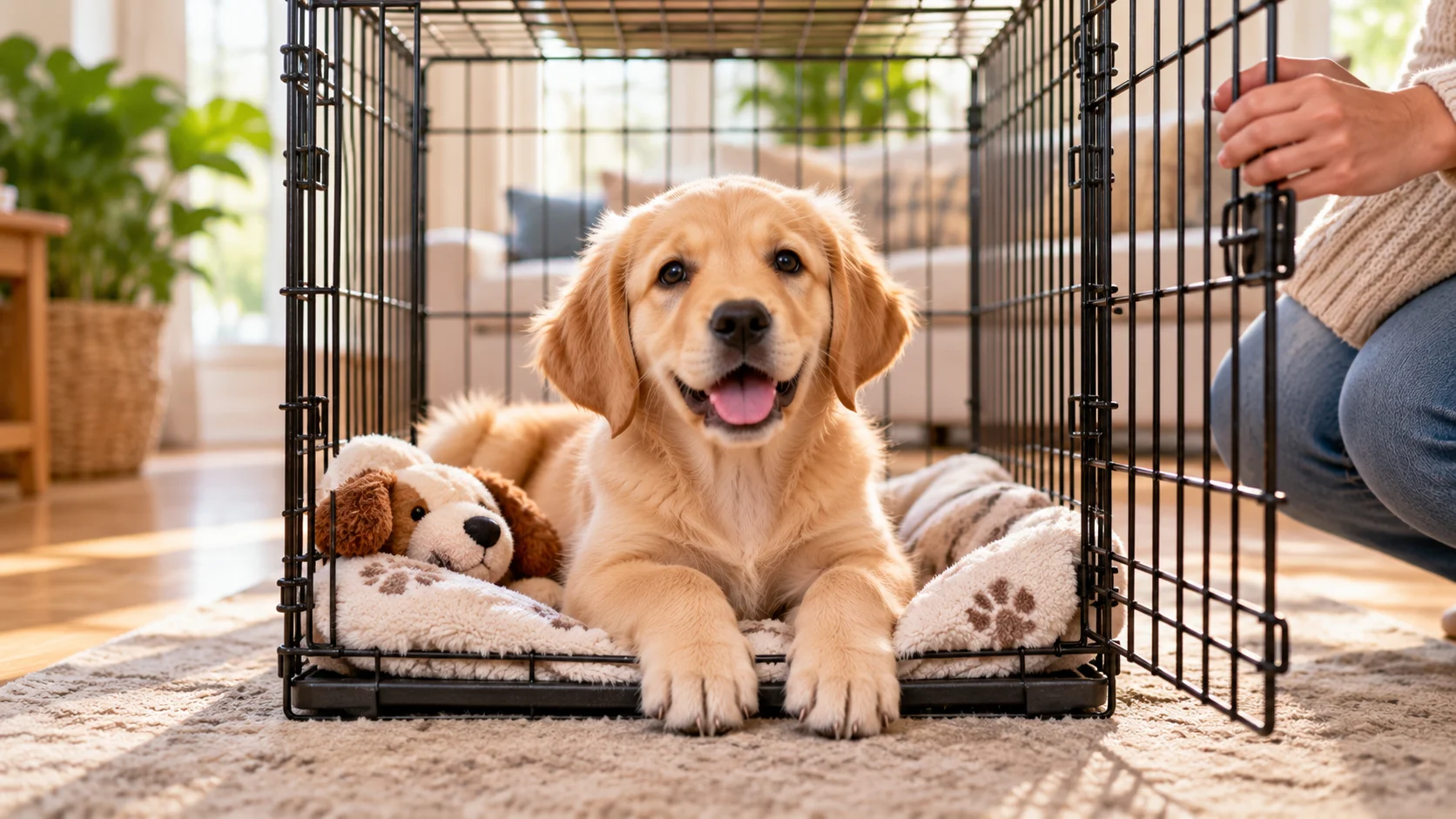
Crate training a puppy can feel intimidating at first, especially when those first whimpers start. Done well, though, a crate becomes a calm, familiar space where your puppy feels secure. It also makes house training easier, keeps your puppy safe when you cannot supervise, and prepares them for travel and vet visits.
This beginner’s guide covers how to choose a crate, the step-by-step process for introducing it, how long your puppy can stay inside at each age, and what to do about crying. The goal is a crate your puppy chooses to rest in, not one they are forced into.
Table of Contents
Quick Answer: How Do You Crate Train a Puppy?
Introduce the crate gradually, making it a rewarding place with treats, toys, and a cozy bed. Start with the door open, then close it briefly while your puppy eats or chews, and slowly extend the time. Never use the crate as punishment, and keep sessions within your puppy’s age-based limits, with regular potty breaks.
Is Crate Training Good for Puppies?
When it is introduced positively and used sensibly, a crate offers several benefits:
- House training help. Dogs generally avoid soiling the area where they sleep, so a properly sized crate supports potty-training routines.
- Safety. It keeps a curious puppy away from cords, toxic items, and other hazards when you cannot watch them.
- A place to rest. Puppies need lots of sleep, and a quiet den helps them settle.
- Easier travel and vet visits. A dog that is comfortable in a crate copes better with car rides and clinic stays.
A crate is a tool, not a babysitter. Used for too long or for punishment, it can cause stress and set training back. Puppies also need exercise, social time, and plenty of interaction outside the crate.
Choosing the Right Crate
Size
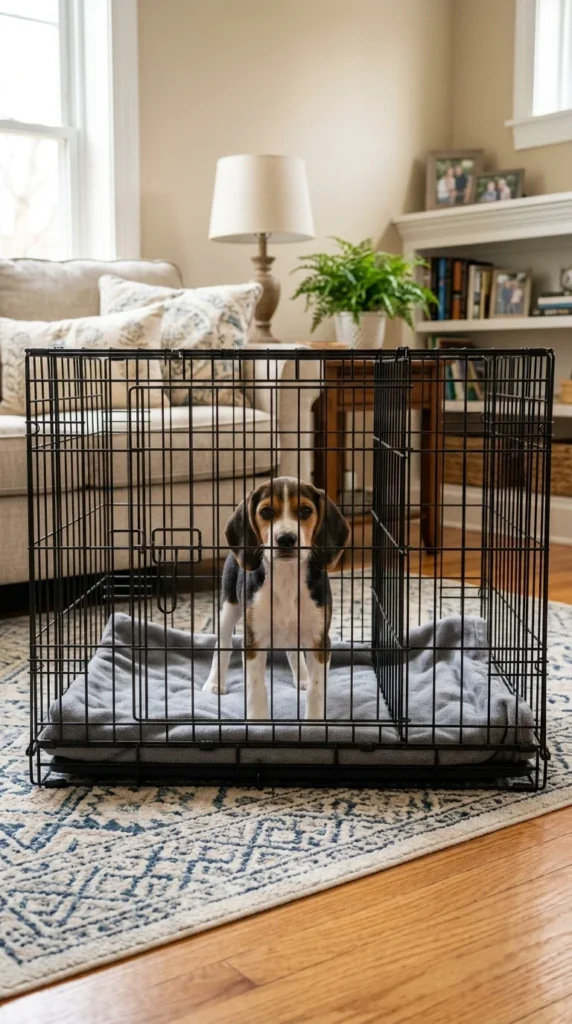
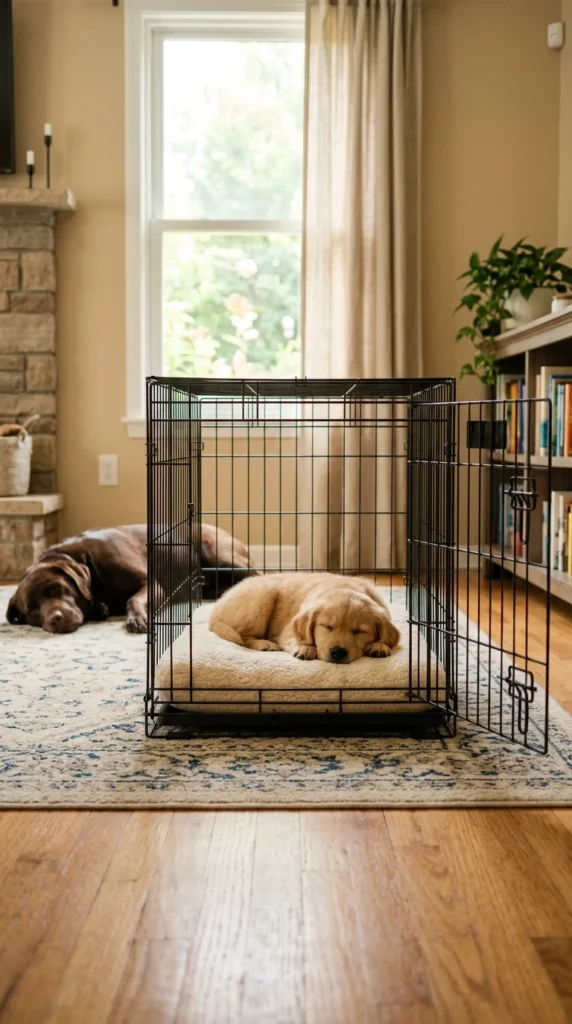
Your puppy should be able to stand up, turn around, and lie down comfortably. Too much space can encourage a puppy to use one corner as a bathroom. If your puppy will grow a lot, consider a larger crate with a divider panel, so you can adjust the space as they grow.
Type
- Wire crates offer good airflow and visibility, and often fold flat. Many come with dividers.
- Plastic crates feel more den-like and are commonly used for travel.
- Soft-sided crates are lightweight, but they are not ideal for puppies who chew or dig.
Location
Place the crate in a spot where your puppy can see and hear the family, such as a corner of the living room. At night, many owners keep the crate in or next to the bedroom at first, so a young puppy feels less alone and you can hear when they need a potty break.
Crate Training a Puppy Step by Step
Go at your puppy’s pace. Moving too fast is the most common reason crate training stalls.
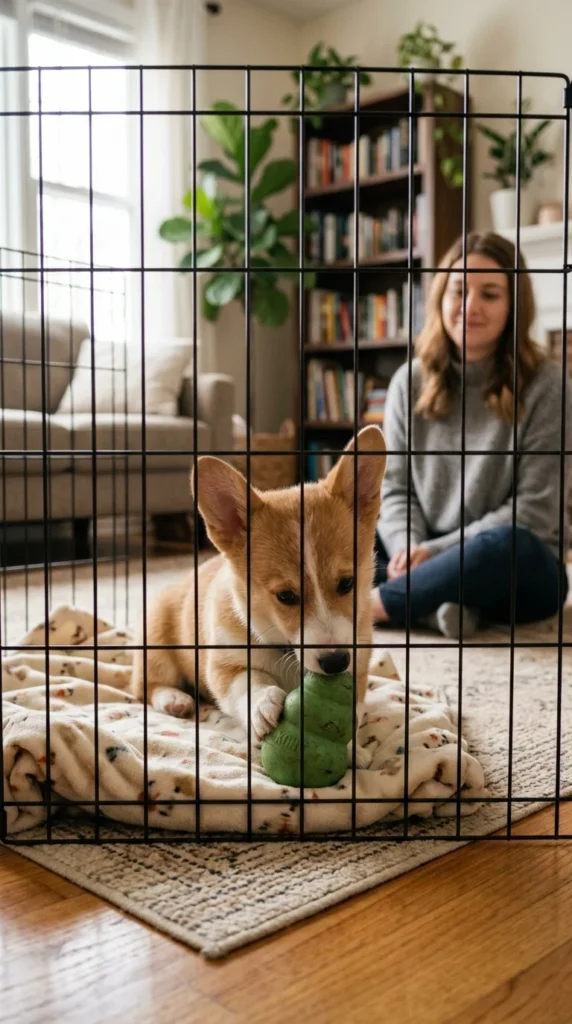
- Make the crate inviting. Put a soft bed or blanket inside and leave the door open or removed. Let your puppy explore without pressure.
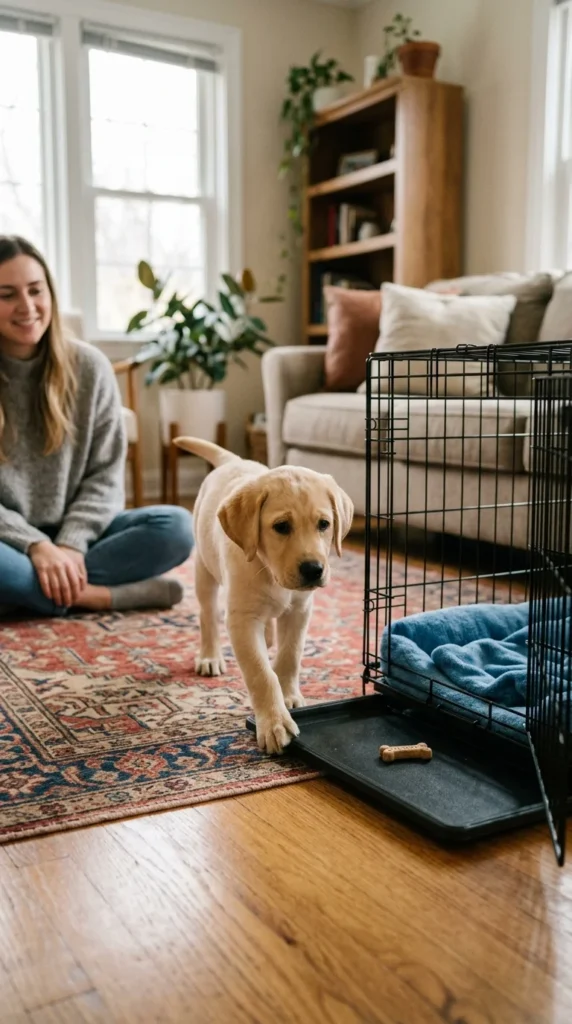
- Toss in treats. Drop a few treats near the entrance, then just inside, then at the back. Praise your puppy for stepping in on their own.
- Feed meals in the crate. Place the food bowl inside. Once your puppy walks in comfortably, close the door while they eat and open it as soon as they finish.
- Add a cue. Say a short word like “bed” or “crate” as your puppy enters, then reward them.
- Close the door for short stretches. Offer a chew toy or stuffed puzzle toy, sit nearby for a few minutes, then let your puppy out calmly.
- Build duration gradually. Increase time in small steps, such as 5, 10, then 20 minutes, while you stay in the room.
- Practice leaving the room. Step out for short periods, return quietly, and avoid a big fuss when you come back.
- Move to longer stretches and night sleeping. Once your puppy is relaxed, extend crate time within age-appropriate limits.
Many puppies begin to feel comfortable within a week or two, but full reliability can take several weeks, depending on age and temperament. Be patient and consistent.
How Long Can a Puppy Stay in the Crate?
Young puppies have small bladders and limited control. A commonly used guideline is that a puppy can hold it for about one hour per month of age during the day, with an upper limit of around three to four hours. Very young puppies need much less.
- 8 to 10 weeks: about 30 to 60 minutes at a time during the day
- 3 to 4 months: roughly 2 to 3 hours
- 4 to 6 months: about 3 to 4 hours at most
Treat these as ceilings, not targets, and remember that play, excitement, eating, and drinking make puppies need to go out sooner. Always take your puppy out for a potty break right before and right after crating.
If your schedule keeps you away longer than your puppy can manage, arrange a midday visit from a family member, a pet sitter, or a daycare. A crate should never be a full-workday solution for a young puppy.
Crate Training at Night
Puppies often settle better with the crate close to you. A few tips for the first weeks:
- Give a final potty trip right before bed, and keep the evening calm.
- Expect at least one overnight potty break for very young puppies, since many cannot hold it all night until they are a bit older.
- Take your puppy out quietly, with no play, then return them to the crate.
- Gradually stretch the time between breaks as your puppy grows.
Ask your veterinarian if you are unsure how long your particular puppy can safely go overnight.
What to Do If Your Puppy Cries in the Crate
Some fussing is normal, especially in the first days. The trick is figuring out why your puppy is crying.
- Needs a potty break. If it has been a while, or your puppy just woke up, take them out calmly.
- Wants attention or is protesting. If your puppy has just been out and is safe and comfortable, wait for a brief pause in the noise before opening the door, so crying does not become the way to get out.
- Is uncomfortable or scared. Check the crate is not too hot or cold, and go back a step in training if the crate still feels scary.
Do not scold your puppy for crying, and do not let them stay in a crate in genuine panic. If your puppy seems terrified, drools heavily, hurts themselves trying to escape, or refuses to settle despite gradual training, talk to your veterinarian or a qualified trainer. Intense distress can be a sign of separation anxiety or another issue that needs more help.
Crate Training Mistakes to Avoid
- Using the crate as punishment. It should always be a safe, pleasant place.
- Leaving your puppy crated too long. Respect age-based limits and offer regular breaks.
- Moving too fast. Skipping steps can create fear that is harder to undo.
- Making a big deal of goodbyes and hellos. Keep comings and goings low-key.
- Choosing a crate that is too big. Extra space can undermine house training.
- Skipping exercise and attention. A tired, well-exercised puppy settles more easily.
- Leaving unsafe items inside. Remove anything that could be swallowed or caught. Avoid bedding your puppy shreds, and ask your vet before leaving a collar on in the crate.
When Can You Stop Using the Crate?
There is no set date. Many dogs earn more freedom between about 6 and 12 months, once they are reliably house trained and no longer chewing everything in sight. Increase freedom gradually, starting with short periods in one puppy-proofed room. Many dogs keep choosing their crate as a resting place long after it is required, which is a good sign.
Chewy Education, How to Crate Train Your Puppy: https://www.chewy.com/education/dog/new-dog/how-to-crate-train-a-puppy-a-step-by-step-guide-from-an-expert
Frequently Asked Questions
How long does it take to crate train a puppy?
Many puppies feel comfortable in one to two weeks, but full reliability can take several weeks or longer. Age, temperament, and consistency all matter.
Should I put my puppy’s crate in my bedroom?
For the first weeks, many owners find it helpful. Your puppy feels less alone, and you can hear when they need a potty trip. You can move the crate later if you prefer.
Should I put water in the crate?
Offer water regularly, and ask your veterinarian what is best for your puppy. For short sessions it is usually not needed, while for longer stretches many owners attach a spill-resistant bowl.
Is it cruel to crate train a puppy?
Not when it is done positively and in moderation. Problems arise when a crate is used for punishment or for too many hours, so follow age-based limits and give your puppy plenty of time outside it.
What if my puppy hates the crate?
Go back a few steps, make the crate more rewarding, and shorten sessions. If the reaction is intense or does not improve, talk to your vet or a qualified trainer.
Can I crate train an older dog?
Yes. The same gradual, reward-based approach works for adult dogs, though it may take longer, especially if they have had bad experiences with crates.
Final Thoughts
Crate training a puppy comes down to patience, positive experiences, and sensible limits. Make the crate cozy, build up time slowly, take regular potty breaks, and never use it for punishment. Your next step is to set up the crate today, toss in a few treats, and let your puppy explore it on their own terms.
This article is for general education and is not a substitute for veterinary or professional training advice. If your puppy shows signs of severe distress, contact your veterinarian or a qualified trainer.