Few things shape a puppy’s first months like their meals. A steady puppy feeding schedule supports healthy growth, keeps energy and digestion on track, and even makes house training easier. The tricky part is that a puppy’s needs change quickly, so the right schedule at 8 weeks looks very different from the right one at 8 months.
This guide explains how often to feed a puppy at each stage, how to work out how much to feed, and how to build a routine that fits your day. It also covers special considerations for tiny and large breeds, plus when to switch to adult food.
Table of Contents
Quick Answer: How Often Should You Feed a Puppy?
Most puppies do best on four meals a day from about 6 to 12 weeks, three meals a day from 3 to 6 months, and two meals a day from about 6 months onward. Feed a complete puppy food, follow the label as a starting point, and ask your vet to adjust the amount for your puppy’s size and body condition.
Why Puppies Need Small, Frequent Meals
Puppies grow fast, but their stomachs are small. Several smaller meals are easier to digest than one or two large ones, and they help keep energy steady through the day. Feeding a day’s worth of food in a single sitting can lead to discomfort, so “little and often” is the guiding idea for young puppies.
A predictable schedule also helps with house training. Puppies tend to need a bathroom break shortly after eating, so regular meal times make those trips easier to anticipate.
Puppy Feeding Schedule by Age
The ranges below are common starting points. Your veterinarian may suggest a different pattern based on your puppy’s breed, size, and health.
Under 8 Weeks
Puppies typically begin the move from their mother’s milk to solid food at around 3 to 4 weeks old and are usually weaned by about 6 to 8 weeks. Most owners bring puppies home at 8 weeks or later, so the breeder or rescue should already have them eating solid puppy food. If you are caring for a younger or orphaned puppy, call your veterinarian for guidance, because these puppies have very specific needs.
8 to 12 Weeks: About Four Meals a Day
This is the stage of small, frequent meals. Many owners split the day into morning, midday, late afternoon, and evening feedings. Keep meals spaced out so your puppy does not go long stretches without eating, and try to give the last meal a few hours before bedtime.
3 to 6 Months: About Three Meals a Day
Around 3 months, most puppies can move to three meals a day. A simple morning, midday, and evening routine works for many households. Make the change gradually, and watch how your puppy handles it.
6 to 12 Months: Two Meals a Day
Between about 6 and 12 months, many puppies settle into two meals a day, morning and evening. Some owners and vets keep three meals for a while longer, especially with smaller breeds. Follow your vet’s guidance if their advice differs.
After the First Year
Most dogs eventually settle into a twice-daily adult routine. When to move to adult food depends heavily on size, so see the section on transitioning below.
Sample Daily Routine
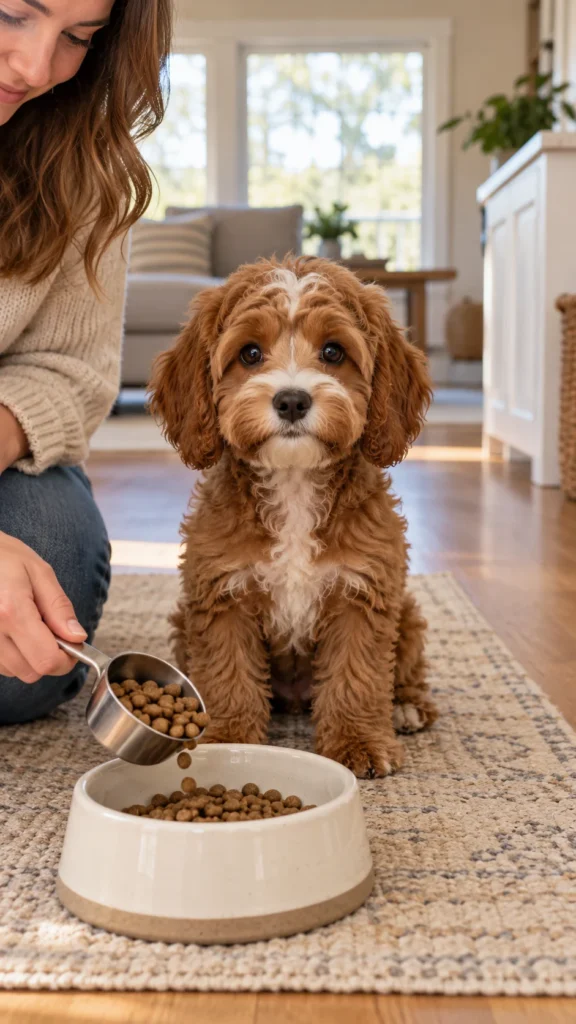
Here is one example of how a day might look for a puppy eating three meals. Adjust the times to fit your life.
- Morning: bathroom trip, then breakfast, then another bathroom trip.
- Midday: lunch, followed by a short break outside and some quiet time.
- Early evening: dinner, followed by a bathroom trip and play.
- Bedtime: a final bathroom trip. Food should be finished a few hours earlier.
The exact times matter less than consistency. Try to keep meals at roughly the same times each day.
How Much Should You Feed a Puppy?
There is no single right amount, because it depends on your puppy’s age, current weight, expected adult size, activity level, and the calorie density of the food. Here is a practical way to approach it.
- Start with the label. Complete puppy foods include a feeding guide based on weight or age. Treat it as a starting point, not a rule.
- Divide the daily amount. Split the total across your puppy’s meals for the day, rather than giving the full amount at each meal.
- Watch body condition. You should be able to feel your puppy’s ribs under a light layer of fat, and see a slight waist from above. Veterinarians use a body condition score to judge this, and your vet can show you what to look for.
- Weigh regularly. Check your puppy’s weight between vet visits so you can catch changes early.
- Adjust with your vet. If your puppy is gaining too fast or looks thin, ask for a revised plan.
Remember that treats count too. If you use treats for training, keep them small and take them into account when you plan the day’s food.
Choosing the Right Food
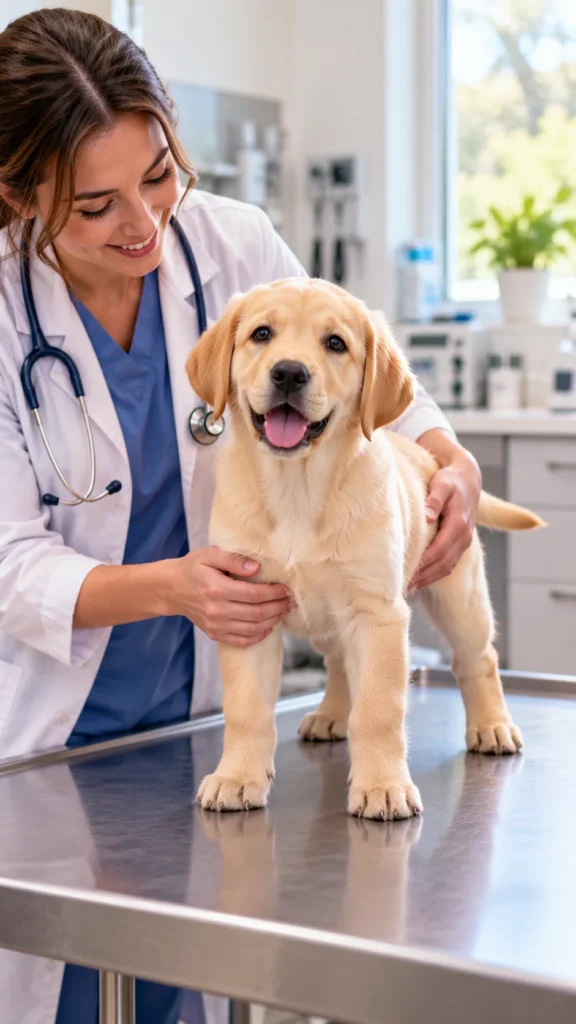
Puppies need food made for growth, not adult dog food. Look for a statement on the label saying the food is complete and balanced for growth or for all life stages. This is the AAFCO nutritional adequacy statement, and it is one of the most useful parts of the package.
Large-Breed Puppies Need Extra Care
If your puppy is expected to weigh 70 pounds or more as an adult, check the label carefully. A food that says it is suitable for “growth, including growth of large-size dogs” is the right type. A food labeled for all life stages “except growth of large-size dogs” should not be fed to a large-breed puppy.
Large-breed puppy foods are designed with controlled calcium and calorie levels to support steady bone growth. Avoid adding calcium or other supplements unless your veterinarian recommends them, since too much can be harmful.
Small and Toy-Breed Puppies
Very small puppies can have trouble keeping their blood sugar steady, so they often need more frequent meals. If your tiny puppy seems weak, wobbly, unusually sleepy, or shaky, contact your veterinarian right away, as this can be a sign of low blood sugar.
Scheduled Meals vs. Leaving Food Out
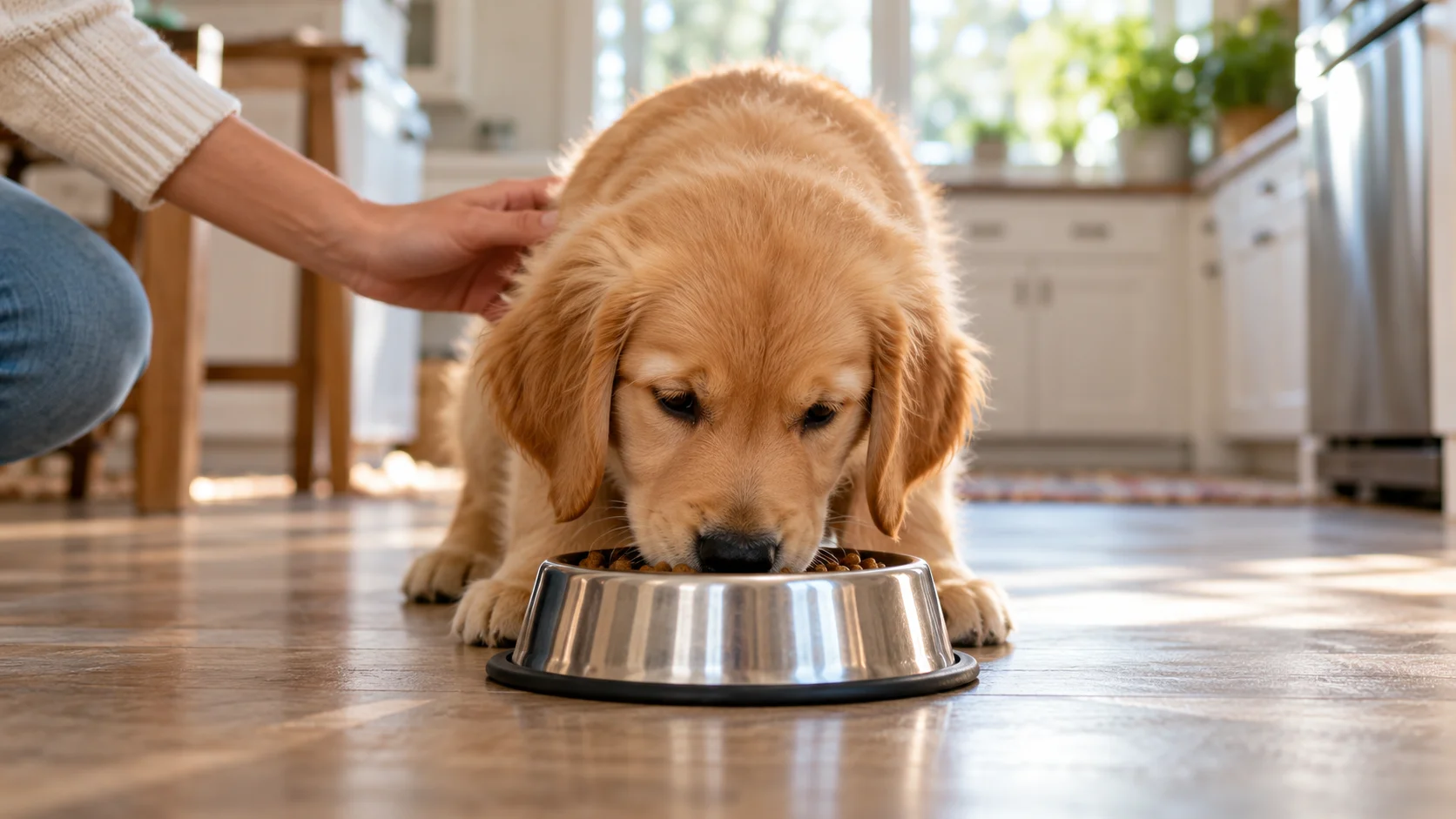
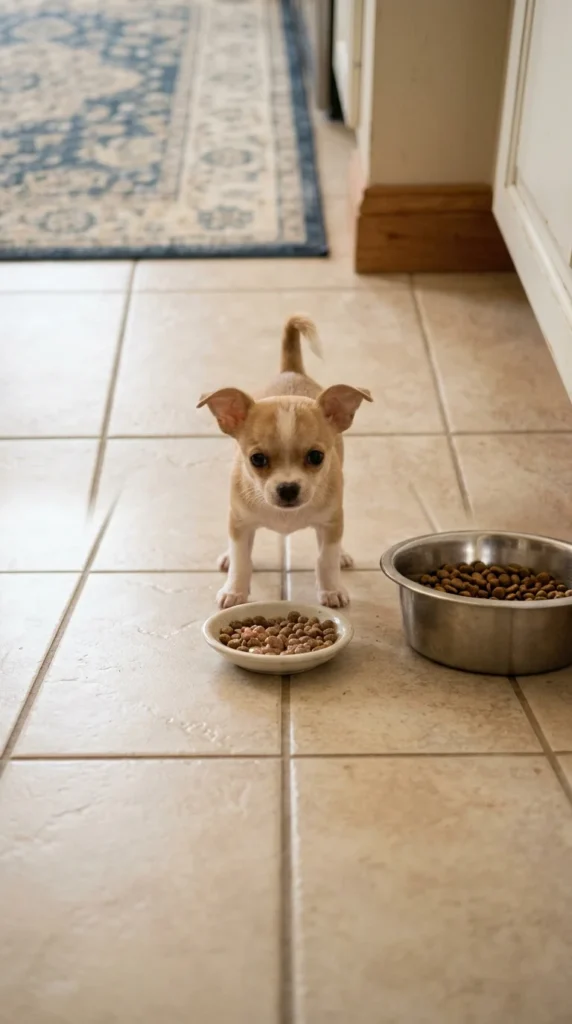
For most puppies, scheduled meals work better than leaving food out all day. Set the bowl down, give your puppy a set period to eat, such as 15 to 20 minutes, then pick it up. This makes it easy to see how much your puppy is really eating, helps prevent overeating, and supports house training.
If your puppy skips several meals or suddenly loses interest in food, do not just wait it out. Call your vet, since appetite changes can signal illness, especially in young puppies.
dvm360, Feeding growing puppies (veterinary proceedings): https://www.dvm360.com/view/feeding-growing-puppies-proceedings
Common Puppy Feeding Mistakes
- Switching foods suddenly. Abrupt changes can upset the stomach. Introduce new food gradually.
- Feeding adult food too early. Adult formulas do not meet a growing puppy’s needs.
- Free-feeding without monitoring. It makes portions hard to track and can lead to overeating.
- Relying only on the bag. Feeding charts are averages, so watch your puppy’s body condition.
- Too many treats or table scraps. These add calories and can cause stomach upset. Some human foods are also unsafe for dogs.
- Adding supplements on your own. Check with your vet first.
When to Switch from Puppy Food to Adult Food
Puppies should stay on a growth diet until they are close to their adult size. Smaller breeds often finish growing sooner, while large and giant breeds can take well over a year and sometimes up to two. Veterinary nutritionists generally advise against switching until a puppy has reached most of its skeletal maturity, so ask your vet when the right time is for your dog.
When it is time, change foods gradually. Mix a little of the new food into the old, and increase the proportion over about a week or longer, watching for loose stools or vomiting. If your puppy has been spayed or neutered, ask your vet whether portions should be adjusted, since energy needs can change.
When to Call the Vet
Contact your veterinarian promptly if your puppy:
- Refuses food for more than a meal or two, or seems unwell
- Has repeated vomiting or ongoing diarrhea
- Seems weak, shaky, or unusually sleepy, especially a tiny-breed puppy
- Is gaining weight too quickly or looks too thin
- Has a swollen, tight belly or seems in pain after eating
Seek emergency care right away for collapse, repeated unproductive retching, or a bloated abdomen.
Frequently Asked Questions
How often should an 8-week-old puppy eat?
Most 8-week-old puppies eat about four small meals a day, spaced through the day. Your vet may adjust this for tiny breeds or puppies with health concerns.
Should I wake my puppy to feed them?
Generally not. Plan meals during waking hours and finish the last one a few hours before bedtime. If your puppy is very young or tiny and you are worried about overnight gaps, ask your vet.
Is it okay to feed my puppy only twice a day?
Young puppies usually do better on more frequent meals. Twice a day is typical later, around 6 months or older, though your vet may suggest otherwise for your puppy.
Can I mix wet and dry puppy food?
Yes, as long as both are complete and balanced for puppies, and you count the total amount toward the day’s food. Introduce any new food gradually.
Why is my puppy always hungry?
Growing puppies often act eager at mealtime. Check that you are feeding an appropriate amount, include treats in your count, and rule out parasites or other causes with your vet if the hunger seems extreme.
What if my puppy won’t eat?
One skipped snack is not unusual, but ongoing refusal, especially with lethargy, vomiting, or diarrhea, needs a veterinary check, since young puppies can get sick quickly.
Final Thoughts
A good puppy feeding schedule is simple: small, frequent meals early on, fewer meals as your puppy grows, a food made for growth, and portions guided by your puppy’s body condition rather than the bag alone. Your next step is to ask your veterinarian at the next visit to confirm the right food, amount, and schedule for your puppy’s breed and size.
This article is for general education and is not a substitute for veterinary advice. Always follow your veterinarian’s recommendations for your individual puppy.