Bringing home a puppy is exciting, and a little overwhelming. Your puppy has just left their mother, littermates, and everything familiar, and now they are in a new place with new smells, sounds, and people. A good plan for the puppy first week at home helps them feel safe, helps you stay calm, and sets up routines that last.
This checklist covers what to prepare before pickup, how to handle the first day and night, how to build a simple daily routine, and when to see your veterinarian. It is general guidance, so follow any specific advice from your vet, breeder, or shelter.
Table of Contents
Quick Answer: What Should You Do in a Puppy’s First Week at Home?
Keep your puppy’s world small and predictable. Set up a safe space, pick a potty spot, keep a steady schedule for meals, potty breaks, naps, and play, and plan for a rough first night or two. Feed the same food they ate before, and book a veterinary checkup within the first few days.
Before Your Puppy Comes Home
A little preparation makes the first days much smoother. The AKC notes that you will want to protect your puppy and your home from trouble spots, and that a crate, a bed, and toys are basic starting points.
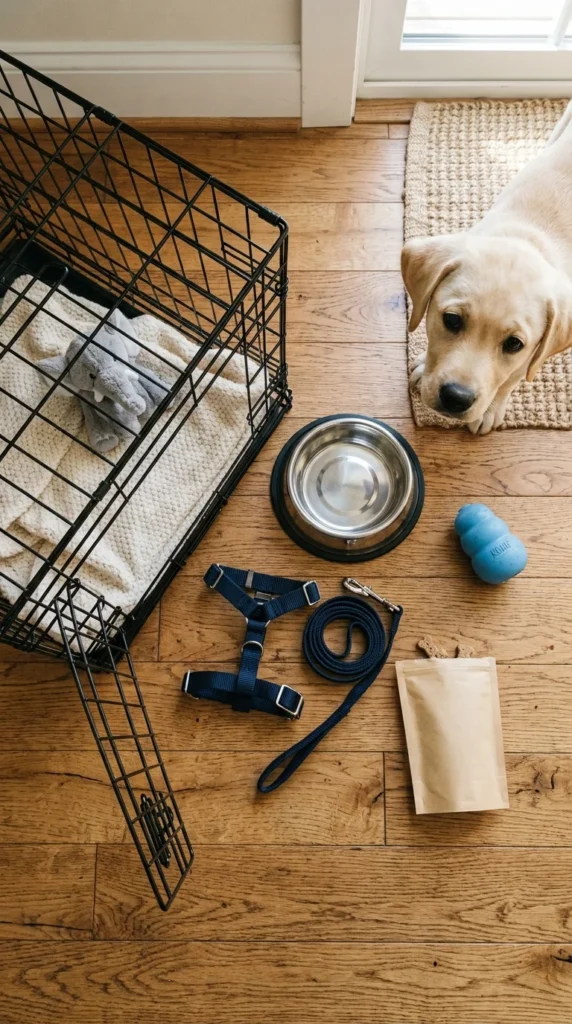
New Puppy Supplies Checklist
- Crate: One large enough for the puppy to stand, turn, and lie down in comfortably, with a divider if it is sized for an adult dog.
- Bed or washable bedding: Something soft and easy to clean.
- Food and water bowls: Stainless steel or ceramic are easy to wash.
- Puppy food: The same brand and formula the puppy is eating now.
- Collar or harness and ID tag: Make sure the fit is snug but comfortable.
- Leash: A standard six-foot leash works well.
- Chew toys and soft toys: Size-appropriate, safe options.
- Treats: Small, soft training treats.
- Potty supplies: Waste bags and an enzymatic cleaner for accidents.
- Grooming basics: A soft brush and puppy-safe nail clippers.
- Baby gates or a playpen: To limit where your puppy can roam.
Puppy-Proof Your Home
Get down to puppy height and look around. Puppies chew and swallow things, so:
- Move electrical cords out of reach or cover them.
- Store cleaning products, medications, and chemicals in closed cabinets.
- Keep small objects, socks, and children’s toys off the floor.
- Close off stairs and rooms you do not want your puppy to enter.
- Check that houseplants are safe, and remove any you are unsure about.
- Secure trash cans with lids.
Ask your vet or consult the ASPCA’s list of toxic foods and plants for items to keep away from dogs.
Get the Household on the Same Page
Decide in advance who feeds the puppy, who handles the late-night potty trip, and what the house rules will be. Consistent rules help your puppy learn faster and keep everyone from sending mixed messages.
Day One: Bringing Your Puppy Home
If you can, pick up your puppy early in the day and plan to stay home so you have time to help them settle. The AKC recommends staying home so your puppy feels secure.
- Go to the potty spot first. Before going inside, carry or lead your puppy to the spot you chose and give them a minute to sniff. Reward them if they go.
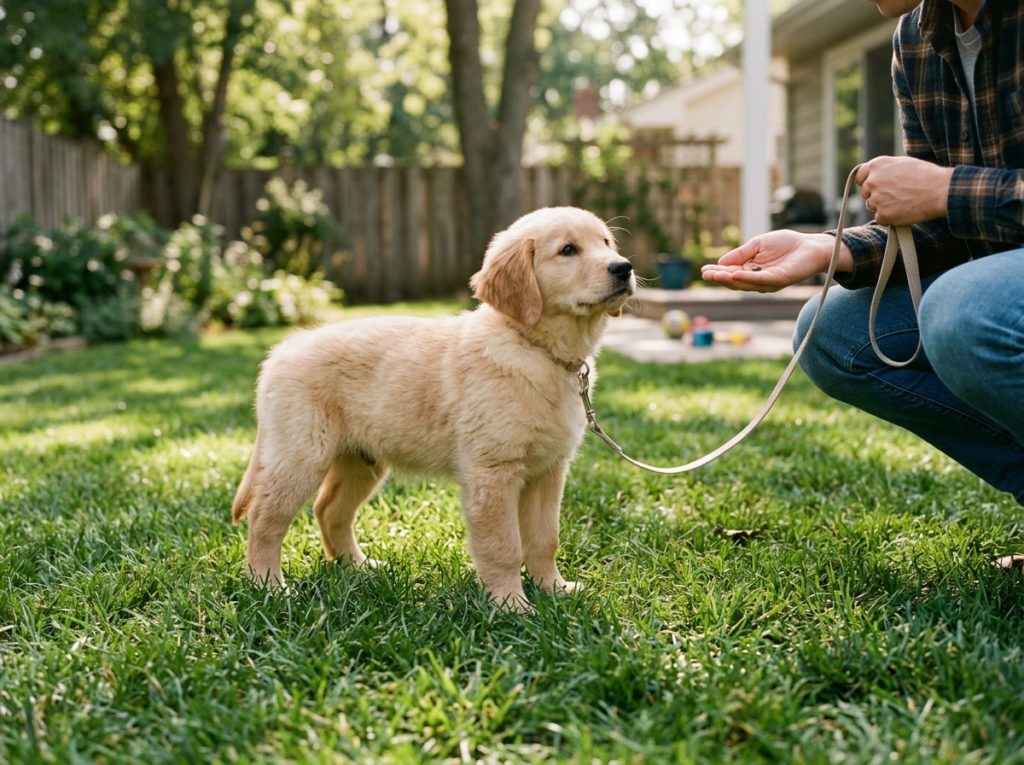
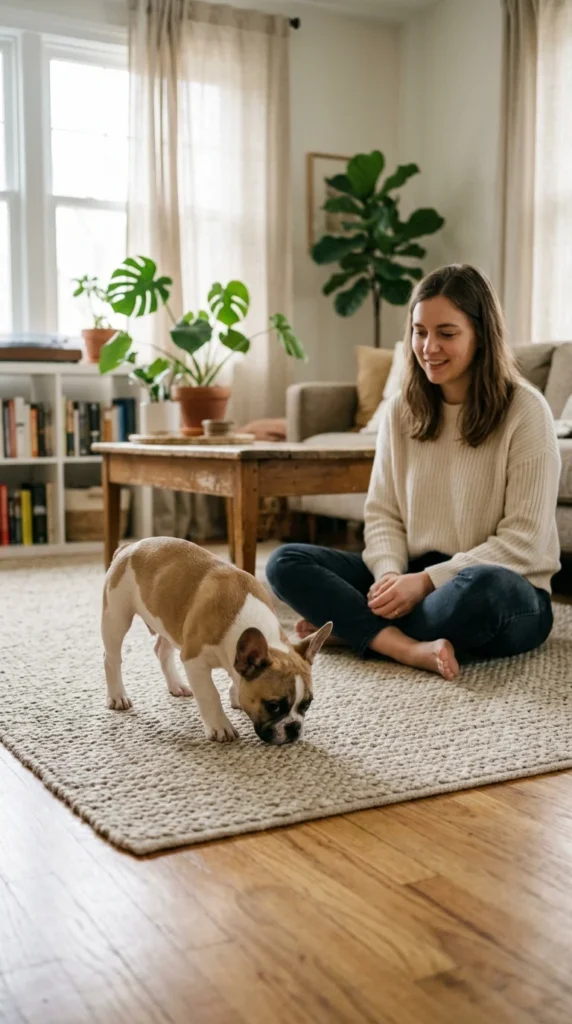
- Keep the tour small. Let your puppy explore one or two rooms on a leash or inside a gated area. Show them their bed, water, and crate.
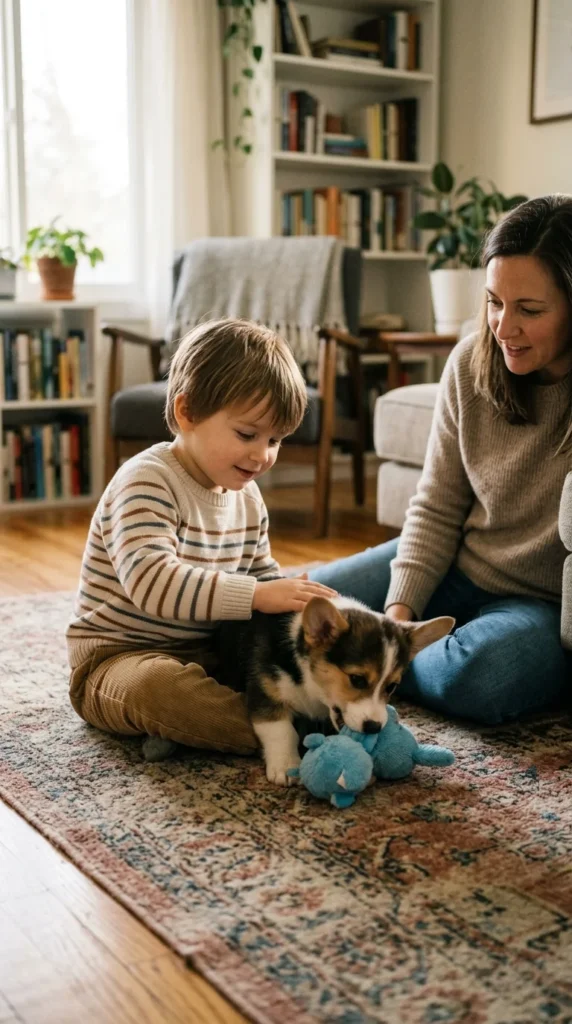
- Introduce the family calmly. Have people meet the puppy one at a time, and ask young children to sit on the floor to pet the puppy gently.
- Limit visitors. Save big welcome parties for later.
- Avoid other dogs outside your home. The AKC advises against interactions with unfamiliar dogs at first, since your puppy’s vaccinations are not complete.
- Let your puppy rest. Puppies need a lot of sleep, and it is normal for them to nap between bursts of energy.
The First Night With Your Puppy
The first night is often the hardest. Your puppy is away from their mother and siblings for the first time, so some whining is normal. A few steps can help.
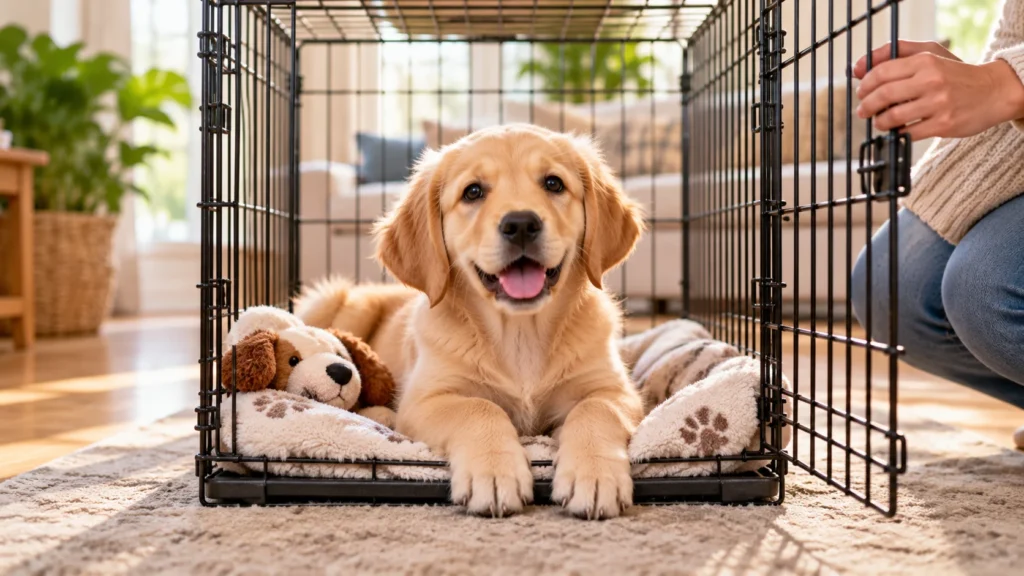
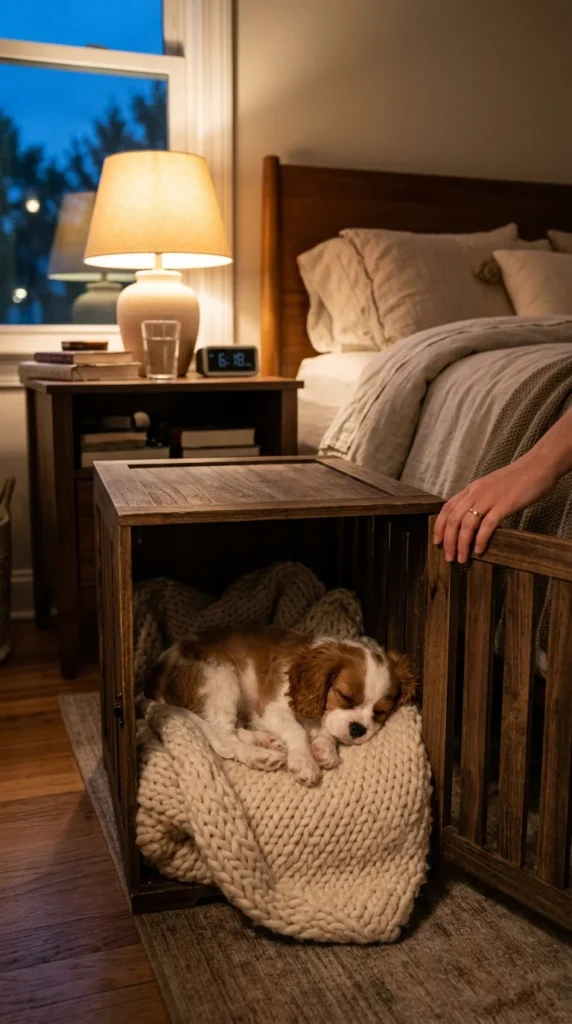
- Put the crate in your bedroom. The AKC suggests this so your puppy can hear and smell you.
- Add something familiar. A blanket or toy that smells like their mother or previous home can be comforting.
- Take a last potty trip right before bed. Keep it calm and quiet.
- Make the crate positive. Offer a small treat when your puppy goes in on their own.
- Expect a night potty break. Young puppies cannot hold their bladder all night. If your puppy wakes and whines, take them out quietly for a short, boring potty trip, then return them to the crate.
Do not punish whining, and try not to turn nighttime trips into playtime. Some puppies settle within a few nights, while others take longer. If distress is intense or continues, talk to your vet or a positive-reinforcement trainer.
Set a Daily Routine
Structure helps your puppy feel secure and understand what is expected. The AKC advises creating a schedule and sticking to it. A simple routine includes:
- Meals: Regular times each day, as your vet or the food label recommends for your puppy’s age and size.
- Potty breaks: After waking, eating, drinking, and playing, and often in between.
- Play: Short sessions of gentle play, which tire a puppy out.
- Naps: Plenty of quiet rest in the crate or a quiet spot.
- Bedtime: A consistent time each night.
Feeding in the First Week
Keep your puppy on the same food they ate at the breeder or shelter, at least for the first week or until your vet advises otherwise. A sudden diet change on top of the stress of a move can upset a puppy’s stomach. If you want to switch foods, ask your vet and do it gradually. Follow the feeding amounts recommended by your vet or the food label for your puppy’s age and expected adult size.
Start Potty Training From Day One
Take your puppy to the same outdoor spot often, and praise or treat right after they go. The AKC advises giving a potty break every time your puppy eats, drinks, wakes up, plays, or starts sniffing around. If your puppy is not yet walking well, carry them to the spot. Expect accidents, and clean them with an enzymatic cleaner without scolding.
Crate Time and Alone Time
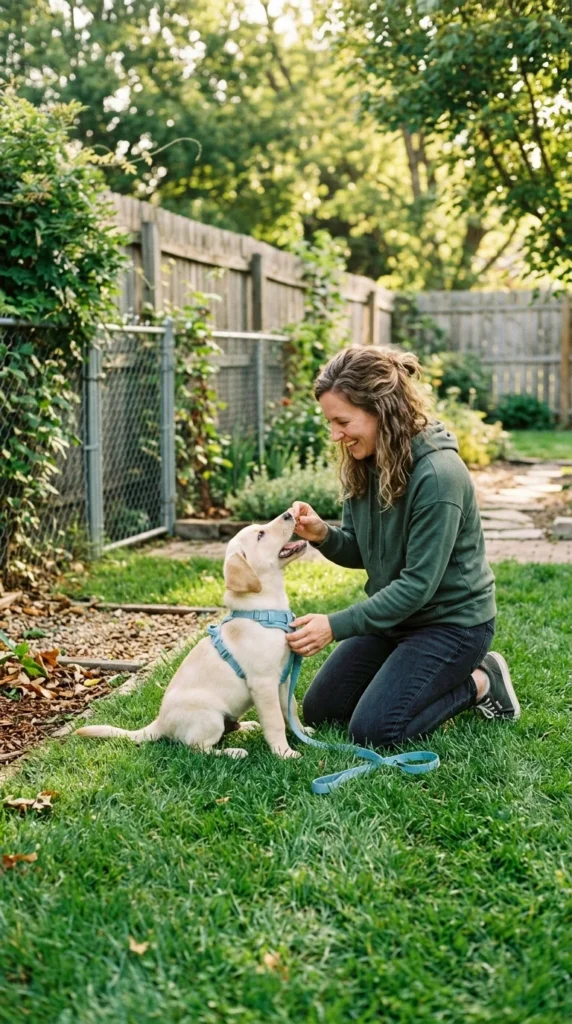
A crate can become your puppy’s safe den if you introduce it gently. Feed meals near or inside it, toss in treats, and keep early crate sessions short. Start practicing short periods of alone time in the first week, even if you work from home, so your puppy learns that being alone is normal. Never use the crate as punishment.
Gentle Socialization in the First Week
Socialization means helping your puppy have calm, positive experiences with new sights, sounds, surfaces, and people. In the first week, keep it simple and low-pressure:
- Let your puppy meet a few calm family members or friends at home.
- Introduce household sounds gradually, like the vacuum or the doorbell.
- Offer different surfaces such as tile, carpet, and grass at the potty spot.
- Handle paws, ears, and mouth gently so grooming and vet visits are easier later.
Ask your vet when it is safe to take your puppy to public places and meet other dogs, since that depends on vaccinations and local disease risks.
Book the First Vet Visit
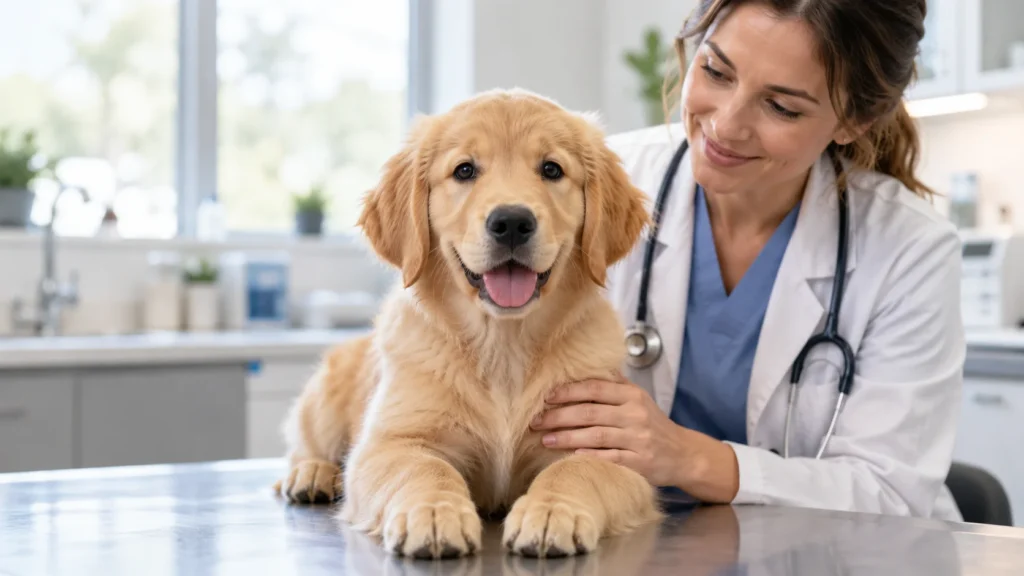
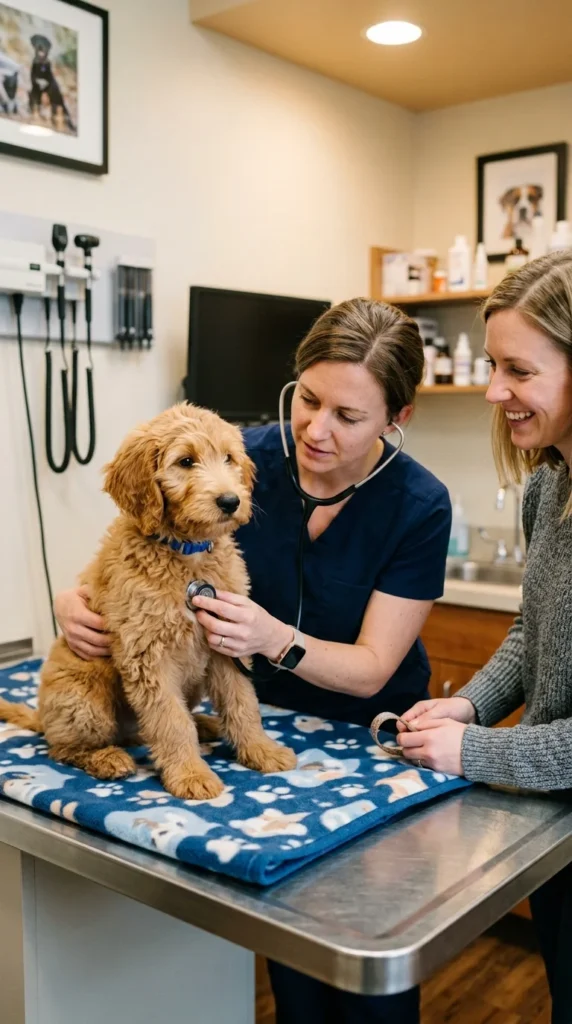
The AKC says your puppy should have a checkup within the next few days after coming home. At the visit, your vet can examine your puppy, review vaccinations and parasite prevention, discuss feeding, and answer questions. Bring any records from the breeder or shelter, along with a stool sample if the clinic asks for one.
What’s Normal and When to Call the Vet
Some mild changes are common in a new puppy, such as a little extra sleep, crying at night, or slightly softer stool in the first days of stress. But puppies are fragile, and they can become seriously ill quickly. Call your veterinarian promptly if you notice:
- Vomiting or diarrhea that is repeated, severe, or contains blood
- Refusing to eat or drink
- Lethargy, weakness, or being hard to wake
- Coughing, sneezing, or discharge from the eyes or nose
- Pale gums or a swollen belly
- Limping, crying when touched, or signs of pain
Seek emergency care if your puppy is limp, unresponsive, having seizures, struggling to breathe, or may have eaten something toxic.
AKC, Tips for Your Puppy’s First Night Home: https://www.akc.org/expert-advice/puppy-information/tips-for-your-puppys-first-night-home/
A Simple Day-by-Day Plan for the First Week
- Day 1: Potty spot first, quiet tour, family introductions, early bedtime, and crate in your room.
- Days 2 and 3: Stick to the routine, practice short crate sessions, and book the vet visit if you have not already.
- Days 4 and 5: Add gentle handling, short play sessions, and a bit of alone time. Keep outings and visitors limited.
- Days 6 and 7: Review how the routine is going, adjust the potty schedule if needed, and write down questions for your vet.
Mistakes to Avoid
- Overwhelming your puppy: Too many visitors, toys, and outings at once can stress them.
- Skipping the routine: Irregular schedules slow potty training and settling in.
- Changing food suddenly: It can cause stomach upset.
- Punishing accidents or crying: It can create fear without teaching anything.
- Letting kids carry or pick up the puppy: Puppies can be dropped or hurt, so supervise all handling.
- Taking the puppy to dog parks too early: Wait until your vet says it is safe.
- Waiting to book the vet visit: Early checkups catch problems and set up prevention.
Frequently Asked Questions
Where should my puppy sleep the first night?
Many trainers and the AKC suggest a crate in or near your bedroom so your puppy can hear and smell you. It also makes it easier to hear when they need a potty break.
How often should a new puppy go outside?
Very often. Take them out after waking, eating, drinking, and playing, and at regular intervals in between. Puppies have small bladders and limited control.
Is it normal for a new puppy to cry at night?
Yes. Many puppies cry during the first nights because they miss their family. Check that they do not need to go out, keep nighttime trips calm, and talk to your vet if crying is intense or lasts.
What should I feed my puppy in the first week?
Continue the food they were eating before, unless your vet tells you otherwise, and use feeding guidelines for their age and size. Change foods gradually and only with your vet’s guidance.
When should I take my puppy to the vet?
Within the first few days to the first week after bringing them home. Your vet will check their health and plan vaccinations and parasite prevention.
Can my puppy meet other dogs right away?
Not until your vet says it is safe. Puppies are still building immunity, so ask your vet which dogs and places are low-risk.
Final Thoughts
The first week is about helping your puppy feel safe, not about perfect behavior. Prepare your home, set a steady routine, keep the world small and calm, and see your vet early. Be patient with accidents and sleepless nights, since they pass, and the bond you build in these first days is the foundation for everything that follows.
This article is for general education and is not a substitute for veterinary advice. If you have questions about your puppy’s health, contact your veterinarian.