
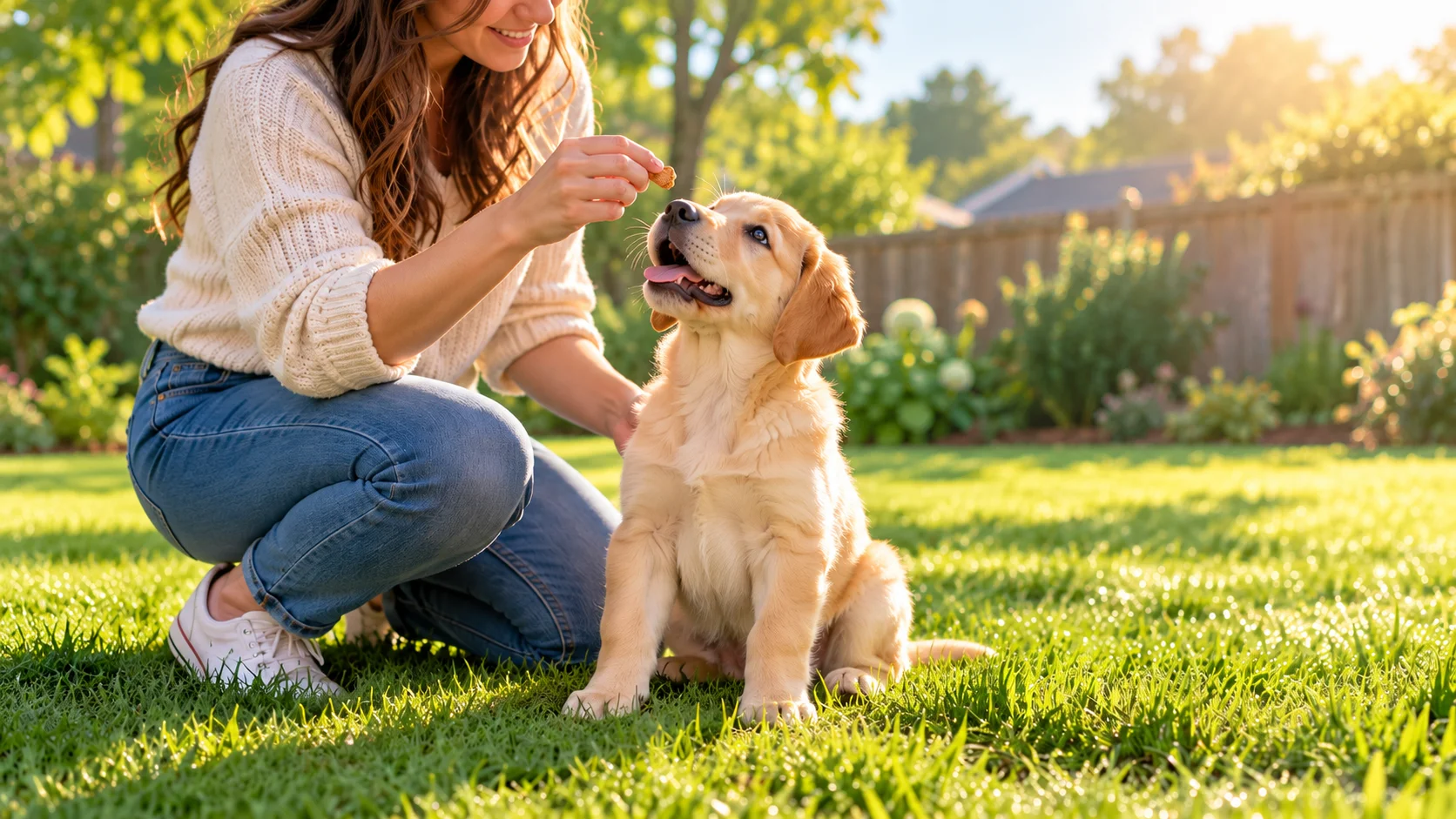
Almost every new puppy owner faces the same question in the first hour: where is this puppy going to pee? Puppy potty training can feel like a never-ending cycle of trips outside and puddles inside, but it follows a simple pattern. Puppies learn fastest when they have a predictable schedule, constant supervision, and a reward the moment they go in the right place.
This step-by-step guide covers what you need, how to build a schedule, how to handle accidents, how to deal with nights and crates, and when accidents may be a medical problem. Every puppy learns at their own pace, so use the timing here as a guide rather than a deadline.
Table of Contents
Quick Answer: How Do You Potty Train a Puppy?
Take your puppy to the same outdoor spot on a regular schedule, especially after waking, eating, drinking, and playing. Stay with them, reward immediately when they go, and supervise or confine them the rest of the time. Clean accidents with an enzymatic cleaner and never punish. Be consistent, and expect it to take time.
What You Need Before You Start
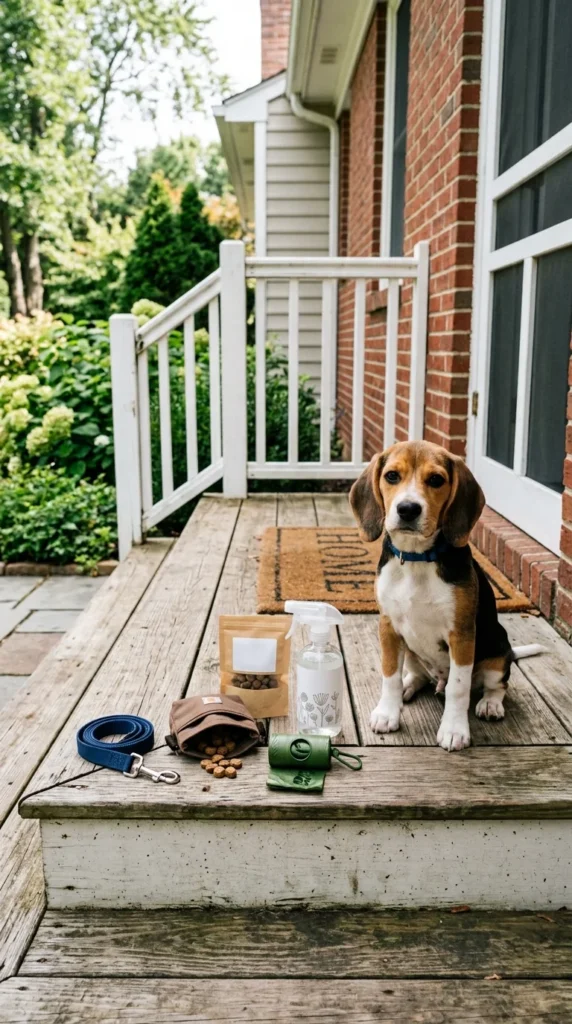
The AKC advises choosing an outdoor potty spot before the puppy comes home and having your supplies ready. A basic kit includes:
- A leash and collar or harness
- Small, soft treats that your puppy loves
- An enzymatic cleaner for accidents
- A crate, playpen, or baby gates to limit where your puppy can roam
- Waste bags
- A cue word you will use each time, such as “go potty”
How Puppy Potty Training Works
Puppies have small bladders and limited control, so they need frequent opportunities to go in the right place. Dogs also naturally avoid soiling the area where they sleep, which is why a crate or small space can help them learn to hold it between trips. The goal is to prevent mistakes, then reward success, so that going outside becomes a habit. Shelters and humane societies consistently stress prevention and rewards over punishment.
Step-by-Step Puppy Potty Training Plan
Step 1: Choose a Potty Spot and a Cue
Pick one spot outside, ideally somewhere easy to reach quickly. Take your puppy to the same area every time, so the smell helps them understand what to do. Say your cue word calmly just as they start to go, and the word will eventually help prompt them.
Step 2: Build a Schedule
Feed your puppy at regular times, and take them out on a predictable schedule. Per the AKC, give your puppy a potty break every time they eat, drink, wake up, play, or start sniffing around the room. One shelter guide suggests starting with trips every two to three hours, and very young puppies often need to go even more often. When in doubt, go out.
A sample day might look like this:
- First thing in the morning: Straight outside before anything else.
- After breakfast: Out again within a short time.
- After naps and play sessions: Out as soon as the puppy wakes or stops playing.
- After drinking and meals through the day: Another trip.
- Last thing before bed: One final trip, kept quiet and calm.
Step 3: Watch for Signs Your Puppy Needs to Go
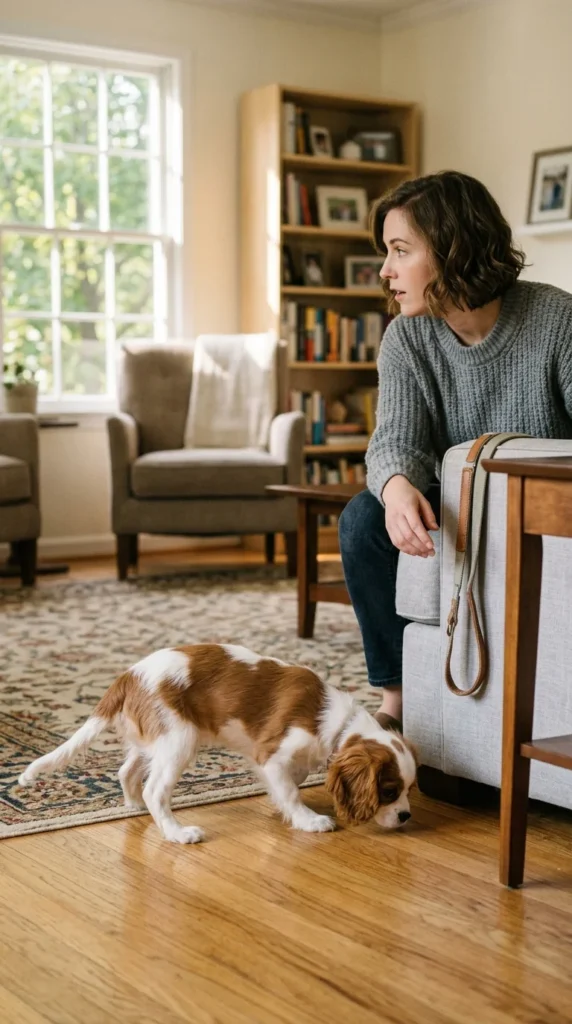
Learn your puppy’s cues. Sniffing the floor, circling, whining, wandering off, or suddenly stopping play are common signs. If you see them, pick up your puppy or lead them outside right away.
Step 4: Go Outside and Wait
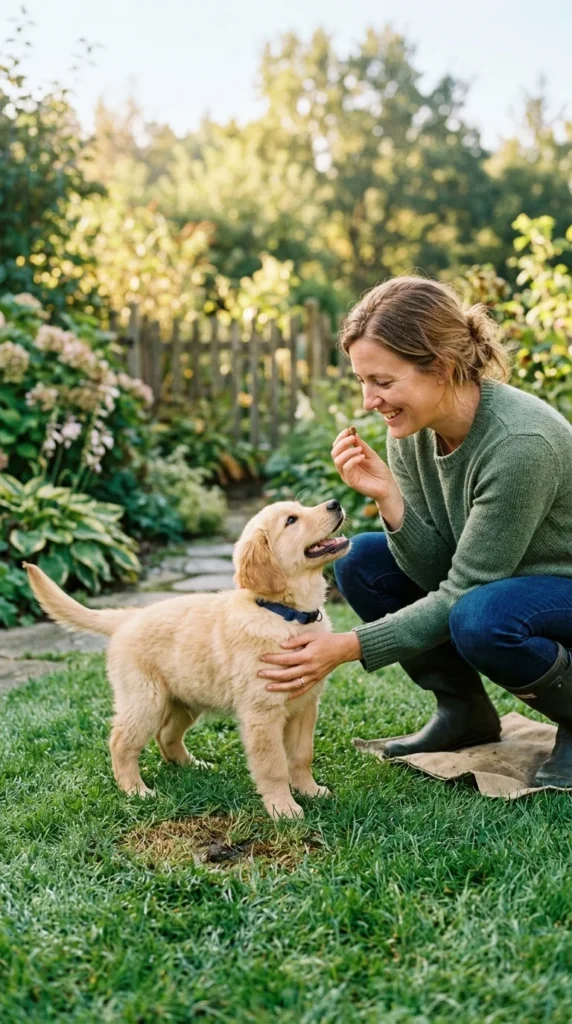
Bring your puppy on a leash, and carry them if needed so they do not have an accident on the way. Stay in the potty area and keep it boring. One shelter guide suggests staying outside for at least about five minutes. Avoid playing until after your puppy has gone, or they may forget why they are there.
Step 5: Reward Immediately
Praise and give a treat the moment your puppy finishes going, while you are still outside. Reward timing matters, since your puppy needs to connect the treat with going in the right place. A reward given after you come back inside is too late to make that link.
Step 6: Supervise or Confine When You Cannot Watch
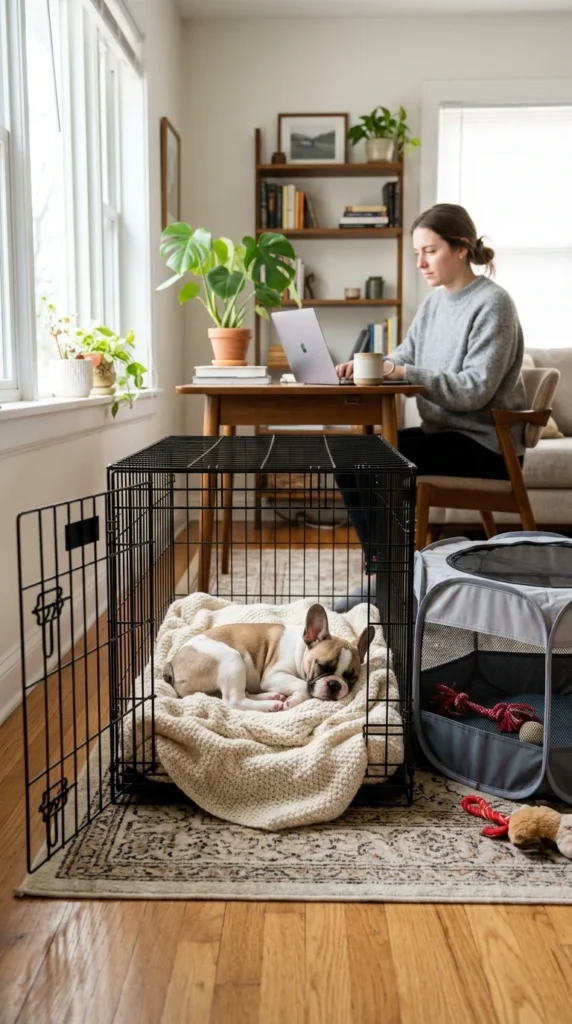
Accidents often happen when a puppy slips out of sight. Keep your puppy in the same room with you, on a leash if needed, or use a crate or a puppy-proofed pen when you cannot watch closely. A crate should be sized so the puppy can stand and turn around comfortably, and it should never be used longer than your puppy can reasonably hold it. Confinement prevents accidents, but it does not stretch a small bladder.
Step 7: Handle Accidents Calmly
Accidents are part of learning. If you catch your puppy in the act, interrupt calmly, such as with a clap or a quick “oops,” and take them outside right away. If they finish outside, reward them. Then clean up without scolding.
Step 8: Add Freedom Gradually
Once your puppy is going outside reliably and has gone a while without accidents, slowly give them access to more space. If accidents return, go back a step and tighten supervision.
Cleaning Up Accidents the Right Way
Use an enzymatic pet cleaner, which breaks down the odor compounds so your puppy is less likely to return to the same spot. Regular household cleaners may leave a scent your puppy can still detect. Soak the area as directed, and treat past accident spots as well.
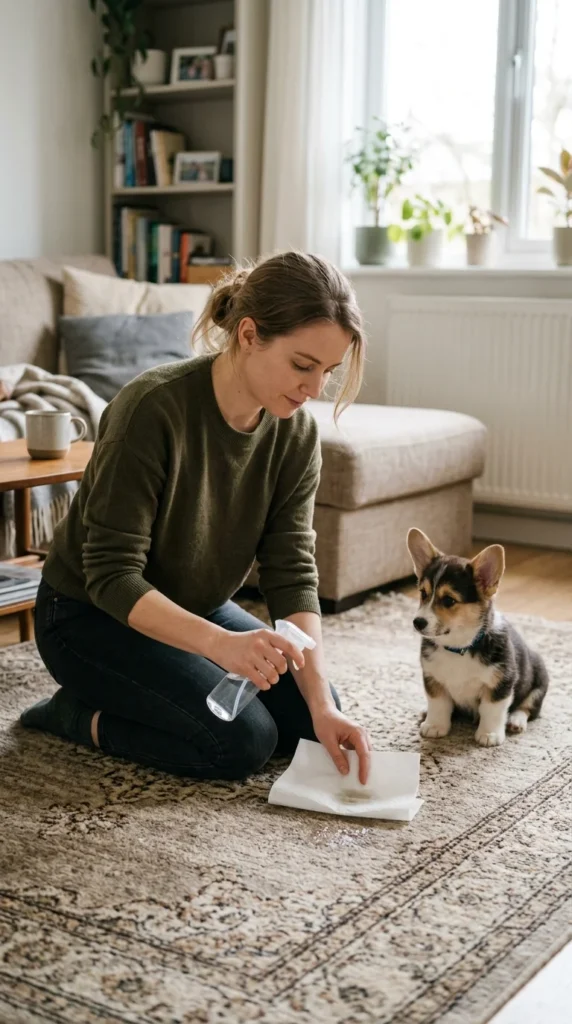
Never rub your puppy’s nose in an accident or scold after the fact. Puppies cannot link the punishment to something that happened earlier, and punishment can make a puppy fearful or lead them to hide when they need to go. The ASPCA-based guidance shared by shelters is clear on this point.
Potty Training at Night
Young puppies usually cannot make it through the whole night. A crate near your bed makes it easier to hear when your puppy wakes. If your puppy whines, take them out quietly, keep the lights low, skip the play, and return them to the crate. Over time, as your puppy grows, they will be able to wait longer.
Crates, Pens, and Pee Pads
Crates
Crates are a common tool because most dogs avoid soiling where they sleep. Introduce the crate with treats and keep it a positive place. Some dogs take longer to accept it, so go slowly.
Pee Pads and Indoor Spots
Pads can help if you live in an apartment, have limited access to the outdoors, or must leave your puppy alone for long periods. But they can make it harder to teach your puppy that outdoors is the only toilet. If you use pads, decide whether they are a temporary step or a long-term plan, and be consistent.
Common Potty Training Problems
Accidents Right After Coming Inside
Your puppy may have been distracted outside and not finished. Stay out longer, keep the trip boring, and supervise closely for a while once you come back in.
Refusing to Go in Bad Weather
Rain, cold, and snow can make some puppies reluctant. Go out with them, reward quickly, and consider a covered spot near the door.
Sudden Setbacks
Regression is common when routines change, but a sudden step backward can also have a medical cause. If a previously reliable puppy starts having frequent accidents, call your vet.
When Accidents May Be a Medical Problem
Not every accident is a training issue. Contact your veterinarian if you notice:
- Very frequent urination or sudden increases in accidents
- Straining, squatting often with little output, or crying while urinating
- Blood in the urine
- Diarrhea, vomiting, or signs of intestinal parasites
- Increased thirst or lethargy
- No progress after several weeks of consistent training
Conditions such as urinary tract infections and parasites can cause accidents, and a vet can check for them. Seek urgent care if your puppy is unable to urinate, seems to be in pain, or becomes lethargic.
Mistakes to Avoid
- Punishing accidents: It teaches fear, not where to go.
- Waiting too long between trips: Young puppies need frequent chances.
- Rewarding late: Treat while still outside.
- Giving too much freedom too soon: Expand slowly.
- Using the crate for too long: Puppies cannot hold it forever.
- Skipping the enzymatic cleaner: Lingering odor invites repeats.
- Changing the routine often: Consistency is the secret.
- Expecting perfection quickly: Setbacks are normal.
Frequently Asked Questions
How long does it take to potty train a puppy?
It varies. Some puppies understand the basics within a few weeks, while reliable habits can take months, especially for small breeds and very young puppies. Consistency matters more than speed.
When should I start potty training my puppy?
As soon as your puppy comes home, which is often around 8 weeks old. Start with a schedule and supervision from day one.
How often should a puppy go outside?
Very often, including after waking, eating, drinking, and playing, and at regular intervals in between. Younger puppies need more frequent trips than older ones.
Should I wake my puppy at night to go out?
Very young puppies often need a night potty trip. Ask your vet or trainer how to adjust as your puppy grows.
Why does my puppy pee inside right after we come in?
Your puppy may not have finished outside or got distracted. Stay out a bit longer, reward when they go, and watch them closely when you return.
Should I use pee pads or train outside only?
Either can work, but training for one spot is simpler. If pads are necessary, plan how you will transition later.
Final Thoughts
Puppy potty training comes down to a few habits: frequent trips on a schedule, close supervision, immediate rewards, and calm cleanup. Pick a routine, keep it consistent for everyone in the household, and give your puppy time. If accidents suddenly increase or you see signs of discomfort, check with your veterinarian.
This article is for general education and is not a substitute for veterinary advice. If you are concerned about your puppy’s health, contact your veterinarian.