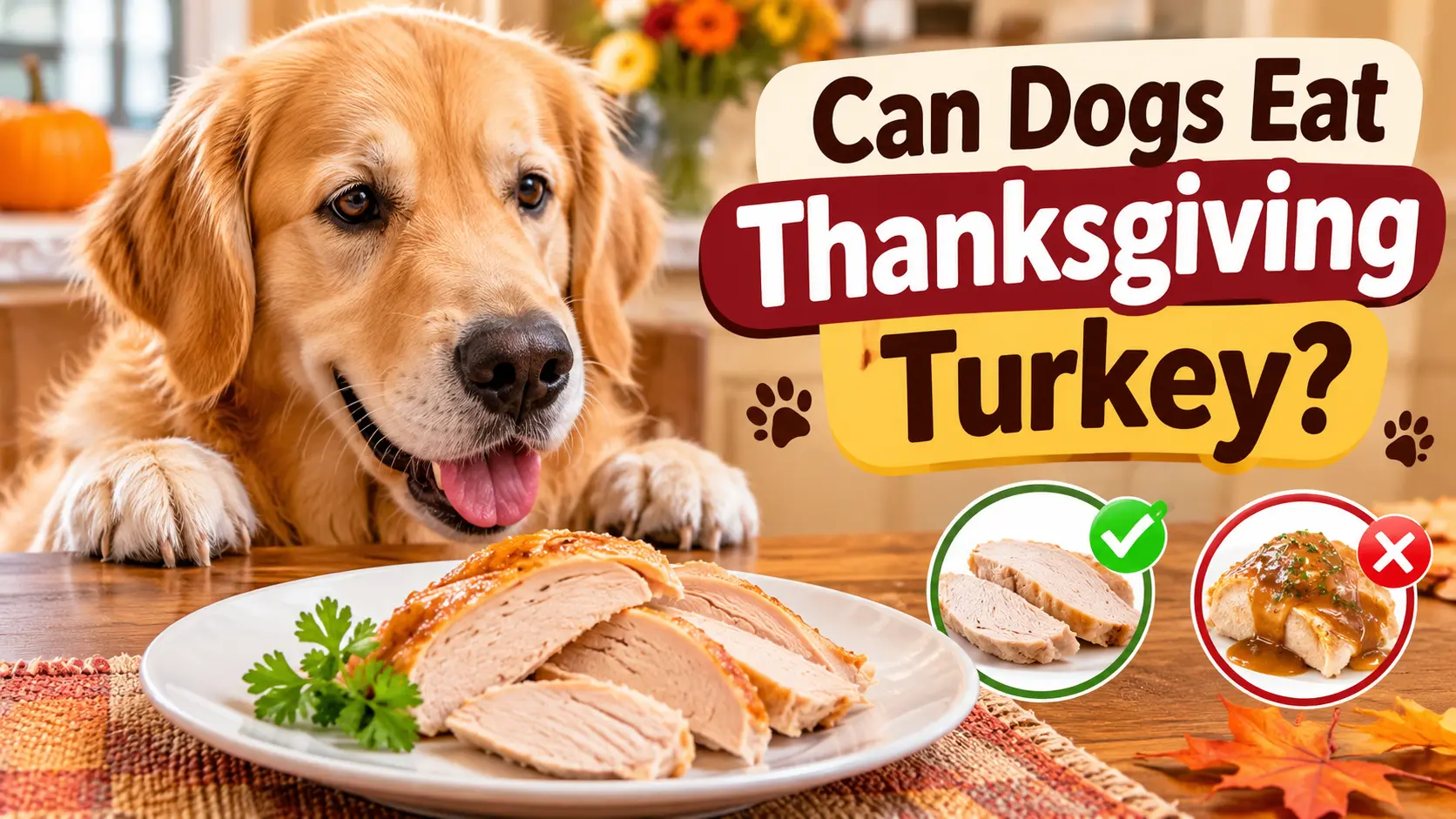
Quick answer: Plain cooked, boneless, skinless turkey may be acceptable as a tiny treat; avoid seasoned scraps, fatty skin and all bones. Start with the simplest safe step and adapt to your dog’s size, health, experience, and comfort. This guide explains what to watch, what to do next and when professional help matters.
Dog owners often look for a quick fix, but a sensible plan starts with understanding why the problem happens. Small adjustments in preparation, environment and expectations can make the experience safer and more comfortable. The goal is progress without forcing a frightened, uncomfortable or unwell dog to continue.
This guide is written for everyday U.S. dog owners. It is educational rather than a substitute for veterinary care. For more background, explore Dogs Daily Care and the trusted resources linked at the end.
Table of Contents
What to know first
Plain cooked, boneless, skinless turkey may be acceptable as a tiny treat; avoid seasoned scraps, fatty skin and all bones. Keep a simple record of what triggers the difficulty and which gentle changes help. If signs are sudden, severe or painful, contact your veterinarian rather than assuming a training or home-care issue.
1. The short answer
A small portion of plain, fully cooked turkey without bones or skin is generally safe for many healthy dogs, according to the American Veterinary Medical Association. The problem is not the bird alone; it is the rich additions that come with a holiday meal.
Gravy, butter, garlic, onion, fatty drippings and stuffing can turn an ordinary food into a problem. Your dog can enjoy the holiday without sharing the dinner plate.
2. Remove bones and skin completely
Cooked poultry bones can break into dangerous pieces and may cause choking or digestive injury. Skin and fatty trimmings can upset digestion and contribute to pancreatitis risk in susceptible dogs.
Check every morsel rather than assuming a serving is boneless because it came from a large slice. Dispose of the carcass in a secured bin.
3. Keep seasoning and stuffing out
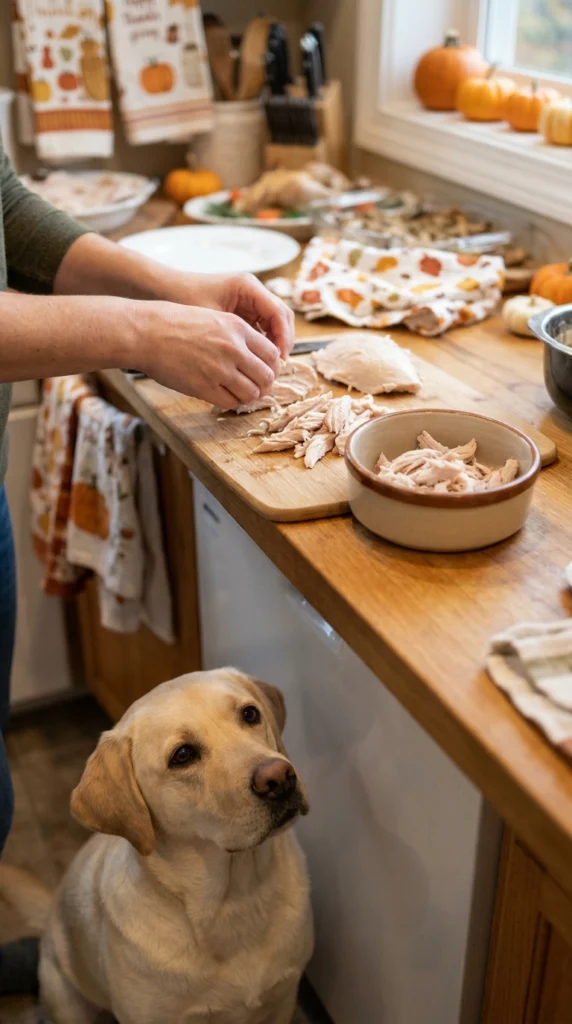
Turkey cooked with garlic, onion, excess salt or rich sauces is not a plain treat. Stuffing and gravy commonly contain ingredients that dogs should avoid. Even if the meat looks clean, juices and seasonings may have coated it.
Do not rinse heavily seasoned meat and call it safe. The simplest approach is to reserve a small, plain portion before seasoning during cooking.
4. Serve a tiny amount, not a meal
If your veterinarian has not restricted your dog’s diet, a tiny bite can be a special treat. It should not replace balanced dog food or make up a large share of the day’s calories.
Too much unfamiliar food can lead to vomiting or diarrhea even without a toxin. Small dogs can be affected by relatively small portions.
5. Avoid raw and undercooked turkey
Undercooked poultry can carry pathogens and pose health risks to pets and people. Do not offer raw holiday preparation scraps, and practice ordinary food hygiene when handling poultry.
Keep cutting boards and surfaces clean, and never allow dogs to raid trash bags holding raw or cooked remnants.
6. Watch for digestive warning signs
Repeated vomiting, abdominal discomfort, unusual posture, lethargy or diarrhea after a rich meal warrant a veterinary call. A dog that has swallowed a bone or appears to choke needs immediate professional advice.
Do not induce vomiting or give over-the-counter medicines unless a veterinarian directs you. Mention exactly what was eaten and approximately when.
7. Tell every guest the feeding rule
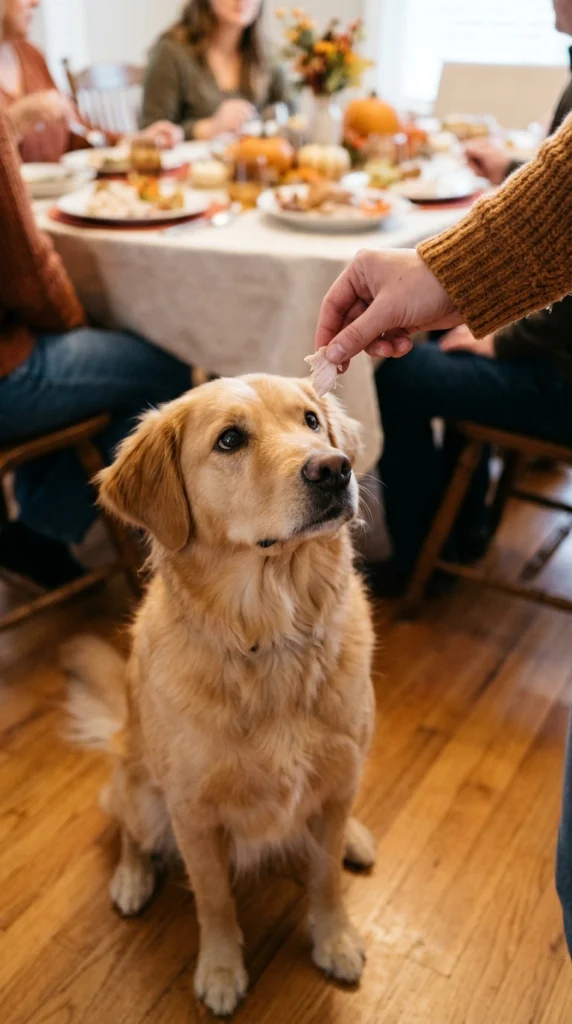
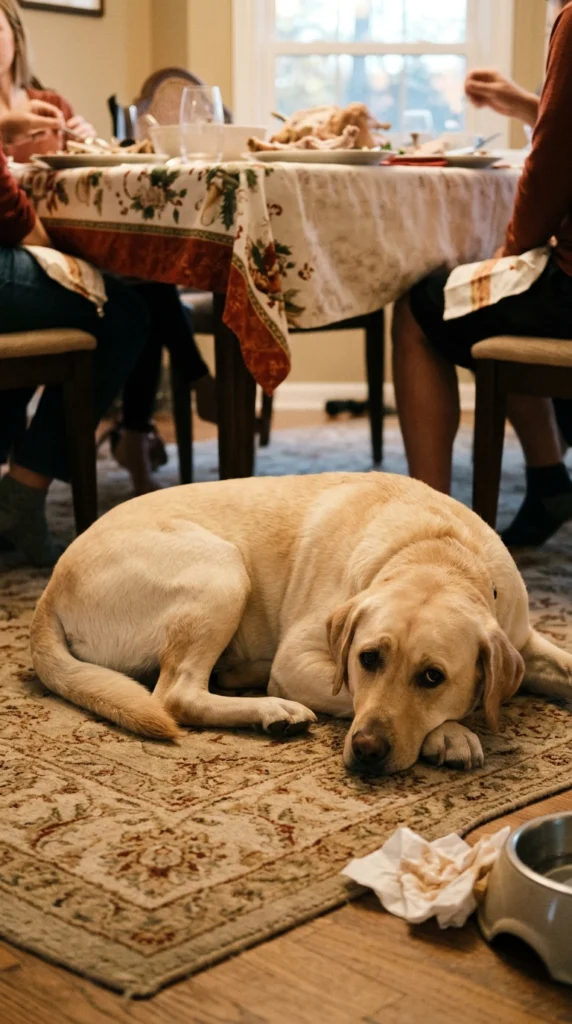
Well-meaning relatives can accidentally give several servings by each sharing a little. Ask everyone not to feed the dog from the table. A small covered container of approved dog treats makes the plan easy to follow.
Keep plates and leftovers beyond reach, particularly when children or guests leave food on low surfaces.
8. Use safe alternatives
A portion of your dog’s usual meal, a veterinarian-approved dog treat or a supervised food puzzle can feel festive without adding rich human foods. Avoid relying on new treats when your dog has food allergies or digestive disease.
For dogs with pancreatitis history or special diets, stick with the prescribed plan unless your veterinarian tells you otherwise.
9. Keep holiday trash locked away
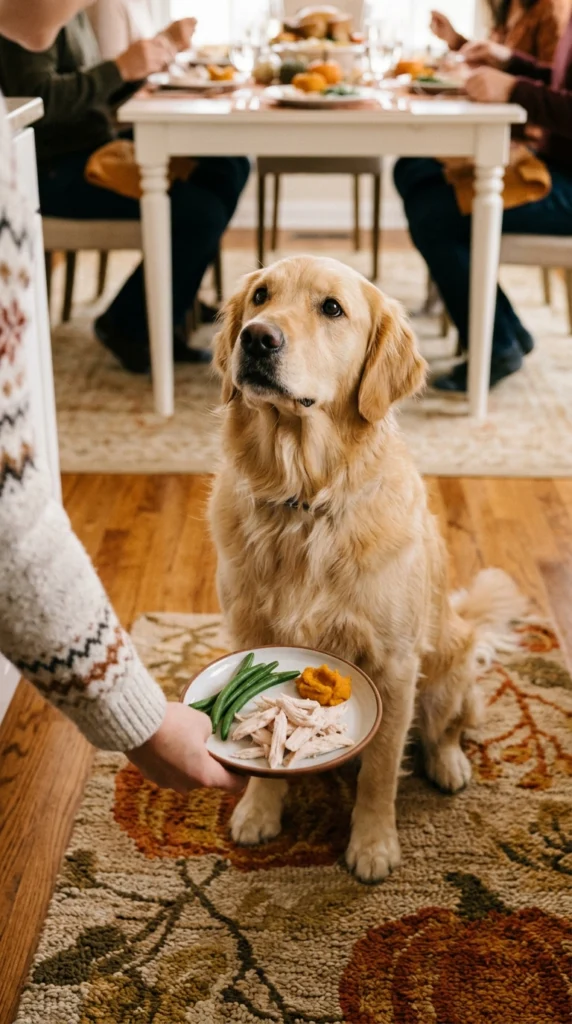
Turkey bones, skewers, plastic wrap, strings and foil can all create injury or obstruction risks. Take trash out promptly to a closed bin that the dog cannot open.
Set a separate food-preparation area during the busiest hours. A securely closed room is more reliable than asking a curious dog to ignore a feast.
Common mistakes to avoid
- Assuming that people food is safe just because it is familiar.
- Leaving potentially hazardous ingredients or scraps within reach.
- Using home remedies when a veterinarian or poison service is needed.
- Changing meals or serving sizes without considering the dog’s health.
Helpful resources and optional supplies
For a broader selection of owner-approved gear, visit our Recommended Dog Products page. Readers who prefer detailed learning can browse our Dog Books library. Explore the Dog Care Tools hub for the live breed-matching and age resources. These links are optional and do not replace the steps above.
Holiday meals should not replace a balanced diet. Review feeding concerns with your veterinarian and keep toxic foods and rich leftovers out of reach.
No product-specific Amazon affiliate recommendations are included in this guide because a suitable exact product listing was not sufficiently verified for the topic. The related product and book resource pages above remain available.
A safe turkey-sharing checklist
This practical reference turns the advice above into manageable actions:
- Cooked thoroughly: Only consider a thoroughly cooked portion from a safe food-handling process.
- Plain meat: Remove any butter, gravy, garlic, onion and other seasonings.
- No bones: Check the morsel for small bone fragments or cartilage.
- No skin: Leave fatty skin, drippings and trimmings off the dog’s plate.
- Small portion: Treat as an occasional tiny extra, not a replacement meal.
- Guest rule: Tell every guest not to feed table scraps; assign one person to manage the dog’s treats.
- Trash locked: Secure carcasses, foil, string and leftovers behind a closed door or in a closed bin.
Dogs with pancreatitis, allergies, kidney disease or prescribed diets may need to avoid turkey extras altogether. Follow the veterinary diet plan rather than holiday traditions.
Frequently asked questions
Can dogs eat turkey skin?
Skin is fatty and can trigger digestive upset or more serious problems in susceptible dogs; skip it.
What if my dog swallowed a turkey bone?
Contact a veterinarian immediately for advice. Do not induce vomiting or try to push the bone down with bread or food.
Is store-bought deli turkey okay?
Deli turkey is often salty, seasoned or processed; it is not the best Thanksgiving treat choice.
Can dogs eat Thanksgiving gravy?
Gravy is usually rich in fat, salt and seasonings such as onion or garlic. Keep it out of the dog’s bowl.
Final thoughts
Plain cooked, boneless, skinless turkey may be acceptable as a tiny treat; avoid seasoned scraps, fatty skin and all bones. Keep the routine kind, predictable and appropriate for your dog. A few careful, comfortable steps are usually more useful than a dramatic one-day transformation. If a problem continues or feels medically concerning, your veterinarian or a credentialed reward-based professional can provide individualized help.