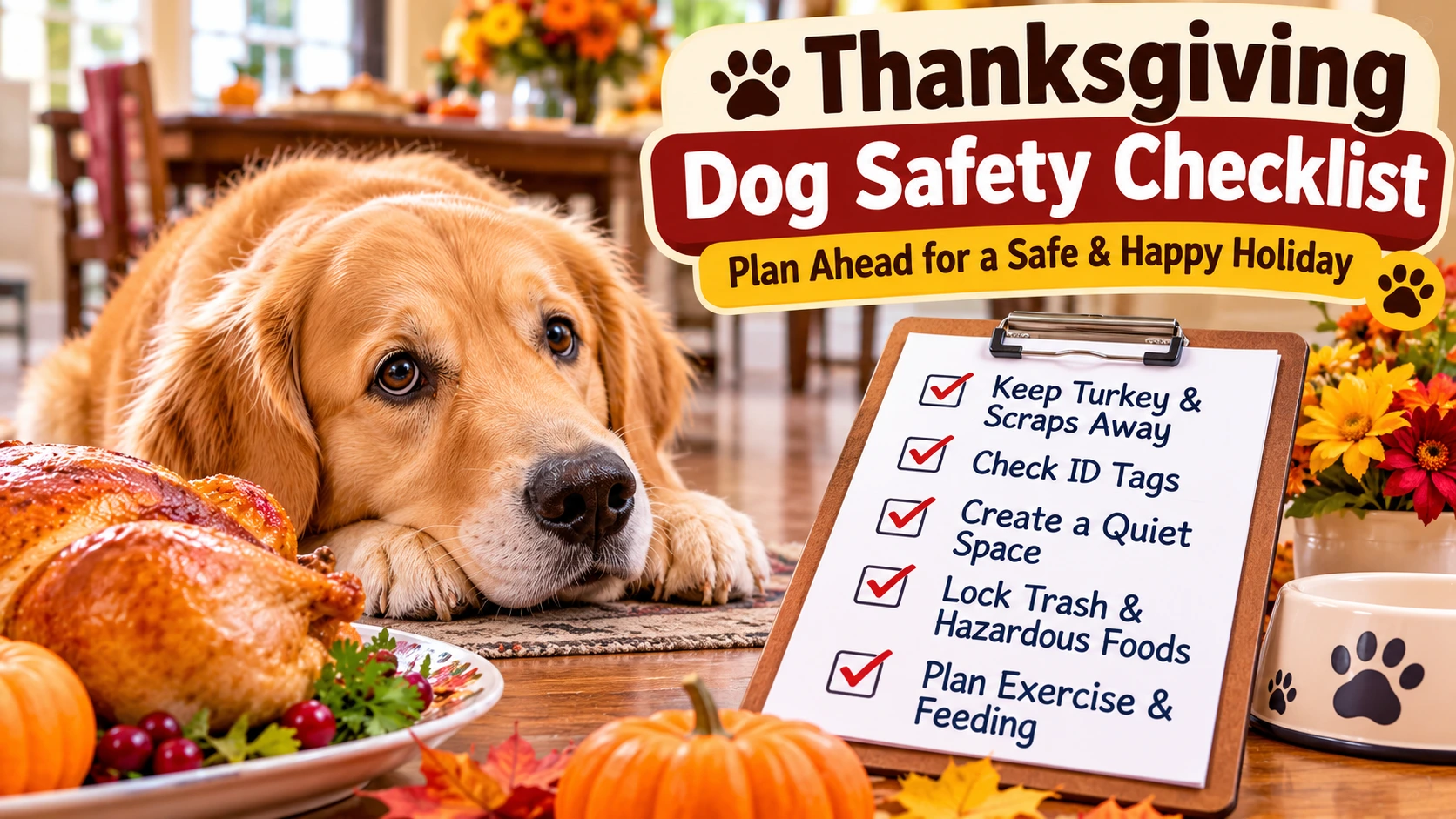
Quick answer: Prepare for holiday guests, table scraps, trash, doors, and quiet-space needs before Thanksgiving begins. Start with the simplest safe step and adapt to your dog’s size, health, experience, and comfort. This guide explains what to watch, what to do next and when professional help matters.
Dog owners often look for a quick fix, but a sensible plan starts with understanding why the problem happens. Small adjustments in preparation, environment and expectations can make the experience safer and more comfortable. The goal is progress without forcing a frightened, uncomfortable or unwell dog to continue.
This guide is written for everyday U.S. dog owners. It is educational, not a substitute for veterinary care. For more background, explore Dogs Daily Care and the trusted resources linked at the end.
Table of Contents
What to know first
Prepare for holiday guests, table scraps, trash, doors and quiet-space needs before Thanksgiving begins. Keep a simple record of what triggers the difficulty and which gentle changes help. If signs are sudden, severe or painful, contact your veterinarian rather than assuming a training or home-care issue.
1. Start with a simple household plan
Thanksgiving combines distractions: doors opening, hot food moving through the kitchen, guests carrying bags and tempting scraps at nose height. The safest plan happens before visitors arrive, not after the dog bolts toward the front door.
Decide who will supervise your dog, which rooms are off-limits and where your dog can rest. Put emergency veterinary contact information where the family can find it.
2. Check ID tags and exits
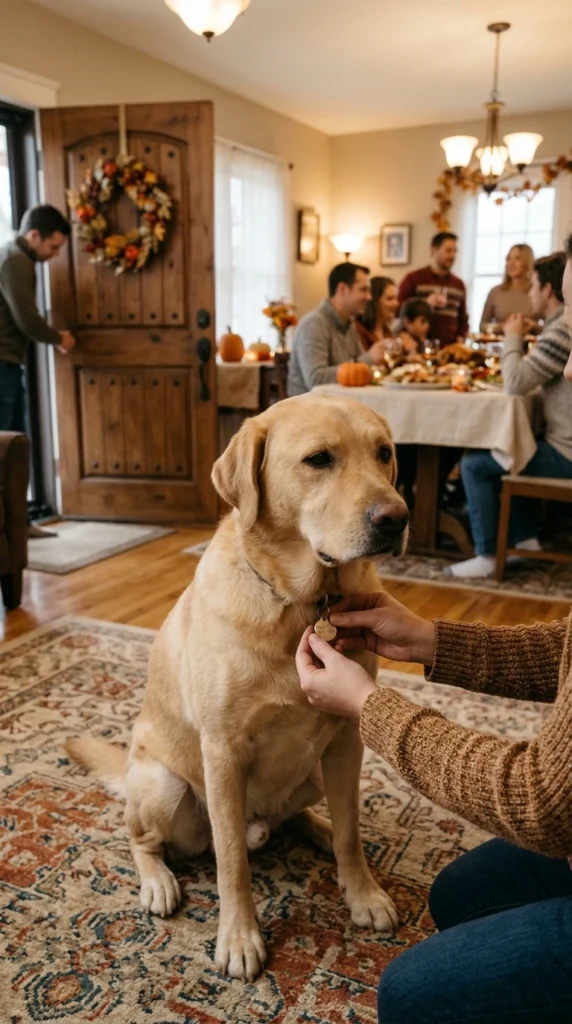
Confirm that the collar tag has a current phone number and that any microchip registration is up to date. Verify the front door, yard gate and any interior barriers close properly. Dogs may try to escape during busy greetings.
For dogs prone to rushing doors, use a secure closed room during arrivals. A gate can be an additional management layer but is not always escape-proof.
3. Create a guest-free resting place
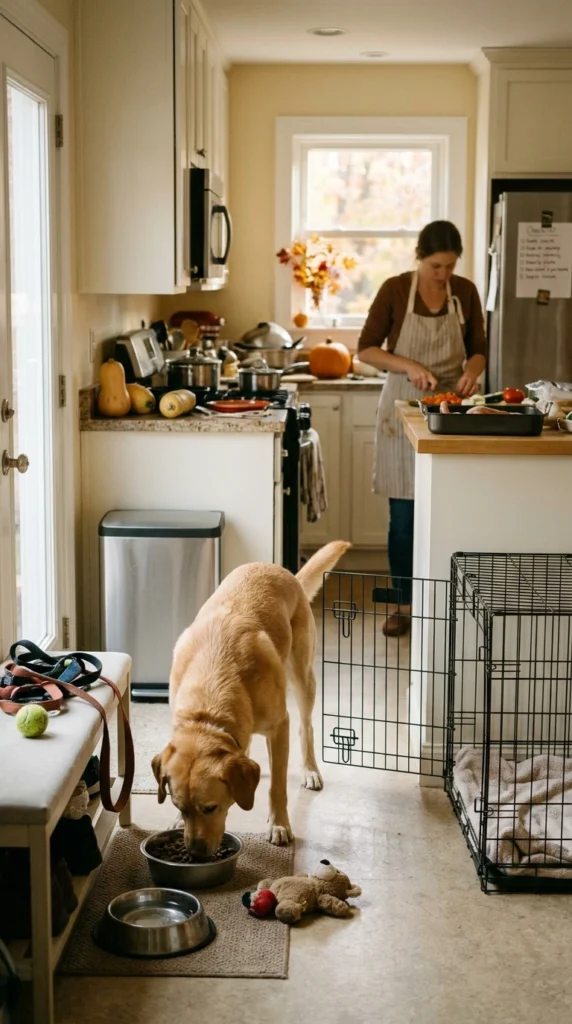
Set up a quiet area with familiar bedding, water and a safe activity. Let the dog retreat; children and guests should not follow or grab the dog. Some dogs are comfortable with crowds, while others need more distance.
If your dog shows stiff posture, avoidance, growling or refusal of treats, reduce social pressure immediately instead of insisting on greetings.
4. Set a no-table-scraps rule
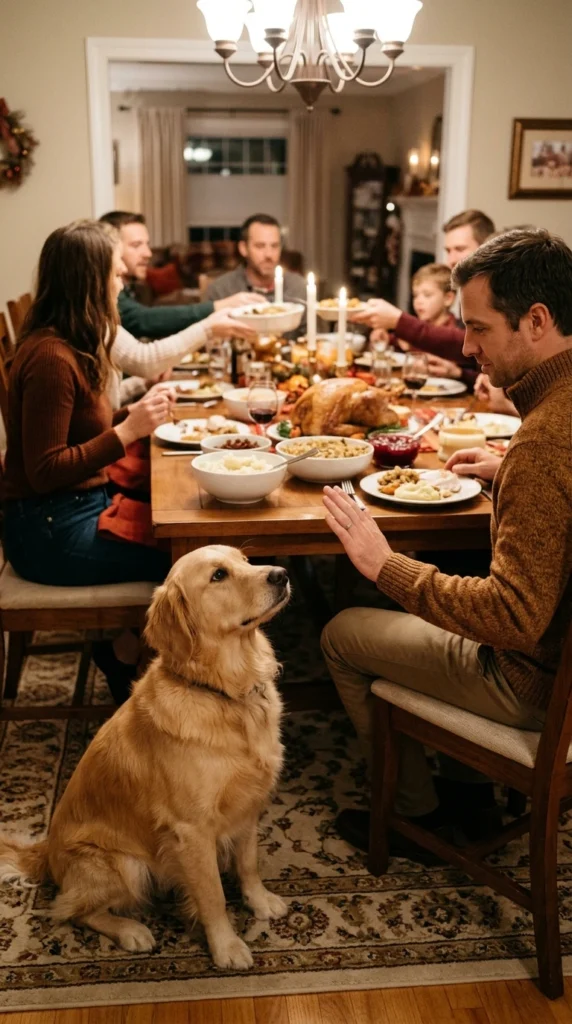
Ask guests not to offer turkey skin, gravy, stuffing, bones, sweets or other leftovers. Plain cooked boneless skinless turkey may be tolerated in small amounts by some dogs, but it is not required.
Place approved dog treats in one clearly labeled location and let the assigned caregiver decide if any are appropriate.
5. Lock away bones and food waste
Turkey carcasses, roasting strings, aluminum foil and rich leftovers must go into closed, inaccessible bins. A determined dog can tear open a trash bag left on the floor or porch.
Check the kitchen and dining room after the meal. A little prevention is easier than an emergency visit for swallowed material.
6. Watch dangerous ingredients
Chocolate, raisins, grapes, onions, xylitol-sweetened products and raw yeast dough can harm dogs. Holiday desserts and bread preparations should stay completely out of reach.
If you suspect ingestion of a hazardous ingredient, call your vet or pet poison control promptly; do not wait for symptoms.
7. Keep heat and cooking equipment controlled
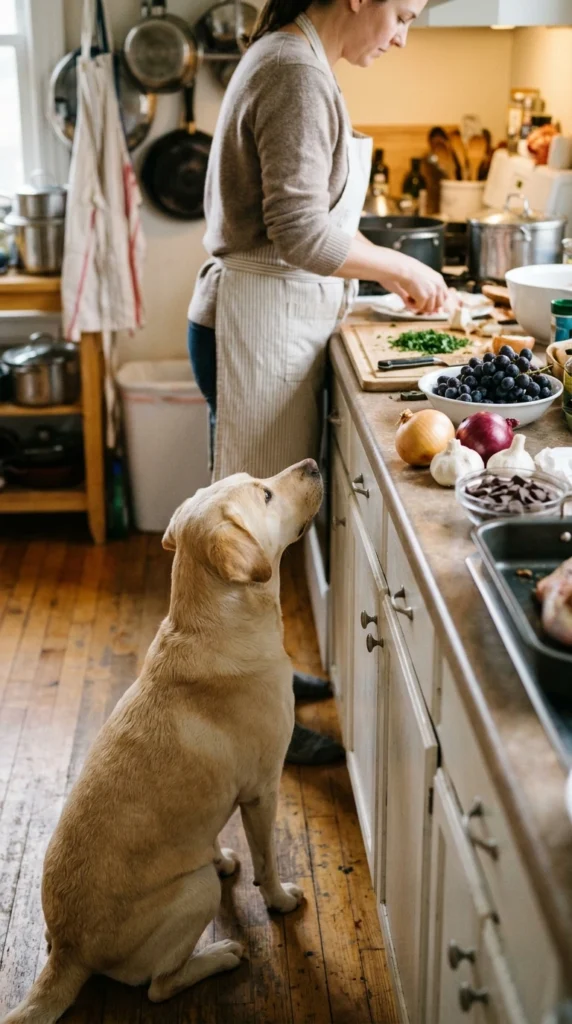
Hot ovens, roasting pans, boiling water and dropped knives are hazards for a curious dog underfoot. Keep dogs out of the cooking zone using a secure room or appropriately installed barrier.
Do not rely on repeated verbal corrections while carrying hot food. Change the environment so the dog cannot enter the risk area.
8. Plan exercise and feeding before guests
Give your dog a normal bathroom break and appropriate activity before the house fills. Keep meals on their ordinary schedule, unless a veterinarian advises otherwise. A regular routine helps many dogs cope with a busier day.
A short sniffing walk or a familiar enrichment toy may be enough; avoid overstimulation or exhausting a dog into tolerating unwanted attention.
9. Know when to call for help
Vomiting, difficulty breathing, collapse, choking or suspected toxin ingestion should trigger veterinary contact. Keep the packaging and describe what the dog ate.
For pet poison support in the United States, ASPCA Animal Poison Control is 888-426-4435 and Pet Poison Helpline is 855-764-7661; fees may apply. Your own veterinarian or emergency clinic remains the primary medical contact.
Common mistakes to avoid
- Assuming that people food is safe just because it is familiar.
- Leaving potentially hazardous ingredients or scraps within reach.
- Using home remedies when a veterinarian or poison service is needed.
- Changing meals or serving sizes without considering the dog’s health.
Helpful resources and optional supplies
For a broader selection of owner-approved gear, visit our Recommended Dog Products page. Readers who prefer detailed learning can browse our Dog Books library. Explore the Dog Care Tools hub for the live breed-matching and age resources. These links are optional and do not replace the steps above.
Holiday meals should not replace a balanced diet. Review feeding concerns with your veterinarian and keep toxic foods and rich leftovers out of reach.
Related on our site: Stop Dog Jumping On People.
Affiliate disclosure: As an Amazon Associate, we may earn from qualifying purchases, at no additional cost to you. All products below are optional.
- Carlson Extra Wide Walk-Through Pet Gate: An optional interior separation barrier when properly installed and appropriate for the dog. View exact product on Amazon.
- Outward Hound Nina Ottosson Dog Brick Puzzle: A supervised enrichment option for dogs already comfortable with food games; choose an easier toy for beginners. View exact product on Amazon.
Printable-style Thanksgiving timeline
This practical reference turns the advice above into manageable actions:
- The morning before guests: Confirm ID details, clear a bathroom area, provide regular exercise and fill water bowls.
- One hour before arrivals: Prepare a quiet room, check barriers and move trash bins away from dog access.
- During cooking: Keep dogs out of the kitchen; secure hot pans, raw dough and human food.
- At guest arrival: Use a closed room for dogs that bolt, jump or fear unfamiliar people.
- During the meal: Repeat the no-table-scraps rule and keep desserts and plates above reach.
- After dinner: Lock the turkey carcass and food waste away and check the floor for dropped scraps.
- Before bedtime: Offer a quiet bathroom break, check water and return to the usual feeding schedule.
Write the household rules on a small note near the kitchen. A guest does not have to remember every toxic ingredient to follow one clear instruction: never feed the dog from the table.
Frequently asked questions
Can dogs eat turkey during Thanksgiving?
Plain cooked, boneless, skinless turkey may be tolerated in a small portion, but rich leftovers and bones are unsafe.
Should dogs greet every holiday guest?
No. Some dogs prefer no greeting at all; provide a quiet space and let the dog choose distance.
What if a dog gets into the holiday trash?
If the dog ate bones, wrappers or other hazards, contact your veterinarian promptly and explain what may be missing.
What is the most important Thanksgiving safety step?
Prevent access to risky food and doors while guests arrive; management is more reliable than correcting the dog after an accident.
Final thoughts
Prepare for holiday guests, table scraps, trash, doors and quiet-space needs before Thanksgiving begins. Keep the routine kind, predictable and appropriate for your dog. A few careful, comfortable steps are usually more useful than a dramatic one-day transformation. If a problem continues or feels medically concerning, your veterinarian or a credentialed reward-based professional can provide individualized help.