Quick answer: Plain unsweetened pumpkin purée may be a small food addition for some dogs, but avoid pie filling and ask a vet about digestive problems. Start with the simplest safe step and adapt to your dog’s size, health, experience and comfort. This guide explains what to watch, what to do next and when professional help matters.
Dog owners often look for one fast fix, but the sensible plan begins by understanding why the problem happens. Small adjustments in preparation, environment and expectations can make the experience safer and more comfortable. The goal is progress without forcing a frightened, uncomfortable or unwell dog to continue.
This guide is written for everyday U.S. dog owners. It is educational rather than a substitute for veterinary care. For more background, explore Dogs Daily Care and the trusted resources linked at the end.
Table of Contents
What to know first
Plain unsweetened pumpkin purée may be a small food addition for some dogs, but avoid pie filling and ask a vet about digestive problems. Keep a simple record of what triggers the difficulty and which gentle changes help. If signs are sudden, severe or painful, contact your veterinarian rather than assuming a training or home-care issue.
1. The simple answer
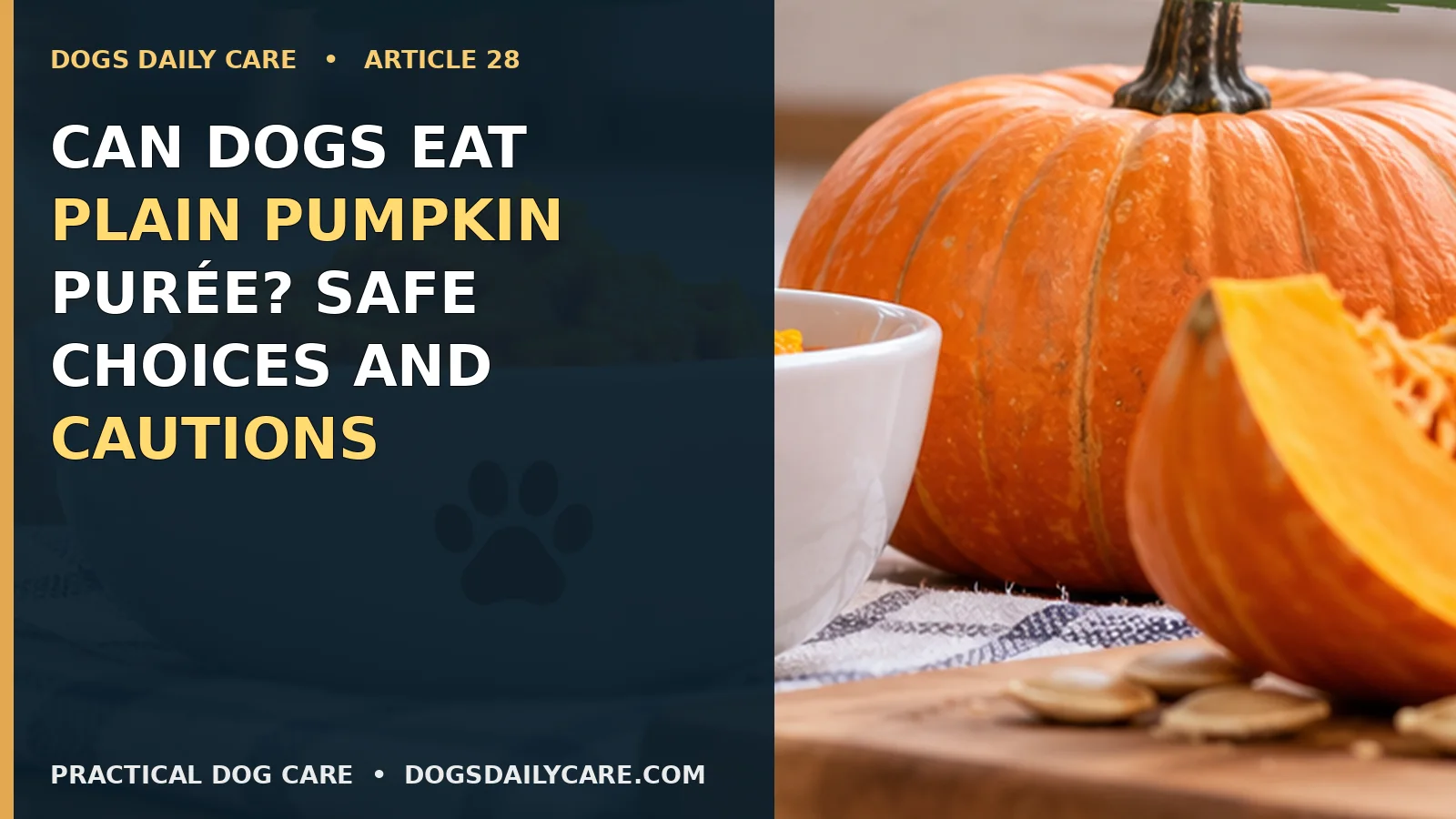
Many healthy dogs can eat a small amount of plain, cooked pumpkin purée without added sugar, spices or sweeteners. The key word is plain. A product sold as pumpkin pie filling is not the same thing and may contain sugar, seasoning or other ingredients.
Pumpkin is an optional food, not an essential supplement or a cure for digestive disease. Any diet change should be proportionate and tolerated by your individual dog.
2. Read every ingredient on the label
Choose an ingredient list that says only pumpkin. Some cans are sold close together on grocery shelves even though one contains premixed pie filling. Double-check for artificial sweeteners such as xylitol (also called birch sugar), which is dangerous to dogs.
When a label is unclear, leave the product out of the bowl. Do not rely on color or the front-of-can photograph to tell the difference.
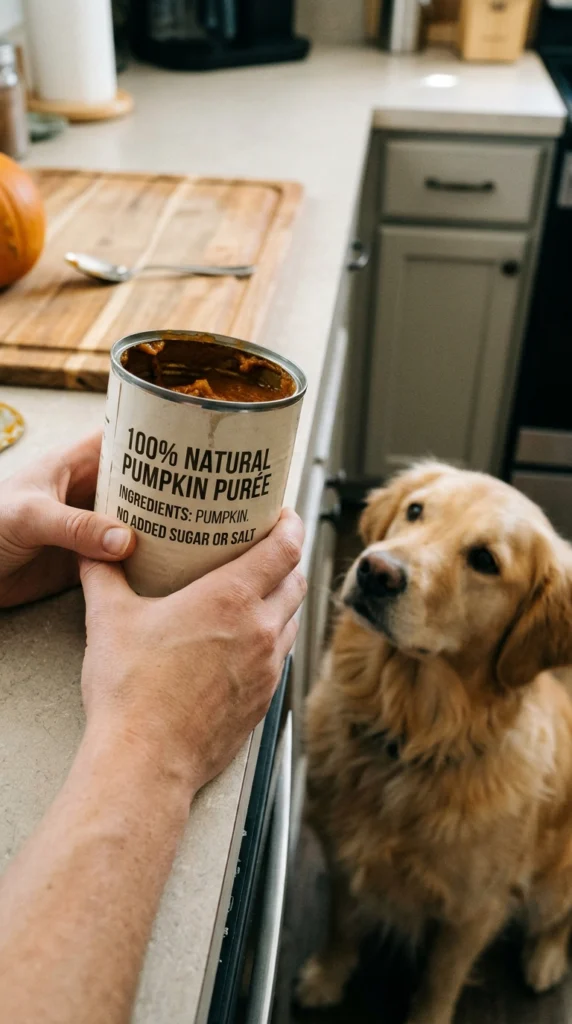
3. Offer a small amount first
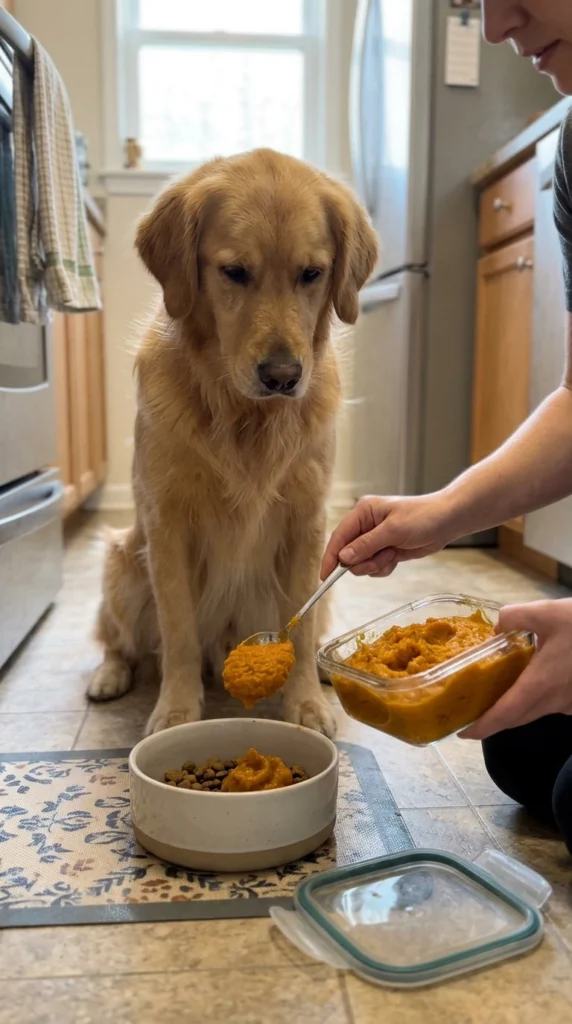
Start with a small taste mixed into your dog’s normal food, not a large scoop. Watch how your dog responds over the next day. Even an ordinary food can cause vomiting, diarrhea or refusal when introduced abruptly.
The right portion depends on your dog’s size, diet, health and veterinary plan. Ask your veterinarian rather than following a universal tablespoon chart for all dogs.
4. Know when pumpkin is the wrong answer
If your dog has repeated vomiting, blood in stool, severe diarrhea, a swollen belly, marked lethargy or cannot keep water down, call your veterinarian. Do not try to mask serious digestive signs by adding extra pumpkin.
A dog who has swallowed a foreign object or toxin needs professional assessment. Food changes are not emergency treatment.
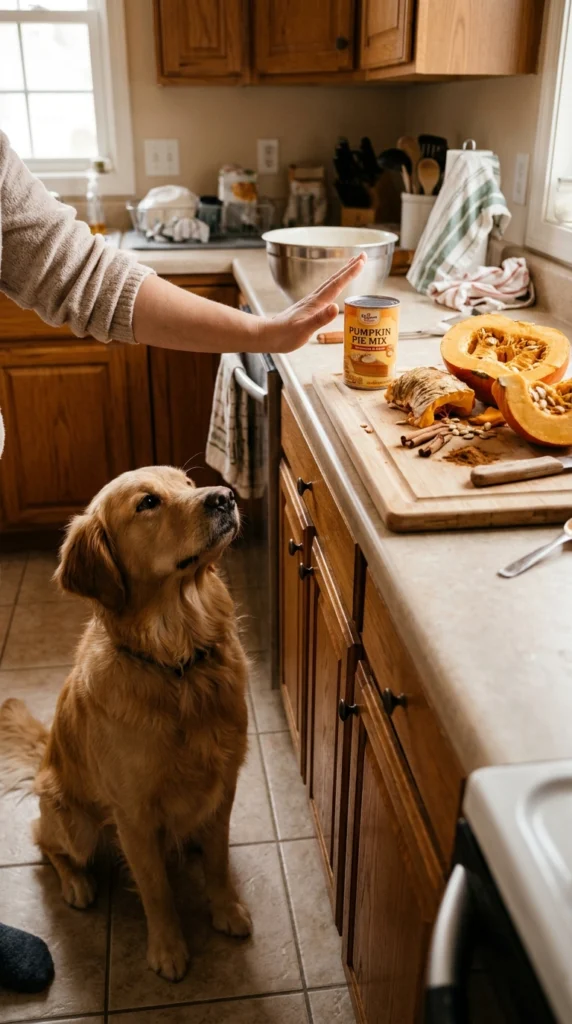
5. Understand what fiber can and cannot do
Pumpkin contains fiber, and dietary fiber can influence stool consistency in some dogs. That does not mean it reliably treats every cause of constipation or diarrhea. Underlying infection, parasites, intolerance or medical disease may require different care.
Avoid replacing prescribed digestive diets with home food experiments. A veterinarian can advise whether fiber is appropriate for your dog.
6. Avoid the holiday-food traps
Pumpkin pie, frosting, spiced latte mixes and sweets are for people, not pets. Dairy, high-fat foods, certain spices or sweeteners can be problematic. Keep desserts and baking ingredients behind a closed door during holiday gatherings.
If your dog eats a product containing xylitol or a hazardous ingredient, contact a veterinary clinic or animal poison service right away.
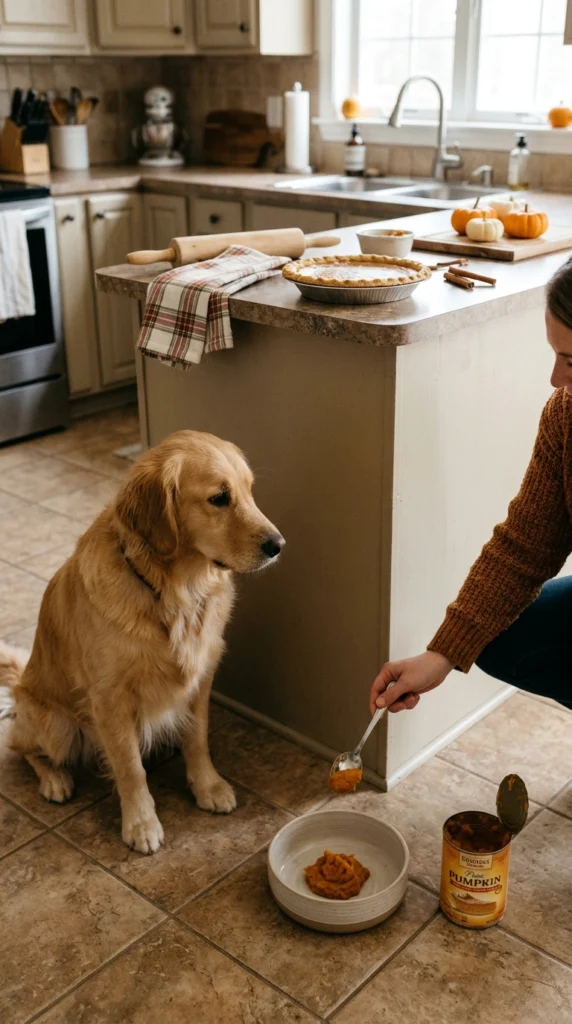
7. Try simple, controlled serving ideas
A small amount can be stirred into the dog’s regular food, placed on a lick mat when supervision is appropriate or frozen in a tiny portion for an enrichment activity. Avoid adding other human toppings.
Keep all serving tools clean and use only containers that are safe for food contact. Monitor dogs that chew plastic mats.
8. Store leftovers safely
Treat opened pumpkin like other refrigerated foods: follow the label, transfer leftovers to a covered food-safe container and discard spoiled product. Never leave a sticky bowl sitting out for hours.
If the purée changes odor or appearance, throw it out. Clean the dog’s bowl between meals.
9. Ask about underlying nutrition needs
Dogs eating complete and balanced diets usually do not need pumpkin as an everyday extra. Treats and toppers add calories, which matter especially for small dogs and dogs on controlled diets.
For weight, allergies, pancreatitis or chronic gut conditions, get individualized veterinary advice before using pumpkin routinely.
Common mistakes to avoid
- Assuming that people food is safe just because it is familiar.
- Leaving potentially hazardous ingredients or scraps within reach.
- Using home remedies when a veterinarian or poison service is needed.
- Changing meals or serving sizes without considering the dog’s health.
Helpful resources and optional supplies
For a broader selection of owner-approved gear, visit our Recommended Dog Products page. Readers who prefer detailed learning can browse our Dog Books library. Explore the Dog Care Tools hub for the live breed-matching and age resources. These links are optional and do not replace the steps above.
Holiday meals should not replace a balanced diet. Review feeding concerns with your veterinarian and keep toxic foods and rich leftovers out of reach.
No product-specific Amazon affiliate recommendations are included in this guide because a suitable exact product listing was not sufficiently verified for the topic. The related product and book resource pages above remain available.
The pumpkin label checklist
This practical reference turns the advice above into manageable actions:
- Ingredient line: Look for pumpkin as the only listed ingredient.
- Sugar and sweeteners: Avoid added sugar, syrups and all xylitol or birch-sugar sweeteners.
- Spices: Avoid pre-spiced pie mixes, nutmeg-heavy desserts and flavored beverages.
- Serving size: Use only a small taste at first and count it among snacks and toppers.
- Storage: Follow refrigeration instructions once opened and discard spoiled leftovers.
- Medical issues: Ask a veterinarian before using pumpkin to address persistent constipation, vomiting or diarrhea.
If a dog ate a suspicious product, photograph the entire ingredient panel and call the veterinarian. The package is more useful than guessing what the recipe contained.
Frequently asked questions
Is canned pumpkin the same as pumpkin pie filling?
No. Plain pumpkin purée contains pumpkin alone, whereas pie filling may include sweeteners, spices and other ingredients.
Can pumpkin cure diarrhea?
No. Pumpkin is not a reliable treatment for every cause of diarrhea; repeated or severe symptoms need veterinary assessment.
Can dogs eat pumpkin every day?
It can be an optional topper for some dogs, but daily use and portion size should be discussed if your dog has weight or medical issues.
Is raw pumpkin safe for dogs?
Plain cooked pumpkin is generally easier to serve than large raw pieces; avoid stems, tough rind and unsuitable preparations.
Final thoughts
Plain unsweetened pumpkin purée may be a small food addition for some dogs, but avoid pie filling and ask a vet about digestive problems. Keep the routine kind, predictable and appropriate for your dog. A few careful, comfortable steps are usually more useful than a dramatic one-day transformation. If a problem continues or feels medically concerning, your veterinarian or a credentialed reward-based professional can provide individualized help.