
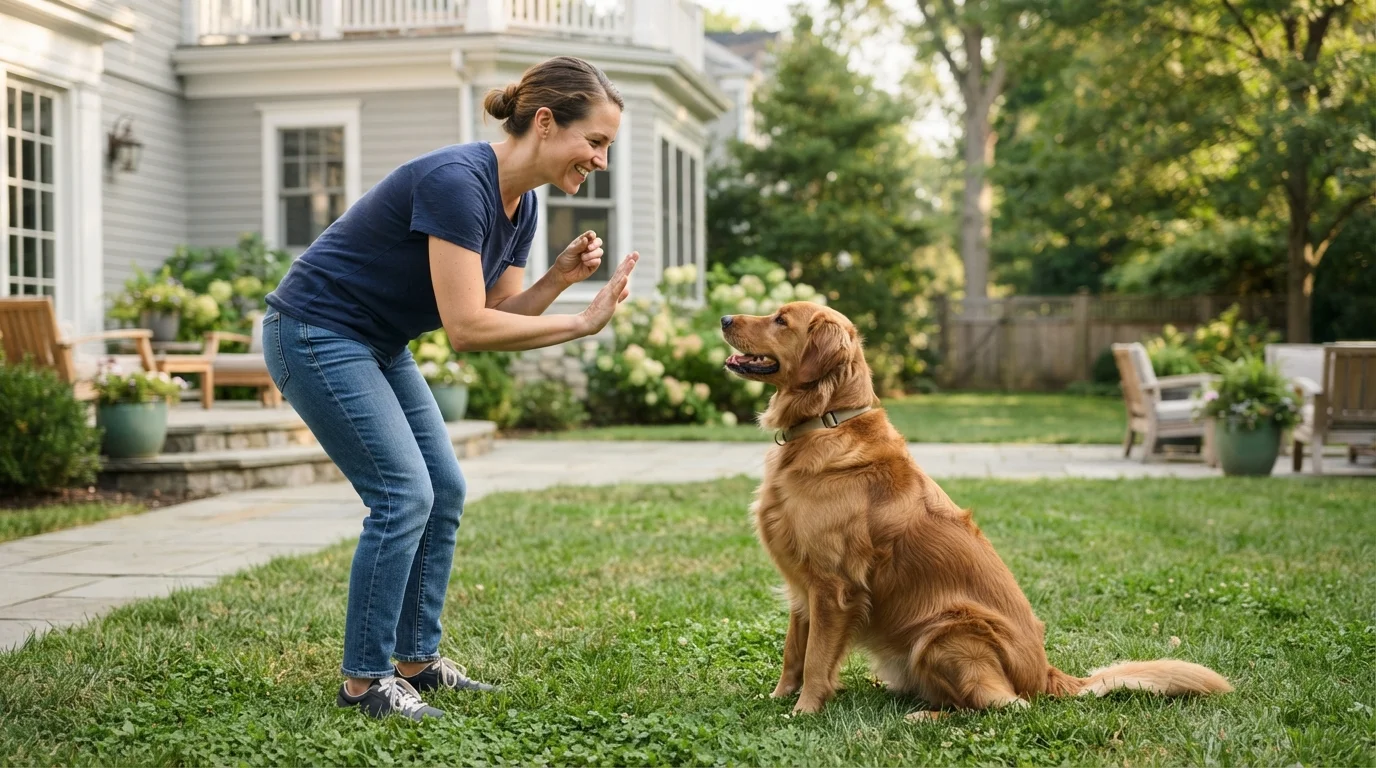
Training your dog does not have to mean teaching dozens of complicated tricks. A few clear obedience commands can make everyday life easier, safer, and more enjoyable for both of you. Whether you have a new puppy, an adult rescue dog, or a senior companion, basic training can help you communicate more clearly.
The best training starts with simple behaviors and rewards your dog for getting them right. Reward-based training is recommended by the American Veterinary Society of Animal Behavior (AVSAB), which advises against aversive training methods. The goal is not to force your dog into obedience. It is to teach your dog what you want them to do and make that behavior worth repeating.
In this guide, you will learn seven basic obedience commands every dog should know: sit, down, stay, come, leave it, drop it, and wait. You will also learn how to introduce each cue, where it can help in daily life, and which common training mistakes to avoid.
Table of Contents
Why Basic Obedience Commands Matter
Basic commands give you a simple way to communicate with your dog. They can help with everyday routines such as feeding, walking, greeting visitors, getting into the car, and settling down at home.
Some commands can also help you manage potentially unsafe situations. A reliable recall can help bring your dog back to you. A well-practiced “leave it” can tell your dog not to investigate something they should avoid. “Drop it” can help when your dog already has an unwanted object in their mouth.
Training also gives your dog mental stimulation. Learning a new behavior requires attention and practice, so even a short training session can give your dog something useful to think about.
Keep your expectations realistic. Dogs learn at different speeds, and a command that works perfectly inside your home may need additional practice in the backyard, on a walk, or around distractions.
1. Sit
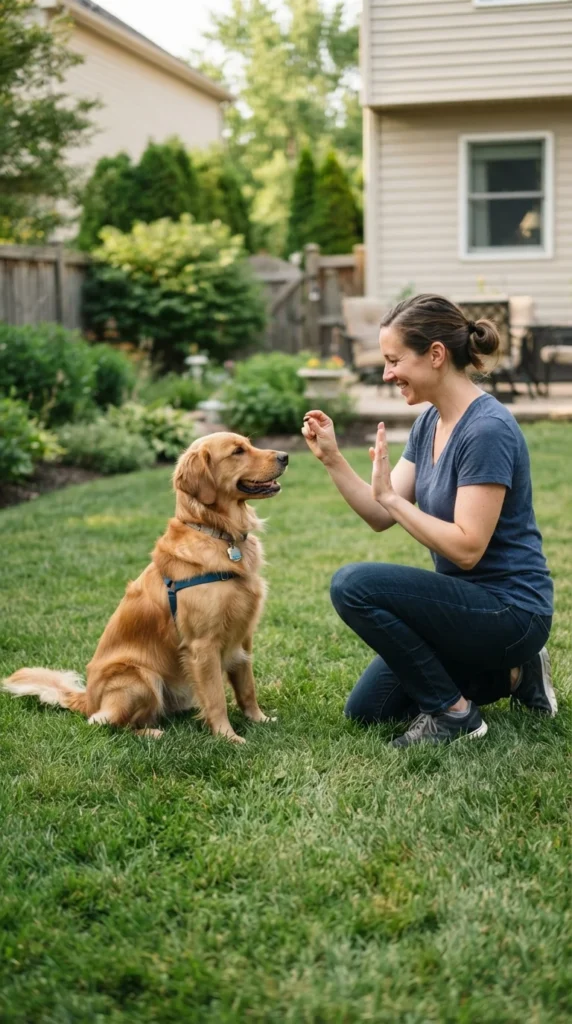
What it means: Your dog places their rear on the ground and remains in the sitting position until another cue or release tells them what to do next.
“Sit” is one of the easiest behaviors to build into everyday routines. You can use it before meals, before opening a door, while putting on a leash, or when your dog needs a calm behavior instead of jumping.
How to teach sit
- Start in a quiet area with few distractions.
- Hold a small treat near your dog’s nose.
- Slowly move the treat upward and slightly back.
- As your dog’s head follows the treat, their rear may naturally move toward the floor.
- The moment your dog sits, mark the behavior with praise or a marker such as “yes.”
- Give the reward while your dog is still sitting.
- Repeat several short times.
- Once your dog understands the movement, introduce the verbal cue “sit” just before the behavior.
Avoid physically pushing your dog’s rear into the sitting position. Reward-based teaching allows your dog to discover the behavior without force. AKC also recommends fading the food lure over time so your dog eventually responds to the hand signal or verbal cue without needing to follow a treat every time.
Common sit mistake
Do not wait until your dog stands up again before giving the reward. If you want your dog to understand that sitting is the behavior you want, reward them while they are actually sitting.
2. Down
What it means: Your dog lowers their body into a lying position.
“Down” can encourage your dog to settle and can be useful when you want a calmer behavior. It can also become a foundation for other training skills.
How to teach down
- Begin when your dog is relaxed and able to focus.
- Place a treat near your dog’s nose.
- Slowly guide the treat toward the floor.
- As your dog follows it, gradually encourage their body downward.
- Mark and reward small steps toward the finished behavior.
- When your dog lies down, reward immediately.
- Repeat the exercise in short sessions.
- Add the word “down” once your dog understands the behavior.
Do not push your dog into a down position. AKC’s training guidance recommends breaking the behavior into manageable steps and rewarding progress rather than forcing the dog into position.
It is also important to reward your dog while they are still lying down. This helps make the position itself valuable instead of teaching your dog to immediately pop back up after reaching the floor.
3. Stay
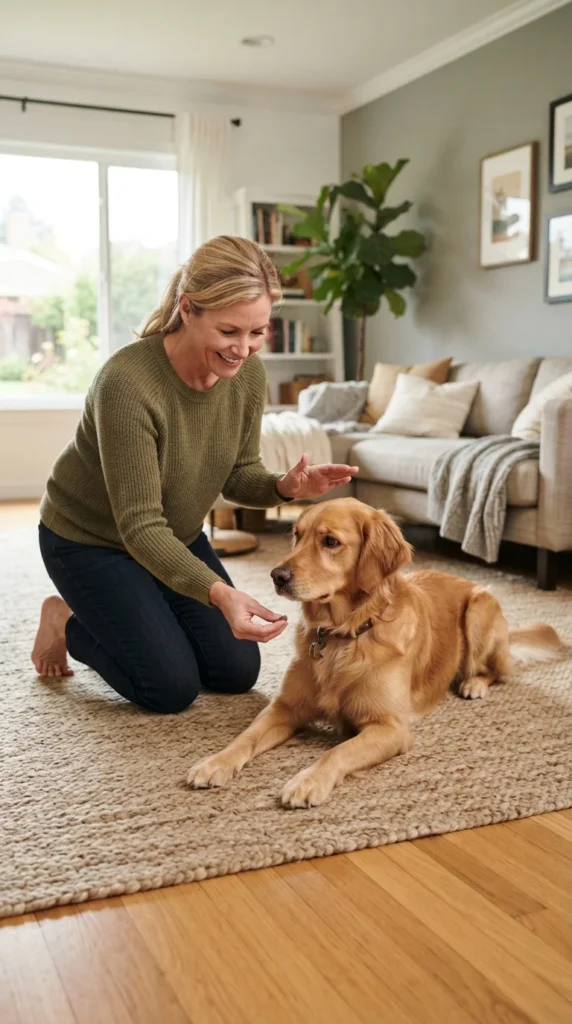
What it means: Your dog remains where you asked them to stay until you provide a release cue or another instruction.
“Stay” is especially useful when you need your dog to remain in one place while you move away. It can help during everyday activities such as answering the door, preparing food, grooming, or carrying something through the house.
How to teach stay
- Ask your dog for a position they already know, such as sit.
- Say “stay” once.
- Wait for a very short moment.
- Mark and reward your dog for remaining in place.
- Gradually increase the time before rewarding.
- Then slowly add small amounts of distance.
- Practice in different locations once your dog understands the behavior.
- Use a consistent release word such as “okay” or “free.”
Do not immediately expect your dog to stay while you walk across a busy room. Build the behavior gradually. Increasing duration, distance, and distractions separately can make the exercise easier for your dog to understand.
AKC describes “stay” as remaining in a specific position until the dog is released, making it different from a brief “wait” cue.
Common stay mistake
Many owners increase the difficulty too quickly. If your dog repeatedly breaks the stay, make the exercise easier instead of repeatedly correcting them.
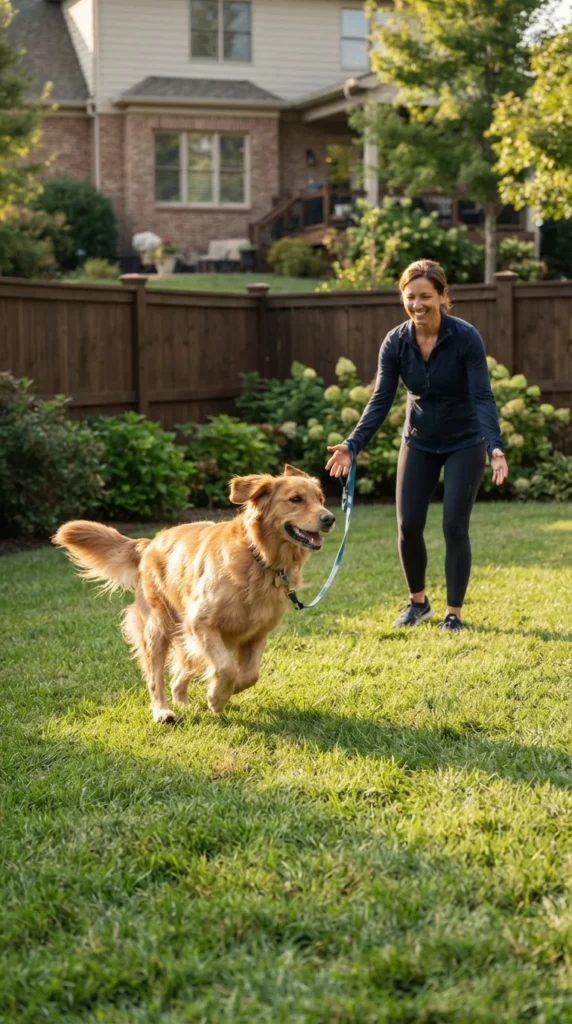
4. Come
What it means: Your dog moves toward you when you give the recall cue.
“Come” is one of the most useful obedience commands because it can help you bring your dog back to you. A strong recall can be especially important if your dog gets loose or begins moving toward something dangerous.
However, recall needs careful practice. A dog that comes reliably inside your home may not immediately respond when they are outdoors and surrounded by exciting smells, animals, people, or movement.
How to teach come
- Start in a quiet, secure area.
- Use a happy, inviting voice.
- Move a short distance away from your dog.
- Say your dog’s name followed by your recall cue, such as “come.”
- Encourage your dog toward you.
- When your dog reaches you, immediately praise and reward them.
- Gradually practice from greater distances.
- Add distractions slowly as your dog’s response improves.
Make coming to you a positive experience. Avoid calling your dog in an angry voice or punishing them after they finally reach you. AKC recommends keeping recall training positive and rewarding, because you want your dog to build a strong association between the cue and returning to you.
Do not use your strongest recall cue casually for things your dog dislikes, such as ending every fun activity. You want the cue to remain meaningful and rewarding.
5. Leave It
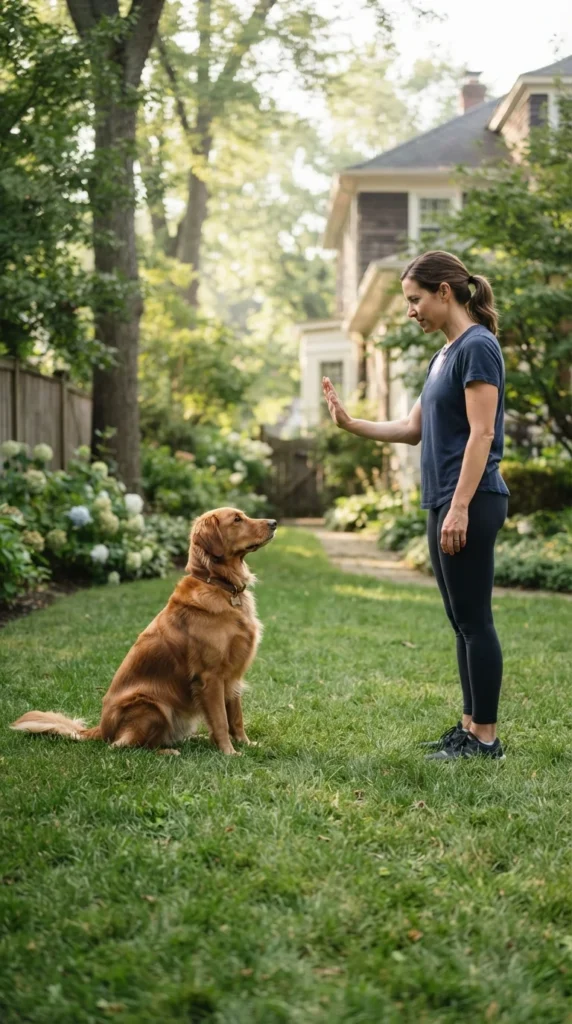
What it means: Your dog should ignore or move away from something they are interested in instead of picking it up or investigating it.
“Leave it” can be useful around food, objects, trash, toys, or other distractions. It is different from “drop it.” With “leave it,” your goal is for your dog not to take or investigate the item in the first place.
How to teach leave it
- Place a low-value treat or object where your dog can notice it.
- Prevent your dog from immediately grabbing it.
- Wait for your dog to move their attention away from the item.
- Mark that choice and reward with something better.
- Repeat until your dog begins to understand that ignoring the item leads to a reward.
- Gradually practice with different safe objects.
- Later, introduce controlled distractions in different locations.
Do not begin with the most exciting distraction your dog has ever seen. Start easy and build up gradually.
AKC recommends practicing “leave it” with different objects and locations so the dog learns the broader concept rather than memorizing one specific exercise.
Why leave it matters
Dogs naturally investigate the world with their noses and mouths. Teaching “leave it” gives you a useful communication tool when you want your dog to ignore something before they interact with it.
6. Drop It
What it means: Your dog releases an object that is already in their mouth.
“Drop it” is different from “leave it.” If your dog is staring at a piece of food on the floor, “leave it” may be appropriate. If your dog already has a sock, toy, or another object in their mouth, “drop it” is the more relevant cue.
How to teach drop it
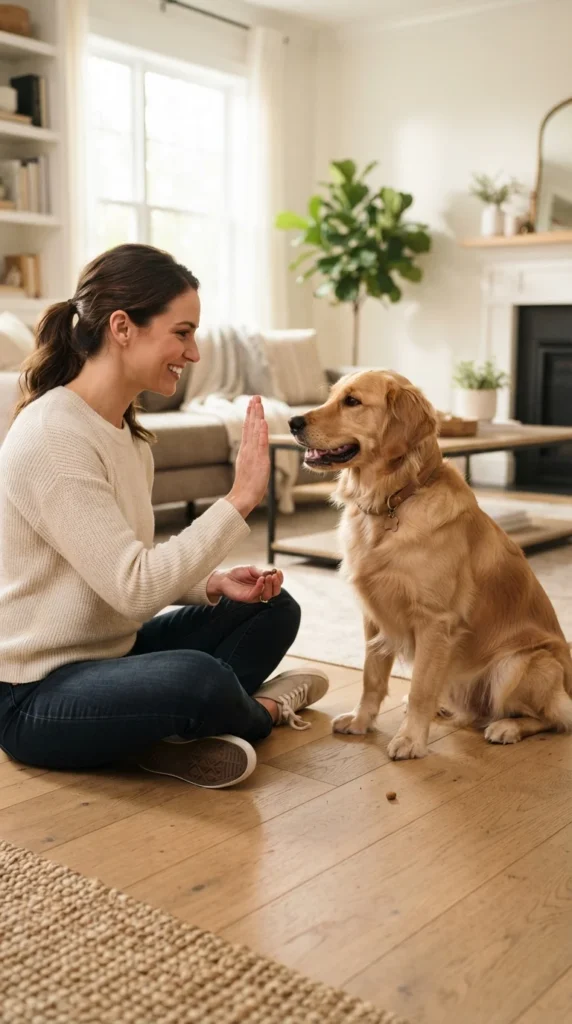
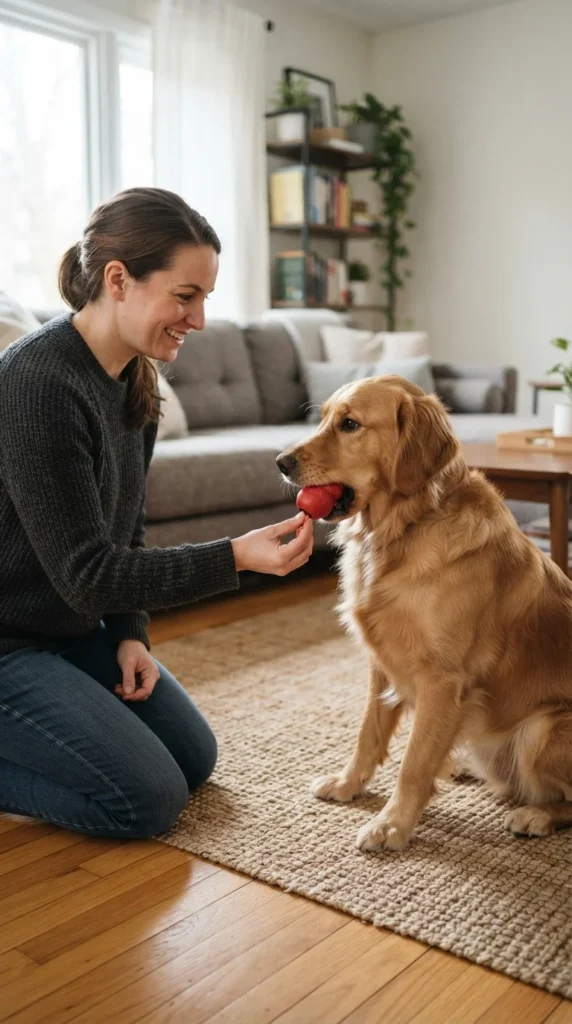
- Start with a safe toy your dog enjoys.
- Let your dog hold the toy.
- Present a valuable reward.
- When your dog releases the toy, mark and reward the release.
- Give the toy back when appropriate.
- Repeat until your dog happily releases the toy.
- Add the verbal cue “drop it” once the behavior is predictable.
- Gradually practice without showing the reward first.
Teaching a trade can help your dog learn that releasing an object does not always mean losing everything they enjoy. Keep the exercise calm and rewarding.
AKC notes that “drop it” can be useful when a dog has picked up something inappropriate, and can become particularly important when a dog grabs potentially dangerous items.
Never chase your dog for an object
Chasing can turn the situation into a game and may make some dogs more likely to run away with the item. Instead, practice trading safe objects during normal training sessions so your dog becomes comfortable releasing things for you.
7. Wait
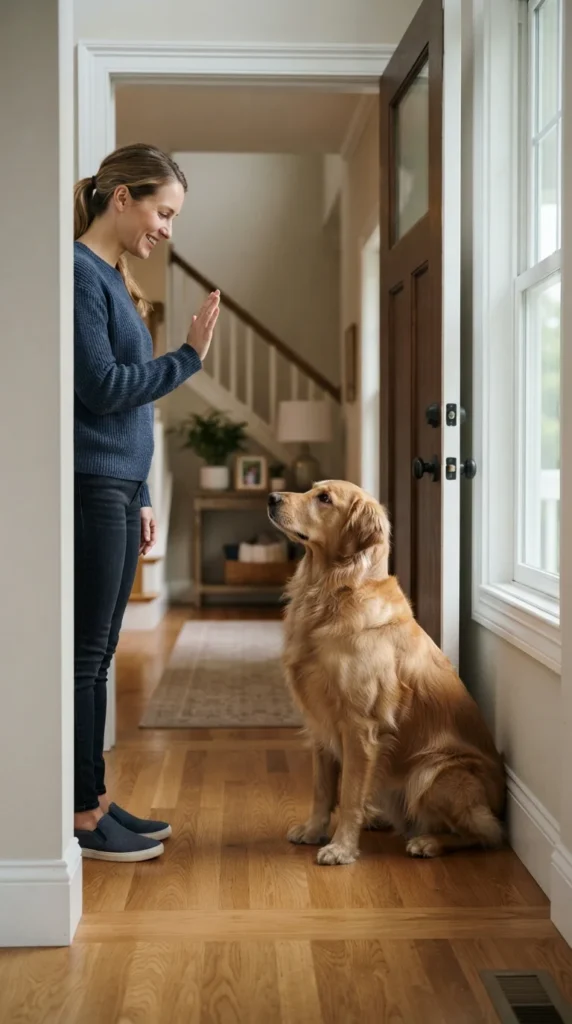
What it means: Your dog pauses and does not move forward until you give permission or another cue.
“Wait” is especially useful around doors, gates, crates, cars, and other situations where moving forward too quickly could create a problem.
Unlike “stay,” “wait” does not necessarily require your dog to remain in one exact body position. The important part is that your dog pauses instead of moving forward until you give permission.
How to teach wait
- Start with a simple doorway inside your home.
- Ask your dog to wait before opening the door.
- Open the door only a small amount.
- If your dog remains behind the threshold, mark and reward.
- Gradually open the door farther.
- Practice taking one small step through the doorway while your dog waits.
- Return and reward your dog.
- Add a release cue such as “okay” when you want your dog to move forward.
AKC distinguishes “wait” from “stay” by explaining that wait can mean the dog should pause before moving forward, while a release cue tells the dog when they can proceed.
Practice this skill with ordinary household doors before trying it around more exciting situations. Never rely on a newly trained wait cue as the only safety measure around an open exterior door, busy street, or other serious hazard.
How to Make Basic Dog Training Easier
Teaching the commands is only part of the process. How you train can make a major difference in how clearly your dog understands what you want.
Keep training sessions short
Several short sessions can be easier for a dog than one long lesson. End while your dog is still engaged and successful instead of waiting until they become frustrated.
Start with fewer distractions
A quiet living room is usually easier than a busy park. Once your dog understands a command in an easy environment, gradually introduce new places and distractions.
Reward the behavior you want
Rewards can include small food treats, praise, play, toys, or other things your dog finds valuable. The important part is that the reward follows the behavior you want to strengthen.
Use one clear cue
Choose a word and use it consistently. If you repeatedly say “sit, sit, sit, sit” before your dog responds, they may learn that the cue is actually the entire string of words rather than the first command.
Give your dog time to respond. If they do not understand, make the exercise easier rather than simply repeating the command louder.
Practice in different places
Dogs do not automatically understand that a behavior learned in your kitchen also applies at the park. Practice familiar commands in several safe environments and gradually add distractions.
Common Basic Obedience Training Mistakes
Even simple commands can become confusing when training becomes inconsistent. Watch for these common problems.
- Training for too long: Long sessions can reduce attention and increase frustration.
- Adding distractions too quickly: Build difficulty gradually.
- Repeating commands: Give your dog an opportunity to respond before trying again.
- Using physical force: Reward-based training is recommended by AVSAB for teaching dogs and addressing behavior problems.
- Rewarding too late: Deliver the reward close to the behavior you want to reinforce.
- Expecting perfection immediately: Learning takes repetition and practice.
- Using different words for the same behavior: Consistent cues make communication clearer.
- Practicing only at home: Dogs need opportunities to generalize learned behaviors to different environments.
If your dog becomes fearful, highly reactive, aggressive, or difficult to manage during training, do not try to solve a serious behavior problem through punishment. Consider speaking with your veterinarian and seeking qualified behavior or training support. AVSAB notes that more serious concerns such as aggression, fear, and anxiety may require individualized behavior modification and professional assessment.
A Simple Training Routine for Beginners
You do not need a complicated schedule to begin. A simple routine can help you practice consistently.
- Start with attention: Make sure your dog is able to focus on you.
- Practice one familiar command: Begin with something your dog already understands.
- Introduce one new skill: Work on only a small piece of the new behavior.
- Reward successful attempts: Make it clear when your dog gets the behavior right.
- Take a short break: Give your dog time to relax.
- Practice again later: Short, repeated sessions build experience.
As your dog improves, change one part of the exercise at a time. You might increase distance, duration, or distractions, but making everything harder at once can make success much less likely.
Are These Commands Enough for a Well-Trained Dog?
These seven commands create a useful foundation, but they are not the entire training picture.
Depending on your dog’s lifestyle, you may eventually want to teach loose-leash walking, a reliable “go to place” behavior, handling skills, polite greetings, and other practical behaviors.
Training should also match the individual dog. Age, experience, environment, motivation, physical ability, and previous learning can all affect how a dog responds.
Think of basic obedience as an ongoing communication system rather than a test your dog passes once. Continue practicing familiar skills while gradually adding new challenges.
Frequently Asked Questions
What are the most important basic commands for a dog?
Useful foundational commands include sit, down, stay, come, leave it, drop it, and wait. The most useful commands can vary depending on your dog’s lifestyle, environment, and individual needs.
What command should I teach my dog first?
Many owners begin with sit because it is relatively simple to teach and can be incorporated into everyday routines. You can then build other behaviors gradually as your dog learns how training works.
Is “leave it” the same as “drop it”?
No. “Leave it” generally means your dog should not pick up or investigate something. “Drop it” means your dog should release something they already have in their mouth.
What is the difference between stay and wait?
“Stay” generally means remain where you are until released. “Wait” can be used to tell a dog to pause before moving forward, such as at a doorway. The exact cues can vary between training systems, so consistency is important.
Should I use treats when training my dog?
Small food rewards can be useful because they give dogs clear feedback about which behavior earned a reward. You can also use praise, play, toys, or other rewards your dog values. As a behavior becomes reliable, you can gradually vary how and when you reward it.
How long does it take to train a dog?
There is no single timeline that works for every dog. Puppies, adult dogs, senior dogs, and dogs with previous training experiences may learn at different rates. Focus on steady progress rather than expecting a specific result within a fixed number of days.
Final Thoughts
Learning basic obedience commands can make daily life with your dog easier and give you a clearer way to communicate. Start with simple behaviors, reward your dog for successful choices, and increase distractions gradually.
The seven commands in this guide—sit, down, stay, come, leave it, drop it, and wait—give you a practical foundation for everyday training. Keep sessions positive and manageable, practice regularly, and remember that your dog is learning through every interaction.
Good training is not about demanding perfection. It is about helping your dog understand what you want and giving them plenty of opportunities to succeed.