If your hands and ankles look like they’ve lost a fight with a tiny shark, you’re not alone. Puppy biting is one of the most common complaints new owners have, and knowing how to stop puppy biting starts with understanding that it is normal behavior, not aggression.
Puppies explore the world with their mouths, play with their mouths, and get through teething by chewing. The goal isn’t to scold the behavior out of them. It’s to teach a gentle mouth and give them the right things to chew. This step-by-step guide shows you how.
Table of Contents
Quick Answer: How to Stop Puppy Biting
Teach your puppy that teeth on skin ends the fun. When a bite is too hard, stop play calmly and briefly. Redirect your puppy to a chew toy, reward gentle behavior, and make sure your puppy gets enough rest, since overtired puppies bite more. Consistency matters more than any single trick.
Why Puppies Bite
Play biting is normal. According to the AKC, trainers call it “play biting,” and it doesn’t mean your puppy is vicious. Common reasons include:
- Play and exploration: puppies learn about objects and people with their mouths.
- Teething: sore gums make chewing feel good.
- Overexcitement: an aroused puppy often can’t control their mouth.
- Tiredness: an overtired puppy can turn bitey and wild.
- Attention-seeking: if biting gets a big reaction, a puppy may repeat it.
Teach Bite Inhibition First
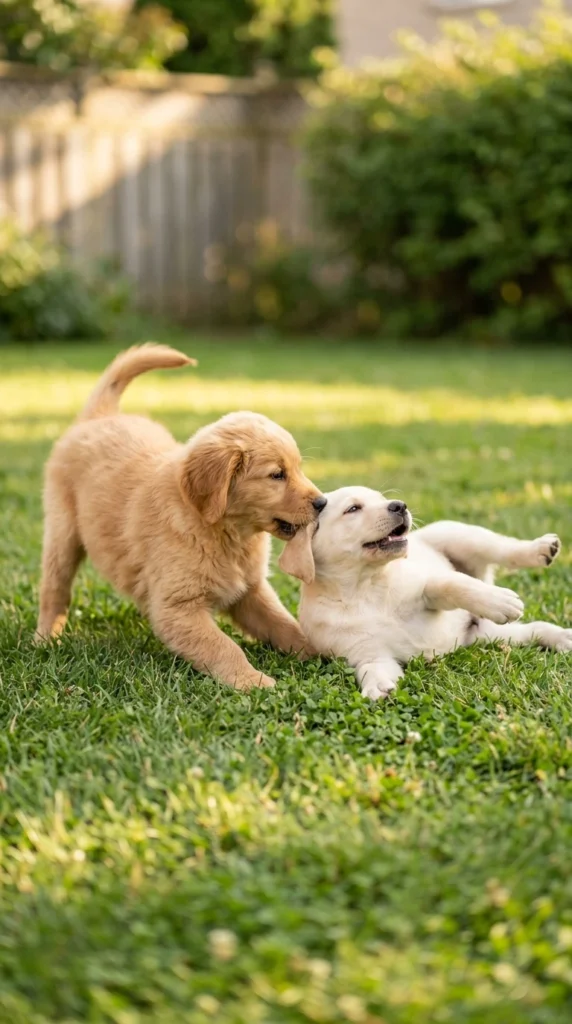
Bite inhibition is a dog’s ability to control the force of their bite. The AKC notes that learning to moderate bite force matters for all dogs. Puppies start learning it from their mother and littermates, who react when a bite is too hard.
That’s the model for your training. Your puppy doesn’t need to learn “never use your mouth.” They need to learn that human skin is delicate and that gentle mouths keep the game going.
Step-by-Step: How to Stop Puppy Biting
Step 1: Keep Chew Toys Within Reach
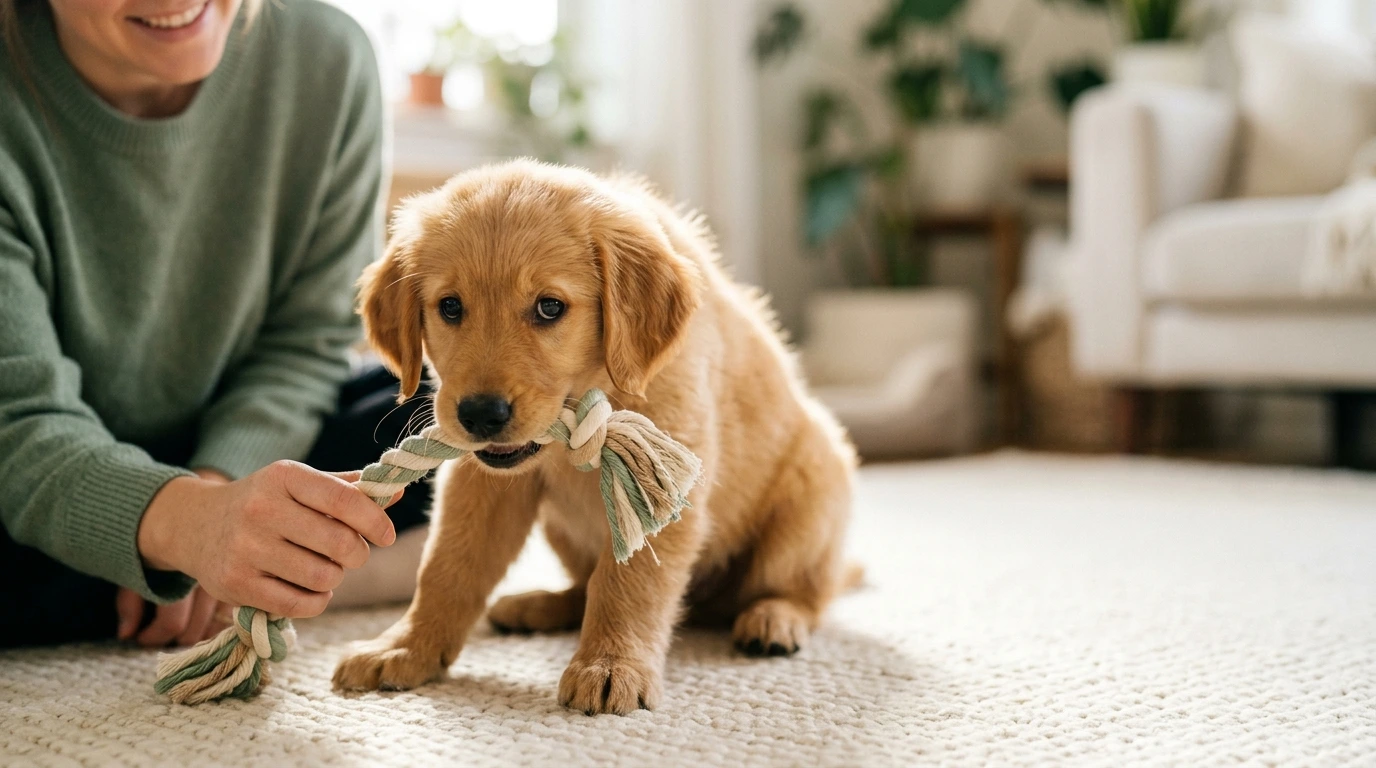
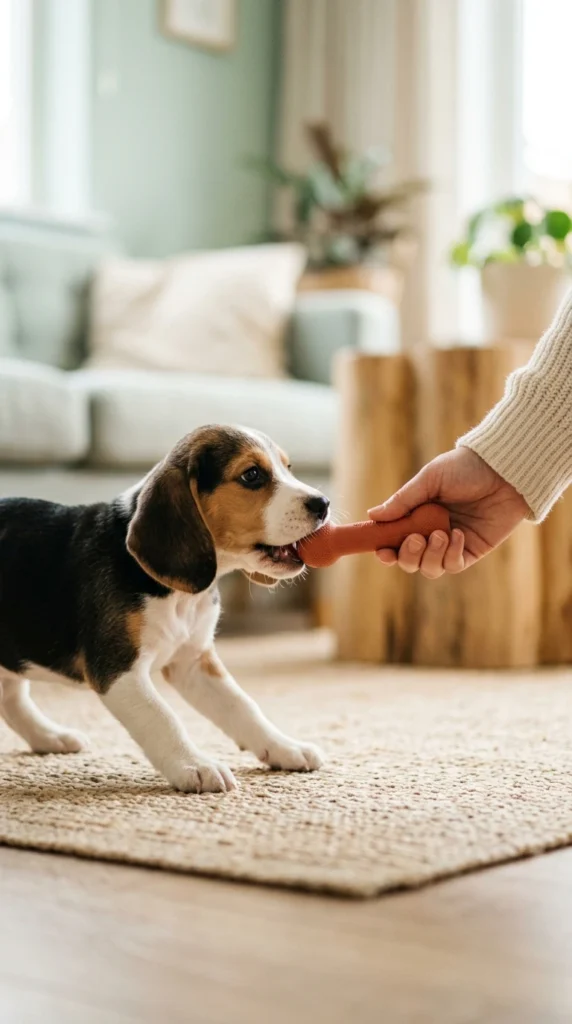
The AKC recommends keeping a chew toy handy at all times so you can substitute it for your hand or furniture. Place a few in every room where you spend time. Rotating toys keeps them interesting.
Step 2: Redirect Before Biting Escalates
When you feel teeth, calmly offer a toy and praise your puppy when they take it. If your puppy already knows “sit,” you can ask for a sit and reward with a toy, as the AKC suggests.
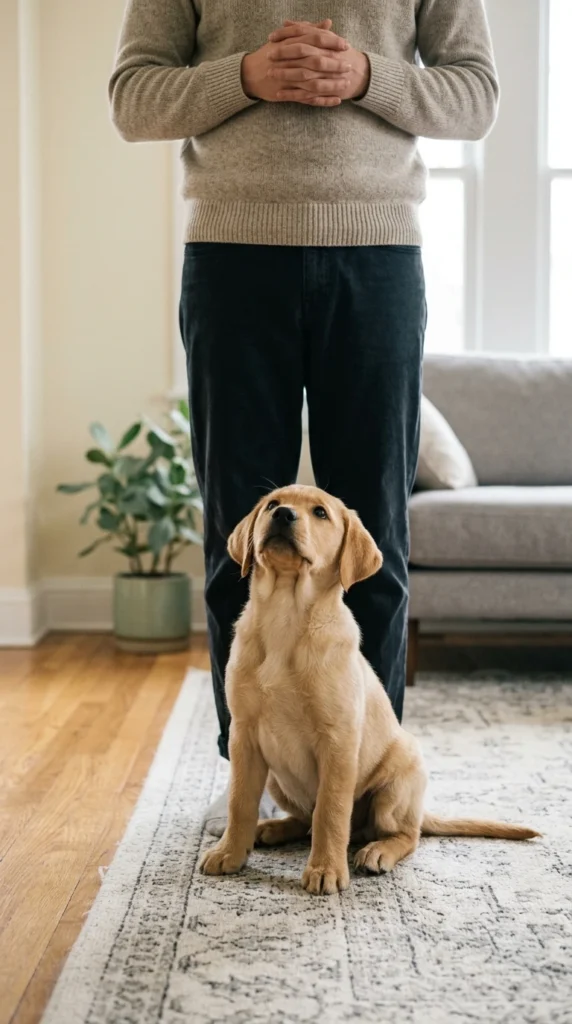
Step 3: End the Fun When Teeth Touch Skin
Teach your puppy that biting means “game over.” Stop moving, stop talking, and take your hands away for a few seconds. Then offer a toy to restart play.
If your puppy keeps biting, the AKC advises stopping the play session. Keep this calm and brief. It isn’t a punishment, just a consequence.
Step 4: Be Careful with Yelping
Yelping imitates how littermates tell each other a bite hurt. The AKC cautions that for some puppies, this gets them even more worked up and likely to bite. If a yelp seems to excite your puppy, skip it and use quiet, calm withdrawal instead.
Step 5: Reward the Behavior You Want
Catch your puppy being gentle and reward it. Calm licking, soft mouthing, and chewing a toy all deserve praise or a small treat. Puppies repeat what pays off.
Step 6: Give Your Puppy a Break
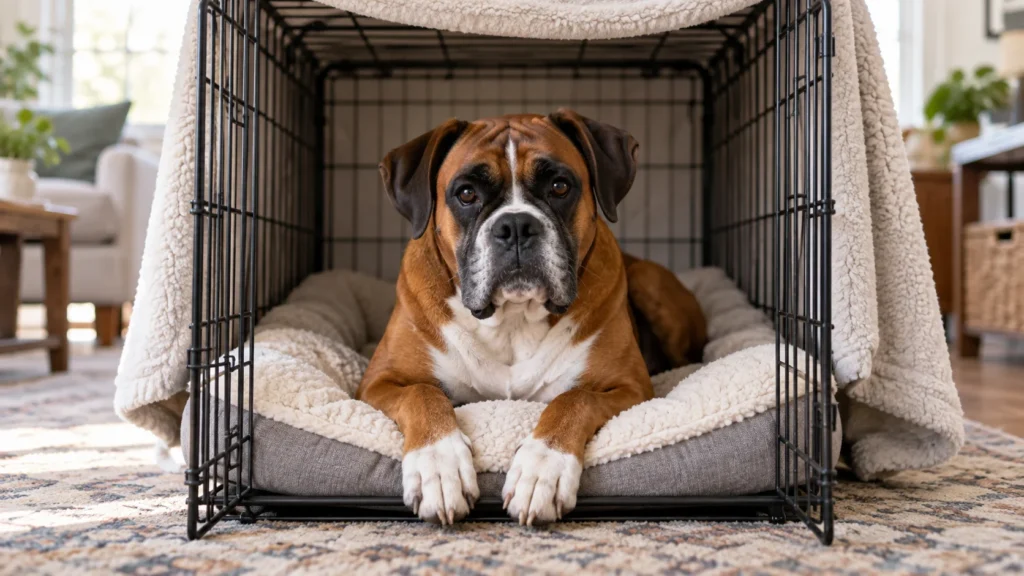
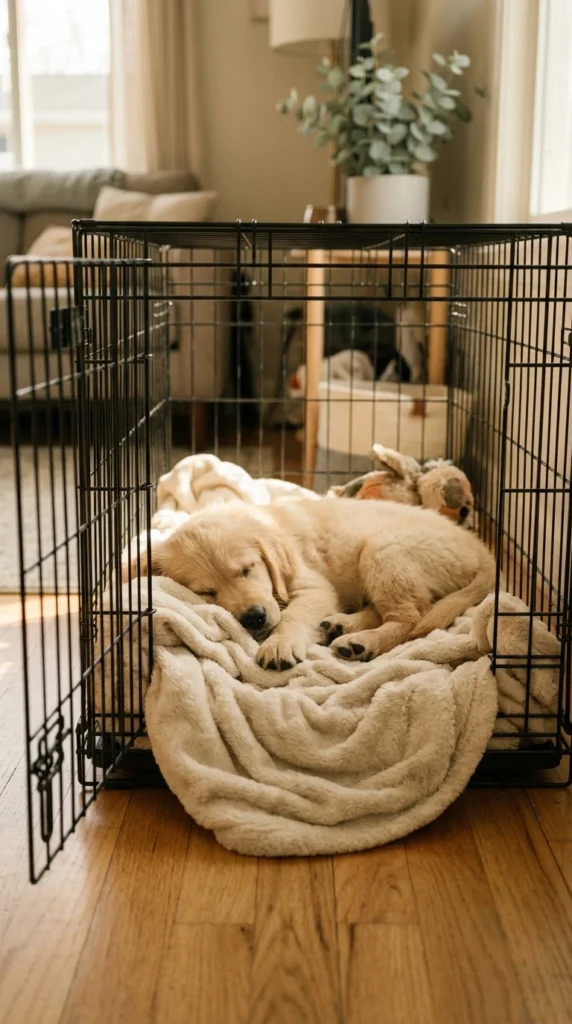
Sometimes a biting puppy is really an overtired puppy. The AKC says such a puppy may need a quiet space or crate to nap. Place your puppy there gently and calmly, not as a punishment. Many puppies need far more sleep than owners expect.
Step 7: Burn Off Energy the Right Way
If your puppy keeps biting even after you substitute a toy several times, they may need to burn physical or mental energy. Try short play sessions, sniffing games, food puzzles, and simple training exercises. Keep sessions short, since puppies tire quickly.
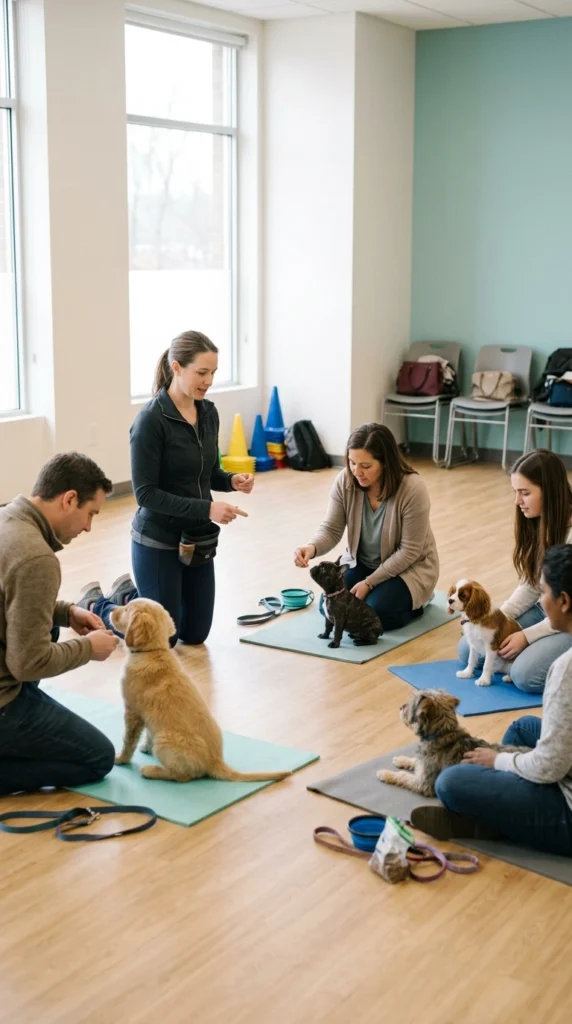
Step 8: Consider a Puppy Class
A well-run puppy class gives your puppy supervised play with other puppies and gives you coaching from a trainer. The AKC recommends puppy classes as part of the plan. Ask what vaccinations the class requires and how the trainer handles biting.
What to Do in the Heat of the Moment
- Freeze and stay calm. Don’t pull your hand away quickly, since that can turn the bite into a game.
- Say nothing or use a calm, neutral cue.
- Offer a toy as soon as your puppy lets go.
- Praise when your puppy chews the toy.
- If your puppy returns to biting, end play for a few moments or offer a nap.
Want your pup to grow up healthy and happy? Explore more puppy tips: https://dogsdailycare.com/how-to-housebreak-a-puppy/
Common Mistakes to Avoid
- Using physical punishment. Hitting, flicking the nose, or pinning a puppy can frighten them and damage trust.
- Holding the mouth shut. It can scare your puppy and make biting more defensive.
- Yelling. It can excite your puppy or make them anxious.
- Using your hands as toys. Wrestling with fingers teaches your puppy that hands are fair game.
- Being inconsistent. If one family member allows nipping and another doesn’t, the lesson is confusing.
- Expecting the behavior to disappear overnight. Improvement takes weeks of consistency.
Teething and Biting
Puppies lose their baby teeth and grow adult teeth over their first several months, and sore gums can intensify chewing. Offer safe, puppy-appropriate chew toys and ask your vet which are suitable. Avoid very hard items that could damage young teeth.
Biting and Children
Puppies and kids can be a challenging mix, since quick movements and high voices excite puppies. Supervise every interaction.
- Teach children to stay calm and stand still if the puppy mouths them.
- Show children how to offer a toy instead of hands.
- Keep play sessions short and end them before the puppy is overexcited.
- Give the puppy a safe space where children can’t follow.
When Biting Might Be Something More
Most puppy biting is normal play. Contact your veterinarian or a qualified, force-free trainer if you notice:
- Growling, stiffening, or snapping when you approach food, toys, or resting spots
- Biting that is truly aggressive or paired with fearful body language
- A sudden change in behavior, which can have a medical cause such as pain
- No improvement after several weeks of consistent training
If a bite breaks your skin, wash the wound well with soap and water, and contact your doctor if you’re concerned. Puppy bites can cause infections.
eep that coat healthy and shiny. Read our dog grooming tips: https://dogsdailycare.com/diy-dog-grooming-at-home/
Frequently Asked Questions
Is puppy biting normal?
Yes. Play biting is a normal part of puppy development and doesn’t mean your puppy is aggressive.
When will my puppy stop biting?
Biting usually decreases as puppies mature and finish teething, and consistent training speeds it up. Timing varies, so ask your vet or trainer if you’re concerned about your puppy’s progress.
Should I yelp when my puppy bites?
It works for some puppies. For others, it increases excitement. If your puppy gets wilder, switch to calm withdrawal.
Why does my puppy bite more in the evening?
Overtiredness is a common cause. A nap or quiet time in a crate or pen often helps.
Is it okay to use a spray or deterrent on my hands?
Ask your vet or trainer first. Training and redirection work better than relying on products.
Final Thoughts
Learning how to stop puppy biting comes down to patience, consistency, and kindness. Redirect to toys, end play when teeth touch skin, reward gentle behavior, and protect your puppy’s sleep.
Your next step is to place a chew toy in every room today, so you’re ready the next time those needle teeth show up.
This article is for general education and is not a substitute for advice from a veterinarian or qualified trainer. If your puppy’s biting seems aggressive or you’re worried about safety, seek professional help.
Every minute counts. Locate your furry friend faster: https://dogsdailycare.com/find-my-dog/