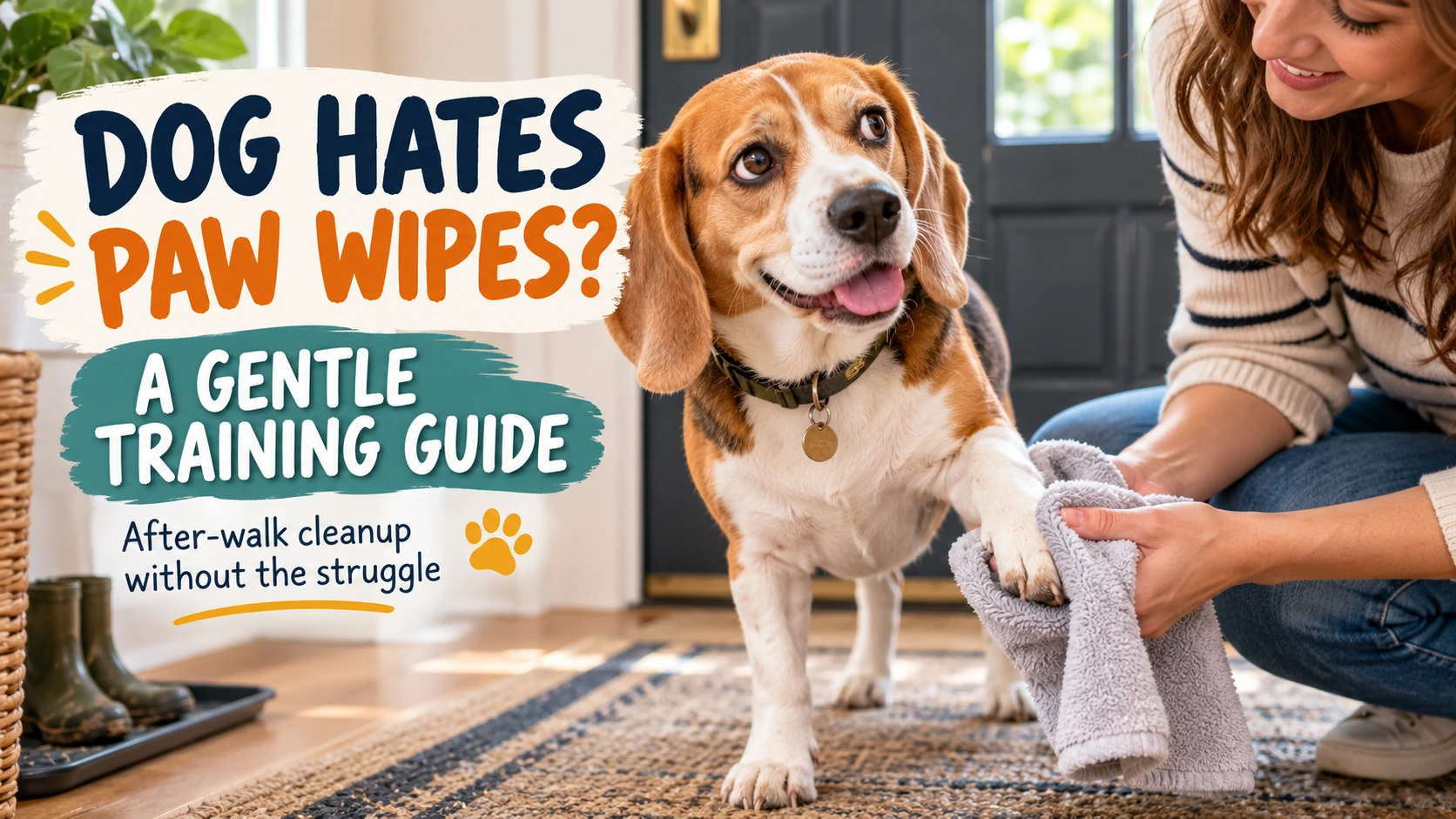
Does your dog pull away, twist around, or sprint off the moment you reach for a towel after a walk? You’re not alone. For some dogs, paw wiping is just another part of coming home. For others, having their feet touched is uncomfortable, unfamiliar, or downright worrying. The answer isn’t to hold tighter: it’s to teach your dog that a gentle paw-cleaning routine is predictable and rewarding.
Quick answer: If your dog won’t let you wipe their paws after walks, practice handling when their feet are already clean. Start with a tiny movement they can comfortably tolerate, reward it, and work gradually toward touching, briefly holding, and wiping one paw. Use a damp cloth to remove outdoor grime; after winter walks on salted sidewalks, rinse away residue and dry between the toes. Never force a painful or frightened dog through the process.
Disclosure: This article contains Amazon affiliate links. As an Amazon Associate, Dogs Daily Care may earn from qualifying purchases at no additional cost to you.
Table of Contents
Why Won’t My Dog Let Me Wipe Their Paws?
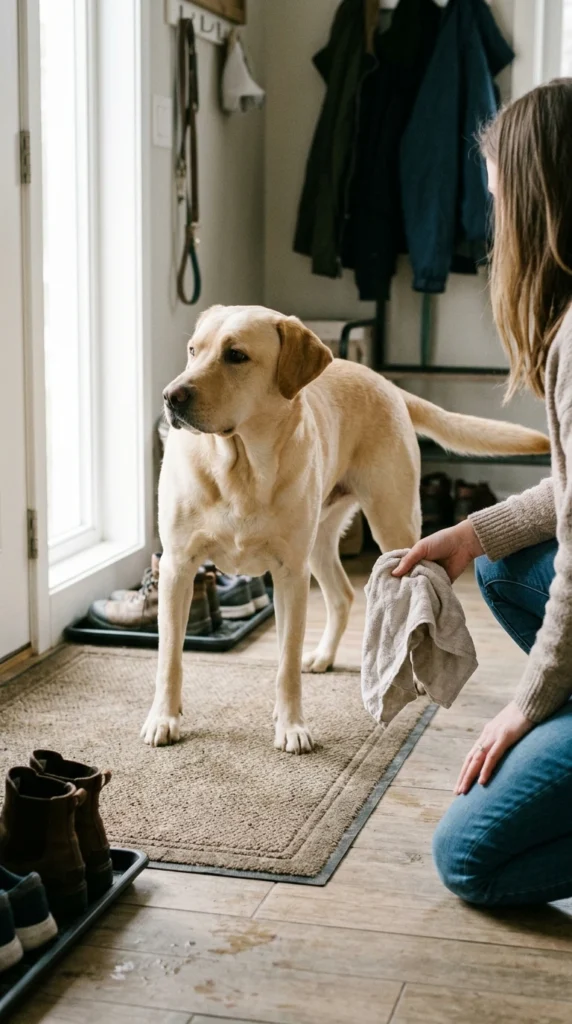
Dogs use their paws for balance, movement, and exploring the world. They don’t necessarily understand why someone suddenly reaches down to lift a foot. Some dogs also have a history of unpleasant handling, slippery floors, rushed grooming sessions, or uncomfortable wipes. A dog who normally accepts petting might still dislike a towel rubbing between their toes.
Notice exactly when the resistance begins. Does your dog back away when you pick up the towel? Do they let you touch a leg but pull away when you lift the paw? Or do they tolerate touching until the damp cloth appears? Each response points to a different starting place for training. A dog who objects only after a muddy or snowy walk may also have a sore pad, a piece of grit between the toes, or other discomfort.
The American Kennel Club recommends gentle, gradual handling paired with rewards rather than forcing an uncomfortable dog to accept paw contact. Read its guidance on teaching dogs to enjoy handling.
Check for Pain Before Starting Training
If your dog previously allowed paw wiping but suddenly refuses, examine the situation before treating it as a training problem. Watch for limping, frequent paw licking, swelling, redness, broken nails, bleeding, cracked pads, or sensitivity in one particular foot. Don’t probe deeply between sore toes or pull away anything embedded in the skin. Ask your veterinarian about a painful or unexplained change in behavior.
Winter can introduce extra problems: salt and ice-melting chemicals may irritate the skin, while ice clumps can collect around the toes. VCA Animal Hospitals advises checking paws after cold-weather walks, rinsing salt residue with lukewarm water, and drying the feet. See VCA’s winter paw-protection advice.
Handling discomfort can also affect nail trimming. If your dog is distressed by ordinary gentle touch, don’t begin with clippers or a grinder. First address possible pain and help them feel safe with basic handling.
How to Train Your Dog to Accept Paw Wiping: Step by Step
Choose a quiet moment when your dog is relaxed and their paws don’t urgently need cleaning. Gather a soft, slightly damp towel and a few tiny rewards your dog enjoys. Use a non-slip floor and let your dog stand, sit, or rest comfortably. Keep each session short enough that your dog is still willing to participate at the end.
Step 1: Reward Calmly Noticing the Towel
Place the towel nearby rather than immediately reaching for your dog’s feet. If your dog looks at it, sniffs it, or remains comfortably beside you, say a gentle marker such as “yes” and offer a treat. Repeat a few times. If your dog leaves, make the situation easier: move the towel farther away or choose a less exciting environment.
Step 2: Teach a Brief Touch Away From the Paw
Reach toward your dog’s shoulder or upper leg, touch lightly for a second, then reward. Build toward the lower leg over several short attempts. The goal is to create a positive experience with your hand approaching, not to hold the dog still. If your dog stiffens, withdraws, growls, or refuses rewards they normally enjoy, stop and return to an easier stage.
Step 3: Touch the Paw Without Holding It
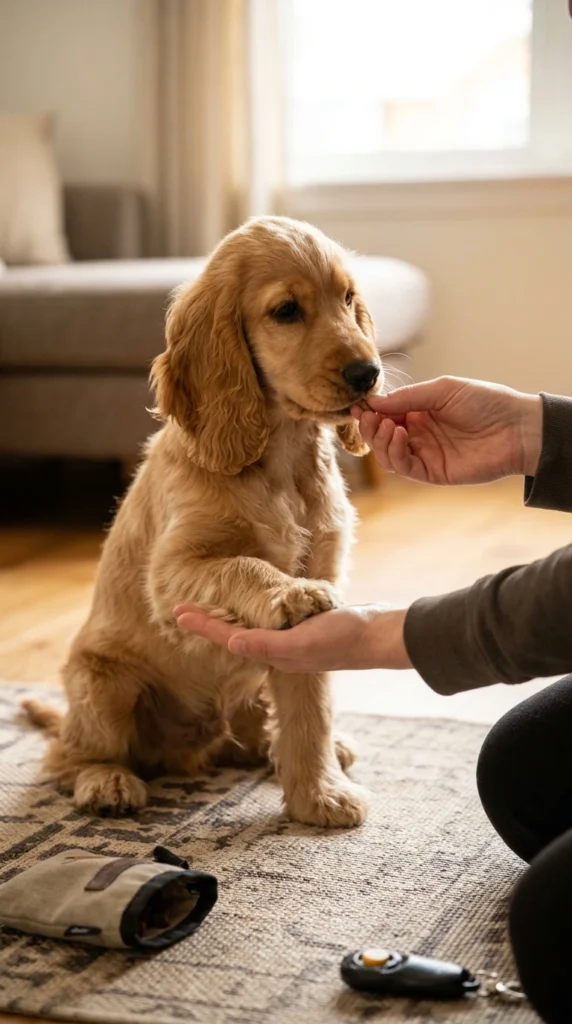
When your dog is comfortable with a gentle touch to the leg, briefly touch the top or side of a paw, then immediately reward. Start with just a moment. Keep your hand relaxed. Don’t squeeze the toes, bend the leg into an awkward position, or insist on lifting the foot. The American Kennel Club describes a similar gradual process for building comfort with foot grooming.
Step 4: Add the Towel for One Gentle Contact
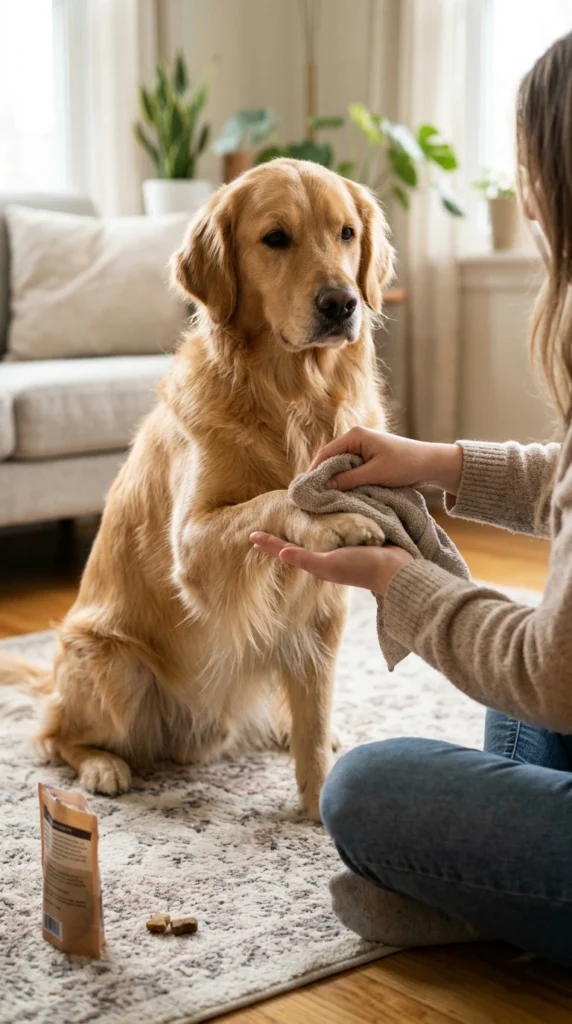
Show the soft towel, touch a paw briefly with it, mark the moment, and reward. One successful touch is enough at first. Over several sessions, increase to a short wipe across the top of the paw or the pad, only while your dog remains comfortable. If your dog pulls away, let go and try a smaller step next time.
Step 5: Progress to a Real After-Walk Routine
Once your dog welcomes a brief wipe during practice, try it after a low-key walk. Have the cloth and treats ready before you come inside. Ask for a familiar cue, reward calm behavior, gently clean one paw, and pause. You may need several successful outings before you can clean all four paws in one session. Don’t rush that process.
A Simple Practice Plan for Nervous Dogs
Think of this as a sequence of skills, not a rigid seven-day challenge. Some dogs may move through the stages quickly; others need days or weeks before they’re ready for the next step. Repeat the current step until your dog looks relaxed and willingly stays with you.
- First: Reward being near the towel and allowing a hand to approach.
- Next: Practice a light touch to the leg, then a brief touch to one paw.
- Then: Pair the towel touching the paw with a small reward.
- Later: Make one slow wipe, then stop.
- Finally: Work toward cleaning additional paws and adding normal after-walk distractions.
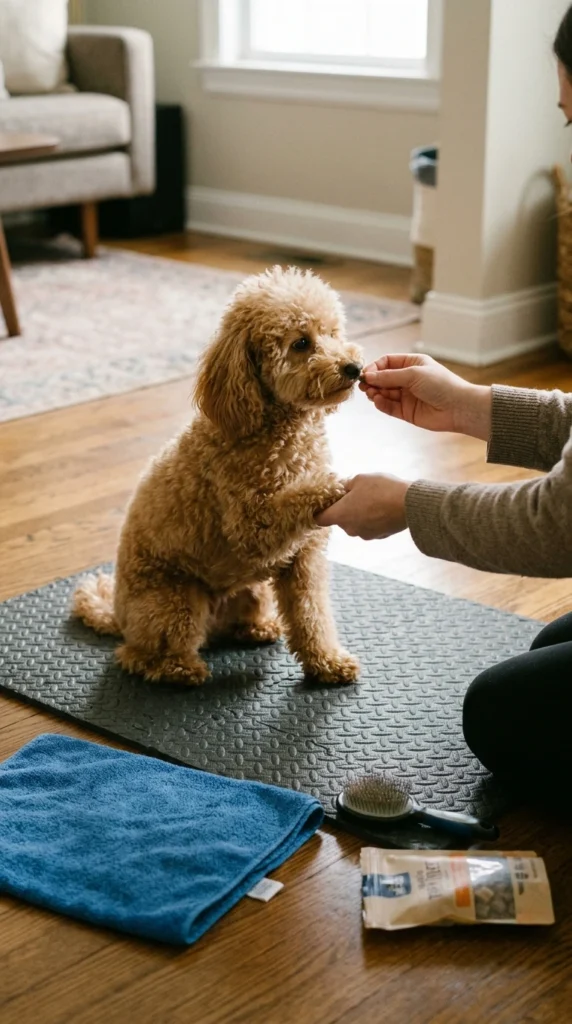
You can also teach a calm “station” behavior, such as standing on a small nonslip mat. Start by rewarding your dog simply for stepping onto it. Later, use the same mat as a familiar place for wiping. If you’re new to reward-based cues, our guide to basic obedience commands explains simple skills that can make everyday routines easier.
The American Veterinary Society of Animal Behavior recommends reward-based training and advises against punishment or intimidation. That principle is especially important for care routines involving sensitive body parts.
How to Clean Muddy Paws Without Starting a Struggle
When your dog returns with muddy paws, a soft towel and a little lukewarm water may be all you need. Have a second towel ready for drying. Clean the paw pads gently, remove visible dirt from the fur between the toes without tugging, then pat dry. Avoid hot water, harsh household cleaners, and vigorous scrubbing.
If paws are heavily muddy, rinse them first rather than grinding dirt into the skin with a dry cloth. A paw-cleaning cup can be convenient for dogs who already tolerate placing a foot into a container, but it is not automatically less stressful for a dog who dislikes paw handling. Introduce the empty cup and its silicone interior gradually, just as you would introduce a towel.
Optional tool: Dexas MudBuster Medium Dog Paw Cleaner is a water-filled paw-cleaning cup with soft silicone bristles. Check the manufacturer’s size guide before buying, and don’t use it if your dog becomes frightened by the motion or contact. A basic bowl of water and a soft cloth is also perfectly reasonable.
For coats that hold debris around the feet, our dog brushing guide explains how to select gentle tools and identify signs of skin irritation.
Cleaning Your Dog’s Paws After Salt, Snow, or Ice
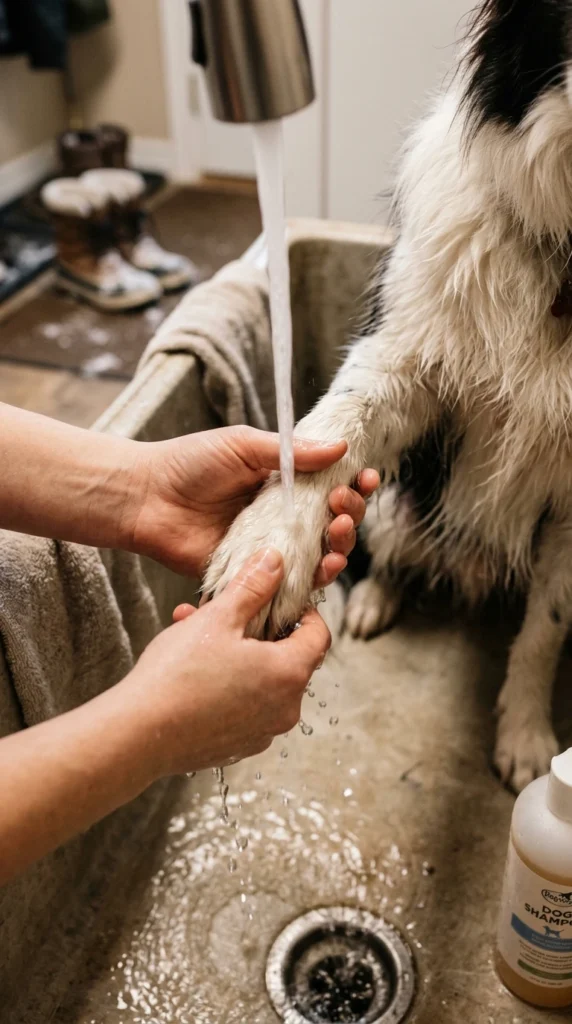
Winter paw cleaning isn’t just about keeping floors clean. Deicing products can irritate pads and the skin between toes, and your dog may swallow residue while licking their feet. After walking on treated pavement, rinse the paws with lukewarm water and dry them carefully. Inspect for small ice clumps, redness, or cracks, and keep the next outing short if your dog appears uncomfortable.
If a foot is very sore, swollen, bleeding, or your dog is limping, call your veterinarian. If your dog may have eaten a significant amount of deicer or antifreeze, seek prompt professional poison advice rather than waiting for symptoms. VCA also discusses boots and protective balms as options for some winter conditions, but neither replaces checking and cleaning paws after exposure.
On very cold days, make the entryway routine simple: place towels near the door, keep a safe nonslip mat ready, and have clean water within reach. For puppies, senior dogs, and dogs with sensitive paws, comfortable positioning matters more than completing all four feet quickly.
Are Dog Paw Wipes Better Than a Damp Towel?
Not necessarily. A clean cloth with water is often enough for ordinary dirt. Dog-labeled grooming wipes can be convenient when you’re traveling or cleaning up after a short walk, but check the product directions and avoid fragranced or irritating products if your dog has sensitive skin. Never use disinfecting household wipes on a dog’s paws unless your veterinarian specifically directs you to do so.
Optional product: Earth Rated Unscented Dog Grooming Wipes (100 count) are designed for paws and coat touch-ups. If your dog resists the feeling of a wet wipe, practice with a barely damp towel first. Wipes should not replace thorough rinsing when you need to remove salt or other chemical residue.
Never use a new product on broken or inflamed skin without veterinary advice, and stop if it appears to cause discomfort. Introduce all new cleaning tools in the same gradual way you introduced the original towel.
What If Your Puppy Hates Having Their Feet Touched?
Start early but keep expectations small. A young puppy can learn that gentle paw contact predicts good things without being subjected to long grooming sessions. Reward your puppy for letting you approach, touch one leg, and briefly handle one paw. Practice at a quiet time, not immediately after exciting play.
Puppy socialization isn’t only about meeting strangers or other dogs. Positive exposure to everyday handling and grooming matters too. Read our puppy socialization tips for ways to introduce new experiences without overwhelming your puppy.
If your puppy repeatedly pulls away, go back to shorter, easier touches. Avoid pinning them down or using treats to distract them while performing handling they’re not ready to accept. The aim is willing participation and a calm long-term habit.
Common Paw-Wiping Mistakes to Avoid
- Practicing only when paws are filthy: Teach the skill on clean, calm days, when there is no pressure to finish quickly.
- Holding the paw too firmly: Restraint can make an already worried dog more defensive.
- Using a rough or cold cloth: Choose a soft material and comfortably lukewarm water.
- Cleaning between toes forcefully: Gentle inspection is useful; painful scrubbing or pulling is not.
- Ignoring warning signs: Freezing, growling, lip licking, or trying to escape are reasons to make the session easier.
- Expecting instant progress: Some dogs need repeated practice before they feel comfortable with touch.
- Assuming resistance is stubbornness: Pain, fear, sensitivity, and unfamiliar handling can all explain avoidance.
If grooming generally causes stress, our DIY dog grooming guide covers practical ways to build a gentler routine at home.
When to Ask a Veterinarian or Qualified Trainer
Contact your veterinarian if paw handling causes obvious pain, sudden withdrawal, limping, swelling, bleeding, cracked pads, or intense licking. A dog who snaps, bites, freezes, or panics during handling may benefit from a carefully designed plan involving a qualified reward-based trainer or veterinary behavior professional. Do not attempt to overpower the dog.
Seek help sooner if the problem is getting worse, your dog has a known painful condition, or cleaning is necessary because of a suspected harmful chemical exposure. The priority is safety and comfort, not completing the training schedule.
Frequently Asked Questions
Why does my dog run away when I bring out the towel?
Your dog may have learned that the towel predicts uncomfortable handling. Introduce it from a distance, reward calm curiosity, and gradually pair it with very brief, gentle contact. Practice before the next muddy walk.
Can I use treats to teach my dog to accept paw wiping?
Yes. Use small rewards immediately after easy steps, such as calmly staying near the towel or allowing a brief paw touch. Work at a level where your dog remains comfortable rather than using treats to force through distress.
Should I clean my dog’s paws after every walk?
It depends on the conditions. Inspect paws after outings, especially if they were muddy, wet, snowy, or exposed to deicing salt. A thorough rinse is more important after potential chemical exposure than after a clean, dry walk.
Can dog wipes remove road salt?
Wipes may remove surface debris, but rinsing with lukewarm water followed by drying is a better choice when you know the paws contacted salt or deicing chemicals. Seek veterinary advice if the paws look injured or your dog may have swallowed a harmful product.
What if my dog allows one paw to be wiped but not the others?
Practice the comfortable paw first, then briefly touch the others without wiping. Some dogs are more sensitive on one side, and an abrupt difference can suggest pain. If the same foot is consistently painful or difficult to handle, consult your veterinarian.
How long does paw-wiping training take?
There is no reliable fixed timeline. Some dogs adapt after a few easy sessions; others need weeks of gentle practice. Progress depends on previous experiences, comfort, possible pain, and how gradually you increase the challenge.
Final Thoughts
If your dog won’t let you wipe their paws after walks, slow down the routine and teach the skill away from muddy or stressful moments. Reward tiny successes, respect discomfort, and check for physical causes when the behavior changes suddenly. A soft towel, clean water, and patience will often do more than expensive equipment.
Keep winter paw safety in mind, too: rinse salt and ice-melt residue, dry between the toes, and ask your veterinarian about soreness or injury. With consistent, gentle practice, paw cleaning can become an ordinary part of coming home rather than a daily struggle.