Brushing is one of the simplest things you can do for your dog, and one of the easiest to get wrong. The wrong brush can miss the undercoat completely, tug at tangles, or irritate the skin. This dog brushing guide helps you match the right brush to your dog’s coat, then walks you through how to use it.
You’ll learn the main brush types, which coats they suit, how often to brush, how to handle tangles safely, and when a problem is better left to a groomer or veterinarian.
Table of Contents
Quick Answer: Which Brush Is Right for Your Dog?
Choose your brush by coat type. Short coats usually do well with a rubber brush or bristle brush. Long coats often need a slicker or pin brush and a comb. Double coats typically need an undercoat rake. Whatever you choose, use a light touch and check your dog’s skin as you go.
Why Brushing Matters
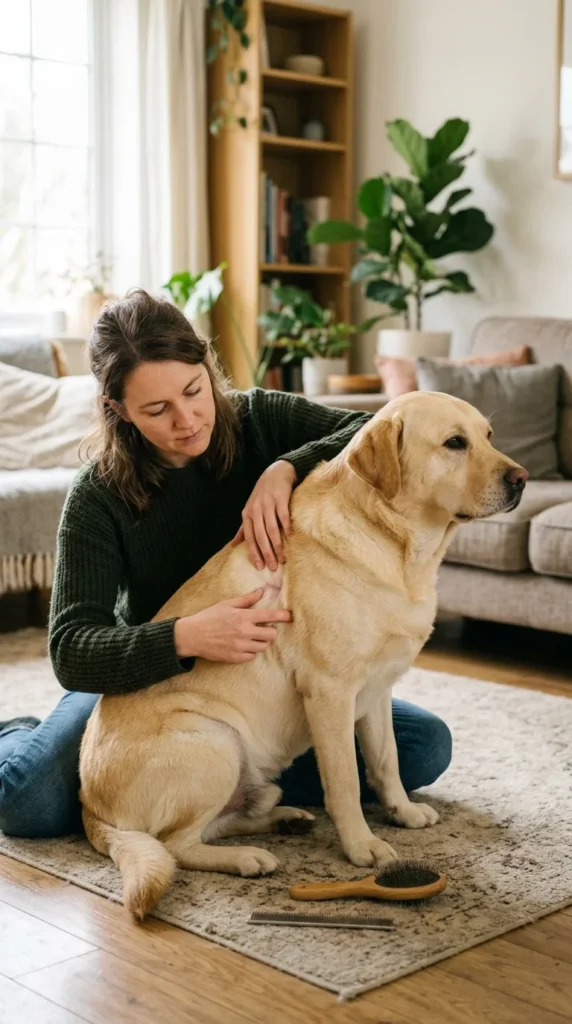
Brushing removes loose hair, dirt, and debris. It also gives you a regular chance to look over your dog’s skin, ears, and paws, so you notice lumps, scabs, or parasites sooner. For many dogs it reduces shedding around the house, and for long-haired dogs it helps prevent tangles from turning into mats.
Brushing also builds trust. A dog who is comfortable being handled is generally easier to bathe, trim, and examine.
Know Your Dog’s Coat Type
Dogs don’t all grow coats the same way, and mixed breeds can combine traits. Start with the closest match.
- Short, smooth coat: Close-lying hair, as on a Beagle or Boxer.
- Double coat: A dense undercoat under longer guard hair, as on a Husky, Golden Retriever, or German Shepherd.
- Long, silky coat: Fine hair that tangles easily, as on a Shih Tzu or Maltese.
- Curly or wavy coat: Hair that traps debris and mats, as on a Poodle or Doodle.
- Wiry coat: A rougher texture, as on many terriers.
If you’re unsure what your dog has, ask your veterinarian or a professional groomer.
The Main Types of Dog Brushes
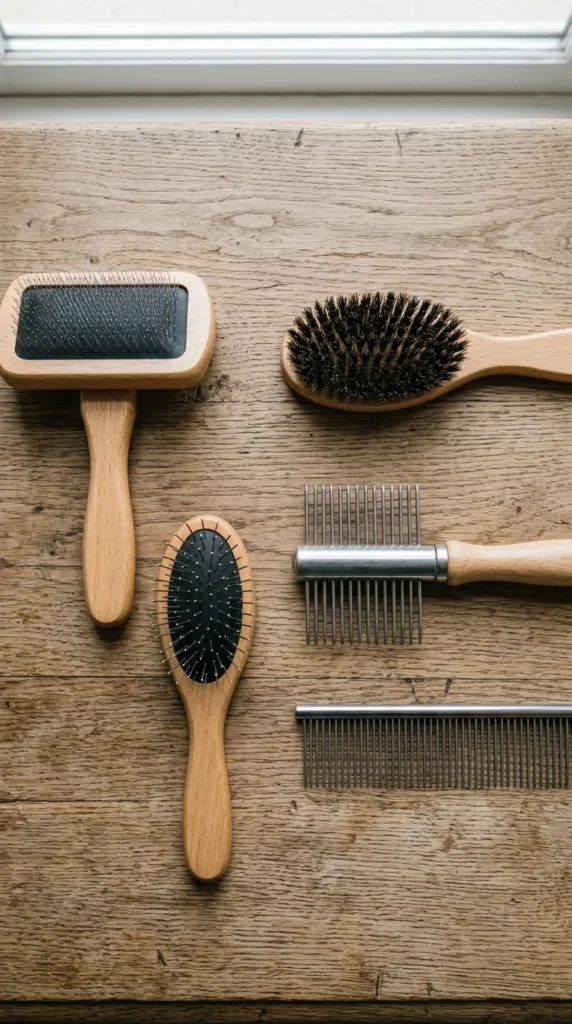
Slicker brush
A slicker brush has short, tightly packed wire pins angled to work through the coat. It’s useful for removing loose hair and light tangles. Use a gentle touch, because pressing hard can be uncomfortable for your dog.
Pin brush
A pin brush has widely spaced pins, usually with rounded tips. It’s gentler than a slicker and is commonly used on longer, finer coats. It won’t remove loose hair as effectively as a slicker.
Bristle brush
A bristle brush has natural or synthetic bristles and is mainly a finishing tool. It smooths the coat and helps spread natural oils, and it’s a gentle choice for sensitive areas. It won’t deal with tangles or heavy shedding on its own.
Undercoat rake
An undercoat rake has one or two rows of metal pins that reach the undercoat to remove loose fur and help prevent mats. It suits double-coated dogs, but pin length matters, so choose one that fits your dog’s coat length.
Rubber brush or grooming mitt
A soft rubber brush or mitt lifts loose hair and dirt from short coats, and many dogs enjoy the feel of it. It’s a good first tool for dogs new to brushing.
Comb
A comb isn’t a brush, but it’s a useful check. After brushing, run a comb through the coat to catch tangles the brush missed, especially behind the ears, under the legs, and on the belly.
AKC, “Types of Dog Brushes”: https://www.akc.org/expert-advice/health/types-dog-brushes-shedding/
The Right Brush for Every Coat Type
Short, smooth coats
A rubber brush or soft bristle brush is usually enough. Brush in the direction of hair growth, and expect to finish quickly.
Double coats
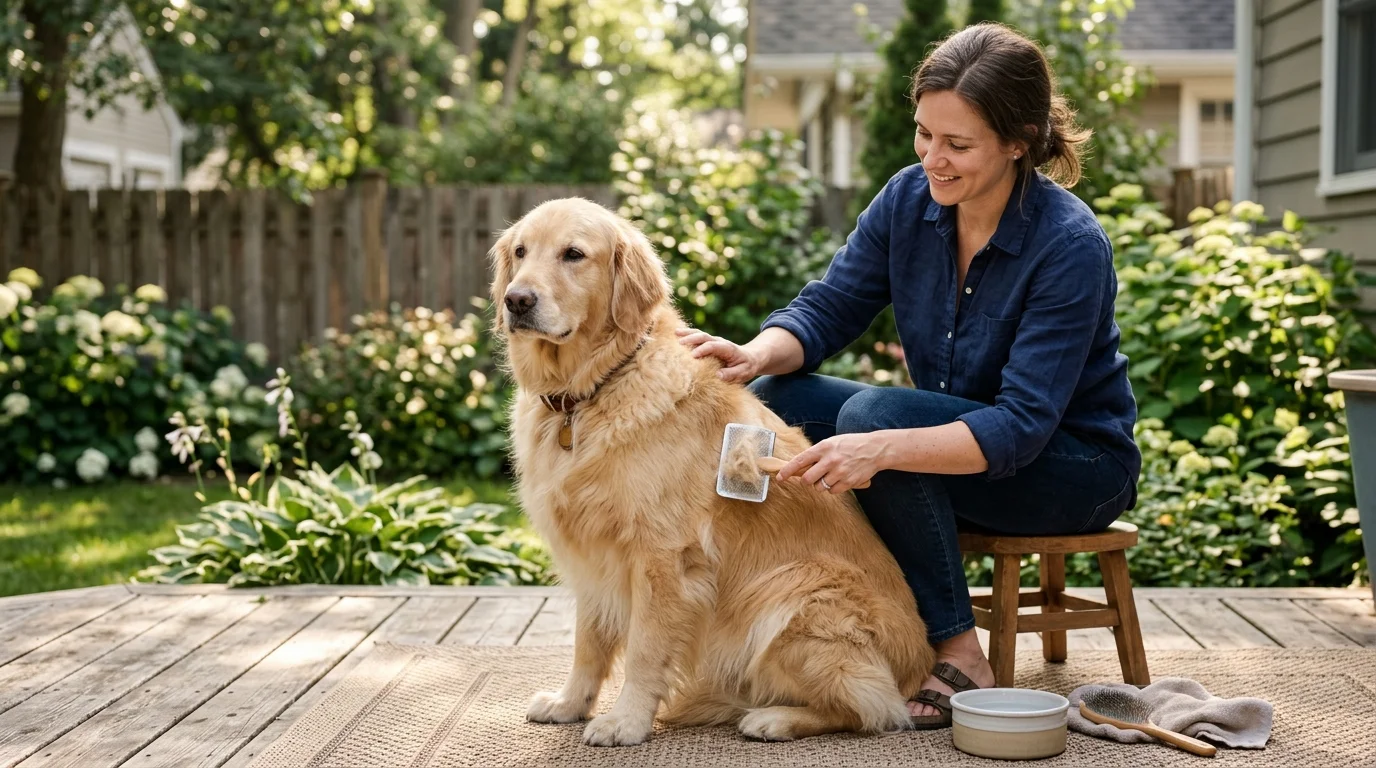
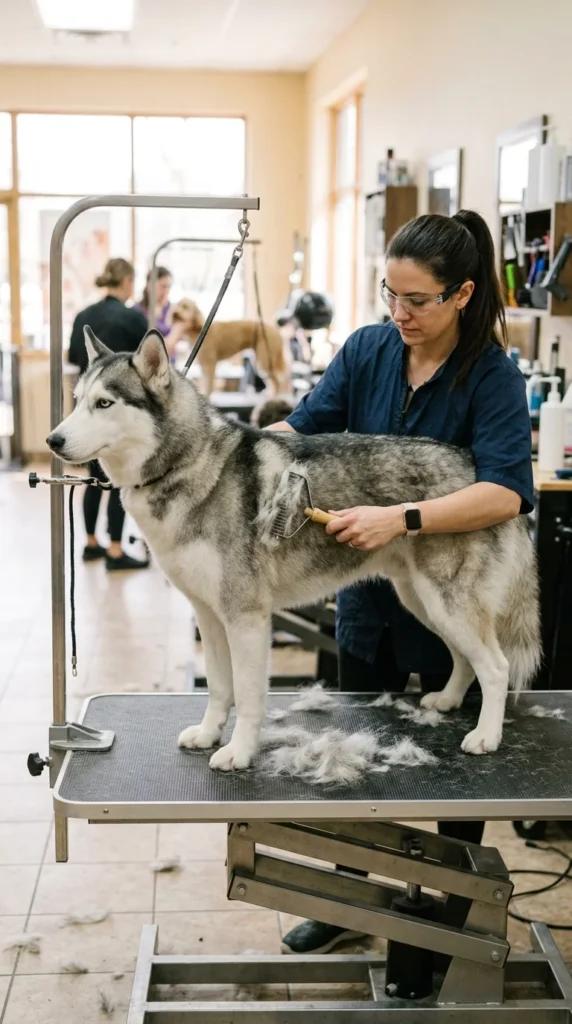
Use an undercoat rake to reach loose undercoat, then a slicker or bristle brush to finish. Brush the undercoat as well as the top coat, and work in sections so you don’t skip areas. Expect heavier shedding in spring and fall.
Long, silky coats
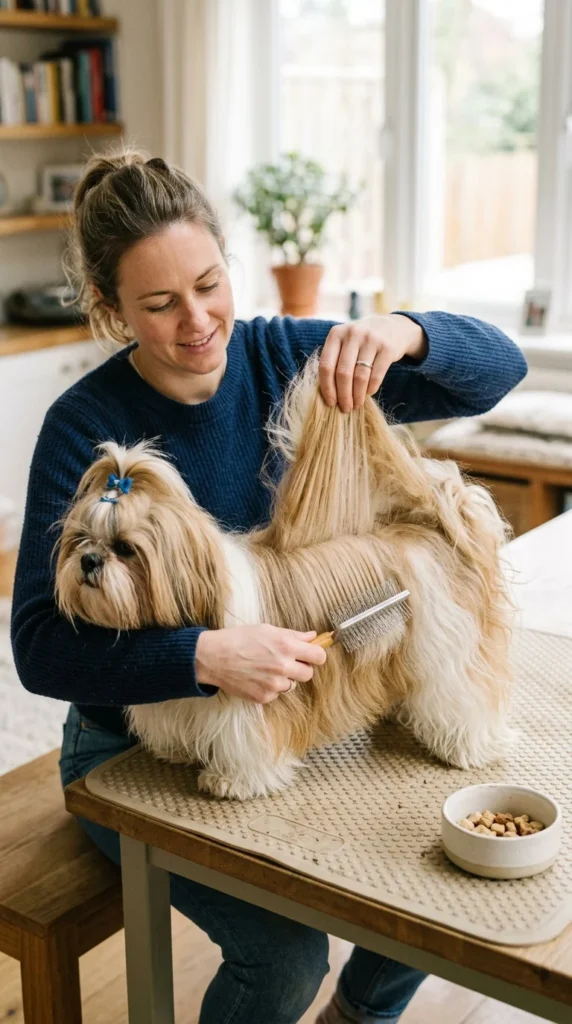
Use a pin brush or slicker, then a comb to check for tangles. Work in layers from the skin outward, because brushing only the surface can leave knots underneath.
Curly and wavy coats
Use a slicker brush and a comb, and brush all the way to the skin. Brushing only the top of a curly coat can leave mats close to the skin. Brush when the coat is clean and dry.
Wiry coats
A slicker brush and comb are common choices. Because some wiry coats are professionally hand-stripped or clipped, ask your groomer what’s right for your dog’s coat.
Hairless and thin-coated dogs
These dogs usually don’t need a brush for the coat itself. If you do use one, choose a very soft tool, and ask your veterinarian about skin care.
How Often Should You Brush Your Dog?
There’s no single schedule, because it depends on coat, shedding, and lifestyle. As a general guideline:
- Short coats: Weekly is often enough.
- Double coats: A few times a week, and more often during heavy shedding.
- Long, curly, or tangle-prone coats: Often daily or every other day.
Dogs that swim, hike, or roll in mud may need extra sessions. A short brush after outdoor play is easier than untangling a week of burrs later.
How to Brush Your Dog Step by Step
- Choose a calm spot. Use a non-slip surface and keep treats nearby.
- Start with a quick check. Look for mats, scabs, bumps, or parasites before you begin.
- Brush in sections. Work in the direction of hair growth, using light, steady strokes.
- Go through the coat, not just over it. Part longer coats and brush down to the skin without pressing hard.
- Be gentle in sensitive areas. Take extra care around the belly, armpits, inner legs, behind the ears, and the tail base.
- Finish with a comb. Check for tangles the brush missed.
- Reward your dog. End on a positive note, even if the session was short.
Dealing With Tangles and Mats
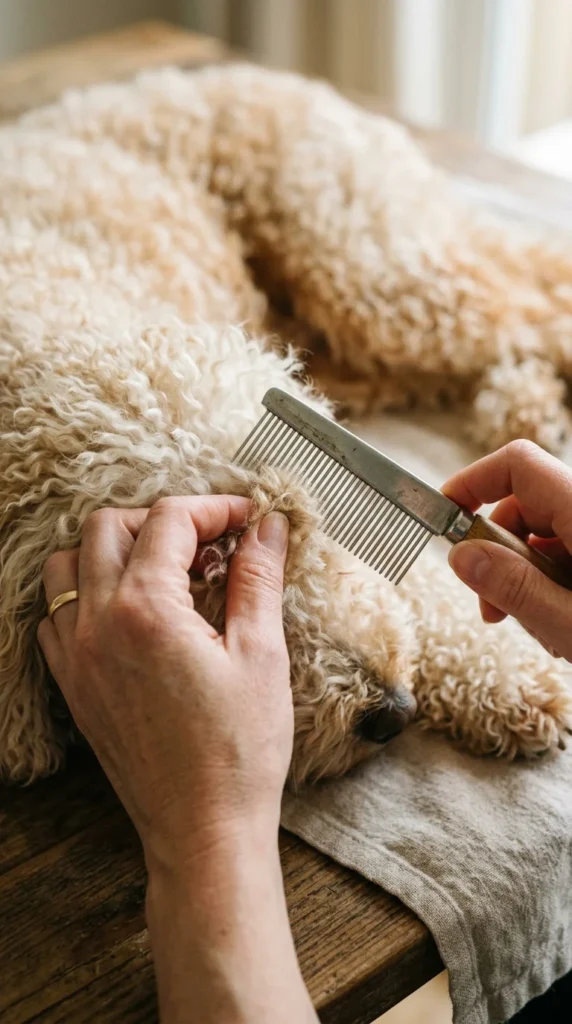
A tangle is a small knot you can often work out. A mat is a dense clump of hair that sits close to the skin and may pull painfully with movement.
For a small tangle, hold the hair at the base so you don’t tug the skin, then work it out gently with your fingers and a comb, starting from the ends and moving toward the skin.
Avoid cutting mats with scissors. Skin can be pulled up into a mat, and it’s easy to cut your dog by accident. If a mat is large, tight, close to the skin, or your dog is in pain, a professional groomer or your veterinarian is the safer option. Mats can hide skin irritation, so don’t ignore them.
Brushing Puppies, Seniors, and Nervous Dogs
Puppies
Start early with a soft brush and very short sessions. The goal is to make brushing a pleasant routine, so it’s more important to build positive associations than to get a perfect coat.
Senior dogs
Older dogs may have thinner coats, sensitive skin, or sore joints. Use a gentle tool, keep sessions short, and let your dog stand or lie in whatever position is most comfortable.
Nervous dogs
Let your dog sniff the brush first. Brush for a few seconds, reward, and stop before your dog becomes stressed. Build up slowly over several days.

Common Brushing Mistakes
- Pressing too hard. It can irritate the skin, especially with a slicker brush.
- Brushing only the top coat. This can leave mats underneath, especially in long, double, or curly coats.
- Using the wrong tool. A bristle brush won’t deal with an undercoat, and a rake isn’t right for every coat.
- Brushing a matted coat wet. Water can tighten knots, so brush out tangles before a bath.
- Forcing long sessions. Short, positive sessions work better than a struggle.
- Ignoring skin changes. Redness, scabs, bald patches, or lumps deserve attention.
When to Call a Groomer or Veterinarian
Brushing is routine care, but some signs call for a professional:
- Heavy, tight mats close to the skin
- Redness, sores, scabs, or hair loss
- Excessive scratching or biting at the skin
- Signs of fleas or other parasites
- A dog who yelps, snaps, or shows pain when touched
- Sudden changes in shedding or coat quality
This article offers general grooming information and isn’t a substitute for professional veterinary advice.
Frequently Asked Questions
What is the best brush for a dog that sheds a lot?
For double-coated dogs, an undercoat rake is a common choice, followed by a slicker or bristle brush. For short coats, a rubber brush or mitt can lift loose hair.
Is a slicker brush safe for all dogs?
Slicker brushes work on many coats, but pressure matters. Use a light touch, and avoid it on irritated skin or where your dog seems sensitive.
How often should I brush a short-haired dog?
Weekly is often enough for many short-haired dogs, though shedding seasons may call for more.
Should I brush my dog before or after a bath?
Before. Brushing out tangles first helps prevent water from tightening them into mats.
Can I brush a puppy?
Yes. Start with a soft brush and short, positive sessions so your puppy gets used to handling.
Does brushing reduce shedding?
Brushing doesn’t stop shedding, but it removes loose hair before it ends up on your furniture. If shedding seems excessive or your dog has bald patches, ask your veterinarian.
Final Thoughts
The right brush depends on your dog’s coat, and good technique matters as much as the tool. Start with the brush that fits your dog, go slowly, and keep sessions positive. Your next step is to identify your dog’s coat type, check which brush you already own, and try a short session this week.