Most dog owners can tell when a dog is too thin, but extra weight is easier to miss. A little padding creeps up over months, and soon “a bit chunky” feels normal. The trouble is that even modest excess weight can strain your dog’s joints, heart, and breathing. The good news is that dog obesity and weight management are very workable with the right plan and your veterinarian’s help.
This guide shows you how to check your dog’s body condition at home, why weight matters, what usually causes weight gain, and how to help your dog slim down safely.
Table of Contents
Quick Answer: How Do You Know If Your Dog Is Overweight?
Your dog is probably at a healthy weight if you can easily feel the ribs under a thin layer of fat, see a waist from above, and see the belly tuck up from the side. If the ribs are hard to feel, the waist is gone, or the belly hangs low, your dog likely needs to lose weight. Confirm with your vet.
Overweight vs. Obese: What’s the Difference?
Veterinarians use the term overweight for dogs carrying extra body fat and obese for dogs carrying a lot more. Many sources describe obesity as roughly 20 to 30 percent or more above ideal body weight, though the exact cutoffs vary. What matters in practice is that excess weight is a medical issue, not a cosmetic one, and that it is easier to correct early.
The Association for Pet Obesity Prevention estimates that more than half of dogs in the U.S. are overweight or obese. Research also suggests many owners underestimate their dog’s weight, partly because a heavier dog now looks “normal” compared with other dogs they see.
How to Tell If Your Dog Is Overweight at Home
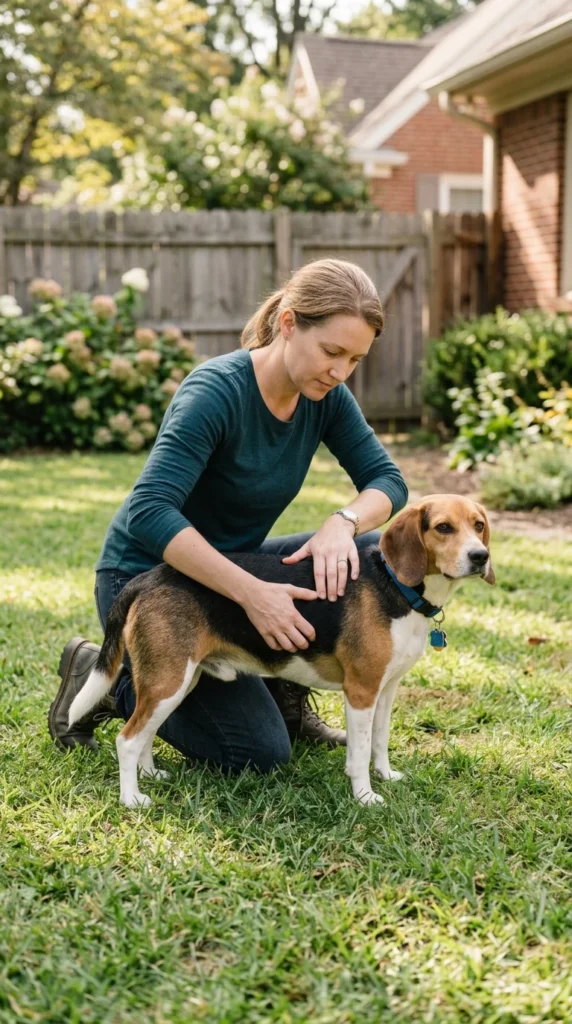
The scale is helpful, but it does not tell the whole story, because ideal weight differs by breed, frame, and muscle. Veterinarians use a Body Condition Score (BCS), usually on a 9-point scale, where 1 is very thin, 9 is obese, and 4 to 5 is ideal. You can do a simple version at home in a few minutes.
- Feel the ribs. Run your fingertips lightly along your dog’s sides. You should feel the ribs easily, without pressing hard, under a thin layer of fat.
- Look from above. Stand over your standing dog. You should see a waist behind the ribs. A straight or bulging outline suggests extra weight.
- Look from the side. The belly should tuck up behind the rib cage. A belly that hangs level or sags is a warning sign.
- Check the back and base of the tail. Thick fat deposits over the spine or tail base are common in overweight dogs.
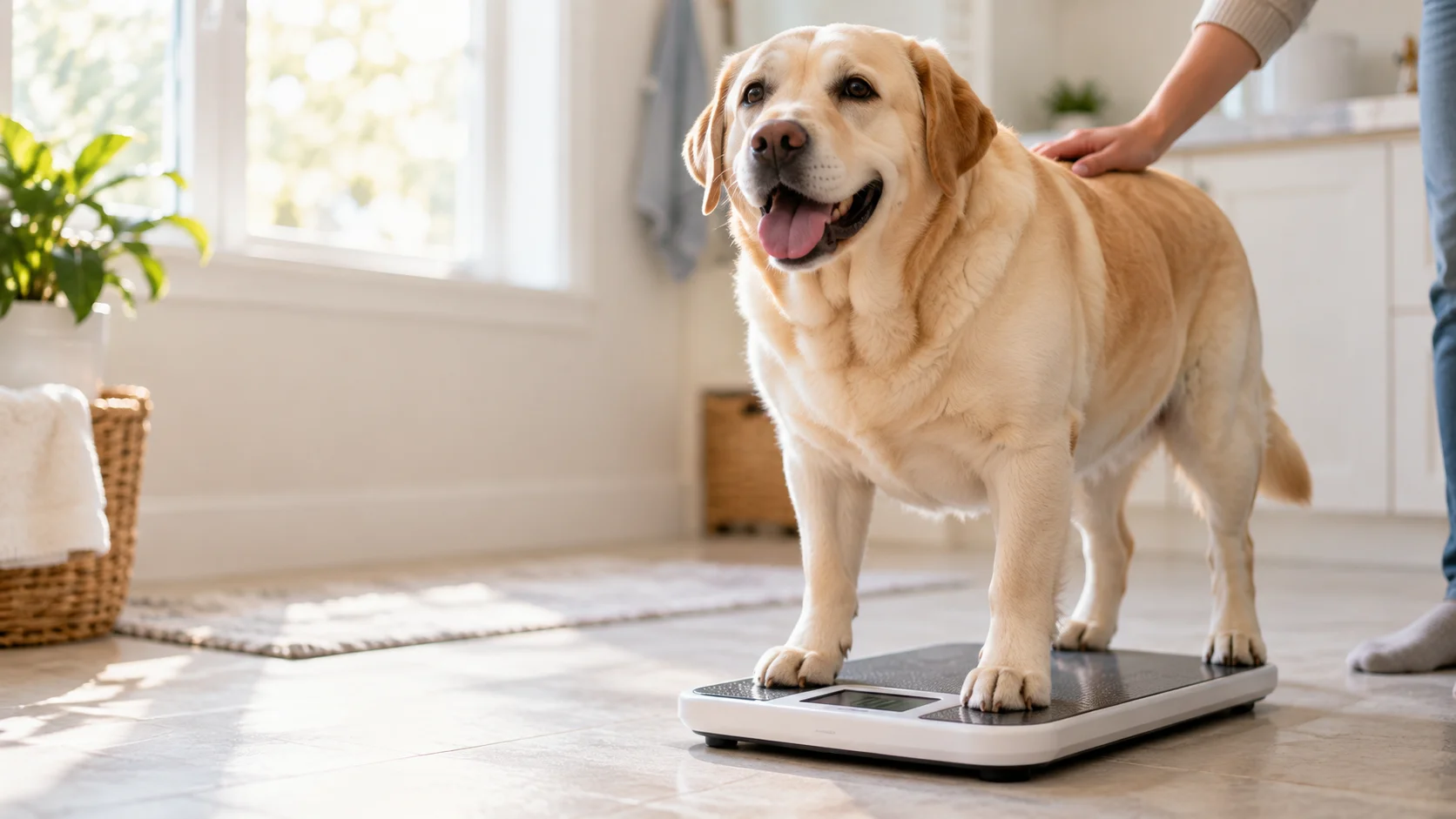
Long or dense coats can hide body shape, so rely on touch as much as sight. The American Pet Obesity Prevention organization suggests rechecking body condition and weight about once a month, and your vet can do a formal assessment during exams.
Why Your Dog’s Weight Matters
Extra fat is not just stored energy. It affects how your dog moves, breathes, and ages. Veterinary sources link excess weight to:
- Arthritis and joint pain: Cornell’s veterinary college notes that worsening arthritis is among the most common risks, because extra weight stresses bones and joints.
- Diabetes: Overweight dogs are more likely to develop diabetes.
- Breathing and heart strain: Excess weight makes exercise harder and can aggravate breathing problems.
- Heat intolerance: Heavier dogs often struggle in warm weather.
- Lower quality of life: Less energy and stamina can mean fewer walks and less play.
- Possibly a shorter lifespan: Veterinary sources generally agree that overweight dogs tend to live shorter lives than dogs at a healthy weight.
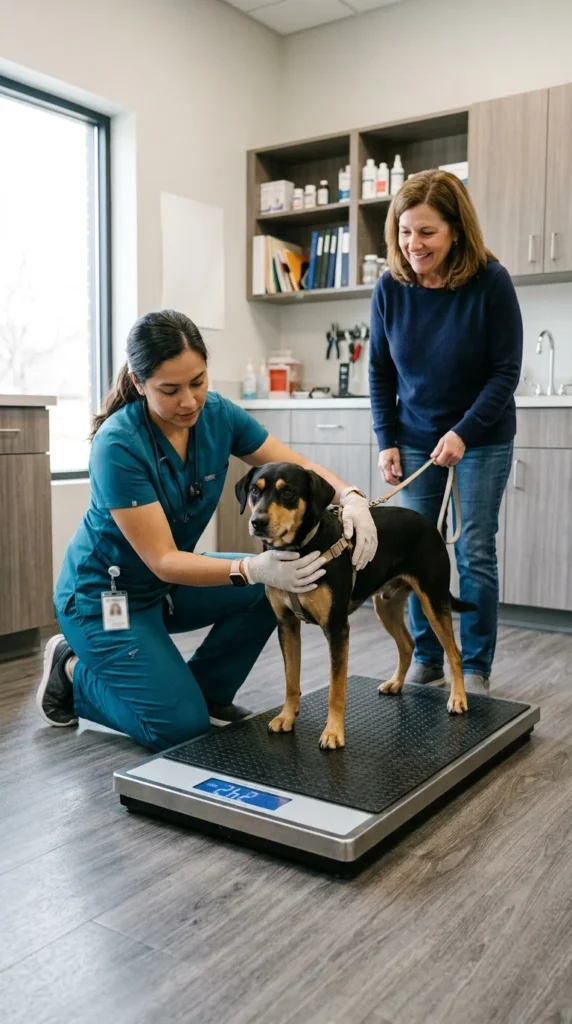
Common Causes of Weight Gain in Dogs
Weight gain is usually a simple energy imbalance, with more calories going in than going out. Several things contribute.
Too Much Food, Too Many Treats
Heaping scoops, free feeding, table scraps, and frequent treats add up quickly. Treats alone can quietly turn into an extra meal. Veterinary guidance commonly recommends keeping treats to roughly 10 percent of your dog’s daily calories.
Not Enough Exercise
A dog who gets only a short potty walk burns far fewer calories than a dog with regular activity. Exercise helps, but it works best alongside diet changes.
Life Stage and Neutering
Calorie needs often drop as dogs age or after spaying or neutering, but food portions stay the same. If your dog’s energy needs have changed, their portions may need to change too. Ask your vet to adjust.
Breed and Genetics
Some breeds gain weight more easily. Veterinary nutritionists at Tufts have named Labrador Retrievers, Beagles, Newfoundlands, Dachshunds, and Cocker Spaniels among the breeds prone to excess weight. Individual dogs vary, and any breed or mixed breed can become overweight.
Medical Conditions and Medications
Some health problems, such as hypothyroidism, and some medications can contribute to weight gain or make it harder to lose. If your dog gained weight quickly or is not losing weight despite a careful plan, ask your vet to check for underlying causes.
Dog Obesity Weight Management: Where to Start
It is tempting to cut your dog’s food in half and start long walks. Resist that urge. Cutting food too sharply can leave your dog short on essential nutrients, and sudden big changes can be risky for dogs with health conditions.
1. Book a Veterinary Visit
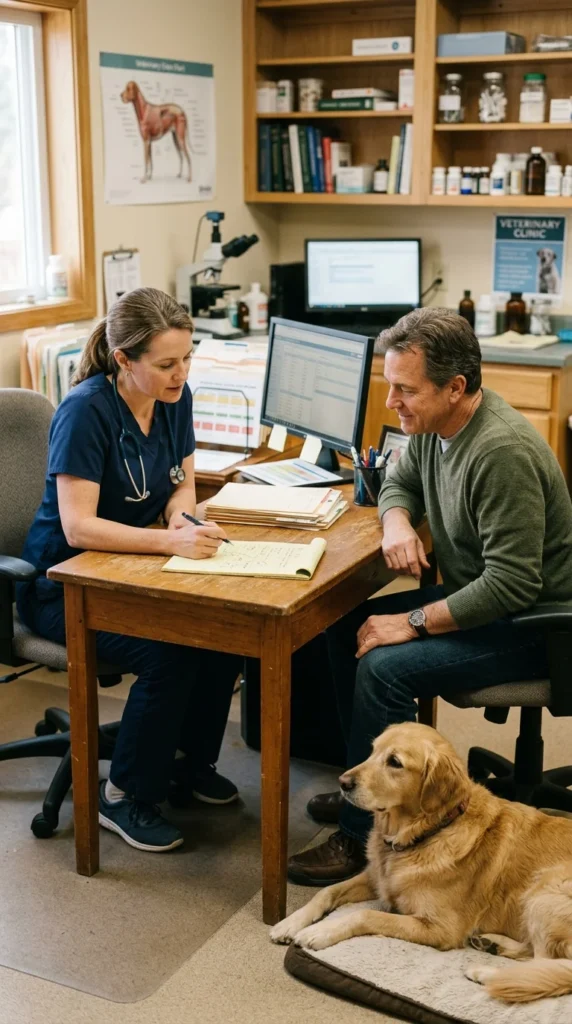
Your vet can confirm your dog’s body condition, rule out medical causes, and set a target weight. They can also calculate how many calories your dog should eat per day and recommend an appropriate food. Your vet may suggest a diet formulated for weight loss, which usually has fewer calories per cup and more fiber to help dogs feel full.
2. Measure Every Meal
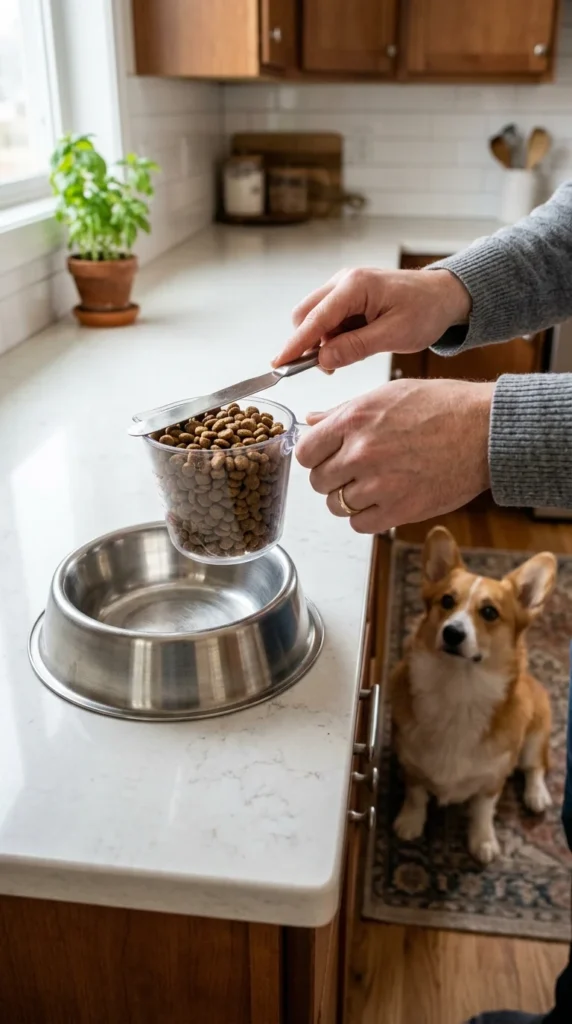
Use a standard measuring cup or a kitchen scale instead of eyeballing portions. A “scoop” can be bigger than you think. If you also feed treats, chews, or toppers, count them toward the daily total.
3. Control Treats and Human Food
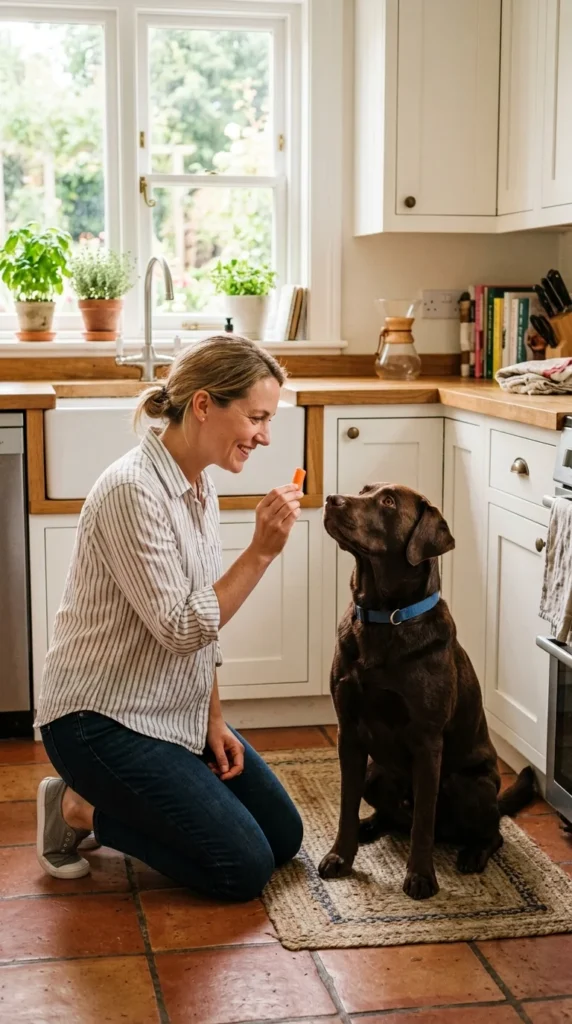
- Keep treats to about 10 percent of daily calories.
- Use small, low-calorie treats or part of your dog’s regular kibble as rewards.
- Ask your vet which fruits and vegetables are safe and appropriate for your dog.
- Skip table scraps, and get the whole household on the same plan.
4. Add Exercise Gradually
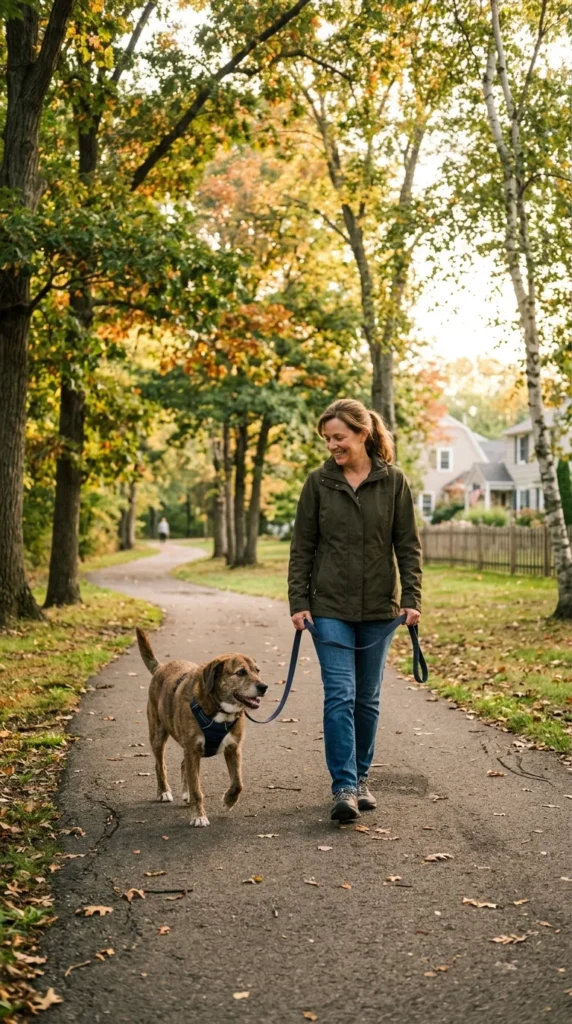
Activity supports weight loss and helps maintain muscle, but it should build slowly, especially for dogs that are very overweight, older, or arthritic. Start with short, easy walks and add time over weeks. Low-impact options such as walking on flat ground or gentle play are often easier on the joints. Avoid intense exercise in hot weather, and stop if your dog pants heavily, lags, or seems uncomfortable.
5. Weigh and Reassess Regularly
Cornell’s veterinary college notes that dogs on a weight-loss plan can safely lose about 1 to 2 percent of their body weight per week. Losing weight much faster is not better and can be harmful. Recheck weight and body condition on a regular schedule, and return to your vet so the plan can be adjusted as your dog slims down.
Tufts Your Dog, Often-Missed Nuts and Bolts of Weight Management: https://tuftsyourdog.com/?p=5529
Mistakes to Avoid
- Judging by breed standards alone: Compare your dog to their own ideal body shape, not to other dogs at the park.
- Crash dieting: Rapid weight loss can be dangerous.
- Counting “light” food as a plan: Even weight-loss food must be measured.
- Forgetting hidden calories: Dental chews, pill pockets, chews, and bits of cheese all count.
- Giving in to begging: Offer attention, play, or a short walk instead of food.
- Using supplements or “fat burner” products without veterinary guidance: Do not give them unless your vet recommends them.
- Quitting early: Weight can return quickly after a plan ends, so maintenance matters as much as weight loss.
Special Considerations for Puppies and Senior Dogs
Puppies: Growing puppies need carefully balanced nutrition, so do not restrict food on your own. If a puppy looks chubby or is gaining quickly, ask your vet to review the feeding plan.
Senior dogs: Older dogs often move less, and arthritis can make activity painful. Weight loss may ease joint strain, but the plan should be vet-guided and gentle. Rule out medical issues before assuming age is the only cause.
When to Contact Your Veterinarian
Book a visit if your dog is overweight or you are unsure. Call sooner if you notice:
- Rapid or unexplained weight gain
- A swollen or bloated belly rather than general fat
- Excessive thirst or urination
- Hair loss, skin changes, or unusual tiredness
- Labored breathing, coughing, or reluctance to exercise
- Limping or stiffness
A swollen, hard abdomen with retching, restlessness, or signs of pain can be an emergency. Seek urgent veterinary care right away.
Frequently Asked Questions
How much weight should my dog lose per week?
Cornell’s veterinary college says dogs can safely lose about 1 to 2 percent of their body weight per week. Your vet will set a target weight and timeline for your dog.
Can I just feed my dog less of the same food?
Not always. Reducing a regular diet can leave out important vitamins and minerals. Your vet may recommend a diet made for weight loss so your dog can eat a satisfying portion while still getting complete nutrition.
How many treats can an overweight dog have?
A common guideline is that treats should make up no more than about 10 percent of daily calories. For a dog on a weight-loss plan, ask your vet to set the limit.
Is my dog just big-boned?
Frame size does vary, but “big-boned” rarely explains a missing waist or hidden ribs. Use the body condition checks above and ask your vet.
Which exercise is best for an overweight dog?
Gentle, low-impact activity such as steady walking is a good starting point. Increase the time slowly and ask your vet about safe options if your dog is older, has arthritis, or has breathing or heart concerns.
Will my dog keep the weight off?
Many dogs do, but weight can return if old habits come back. Continue measuring meals, limiting treats, staying active, and rechecking body condition regularly after your dog reaches the goal.
Final Thoughts
Keeping your dog lean is one of the most effective ways to support their long-term health. Start with a hands-on body condition check, talk to your veterinarian about a target weight and daily calories, measure every meal, limit treats, and add exercise gradually. Small, consistent changes add up, and your dog will likely thank you with more energy and easier movement.
This article is for general education and is not a substitute for veterinary advice. If you are concerned about your dog’s weight or health, contact your veterinarian.