Quick answer: Work out whether cold, slippery ground, poor gear fit or pain is stopping your dog, then adapt the plan safely. Start with the simplest safe step and adapt to your dog’s size, health, experience and comfort. This guide explains what to watch, what to do next and when professional help matters.
Dog owners often look for one fast fix, but the sensible plan begins by understanding why the problem happens. Small adjustments in preparation, environment and expectations can make the experience safer and more comfortable. The goal is progress without forcing a frightened, uncomfortable or unwell dog to continue.
This guide is written for everyday U.S. dog owners. It is educational rather than a substitute for veterinary care. For more background, explore Dogs Daily Care and the trusted resources linked at the end.
Table of Contents
What to know first
Work out whether cold, slippery ground, poor gear fit or pain is stopping your dog, then adapt the plan safely. Keep a simple record of what triggers the difficulty and which gentle changes help. If signs are sudden, severe or painful, contact your veterinarian rather than assuming a training or home-care issue.
1. Start with what changed
A dog that loved walks last month may now balk at the door because the pavement is icy, the wind feels harsh or the harness rubs under a heavy coat. Another dog may have arthritis or an injury that becomes more obvious in cold weather.
Notice whether the refusal begins indoors, at the first step or after several minutes. This pattern helps you separate equipment discomfort, fear and physical limitations.
2. Watch for cold-stress signals
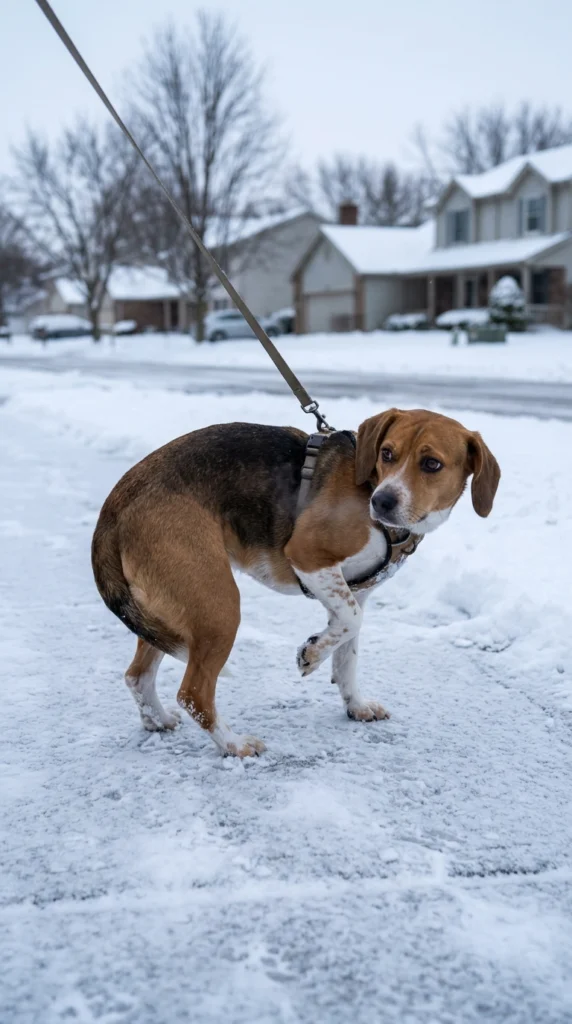
Shivering, hunching, holding up paws, whining or trying to return indoors suggest the dog is struggling with the conditions. Move inside, warm the dog gradually and dry any wet fur.
There is no single safe temperature for every dog. Coat, size, age, health, wind chill and prior acclimation all matter.
3. Rule out pain rather than pushing
A limp, stiffness after rest, reluctance to climb steps or an abnormal gait can point to discomfort. Senior dogs and dogs with arthritis may find icy surfaces especially hard to navigate. Contact a veterinarian if refusal is sudden or accompanied by pain signs.
Avoid dragging the leash or promising a treat just beyond an unsafe icy spot. A reluctant dog needs a different plan, not more pressure.
4. Check boot, jacket and harness fit
Inspect how clothing sits around shoulders, chest and armpits, especially when a harness layers over a coat. Boots that pinch or turn can cause odd walking. Try adjustments indoors before going outside again.
A warm coat can help a thin-coated or small dog, but it cannot make a blizzard or dangerous ground safe.
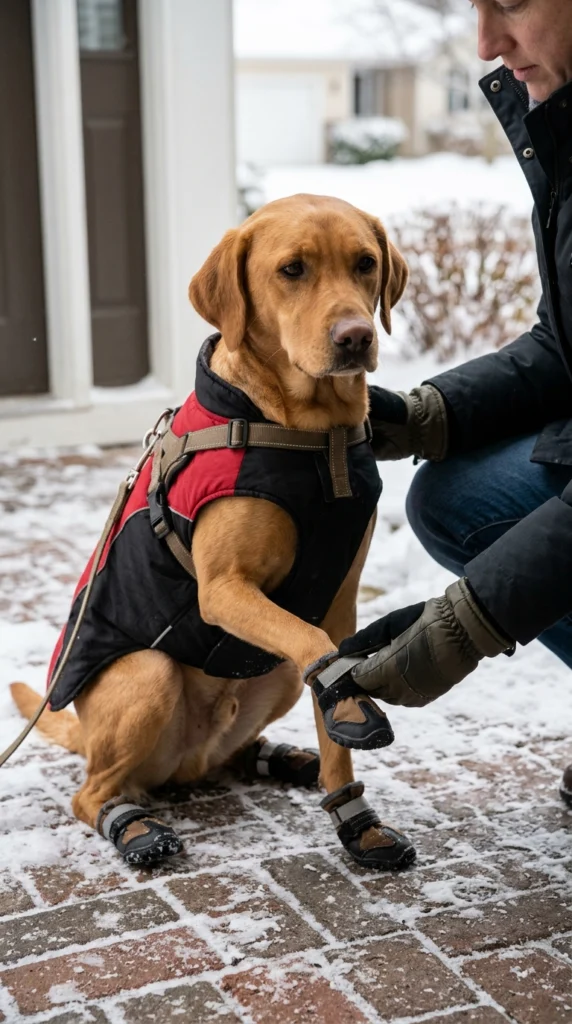
5. Try a shorter, sheltered route
Choose a plowed, gritted or sheltered path rather than an exposed hill or frozen pond edge. Start with a quick sniffing loop and return before your dog becomes uncomfortable. You can add more short outings rather than one long walk.
Use a normal secure leash, reflective gear in low light and a pace your dog can choose. Salt and de-icers still need paw cleaning after the trip.
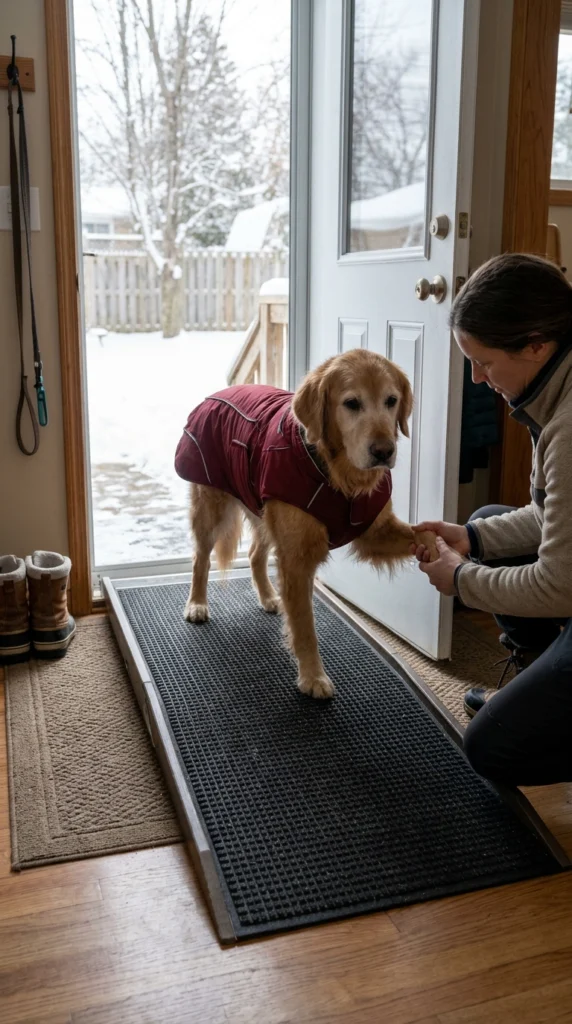
6. Make the doorway easier
Some dogs become wary of slippery entry steps or a cold metal threshold. Lay a nonslip mat indoors and clear ice outside before opening the door. Reward a relaxed approach; allow the dog to step back if needed.
Practice in daylight when traffic and distractions are low. Keep the routine predictable so the dog knows it can return to a warm place.
7. Replace unsafe walking time with enrichment
Food-search games, easy training cues and supervised toys can provide mental activity on days when outdoor walks are shortened. For mobility-limited dogs, keep activity gentle and avoid jumping or slippery indoor games.
Enrichment helps, but it does not replace bathroom access. Work out a nearby low-stress potty area with your dog.
8. Adjust the plan for puppies and older dogs
Puppies lose heat more readily and may have difficulty focusing in very cold weather. Older dogs can have pain, muscle loss or reduced balance. Tailor the route, clothing and duration rather than expecting every dog to manage the same outing.
For a senior dog whose mobility is changing, ask the vet about a practical pain and exercise plan.
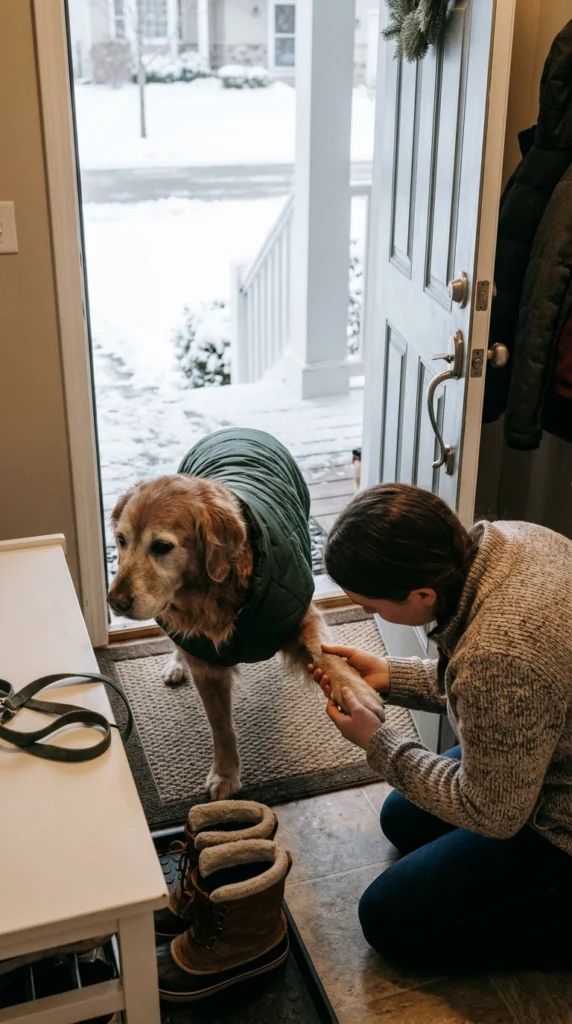
9. Know when the refusal needs professional help
Seek veterinary guidance when a previously eager dog consistently refuses walks, shows lameness, pants at rest or acts unusually withdrawn. Urgent signs of cold injury require prompt treatment.
Keep a brief video of the gait if it is safe to record; the dog may move differently at the clinic than at home.
Common mistakes to avoid
- Continuing an outing when the dog is uncomfortable or injured.
- Using hot water, sharp tools or harsh products on tender tissue.
- Skipping careful drying and follow-up checks.
- Treating persistent pain or unusual symptoms as ordinary winter discomfort.
Helpful resources and optional supplies
For a broader selection of owner-approved gear, visit our Recommended Dog Products page. Readers who prefer detailed learning can browse our Dog Books library. Explore the Dog Care Tools hub for the live breed-matching and age resources. These links are optional and do not replace the steps above.
Winter care is not one-size-fits-all. See senior dog care advice for age-related adjustments, particularly when movement or comfort has changed.
Related on our site: Senior Dog Care.
Affiliate disclosure: As an Amazon Associate, we may earn from qualifying purchases, at no additional cost to you. All products below are optional.
- Paw Lifestyles Dog Treat Training Pouch: A reward pouch is useful for short reward-based lessons, but an ordinary pocket also works. View the exact product on Amazon.
A simple cold-weather walk decision guide
This practical reference turns the advice above into manageable actions:
- Before leaving: Check wind, ice and salt; inspect the harness, coat and boot fit; choose a cleared route.
- At the doorway: Let your dog approach freely. If it refuses even before meeting the cold, look for pain or equipment discomfort.
- After one minute: Observe paw lifting, trembling and whether the dog moves normally.
- During the walk: Allow sniffing and a steady pace; do not pull across slippery ground.
- Back indoors: Dry feet and fur, provide warmth and check for stiff or painful movement.
- The next day: If reluctance or limping persists, schedule a veterinary assessment rather than repeating the same route.
A five-minute safe outing can be better than a twenty-minute miserable one. Build your routine from your dog’s actual comfort, not another dog’s winter stamina.
Frequently asked questions
Should I force a dog to walk in snow?
No. If the weather or surface is uncomfortable, reduce exposure and look for a safer potty route.
Are indoor games enough during a snowstorm?
On severe-weather days, indoor activity can supplement shorter necessary bathroom breaks, but your dog still needs an appropriate elimination plan.
Can arthritis make cold walks harder?
Yes. Slippery footing and joint discomfort can make cold outings harder for dogs with arthritis.
What is the safest winter walking duration?
There is no universal number of minutes; monitor the individual dog for shivering, lifting paws, reluctance or altered movement.
Final thoughts
Work out whether cold, slippery ground, poor gear fit or pain is stopping your dog, then adapt the plan safely. Keep the routine kind, predictable and appropriate for your dog. A few careful, comfortable steps are usually more useful than a dramatic one-day transformation. If a problem continues or feels medically concerning, your veterinarian or a credentialed reward-based professional can provide individualized help.