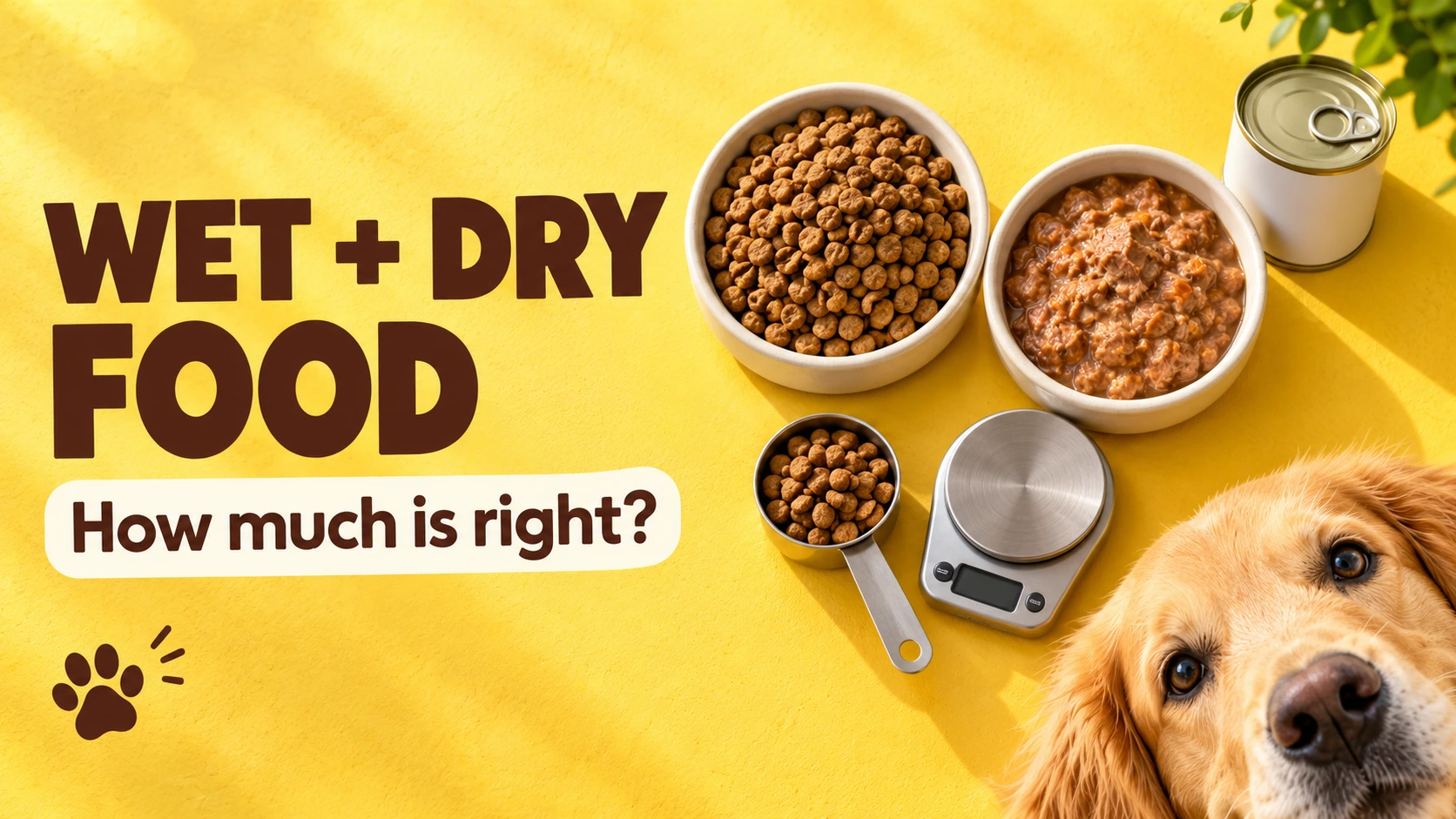
Mixing wet food with dry dog food can make meals more appealing, add moisture, and give your dog a different texture to enjoy. But there is one important detail to get right: the amount of wet food you add must fit into your dog’s total daily calorie allowance. Simply adding canned food on top of a full serving of kibble can lead to overfeeding and unwanted weight gain.
So, how much wet food should you mix with dry dog food? The answer depends on your dog’s calorie needs and the calorie content of both foods. A reasonable starting point for some healthy adult dogs is to replace about 25% of their daily food calories with wet food while keeping the remaining 75% from dry food. This is a starting example, not a universal feeding rule. You can choose other proportions when they suit your dog’s needs.
How Much Wet Food to Mix With Dry Dog Food for a Balanced and Healthy Diet https://dogsdailycare.com/is-it-ok-to-feed-dogs-the-same-food-every-day/
The following guide explains how to calculate portions, read food labels, introduce mixed feeding, and avoid common mistakes.
Table of Contents
Quick Answer: How Much Wet Food to Mix With Dry Food
There is no single correct amount of wet food to mix with dry dog food. One practical starting option is to provide 75% of your dog’s daily calories from kibble and 25% from a complete and balanced wet food. Calculate the portions using the calorie information on both labels, and subtract the wet food calories from the amount of dry food you would otherwise feed. Adjust the proportions to your dog’s needs and your veterinarian’s advice.

Is It Safe to Mix Wet and Dry Dog Food?
Yes. Many dogs can eat a combination of wet and dry food every day, provided the foods are appropriate for their life stage, and the overall diet supplies the nutrients they need. Wet food does not automatically make a meal healthier, and dry food is not automatically better. The right choice depends on your dog’s nutritional requirements, preferences, health, and feeding routine.
Look for a nutritional adequacy statement on each package. In the United States, a food labeled as complete and balanced for the appropriate life stage is intended to provide the necessary nutrients when fed as directed. Some products are designed only for intermittent or supplemental feeding. Those products should not automatically replace a substantial portion of your dog’s main diet.
The U.S. Food and Drug Administration explains the meaning of complete and balanced pet food and how nutritional adequacy is established. You can read its guidance in the FDA’s complete and balanced pet food guide.
Check that both foods are suitable for your dog’s age and circumstances. Puppies, pregnant or nursing dogs, and dogs with certain medical conditions may have specific nutritional needs. If your veterinarian has prescribed a therapeutic diet, ask before mixing in another product because doing so may change the diet’s intended nutrient profile.
What Is a Good Wet-to-Dry Dog Food Ratio?
You can mix wet and dry dog food in different proportions. The important distinction is that the ratio should be based on calories rather than simply the volume of each food or the number of scoops.
A 75/25 calorie split
For some healthy adult dogs, a useful starting example is 75% of daily calories from dry food and 25% from wet food. This lets you add some wet food without making it the main component of the diet. It is not a medically established ideal ratio for every dog, and your dog’s calorie requirements may call for a different split.
A 50/50 calorie split
A half-and-half calorie split is another option for dogs that do well with mixed feeding. You would obtain half the daily calories from kibble and half from wet food. Because canned food generally contains more water and fewer calories per gram than dry food, the two portions may look very different in size.
A small wet food topper
If your goal is mainly to make kibble more appealing, you may prefer to use a small amount of wet food. Count those calories as part of the meal rather than treating them as free extras. If the wet product is intended only for supplemental feeding, keep it within a suitable portion of the overall diet and ask your veterinarian if you are unsure how much is appropriate.
There is no need to match equal scoops of wet and dry food. The calorie content of each product is what matters.
How to Calculate How Much Wet Food to Mix With Dry Dog Food
You can work out your dog’s portions using the calorie information printed on the food packages. Look for calories per cup or kilogram on dry food and calories per can, pouch, or gram on wet food. These values vary by product, so use the actual labels rather than relying on a general online estimate.
Step 1: Find your dog’s daily calorie target
Start with the amount your dog currently eats if their weight is stable and the amount has been recommended or confirmed as appropriate. A veterinarian can estimate an individual calorie target based on your dog’s weight, body condition, activity, age, reproductive status, and health.
Package feeding guides are useful starting points, but they are not exact requirements for every dog. If your dog is gaining or losing weight unexpectedly, do not assume that the package recommendation is the correct target without reviewing the situation.
Step 2: Choose the percentage of calories from wet food
For example, suppose your dog’s daily target is 600 calories, and you want 25% of those calories to come from wet food.
- Total daily target: 600 calories.
- Wet food portion: 600 × 0.25 = 150 calories.
- Dry food portion: 600 × 0.75 = 450 calories.
Your goal is therefore 150 calories from wet food and 450 calories from kibble across the entire day. This example illustrates the calculation; 600 calories is not a recommended target for every dog.
Step 3: Convert calories into actual portions
Imagine that the dry food contains 400 calories per cup and the wet food contains 150 calories per can. Using the example above, calculate the portions as follows:
- Dry food: 450 ÷ 400 = 1.125 cups per day.
- Wet food: 150 ÷ 150 = 1 can per day.
The resulting daily total is 1⅛ cups of that dry food and one can of that wet food. The amounts will change when you use different products or a different calorie target.
If your dog eats two meals daily, you could divide these amounts between the meals. You do not have to put the same amount of wet food in every bowl, provided the daily total remains appropriate and the routine works for your dog.
Step 4: Subtract the calories you add
If you normally feed your dog 600 calories of kibble and decide to add 150 calories of wet food, you generally need to reduce the kibble enough to account for those 150 calories. Continuing to serve all 600 calories of kibble plus the wet food would produce a total of 750 calories.
That is a 25% increase over the original 600-calorie allowance. Whether a particular dog gains weight depends on their energy needs, but routinely adding food without adjusting portions can make weight management harder.

How Much Wet Food Should You Add to One Cup of Kibble?
This is a common question, but one cup of kibble is not a universal measure of calories. One dry food may contain 300 calories per cup, while another may contain 450 or more. Wet foods also vary in calorie content, even when their cans appear similar in size.
Use the label values to convert your usual serving into calories. For example, if your kibble provides 400 calories per cup and you want to replace 25% of those calories with wet food, the calculation looks like this:
- One cup of kibble provides 400 calories.
- Twenty-five percent of 400 is 100 calories.
- The remaining 300 calories can come from kibble, equal to ¾ cup.
- Add enough wet food to provide 100 calories.
If the wet food provides 150 calories per can, the amount needed is 100 ÷ 150, or about two-thirds of a can. The combined serving would be ¾ cup of kibble plus approximately two-thirds of that can, providing about 400 calories in total.
This is an illustration of calorie replacement, not a serving recommendation for every dog. If you use a different wet food, calculate its portion from its own label. Measure portions carefully, particularly if your dog needs to maintain or lose weight.
Complete Dog Feeding Guide for Mixing Wet and Dry Food in the Right Portions https://dogsdailycare.com/is-it-ok-to-feed-dogs-the-same-food-every-day-2/
How to Mix Wet and Dry Dog Food at Mealtime
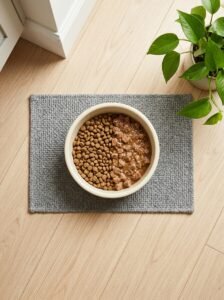
Once you have calculated the portions, you can combine the foods in the way your dog finds most comfortable. The method matters less than the total amount and nutritional suitability of the meal.
- Measure the dry food. Use a consistent measuring cup or, when greater precision is needed, a kitchen scale and the product’s feeding information.
- Measure the wet food. Use the calculated portion rather than automatically adding a full can.
- Combine the foods. Stir the wet food through the kibble, or place a small amount on top if your dog prefers that texture.
- Serve fresh. Offer the meal in a clean bowl and provide access to fresh drinking water.
- Refrigerate leftovers promptly. Follow the manufacturer’s storage instructions for opened wet food and discard food left out longer than recommended.
You can also serve wet food at one meal and dry food at another. The foods do not have to be mixed in the same bowl for your dog to receive both. Keep track of all portions so the daily calorie total remains appropriate.

How to Transition Your Dog to Mixed Feeding
If your dog has been eating only kibble, introduce the new food gradually rather than abruptly changing the entire meal. A sudden diet change can cause digestive upset in some dogs, and a gradual transition gives you a chance to notice whether your dog tolerates the new product.
- Start with a small portion. Replace a modest amount of the usual food calories with wet food.
- Watch your dog’s response. Monitor appetite, stool consistency, vomiting, gas, and general comfort.
- Increase gradually if tolerated. Adjust the proportions over several days, using a slower transition if your dog has a sensitive digestive system or your veterinarian advises one.
- Keep the total calories controlled. Increase wet food by replacing calories from kibble rather than continually adding to the meal.
- Maintain a consistent routine. Once the transition is complete, measure portions consistently and monitor your dog’s weight and body condition.
Some dogs need a more cautious transition, particularly if they have a history of gastrointestinal problems or are following a veterinary diet. Ask your veterinarian for an individualized plan when needed.
Benefits of Mixing Wet and Dry Dog Food
Mixed feeding can be useful when it suits your dog’s preferences and nutritional needs. It is not essential for every dog, and a complete and balanced dry diet can meet nutritional needs on its own when appropriately formulated and fed.
More texture and variety
Wet food has a different texture and smell from kibble. Some dogs find it more appealing, so a measured portion may help make meals more enjoyable. However, a sudden change in appetite can also signal a health problem, so do not rely on a topper to mask persistent food refusal.
More moisture in the meal
Wet food contains considerably more moisture than typical dry kibble. Including it can increase the amount of water your dog receives through food. It does not replace access to clean drinking water, and dogs with medical conditions affecting hydration should follow their veterinarian’s recommendations.
Flexible feeding routines
Combining formats may give you more flexibility with storage, portion sizes, and meal preferences. Dry food is often easier to measure and store, while wet food can provide a softer texture. The best combination is one you can feed consistently without exceeding your dog’s calorie needs.
Neither format is automatically better for all dogs. Consider the full nutritional profile, your dog’s health, and the practical requirements of your household.
Common Mistakes to Avoid When Mixing Dog Food
Adding wet food without reducing kibble
This is the most serious mistake to avoid. Even a relatively small extra serving can add meaningful calories when repeated at every meal. Calculate the wet food calories first, then reduce the dry portion accordingly.
Using equal scoops instead of equal calories
Wet food contains more water than kibble, so equal volumes do not usually provide equal calories. Never assume that half a cup of wet food replaces half a cup of dry food. Read both labels and calculate the portions.
Using a topper as the main diet
Some products are designed for supplemental feeding rather than as a complete meal. If you replace a substantial portion of your dog’s main food with a supplemental product, the overall diet may no longer provide the nutrients your dog needs. Choose products with an appropriate nutritional adequacy statement and check with your veterinarian when uncertain.
Ignoring your dog’s weight and body condition
Even carefully measured portions may need adjustment as your dog’s activity, age, or health changes. Monitor body weight and body condition rather than assuming the same serving will remain suitable indefinitely. Ask your veterinarian to help you assess an appropriate weight and feeding plan.
Leaving wet food out too long
Moist food can spoil if it is left at room temperature beyond the manufacturer’s recommended period. Follow the label’s directions for serving, refrigeration, and disposal. Wash food bowls regularly, and do not mix a fresh portion into old leftovers that have been sitting out.
How Much Wet Food Should Puppies or Senior Dogs Get?
Puppies and senior dogs may need a different approach from a healthy adult dog. Age alone does not determine the correct wet-to-dry ratio. The nutritional needs of a growing puppy differ from those of an adult, and some senior dogs have medical conditions that affect their diet.
Puppies
Choose food formulated for growth or the appropriate life stage, and make sure the combined diet remains nutritionally suitable. Growing puppies have changing energy and nutrient requirements, so avoid using an adult dog’s calorie target or feeding ratio as a substitute for puppy-specific guidance.
For large-breed puppies, nutritional balance is especially important. If you want to combine wet and dry food, ask your veterinarian to confirm that the selected products and portions are suitable for your puppy’s expected adult size and growth stage.
Wet and Dry Dog Food Mixing Tips to Improve Nutrition, Digestion, and Mealtime Enjoyment https://dogsdailycare.com/dog-wont-eat-kibble-but-eats-treats/
Senior dogs
Some older dogs appreciate the softer texture of wet food, while others do well with their existing kibble. Dental problems, changes in appetite, reduced activity, and chronic conditions can all influence feeding decisions. A new difficulty chewing or a persistent decline in appetite deserves veterinary attention rather than an automatic change in food texture alone.
When to Ask Your Veterinarian About Mixed Feeding
Most healthy dogs can transition between appropriate commercial foods without major difficulty, but individual circumstances matter. Get veterinary guidance before changing the diet if your dog has a medical condition, requires a prescription diet, has a history of food intolerance, or needs a structured weight-management plan.
Contact your veterinarian if your dog develops persistent diarrhea, repeated vomiting, ongoing appetite changes, or unexplained weight gain or loss after a food change. Seek urgent veterinary care for severe symptoms such as collapse, difficulty breathing, or repeated unproductive retching with a swollen abdomen.
Do not assume that refusing dry food is simply pickiness. Dental pain, nausea, and other health problems can affect eating behavior. If your dog suddenly stops eating or seems unwell, contact a veterinary professional for advice.
This article provides general educational information and is not a substitute for veterinary advice. Your veterinarian can help determine your dog’s calorie needs, appropriate foods, and safe portion sizes.
Frequently Asked Questions
Can I mix wet and dry dog food every day?
Yes, if both foods are appropriate for your dog and the overall diet is nutritionally balanced. Calculate the portions using the calorie content of each food and keep the total daily amount appropriate. If your dog eats a prescription diet or has a medical condition, ask your veterinarian before mixing foods.
Should wet food be mixed with kibble or served separately?
Either method can work. You can stir wet food into kibble, serve it as a measured topper, or offer the two foods at separate meals. Choose a method your dog tolerates and track the portions across the entire day.
Can I add wet food to help a picky dog eat?
A small amount of wet food may make kibble more appealing to some dogs. However, a sudden loss of appetite, refusal to eat, or difficulty chewing can indicate an underlying problem. Contact your veterinarian if the change persists or your dog shows other symptoms.
Does wet food cause weight gain?
Wet food does not automatically cause weight gain. Excess calories from any food can contribute to weight gain when intake consistently exceeds your dog’s energy needs. Replacing some kibble calories with wet food helps you control the total rather than simply increasing the meal size.
Do I need to use wet and dry food from the same brand?
Not necessarily. The important considerations are nutritional adequacy, suitability for your dog’s life stage, calorie content, and any individual dietary restrictions. Foods from different brands can differ in nutrient profiles and energy density, so check their labels and consult your veterinarian if your dog has special nutritional needs.
How long can mixed wet and dry dog food stay in the bowl?
Follow the wet food manufacturer’s storage and serving instructions. Because wet food is perishable, remove uneaten portions within the recommended period rather than leaving the mixed meal out indefinitely. Refrigerate opened cans or pouches as directed and use them within the stated storage period.
Final Takeaway
The best way to decide how much wet food to mix with dry dog food is to calculate calories, not to guess at scoops or use a fixed ratio for every dog. A 75% dry and 25% wet calorie split is one possible starting example, but your dog’s needs may call for a different balance.
Check the calorie information on both packages, replace rather than simply add food, and monitor your dog’s weight and appetite as you introduce the new routine. If you are unsure about the right calorie target or your dog has special dietary needs, ask your veterinarian to help you create an appropriate feeding plan.