Table of Contents
Most dog owners don’t think about their dog’s teeth until something smells bad. By then, the problem may have been building for a while.
Dog dental care is simple at its core. Brush your dog’s teeth often, use safe dental products, and have your vet check the mouth at least once a year. Start early if you can, but it’s never too late to begin.
This guide covers why dental care matters, how to brush step by step, and which chews and products can help. You’ll also learn the warning signs of dental problems and when to see your vet.
Why Dog Dental Care Matters
Plaque is a sticky film of bacteria that forms on teeth. If it stays there, it hardens into tartar. Tartar gives plaque more places to grow.
Over time, this can lead to gum disease. Gum disease often starts as gingivitis, which means red, swollen gums that bleed easily. If left untreated, it can progress to periodontal disease, which damages the tissue and bone that hold teeth in place.
This is very common. The 2019 AAHA Dental Care Guidelines note that most dogs and cats have some level of periodontal disease by age three, and owners often don’t notice it. Gables Animal Clinic
That’s why prevention matters. Dental problems can hurt, even when a dog doesn’t show it. Dogs often hide pain well, so bad teeth can go unnoticed for a long time.
How to Brush Your Dog’s Teeth
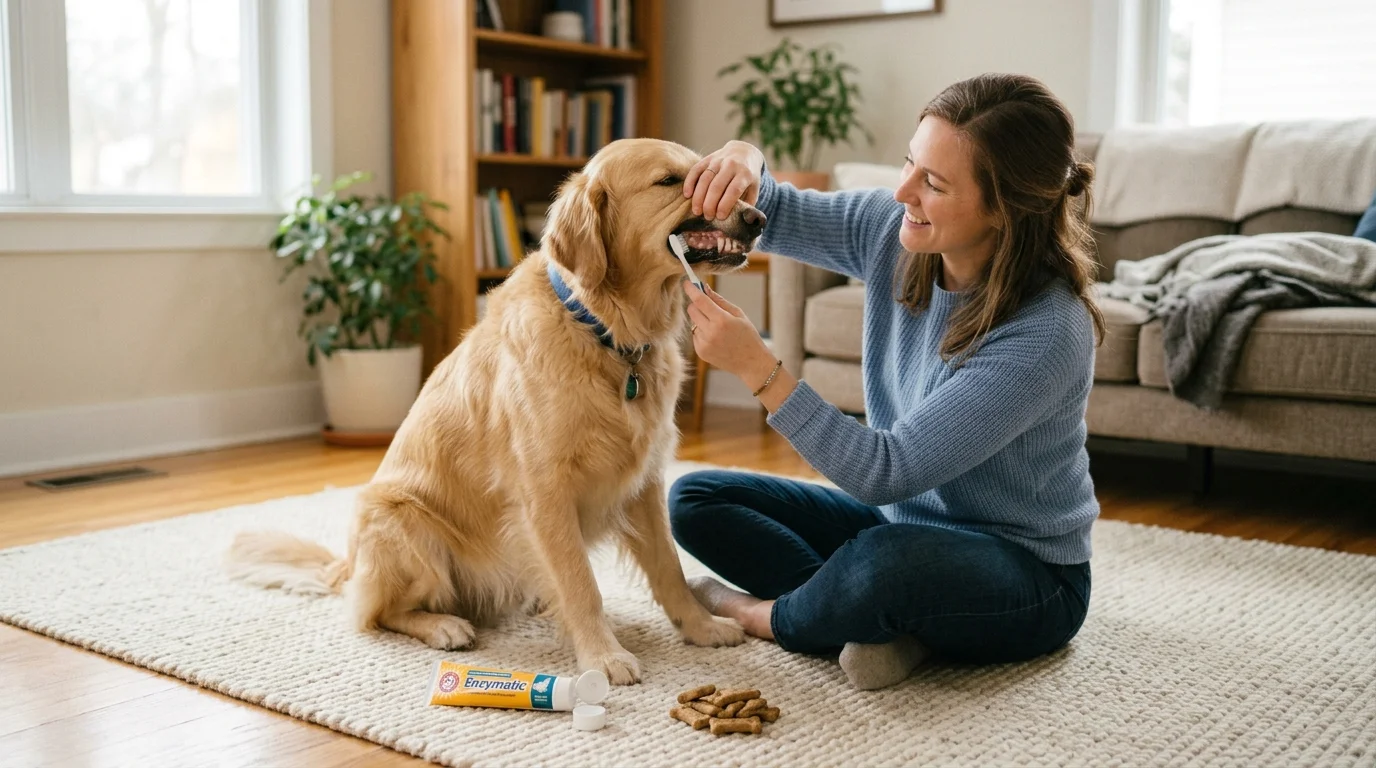
Brushing is the most effective thing you can do at home. The AVMA says daily brushing is best, but brushing several times a week can still help. American Humane Society
If that sounds like a lot, start small. Even a few seconds a day is a good beginning.
What You Need
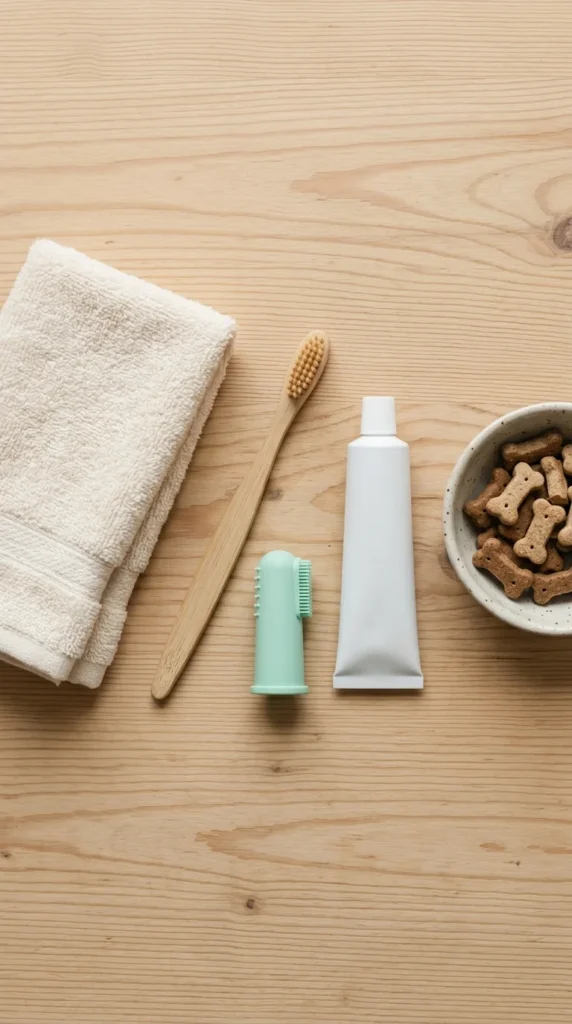
- A soft toothbrush. A dog toothbrush, a soft child’s brush, or a finger brush all work. Finger brushes are easier to start with. Handled brushes reach the back teeth better.
- Dog toothpaste. Use toothpaste made for pets, because ingredients in human toothpaste can be harmful if swallowed. Dog toothpastes come in flavors like chicken or peanut butter, which many dogs enjoy. American Humane Society
- Treats. You’ll use them to make the experience positive.
Never use human toothpaste. Some human products also contain xylitol, a sweetener that is toxic to dogs.
Step-by-Step: Getting Your Dog Used to Brushing
Go slowly. Rushing is the fastest way to end up with a dog who hates the toothbrush.
- Let your dog taste the toothpaste. Put a little on your finger and let your dog lick it. Give praise.
- Touch the mouth. Gently lift your dog’s lip and touch the teeth and gums with your finger. Give a treat.
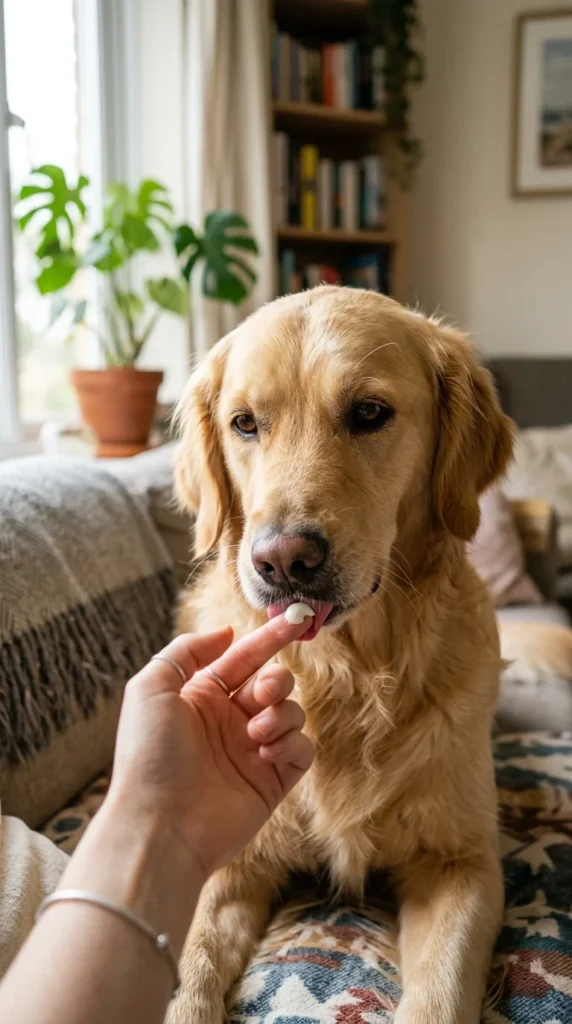
- Introduce the brush. Let your dog sniff it and lick some paste off it.
- Brush one or two teeth. Use small circles along the gumline. Stop while your dog is still calm.
- Add more teeth over several days. Work up until you can brush the whole mouth.
- Reward at the end. A treat, a walk, or playtime helps your dog feel good about it.
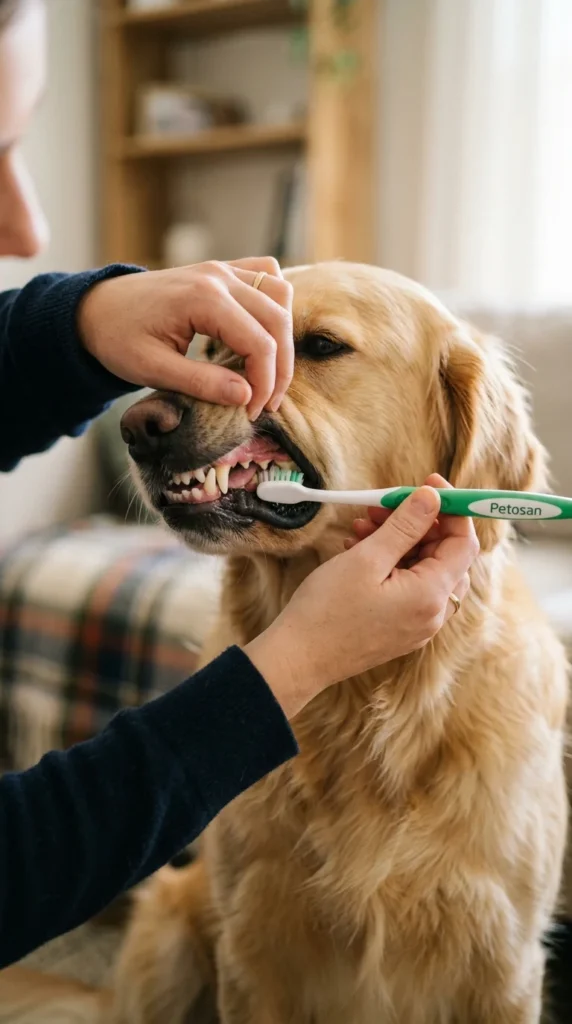
Aim for the outside surfaces of the teeth first. Plaque and tartar build up fastest on the cheek-side surfaces of the upper teeth, so these areas deserve extra attention. If your dog allows it, add a few strokes on the inner surfaces too. Veterinary Oral Health Council
Most dogs won’t accept a full brushing on day one. That’s normal. Some dogs need weeks to get comfortable.
Tips to Make Brushing Easier
- Pick a calm time, such as after a walk.
- Keep sessions short and happy.
- Sit next to your dog rather than looming over them.
- Use a soft touch. Gums can be sore.
- Try a different flavor if your dog refuses one.
If your dog growls, snaps, or seems very stressed, stop and ask your vet for help.
Dental Chews, Toys, and Other Helpers
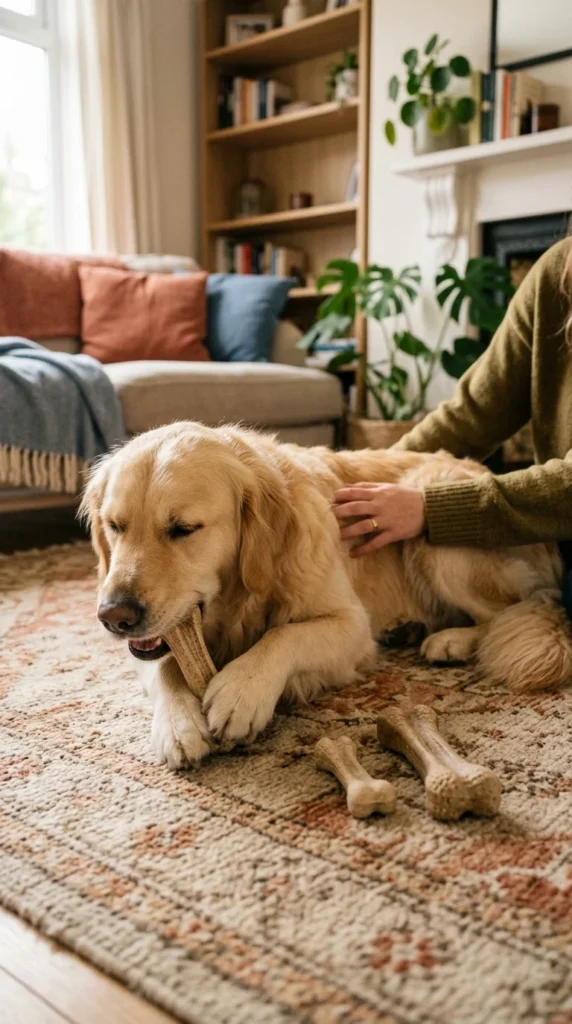
Brushing works best, but other products can add extra help. They shouldn’t replace brushing.
| Option | How it may help | Keep in mind |
| Dental chews | Chewing can scrape plaque off teeth | Choose the right size and check the label |
| Dental diets | Special kibble shapes or ingredients may reduce buildup | Ask your vet if it fits your dog’s needs |
| Water additives and gels | May be a helpful extra | They’re add-ons, not replacements for brushing |
| Professional cleaning | Cleans below the gumline where you can’t see | Done by your vet under anesthesia |
Look for the VOHC Seal
The Veterinary Oral Health Council (VOHC) tests dental products for plaque and tartar control. A VOHC seal means the product’s effectiveness has been studied. AAHA
Lots of products claim to clean teeth. Not all of them do. The VOHC seal is one of the best ways to tell.
Chew Safety
Chews can help, but they can also cause problems.
- Pick a chew that fits your dog’s size and chewing style.
- Watch your dog while they chew.
- Take away small pieces that could be swallowed.
- Be careful with very hard items, such as some bones and antlers. Hard chews may crack teeth in some dogs.
Not sure what’s safe? Ask your vet to recommend chews for your dog.
Professional Dental Care
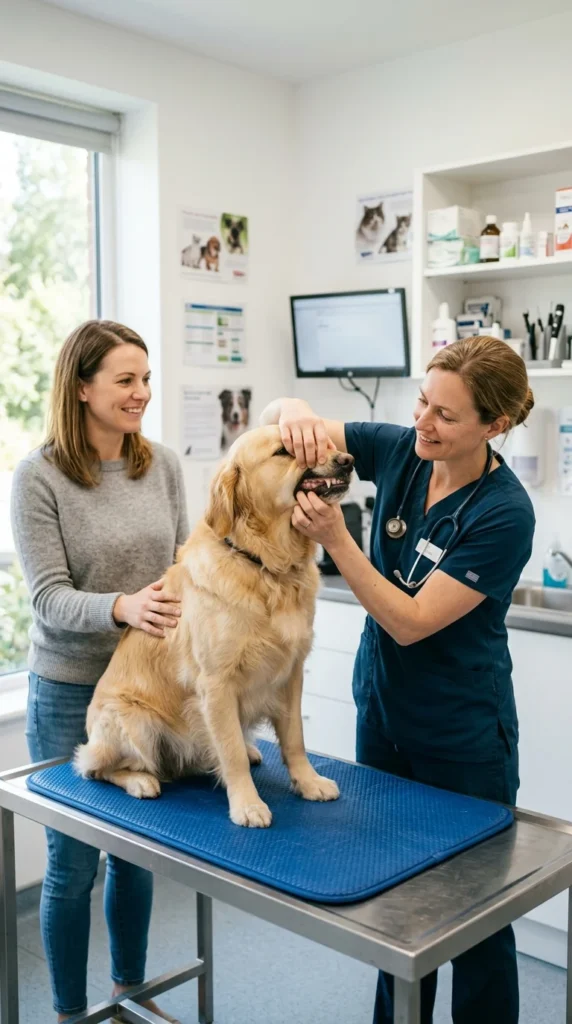
Home care is important, but it can’t do everything. Much of the problem can sit below the gumline where you can’t see it.
Vets do a full dental cleaning under general anesthesia. This lets them clean carefully, check each tooth, and take dental X-rays when needed. The AAHA guidelines describe a thorough assessment and cleaning that can’t be done well on an awake pet.
Why “Anesthesia-Free” Cleaning Isn’t the Same
You may see groomers or other services offering “anesthesia-free” dental cleaning. A veterinary dental college statement, supported by AAHA and the AVMA, calls cleaning an unanesthetized pet inappropriate because tartar is firmly attached to teeth. Scraping the visible part of the tooth can also make the teeth look clean while problems remain under the gums. Littletonwestanimalhospital
If you have questions about anesthesia safety, talk to your vet. They can explain the risks for your dog.
How Often Should Your Dog See the Vet for Dental Care?
At least once a year, your vet should look at your dog’s mouth. Some dogs need cleanings more often. Small breeds and dogs with crowded teeth often build plaque faster. Flat-faced breeds can also have alignment problems.
Your vet can tell you how often your dog needs a cleaning.
Warning Signs of Dental Problems
Some dogs show clear signs. Many don’t. Call your vet if you notice any of these:
- Bad breath that doesn’t go away
- Red, swollen, or bleeding gums
- Yellow or brown buildup on teeth
- Loose, broken, or missing teeth
- Drooling more than usual
- Dropping food or chewing on one side
- Pawing at the mouth
- Not wanting to eat hard food or play with chew toys
- Swelling on the face
Some signs need fast attention. If your dog has a swollen face, won’t eat, or seems to be in pain, call your vet right away.
A note on bad breath: a little “dog breath” is normal. Strong, ongoing bad breath is not. It’s often a sign of dental disease, and sometimes a sign of another health problem. Your vet can help find the cause.
Common Dog Dental Care Mistakes
A few habits can make things harder than they need to be.
- Waiting until there’s a problem. Prevention is easier than treatment.
- Using human toothpaste. It isn’t made for dogs to swallow.
- Relying only on chews. They help, but brushing does more.
- Rushing the training. A scared dog will avoid the toothbrush.
- Trusting products without checking. Look for the VOHC seal.
- Skipping vet dental checks. You can’t see everything at home.
- Giving very hard chews. These can crack teeth.
Dental Care for Puppies and Senior Dogs
Puppies

Start early. Puppies can learn to accept mouth handling while they’re young. Touch their lips and gums during play and cuddle time. Then move on to a finger brush or soft brush with puppy-safe paste.
Puppies also lose their baby teeth as adult teeth come in. If baby teeth stay in place after the adult teeth arrive, tell your vet.
Senior Dogs
Older dogs are more likely to have dental issues. But it’s never too late to start home care. Go gently, since senior dogs may have sore gums or loose teeth. Ask your vet to check your dog’s mouth before you start a new routine.
FAQs
How often should I brush my dog’s teeth?
Daily is best. If that’s not realistic, aim for several times a week. Even occasional brushing is better than none, especially if you also see your vet for regular checkups.
Can I use human toothpaste on my dog?
No. Human toothpaste isn’t made to be swallowed and may contain ingredients that can harm dogs. Use toothpaste made for dogs.
Do dental chews really work?
Some can help reduce plaque and tartar. Look for products with the VOHC seal. Chews work best alongside brushing, not instead of it.
What if my dog won’t let me brush their teeth?
Go back a step and move more slowly. Use treats and keep sessions very short. If your dog still resists, ask your vet about other options.
Why does my dog’s breath smell so bad?
Dental disease is a common cause. Plaque, tartar, and gum infection can all cause strong odors. If the smell doesn’t go away, book a vet visit.
Do small dogs need more dental care?
Many small dogs have crowded teeth, which can trap plaque. They may need extra attention. Ask your vet about the best plan for your dog’s size and breed.
At what age should I start dog dental care?
As early as possible. Puppies can start learning to accept mouth handling right away. Adult and senior dogs can start too.
Are dental water additives worth it?
They can be a helpful extra, but they don’t replace brushing. Check with your vet, and look for products with the VOHC seal.
The Bottom Line
Healthy teeth are a big part of your dog’s comfort and overall care. The best plan is simple: brush often, use safe products, and see your vet for regular dental checks.
Start slowly and keep it positive. If you’re unsure where to begin, ask your vet to show you how to brush your dog’s teeth. A few minutes of care each day can make a real difference.