
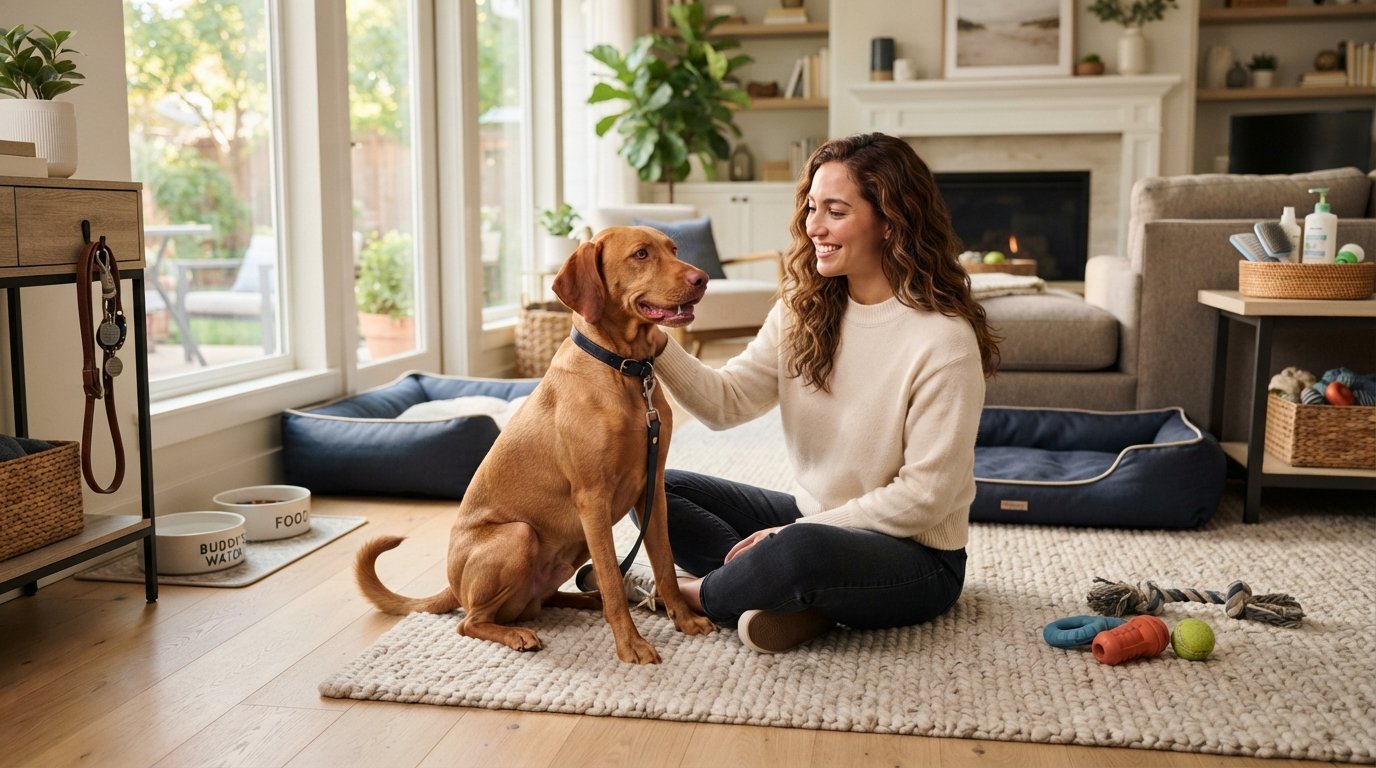
Bringing home a new dog is exciting, but the first few days can feel overwhelming. You suddenly have food, training, potty breaks, safety, grooming, vet visits, and many new routines to manage.
The good news is that you do not need to figure everything out at once.
A simple new dog owner checklist can help you prepare your home, build a daily routine, and give your dog time to feel safe. Whether you adopted an adult dog or brought home a puppy, the basics are similar: provide food and water, create a safe space, schedule veterinary care, start gentle training, and build trust through consistent routines.
This checklist covers what to prepare before your dog arrives, what to do during the first week, and the everyday care your new companion will need.
Table of Contents
New Dog Owner Checklist at a Glance
Before your dog arrives, make sure you have:
- ☐ Food appropriate for your dog’s age and needs
- ☐ Fresh water bowl
- ☐ Food bowl
- ☐ Collar and identification tag
- ☐ Leash
- ☐ Secure harness, when appropriate
- ☐ Comfortable bed or resting area
- ☐ Safe crate, if you plan to use one
- ☐ Age-appropriate toys
- ☐ Safe chew items
- ☐ Grooming supplies
- ☐ Waste bags
- ☐ Cleaning supplies for accidents
- ☐ Dog-safe home environment
- ☐ Veterinarian selected
- ☐ Medical records collected
- ☐ Microchip information checked
- ☐ Basic household rules decided
- ☐ Daily feeding and bathroom schedule planned
These basics give your new dog a safer and calmer start.
1. Prepare Your Home Before Your Dog Arrives
Your home should be ready before your dog walks through the door.
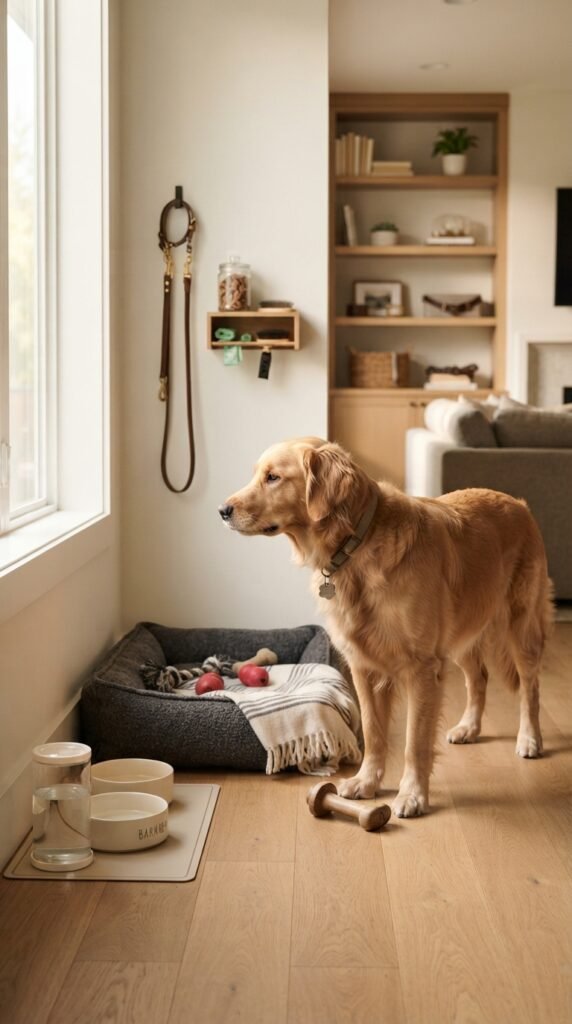
Dogs explore with their noses and mouths. New dogs may chew, investigate, hide, or wander into places you did not expect.
Walk through your home at your dog’s level. Look for electrical cords, small objects, medications, cleaning products, toxic foods, unsecured trash, and anything else that could cause harm.
Keep household chemicals and food out of reach. Close doors or use gates to block areas that are not ready for your dog.
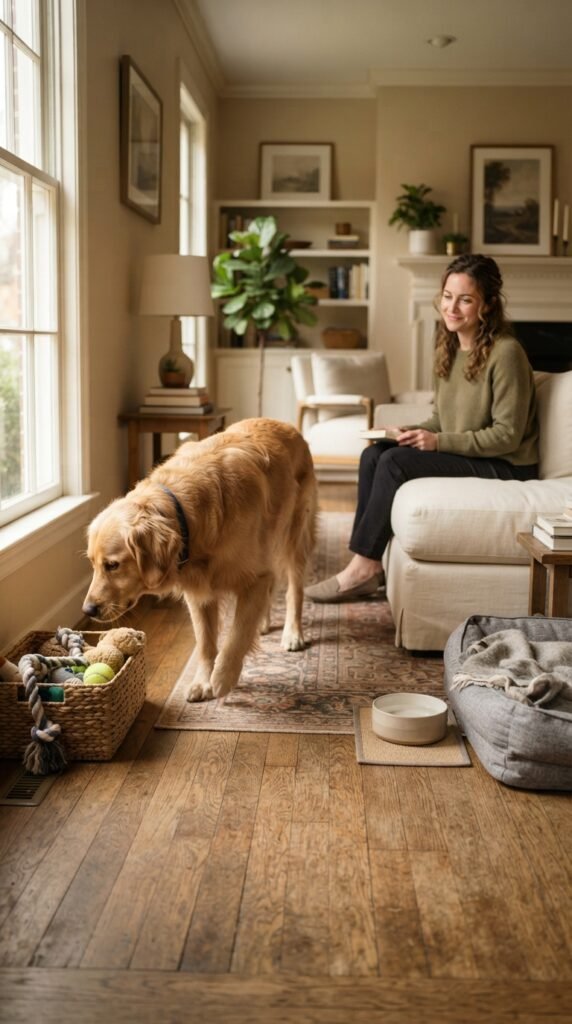
Create one quiet area where your dog can rest without being disturbed.
This does not need to be a large room. A calm corner with a bed, crate, water, and a few safe items can work well.
2. Buy the Basic Dog Supplies
You do not need to buy every dog product you see online.
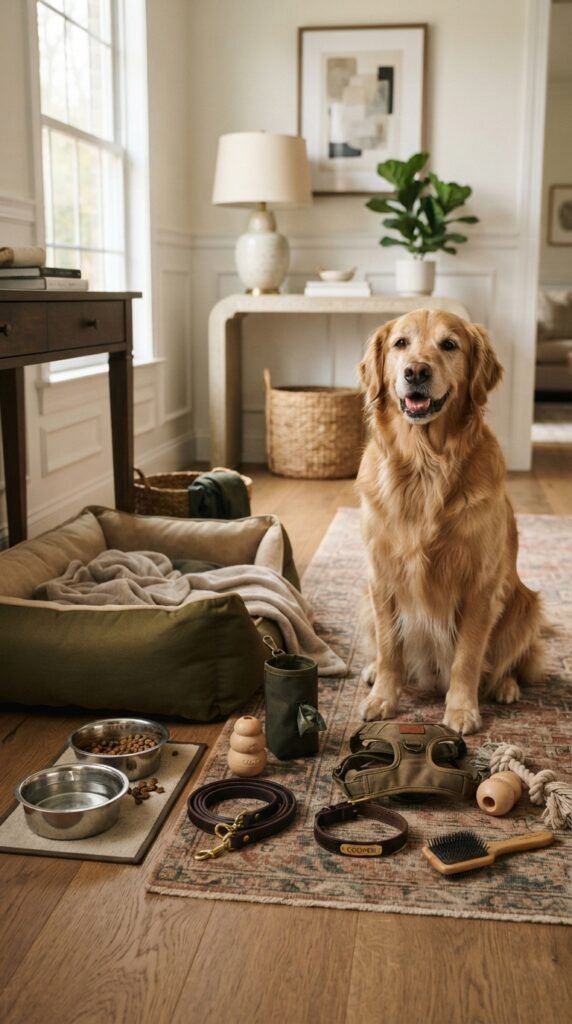
Start with the essentials.
Basic New Dog Supplies
| Item | Why You Need It |
|---|---|
| Food bowl | Provides a consistent feeding area |
| Water bowl | Keeps fresh water available |
| Dog food | Provides appropriate daily nutrition |
| Collar | Helps with everyday identification |
| ID tag | Provides visible contact information |
| Leash | Supports safe outdoor walks |
| Harness | May provide another walking option |
| Bed | Gives your dog a comfortable resting place |
| Toys | Provides play and enrichment |
| Safe chews | Supports appropriate chewing |
| Grooming tools | Helps with routine coat care |
| Waste bags | Makes bathroom cleanup easier |
| Cleaning supplies | Helps manage accidents |
Choose products based on your dog’s size, age, health, and behavior.
A tiny puppy may need different equipment from a large adult dog. Your veterinarian can also help you choose products that fit your dog’s individual needs.
3. Choose the Right Food
Food is one of the first things to organize.
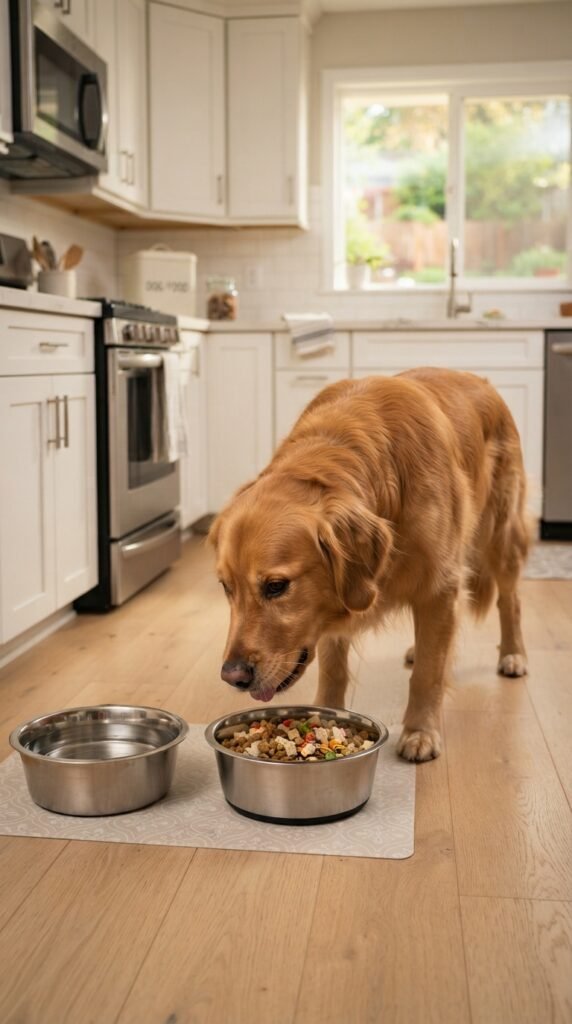
Choose a complete and balanced food appropriate for your dog’s life stage and individual needs. Puppies, adults, and senior dogs can have different nutritional requirements.
Ask the shelter, breeder, rescue organization, or previous owner what your dog has been eating. If you need to change foods, ask your veterinarian about the best way to make the transition.
Avoid making major food changes simply because you bought a different brand.
Also remember that feeding amounts are not identical for every dog. Age, size, activity, body condition, health, and the food itself can affect feeding needs.
Fresh, clean water should always be available.
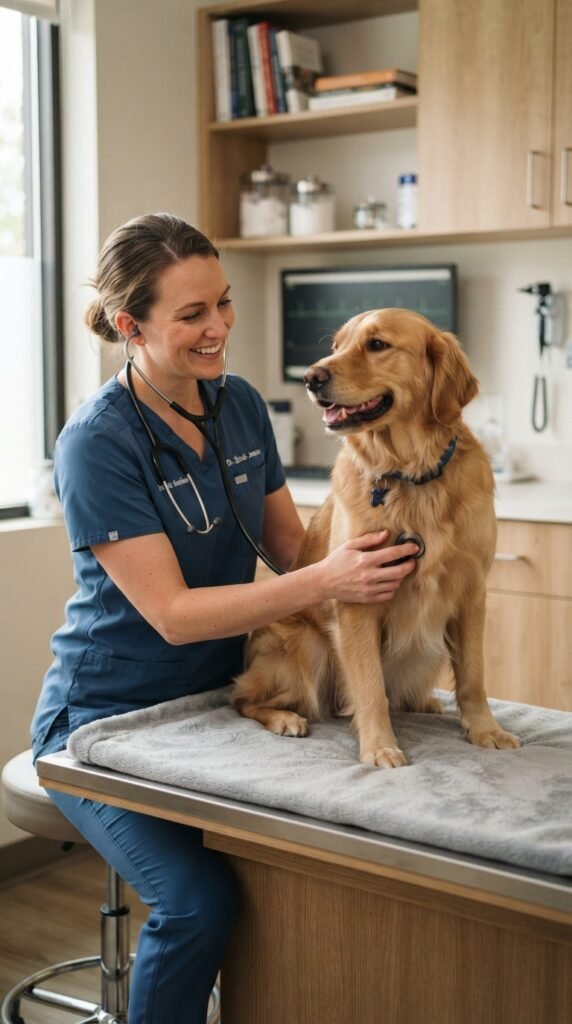
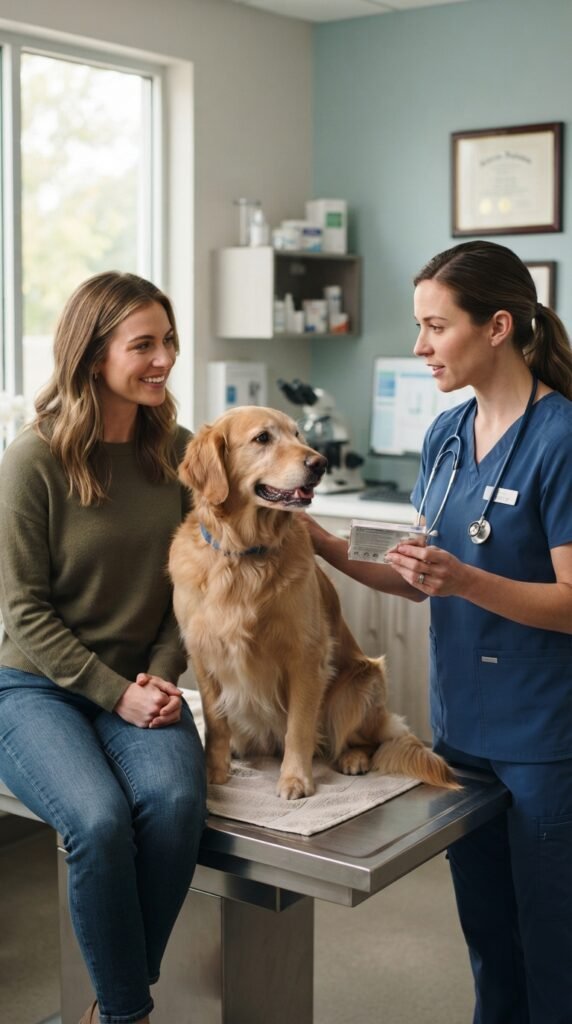
4. Schedule Your First Veterinary Visit
Finding a veterinarian should be one of your first priorities.
If possible, schedule the first appointment during the first weeks after bringing your dog home. AAHA recommends establishing a veterinary relationship early so your dog’s health and preventive-care plan can be created around its life stage and individual needs.
Bring all records you received with your dog.
At the first visit, ask about:
- Vaccinations
- Parasite prevention
- Heartworm prevention and testing
- Flea and tick prevention
- Dental care
- Nutrition
- Weight and body condition
- Microchip information
- Spaying or neutering
- Future wellness visits
- Any unusual behavior or health concerns
Your veterinarian can create a preventive-care plan based on your dog’s age, lifestyle, location, and health history.
5. Check Your Dog’s Identification
Identification can help your dog return home if they ever become lost.
Make sure your dog has an appropriate ID tag with current contact information.
Ask your veterinarian to check whether your dog is already microchipped. If there is a microchip, make sure the registration information is current.
A microchip is not a replacement for a collar and ID tag. It provides another form of identification if your dog becomes separated from you.
6. Establish a Simple Daily Routine
New dogs often benefit from predictable routines.
Try to keep important parts of the day reasonably consistent.
Your routine can include:
Morning
- Bathroom break
- Fresh water
- Breakfast
- Short walk or play
- Brief training
Afternoon
- Bathroom break
- Mental enrichment
- Rest
- Short play session
Evening
- Dinner
- Walk or age-appropriate activity
- Training
- Family time
- Final bathroom break
The exact schedule will depend on your dog’s age, health, energy level, and household.
The goal is not perfection.
The goal is consistency.
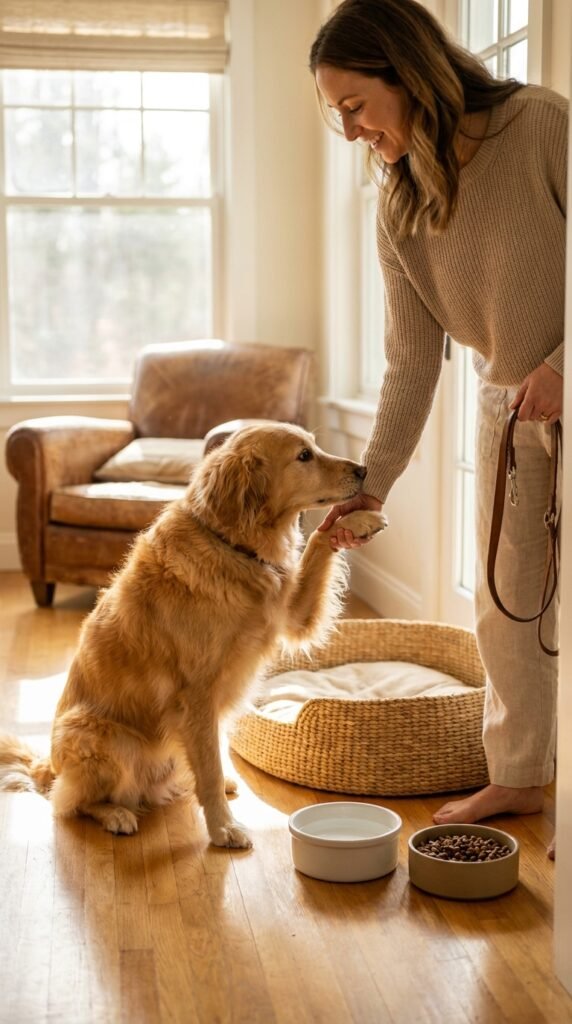
7. Start Potty Training Immediately
Do not wait several weeks before establishing bathroom habits.
Take your dog to an appropriate bathroom area regularly. Puppies often need more frequent opportunities than adult dogs.
Useful times include after waking, eating, playing, and sleeping.
When your dog eliminates in the correct place, calmly praise and reward the behavior.
Accidents can happen.
Do not punish your dog for accidents. Clean the area thoroughly and adjust the routine if accidents happen repeatedly.
If house-training problems continue, talk with your veterinarian or a qualified trainer.
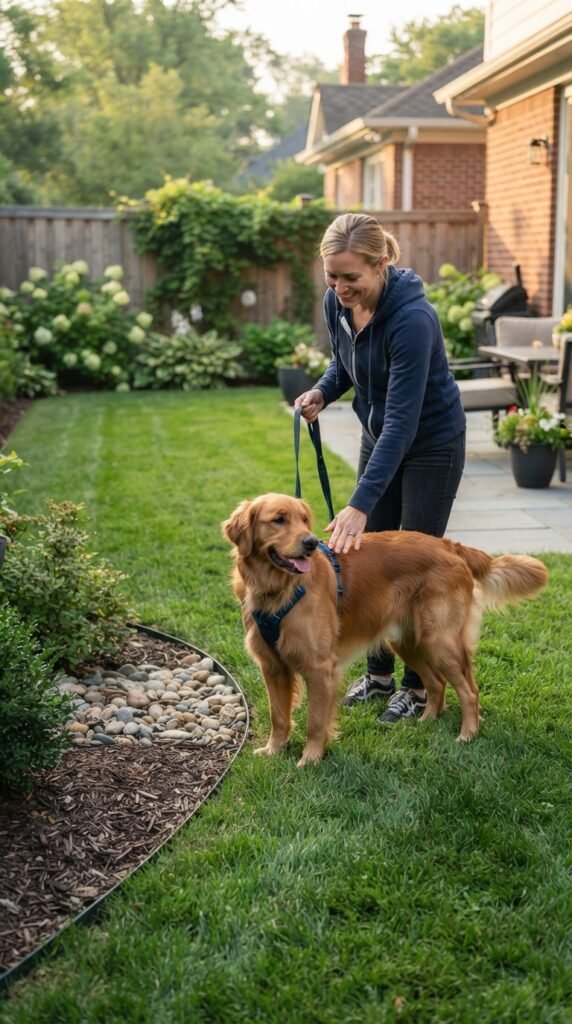
8. Start Basic Training With Positive Reinforcement
Training is not only about teaching commands.
It helps your dog understand what behavior works in your home.
Start with simple skills such as:
- Responding to their name
- Coming when called
- Sitting
- Walking calmly on a leash
- Waiting at doors
- Settling on a bed
- Appropriate chewing
- Basic handling
Keep early training sessions short and positive.
Reward behaviors you want to see again with appropriate treats, praise, toys, or play.
Avoid punishment-based training.
Your dog is learning your household, just as you are learning your dog.
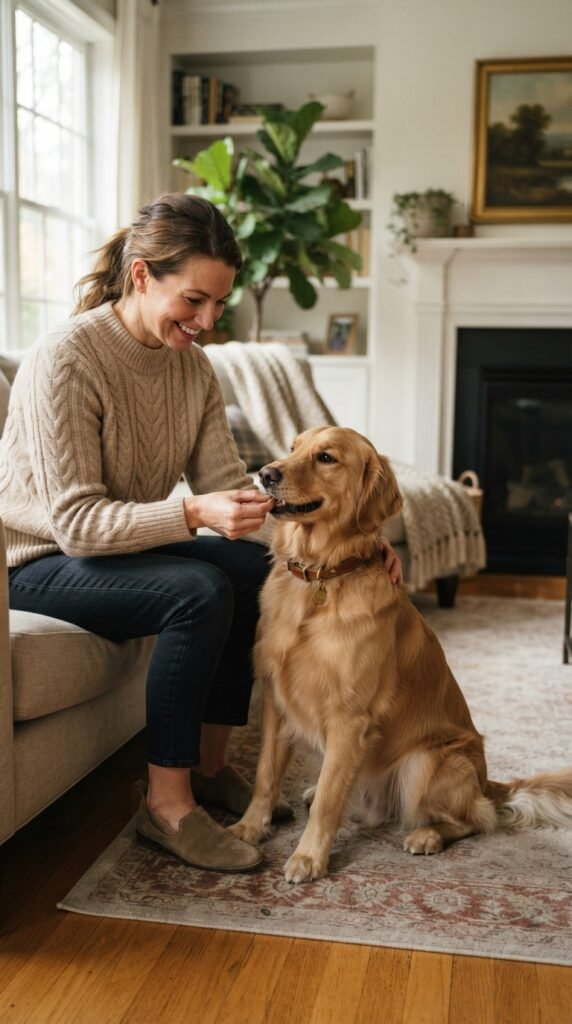
9. Give Your New Dog Time to Adjust
One of the biggest mistakes new owners can make is expecting an unfamiliar dog to immediately behave like a settled family pet.
A new dog may hide, sleep more than expected, eat differently, stay close to you, or seem unusually quiet during the adjustment period.
Give your dog time.
Keep the first days calm. Limit unnecessary visitors and allow your dog to explore at their own pace.
Do not force cuddling, play, introductions, or interaction.
Watch your dog’s body language and give them space when they appear uncomfortable.
Trust grows through repeated experiences of safety and consistency.
10. Introduce Family Members Carefully
Everyone in the household should understand the basic rules before the dog arrives.
Decide:
- Where the dog can sleep
- Where the dog can go
- Who handles feeding
- Who handles bathroom breaks
- Where food is stored
- Which behaviors are not allowed
- Who handles training
- Where the dog can retreat when it wants quiet time
Consistency makes the new environment easier to understand.
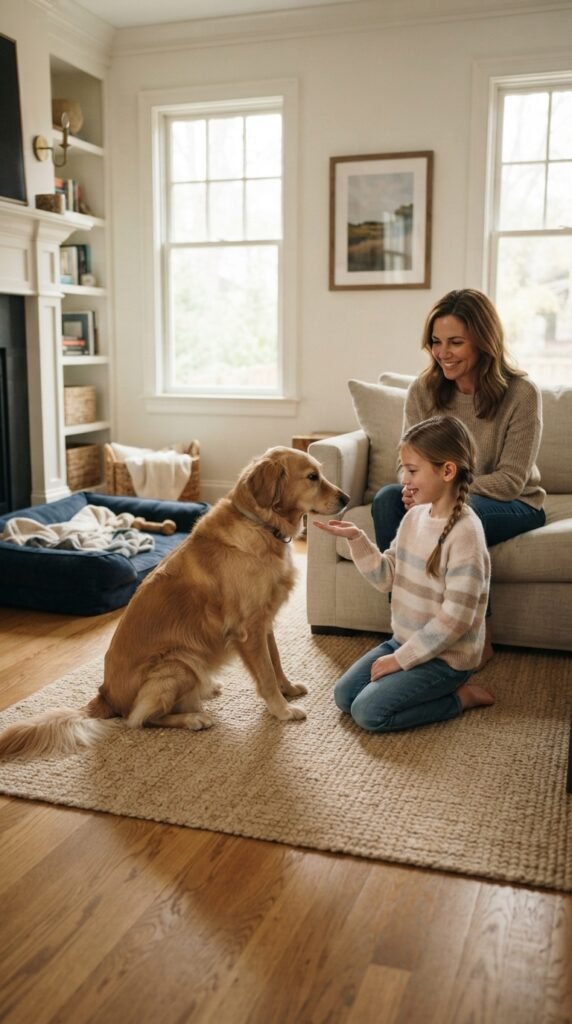
Children should also learn how to interact safely with the dog.
Never leave young children unsupervised with a dog, even when the dog has previously behaved well around children.
Your dog should also have a quiet area where it can move away from household activity.
11. Introduce Other Pets Slowly
If you already have another dog or cat, avoid rushing the introduction.
Initial meetings should be managed carefully.
Dogs may benefit from meeting another dog in a neutral area rather than immediately bringing the unfamiliar dog into another dog’s personal space.
For cats, provide safe areas and escape routes.
Use barriers such as baby gates when needed.
Do not force animals to interact.
Watch their body language and keep early interactions controlled and positive.
If the animals show serious fear, aggression, or repeated conflict, seek help from a qualified behavior professional.

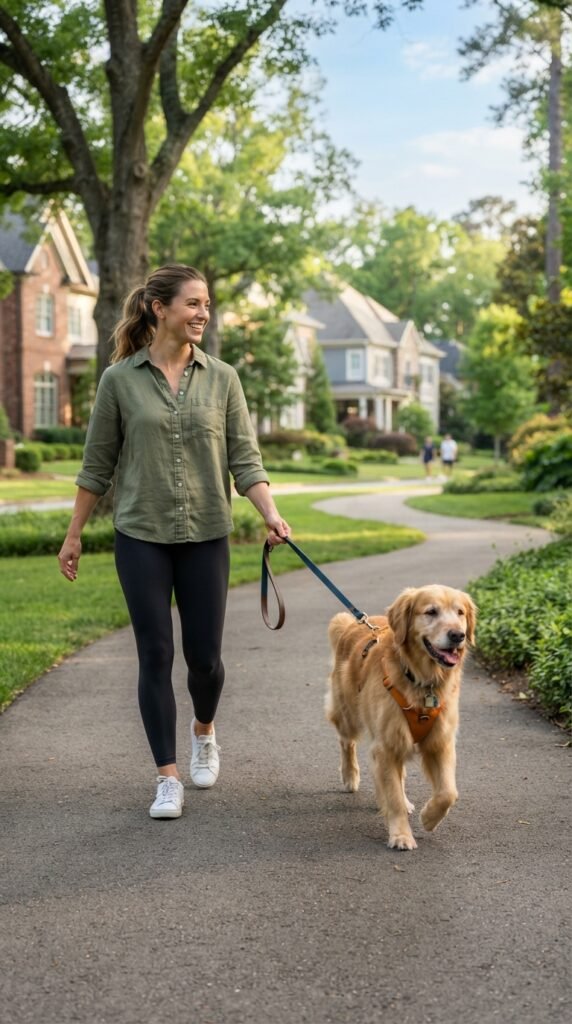
12. Give Your Dog Daily Exercise
Exercise needs vary.
A young, energetic dog may need much more activity than a senior dog or a dog recovering from illness.
Breed tendencies can also influence activity needs.
Start with activities that fit your dog’s age, health, fitness, and behavior.
Exercise can include:
- Walks
- Gentle play
- Fetch
- Sniffing activities
- Backyard games
- Training games
- Interactive toys
Do not assume that more exercise is always better.
Your veterinarian can help you determine an appropriate activity level, especially if your dog is very young, elderly, overweight, or has a medical condition.
13. Provide Mental Stimulation
Dogs need more than physical activity.
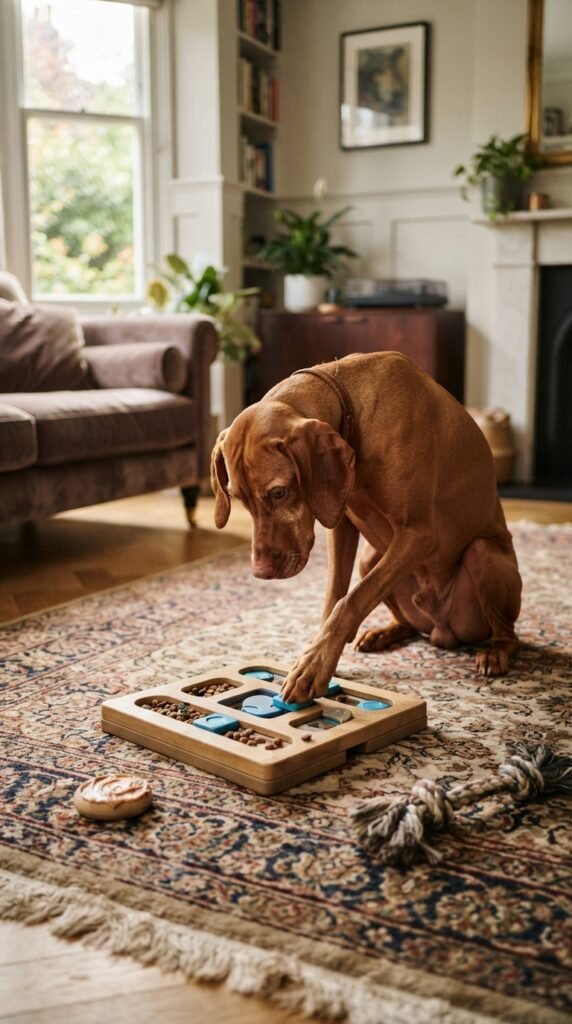
Mental enrichment gives your dog appropriate ways to investigate, explore, sniff, chew, solve problems, and interact with you.
Try:
- Food puzzles
- Snuffle activities
- Short training games
- Hide-and-seek
- Scent games
- Safe chew items
- Interactive toys
Rotate toys instead of leaving everything available at once.
This can help keep familiar toys interesting.
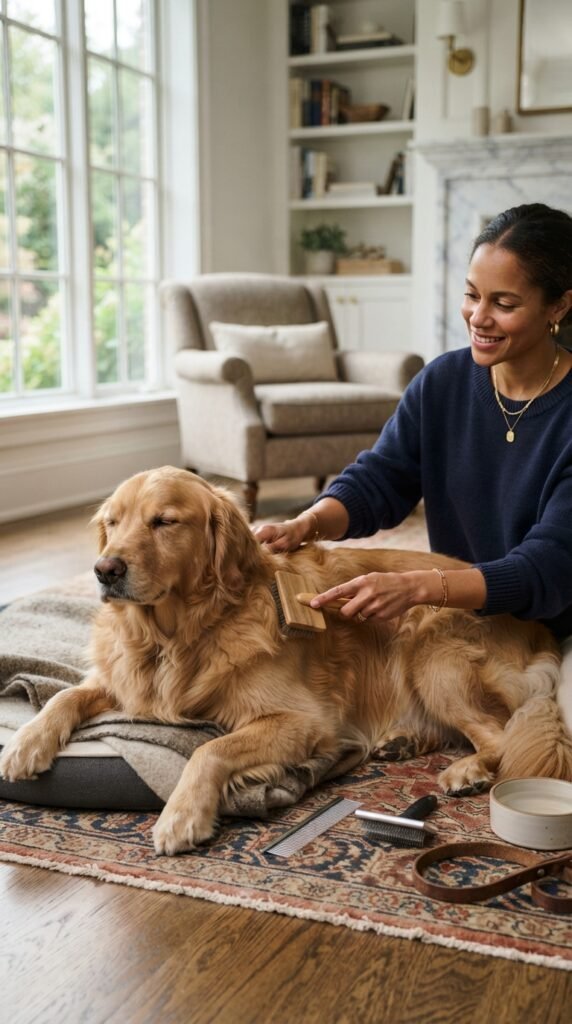
14. Groom Your Dog Regularly
Grooming needs depend on the dog’s coat and individual needs.
Regular brushing can help manage loose hair and gives you a chance to notice changes in the skin or coat.
During grooming, look for:
- New lumps or bumps
- Redness
- Skin irritation
- Unusual odor
- Parasites
- Matted fur
- Sore areas
Also become comfortable checking your dog’s ears, paws, nails, and mouth.
Do not force grooming if your dog becomes frightened.
Introduce handling gradually and use positive reinforcement.
15. Begin Dental Care Early
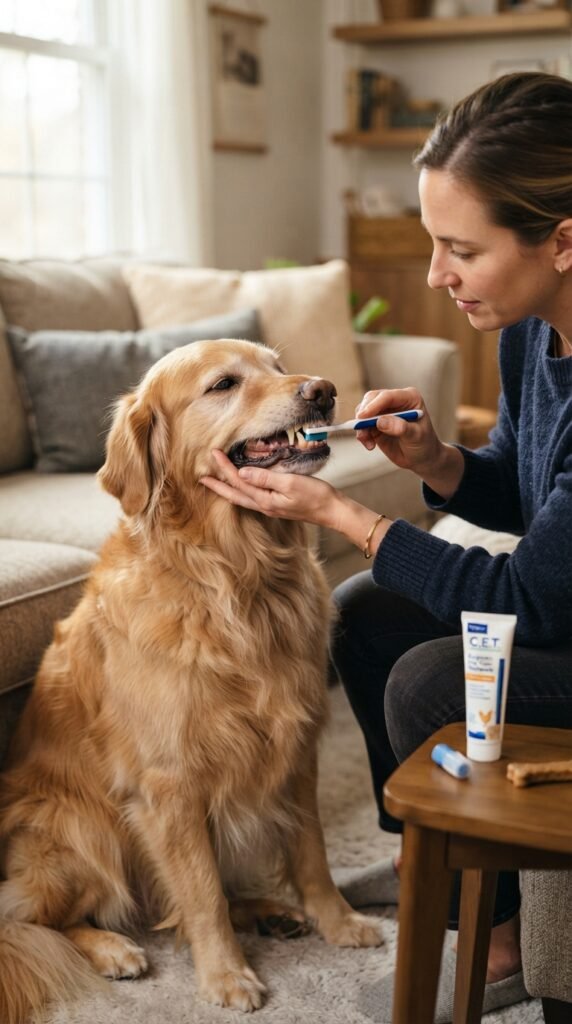
Dental care should become part of your dog’s routine.
Ask your veterinarian how to care for your dog’s teeth at home. Regular brushing with products designed for dogs can support dental hygiene.
Your veterinarian should also check your dog’s mouth during routine care.
Starting dental handling while your dog is young or newly adopted can make future care easier.
Go slowly.
Let your dog become comfortable with having its mouth and face handled before expecting a full brushing routine.
16. Protect Your Dog From Common Household Hazards
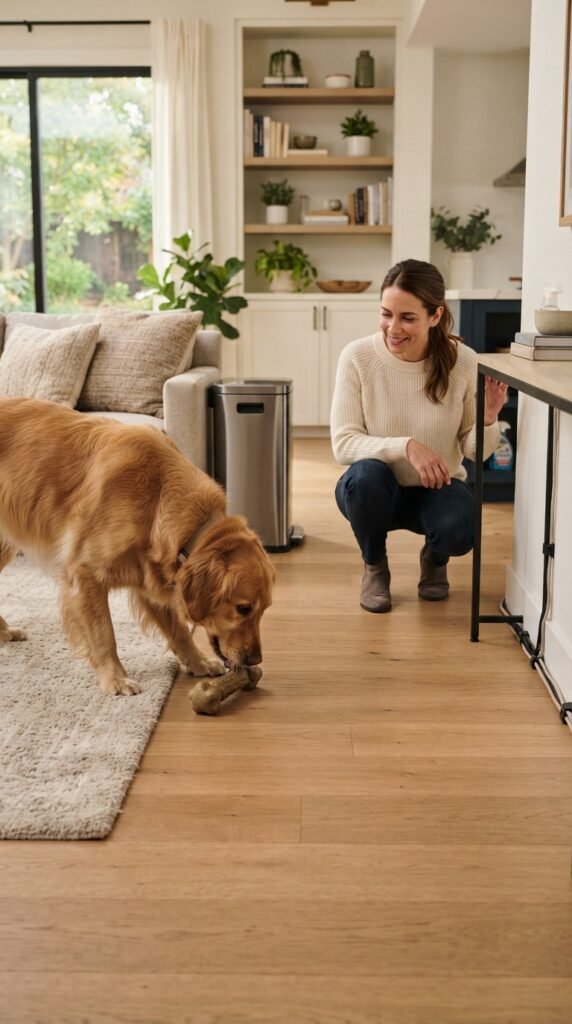
A new dog may investigate almost everything.
Keep potentially dangerous items secured.
Pay special attention to:
- Medications
- Cleaning products
- Chemicals
- Electrical cords
- Small objects
- Certain human foods
- Trash
- Unsafe plants
- Open windows
- Unsecured doors and gates
Do not assume that a dog will automatically know what is dangerous.
Pet-proofing is your responsibility.
If you believe your dog has eaten something potentially toxic or dangerous, contact a veterinarian or appropriate animal poison-control resource promptly.
17. Keep Parasite Prevention on Your Checklist
Parasites are part of routine dog care.
Your veterinarian can recommend prevention based on your dog’s lifestyle and local risks.
Ask about:
- Heartworms
- Fleas
- Ticks
- Intestinal parasites
Do not choose a medication simply because another dog uses it.
Preventive products should be selected for the individual dog and used according to veterinary guidance and product directions.
18. Keep Your Dog’s Medical Records Organized
Create a simple folder for your dog’s health information.
Keep records for:
- Vaccinations
- Veterinary examinations
- Parasite prevention
- Test results
- Medications
- Microchip information
- Previous medical history
- Adoption or breeder records
Having these records ready can make future veterinary visits easier.
It is especially helpful if you change veterinarians, travel with your dog, or need emergency care.
19. Prepare for Emergency Situations
New dog owners should know what they would do if their dog suddenly became sick or injured.
Save your veterinarian’s contact information.
Also know where the nearest emergency veterinary hospital is located.
Keep basic information easy to find, including your dog’s medical records and medication list.
Ask your veterinarian about a first-aid kit and what emergency supplies make sense for your dog.
Do not try to diagnose a serious medical problem from an online checklist.
If your dog has severe symptoms, sudden collapse, difficulty breathing, major injury, repeated vomiting, poisoning concerns, or another urgent problem, seek veterinary care immediately.
20. Budget for Ongoing Dog Care
Dog ownership includes more than food and toys.
Plan for routine expenses such as:
- Veterinary examinations
- Vaccinations
- Parasite prevention
- Food
- Grooming
- Dental care
- Training
- Licensing where required
- Pet supplies
Unexpected veterinary costs can also happen.
Consider building an emergency fund or researching pet insurance before you need it.
Your veterinarian can help you estimate the types of preventive care your dog may need throughout the year.
Your First Week With a New Dog
The first week should focus on safety, routine, observation, and trust.
Day 1
Keep the environment calm.
Show your dog their food, water, bathroom area, and resting space.
Avoid overwhelming them with visitors or too many activities.
Days 2–3
Begin establishing consistent meal and bathroom times.
Start short training sessions.
Watch how your dog eats, sleeps, plays, eliminates, and reacts to household activity.
Days 4–7
Continue the routine.
Gradually introduce normal household activities.
Continue positive training and appropriate exercise.
If you notice health or behavior concerns, write them down and discuss them with your veterinarian.
New Dog Owner Daily Checklist
Use this simple checklist to stay organized:
Every Day
- ☐ Provide fresh water
- ☐ Feed the appropriate amount of food
- ☐ Give bathroom opportunities
- ☐ Provide appropriate exercise
- ☐ Offer mental enrichment
- ☐ Spend positive time together
- ☐ Practice a few training skills
- ☐ Check your dog’s general behavior and energy
- ☐ Keep the environment safe
- ☐ Clean up bathroom waste
- ☐ Check paws and coat when appropriate
- ☐ Follow any veterinarian-prescribed care
Every Week
- ☐ Check grooming needs
- ☐ Wash food and water bowls thoroughly
- ☐ Wash bedding as needed
- ☐ Rotate enrichment toys
- ☐ Review training progress
- ☐ Check your supply of food, waste bags, and other essentials
On Your Veterinary Schedule
- ☐ Wellness examinations
- ☐ Recommended vaccinations
- ☐ Parasite prevention
- ☐ Dental care
- ☐ Recommended testing
- ☐ Microchip information review
- ☐ Spay or neuter discussion when appropriate
- ☐ Nutrition and weight review
The exact schedule should be personalized with your veterinarian.
What New Dog Owners Often Forget
Some of the most important parts of dog ownership are not physical products.
New owners sometimes focus heavily on beds, toys, bowls, and treats while forgetting about routine and communication.
Your dog also needs:
Patience: Adjustment takes time.
Consistency: Similar rules and routines make life easier to understand.
Training: Good habits need to be taught.
Enrichment: Dogs need appropriate mental activity.
Supervision: New dogs should be watched while you learn their habits.
Preventive care: Veterinary care helps identify health needs early.
Identification: Current identification information matters if your dog gets lost.
A safe retreat: Every dog benefits from having a comfortable place to rest.
When Should a New Dog Owner Call the Veterinarian?
Contact your veterinarian when you notice a significant change in your dog’s health, behavior, eating, drinking, bathroom habits, or energy.
Urgent veterinary attention may be needed for serious signs such as difficulty breathing, collapse, severe injury, suspected poisoning, seizures, or other sudden and severe problems.
When you are unsure whether something is serious, calling your veterinary team is safer than trying to diagnose the problem yourself.
Your veterinarian knows your dog’s history and can help you decide what should happen next.
Frequently Asked Questions
What should I buy before getting a dog?
Start with food, bowls, fresh water, a collar, ID tag, leash, comfortable resting area, appropriate toys, safe chews, grooming supplies, and waste bags. You should also prepare your home and choose a veterinarian.
What should I do on the first day with my new dog?
Keep the first day calm. Show your dog their food, water, bathroom area, and safe resting space. Allow them time to explore without forcing interaction.
How long does it take a new dog to adjust?
There is no single adjustment timeline for every dog. Age, previous experiences, temperament, environment, and household changes can all affect the process. Give your dog time and use predictable routines.
Should I take my new dog to the vet?
Yes. Establishing veterinary care early allows your veterinarian to review your dog’s history and create an individualized preventive-care plan.
How often should I feed my new dog?
Feeding frequency depends on age, size, health, lifestyle, and the type of food. Follow the food’s feeding guidance and ask your veterinarian for advice specific to your dog.
Should I start training immediately?
Yes, but keep early training simple and positive. Begin with name recognition, household routines, appropriate bathroom habits, and basic behaviors.
How do I introduce my new dog to my children?
Keep early interactions calm and supervised. Teach children how to approach and handle dogs safely. Always provide the dog with a quiet place where it can move away from activity.
Do new dogs need a microchip?
A microchip provides permanent identification and can help reunite lost dogs with their owners. Ask your veterinarian to check the chip and make sure its registration information is current.
Bottom Line
A new dog owner checklist does not need to be complicated.
Start with the basics: prepare a safe home, provide appropriate food and fresh water, establish a routine, arrange veterinary care, begin gentle training, provide exercise and enrichment, and give your dog time to adjust.
You will learn more about your dog every day.
The goal is not to become a perfect dog owner overnight. It is to create a safe, predictable, loving home where your new companion can gradually feel comfortable and thrive.