Small dogs have a broad, lasting appeal — they’re easier to carry, take up less space, and often feel like a natural fit for compact homes or simpler lifestyles. But “small” describes size, not personality. A small dog breed can be bold, independent, highly energetic, or intensely vocal just as easily as it can be a quiet lap companion.
Small breeds vary enormously in temperament, energy, grooming needs, and trainability. Understanding those differences — rather than assuming all small dogs are interchangeable — is what actually helps someone decide whether this category of dog fits their life. This guide walks through what small dog breeds generally have in common, where they differ, common misconceptions, and who tends to do well with a smaller companion.
Table of Contents
What Counts as a Small Dog Breed?
“Small dog breed” is a general size category rather than a single precise definition. Most sources loosely group dogs by adult weight, though exact cutoffs vary somewhat depending on the organization or breed standard referenced.
Within the broader small category, there are meaningful distinctions:
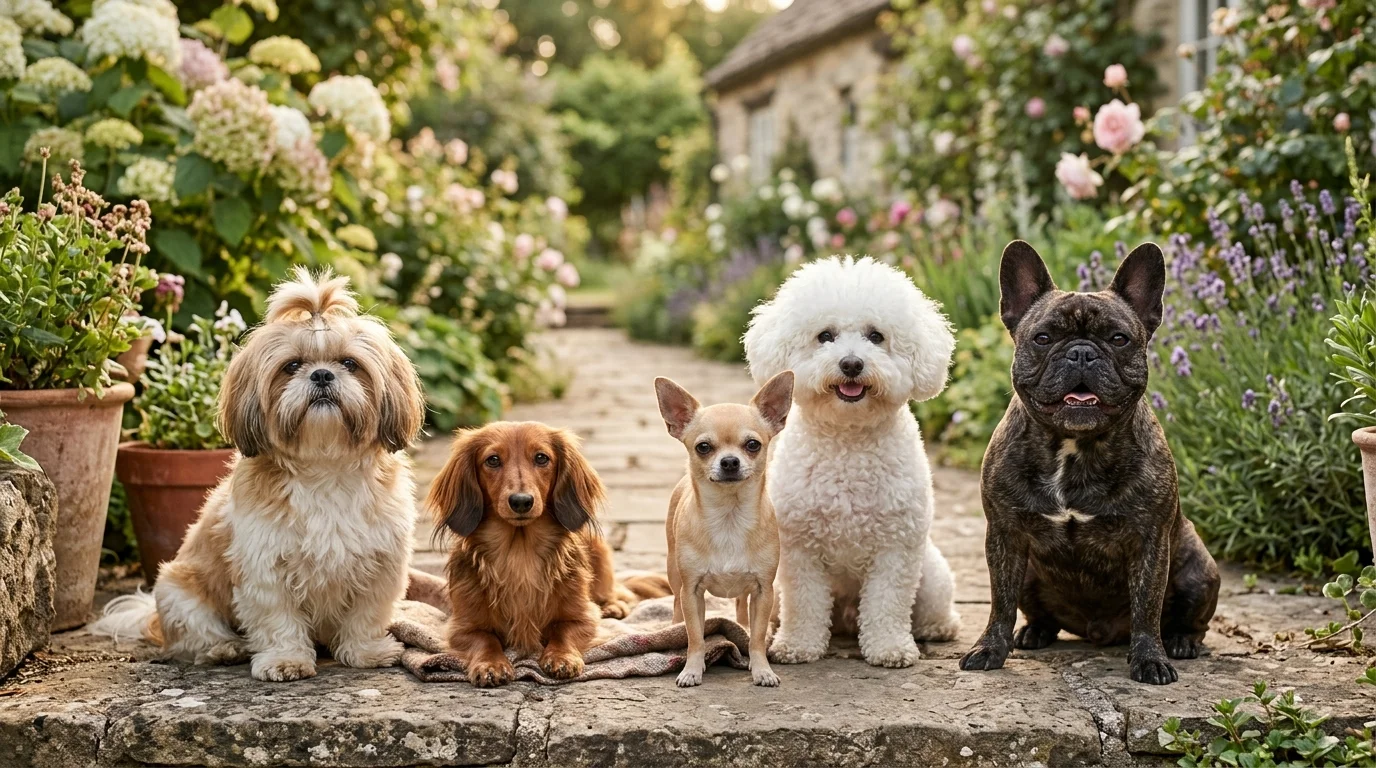
- Toy breeds — typically the smallest, often under about 10 pounds (Chihuahuas, Pomeranians, Papillons)
- Small breeds — generally in the 10–25 pound range (Shih Tzus, Boston Terriers, Dachshunds)
- Small-to-medium breeds — sometimes included in “small dog” discussions, generally up to around 30–35 pounds (French Bulldogs, some Cocker Spaniels)
These labels are useful for general orientation, but they say very little about temperament, energy, or trainability. Two dogs of similar size can have completely different personalities and daily needs.
Common Traits of Small Dog Breeds
While individual breeds vary widely, small dogs do share a few practical characteristics tied directly to their size:
Easier physical handling. Many small breeds are easier to lift, carry, and physically manage than large dogs, which can matter for owners with limited strength or mobility.
Indoor adaptability. Smaller dogs often require less physical space to move comfortably indoors, which can make them a practical fit for compact homes — though this depends heavily on energy level and temperament, not size alone.
Strong attachment tendencies. Many small breeds form close bonds with their owners, though the degree of this varies significantly between independent-minded breeds and more clingy ones.
Alertness. Small dogs are often quick to notice changes in their environment, which some owners appreciate and others find leads to more frequent alert barking.
Confidence beyond their size. It’s a common observation among small-breed owners that many small dogs act with a level of boldness that doesn’t match their physical stature — this is a real behavioral tendency in several breeds, not just a stereotype.
Wide variation in energy and temperament. This is the most important point: small size does not predict any single personality type. A Dachshund’s tenacious, sometimes stubborn nature is very different from a Cavalier King Charles Spaniel’s typically easygoing sociability.
Small Dog Temperament: What Owners Should Expect
Temperament among small breeds spans a genuinely wide range, shaped heavily by each breed’s original purpose.
Some small breeds, like the Cavalier King Charles Spaniel or Bichon Frise, tend to be affectionate and people-oriented, often described as eager to be near their owners. Others, like the Dachshund, were originally bred for independent work (hunting badgers), and many individuals retain a more determined, sometimes stubborn streak.
Alert behavior and barking tendencies also vary by breed. Terriers and some toy breeds, for instance, often have a stronger instinct to vocalize at unfamiliar sounds or visitors, while breeds like the Bichon Frise tend to be comparatively less reactive, though individual dogs still differ.
Confidence and boldness are worth noting specifically: breeds like the Chihuahua are often described as having big personalities relative to their size, sometimes showing more assertiveness toward larger dogs than their size would suggest is wise. This isn’t universal, but it’s a commonly reported tendency.
Sensitivity to handling also differs. Some small breeds tolerate handling, grooming, and household activity comfortably, while others are more reactive to sudden touch or unfamiliar handling styles. A breed’s history — working dog, companion dog, or hunting dog — often offers useful clues about these tendencies, though individual upbringing and socialization still play a major role.
Are Small Dogs Really Low-Energy?
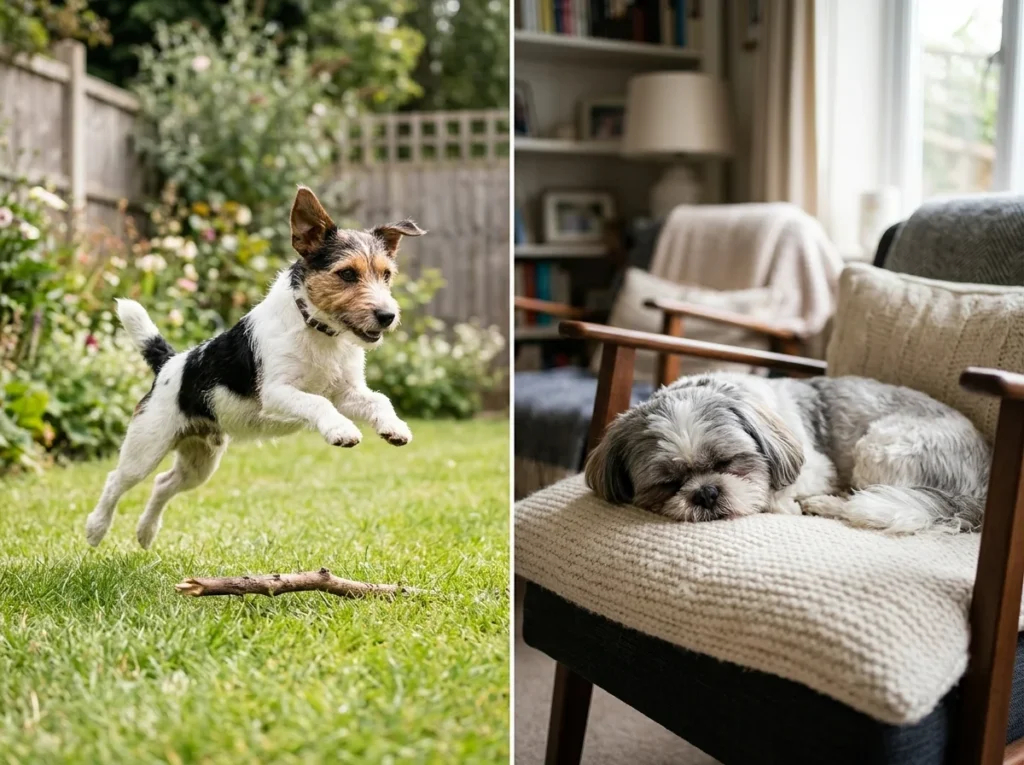
This is one of the most persistent misconceptions about small dog breeds, and it’s not accurate as a blanket statement.
Some small breeds are genuinely lower-energy and content with modest daily activity — the Shih Tzu is a commonly cited example. Others are surprisingly active. Jack Russell Terriers, for instance, are widely known for high energy and a strong need for both physical exercise and mental stimulation, despite their compact size. Dachshunds, similarly, often carry more stamina and determination than their short legs might suggest.
Even lower-energy small breeds still need regular mental stimulation. Boredom in an under-stimulated small dog can show up as barking, chewing, or other unwanted behaviors — the same way it can in larger breeds, just on a smaller physical scale.
The practical takeaway: energy level should be researched breed by breed, not assumed based on size.
Small Dogs and Living Space
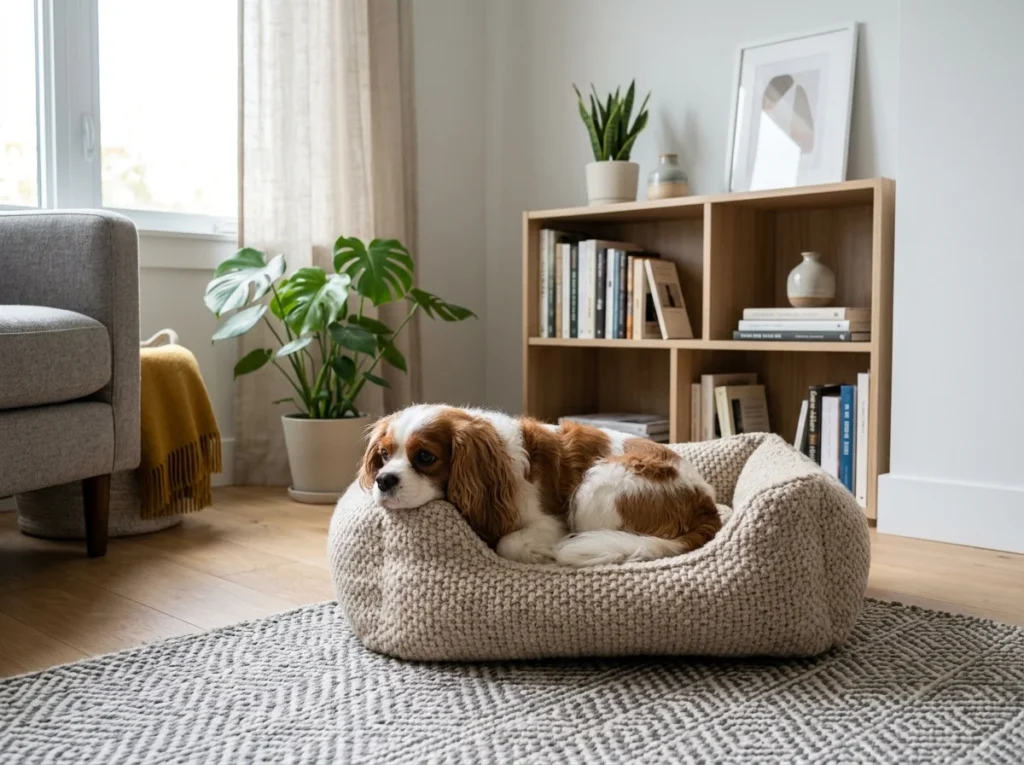
Compact size does offer some practical living-space advantages. Smaller dogs are generally easier to transport, take up less room for beds and crates, and can be easier to manage in tighter indoor spaces than a large, high-energy breed.
That said, size is only one factor in whether a dog suits close-quarters living. Barking tendencies, energy level, and temperament often matter more than square footage. A vocal, alert small breed in a shared building can create more friction than a calm, larger dog that settles easily indoors. Choosing a small dog specifically for a compact living situation still requires looking at the individual breed’s noise and activity tendencies, not just its size.
Pros of Choosing a Small Dog
Several practical advantages come up often among small-dog owners:
- Generally easier to lift and physically handle
- Easier to transport, including travel by car or air in some cases
- Smaller beds, crates, and supplies, which can mean lower costs and easier storage
- Often a manageable fit for compact homes, when temperament and energy align
- Typically lower food quantity needs than many larger breeds
- Companionship benefits that suit certain lifestyles, such as owners who want a dog they can bring along more easily
These are common advantages, not universal guarantees — they depend on matching the specific breed to the specific household.
Potential Challenges of Small Dog Breeds
Choosing a small dog also comes with realistic trade-offs worth understanding upfront:
Fragility. Many small and toy breeds are more physically delicate than larger dogs and can be more vulnerable to injury from falls, rough play, or mishandling.
Sensitivity around handling. Some small breeds don’t tolerate rough or careless handling well, which matters especially in homes with young children.
Barking tendencies. Several small breeds, particularly certain terrier and toy breeds, have a stronger tendency toward alert barking than some larger companion breeds.
Grooming demands. Coat type, not size, drives grooming needs. Breeds like the Shih Tzu or Bichon Frise often require regular brushing and professional grooming, despite their small stature.
House-training variability. Some small breeds are anecdotally reported by trainers and owners to be more challenging to house-train consistently than certain larger breeds, though this varies significantly by individual dog and training approach.
Owner “babying.” Small size sometimes leads owners to under-socialize or under-train a dog, assuming its size limits the consequences of unwanted behavior. This can result in behavioral issues that have little to do with the breed itself.
Strong personalities. Many small breeds carry confident, sometimes willful personalities that require the same consistent structure and training as larger dogs.
Small Dogs and Children
Small size is often assumed to make a dog automatically safer around kids — this isn’t accurate. In some cases, it’s the opposite concern: many small and toy breeds are more physically fragile and may be more vulnerable to injury from a young child’s rough or unpredictable handling than a larger, sturdier dog would be.
Temperament and the child’s age matter as much as the dog’s size. Sturdier small breeds, such as the Boston Terrier or Beagle, may tolerate more active handling than a more delicate toy breed. Regardless of breed, supervision during interactions between small children and any dog remains essential, and individual temperament always varies.
Small Dogs and Other Pets
Compatibility with other pets depends more on individual temperament, socialization, and breed background than on size alone. Prey drive varies significantly across small breeds — some terriers, for example, were historically bred for hunting small animals and may show a stronger prey response toward cats or small pets. Other small breeds tend to coexist comfortably with cats and other dogs when properly introduced and socialized. As with most behavioral traits, gradual introductions and ongoing management matter more than breed alone.
Do Small Dogs Tend to Live Longer?
There’s a general tendency, often noted by veterinary sources, for many smaller dog breeds to have longer average lifespans than many giant breeds. This pattern shows up broadly across canine size categories, though it isn’t a fixed rule for every individual dog.
Lifespan still depends heavily on genetics, overall health, breed-specific predispositions, and quality of care throughout a dog’s life. Choosing a small breed shouldn’t be treated as a guarantee of a long, healthy life — it’s a general tendency, not a promise.
Who May Be a Good Fit for a Small Dog?
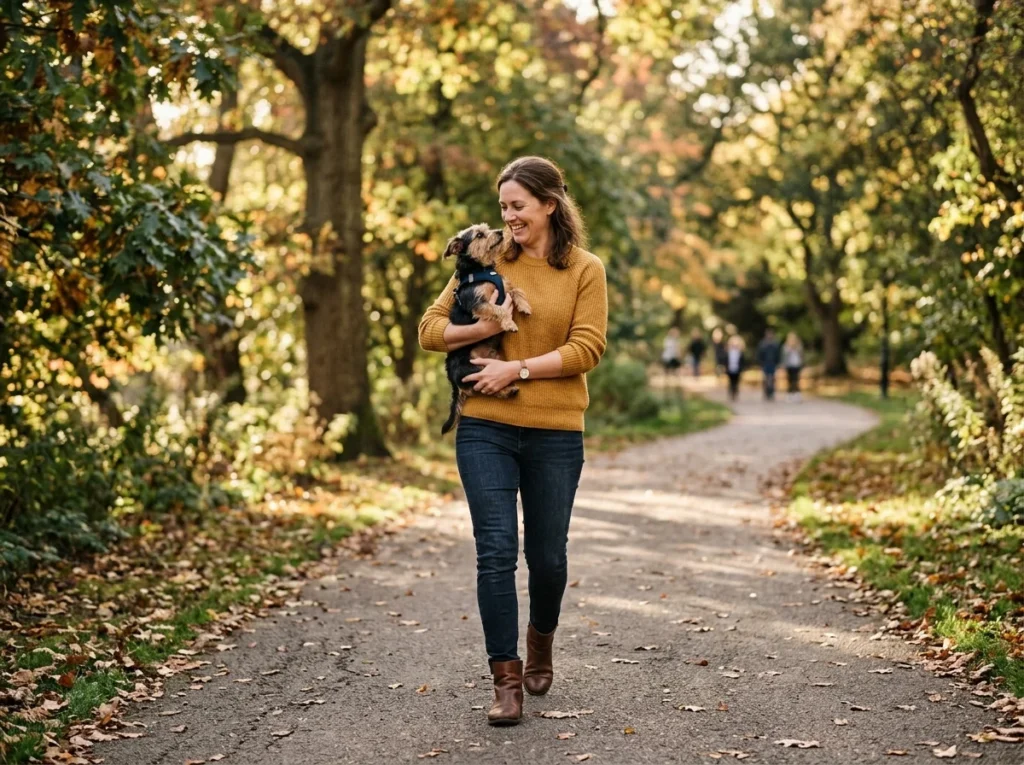
Small breeds often suit:
- Singles or couples with a manageable living space
- Apartment or condo residents, provided the specific breed’s energy and noise tendencies are a good match
- Older adults who want a physically manageable companion
- People who travel or relocate frequently and want an easier dog to transport
- Owners who prefer a dog they can more easily lift or handle physically
- Families with children old enough to understand gentle handling, paired with a sturdier small breed
- First-time owners, depending on the specific breed’s trainability and temperament
Who Should Think Carefully Before Choosing a Small Breed?
A small dog isn’t automatically the right choice for everyone. It’s worth pausing if you:
- Have very young children and are considering a particularly delicate toy breed
- Want a rugged, all-weather outdoor companion for hiking or heavy activity
- Assume a small dog will need little to no exercise
- Aren’t prepared to manage barking or grooming demands, depending on the breed
- Are choosing a small dog primarily because of its size, without researching temperament or energy level
Prefer a larger companion instead? Our guide to the top 10 big dog breeds compares size, temperament, and care needs for giant and large breeds. You can also explore more dog care guides across DogsDailyCare.com.
Common Myths About Small Dog Breeds
Myth: Small dogs don’t need much exercise.
Reality: Energy levels vary widely — some small breeds are highly active and need substantial daily activity.
Myth: Small dogs are easier to train.
Reality: Trainability depends on the individual breed and dog, not size. Some small breeds are notably independent or stubborn.
Myth: Small dogs are always good apartment dogs.
Reality: Noise tendencies and energy level often matter more than physical size for apartment or condo living.
Myth: Small dogs are safer for children.
Reality: Many small breeds are more physically fragile, which can actually increase injury risk during rough handling.
Myth: All small dogs are lap dogs.
Reality: Many small breeds have active, independent, or even working-dog personalities rather than a purely companion-oriented temperament.
Quick Small Dog Breed Checklist
- Do I want a calm or active dog?
- How much barking can I realistically tolerate?
- Are there young children in the home?
- How much grooming am I willing to manage?
- Do I need a dog that travels easily?
- How much daily exercise can I provide?
- Do I want an affectionate or more independent personality?
- Are there other pets in the home?
- Am I comfortable handling a more delicate dog, if applicable?
- Am I choosing a small breed for the right reasons — not size alone?
How to Narrow Down Which Small Breed Fits You
Once you understand small breeds as a category, compare specific breeds using these factors:
- Temperament: affectionate and people-oriented, or more independent and reserved
- Energy level: low-key companion or genuinely active breed
- Grooming: low-maintenance coat or one requiring regular professional care
- Household setup: apartment, house, yard access
- Children’s ages: sturdier small breed vs. a more delicate toy breed
- Other pets: prey drive and general sociability
- Noise tolerance: your own tolerance and any shared-living constraints
- Owner experience: some small breeds are more forgiving of a first-time owner than others
Breeds like the Cavalier King Charles Spaniel, Shih Tzu, Bichon Frise, and Miniature Poodle tend to sit toward the more affectionate, people-oriented end of the spectrum, though their energy levels still differ. Breeds like the Dachshund, Chihuahua, and Pomeranian often bring more independence, boldness, or vocal tendencies. French Bulldogs and Boston Terriers illustrate a sturdier build within the small-breed range, while Papillons show how a toy-sized dog can still carry notable energy and trainability. These examples aren’t a ranked list — they’re meant to show how much small breeds can differ from one another.
Frequently Asked Questions
What is considered a small dog breed?
There is no single official definition. Dogs are loosely grouped by adult weight, with toy breeds often under about 10 pounds and small breeds generally up to around 25 pounds. Exact cutoffs vary by source.
Are small dogs good for apartments?
Often, but not automatically. Barking tendencies and energy level matter as much as size. A quiet, adaptable small breed can fit an apartment well, while a very vocal or high-energy one may be harder to manage in shared buildings.
Are small dogs good with kids?
It depends on the breed, the dog, and the child’s age. Many small breeds are fragile and can be hurt by rough handling, so sturdier small breeds and adult supervision matter.
Do small dogs live longer than big dogs?
Many small breeds tend to live longer than many giant breeds, but this is a general pattern and not a guarantee. Genetics, health, and care all play a role.
Are small dogs easier to train?
Not necessarily. Trainability depends on the breed and individual dog. Some small breeds are eager to please, while others are independent or stubborn, so consistent training matters for every size.
Final Thoughts
Small dog breeds are not a single personality type packaged in a smaller body. Energy level, temperament, grooming needs, and trainability vary as much among small breeds as they do among large ones. A calm, adaptable companion and a bold, independent, vocal dog can both technically be “small dog breeds.” Choosing well means looking past size to the traits that actually shape daily life with a dog — because the right fit comes from matching those traits to your household, not from picking a category based on size alone.