You don’t need a salon to keep your dog clean and comfortable. With a few basic tools and some patience, DIY dog grooming at home covers most of the routine care your dog needs between professional appointments: brushing, bathing, nail trims, ear checks, and teeth brushing.
This guide walks you through what you can safely do yourself, the tools to gather first, a step-by-step order that works for most dogs, and the jobs better left to a groomer or veterinarian.
Table of Contents
Quick Answer: What Can You Groom at Home?
Most owners can safely brush, bathe, trim nails, check and clean ears, and brush teeth at home. Tasks like clipping tight mats, shaving a double coat, or styling a breed haircut are usually best left to a professional, and so is anything that stresses your dog or makes you uncomfortable.
Why Grooming at Home Is Worth Doing
Grooming is more than appearance. Regular hands-on time keeps the coat clean and helps you notice skin changes, lumps, ear odor, or overgrown nails early. Home grooming and professional grooming also work well together, since your regular care makes each salon visit easier.
How much grooming your dog needs depends on size, breed, coat type, and lifestyle. A short-coated Beagle and a long-coated Maltese need very different routines.
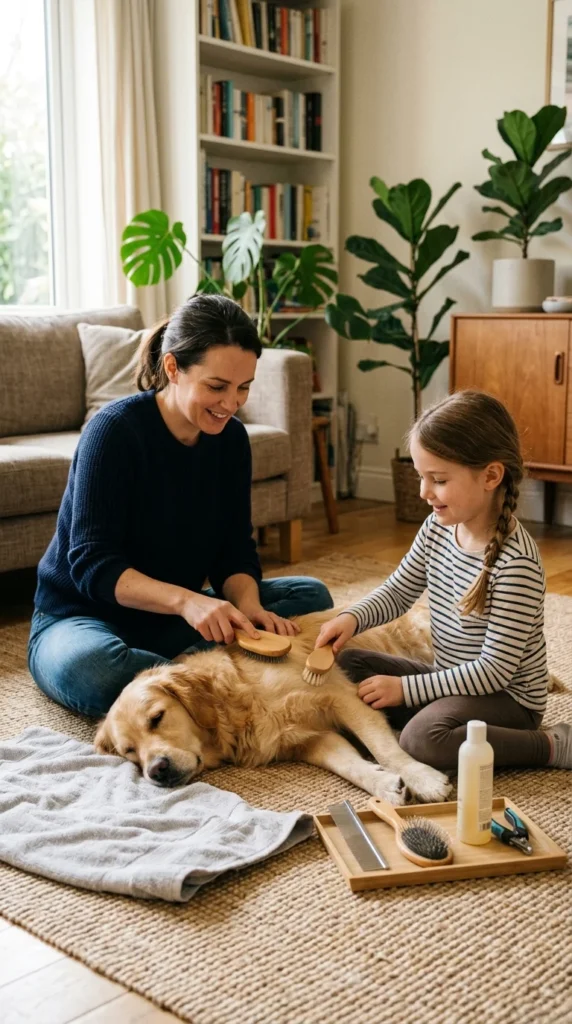
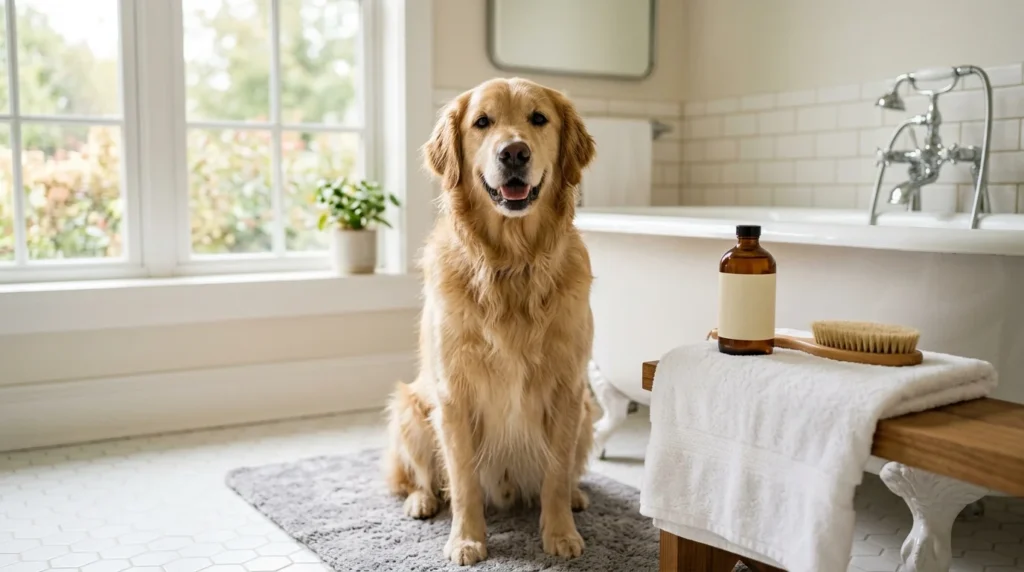
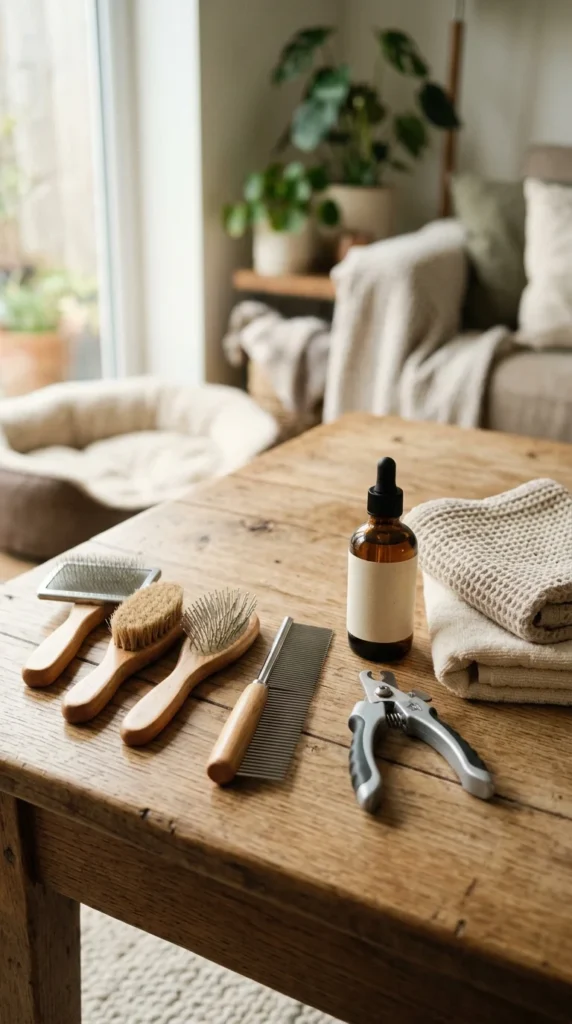
The At-Home Dog Grooming Kit
Gather your tools before you start, so you’re not leaving a wet dog to search for a towel.
- Brushes and a comb: Choose by coat type. Many dogs need a brush plus a comb to check for tangles.
- Dog shampoo: Use a product made for dogs, not human shampoo.
- Towels, and a dryer if your dog tolerates one: Keep any dryer on a low, cool setting.
- Nail clippers or a rotary grinder: Made specifically for dogs.
- Styptic powder or pencil: To stop bleeding if you trim a nail too short.
- Ear cleaner made for dogs: Ask your veterinarian which type suits your dog.
- Cotton balls or gauze: For wiping the outer ear. Avoid cotton swabs deep in the ear.
- Dog toothbrush and dog toothpaste: Never use human toothpaste.
- Treats: Positive rewards make every step easier.
Set Up a Calm Grooming Space
A calm setup prevents most problems. Choose a spot with a non-slip surface, good light, and everything within reach. A bathroom, laundry room, or backyard (in mild weather) can work, depending on your dog’s size.
Never leave your dog unattended on a raised surface or in the tub. Keep sessions short at first, especially for puppies and dogs new to grooming, and end on something pleasant.
Step-by-Step: How to Groom Your Dog at Home
Step 1: Brush first
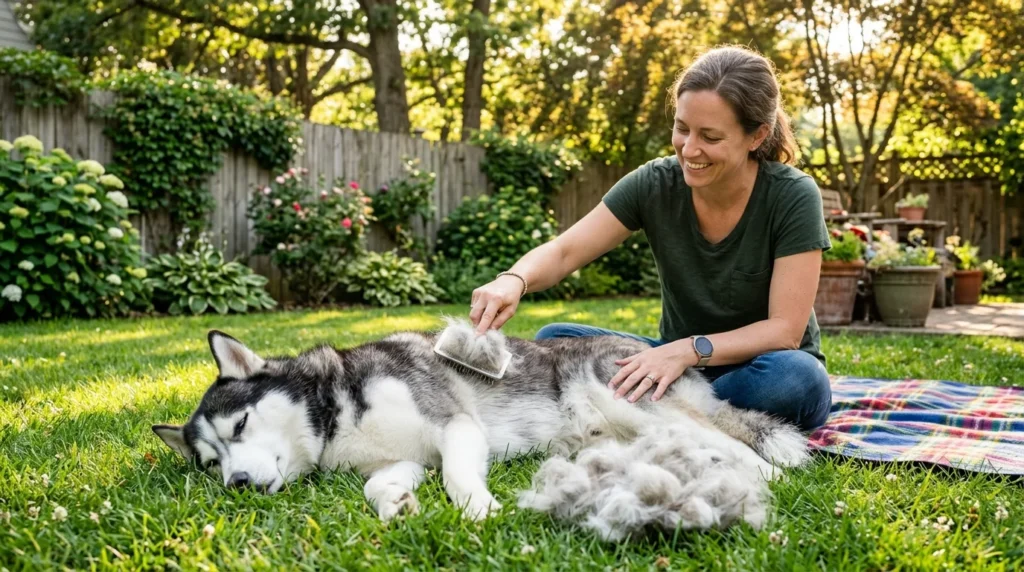
Brush out loose hair and tangles before the bath. Water tightens knots, so a tangle left in the coat can turn into a mat. Brush in the direction of hair growth, and go through the coat to the skin rather than only skimming the top.
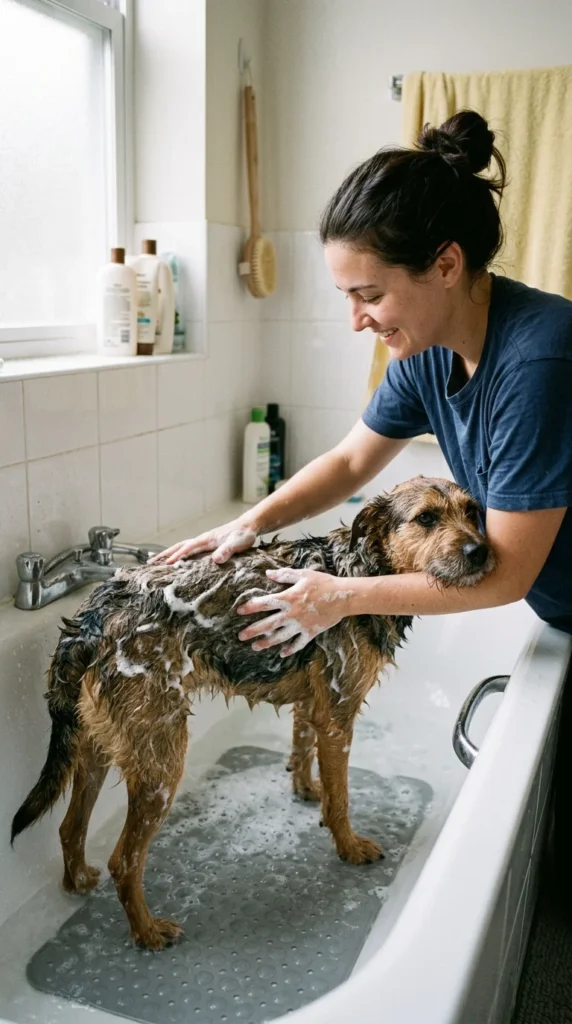
Step 2: Bathe with dog shampoo
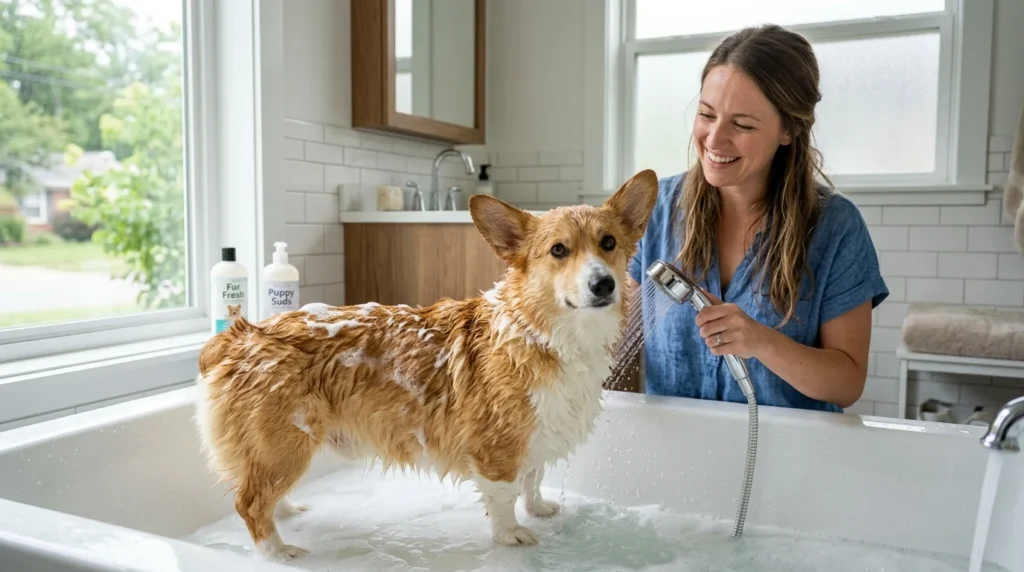
- Wet the coat thoroughly with lukewarm water.
- Apply a small amount of dog shampoo and work it into a lather, avoiding the eyes, ears, and mouth.
- Rinse until the water runs clear, then rinse again. Leftover shampoo can irritate the skin.
- Clean the face last, with a damp cloth.
Bathing needs vary by dog, so check with your groomer or veterinarian if you’re unsure how often your dog should be bathed. Overwashing can dry the skin.
Step 3: Dry thoroughly
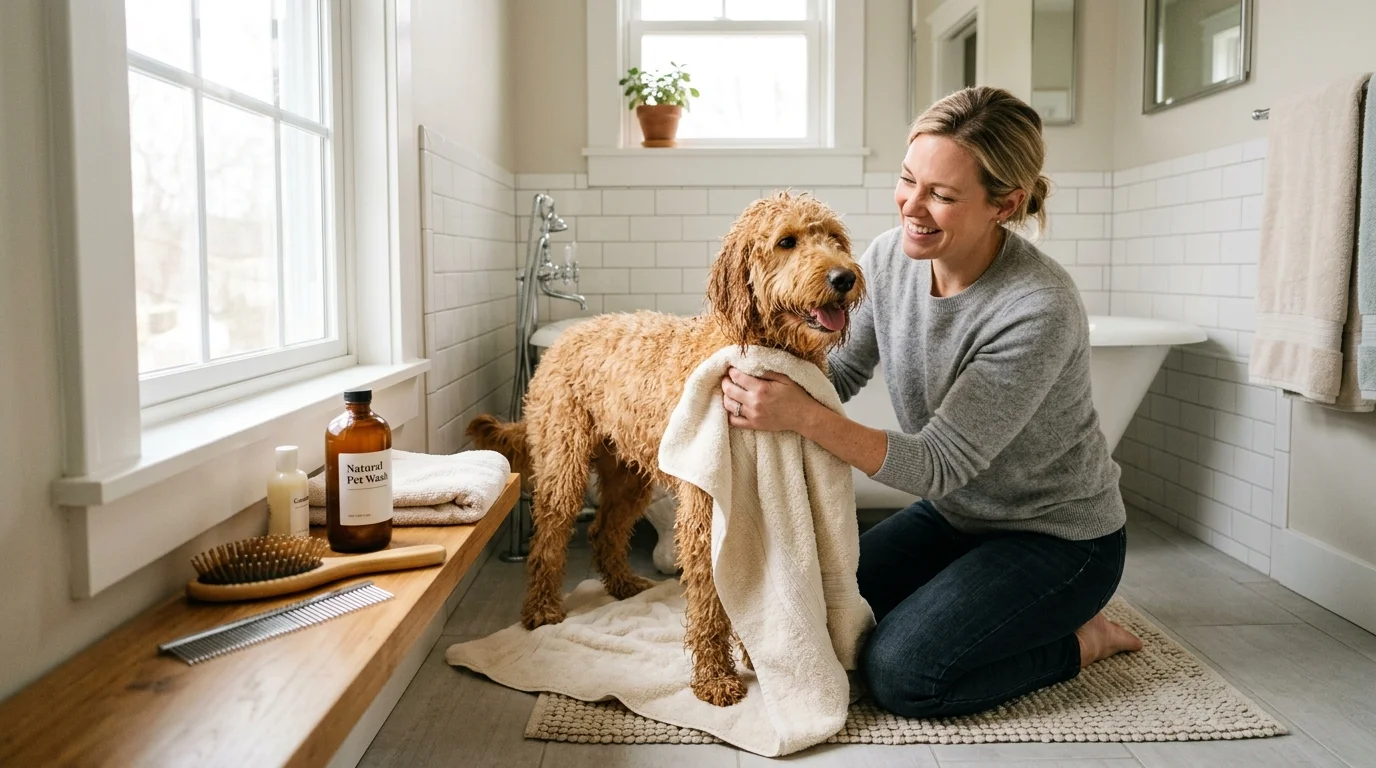
Towel dry first. If your dog tolerates a dryer, use a low, cool setting and keep it moving, and never point it at the face. Dry the ears well, since moisture left in the ear can cause problems. Dense or long coats can stay damp underneath, so check close to the skin.
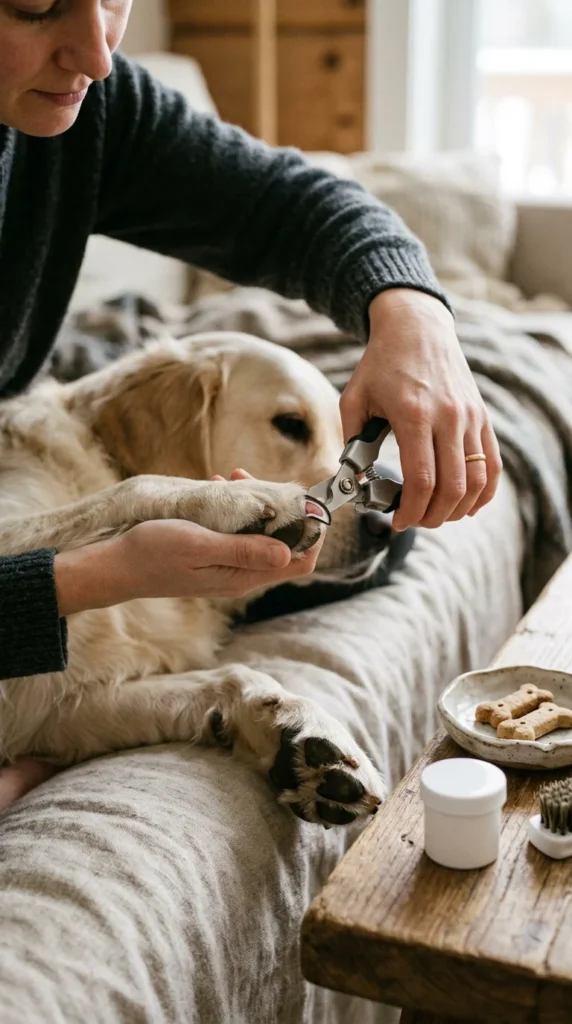
Step 4: Trim the nails
Use clippers or a grinder made for dogs, and trim only the tip, the hook-like part of the nail that curves down. Avoid the quick, a blood vessel inside the nail. On light nails you can usually see it, but on dark nails it’s harder to judge, so trim tiny amounts at a time.
- Start with one or two nails per session if your dog is nervous.
- Keep styptic powder within reach before you begin.
- If you cut the quick, stay calm, apply the styptic powder, and comfort your dog.
If you hear your dog’s nails clicking on hard floors, or notice a change in how your dog walks, the nails may be too long. If you’re unsure, a groomer or veterinarian can show you how.
Step 5: Check and clean the ears
Most dogs benefit from ear care about once a month, and some need it more often. Look at and smell each ear. Use a dog ear cleaner and a cotton ball or gauze on the visible outer ear, and never force anything deep into the ear canal.
Redness, swelling, discharge, a strong odor, head shaking, or scratching at the ears are reasons to call your veterinarian rather than keep cleaning at home.
Step 6: Check the eyes and face
Wipe the corners of the eyes gently with a soft, damp cloth if needed, and use a separate cloth for each eye. Look for redness or other signs of irritation, and contact your veterinarian if your dog’s eyes are red, cloudy, painful, or have a lot of discharge.
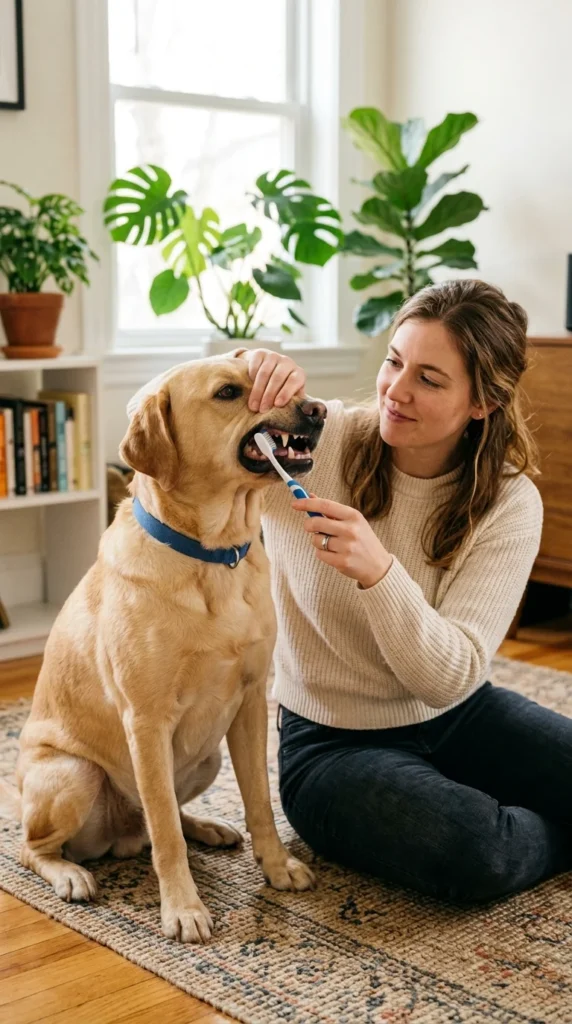
Step 7: Brush the teeth
Use a dog toothbrush and dog toothpaste. Start slowly, letting your dog taste the paste first, then brush a few teeth at a time. Tartar can still build up as dogs age, and some dogs need professional dental cleaning by a veterinarian.
How Often Should You Groom Your Dog?
It depends on the dog, so use this as a starting point rather than a rule.
- Brushing: From weekly for short coats to daily for long or curly coats.
- Bathing: As needed for dirt, odor, and coat type, and not on a fixed schedule for every dog.
- Nails: Regularly, before they get long enough to click on the floor.
- Ears: About monthly, or more often for dogs prone to ear problems.
- Teeth: Ideally brushed regularly, as your dog allows.
Grooming Different Coat Types at Home
Short coats
Weekly brushing with a rubber brush or bristle brush, and occasional baths, is often enough.
Double coats
Brush the undercoat as well as the top coat, particularly during heavy shedding seasons. Before shaving a double-coated dog, ask a groomer, because shaving isn’t always the right choice.
Long and silky coats
Brush often and check with a comb, especially behind the ears, under the legs, and on the belly.
Curly coats
Brush to the skin and dry thoroughly. These coats mat easily, and many owners schedule regular professional grooming for haircuts.
What Not to Try at Home
Some jobs carry a real risk of injury. Leave them to a groomer or veterinarian:
- Tight or large mats close to the skin: Skin can be pulled into a mat, and cutting it out with scissors is a common cause of accidental cuts.
- Sensitive-area trimming and sanitary clips for dogs who squirm or are nervous.
- Full haircuts and breed styling: Professionals have the tools and training.
- Nails for dogs who panic or bite: A groomer or veterinarian can help safely.
- Anything involving pain, bleeding, sores, or a skin condition.
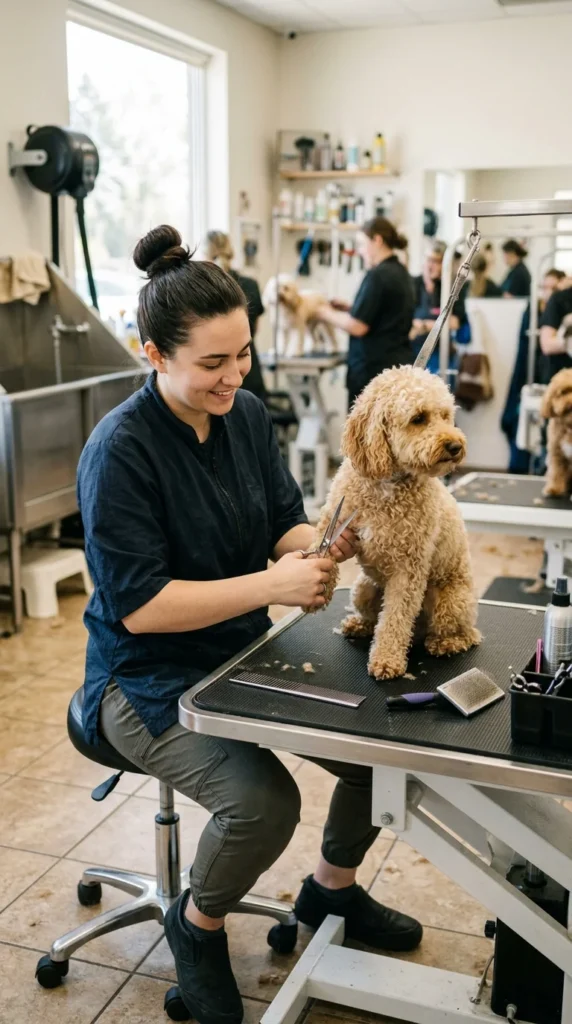
If you don’t feel comfortable doing a task, a trip to a groomer or your veterinarian’s office is usually quick and reasonable.
Common DIY Grooming Mistakes
- Skipping the brush before the bath. Tangles tighten when wet.
- Using human shampoo or toothpaste. Choose products made for dogs.
- Leaving shampoo in the coat. It can irritate the skin.
- Cutting nails without styptic powder nearby. Be prepared before you start.
- Going too fast. A stressed dog learns to dread grooming. Short sessions with treats work better.
- Ignoring what you find. New lumps, sores, odors, or skin changes deserve a veterinary check.
Grooming Puppies, Seniors, and Anxious Dogs
Puppies: Start early. Handle paws, ears, and mouth often, and keep sessions very short and rewarding.
Senior dogs: Use a non-slip surface, keep sessions short, and let your dog stand or lie comfortably if joints are sore.
Anxious dogs: Introduce one tool at a time, reward calm behavior, and stop before your dog gets upset. If your dog is very fearful, a professional or your veterinarian can help.
This article offers general grooming information and isn’t a substitute for professional veterinary advice.
Frequently Asked Questions
Is it OK to groom my dog at home?
Yes, for routine care like brushing, bathing, nail trims, ear checks, and teeth brushing. Leave complicated jobs like haircuts and severe mats to professionals.
What do I need to start grooming my dog at home?
Brushes and a comb, dog shampoo, towels, dog nail clippers, styptic powder, dog ear cleaner, and a dog toothbrush and toothpaste.
How often should I clean my dog’s ears?
Many dogs benefit from about once a month, and some need it more often. Call your veterinarian if you see redness, discharge, or odor.
What if I cut the quick when trimming nails?
Stay calm and apply styptic powder to stop the bleeding. Keep it on hand before you start trimming.
Should I brush my dog before or after a bath?
Before. Brushing first removes loose hair and tangles that water would tighten.
When should I take my dog to a groomer instead?
For tight mats, haircuts, sensitive-area trimming, or any grooming task that stresses your dog or that you don’t feel comfortable doing.
Final Thoughts
DIY dog grooming at home is mostly about steady, gentle routine. Gather the right tools, work in a sensible order, keep sessions short and positive, and know when to hand a job to a professional. Your next step is to set up a basic grooming kit and try one short session this week, starting with a brush and a few treats.