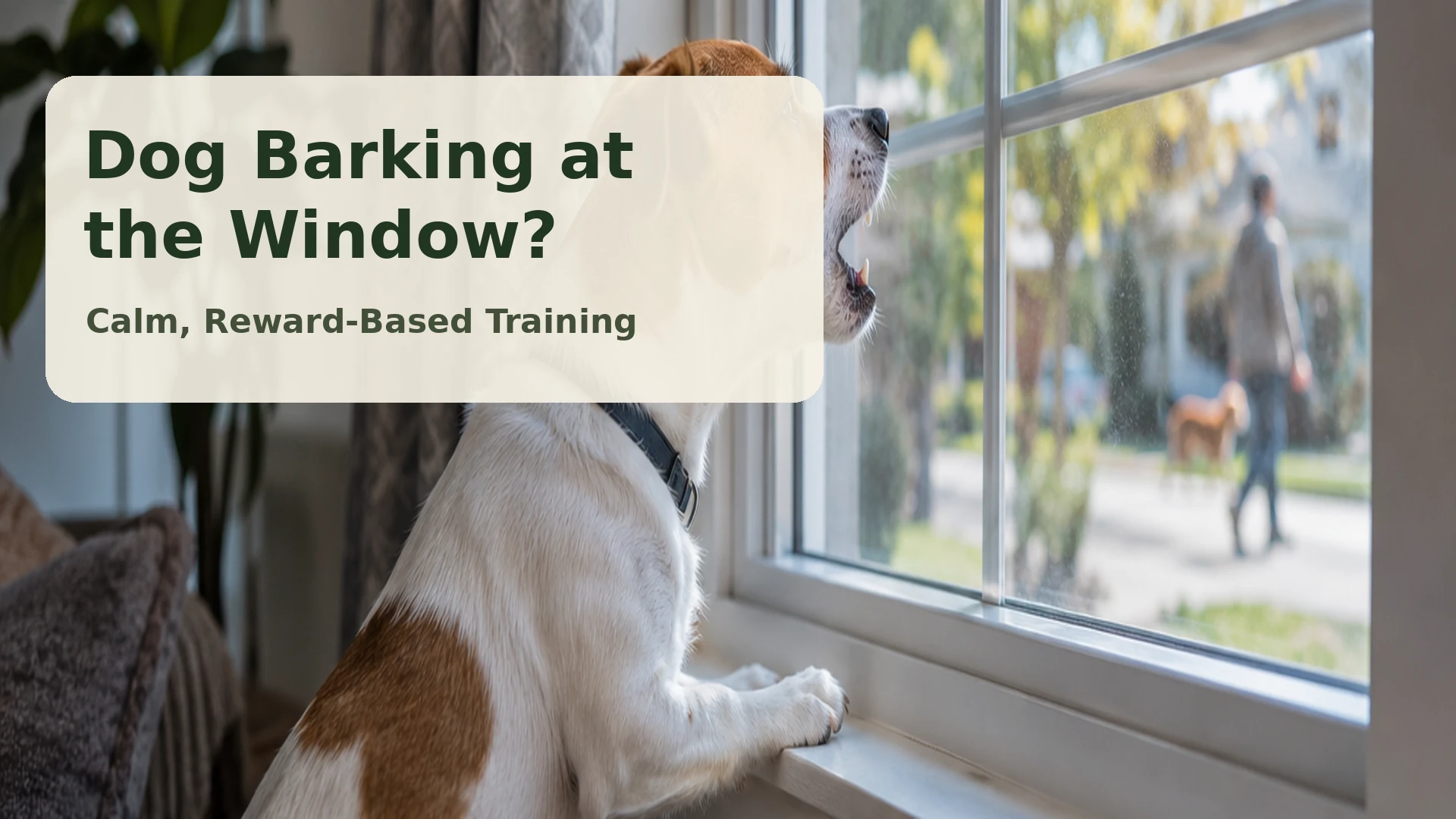
When your dog races to the window and barks at every delivery, neighbor, passing dog, or moving car, the noise can quickly become part of daily life. Window barking is common, but it can also leave a dog wound up and make it difficult for everyone in the home to relax. Fortunately, you can address it without shouting, punishment, or unrealistic expectations of complete silence.
Quick answer: To stop a dog from barking at the window, temporarily block the view when you cannot supervise, identify what makes your dog react, reward them for noticing a trigger without barking, and teach an easy alternative such as turning toward you or relaxing on a mat. Practice at a distance and intensity your dog can handle. The goal is fewer, shorter, less intense barking episodes—not allowing a dog to communicate.
Affiliate disclosure: As an Amazon Associate, Dogs Daily Care earns from qualifying purchases. This article includes affiliate links; we may receive a commission at no additional cost to you.
Table of Contents
Why Does My Dog Bark at the Window?
Understanding the reason matters more than trying to silence the sound. According to the American Kennel Club’s window-barking guidance, dogs may react because they are worried, territorial, excited, frustrated, or understimulated. The same-looking bark can represent very different emotions.
Alerting or territorial behavior
A dog hears a truck approaching or spots a stranger walking close to the house and sounds the alarm. If the person then walks away, the dog may learn that barking seems to work. The VCA veterinary behavior team explains why this pattern can become self-rewarding even though the passerby was always going to leave.
Fear or uncertainty
Some dogs stiffen, retreat, growl, or bark because a person, dog, or unfamiliar object outside makes them uneasy. If your dog is tense or won’t accept food near the window, the situation is already too difficult for effective learning. Give them more distance and reduce exposure before asking for another behavior.
Excitement or barrier frustration
A social dog may desperately want to greet people or other dogs on the sidewalk. A glass window prevents them from reaching what they see, which can produce spinning, jumping, whining, and barking. A dog that becomes excited in this way needs practice settling, not punishment for being interested in the outside world.
Boredom and a learned habit
For some dogs, the front window becomes all-day entertainment. Every passerby sets off another rehearsal of the same behavior. Once the sequence is practiced repeatedly, barking may happen quickly, before the dog has a chance to think. Better enrichment can help, but it does not replace targeted training.
First, Stop the Daily Rehearsal
Training is much harder if your dog spends hours practicing the behavior between sessions. Management isn’t cheating; it protects your dog’s chance to learn. Start with the easiest changes that make the view less stimulating.
- Close curtains or blinds during your busiest delivery and dog-walking hours.
- Apply removable frosted window film to the lower portion of the glass if seeing movement at dog height is the main trigger. Check that the product suits your window and can be removed safely.
- Move furniture or a favorite lookout perch away from the window if jumping onto it causes frantic barking.
- Use a baby gate to create comfortable distance from the window when supervision is limited. Never block access to water, a safe resting area, or required exits.
- Play low-volume background sound if outdoor noises, rather than sights, are the main trigger.
If there are several dogs in the household, separate them during the first training sessions if one dog reliably triggers the others. Keep any barriers positive, comfortable, and appropriate to the dog’s size and mobility.

A Step-by-Step Window Barking Training Plan
Set up five-minute sessions at a time when activity outside is predictable but not overwhelming. Have pea-size treats ready. Your dog should be able to notice the trigger, take food, and respond to their name. If they are already barking continuously, change the setup before continuing.
Step 1: Find your dog’s easy starting point
Stand several feet back from the window with the curtains only partly open. If your dog can look outside, keep a loose body, and turn toward you for a treat, you’re at a useful starting point. If they freeze, lunge, or bark, close the curtain further or work in another room.
Step 2: Reward noticing without reacting
When a person or dog appears, calmly say “yes” before the barking begins and offer a treat. Do not wait until your dog has been staring and stiffening for several seconds. Over repeated, easy exposures, the sight of a passerby can become a cue to check in with you instead of rushing the window.
Initially, treat generously: one small reward for noticing, another for turning back toward you, and another for staying calm. If no triggers appear, practice with a helper walking at a comfortable distance where the dog can succeed. Never ask a stranger to deliberately startle your dog.
Step 3: Teach a reliable “come away” cue
In a quiet room, say a short cue such as “this way,” step backward, and reward your dog for following. Repeat until the cue is familiar. Then rehearse it with the curtains closed near the window and later with a mild distraction visible. This is often more useful than repeatedly shouting “quiet” at a dog already overwhelmed.
For the foundation skills behind this exercise, see our guide to basic obedience commands every dog should know.
Step 4: Teach relaxation on a mat
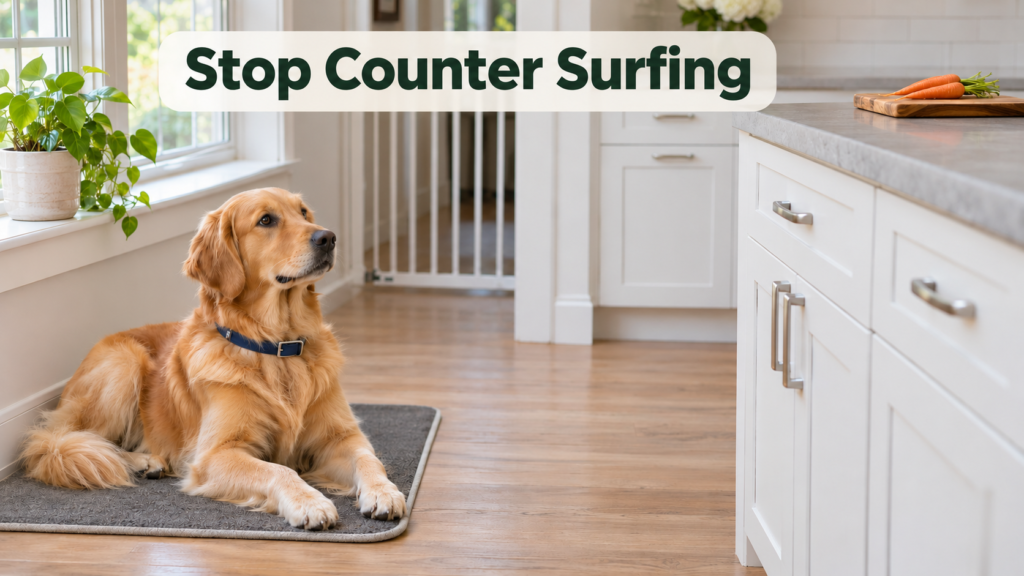
Place a nonslip mat several feet from the window. Reward your dog for stepping onto it, then for sitting or lying down. Gradually reward longer periods of calm behavior. Practice when nothing exciting is happening first. When your dog understands the routine, open the curtains briefly and reward calm glances or a return to the mat.
A quiet, separate rest area can also be useful. If a dog genuinely enjoys a crate, positive adult-dog crate training may provide another option, but a crate should never be used to trap a distressed dog during a barking episode.

Step 5: Gradually make the training more realistic
Once your dog can watch a person pass at a distance without exploding into barking, open the blinds a little more or increase the duration of the session. Change only one variable at a time: distance, duration, movement, or intensity. Return to an easier version if the dog starts barking repeatedly. Progress is not always linear.
The VCA guide to desensitization and counterconditioning explains why gradual exposure paired with rewards works best when the dog stays below their fear threshold.
What If Your Dog Is Already Barking?
Trying to teach a new skill in the middle of a full reaction usually isn’t productive. Stay calm. Avoid yelling, physically pulling the dog off a couch, grabbing their collar, or looming over them. Those responses may heighten arousal, especially for a dog who is frightened.
If they can still respond, say your practiced “this way” cue and lead them to a different space where you can reward settling. If they cannot respond, simply reduce the view and give them time to recover. When the barking ends, do not rush to reopen the curtains to test them again. Record what triggered the episode and make the next session easier.
If barking occurs mostly at the door rather than at the glass, practice polite greetings and controlled distance too. Our guide to stopping a dog from jumping on people covers some related impulse-control skills.
Helpful Equipment Without Turning Training Into a Shopping List
You can begin with treats, a washable mat, and a window covering you already own. Optional products may make consistency easier; none is a substitute for training or a guarantee that barking will stop.
A clip-on Chuckit! Treat Tote training pouch lets you reward calm behavior quickly rather than scrambling for treats after the trigger passes. Product identity is supported by third-party listing information; confirm the current size and seller before purchase.
For downtime away from the window, an appropriately sized KONG Classic Large stuffable dog toy can provide supervised food enrichment. The linked variant is large, so check sizing and chewing style before ordering. A LickiMat Classic Buddy is another option for a supervised, food-based activity when your dog is relaxed enough to enjoy it. Wash and inspect enrichment items according to their instructions.
Do not use shock collars, startling noises, or devices designed to punish barking as a first-line fix. Some dogs may become more fearful or reactive even if the noise temporarily stops.

A Simple Daily Practice Schedule
Morning: Before the neighborhood becomes busy, give your dog an appropriate walk or sniffing opportunity. Spend two minutes reinforcing “this way” or “go to mat” in a quiet room.
Afternoon: Keep the busiest window partially blocked. When you have five minutes to supervise, open a small view, reward calm observations, and end while the dog is successful.
Evening: Offer a comfortable resting area or food enrichment away from the window. Write down one easy success and one trigger that still needs work. On difficult days, choosing more management rather than harder training is sensible.
Two or three short, manageable sessions are generally more useful than allowing one prolonged barking episode. Keep the rest of your dog’s routine predictable and account for adequate sleep, age-appropriate activity, and recovery time.
Common Mistakes That Slow Progress
- Opening all the blinds too soon. Increase exposure in small steps rather than overwhelming your dog.
- Only rewarding after a long barking fit. Look for the moment your dog notices the trigger while still calm.
- Repeating “quiet” louder and louder. Teach a useful cue first when your dog can learn.
- Letting barking continue for hours between sessions. Combine training with window management.
- Assuming every dog has the same motivation. Fear, excitement, territorial behavior, and boredom can require different adjustments.
- Using a crate or gate as punishment. These tools should preserve comfort, access, and choice.
How to Tell Whether Training Is Working
Do not judge progress only by whether the room is completely silent. Better measures include how quickly your dog turns away from the window, whether they can take a treat, how intense the barking sounds, how long it lasts, and how quickly they recover afterward.
Try keeping a simple log: trigger, time, setup, response, and what helped. For example, “Tuesday, delivery truck, blinds half closed, two barks, returned to mat within 20 seconds.” Improvement is often gradual and uneven; some days will be harder because the surroundings are busier or the dog is tired.

When to Ask a Veterinarian or Qualified Trainer for Help
Seek guidance when your dog is panicking, slamming into windows, redirecting bites toward people or pets, or becoming increasingly fearful of ordinary sights and sounds. A sudden new barking pattern—especially in an older dog—also deserves a veterinary check, because pain, sensory changes, or other medical problems can influence behavior.
A credentialed reward-based trainer or veterinary behavior professional can help you distinguish frustration from fear and design a program within your dog’s comfort level. In the meantime, protect your dog from repeated intense triggers rather than forcing practice.
Frequently Asked Questions
Should I let my dog look out the window all day?
Not if the view leads to repeated barking or distress. Some dogs enjoy quiet observation, but others benefit from restricted access except during brief training sessions.
Can I teach my dog the word “quiet”?
Yes, but teach it during easy moments and reward the silence that follows. A practiced “come away” or “go to mat” cue is often a helpful alternative when the dog is already focused on the window.
Will frosted window film stop barking?
It can reduce visual triggers, especially at dog-eye level, but it may not address sounds or the underlying emotional response. Use it as management alongside training.
How long does window-barking training take?
There is no reliable universal timeline. It depends on how long the habit has been practiced, the dog’s emotional response, how predictable triggers are, and consistency at home. Track shorter episodes and faster recovery rather than expecting instant silence.
Should I scold my dog for barking at people?
No. Yelling can increase stress or excitement. Instead, prevent repeated rehearsals and reward a calm alternative at a level your dog can manage.
Final Thoughts
The most sustainable way to reduce window barking is to give your dog fewer chances to practice frantic reactions and more chances to succeed at calm behavior. Start with a less stimulating view, reward early check-ins, teach a simple “this way” or mat routine, and make training gradually more realistic. If fear or aggression is part of the pattern, involve a professional early. Patient, practical work can make the window a much less stressful part of home life.