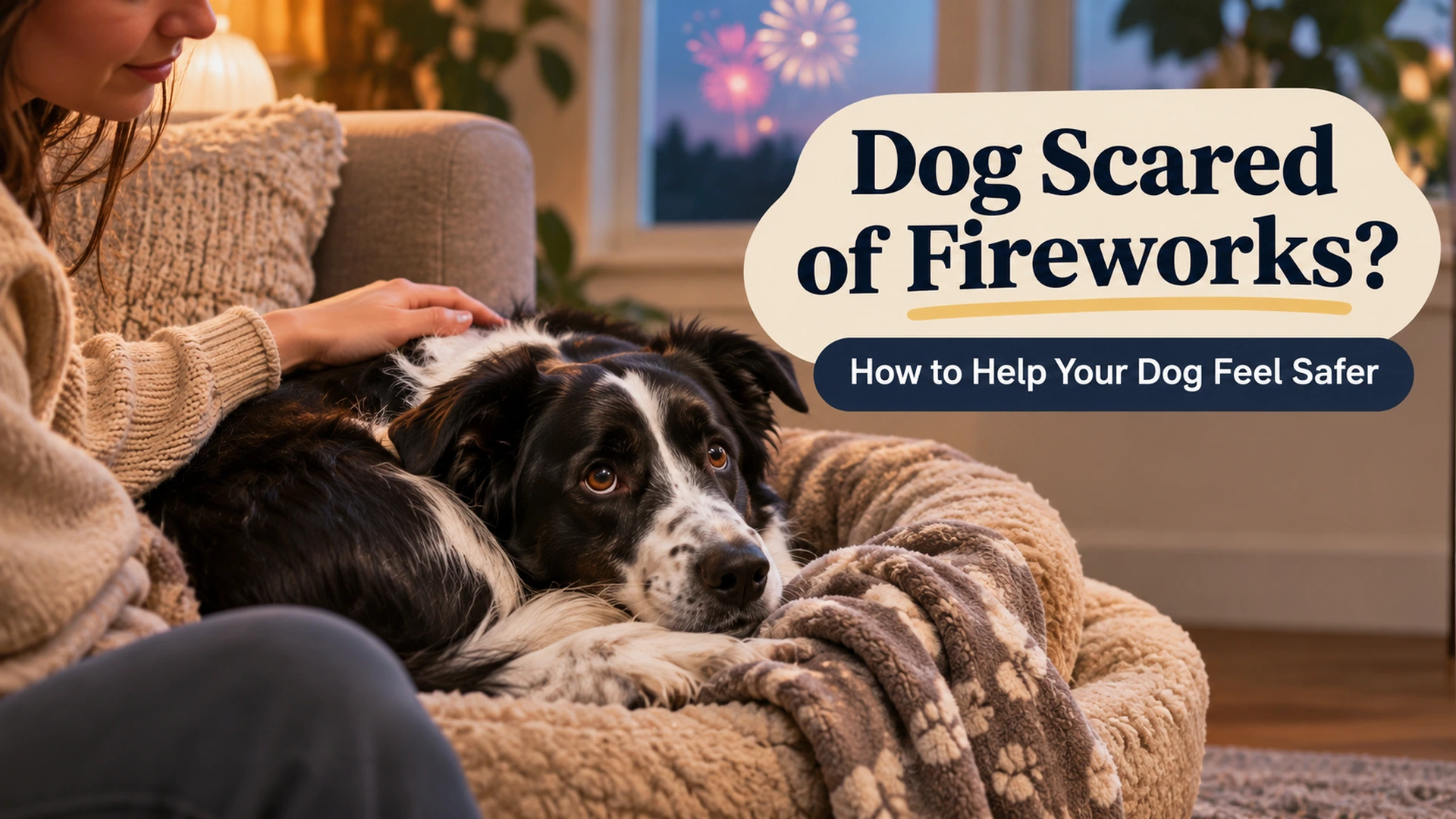
Fireworks can turn a normal evening into a very stressful one for some dogs. If your dog trembles, pants, paces, hides, or tries to bolt when the noise starts, you are not alone. Noise sensitivity is common, and fireworks are especially difficult because the sounds are sudden, loud, and unpredictable.
The good news is that there are practical ways to help your dog feel safer. A calm setup, early preparation, and the right support can make a big difference. For dogs with severe panic, your veterinarian may also recommend behavior support or short-term medication.
Quick answer: If your dog is scared of fireworks, bring them indoors early, set up a quiet safe space, close curtains and windows, play calming background noise, offer a food toy or lick mat, and stay calm yourself. If your dog panics, injures themselves, or stays distressed for hours, call your veterinarian.
Affiliate disclosure: As an Amazon Associate, Dogs Daily Care earns from qualifying purchases. This page may contain affiliate links; purchases may generate a commission at no additional cost to you.
Table of Contents
Why dogs get scared of fireworks
Fireworks are challenging for dogs because they combine several triggers at once: loud bangs, vibration, flashing lights, unusual smells, and an unpredictable pattern. According to Cornell University College of Veterinary Medicine, dogs with noise sensitivity may show anything from mild uneasiness to severe panic. Some dogs are naturally more sensitive, while others develop the fear after a bad experience or as they get older.
A dog may seem fine during a quiet week and then react intensely when fireworks begin. That does not mean the dog is trying to get attention. The combination of unexpected sound and being unable to predict when the next bang will happen can keep the nervous system on alert. Some dogs recover after the noise stops, but others remain watchful or refuse to go outdoors the next day.
Notice whether your dog starts worrying before the first firework. Evening darkness, crowds, neighborhood parties, or the sound of distant popping may become warning cues. Keeping a short record of when the fear starts and how your dog responds can help your veterinarian plan treatment.
Firework fear is not disobedience or stubbornness. It is a fear response. That means punishment does not help and usually makes the problem worse.
Common signs of fireworks stress in dogs
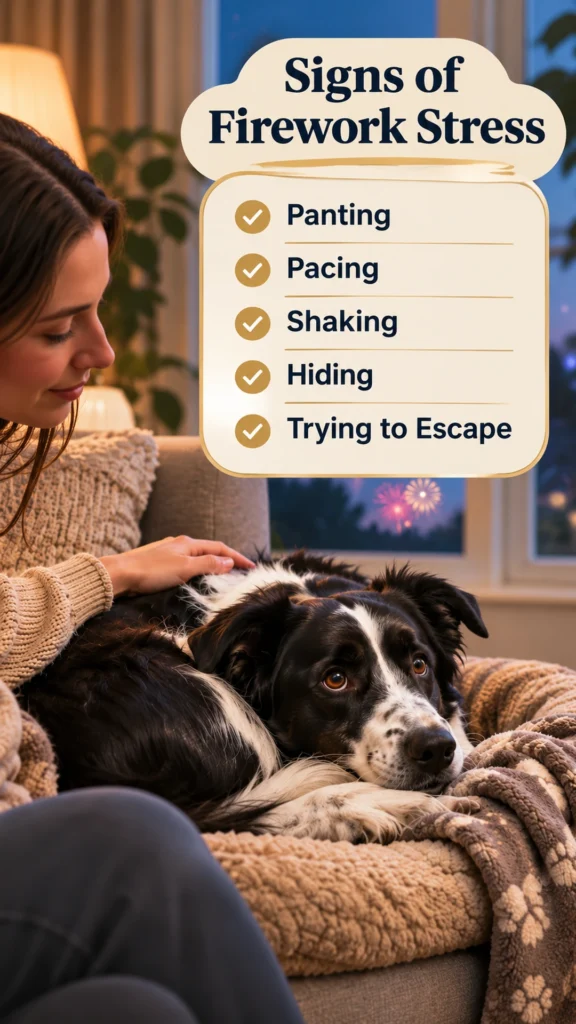
Some signs are easy to spot, while others are subtle. Watch for:
Look at the whole dog, not one behavior. Panting could also come from heat or activity. But panting combined with a tucked tail, pinned-back ears, frantic scanning, trembling, or repeated escape attempts strongly suggests distress. A dog that freezes, refuses a favorite treat, or becomes unusually still may be just as frightened as one that barks.
Severe escape attempts are a safety concern. Do not grab a terrified dog by the collar if they are struggling, and avoid cornering them. Instead, reduce stimulation, secure exits, and guide them toward a safe room if they can move willingly.
- Panting when your dog has not been exercising
- Pacing or being unable to settle
- Shaking or trembling
- Whining, barking, or clingy behavior
- Hiding under furniture, in a closet, or in a bathroom
- Drooling, yawning, or lip licking
- Trying to escape through a door, window, fence, or crate
- Ignoring food they would normally enjoy
Cornell’s firework safety guidance also warns that some frightened dogs may accidentally hurt themselves while trying to escape. That is one reason preparation matters so much.
How to help your dog before fireworks start
1. Set up a safe space early
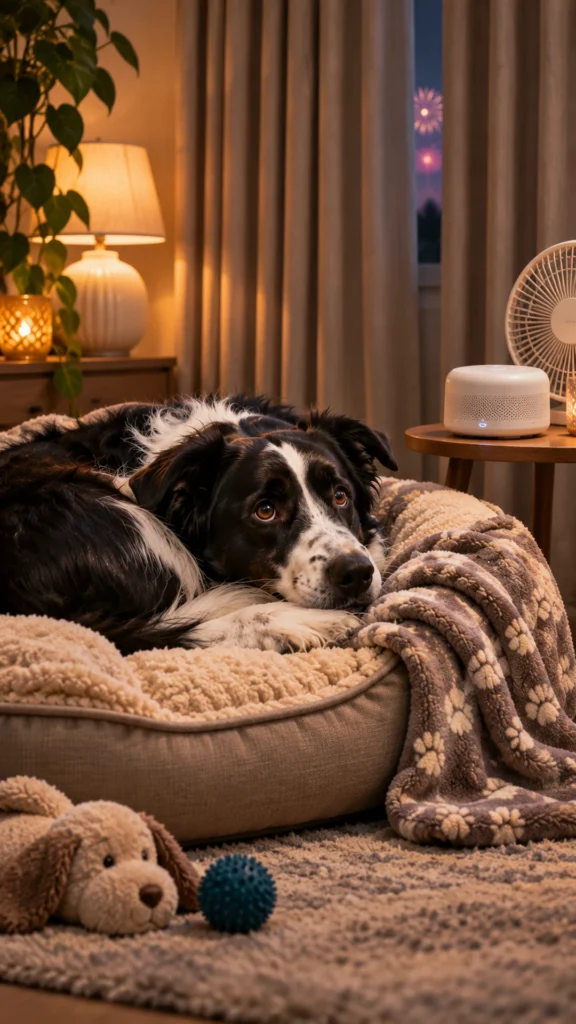
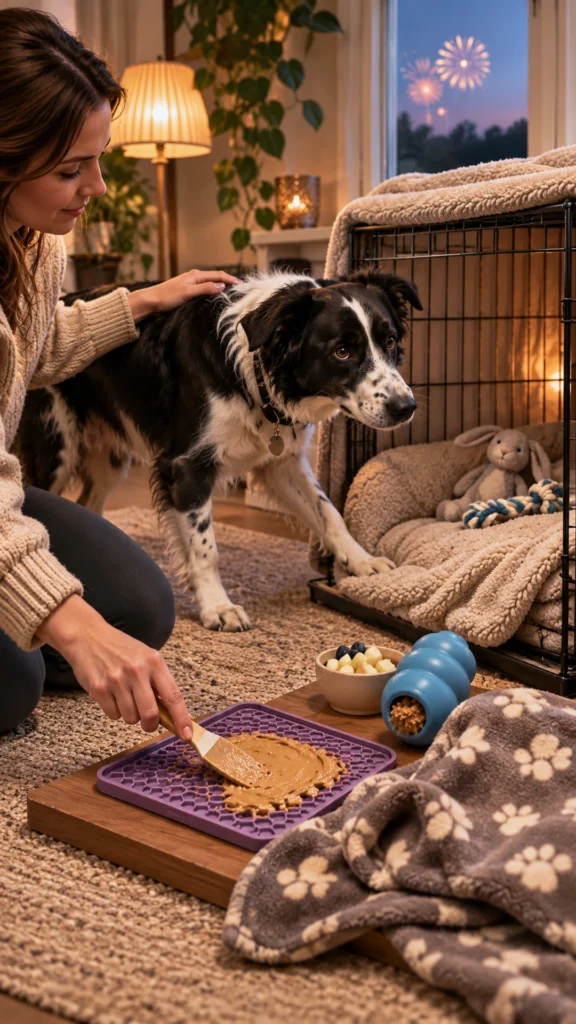
Create a quiet area before the fireworks begin. This can be a covered crate, a small bedroom, a laundry room, or another spot where your dog already relaxes. Add familiar bedding, a favorite toy, and something soothing to do, such as a food-stuffed toy or a lick mat.
Start by observing where your dog naturally goes when startled. Some choose a closet, bathroom, or space behind the couch; others settle next to a familiar person. Make that area accessible and comfortable. If possible, use an interior room away from street-facing windows, with water nearby and enough space to change position.
If your dog already enjoys a crate, keep its door open so they can enter and leave voluntarily. Never introduce forced confinement on fireworks night. For dogs learning to accept a crate in advance, our adult dog crate-training guide explains how to build a positive association gradually.
Test background sounds at a normal, comfortable volume before the event. The goal is to soften sharp outside noises, not to drown them out with extremely loud music. Keep fans and cables out of reach. If your dog prefers company, place a chair or cushion near their chosen resting area.
Keep the space as calm as possible. Close curtains or blinds to reduce flashes. Shut windows to muffle noise. Turn on a fan, white-noise machine, TV, or soft music to help mask the sound.
2. Exercise earlier in the day
Take your dog out well before fireworks are likely to start. A sniffy walk, play session, or training session earlier in the evening may help take the edge off. Avoid late-night walks once fireworks are already going off.
Choose familiar routes rather than an exciting new outing. Make time for a bathroom break and any necessary medication according to the veterinarian’s instructions before expected fireworks. Feed the usual meal at a predictable time; abrupt changes to diet or routine can add another stressor.
3. Make sure your dog cannot escape
Check doors, gates, and windows before dusk. Keep your dog indoors and make sure identification tags and microchip details are current. The Cornell fireworks safety article notes that panicked pets may run away while trying to find safety.
Have every household member agree on a simple door rule: no opening exterior doors until the dog is in a secure room, on a properly fitted leash, or otherwise safely contained. Visitors and delivery arrivals can create a brief opening that a panicked dog may use to bolt. Check that fences are intact, but do not rely on a fenced yard as the primary safety measure during fireworks.
For more everyday household hazards, see our room-by-room home safety checklist; many of the same door, cord, and storage precautions also help adult dogs.
4. Prepare calming supplies
Some owners like to prepare quiet enrichment before the noise starts. A smear of canned dog food, xylitol-free peanut butter, or plain pumpkin on a lick mat can keep many dogs engaged. A pressure wrap may also help some dogs feel more secure, although results vary by dog.
Offer enrichment well ahead of the first loud bangs, when your dog is still interested in food. Choose fillings that fit your dog’s usual diet; avoid choking risks and check ingredients carefully. If using peanut butter, confirm that it contains no xylitol (sometimes labeled birch sugar). Wash food-contact surfaces afterward.
Pressure garments and pheromone diffusers are optional aids rather than a substitute for an anxiety treatment plan. Introduce a garment on a quiet day, check fit and skin comfort, and remove it if the dog seems more uncomfortable. Plug-in products should be used as directed and kept away from curious pets, fabric, and restricted airflow.
Helpful calming tools
- ThunderShirt Classic Dog Anxiety Jacket — Find on Amazon
- ADAPTIL Calm Home Diffuser — Find on Amazon
- LickiMat Classic Buddy — Find on Amazon
Always supervise your dog with food toys and choose the right size product for your dog.
What to do while fireworks are happening
Begin with a simple check: are doors secured, is the dog inside, and can the dog reach a quiet area? Then lower stimulation. If your dog will not settle, offer your presence without demanding obedience, tricks, or social interaction. The priority during a frightening event is safety, not training progress.
Stay calm and act normal
You do not need to ignore your dog, but you also do not need to make a huge fuss. If your dog seeks contact, it is fine to sit nearby, speak softly, or pet them if that seems to help. Your goal is to be a calm, safe presence.
Comforting your dog does not mean rewarding fear. If they approach you, let them lean against you or sit nearby. If they move away, respect that choice. Children should be supervised and instructed not to hug, restrain, chase, or disturb a frightened dog, because even gentle dogs may react defensively when startled.
Offer choices
Let your dog choose whether to rest in their safe space, stay close to you, or move to another quiet room. Do not force them out of a hiding spot unless there is a safety issue.
Use food and enrichment if your dog will take it
Some dogs will happily work on a stuffed toy, chew, or lick mat during fireworks. Others are too stressed to eat. If your dog refuses food, do not push it. Just stay with the other calming steps.
Do not punish fear behaviors
A frightened dog is not being bad. Yelling, scolding, or forcing them to “face the noise” can make the fear worse and may increase the risk of defensive behavior.
If fear leads to barking, focus on reducing the trigger rather than demanding silence. Our guide to excessive dog barking explains how to distinguish fear-based vocalization from everyday barking patterns and why punishment is unhelpful.
Long-term help for dogs with fireworks anxiety
If your dog struggles every holiday or summer season, think beyond one night of management. The most helpful long-term plan often includes desensitization and counterconditioning. That means exposing your dog to a very low-level fireworks recording while pairing it with something positive, such as treats or play, and gradually increasing the volume over time.
A gentle practice plan between events
- Start with a relaxed dog. Choose a quiet day with no actual fireworks nearby and prepare small rewards your dog enjoys.
- Play a recording at barely audible volume. The sound should be low enough that your dog continues eating, sniffing, or relaxing normally.
- Pair the sound with something pleasant. Offer treats or a relaxed play session, then stop the recording before your dog becomes uneasy.
- Repeat very short sessions. Over many sessions, only adjust volume or duration if your dog stays genuinely comfortable. There is no deadline.
- Lower the difficulty if your dog reacts. Freezing, scanning, refusing food, or moving away means the exercise is too intense. Stop and ask a qualified professional for guidance if progress stalls.
Recordings cannot reproduce every real-world feature of fireworks, and some dogs do not respond well to them. If the dog has had panic attacks, speak with your veterinarian before attempting exposure work. Do not play loud fireworks sounds to “get it over with,” and never use real fireworks for training.
Make a plan with your veterinarian
For severe noise phobia, your veterinarian can assess pain, sensory changes, and other conditions that may worsen a dog’s response. They may recommend a behavior plan, a veterinary behavior specialist, or appropriate prescription medication. Medication should be chosen and trialed under veterinary supervision well before a predictable event when possible; human sedatives and over-the-counter calming products should not be given casually.
This process should be done slowly and outside of actual fireworks events. If your dog is already highly distressed, work with your veterinarian or a qualified positive-reinforcement trainer. The BSAVA position statement supports evidence-based behavior work and, when needed, short-term or long-term veterinary treatment.
When to call your vet
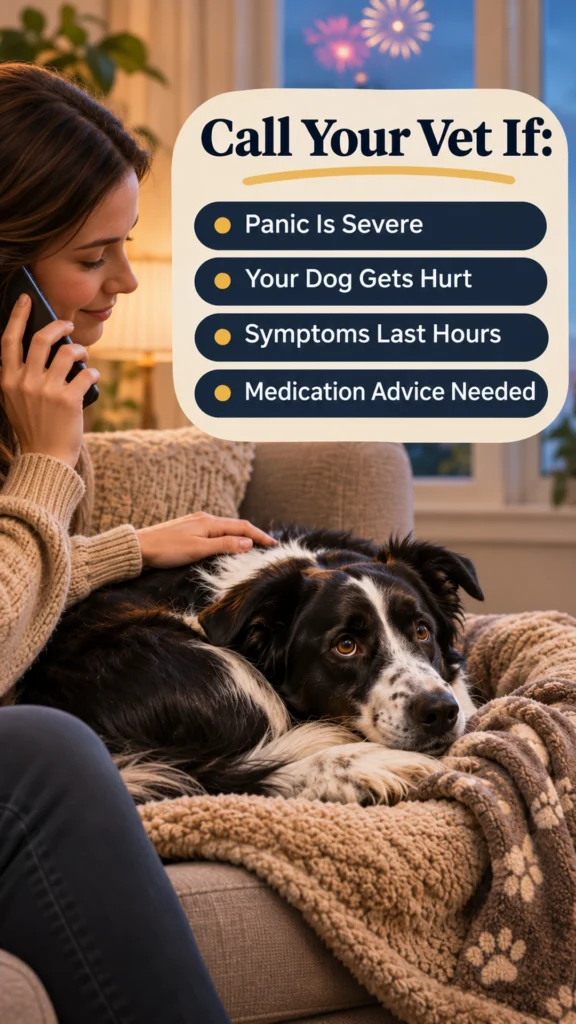
Some dogs need more than at-home comfort measures. Contact your veterinarian if:
Seek urgent veterinary attention if your dog is injured, collapses, has difficulty breathing, develops a seizure, or cannot recover normally after the event. If your dog has ingested firework debris or chemicals, contact a veterinarian or animal poison service immediately rather than trying to make the dog vomit.
If your dog is repeatedly terrified even with a quiet room, schedule a nonurgent appointment before the next holiday. Share any videos or notes about symptoms, triggers, duration, and what you tried. That context helps the veterinarian distinguish a mild startle response from a serious noise phobia.
- Your dog panics so badly that they cannot settle
- Your dog injures themselves trying to escape
- The fear is getting worse each year
- Your dog stops eating and will not calm down for hours
- You think your dog may need prescription help before expected fireworks
Do not wait until the last minute if you already know fireworks are a problem. Cornell recommends speaking with your vet ahead of known fireworks events because some dogs benefit from a treatment plan or trial medication before the big night.
Helpful mistakes to avoid
Do not make an already frightened dog stay outdoors for a potty break. When the noise is active, use the safest feasible short outing with a well-fitted harness and leash only if necessary, or wait until it settles when possible. Do not leave the dog alone in a car or an unsecured outdoor area to avoid the indoor noise.
Holiday events can introduce additional risks. Review our Christmas hazards for dogs article for advice on decorations, guest gatherings, and seasonal household safety.
- Do not take your dog to watch fireworks
- Do not let your dog out unsupervised after dark on firework nights
- Do not force your dog to “be brave”
- Do not assume natural remedies are always safe or effective without veterinary guidance
- Do not give human sleep aids or human anxiety medication unless your veterinarian has specifically told you to do so
FAQ
Should I comfort my dog during fireworks?
Yes, if your dog seeks you out and your calm presence seems to help. You are not “rewarding fear.” You are helping your dog feel safer.
Is it okay to crate a dog during fireworks?
Yes, if your dog already sees the crate as a safe place. Do not suddenly shut a crate-phobic dog inside during fireworks.
Do calming wraps or pheromone diffusers work?
They can help some dogs, but not all. They usually work best as part of a larger plan that includes a safe environment and veterinary support when needed.
Can fireworks fear get worse over time?
Yes. Repeated bad experiences can intensify the response, which is why early management and training matter.
Final thoughts
If your dog is scared of fireworks, the best response is preparation, safety, and compassion. Create a quiet indoor retreat, reduce noise and flashes, provide calm enrichment, and talk to your veterinarian if your dog’s fear is severe. Small changes can make fireworks season much more manageable for both of you.