
Christmas brings new sights, smells and tempting objects into a dog’s home. An otherwise ordinary living room can suddenly contain a tall tree, dangling ornaments, unfamiliar plants, chocolates, ribbon and extra electrical cords. Some cause stomach upset; others can lead to choking, intestinal blockages, poisoning, burns or serious injury.
This guide covers the most important Christmas hazards for dogs, along with simple ways to make your celebrations safer. The goal is not to make your home decoration-free. It is to prevent a curious dog from reaching the few things that can turn a festive evening into an emergency.
Table of Contents
Quick Answer: What Christmas Decorations and Foods Are Dangerous for Dogs?
Keep dogs away from unsecured Christmas trees, tree-stand water, glass ornaments, tinsel, ribbon, batteries, light cords, burning candles, holly, mistletoe, chocolate, raisins, grapes and products containing xylitol (also called birch sugar). Secure the tree, cover its stand, choose sturdy decorations, store foods in closed containers and create a dog-free area when guests or gifts make supervision difficult.
If your dog swallows a decoration, eats a potentially toxic food or plant, or bites a live electrical cord, contact your veterinarian or an emergency clinic promptly. Do not induce vomiting or pull a swallowed string from your dog’s mouth or rectum without professional direction. See the emergency plan below.
Christmas Tree Hazards for Dogs
A Christmas tree is more than a holiday centerpiece to a dog. It may smell interesting, look climbable or carry chewable toys. Both real and artificial trees need a safety plan. Cornell University’s holiday hazards guidance identifies needles, tree decorations and tipping as risks.
Secure the tree before decorating
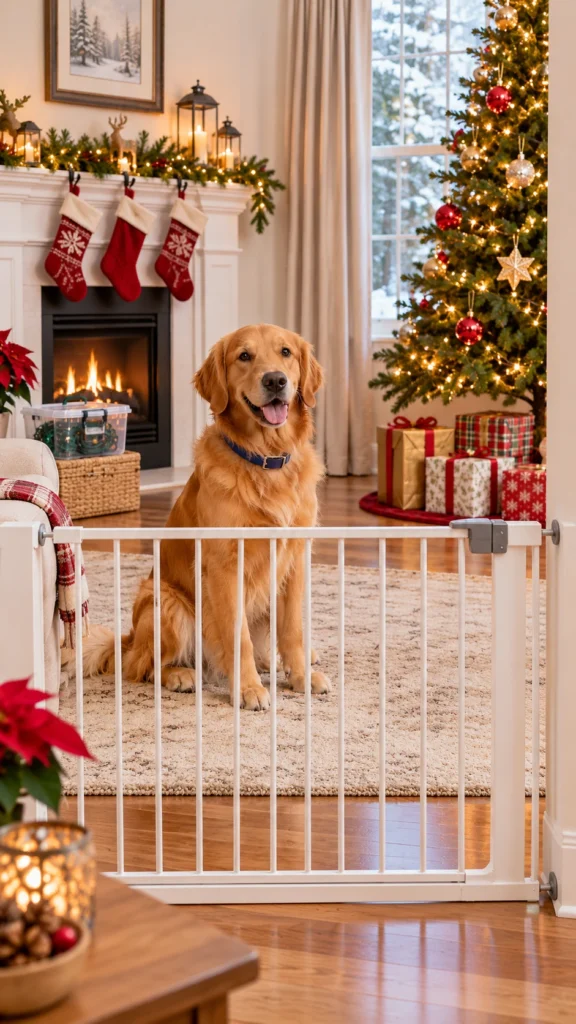
Choose a stable stand sized for your tree and anchor the trunk to a secure point if tipping is possible. Put the tree away from furniture that lets a dog reach higher branches. A baby gate or exercise pen is especially useful for puppies, chewers and energetic dogs who knock things over with their tails.
Place heavier, unbreakable ornaments low only if your dog reliably leaves them alone; otherwise, leave the bottom branches undecorated. Avoid edible decorations such as popcorn strands, salt-dough ornaments and chocolate ornaments entirely.
Cover the water in a real tree stand
Tree-stand water may contain fallen needles, microbes or chemical additives. Do not assume it is a safe drinking bowl. Use a secure, close-fitting stand cover and provide clean water in your dog’s usual bowl. Avoid putting preservatives or other additives in tree water accessible to pets.
Pick up needles and watch for chewing
Fallen needles can irritate the mouth and digestive tract; swallowed plant material may occasionally contribute to a blockage. Sweep or vacuum daily, particularly under natural trees. Artificial needles and plastic branches are not food either: chewing off and swallowing pieces can cause similar physical problems.
Christmas Plants That Can Harm Dogs
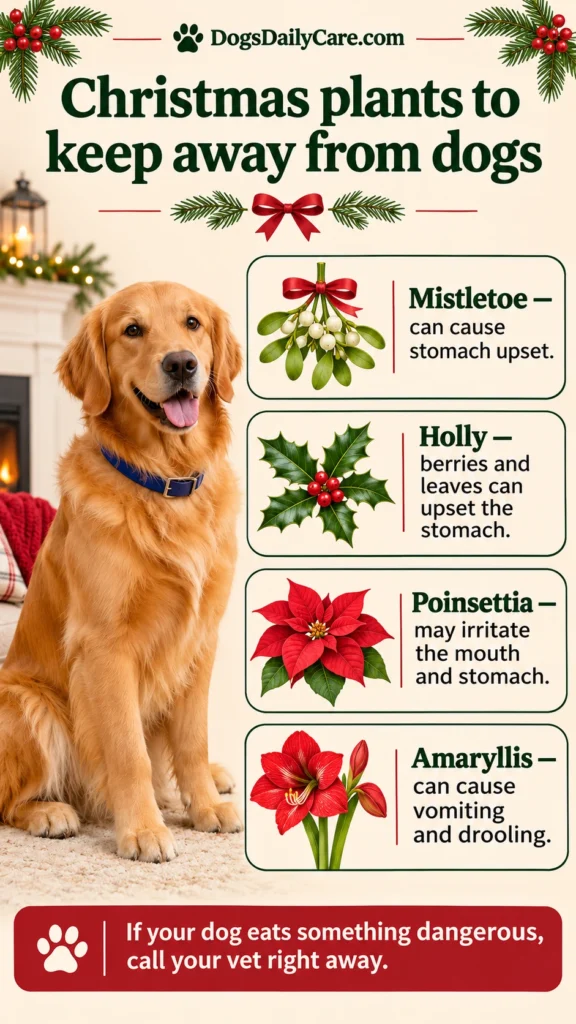
Not every holiday plant has the same risk. Identification matters: a dog’s reaction to a plant depends on the species, amount eaten and individual health. For a fuller list, see our existing Christmas plants poisonous to dogs guide.
Holly and mistletoe deserve extra caution
Holly leaves and berries can cause gastrointestinal symptoms, and some mistletoe species may cause more serious problems. Keep both in inaccessible arrangements, not on coffee tables or reachable shelves. If your dog eats an unknown amount, do not wait for symptoms before asking a veterinary professional for guidance.
Poinsettias are usually irritating, not the holiday’s biggest poison
Poinsettias can irritate the mouth or stomach, producing drooling or vomiting, but are generally less dangerous than popular myths suggest. That does not make them suitable chew toys. Keep them out of reach, especially if your dog repeatedly nibbles plants.
Amaryllis, lilies and mixed bouquets need identification
Amaryllis bulbs and other parts may cause illness if eaten. Floral arrangements can contain several different plants, some of which may be hazardous. Lilies are particularly notorious for severe toxicity in cats; risks in dogs vary by species. Do not apply cat-specific toxicity claims to dogs without checking the actual plant. Photograph the plant and its tag if you need veterinary advice.
Artificial greenery eliminates the plant-toxin issue but may introduce small plastic pieces, wires or glitter that a dog can swallow. Choose decorations that cannot be pulled apart and keep them beyond reach.
Holiday Foods Dogs Should Never Sneak
Holiday food is one of the easiest hazards to underestimate. A dog may find a wrapped gift, lick a dessert plate or pull scraps from the trash. Set food rules with every visitor before the first meal is served. Our detailed Christmas foods dogs can’t eat guide covers the subject more deeply.
Chocolate, cocoa and coffee desserts
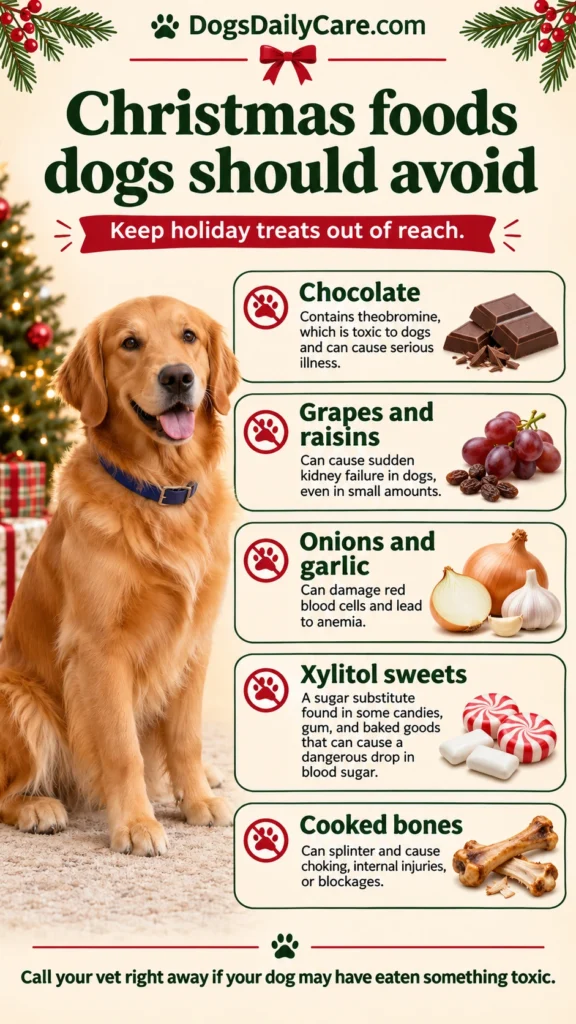
Chocolate contains methylxanthines, including theobromine and caffeine. Dark chocolate, baking chocolate and cocoa powder tend to present higher risks than milk chocolate, although any suspected ingestion warrants prompt advice. The type, amount and dog’s weight all affect urgency; never use a casual home dose estimate to decide that waiting is safe. The FDA’s holiday guidance advises immediate veterinary contact after suspected chocolate ingestion.
Grapes, raisins and baked holiday treats
Grapes and raisins can cause acute kidney injury in dogs, and no reliably safe amount can be assumed. Check fruitcake, mince pies, panettone, cookies and bread before allowing your dog near them. If a recipe is uncertain, treat it as off-limits rather than trying to pick out the raisins.
Xylitol and sugar-free candies
Xylitol, sometimes listed as birch sugar, can cause dangerous low blood sugar and liver injury in dogs. It appears in some sugar-free gums, candies, baked goods and other products. Read labels and store purses and guest snacks securely. The FDA warns that xylitol exposure needs urgent veterinary attention, even before symptoms appear.
Cooked bones, fatty leftovers and onions
Cooked bones can splinter or become lodged, while greasy scraps can provoke gastrointestinal upset and, in susceptible dogs, pancreatitis. Onions and garlic, including concentrated powders in gravy and stuffing, are toxic to dogs. Do not offer a cooked turkey carcass, scraps covered in gravy or a plate of unfamiliar leftovers.
Alcohol and raw bread dough containing active yeast also need to stay out of reach. Secure the trash as carefully as the dinner table: foil, skewers, strings, wrappers and food scraps can all create emergencies.
How to offer a safe Christmas treat
Instead of sharing the human buffet, set aside a portion of your dog’s usual food or a familiar dog treat. If your veterinarian has not restricted your dog’s diet, a small amount of plain, fully cooked, boneless turkey without skin, sauces, onion or garlic may be an option. Keep additions modest and avoid experimenting with new foods when your dog is already stressed by visitors.
Decorations, Wrapping and Electrical Risks
Tinsel, curling ribbon, yarn and gift string
Long, narrow decorations can be swallowed and become trapped in the gastrointestinal tract. These so-called linear foreign bodies are dangerous because the intestine can bunch around the material. The ASPCA describes serious risks from swallowed holiday ribbon. Skip tinsel in dog-accessible spaces, collect ribbon as gifts are opened and keep string away from curious mouths.
If you see string emerging from your dog’s mouth or anus, do not pull it. Call a veterinarian immediately; pulling can injure internal tissues.
Glass ornaments, hooks and small bells
Shattered ornaments can cut paws or mouths, while hooks and small pieces can be swallowed. Use shatter-resistant ornaments, secure hanging loops and inspect the floor after guests move around the tree. Keep batteries, button cells and battery compartments in decorations inaccessible; swallowed batteries can cause severe injury.
Light strings, extension cords and candles
Chewed cords can cause burns, electrical injury or a fire. Route cables behind furniture, use purpose-made cord protectors and unplug decorations when no one is supervising. Battery-operated lights are not automatically chew-safe because the batteries themselves are a hazard. Use flameless candles where possible and never leave a real flame near wagging tails or low surfaces.
Snow globes, artificial snow and craft supplies
A broken snow globe may expose a dog to sharp glass and potentially hazardous liquid; older or certain products may contain toxic ingredients. Treat unknown liquids as an exposure requiring professional advice rather than assuming water is harmless. Keep spray snow, paint, adhesives, glitter, scented oils and craft projects off the floor and follow product-specific pet safety instructions.
Christmas Hazard Checklist: Room by Room
| Area | Check before your dog enters | Safer action |
| Living room | Tree stability, water, ornaments, exposed cords | Anchor, cover, elevate and protect |
| Kitchen | Chocolate, raisins, xylitol, hot pans, open trash | Close containers, clear counters and use a lidded bin |
| Dining area | Bones, gravy, napkins, fallen food | Clear plates promptly and keep dog behind a gate if needed |
| Guest room | Medication, candy, handbags, gift wrapping | Ask visitors to store belongings high or behind a door |
| Entryway | Open doors, deliveries, excited visitors | Use a leash, gate or quiet retreat to prevent escapes |
| Bedroom/office | Ribbons, batteries, craft supplies and packages | Keep gift preparation in a closed room |
How to Dog-Proof Your Home for Christmas
Step 1: Inspect the house at your dog’s eye level
Crouch down and look for dangling decorations, loose cords, reachable food and gifts with ribbons. Notice what your dog can reach by jumping or using furniture, not just what sits at nose height. Close doors to storage areas rather than relying on a verbal command.
Step 2: Designate a calm, safe retreat
Set up a familiar bed or crate if your dog already enjoys one, with drinking water and appropriate chew toys. Place it away from noisy guests, open doors and the food-preparation area. Never force an anxious dog into a crowded room for holiday photos. Guests should know not to disturb a dog resting in this space.
Step 3: Manage arrivals, children and presents
Some accidents happen because everyone assumes someone else is watching the dog. Assign one adult to supervise during gift opening and meals, or use a gate to separate the dog from the activity. Ask children not to share candy, chase the dog or wave bows near their face. Gather wrapping paper and strings into a covered container immediately.
Step 4: Reinforce a useful behavior before the party
Practice a simple cue such as “leave it” or “go to your mat” with rewards in a quiet setting. Add manageable distractions gradually. A cue can help redirect curiosity, but it is never a substitute for physical barriers around poisons, wires or fragile decorations.
Step 5: Repeat a short sweep each evening
Check tree water, fallen needles, dropped sweets, batteries and loose ribbons. Turn off and unplug decorations, secure the trash and put gift bags behind a closed door. A two-minute sweep after visitors leave can prevent a nighttime emergency.
What to Do if Your Dog Eats a Christmas Hazard
Act quickly, even if your dog seems normal. Some toxic exposures cause delayed symptoms, and swallowed objects may not cause immediate distress. If the dog is having trouble breathing, has collapsed, is seizing, shows severe pain or has a suspected electrical burn, seek emergency veterinary care immediately.
- Remove access. Move the dog away from the item without putting yourself at risk. If an electrical cord is involved, disconnect the power safely before touching the dog or cord.
- Identify the material. Save the wrapper, ingredient label, plant photo or a sample of the decoration. Note when it happened and the approximate amount, if known.
- Call for veterinary advice immediately. Contact your veterinarian, a 24-hour emergency clinic or an animal poison control center. In the US, ASPCA Animal Poison Control: 888-426-4435; Pet Poison Helpline: 855-764-7661. Consultation fees may apply.
- Follow professional instructions. Do not give salt, oil, hydrogen peroxide, food, medication or other home remedies unless specifically directed by a veterinary professional. Do not induce vomiting on your own.
- Watch and document. Follow advice about transporting the dog and report symptoms including vomiting, drooling, weakness, stumbling, abdominal pain, repeated retching or loss of appetite.
The FDA’s pet emergency guide also explains who to contact. For suspected obstruction, battery ingestion, xylitol, grapes, raisins or significant chocolate exposure, delay can make treatment more difficult.
Common Christmas Dog-Safety Mistakes
- Assuming a high shelf is enough: large dogs can jump, and furniture can act as a step. Use closed doors for serious hazards.
- Treating all holiday plants as equally poisonous: assess the actual species, especially with mixed bouquets; poinsettias and mistletoe do not carry identical risks.
- Waiting for symptoms: some exposures require intervention before a dog looks unwell.
- Trusting “leave it” around hazards: training is useful, but physical prevention is more reliable.
- Forgetting guest bags and gift baskets: gum, medication and chocolate may be hidden in places your dog can access.
- Believing plastic decor cannot harm a dog: even non-toxic material can cause choking or a blockage.
Frequently Asked Questions
Are real Christmas trees poisonous to dogs?
Most commonly used Christmas trees are not considered highly poisonous, but needles can irritate the mouth and digestive system, and swallowed needles or artificial pieces can be physically hazardous. Tree water and tipping are additional concerns. Restrict access and contact a veterinarian if chewing or swallowing occurs.
Can a dog get sick from drinking Christmas tree water?
Yes. The water may contain debris, microbes or additives. Cover the stand and provide ordinary fresh water in a separate bowl. If your dog drank tree water, check whether anything was added and ask your veterinarian about the next step, particularly if symptoms appear.
Is poinsettia deadly to dogs?
Poinsettia exposure is generally associated with oral and stomach irritation rather than the severe poisoning often described in holiday myths. Keep the plant away from your dog anyway. Seek veterinary advice for significant exposure or ongoing symptoms, and confirm the plant’s identity.
What should I do if my dog swallows ribbon or tinsel?
Call an emergency veterinarian promptly. Swallowed string-like material may cause intestinal injury or obstruction. Do not pull visible string and do not try to make the dog vomit without veterinary direction.
Are battery-powered Christmas lights safe around dogs?
They avoid a wall outlet, but dogs can still chew plastic, wires or batteries. Button batteries in particular can cause serious harm when swallowed. Keep all light sets and battery compartments out of reach, and inspect them regularly.
Final Thoughts
A safer Christmas begins with the basics: secure the tree, control access to plants and human food, choose ornaments that will not shatter, protect electrical cords and plan for visitors. If you can prevent access to the most dangerous items and know whom to call in an emergency, your dog can enjoy the season without being placed in the middle of the festivities.
Educational content prepared for Dogs Daily Care by Emma Vensley. Not veterinarian-reviewed; this guide does not replace individualized veterinary advice.