
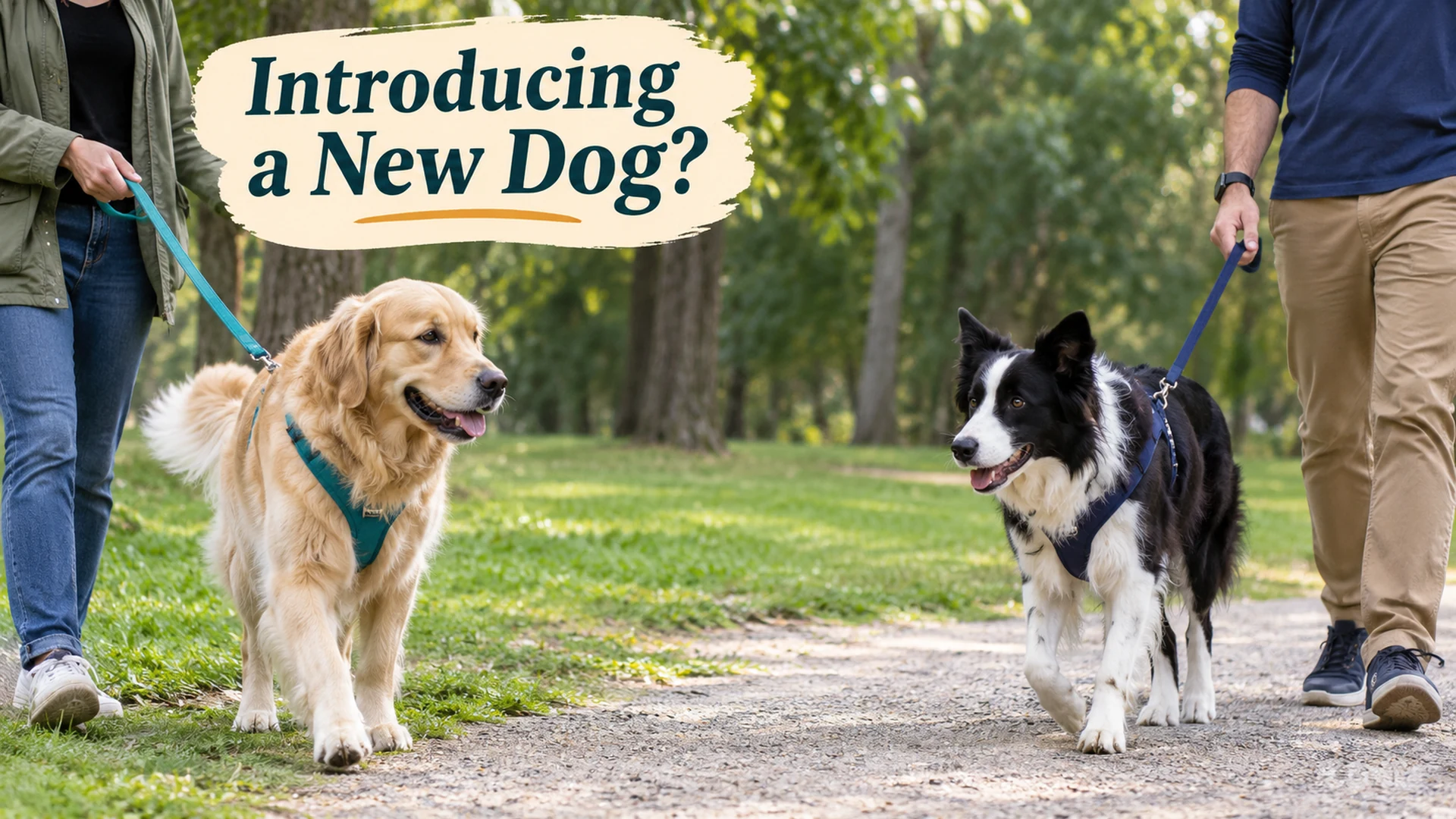
Bringing a new dog into a home that already has a dog is exciting, but the first meeting matters. Your resident dog may be curious, worried about a stranger, or simply uninterested. Your new dog may be overwhelmed by unfamiliar people, smells, and routines. A thoughtful introduction gives both animals room to decide how comfortable they feel.
Quick answer: Introduce the dogs with two capable handlers on neutral ground, begin with a relaxed parallel walk at a comfortable distance, and reward calm behavior. Keep the first interactions short. At home, use separate resting and feeding spaces, supervise every shared session, and increase freedom only when both dogs remain relaxed. Do not force face-to-face greetings or leave unfamiliar dogs alone together.
Table of Contents
Why the first introduction should be planned
Dogs do not automatically enjoy meeting every other dog, even if both have been friendly before. Age, play style, health, size, previous encounters, and stress affect their reactions. An outgoing adolescent may overwhelm an older dog who prefers quiet. A shy newcomer may react defensively if someone blocks an escape route. Rather than asking whether the dogs “like each other” immediately, ask whether both can notice one another and recover without escalating.
Best Friends Animal Society recommends beginning with two handlers and parallel walking, with distance adjusted to each dog. VCA Animal Hospitals similarly advises a neutral location for first meetings. These guidelines are useful starting points, not guarantees of friendship.
Before the new dog arrives: prepare the home
Give each dog an independent retreat
Set up two sleeping areas where each dog can rest undisturbed. Use doors, secure pet gates, or sturdy exercise pens as appropriate. Choose areas that do not trap one dog in a narrow corner. If either dog has guarded a crate or sleeping space before, allow more distance and consult a qualified professional for advice. For a newly adopted puppy, review our positive crate-training guide before asking the puppy to rest behind a barrier.
Separate valuable items from the start
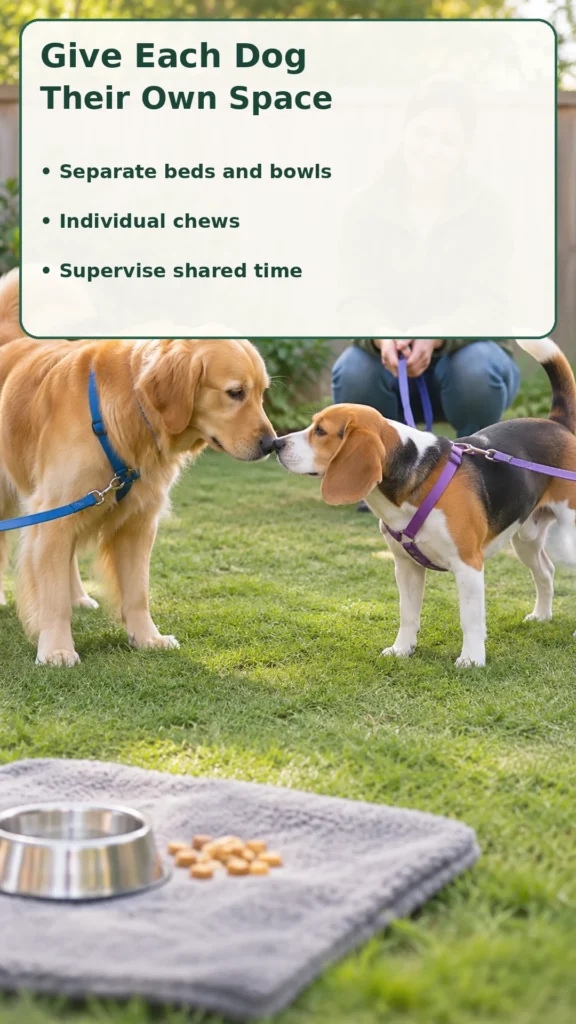
Prepare individual food bowls, water access, beds, chews, and enrichment toys. Feed dogs in separate rooms behind closed doors, especially during the first days. Do not toss a single high-value chew onto the floor between them or ask both dogs to share a bowl. A dog who feels crowded over food may stiffen or lunge even if they were calm outdoors.
Plan for safe, practical equipment
Affiliate disclosure: As an Amazon Associate, Dogs Daily Care earns from qualifying purchases. This article contains affiliate links; if you buy through them, we may earn a commission at no additional cost to you.
Have two well-fitting harnesses, two regular leashes, and small treats ready. A leash should give each dog room to move naturally without trailing into another dog’s legs. A PetSafe Easy Walk harness in the specified large variation (Amazon) is one possible front-clip option if its sizing suits your dog; it is not a substitute for training or an appropriate introduction distance. A LickiMat Classic Buddy (Amazon) can provide separate supervised enrichment after the meeting. Keep these activities apart at first.
Step 1: arrange a neutral, low-pressure meeting
Pick a quiet open location that neither dog views as its home base: a low-traffic park path or wide green space can work. Avoid busy dog parks, crowded sidewalks, narrow gateways, and noisy gathering places. Bring a second adult or capable handler, and keep children out of the initial handling job. Confirm both dogs are healthy enough for the meeting and follow your veterinarian’s guidance about vaccinations and contagious illness. If the newcomer is a young puppy, our puppy socialization guide offers ideas for low-pressure, age-appropriate experiences without exposing a partially vaccinated puppy to busy dog parks.
Start farther apart than you think you need. If either dog fixates, pulls, barks, freezes, or cannot take treats, increase distance. The right starting distance is one where both dogs can walk, sniff the ground, and respond to their handlers. It may be several yards or much more, depending on the individuals.
Step 2: walk in parallel before allowing a greeting
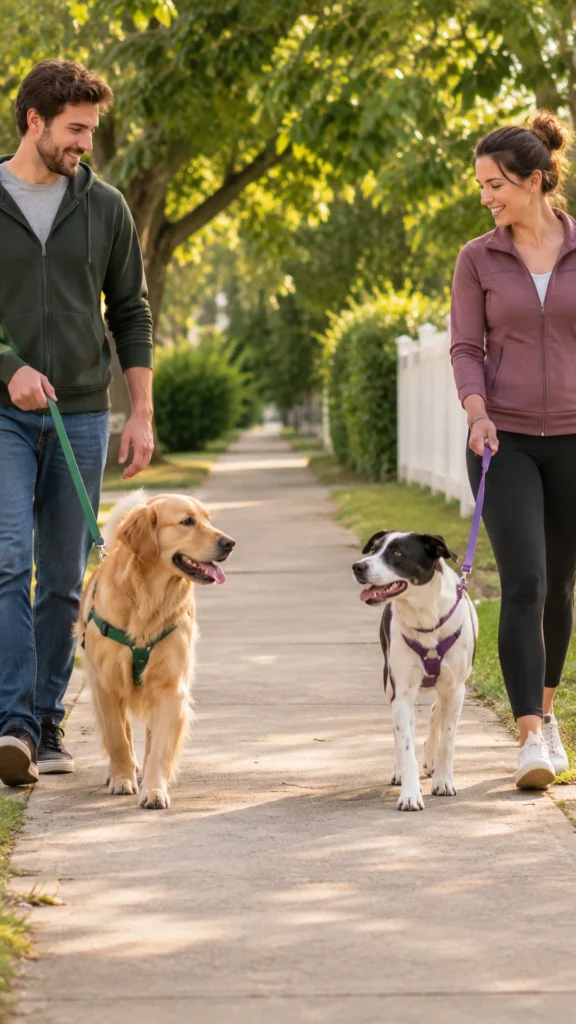
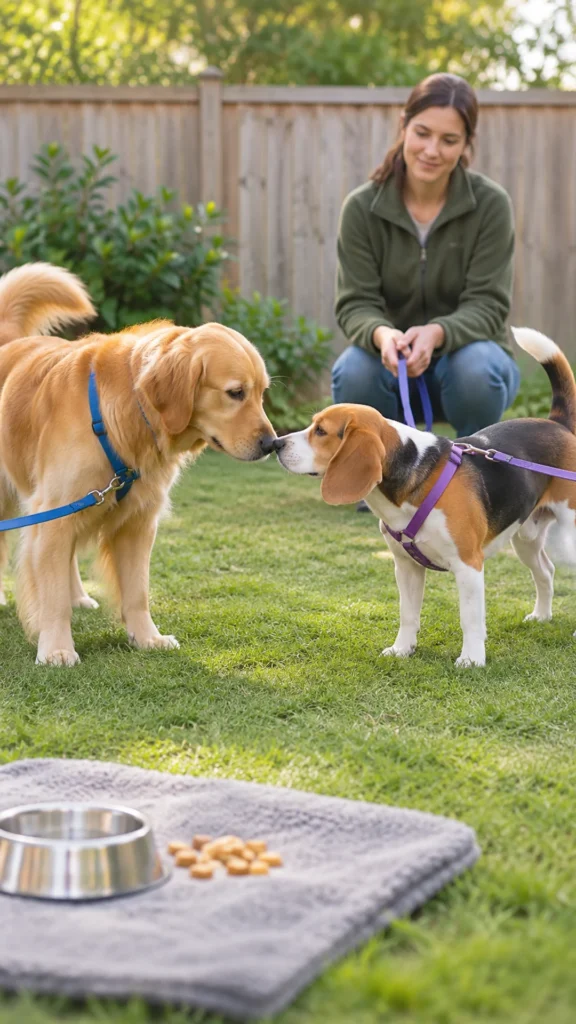
Walk in the same direction, with one handler and dog on each side of a wide path. Do not pull them together head-on. Reward moments when a dog glances at the other and returns attention to the handler. Allow plenty of sniffing and short breaks. If the dogs remain loose and comfortable, gradually reduce the distance; if tension increases, widen it again.
Keep leashes slack enough for normal movement while maintaining safe control. Tight leashes can make meetings feel pressured. Check that handlers do not accidentally let dogs tangle around one another. Parallel walking may take several short sessions rather than one long outing. Ending while things are going well is better than pushing for a dramatic first greeting.
A brief greeting is optional, not a required milestone
If both dogs show relaxed movement and willingly approach, permit a few seconds of sniffing with handlers ready to move apart. Then call the dogs away in a cheerful voice and reward. Repeat only if both choose to re-engage calmly. A stiff stance, prolonged hard stare, closed mouth, raised tension, growling while trapped, or frantic avoidance means the session needs more space or should stop.
Step 3: read both dogs’ body language
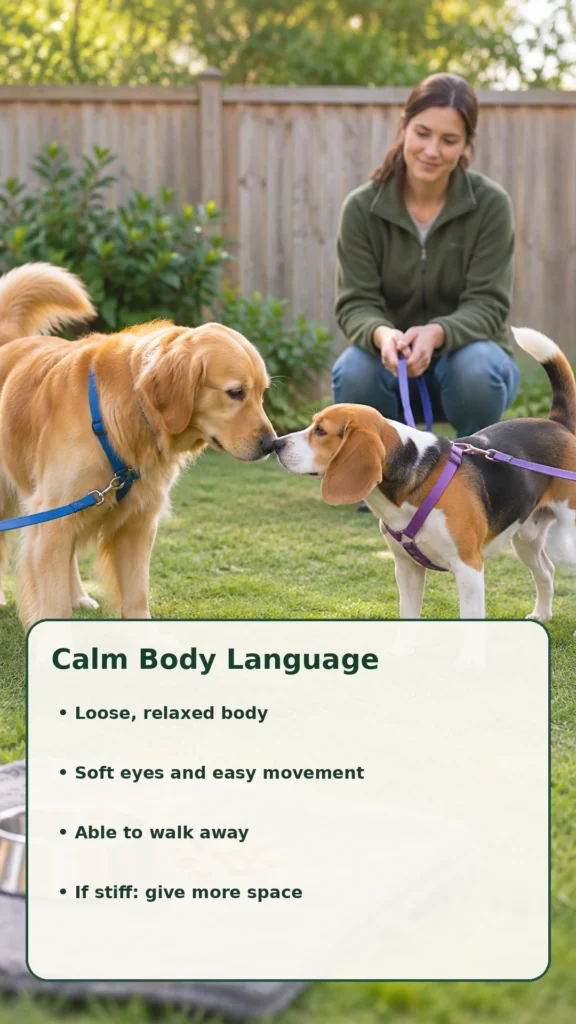
Look at the full picture rather than one signal. Loose bodies, gentle curved approaches, normal sniffing, easy disengagement, and voluntary movement away often indicate comfort. A wagging tail alone does not prove friendliness: some highly aroused or worried dogs wag too. Rapid panting, lip licking, freezing, side-eye, body blocking, repeated mounting, or chasing without pauses can mean the interaction is becoming too much.
Best Friends’ dog body-language guide explains why context and the whole body matter. When in doubt, calmly separate the dogs; do not wait for a growl to become a snap. Never punish a warning growl, since it communicates discomfort. Instead, change the setup that caused it.
Step 4: bring both dogs home without creating a confrontation
After a successful outdoor meeting, keep the transition home organized. Have one adult take the resident dog inside first or manage the dogs through separate entrances if your setup permits. Use a barrier to create an orderly arrival rather than letting a newcomer rush into a hallway where the resident dog is cornered. Remove food bowls, bones, favorite toys, and other potential conflict items from common areas beforehand.
Give the new dog quiet time to investigate a limited area while the resident dog is elsewhere. Then use short, supervised periods where they can see one another through a safe barrier or spend time in the same larger room with handlers present, depending on their comfort. A gate works only when correctly secured and when neither dog can jump or push it over. Neither dog should be made to endure close contact all day.
Step 5: use short, positive sessions over the first week
For the first several days, think in terms of calm coexistence rather than playtime. Give each dog daily one-on-one attention. Feed separately and supervise shared areas. Offer individual sniff walks, simple cues, and rewarding activities that do not make them compete. If one dog is resting, redirect the other dog instead of allowing repeated pestering.
It is fine for the dogs to spend much of the day apart at first. A cautious dog may need longer to settle after adoption, travel, or kennel stress. If they can pass one another calmly, rest in the same room with comfortable distance, and disengage when asked, that is progress. A quiet shared routine is often more important than enthusiastic wrestling.
What if the resident dog growls or seems jealous?
Growling means the dog needs space or is uncomfortable; it does not mean the introduction is ruined. Stop the interaction without shouting, create more distance, and identify the immediate trigger. Was the new dog approaching a bed, hovering over food, pushing into a doorway, or interrupting attention? Manage that situation before the next session. Avoid forcing shared toys or praise battles.
Some owners describe tension as jealousy, but practical management works better than guessing motives. Maintain predictable walks, feeding, and attention for your resident dog. Reward both dogs for choosing calm positions without asking them to compete. If barking or overexcitement is becoming a separate problem, see our gentle puppy behavior and biting guide for broader positive reinforcement principles when the newcomer is young.
When to stop and get professional help
Pause introductions and contact a qualified reward-based trainer or veterinary behavior specialist if either dog has bitten, repeatedly charged, pinned the other, guarded resources intensely, or cannot settle even at substantial distance. A dog with a known bite history or severe dog-directed aggression needs a tailored plan before any direct meeting. Injuries require veterinary care. Keep the dogs safely separated until a professional assesses the situation.
Do not use intimidation, physical corrections, or forced restraint to make them accept one another. These tactics can increase fear and suppress early warning signals. VCA’s introduction guidance emphasizes attention to temperament and structured, calm interactions; adapt the pace to the individuals rather than a fixed deadline.
Common mistakes that make introductions harder
- Allowing an excited head-on rush at the first meeting
- Requiring a greeting when one dog repeatedly turns away
- Using a dog park as the first test of compatibility
- Leaving chews, food bowls, or prized toys in shared areas
- Allowing prolonged unsupervised contact too early
- Punishing a dog for growling instead of addressing the trigger
- Expecting adult and adolescent dogs to want the same play style
Frequently asked questions
How long does it take two dogs to get used to each other?
There is no universal schedule. Some dogs coexist comfortably within days; others need several weeks or longer of gradual management. Watch behavior rather than the calendar.
Should the dogs sleep together on the first night?
No. Give each dog a separate secure place to sleep initially, with no unsupervised contact. This helps them rest and prevents conflicts while you cannot observe them.
Is it okay if the dogs ignore each other?
Yes. Calm neutrality is a very good early outcome. Friendship is not required for a peaceful household.
Can I introduce a puppy to an older dog the same way?
Use the same gradual approach but protect the older dog from relentless puppy play. Provide puppy naps and breaks behind a barrier, and consider differences in mobility and health.
Should I separate them after a small growl?
Calmly increase distance and assess what caused discomfort. Do not punish the growl. If signals escalate or repeat, consult a qualified professional.
Final thoughts
A successful new-dog introduction is built around choice, safe distance, separate resources, and supervised practice. Start outside, move slowly, observe both dogs, and end sessions before anyone becomes overwhelmed. If problems persist, professional guidance can keep everyone safer. The first goal is not instant friendship—it is a stable household where both dogs can relax.