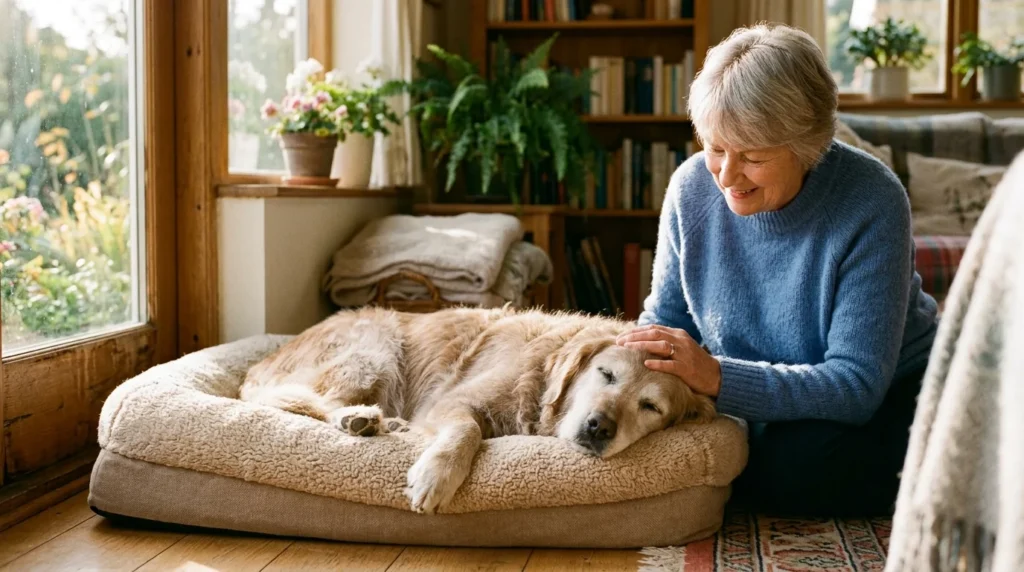

Your older dog may have handled winter without a second thought at age three. At age twelve, the same season can mean stiff joints, slippery floors, shorter walks, and a body that loses heat more easily. The changes can be gradual, which makes them easy to miss until your dog hesitates at the back steps or refuses a walk they once loved.
Good winter care for senior dogs is mostly practical: a warm, draft-free place to rest, better traction at home, shorter and smarter walks, paw care, and a vet visit before the cold sets in. This guide covers each step and explains when a change in your dog is worth a call to your veterinarian.
Table of Contents
Quick Answer
Winter care for senior dogs means a warm, dry bed away from drafts, non-slip surfaces indoors, shorter walks at warmer times of day, a well-fitted coat when needed, and paw cleaning after every outing. Schedule a senior checkup before winter, and call your vet if stiffness, limping, or shivering gets worse.
Why Winter Is Harder on Older Dogs
Senior dogs are usually more sensitive to the cold. The American Animal Hospital Association (AAHA) notes that older pets are generally more cold-sensitive and need a warm retreat when they feel chilly. The American Veterinary Medical Association (AVMA) adds that cold weather may worsen some medical conditions, such as arthritis, and that elderly and arthritic pets may have more trouble on snow and ice and be more prone to slipping and falling.
Arthritis is a big part of the picture. PetMD’s veterinary reviewers note that colder weather seems to make arthritis symptoms worse for some dogs, though the exact reason is not fully understood. Less activity, stiffer joints, and slick floors can all play a role. Importantly, PetMD also points out that slowing down should not be assumed to be a normal part of aging, which is a good reason to bring changes to your vet.
Start Winter Care for Senior Dogs With a Vet Visit
The AVMA suggests a winter checkup to make sure your pet is as healthy as possible for cold weather. AAHA recommends a senior wellness exam so your veterinarian can tell you whether your dog needs a joint supplement or pain medication for achy joints. Heart disease, diabetes, and other conditions can also make it harder for older pets to regulate body temperature, so a check before winter is worth the time.
Bring a short list of questions: Is my dog’s weight right? Are stairs and slippery floors becoming a problem? Should I change exercise, food, or pain control? Never give your dog human pain medication. PetMD warns that some, such as ibuprofen, are toxic to dogs. Any medication or supplement should come from your veterinarian.
Create a Warm, Draft-Free Resting Area
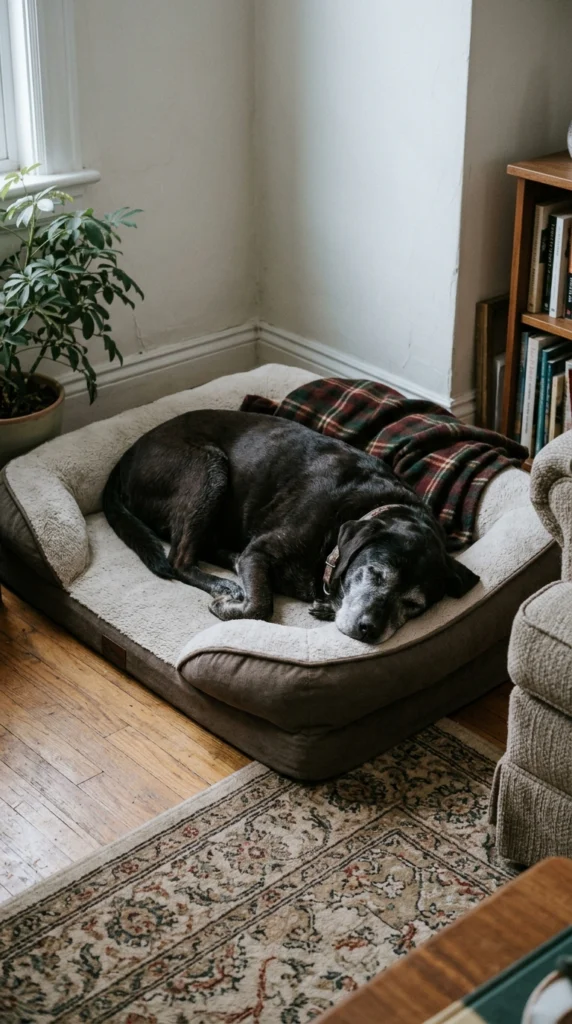
AAHA recommends a well-insulated, comfortable bed in a draft-free, cozy spot. Keep these points in mind:
- Get the bed off the floor. Cold tile and concrete pull heat from a dog’s body. A thick bed, folded blankets, or a raised bed helps.
- Avoid drafts. Keep beds away from exterior doors, leaky windows, and cold-air vents.
- Offer choices. The AVMA notes pets like to change sleeping spots depending on how warm they feel. Provide two or three comfortable places.
- Add rugs or mats. If your dog likes lying on hard floors, AAHA suggests rugs or mats to keep them warmer.
- Be careful with heat. AAHA says heated beds or pads may soothe achy joints if they are pet-safe, do not overheat, and you monitor your dog while using them. The AVMA warns that heated mats can still cause burns and that space heaters can burn pets or be knocked over. Older dogs with reduced sensation or mobility may not move away from a hot spot, so check the surface and your dog regularly.
Make Your Home Easier to Move Around
Slippery floors are a daily hazard for older dogs. PetMD’s veterinary reviewers suggest several changes that help dogs with arthritis, and they apply to many seniors:
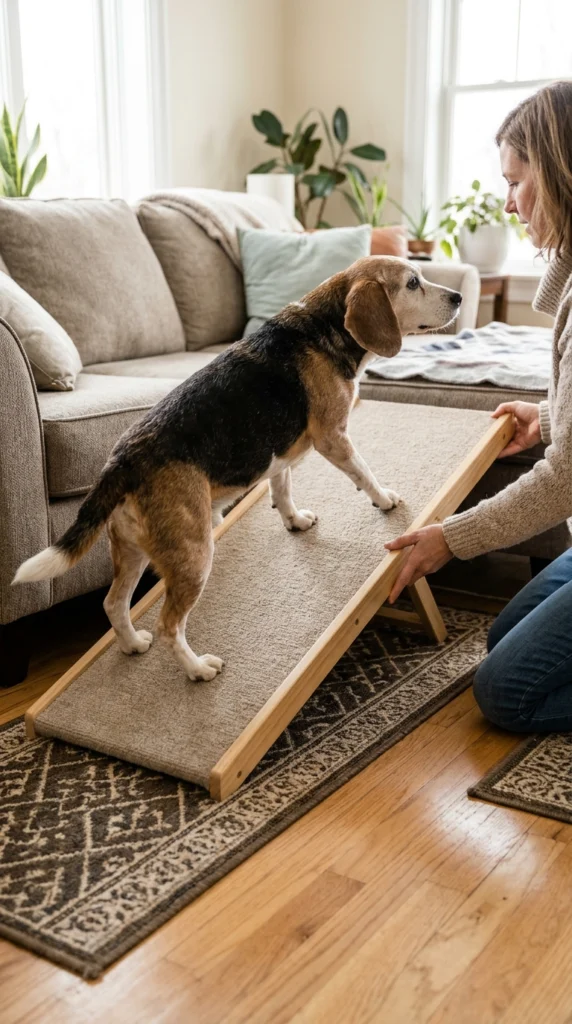
- Add traction. Place non-slip mats or carpet runners on hardwood and tile in the areas your dog uses most.
- Use ramps or small steps. They can help dogs who struggle to get on and off couches, beds, or into the car.
- Keep food and water easy to reach. Avoid making your dog climb stairs to get to bowls.
- Provide supportive beds. PetMD suggests an orthopedic bed on every level of your home.
Watch for signs that arthritis may be worsening, including a lower activity level, unwillingness to jump or play, trouble with stairs, stiffness when getting up or lying down, limping, or changes in how your dog sits. If you see them, call your veterinarian, since treatment may need to be adjusted.
Winter Walks for Senior Dogs
Older dogs still need fresh air and movement. AAHA suggests shortening outdoor walks and heading out during the warmer parts of the day. PetMD adds that dogs with arthritis can still benefit from regular, appropriate exercise as long as they are comfortable, and that shorter walks or indoor activity may work better when conditions are difficult. Several short outings can be easier on a stiff body than one long one.
Dress your dog for the weather
Both AAHA and the AVMA recommend a sweater or coat when your dog has a short coat or seems bothered by cold. It should fit well and not rub or pinch. Keep a spare so you can put a dry one on each time, since a wet garment does not keep a dog warm. After the walk, dry your dog’s fur to help prevent chills.
Watch your dog while you are out
The AVMA says whining, shivering, anxiety, slowing down or stopping, weakness, or looking for a warm place to burrow are signs of hypothermia, and your dog should come inside quickly. AAHA also notes that reluctance to move can mean it is time to warm up indoors. For an older dog, treat those signs as the end of the walk, not something to push through.
Avoid ice and frozen water
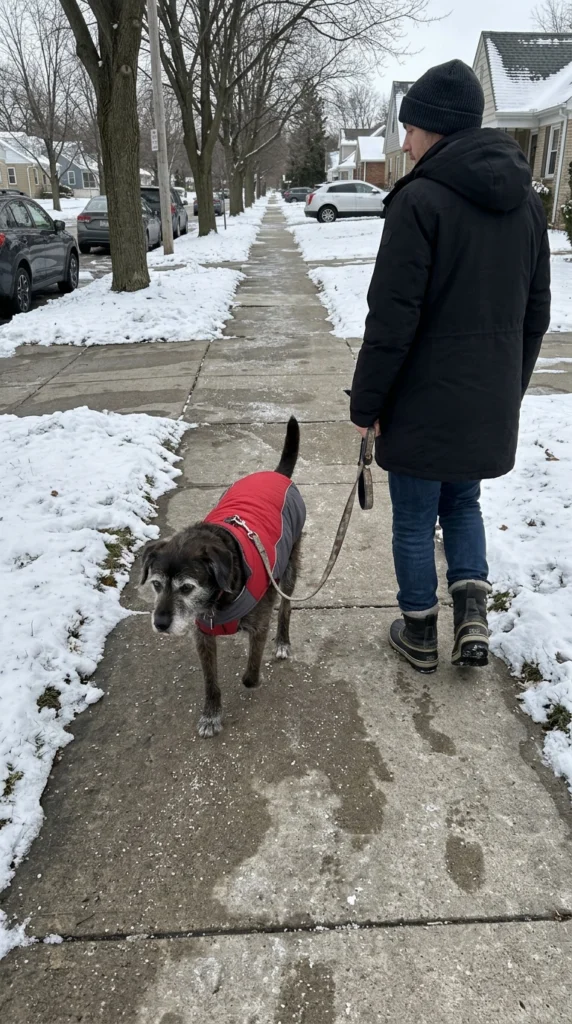
Choose cleared sidewalks when you can, and walk slowly on icy patches. Use a leash, and keep up-to-date microchip and tag information. The AVMA notes snow and ice can hide familiar scents, which helps dogs get lost. Stay off frozen ponds and lakes, since you cannot know whether ice will hold your dog.
For more on temperature limits, see our guide on whether 20°F is too cold for a dog to walk. Not sure how old your dog is in human terms? Try our dog age calculator as a rough guide, then ask your vet when senior care should begin for your dog’s size and breed.
Paw Care After Every Walk
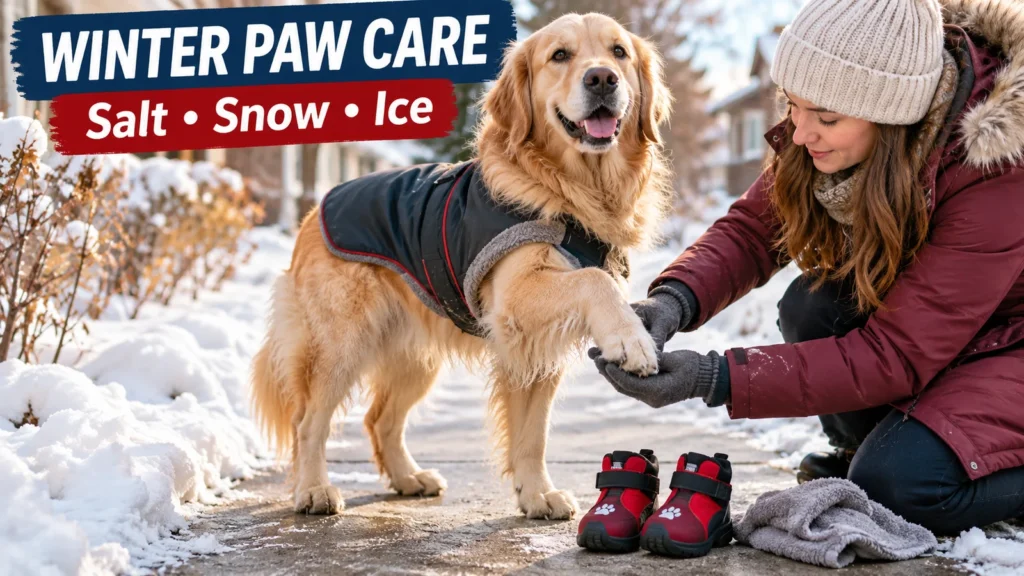
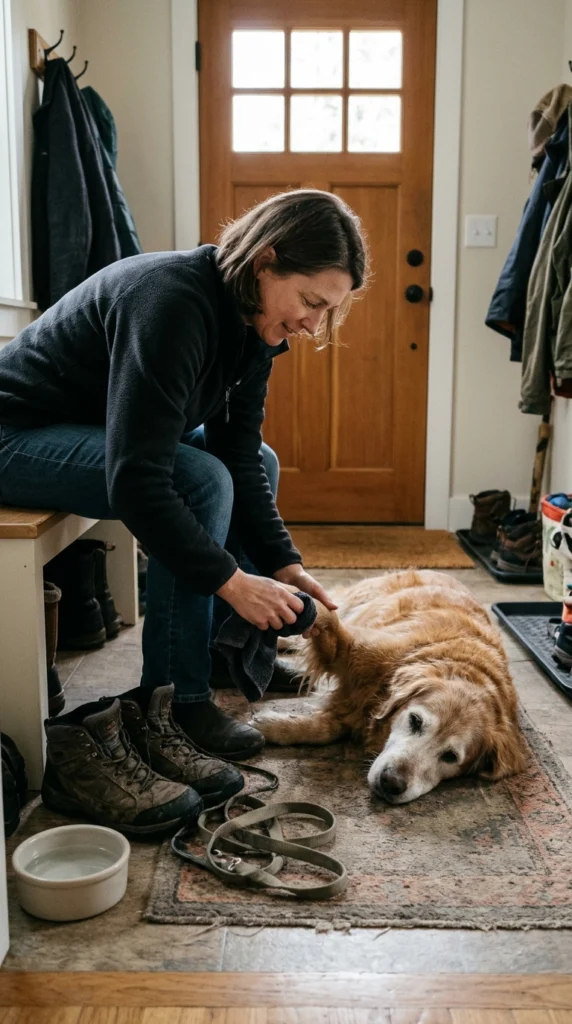
Ice, snow, and road salt can irritate paws, and AAHA notes the salt can be toxic if your dog swallows it while grooming. After a walk, clean your dog’s paws with a warm, damp cloth and remove debris from between the toes and pads. The AVMA recommends wiping or washing the feet, legs, and belly to remove de-icers and antifreeze before your dog licks them off. Check the pads regularly for cracks or bleeding. If your dog tolerates them, booties can protect sensitive paws, as AAHA suggests.
Our guide to winter paw care for dogs walks through the routine step by step.
This article may contain affiliate links. If you purchase through these links, we may earn a commission at no additional cost to you.
Some owners add a paw wax to their winter routine. One option is Musher’s Secret Paw Wax, a 60-gram wax designed for paw care. It does not replace wiping paws after walks, and it will not fix cracked or painful pads. If your senior dog is limping or licking at a paw, call your vet instead of relying on a product.
Keep Your Senior Dog Active Indoors
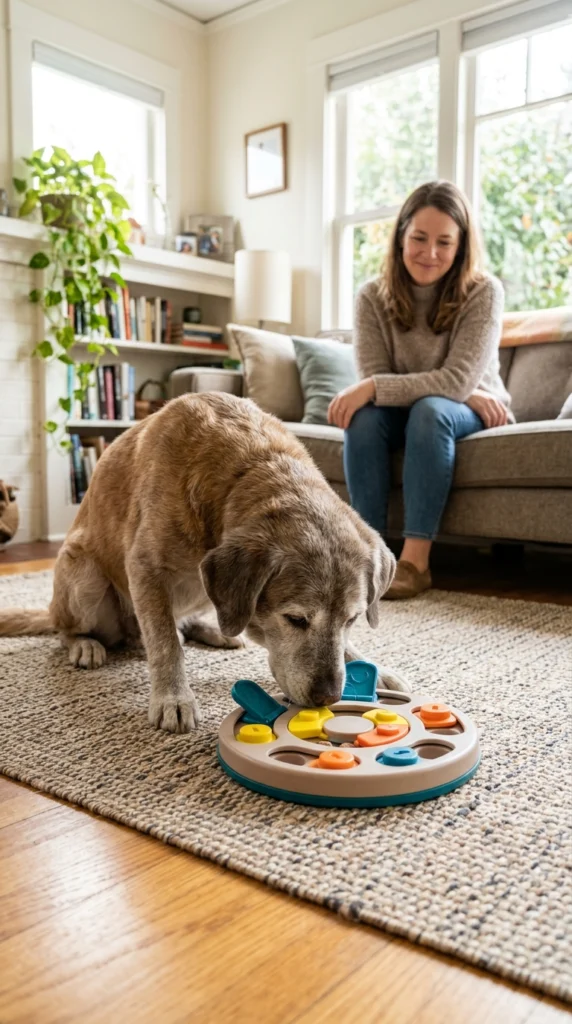
When it is too cold or icy for a long walk, indoor play keeps muscles moving and the mind busy. AAHA suggests clearing a hallway for gentle fetch with a soft toy, a light game of tug-of-war, food puzzle toys, new tricks, and treat-dispensing games. PetMD’s list adds hide-and-seek, scent games with treats scattered around the house, and practicing familiar commands. Match the activity to your dog’s mobility, and use good traction so your dog does not slip.
Mental stimulation matters for older dogs, too. AAHA points out that it helps engage their brains and can help guard against cognitive decline. Short, easy sessions a few times a day are better than one big effort.
Weight, Food, and Winter
PetMD notes that lower winter activity and extra holiday treats can lead to weight gain, which adds stress to arthritic joints. The AVMA likewise advises keeping pets at a healthy weight through winter and says a little extra weight is not a good insulation plan. Ask your veterinarian whether your dog is at an ideal weight and how much to feed. Check with your vet before adding supplements or switching to a joint-support diet.
Warning Signs and When to Call Your Veterinarian
Routine care: Mention gradual changes at your senior checkup, such as slower walking, hesitation on stairs, or less interest in play.
Call your vet soon if your dog shows new or worsening stiffness, limping, difficulty getting up, reluctance to exercise, cracked or bleeding paw pads, or appetite changes. PetMD says to contact a veterinarian if you notice new or worsening symptoms.
Treat as an emergency if your dog is shaking hard, very weak, unusually sleepy, stumbling, or slow to respond, or if you suspect hypothermia or frostbite. Move your dog somewhere warm, wrap them in dry blankets, and call your veterinarian or an emergency clinic right away. The AVMA notes frostbite can be hard to recognize and may not show for days, so call if something seems off after cold exposure. If your dog licked antifreeze or de-icer, contact a veterinarian or an animal poison service immediately.
Be Ready for Storms and Power Outages
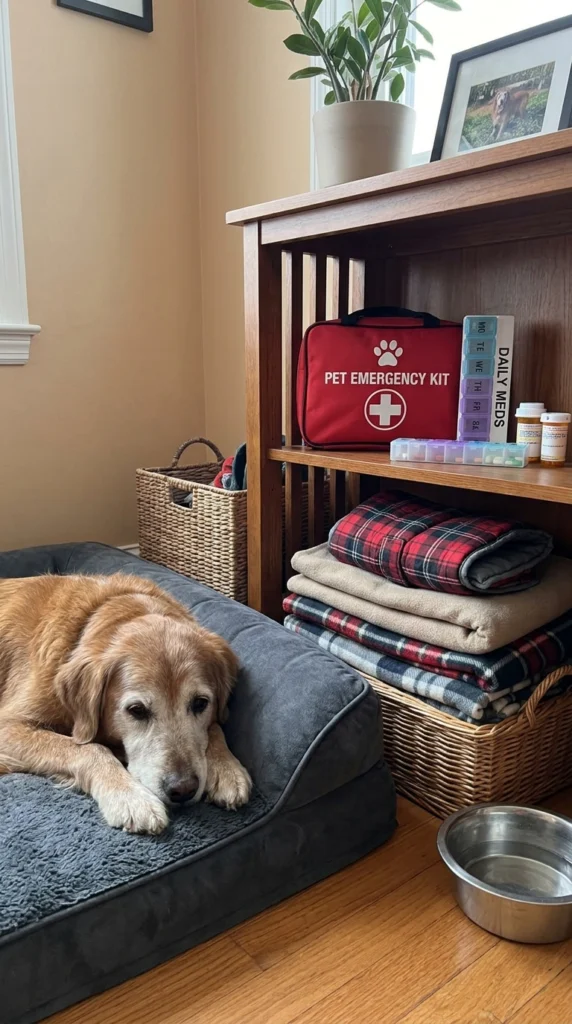
The AVMA recommends an emergency kit that includes your pet, with food, water, and medicine (including prescriptions and heartworm and flea/tick preventives) for at least five days. For a senior dog, add any joint medication, a spare coat, extra blankets, and a copy of your vet’s contact details. If the heat goes out, set up a warm spot in a small interior room with blankets, and keep your dog close.
Helpful Winter Supplies for Senior Dogs
A few items cover most winter needs: a thick or orthopedic bed, non-slip rugs or runners, a ramp or steps for favorite furniture, a well-fitted coat with a spare, a towel by the door, booties if your dog tolerates them, and a basic emergency kit. Browse more ideas on our recommended dog products page. Pick products that fit your dog’s size and mobility, and skip anything that restricts movement or adds a slipping or burn risk.
Common Mistakes to Avoid
- Assuming stiffness or slowing down is just normal aging
- Leaving a senior dog outside “for a few minutes” in freezing weather
- Putting a bed on cold tile or beside a drafty door
- Leaving slick floors uncovered
- Using heated pads or space heaters without close supervision
- Giving human pain relievers
- Skipping paw wipe-downs after salted sidewalks
- Letting holiday treats and low activity add weight
Frequently Asked Questions
At what age does a dog count as a senior?
It varies by size and breed, and large dogs often reach senior status earlier than small dogs. Your veterinarian can tell you when to begin senior care for your dog.
Does cold weather really make arthritis worse?
Many owners see their dogs stiffer in winter, and PetMD says colder weather seems to worsen arthritis symptoms, though the exact cause is not fully understood. If your dog seems more uncomfortable, ask your vet about adjusting the treatment plan.
Should my senior dog still go for walks in winter?
In most cases, yes, within limits. Keep walks shorter, go during warmer hours, dress your dog if needed, and watch for shivering or reluctance to move. Ask your vet what level of activity fits your dog.
Can I use a heated bed for my older dog?
AAHA says heated pet beds or pads can help soothe achy joints if they are pet-safe, do not overheat, and you monitor your dog. The AVMA warns such products can still cause burns, so use them carefully and ask your vet if your dog has any health concerns.
Is it okay to keep my senior dog’s coat long in winter?
A longer coat can add warmth, according to the Red Cross, but keep it clean, dry, and free of mats. If your dog has a thick coat or mobility issues that make grooming hard, ask your groomer or vet for advice.
Final Thoughts
Senior dogs do not need a complicated winter plan. They need a warm place to rest, safe footing, shorter walks, dry paws, and a vet who knows how they are doing. Your next step is easy: walk through your home this weekend and look for slick floors, drafty sleeping spots, and hard-to-reach food or water, then book a senior checkup if your dog is due.
Sources and Further Reading
- AAHA: Grey muzzles make cozy companions: Tips to care for your senior pet in the winter
- PetMD: Dog Arthritis and Cold Weather: Helping Your Dog’s Arthritis Pain in Winter
- American Veterinary Medical Association: Keeping Pets Safe During Cold Weather (news release, January 22, 2026, as published by the Village of Riverwoods)
- American Red Cross: Cold Weather Can Be Dangerous for Your Pets
This article is for general education and does not replace advice from your veterinarian. Talk with your vet about your senior dog’s health, medications, and winter needs.