By Emma Vensley | DogsDailyCare
The first loud boom can change an ordinary evening in seconds. Your dog may stop playing, rush toward the bedroom, or start pacing before you even realize fireworks have begun. If your dog is frightened, the goal is not to make them “get used to it” in the middle of a display. It is to help them feel secure, prevent escape or injury, and make a better plan for the next noisy night.
Quick answer: To calm a dog during fireworks, bring them indoors before the noise starts, close windows and curtains, provide a familiar hiding place, use gentle background sound, and let them choose whether to rest, hide, or stay close to you. Never punish or force them to confront the noise. If they panic, ask your veterinarian about a treatment plan well before the next event.
Table of Contents
Why Fireworks Frighten Some Dogs
Fireworks are loud, unpredictable, and often accompanied by flashes and vibrations. A dog cannot understand why the explosions are happening or when they will stop. Some dogs barely notice them; others become distressed by a single distant bang. Fear can be influenced by earlier experiences, individual sensitivity, age, and underlying health problems.
Noise fear is not disobedience. A frightened dog is responding to something they perceive as a threat. Cornell University’s veterinary guidance notes that signs may range from trembling and panting to escape attempts. That is why a safe environment matters more than trying to teach obedience during a frightening display.
Signs Your Dog Is Stressed by Fireworks
Not every worried dog barks or shakes. Some become unusually quiet or clingy, while others try to hide behind furniture. Look for changes from your dog’s normal behavior:
- Panting when the room is not hot, trembling, or drooling.
- Pacing, whining, barking, or repeatedly looking toward windows.
- Hiding in a closet, bathroom, or under a table.
- Refusing treats they normally love.
- Scratching at doors, attempting to escape, or becoming unusually restless.
- Freezing, becoming withdrawn, or struggling to settle.
If your dog suddenly seems confused, collapses, has trouble breathing, or injures themselves, seek urgent veterinary care rather than assuming the problem is simply fear.
Prepare Before the First Firework
1. Plan walks and bathroom breaks earlier
Check when local fireworks are expected and move your dog’s usual evening walk earlier. A familiar daytime walk and normal play can provide enrichment without putting your dog outside when sudden bangs are likely. Keep outdoor trips calm and avoid busy celebration areas.
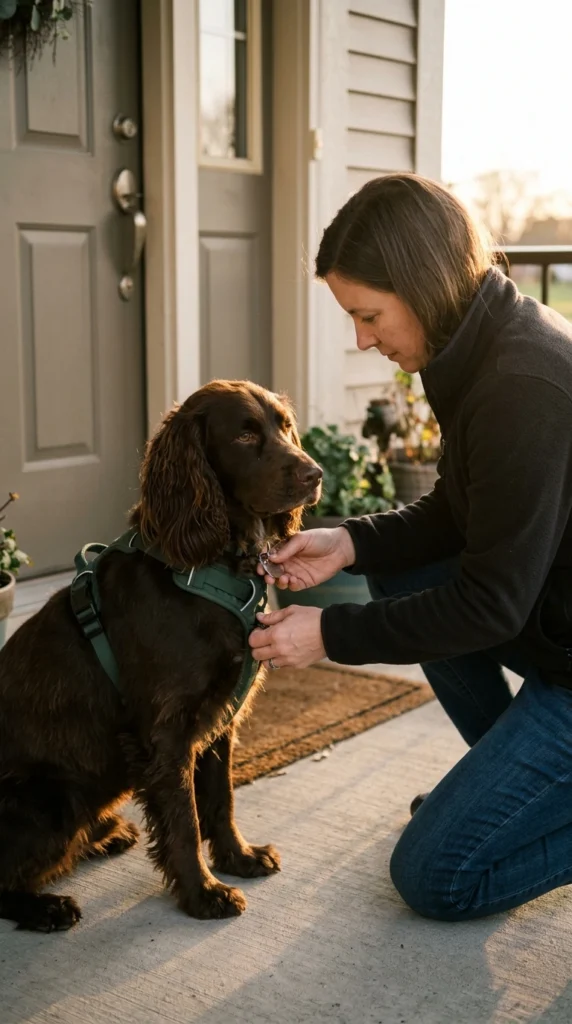
If you must take your dog out after dark, use a secure, well-fitted harness and a fixed leash, even in a fenced yard. For dogs who need more practice with safe walking equipment, our beginner’s leash-training guide explains how to introduce gear and reward calm walking.
2. Check identification and escape routes
Confirm that the collar tag has your current phone number and that the microchip registration is up to date. Check gates, window screens, and doors before guests arrive. A frightened dog may slip through an opening that would not normally interest them. Ask visitors to close exterior doors carefully.
3. Set up a familiar quiet room
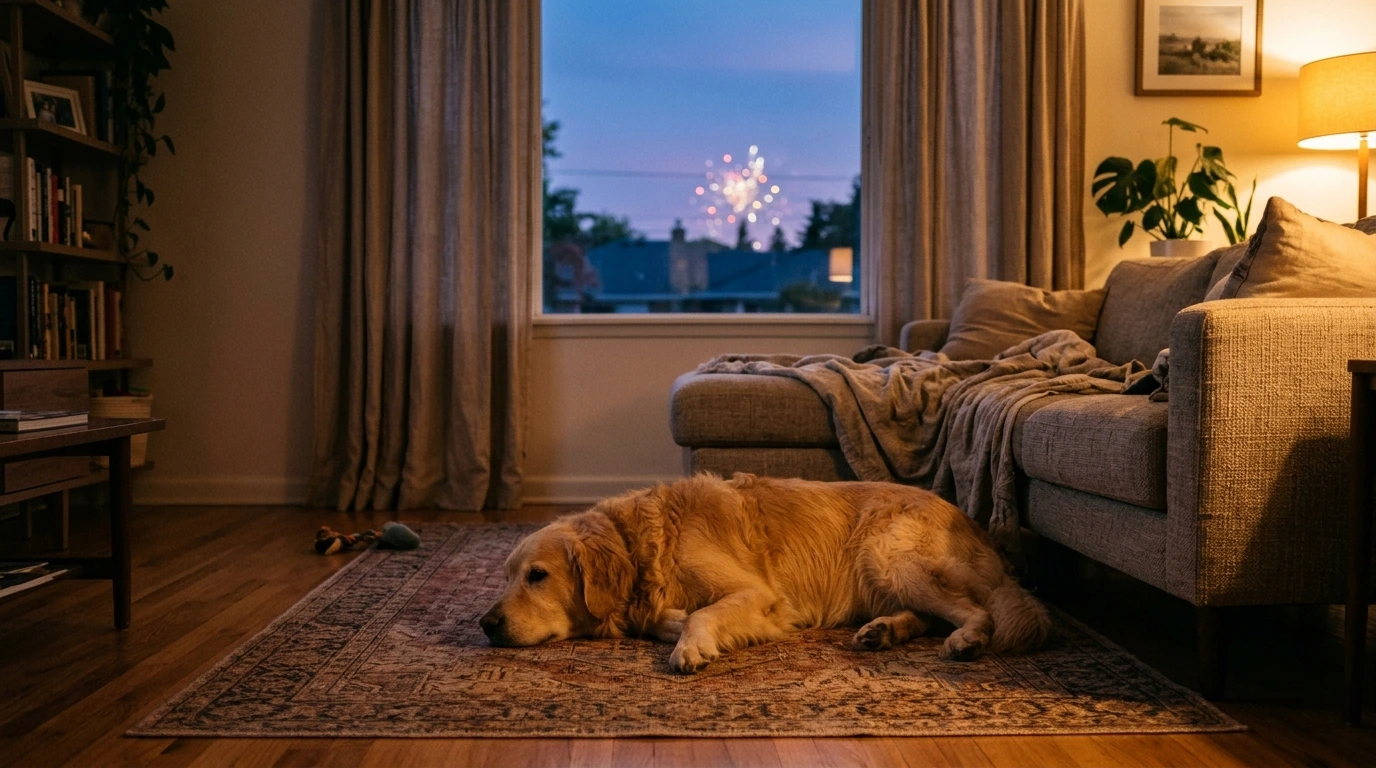
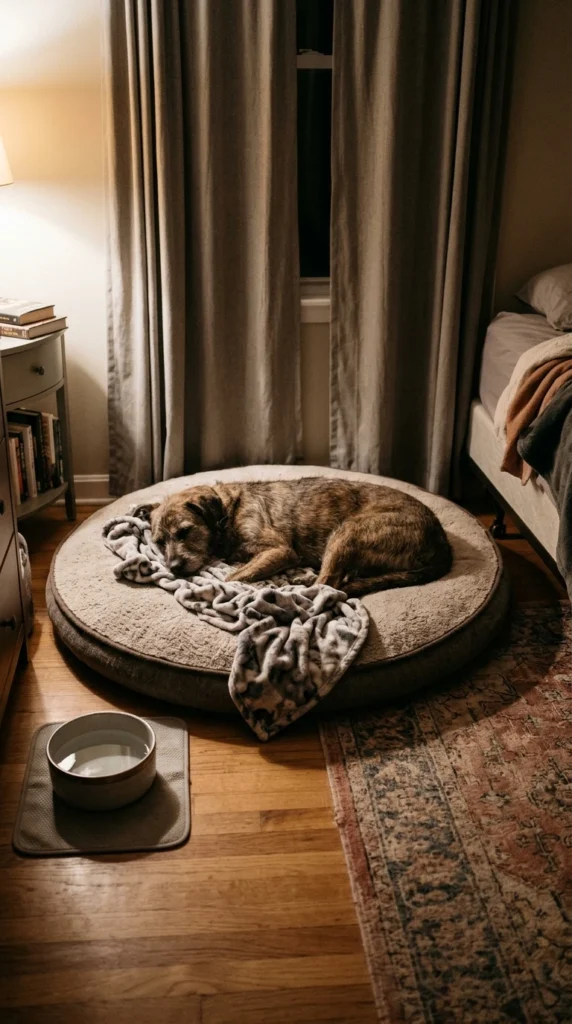
Choose an interior room or the quietest place your dog already likes. Add their usual bed, water, and familiar blanket. Close curtains to reduce flashes and turn on a fan, television, or soft music at a comfortable volume. Keep access to the room open when safe so your dog can choose it.
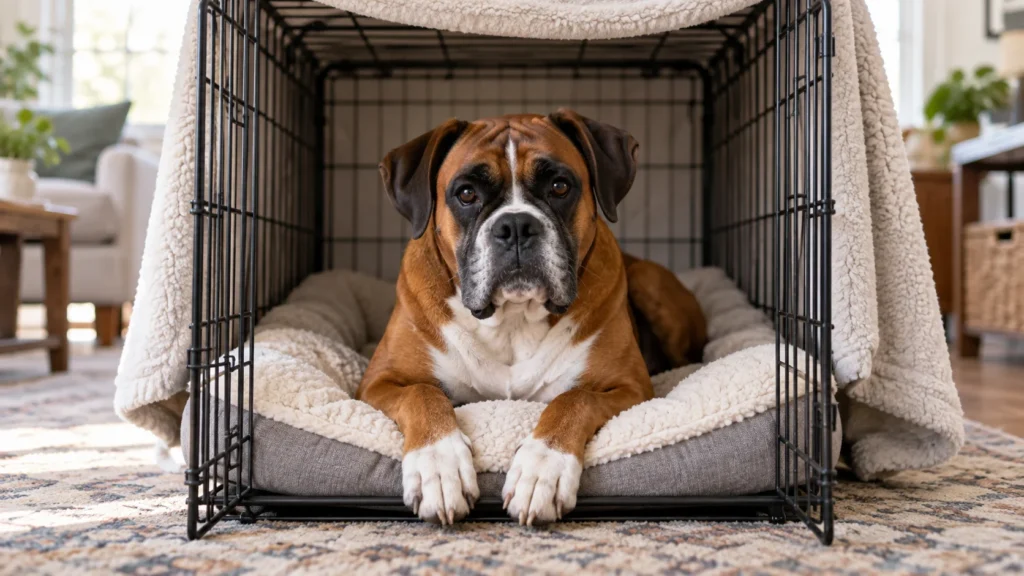
Do not suddenly lock a dog in a crate if they are not comfortable there. A crate can be useful only when your dog already considers it a safe resting spot. If you are building positive crate habits with a puppy, start on ordinary quiet days rather than during fireworks.
What to Do While Fireworks Are Going Off
Stay calm and offer company without forcing contact
Speak normally and move slowly. If your dog approaches you, gentle petting or sitting nearby is fine. If they prefer a dark corner, give them space. You do not need to ignore a scared dog to avoid “rewarding fear.” Comfort is different from forcing interaction.
Keep children from crowding a dog who is hiding. Fear can make even a normally friendly dog more reactive to being grabbed or startled. Explain that the dog’s quiet area is a no-disturbance zone for the evening.
Use sound to soften sudden bangs
Background music, a fan, or white noise may help make distant explosions less noticeable. Start the sound before fireworks begin and keep it at a level that does not itself distress your dog. It will not block every loud blast, but it can make the indoor environment more predictable.
Offer enrichment only if your dog wants it
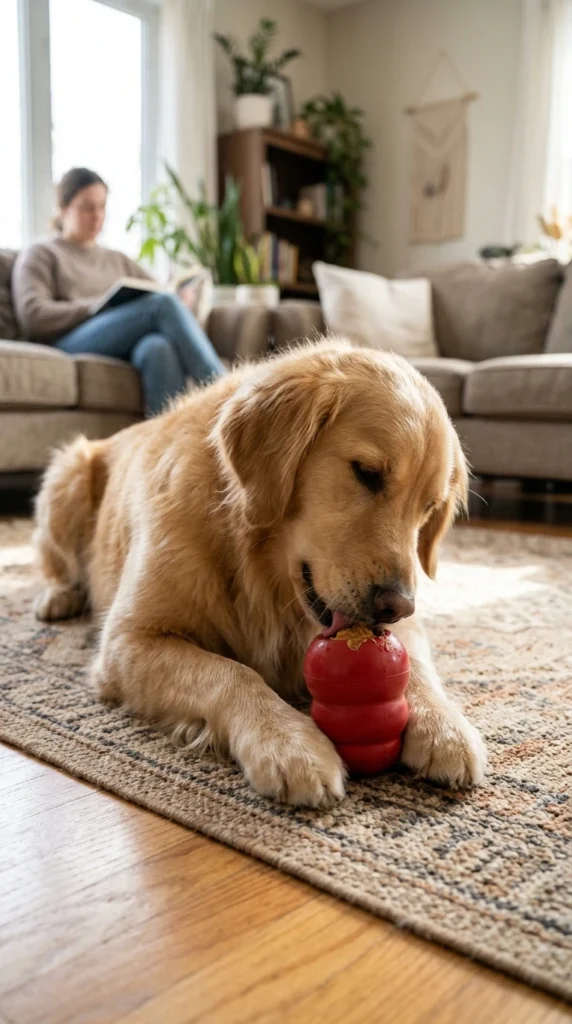
A food-stuffed rubber toy, lick mat, or familiar chew can help some dogs settle. Offer it before your dog becomes overwhelmed. If they refuse food, do not insist: a dog who is too frightened to eat needs space and safety, not a training challenge. Always supervise chews and choose items appropriate for your dog’s chewing style.
Let hiding be an acceptable choice
Dogs often seek small, sheltered spaces when afraid. Allow safe hiding behind furniture or in a familiar room. Do not pull your dog out to prove that the fireworks cannot hurt them. Block access only to genuinely unsafe areas, such as spaces containing cords, sharp objects, or chemicals.
What Not to Do With a Fireworks-Scared Dog
- Do not punish shaking, barking, or hiding. Scolding can make the event even more frightening.
- Do not take your dog to a fireworks display. Even dogs who appear calm can become startled unexpectedly.
- Do not leave your dog tied outside or unattended in a yard. Panic can lead to escape or injury.
- Do not force a crate, pressure wrap, or toy. Introduce optional aids on a calm day and watch your dog’s response.
- Do not give human sedatives, alcohol, or unapproved supplements. Ask a veterinarian before using any medication or calming product.
A Simple Fireworks-Night Checklist
| When | What to do | Why it helps |
| Earlier that day | Walk, play, and offer a bathroom break | Reduces the need to go outside during explosions |
| Before dusk | Check doors, ID, curtains, and quiet room | Reduces escape risk and sensory stimulation |
| As noise begins | Start background sound and offer familiar enrichment | Provides predictable comfort for dogs who accept it |
| During the display | Stay nearby, allow hiding, avoid punishment | Supports safety without adding pressure |
| Afterward | Check the yard before outdoor access; return to routine | Helps avoid fireworks debris and further stress |
Can Calming Products Help?
Some products can support a good plan, but no accessory reliably eliminates severe noise fear. Choose tools based on what your dog already finds comfortable, not on marketing promises.
Affiliate disclosure: As an Amazon Associate, DogsDailyCare may earn from qualifying purchases at no extra cost to you.
Food-stuffable rubber toy
The KONG Classic can hold a portion of your dog’s regular food or a suitable treat. It is most useful for dogs who still enjoy food during mild noise. Select the right size, inspect for damage, and supervise use. Find KONG Classic toys on Amazon.
Comfortable resting bed or washable blanket
A familiar bed gives your dog a predictable place to retreat. A washable, nonslip bed may be more helpful than buying a new item on the day of the event. Browse washable dog beds on Amazon.
Dog enrichment lick mat
A lick mat can offer a quiet activity for dogs who remain interested in food. Use only dog-safe ingredients, account for extra calories, and supervise to prevent chewing or swallowing the mat. Browse dog lick mats on Amazon.
Optional pressure wrap
Some dogs tolerate a properly fitted pressure wrap, but evidence and individual responses vary. Introduce it in short, positive sessions when the house is quiet; remove it if your dog freezes, struggles, or seems more distressed. Browse dog anxiety wraps on Amazon.
You can also explore our recommended dog products page for everyday care essentials. These links are Amazon search results rather than verified exact-product listings; check product suitability before buying.
When to Talk to Your Veterinarian
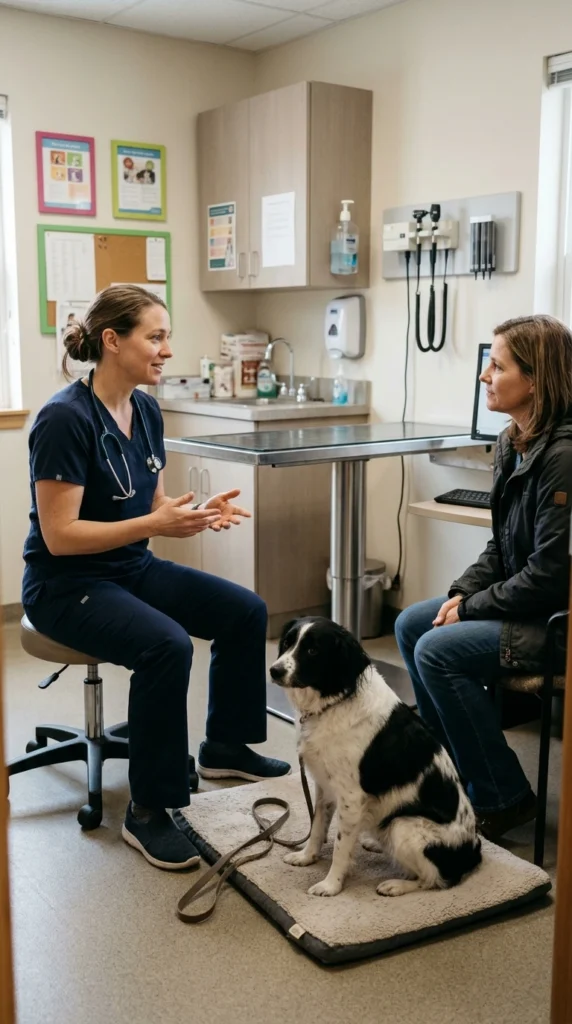
If your dog panics, repeatedly tries to escape, injures themselves, or remains distressed long after the noise ends, contact your veterinarian. Also seek advice if noise fear appears suddenly in an older dog or becomes worse over time. Pain and other medical issues can contribute to changes in behavior.
A veterinarian can assess your dog’s health and discuss behavior support, including whether prescription anti-anxiety medication is appropriate. If medication is prescribed, follow the exact directions and ask whether a trial on a quiet day is recommended. Do not wait until fireworks have started to seek help for a dog with a history of severe panic.
For persistent fear, a veterinarian may recommend a qualified reward-based trainer or veterinary behaviorist. A treatment plan can combine environmental management with gradual behavior modification. There is no need to make your dog endure repeated frightening experiences in the hope that they will simply get over them.
Helping Your Dog Before the Next Fireworks Season
Long-term training is different from managing an event that is already happening. On calm days, a professional may help you introduce recorded firework sounds at a volume so low that your dog remains relaxed, then pair that sound with enjoyable activities. The intensity is increased only when the dog stays comfortable. If the dog shows fear, the session has become too difficult.
Do not play loud firework recordings to “toughen up” your dog. For dogs with significant noise phobias, professional guidance is particularly important. Keep a short note after each event: when the fireworks started, what signs you noticed, what helped, and how long your dog needed to settle. This record can help your veterinarian tailor the plan.
Families with young dogs can also benefit from steady everyday routines. Our puppy potty-training guide explains how to plan predictable bathroom breaks, which can be especially helpful when evening outdoor time must be moved earlier. For more everyday dog care and training advice, visit DogsDailyCare.
Frequently Asked Questions
Should I comfort my dog when fireworks scare them?
Yes. If your dog seeks you out, calm attention can help them feel secure. Do not force contact if they prefer to hide or be alone.
Should I put my dog in a crate during fireworks?
Only if the crate is already a familiar, comfortable resting place. Never force a panicking dog into a crate or shut them somewhere they may injure themselves trying to escape.
Can I give my dog Benadryl or another human medicine for fireworks anxiety?
Do not give human medication without veterinary instructions. Some medicines may be inappropriate or cause sedation without adequately relieving fear. Ask your veterinarian for a plan suited to your dog.
Do calming vests work for fireworks?
Some dogs appear more comfortable wearing a properly fitted wrap, while others do not. Try one on a quiet day, watch your dog’s body language, and do not rely on it as the only solution for severe fear.
Why is my dog suddenly scared of fireworks?
Noise sensitivity can develop or worsen over time. A bad experience, aging, pain, or other health changes may contribute. Arrange a veterinary check if the change is new or pronounced.
What should I do if my dog escapes during fireworks?
Contact local animal shelters and veterinary clinics, update your microchip provider, and share a clear recent photo through appropriate local lost-pet channels. Avoid chasing a frightened dog into traffic; seek help from local animal services when needed.
Final Thoughts
Helping a dog through fireworks is about preparation, safety, and respect for their comfort level. Start with a secure indoor space, earlier walks, familiar sounds and routines, and your calm presence. If your dog is deeply frightened, veterinary help is not a last resort; it can be the most compassionate next step. A good plan today can make the next celebration safer for both of you.
Sources and Further Reading
This article is general educational information, not a substitute for veterinary diagnosis or individualized treatment.