
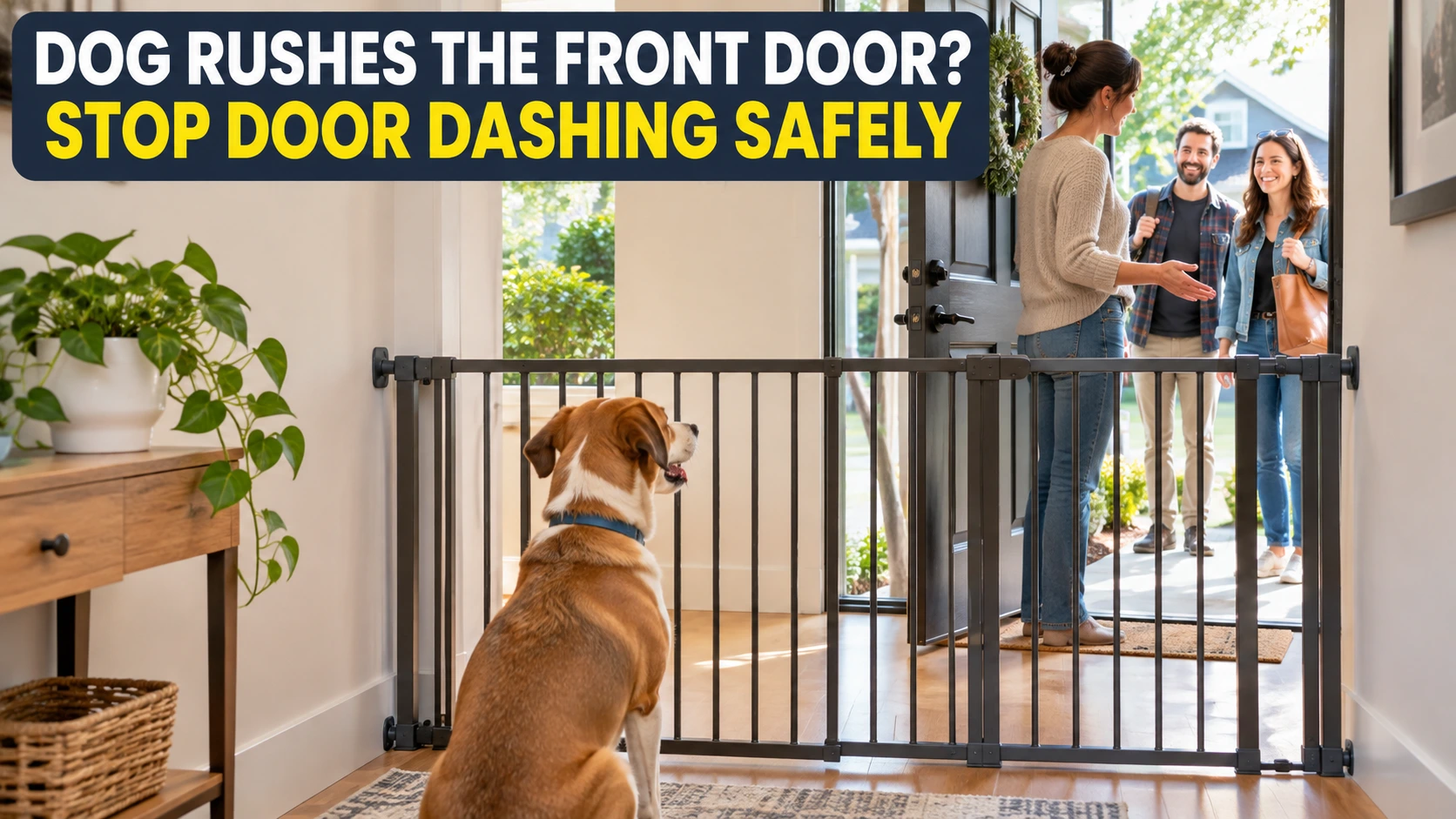
You reach for the front door, and your dog is suddenly pressed against your legs, ready to squeeze through the first opening. Maybe they rush toward delivery drivers, guests, wildlife, or simply the excitement outside. If your dog rushes the front door when guests arrive, this behavior—often called door dashing—is more than a manners problem. It can put your dog near traffic or out of sight in seconds.
You can teach a safer routine with patient, reward-based training, but the first step is preventing an escape while the new habit develops. A dependable system combines a closed or protected entrance, a practiced wait or retreat cue, and consistent cooperation from everyone in the home.
Table of Contents
Quick Answer: How Do You Stop a Dog From Rushing Out the Front Door?
Before visitors arrive, put your dog behind a secure interior door or correctly fitted barrier, or safely clip on a comfortable harness and leash while the outside door remains closed. Practice a “wait” at an interior door first: reward staying behind the threshold as you touch, turn, and gradually open it. Add a release cue, then practice with a helper and a secured entrance. Never test an untrained dog at an open street-facing door.
The American Kennel Club’s door-darting advice recommends both management and positive training: leashes, gates, closed rooms, alternate locations, and easy rehearsals before adding real visitors.
Why Dogs Rush the Door When People Arrive
Some dogs rush because people arriving is exciting. Others want to investigate noises, sniff outdoors, chase a moving object, or escape a stressful interaction. A puppy may not understand the threshold at all. A dog who has reached the yard after pushing past you may have learned that rushing works.
The underlying motivation matters. A social dog may need to learn that waiting brings access to greetings; an anxious dog may need distance and a quiet space instead. Frequent bark-and-rush episodes may also relate to alarm barking. Our excessive barking guide explains why the cause matters more than simply correcting the sound.
Because the front door leads to a real hazard, training must never be the only line of defense. Even an obedient dog can be surprised by a delivery, a loud noise, or an open gate.
Safety First: Create Two Barriers Before Opening the Door
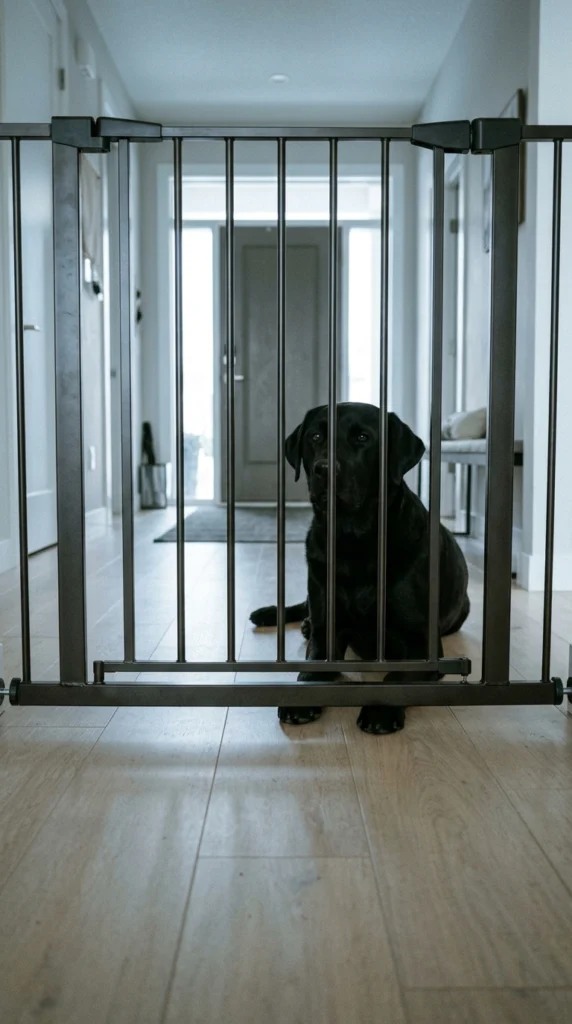
When practical, keep an internal boundary between your dog and the open exterior door. That might be a securely latched room, a properly installed gate across an interior hallway, or a closed secondary doorway. Choose a solution based on your dog’s size, jumping ability, anxiety level, and the space available.
- Closed interior room: Often the safest temporary option for a dog with a history of bolting or jumping gates.
- Secure pet gate: Useful when it truly fits the opening and the dog cannot push through, climb, jump, or operate a small pet door.
- Supervised leash and harness: Helpful for planned drills, but an unexpected lunge can injure an owner or dog. Never tether an unattended dog near an exit.
- Clear visitor plan: Tell guests to wait until you confirm the dog is secured before entering.
Check gate latches and door closers each time. Do not install pressure-mounted barriers at the top of stairs; follow product safety instructions and use appropriate hardware-mounted systems where required. Our room-by-room puppy-proofing checklist</a can help you identify household escape routes and other hazards.
Teach a Safe Doorway “Wait” Step by Step
Step 1: Practice at a Boring Interior Door
Begin at a bedroom or hallway door that does not open to the street. Keep the main front door closed. Put on a comfortable leash if necessary, ask your dog for a sit or relaxed stand, and reward them for pausing behind the threshold. Start with only a second or two.
If your dog walks forward, calmly reset at an easier starting point. Avoid body-blocking in a way that frightens them or makes them compete to squeeze past you. Reward the choice to remain, not the struggle to hold them back.
Step 2: Reward as You Reach for the Handle
Many dogs treat a hand on the doorknob as the signal that something exciting is about to happen. Practice lifting your hand toward the handle and then rewarding your dog for staying put. Next, touch the handle briefly. Then turn it. Each small action should be easy enough that your dog can remain relaxed.
Return and reward rather than waving food in front of their nose to keep them frozen. Your goal is an independently chosen pause, not a dog who only waits when they see a treat.
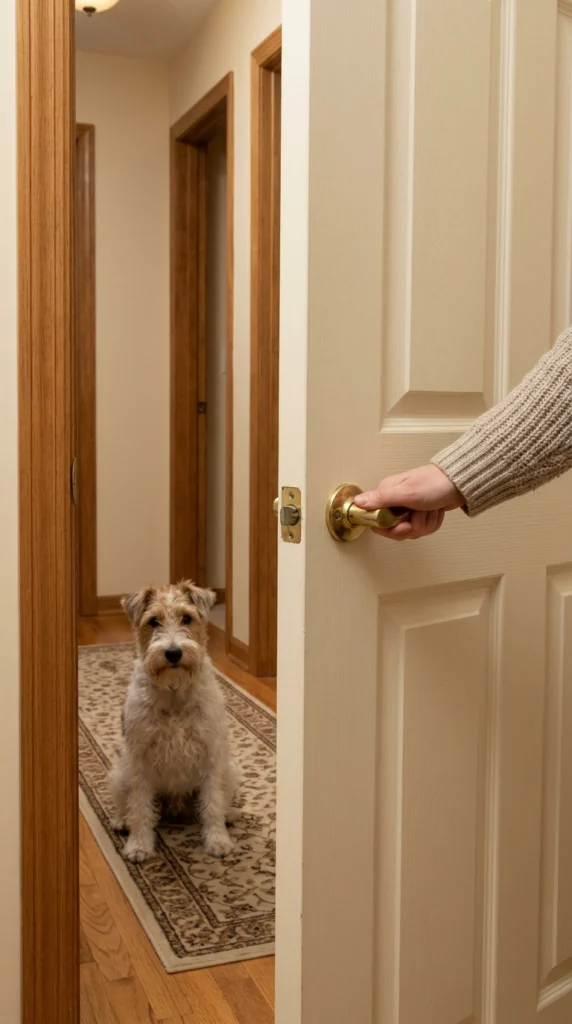
Step 3: Open the Interior Door Just an Inch
When the handle itself is uneventful, crack the door open briefly. Mark and reward a pause behind the threshold, then close the door. Increase the opening slowly across separate repetitions. If your dog surges forward, close the interior door without slamming it and repeat a much easier version.
Use the same release word every time you want your dog to pass through. This teaches that an open door does not automatically mean permission to charge ahead. For a foundation in the difference between “stay” and “wait,” see our basic dog commands guide.
Step 4: Add Your Movement Across the Doorway
Once a short opening is easy, take one small step through the interior doorway and immediately return to reward. Add one more movement only when your dog stays comfortable. Practice from both sides of the threshold. Then say the release word and invite your dog through in a controlled way.
This practice is about communication, not making a dog remain motionless indefinitely. A young puppy, senior dog, or dog with mobility limitations may need shorter repetitions and a comfortable standing posture instead of a long sit.
Step 5: Teach an Alternative “Go to Place”
For deliveries and guests, moving away from the door can be even safer than holding a wait near it. Teach your dog to move to a mat or familiar resting area away from the entrance. Reward them for arriving, then for remaining briefly until released. Use a secure barrier during all real visitor situations while you build this skill.
This is different from our article on stopping jumping during greetings, which focuses on what happens when people get close. Door-dashing training is specifically about preventing access to an opening before a greeting even begins.
Practice With a Helper, Without Risking an Escape
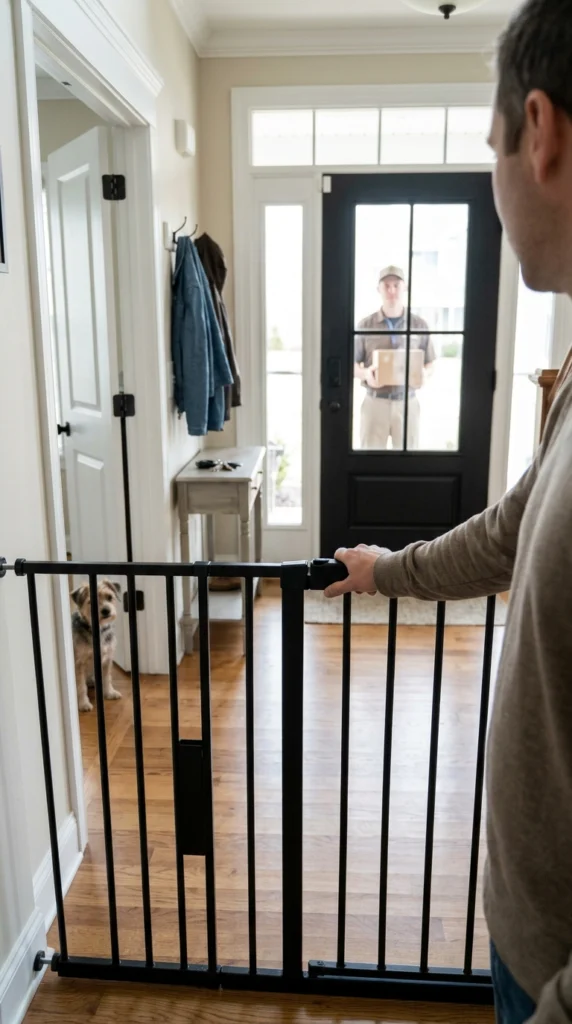
Choose a trusted adult who can follow instructions. Explain that the helper should not step inside or invite the dog out until you say it is safe. Make sure your dog is behind a secure interior barrier. You can start with a quiet knock, then a doorbell sound, then a person visible through a window.
- Place the dog in the prepared safe area, with treats and water as appropriate.
- Ask your helper to knock once and stand outside the closed front door.
- Reward your dog for staying in place or responding to a “go to place” cue.
- Walk to the front door and touch the handle. Return to reward.
- Open the front door a little while the second barrier remains fully closed.
- Talk to the helper briefly; close the front door before releasing your dog.
- Repeat on a different day before adding a full guest entry or louder excitement.
Do not allow a helper to tease, call, or make exciting sounds to test your dog. Your goal is calm repetition. The AKC doorbell-manners guide</a explains why pairing the sound with a practiced alternative response can make entry routines easier.
What If Your Dog Dashes Before You Can React?
Prevention is best, but make an emergency plan in case a door is accidentally left open. If your dog runs outside, stay as calm as you can. Avoid chasing directly if that turns running away into a game. If it is safe, call your dog’s practiced recall cue once in a cheerful voice, move away to encourage following, and reward immediately if they return.
Never run into traffic or put yourself at risk trying to grab a loose dog. Ask a second adult to watch traffic or call for help if needed. Have identification and current microchip contact details in place before an escape happens. If your dog is loose near vehicles, seek safe local assistance promptly.
Recall training is valuable even for dogs who mostly stay indoors, but it does not replace closed entrances. For leash handling during controlled doorway practice, consult our beginner leash-training guide.
Daily Habits That Prevent Door Dashing
- Prepare before the knock: Secure your dog before expecting a delivery or guests.
- Use the same rule: Everyone in the home waits until the dog is behind a barrier before opening the outside door.
- Practice ordinary doors: Rehearse calm thresholds during quiet times, not only during major distractions.
- Keep exits predictable: Clip the leash on in a closed room before preparing for walks.
- Make arrival boring: Ask visitors not to call the dog or reward frantic rushing.
- Maintain ID information: Check collar tags and microchip contact details regularly.
- Watch for fear: A dog trying to escape people or noise needs a different plan than a dog rushing toward greetings.
Helpful Supplies for Secure Door Management
Affiliate disclosure: As an Amazon Associate, we may earn from qualifying purchases. Equipment cannot replace a secured exterior door and good supervision. Select a suitable fit and follow manufacturer instructions.
- Carlson Extra Wide Walk-Through Pet Gate: One possible interior management barrier for compatible openings. It includes a small pet-door feature, which must be securely latched if your dog could use it to escape. A bolting, climbing, or strong dog may require a fully closed room instead. View this Carlson pet gate on Amazon.
- Paw Lifestyles Dog Treat Training Pouch: A convenient way to keep tiny rewards accessible for short indoor threshold drills when your dog is behind a secure barrier. View the Paw Lifestyles treat pouch on Amazon.
Neither item is a guarantee against escape. A gate can fail if poorly mounted, left unlatched, or easily crossed by the dog. Always inspect your actual installation before relying on it.
Common Mistakes That Make Door Rushing Worse
Opening the real front door as an early training test
A newly learned cue is not reliable enough to protect a dog from traffic. Practice with interior doors first and keep a second barrier during real exits.
Scolding or startling a dog at the entrance
Yelling may add tension without teaching an alternative. Punishment can also worsen fear around visitors. The American Veterinary Society of Animal Behavior recommends reward-based methods and environmental management.
Letting some guests invite the dog through
Conflicting rules make the doorway harder to understand. Ask everyone to close and secure the entrance, wait for permission, and greet the dog only if the dog is comfortable and it is safe to do so.
Assuming “sit” means the dog cannot bolt
A sit is a position, not a physical barrier. A dog may spring up the instant something exciting happens. Maintain the gate, closed room, or leash system until the behavior is reliable in that exact context.
When to Contact a Veterinarian or Behavior Professional
If rushing is driven by panic, fear of visitors, separation distress, or sudden behavior changes, ask your veterinarian for guidance. A qualified reward-based trainer or veterinary behaviorist can help design a plan that accounts for individual risk. Dogs who snap at people or show escape attempts around children need safety management and professional help, not forced introductions.
Frequently Asked Questions
Why does my dog bolt toward the front door?
Common reasons include excitement about visitors, curiosity, outdoor scents, chasing opportunities, or anxiety. Observe whether your dog is moving toward something enjoyable or away from something frightening, because the right response differs.
Should I use “stay” or “wait” at the door?
Either can be useful when taught clearly. “Wait” often means pause before moving forward; “stay” may require maintaining a position until released. Use consistent cues and always secure the exterior door independently.
Is a pet gate enough to stop door dashing?
Not for every dog. Some jump or climb gates, squeeze through bars, or push them aside. Assess the dog and installation carefully; a properly closed interior room may be the safer choice.
Can a rescue dog learn door manners?
Yes. Begin with easy indoor repetitions and rewards. Dogs with a history of fear or repeated escapes may need a longer management period and individualized professional support.
What should visitors do if my dog rushes the door?
Wait outside until an adult confirms the dog is secured. Do not call the dog, reach through a gate, or hold the exterior door open while the dog is loose inside.
Final Thoughts
When a dog rushes the front door, the safest solution is not a louder command. Create a real barrier, rehearse an easy interior-door “wait,” reward a reliable retreat to a mat or quiet room, and involve helpers only after the basics are in place. A secure entrance is nonnegotiable even when training goes well.
For more practical dog-training, safety, and everyday care advice, visit the Dogs Daily Care homepage.
Editorial note: This article provides general training and safety information, not a substitute for individualized veterinary or behavior-professional advice.