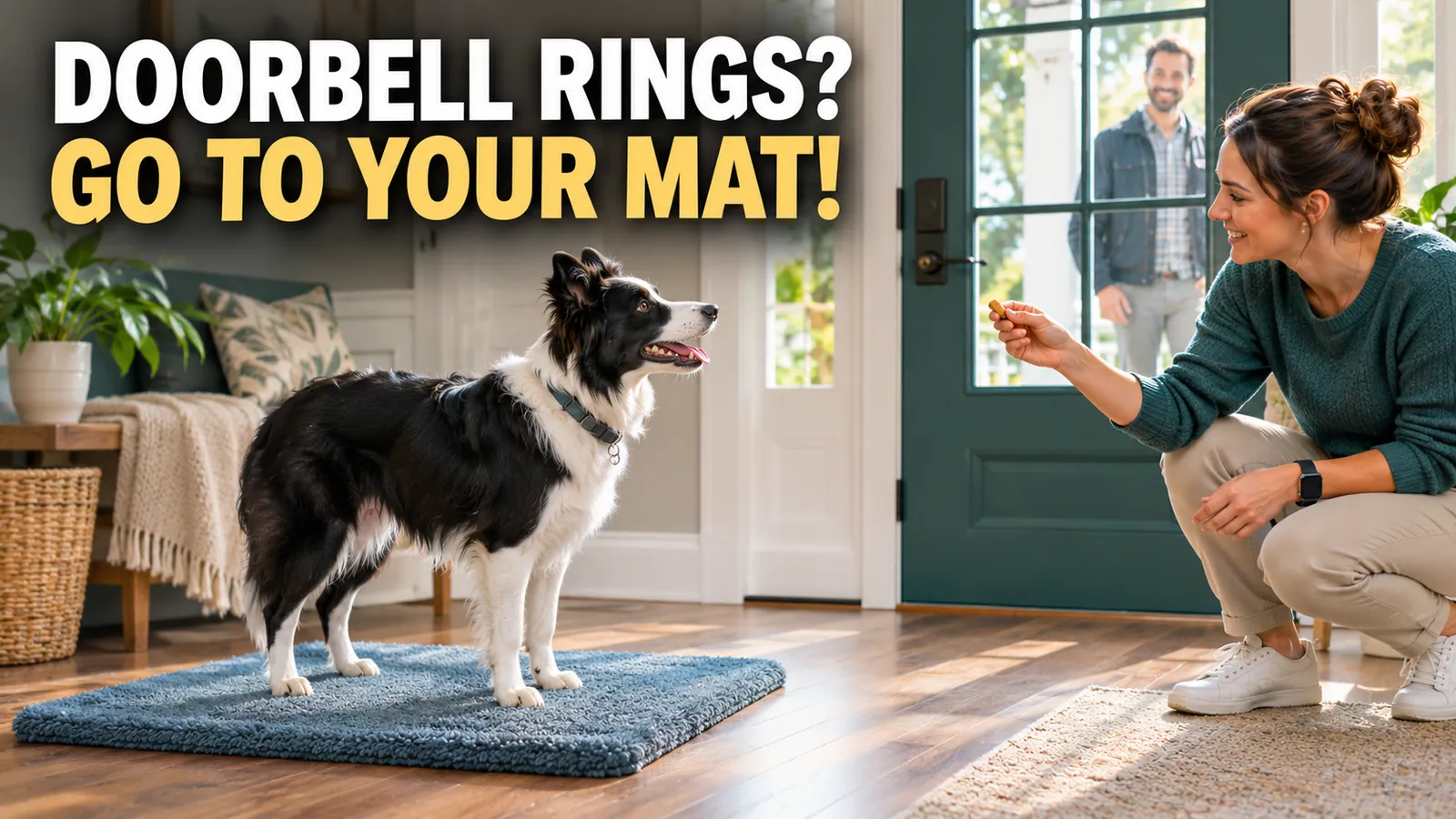
The doorbell rings, and your dog races toward the entrance before you can put down your coffee. Maybe they bark, jump, or get so excited that they cannot hear a familiar cue. Instead of trying to stop every reaction in the moment, teach a simple alternative: go to a mat when the doorbell rings.
A designated mat gives your dog a predictable job and a comfortable place to wait while you answer the door. The skill takes practice, but you can teach it in small, reward-based steps without making your dog confront visitors or relying on shouting.
Table of Contents
Quick Answer: How Do You Teach a Dog to Go to a Mat When the Doorbell Rings?
First teach your dog to step onto a mat in a quiet room. Reward four paws on the mat, introduce a short “place” cue, build a brief stay, and teach a release word. Only then add a very quiet doorbell sound, followed by a real doorbell with a helper. Reward your dog on the mat after each successful repetition. Keep an exterior door closed and use a secure barrier or leash while the behavior is still new.
The American Kennel Club’s doorbell-manners guide teaches a similar progression: make the bell less alarming, practice “go to place,” and gradually pair the routine with visitors. This article focuses on the exact steps, timing, and troubleshooting for home practice.
Why a Mat Works Better Than Yelling “Quiet”
A ringing doorbell predicts something important: a person, a package, activity at the door, or an exciting greeting. Dogs may respond with barking, rushing, jumping, or scanning. Telling a dog to be quiet does not explain where they should go instead. Mat training teaches an observable action: move to a specific location and remain there until released.
Because the mat is away from the entrance, it can also create useful distance. For a friendly dog who simply gets excited, it interrupts a familiar pattern. For a nervous dog, it may create space from strangers—provided no one forces interaction. If barking is intense or happens in many settings, read our guide to the causes of excessive barking as well.
Mat training is a skill, not a physical restraint. A dog who could dash through an open door still needs management until the routine is reliable.
Set Up the Training Space Before You Begin
Choose a mat, flat bed, or washable rug with a non-slip underside. It should be large enough for your dog to stand and comfortably lie down. Position it in sight of you but well away from the front-door swing and the path visitors walk through. Avoid a tight corner where an anxious dog could feel trapped.
- A distinct mat: Choose something your dog can visually and physically recognize.
- Small rewards: Use a portion of your dog’s ordinary food or small training treats that suit their diet.
- A quiet marker: A consistent “yes” works if a clicker sound worries your dog.
- A release word: Choose “free,” “all done,” or another phrase and use it consistently.
- A helper and a barrier: You will need these later for doorbell practice, not in the first lesson.
For dogs learning other everyday cues, our seven basic dog obedience commands explains how to build short, consistent training sessions.
Teach “Go to Your Mat” in Six Simple Stages
1. Reward Interest in the Mat
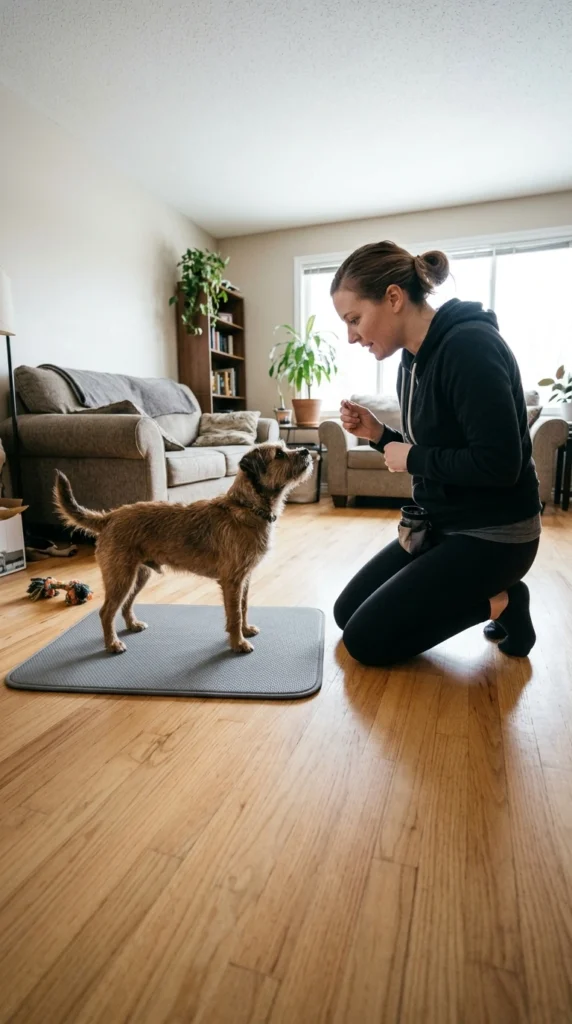
Start when there are no visitors and the doorbell is silent. Place the mat on the floor and allow your dog to investigate. The instant they look toward it, sniff it, or step onto it, say “yes” and give a reward. Place the reward on the mat so that returning there feels worthwhile.
A timid dog may need several rewards just for approaching. Do not shove or drag them onto it. If your dog ignores the mat, try a quieter location, a more comfortable surface, or a reward they enjoy more. Keep this stage light and easy.
2. Build Four Paws on the Mat
Once your dog willingly approaches, gradually reward more specific actions: one paw, two paws, then all four paws on the mat. Deliver the reward while your dog is standing or resting on it. If they walk off, simply invite another attempt instead of correcting them.
It helps to reset between repetitions. Toss a treat a short distance away in a safe indoor direction, wait for your dog to return, and reward when all four paws are back on the mat. Soon the dog starts choosing that location on purpose.
3. Add Your “Place” Cue
When your dog reliably heads toward the mat, say “place” just before they begin moving to it. Use an open-hand gesture if helpful, then reward them on the mat. Do not repeat the word five times. If they do not understand, make the next attempt easier and show them the path again.
The first goal is not a long stay; it is a clear response to the cue. Work from a few steps away, then gradually move a little farther from the mat. The AKC’s “go to place” exercise also uses rewards for increasing engagement before adding a release.
4. Teach a Short Pause and a Release Word
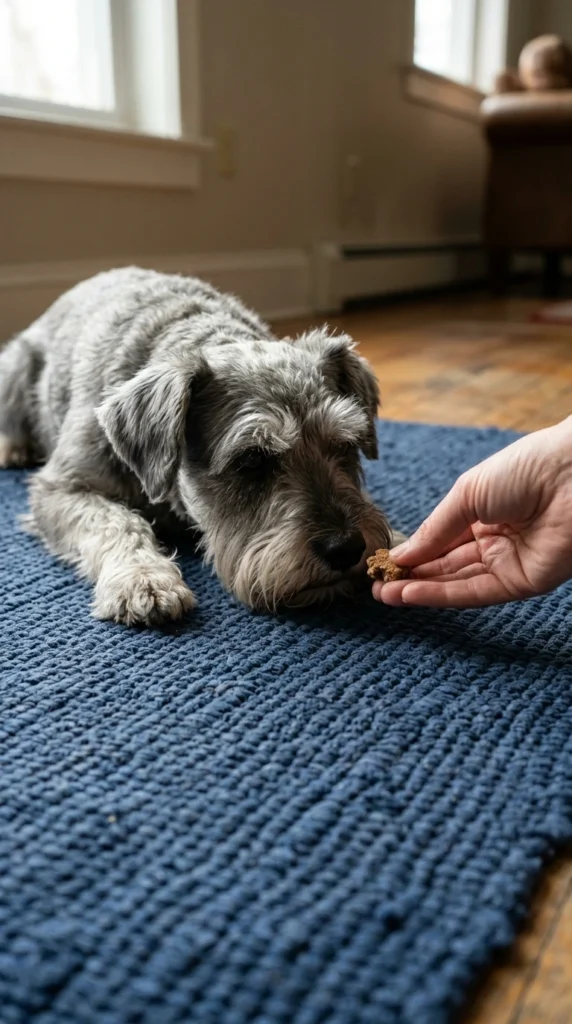
After your dog gets onto the mat, reward immediately. Then wait one second, reward again, and say your release word as you invite them off. Slowly increase the pause over several sessions. If they leave early, do not scold—reduce the time and try again.
Many dogs do better when you reward them several times while they remain on the mat instead of giving a single treat and walking away. For dogs who find lying down comfortable, you can reward a relaxed down. Never require a painful position from an elderly dog or one with mobility issues.
5. Add Distance, Movement, and a Pretend Visitor
When your dog can remain comfortably for several seconds, take one step away and return to reward. Next, touch the doorknob, pick up your keys, or walk toward the hallway and return. Change only one detail at a time. The goal is calm success, not testing how much excitement your dog can tolerate.
If your dog jumps off whenever you walk toward the door, the movement is too difficult. Stand closer, reward more often, and use shorter repetitions. A door should remain closed during these early practices. For dogs who also jump on people, see our polite-greeting and jumping guide.
6. Pair a Very Quiet Doorbell With the Mat
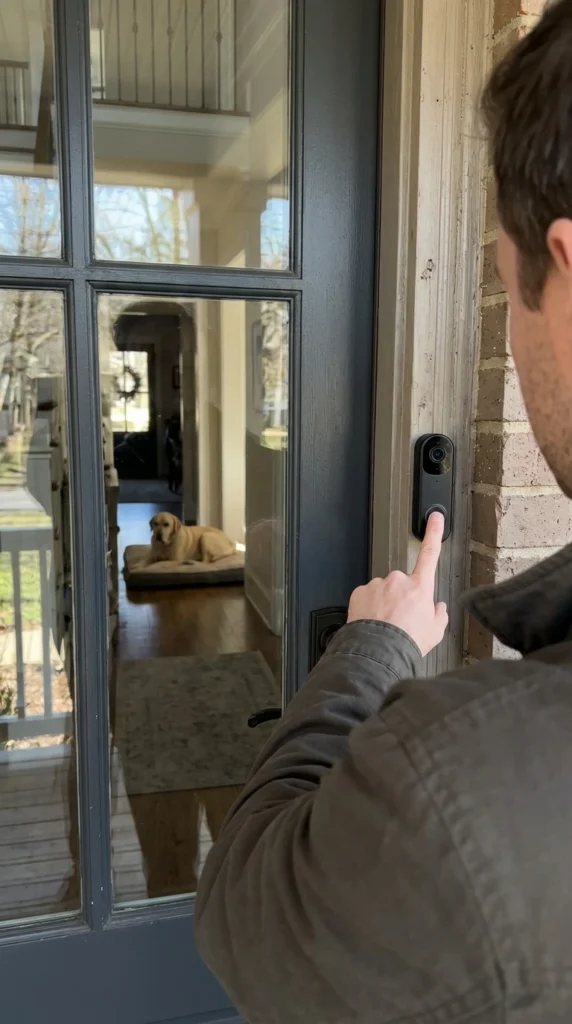
Play a recording of your doorbell at a low, comfortable volume—or ask a household member to ring it once from outside while the door stays closed. Immediately guide your dog to the mat using the cue they already know, and reward on the mat. If they become upset or cannot take rewards, lower the sound or move farther from it.
After successful practice, make the sound a little more like the real bell. Eventually, ring the bell, pause briefly to see whether your dog chooses the mat, and reward that choice. Do not expect the sound itself to become an automatic cue immediately. Dogs need repeated, low-pressure opportunities to connect the bell with the new routine.
Practice With a Real Person at the Door
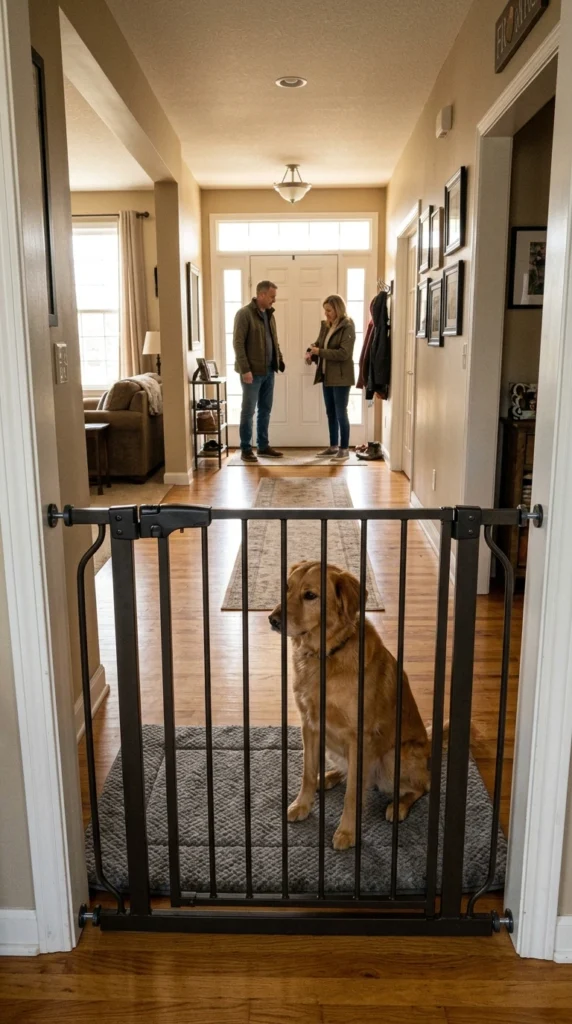
Choose a calm helper who understands that this is training, not a social visit. Explain the plan before they arrive. Keep the front door shut and your dog behind a suitable interior barrier or safely handled leash. Have your helper ring or knock once, cue your dog to the mat, and reward.
- Have the helper ring once, then wait without entering.
- Give your cue and reward your dog on the mat.
- Move a step toward the closed door; return to reward.
- Open the exterior door only when an independent safety barrier is secured and your dog is comfortable.
- Say a few words to the helper and close the door before the dog loses focus.
- Finish with the release cue, water, and a quiet break.
A dog does not need to greet every visitor. If guests increase fear, barking, growling, or frantic activity, use a secure quiet room instead. Puppy owners can also benefit from our gentle puppy socialization tips for controlled, consent-based introductions.
What to Do When the Doorbell Rings Unexpectedly
For unplanned deliveries, use management before training. If your dog has not mastered the mat cue, put them behind a closed interior door or securely fitted barrier before opening the exterior door. You can place a treat container near the mat for supervised rewards, but do not count on food to stop a determined escape.
Some households find it easier to use a delivery note asking visitors not to ring. That may reduce rehearsals of frantic barking during the learning period, but a doorbell can still sound unexpectedly. For outdoor leash skills, consult our beginner leash-training guide.
Common Mat-Training Problems and Gentle Fixes
My dog goes to the mat but immediately jumps off
Reward more often while they are on the mat, shorten the pause, and use your release cue clearly. Practice the stay portion separately from the doorbell. If the bed is slippery or too hot, switch to a more comfortable surface.
My dog barks as soon as the bell rings
Reduce volume or remove the bell sound temporarily. Reward calm behavior around the quiet mat first. A frightened or highly aroused dog cannot learn effectively from repeated full-volume surprises. If the reaction is severe, seek professional advice rather than repeatedly exposing them.
My dog is fine with me but not with guests
Real guests add footsteps, voices, clothing, smell, and excitement. Return to a helper who only knocks and leaves. Open the door for one second with a barrier secured, then close it. Build up from those easy successes. Guests should not stare at, touch, or approach a dog who is nervous.
My dog only responds when I show a treat
Once your dog understands “place,” say the cue before bringing out the reward. Reward after arrival on the mat. Gradually vary the type and frequency of reward, but keep the training worth doing. Do not remove rewards before the behavior is well learned.
Optional Supplies for Doorbell Mat Practice
Affiliate disclosure: As an Amazon Associate, we may earn from qualifying purchases. These items are optional; reward-based teaching and safe barriers matter more than any specific product.
- Paw Lifestyles Dog Treat Training Pouch: A hands-free way to carry tiny food rewards for short practice sessions. Confirm the current listing details before purchasing. View the Paw Lifestyles training pouch on Amazon.
- Carlson Extra Wide Walk-Through Pet Gate: May help establish an interior boundary if installed as directed and appropriate for your dog’s size. Its small pet-door opening must remain securely closed where a dog could pass through. It is not an escape-proof substitute for a securely closed room. View the Carlson walk-through gate on Amazon.
When to Get Help With Doorbell Reactions
Contact your veterinarian or a qualified reward-based behavior professional if doorbell sounds trigger panic, prolonged trembling, snapping, intense attempts to escape, or increasing reactions despite easier training. A sudden behavior change can sometimes reflect pain or illness. The American Veterinary Society of Animal Behavior supports reward-based methods and appropriate environmental management rather than aversive correction.
Frequently Asked Questions
How long does it take a dog to learn “go to mat”?
There is no guaranteed timeline. Some dogs learn the basic cue in a few short sessions but need many more practices before responding to a real doorbell with visitors nearby. Measure success by comfortable, repeatable behavior, not by a deadline.
Should I teach “stay” before the mat cue?
You can teach the mat first, then build a brief stay and release. A general stay cue can help, but it is not required for the first lessons. Keep the dog safe with barriers regardless of the command they know.
Can I use a crate instead of a mat?
Yes, if your dog already finds the crate pleasant and enters voluntarily. Do not use a crate as punishment or force a frightened dog inside. A secure quiet room may be more appropriate for dogs who dislike confinement.
Should a guest reward my dog?
Not necessarily. In early training, it is usually simpler for you to deliver rewards while the guest remains neutral. A nervous dog should not be lured toward a stranger with food.
Will mat training stop all barking?
Not always. Some barking is normal communication, and anxiety or alarm barking may need a separate plan. The mat provides a practical alternative routine but should not be treated as a promise of silence.
Final Thoughts
To teach your dog to go to a mat when the doorbell rings, start far from the actual doorbell. Build a voluntary mat behavior, reward a short pause, introduce a clear release, and add sound and visitors gradually. Keep exterior-door safety separate from the training exercise: a closed door, secure gate, or quiet room matters until your dog’s response is dependable.
For more practical training and everyday dog-care resources, explore the Dogs Daily Care homepage.
Editorial note: This article offers general training guidance and does not replace individualized veterinary or qualified behavior advice.