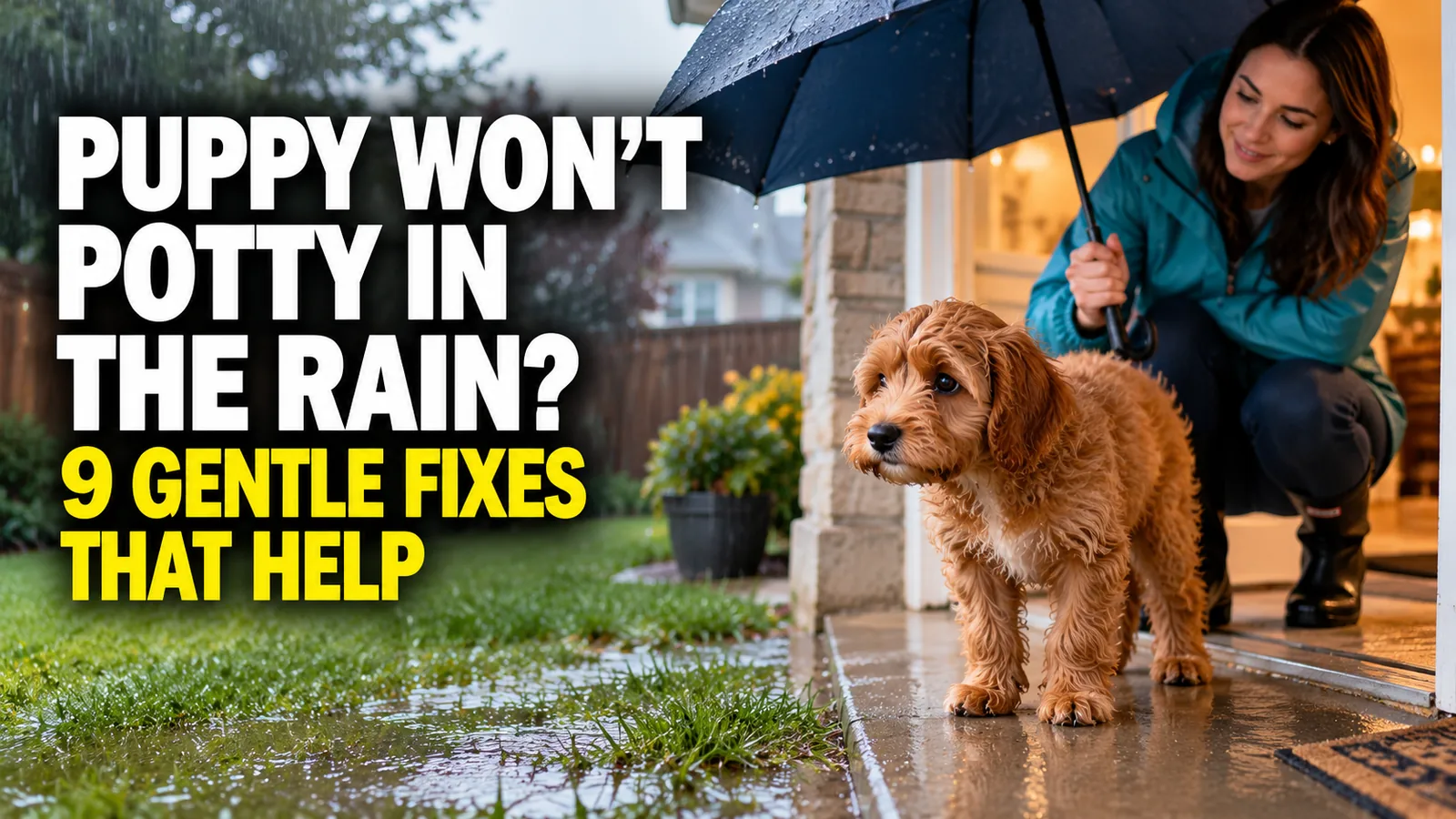
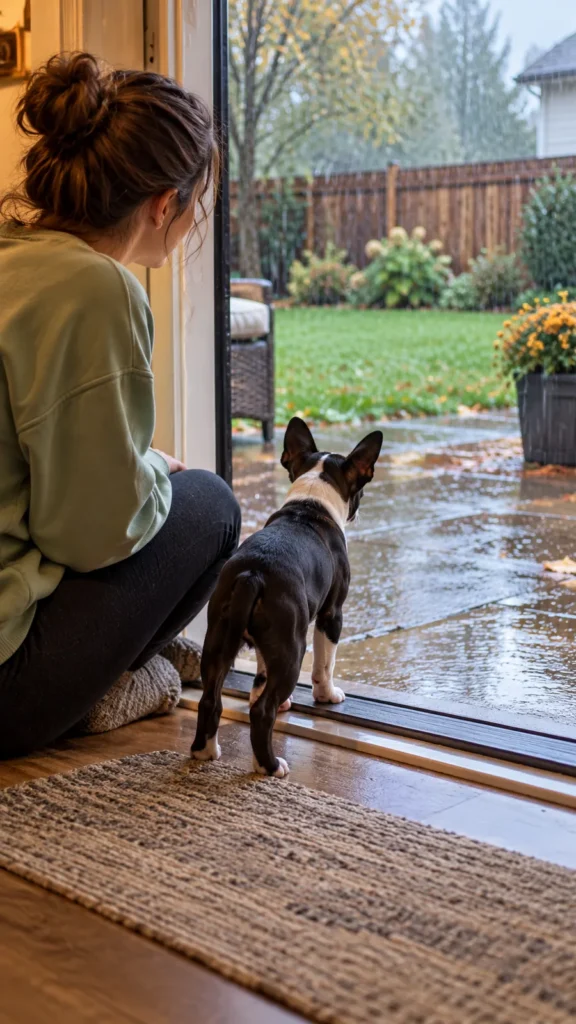
You open the back door, hear rain tapping on the patio, and your puppy plants all four paws on the dry floor. Five minutes later, they still refuse to go—and the moment you return inside, there is a puddle on the rug. If your puppy won’t potty outside in the rain, that frustrating pattern is common, and it usually calls for a gentler rainy-weather plan rather than stricter discipline.
Some puppies dislike raindrops on their backs, soggy grass under their paws, or the noise of wind and gutters. Others are still learning where it is safe to go. Here are nine practical ways to make rainy-day bathroom breaks less stressful while protecting your usual potty-training progress.
Table of Contents
Quick Answer: What Should You Do When a Puppy Refuses to Potty in the Rain?
Try a familiar, sheltered potty spot and go outside with your puppy. Keep the outing calm, use a comfortable leash and an umbrella if helpful, then reward outdoor success right away. If your puppy does not go, return indoors and supervise closely before offering another opportunity. Do not drag them through puddles, punish an accident, or expect a very young puppy to wait for the rain to stop.
This approach is consistent with advice from the American Kennel Club and Battersea Dogs & Cats Home: reduce discomfort, make outdoor experiences positive, and preserve a predictable routine.
Why Your Puppy Will Not Pee or Poop Outside When It Rains
Rain changes several parts of the bathroom experience at once. Falling water can feel strange on the ears and back. Wet grass, gravel, and puddles smell and feel different. Wind may move plants and create unexpected noises. Puppies with short coats or little body fat may get uncomfortable quickly in chilly weather.
A puppy may also have developed a strong preference for one surface—dry grass, for example—or may have learned to rush indoors after a wet trip. None of these reactions means your puppy is stubborn. Watch for hesitation, trying to retreat, shivering, or repeatedly lifting their feet; these clues suggest the outing needs to be easier.
9 Gentle Fixes for a Puppy Who Hates Pottying in the Rain
1. Choose the Driest Familiar Potty Spot
Walk to the same bathroom location you use on clear days, but choose the most sheltered part of it. An overhang, a covered patio beside a patch of grass, or a safe area protected from the worst of the rain may be enough. Do not send your puppy under an unstable structure or into a flooded area. If the surface they trust is grass, keep a small grassy patch available instead of switching suddenly to gravel or wet concrete.
A portable grass patch can be a temporary solution for some apartment or patio setups, but it needs cleaning and a gradual plan if your long-term goal is a different outdoor surface. For the full foundations—schedule, cue and location—see our puppy potty-training guide.
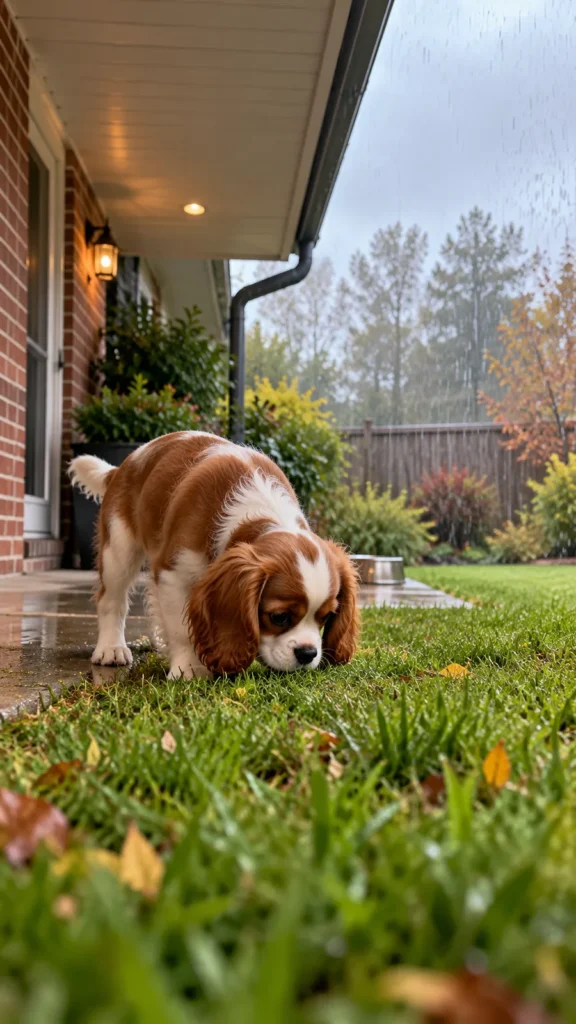
2. Go Outside With Your Puppy, Not Just to the Door
Stand nearby, hold the leash loosely, and allow the puppy a little room to sniff. Many puppies are more willing to investigate when their familiar person is with them. Skip loud encouragement or tugging toward a puddle. A brief, relaxed wander around the designated area can help a distracted pup settle, but an anxious dog should be allowed to retreat.
If a short leash is new to your puppy, practice wearing the harness indoors before a rainy trip. Our beginner leash-training guide explains how to introduce the equipment without turning walks into a struggle.
3. Make Wet Weather Comfortable With Simple Gear
Try holding an umbrella over the puppy or using a lightweight, properly fitted dog raincoat if they tolerate clothing. The coat should not rub, restrict movement, cover the puppy’s eyes, or interfere with toileting. Introduce it indoors with treats first; do not add a strange coat to an already frightening storm. Some puppies prefer no clothing at all.
Dry the coat, belly and paws afterward, especially in cool conditions. Rain gear is optional: a sheltered outdoor space and your calm company may be all your puppy needs. Avoid long outings when a young or small puppy is shivering, and return indoors if weather becomes severe.
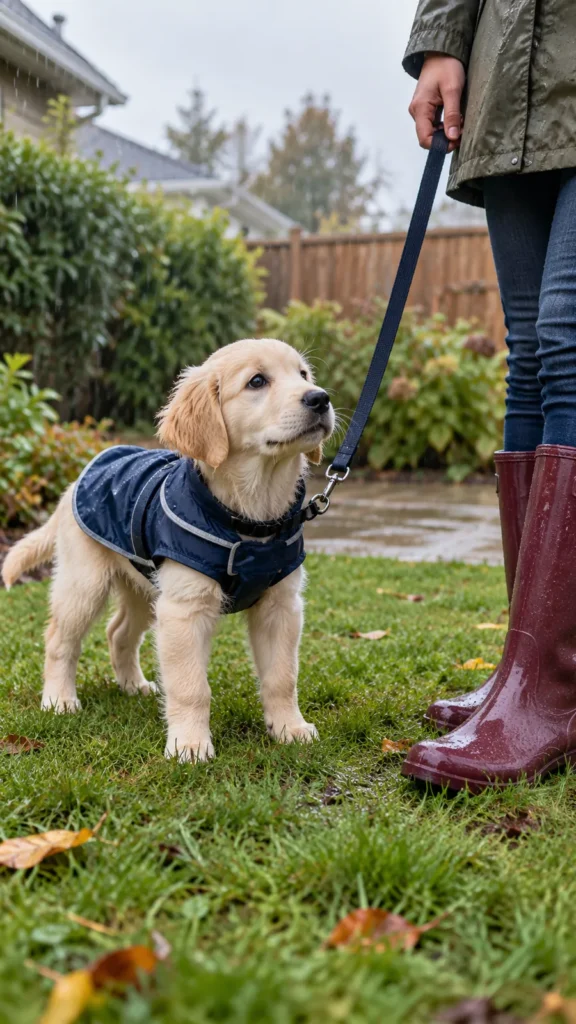
4. Reward the Bathroom Break Immediately
Bring a few small, puppy-appropriate rewards in a waterproof pocket. When the puppy finishes peeing or pooping outdoors, praise gently and give the reward before you return inside. Timing matters: paying the moment they finish helps connect the reward to the correct location instead of to walking through the door.
Do not use treats to pull a frightened puppy out into heavy rain. Rewards should make a safe, successful experience pleasant, not pressure them to tolerate something overwhelming. Consistent, calm reinforcement is also central to housebreaking a puppy.
5. Teach a Potty Cue on a Dry Day First
A predictable phrase such as “go potty” can be useful when the weather is unpleasant, but teach it in conditions your puppy already handles. Quietly say the phrase as they begin to eliminate, then reward once finished. After enough comfortable repetitions, try the familiar cue at the rainy-day potty spot. Do not repeat it loudly or expect an immediate result.
The goal is to make the cue informative rather than a command the puppy can fail. The AKC describes this method in its potty-on-cue training guide.
6. Practice Tiny, Positive Rain Experiences Between Potty Trips
On a mild, safe drizzly day, spend a few moments near the doorway or under an overhang while your puppy enjoys a treat, a calm sniff, or a simple game. Go back inside before they become cold or worried. Repeat only when they seem comfortable, and gradually expand the experience over multiple days instead of making every rainy exit a stressful bathroom test.
This is especially helpful for puppies still learning about novel surfaces and sounds. The same principle—gentle exposure without flooding a puppy with fear—is discussed in our puppy socialization guide. Skip outdoor exercises during thunder, lightning, flooding or strong winds; safety comes before training.
7. If Nothing Happens, Return Indoors and Supervise
Do not stand in cold rain indefinitely. If your puppy is uncomfortable and nothing happens after a brief, reasonable opportunity, bring them in, dry them, and keep them near you in an easy-to-clean area. Watch for sniffing, circling, suddenly wandering away, or squatting, then offer another outdoor break soon. The interval is not fixed: a very young puppy who drank water or just woke up may need to try again quickly.
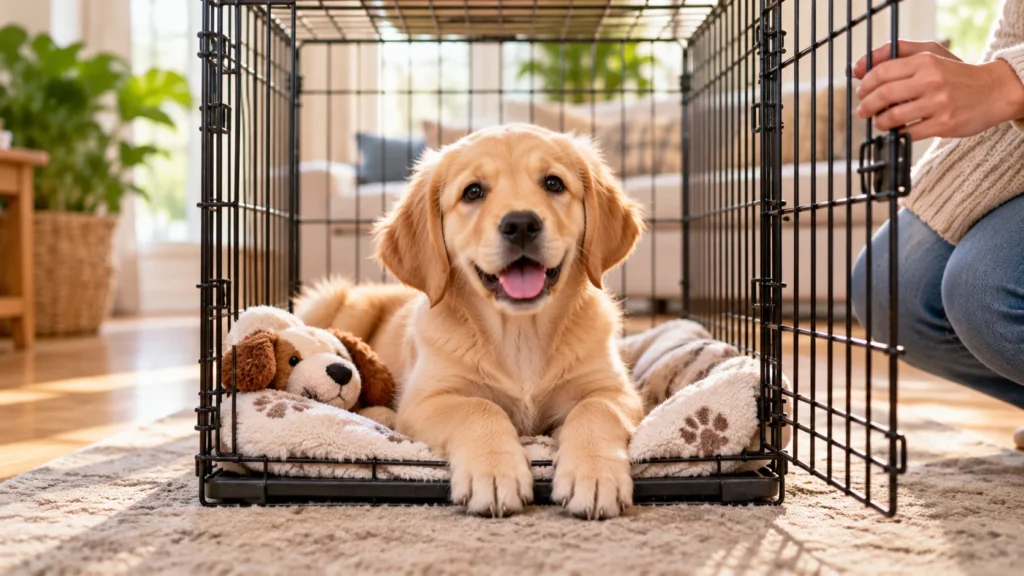
A pen or positively introduced crate can help with supervision for a short period, but should never be used to make a puppy hold urine beyond their developmental ability. See our puppy crate-training guide for safe, age-appropriate introductions. Never restrict water to prevent accidents.
8. Clean Indoor Accidents Without Punishment
If your puppy pees on the floor after refusing a rainy potty trip, stay calm. Interrupt gently only if you catch them in the act and can safely redirect outside; otherwise, clean the area thoroughly with a pet-appropriate enzymatic cleaner following the product label. Keep your puppy away from the cleaning area until it is safe and dry.
Avoid yelling, nose-rubbing, or treating the puddle as spite. Punishment can make puppies hide when they need to eliminate, which complicates training. Keep a short log of eating, drinking, outside attempts, and accidents to spot when an extra trip may help. It is the same prevention-first approach described by VCA Animal Hospitals.
9. Make Coming Back Inside Pleasant, Too
Keep a towel by the door and calmly pat your puppy dry, including between the toes if they have walked through muddy grass. Do not grab at their feet if handling makes them nervous. Offer a warm resting place, then continue the normal household routine. For puppies who pull away from the towel, our gentle paw-wiping training guide provides small practice steps.
A positive return routine helps the whole trip feel predictable. It also protects floors and makes repeated rainy-day breaks less frustrating for the family.
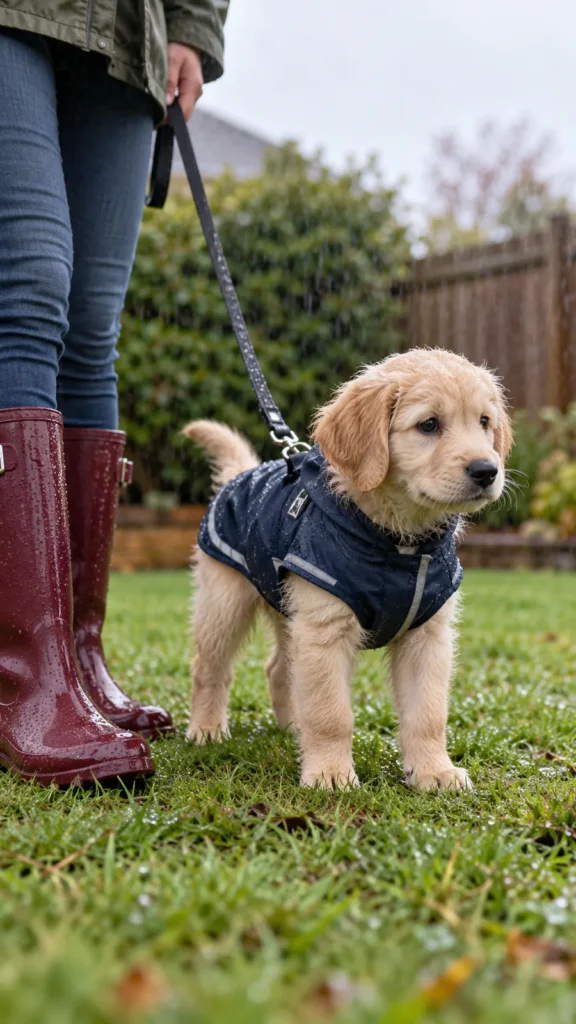
A Simple Rainy-Day Potty Routine You Can Try Today
- Before opening the door: Gather a leash, treats, towel, and umbrella if useful. Check for thunder, flooding, or unsafe footing.
- First attempt: Take your puppy to the sheltered familiar spot. Let them sniff quietly without forcing the issue.
- If they go: Reward immediately, then return inside for a warm, calm dry-off.
- If they do not go: Come indoors and supervise rather than giving unsupervised freedom around the house.
- Try again: Offer another break based on your puppy’s age, last drink, recent activity and signs they need to go. Keep each attempt manageable.
For a newly adopted or very young puppy, you may need many trips throughout the day even in rain. The point is not to wait them out—it is to create more chances for a comfortable success.
What If You Live in an Apartment With No Covered Yard?
Pick the quietest safe outdoor spot you can reach without a long exposed walk. A sturdy umbrella may protect both of you; a small grass surface on a permitted balcony or patio may be a temporary option if it is safely contained, drains properly, and meets building rules. Avoid letting urine run onto neighbors’ property. For puppies who are not fully vaccinated, ask your veterinarian about local infection risks before using shared grassy areas.
If your puppy is repeatedly distressed by the journey outside, a vet or qualified reward-based trainer can help you decide whether a temporary indoor toilet plan is appropriate. Switching surfaces back and forth without a plan can make outdoor habits harder to establish.
Mistakes That Usually Make Rainy-Day Potty Training Harder
- Pulling or carrying a panicked puppy into the rain: Comfort and safety should come before exposure.
- Waiting until the puppy is desperate: Offer regular chances instead of stretching bathroom intervals.
- Using punishment for wet-weather accidents: It does not teach where to go and may increase hiding or anxiety.
- Assuming rain gear is a guaranteed fix: Some puppies dislike jackets more than raindrops.
- Skipping supervision after a failed attempt: A quick indoor puddle is especially likely if the puppy still needs to go.
- Training outdoors during dangerous storms: Thunder, lightning, slick steps and standing water are reasons to change the plan.
When Refusing to Pee Is a Veterinary Concern
Rain aversion is usually a behavior or comfort problem, but a puppy who cannot urinate may have a medical emergency. If your puppy repeatedly strains, produces only a few drops, cries when trying to pee, has blood in the urine, or seems weak or painful, seek veterinary attention immediately rather than assuming the weather is the cause. A complete urinary blockage can be life-threatening, as described by the MSD Veterinary Manual.
Also contact your veterinarian about sudden changes in potty habits, diarrhea, vomiting, excessive thirst, frequent accidents, or refusal to eliminate even on pleasant days. When in doubt, call your veterinary clinic; do not rely on the puppy “holding it” until conditions improve.
Frequently Asked Questions
Should I force my puppy outside if it is raining?
No. Offer a manageable outdoor opportunity, ideally in a sheltered area, and encourage voluntary movement. Forcing a frightened puppy into a storm can make later attempts harder. If the weather is unsafe, ask your veterinarian about an appropriate temporary plan.
Why does my puppy pee indoors immediately after we come back?
They may have been too worried or distracted to finish outside. After an unsuccessful trip, supervise closely and try again at the next reasonable opportunity. Clean the accident without punishment.
Will a dog raincoat make a puppy go potty outside?
A well-fitted coat helps some puppies who dislike wet fur or cold weather. Others find coats uncomfortable. Introduce any clothing gradually and never let it obstruct normal toileting.
Is it okay to use pee pads only on rainy days?
Pads can be a temporary backup in some homes, but inconsistent rules may slow learning when your goal is outdoor toileting. Keep the location and plan clear, and discuss difficult situations with a qualified trainer or veterinarian.
How long should I wait outside in the rain?
There is no universal number. Allow a brief, calm chance to sniff and eliminate. If your puppy is shivering, frightened, or unable to settle, return inside and supervise before trying again. Severe weather calls for a different safety plan.
Final Thoughts
If your puppy refuses to potty in the rain, begin with comfort instead of pressure. A sheltered familiar spot, calm company, well-timed rewards, and careful supervision after unsuccessful trips can make an immediate difference. Work on positive rain experiences on gentle-weather days, and remember that puppies learn at different speeds.
Most importantly, do not confuse a training challenge with a health emergency: a puppy straining to urinate without producing urine needs urgent veterinary care. For ordinary rainy-day reluctance, patience and a predictable routine are the best place to start.
Editorial note: This article offers general training and safety guidance and does not replace an individual veterinary assessment.