
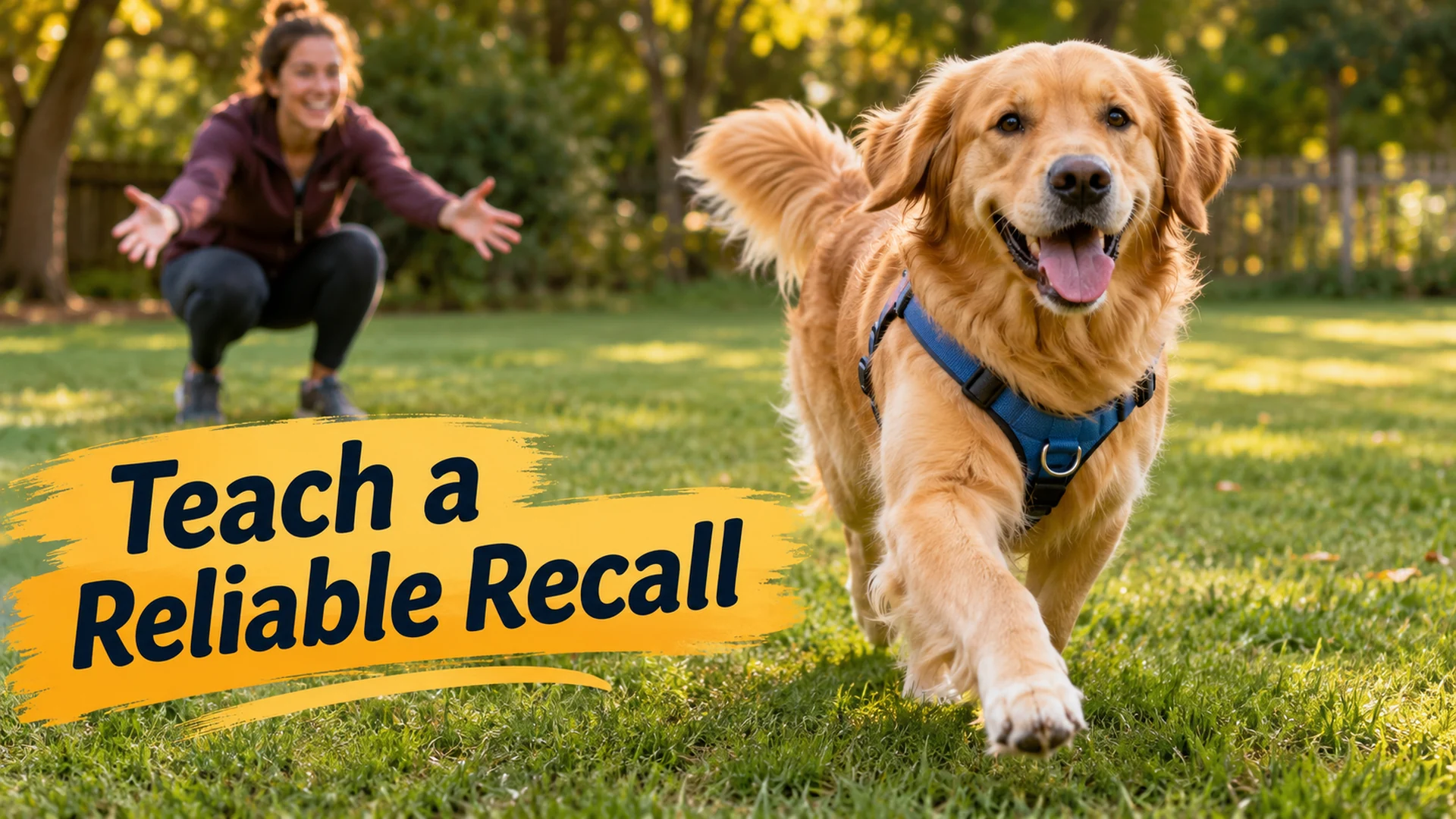
Calling your dog back should feel like a fun opportunity, not a battle. A strong recall can make everyday walks, yard time, and unexpected moments safer, but it takes planned practice. These steps begin indoors and build toward controlled outdoor distractions without punishment or unrealistic promises.
Quick answer: Start indoors with a cheerful single recall cue, reward each full return, slowly add distance, and practice outdoors only on an appropriate leash or safely enclosed area. Never punish a dog for coming back, even if the response was slow.
Helpful references for this topic include AKC reliable recall guide, AKC teaching come when called, AKC recall steps. This article offers general education, not a diagnosis or individualized veterinary or training plan.
Table of Contents
What reliable recall actually means
A reliable recall is a trained response in which the dog hears a cue such as “Come,” turns toward the handler, travels all the way back, and allows the handler to make contact. It does not mean the dog understands English automatically. The cue becomes meaningful through many repetitions in which returning leads to rewards and safety.
Recall is an especially important skill near gates, on walks, and during everyday interruptions, but no recall is guaranteed around all distractions. Even well-trained dogs should use a leash or safely enclosed area when required for safety or by local rules.
Step 1: choose a cue and reward
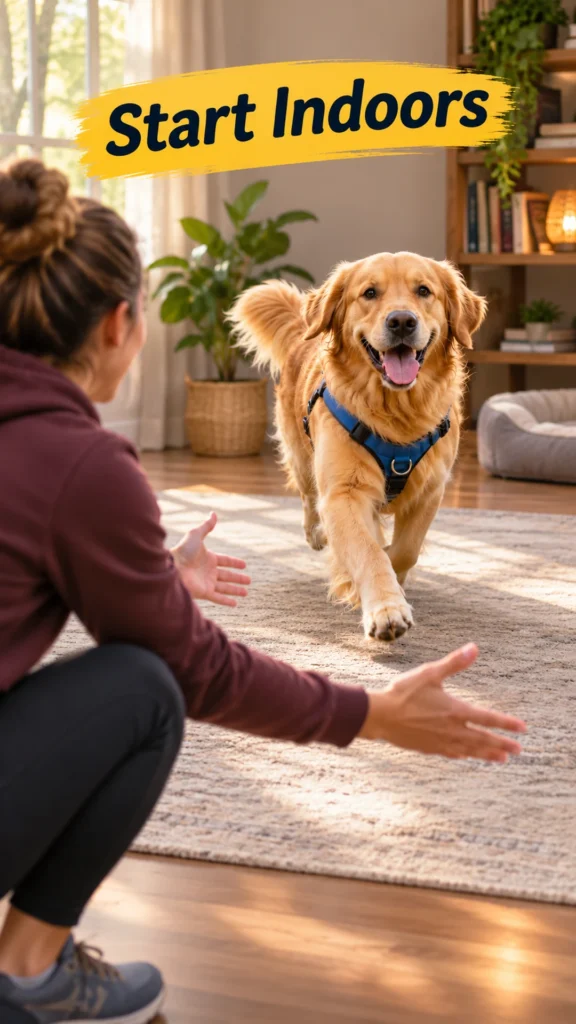
Pick one cheerful cue, such as “Come” or “Here.” Everyone in the family should use the same word. Choose several small high-value treats your dog enjoys, or a favorite game if food is not motivating. Start in a quiet room where success is likely.
Do not call the cue repeatedly while your dog ignores it. Instead, move closer, make the task easier, and reward the first movement toward you. A consistent marker word like “Yes!” can help your dog identify the exact moment they made a good choice.
Step 2: begin at arm’s length indoors
With your dog a step or two away, say their name once, then the recall cue in a happy tone. Take a small step backward and reward as soon as the dog reaches you. Feed several tiny treats while the dog is close to you so returning feels worthwhile.
Repeat briefly a few times, then take a break. Keep sessions fun and avoid dragging the dog by a collar or leash. A calm, successful five-minute session is usually more helpful than an exhausting half hour.
Step 3: add distance and a second person
Move to the opposite end of the room or hallway, still without major distractions. Have two family members alternate calling the dog, each rewarding the complete return. The dog learns that recall works from different locations and directions.
When the dog is fluent indoors, move to a fenced yard or quiet enclosed area. Raise one difficulty at a time: either distance, duration, or distraction. If you change all three at once, the dog may fail even though they learned the first step well.
Step 4: practice outdoors safely on a long line
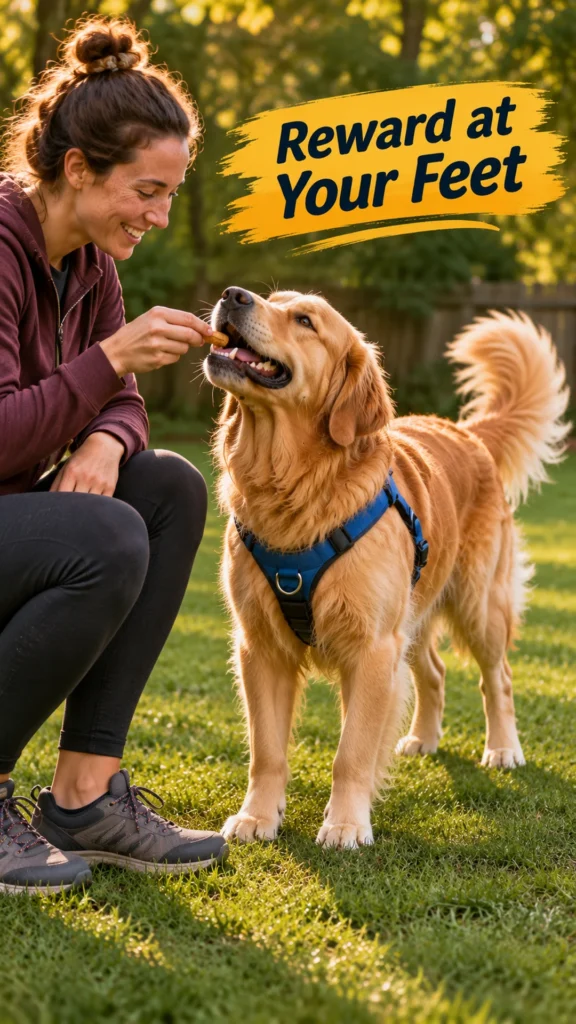
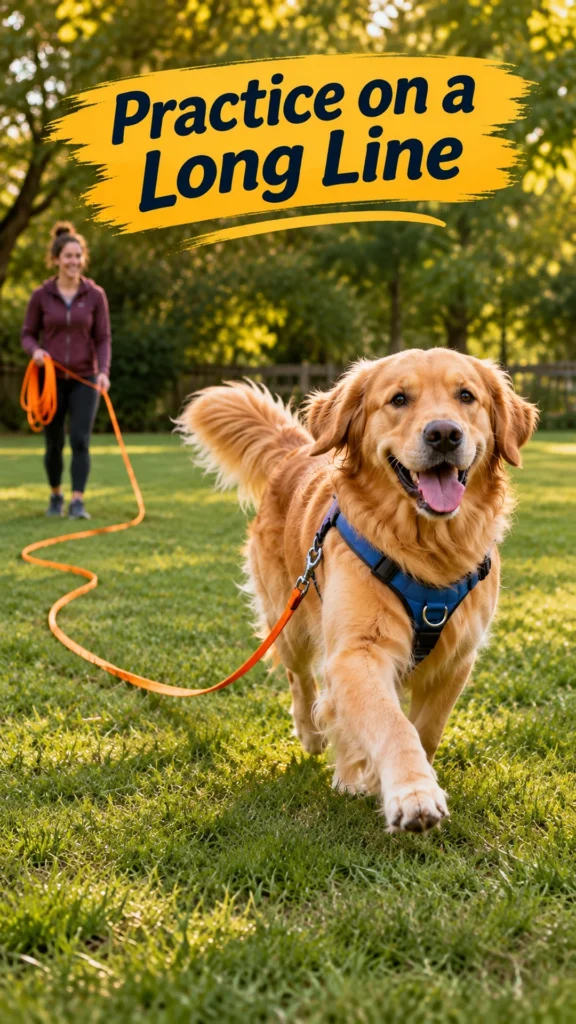
Use an appropriate harness and long training line in a quiet outdoor location where dogs are permitted. Hold the line safely; do not wrap it around your hand or leave a trailing line unattended. Allow a little exploration, then call once. Encourage your dog with happy body language and reward at your feet.
Never use a long line near traffic, crowded dog parks, or places where it can tangle with people or animals. Remember that a training line is a safety aid, not a reason to jerk your dog toward you.
Step 5: teach the collar or harness touch
A dog that arrives but immediately darts away has only learned half the task. After rewarding recall, briefly touch the harness or collar gently, offer another treat, and release. Practice until your dog is comfortable with this normal handling.
If your dog becomes wary when you reach toward them, go back to easier sessions. Build positive associations rather than grabbing suddenly. This skill can help if you need to attach a leash after the dog returns.
What to do when your dog ignores the cue
The most common reason is that the environment became too difficult. Your dog may be sniffing, chasing, greeting another dog, or focused on moving traffic. Avoid chasing or scolding. Reduce distance and distractions, use a better reward, and return to the last level where the dog was successful.
Do not punish a dog after it finally returns, even if it took a long time. The dog may associate the unpleasant moment with coming back to you. Also avoid using “Come” only to signal the end of fun; sometimes reward and release the dog to keep exploring.
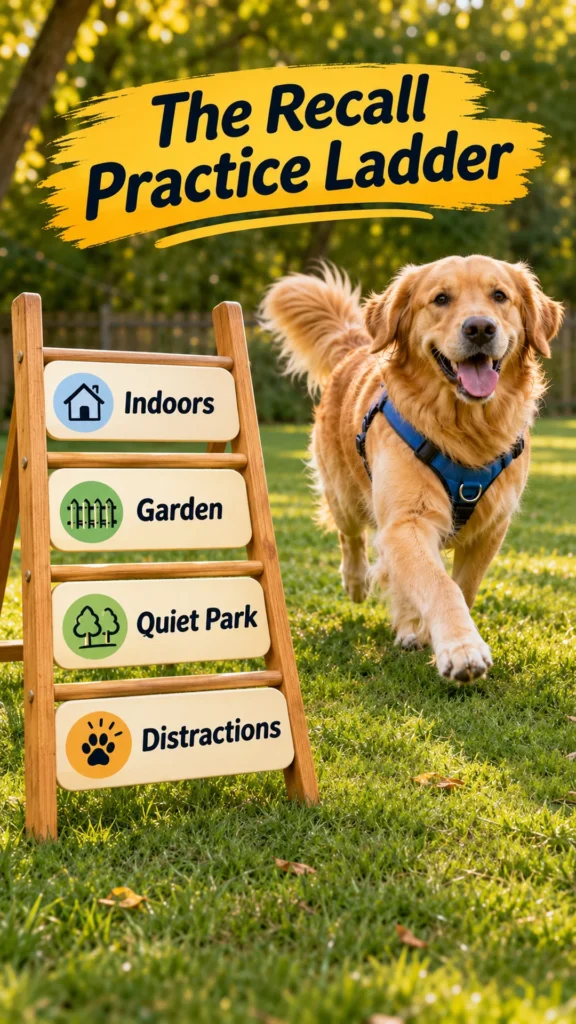
A simple week of recall practice
- Day 1: five short indoor returns from close range.
- Day 2: hallway practice with a second person.
- Day 3: recall before dinner or a favorite game.
- Day 4: quiet enclosed-yard practice with small distance.
- Day 5: harness touch and calm leash attachment after return.
- Day 6: controlled outdoor practice on a long line.
- Day 7: review easier steps and note where distractions still caused difficulty.
This schedule is an example, not a deadline. Many dogs need weeks or months of repetition and continued practice throughout life.
Frequently asked questions
Should I say my dog’s name before ‘come’? Often yes; the name can get attention, while the recall word asks for the return.
Can I use a whistle? Yes, if you condition it consistently with rewards and practice in safe environments.
How do I train an older dog? Start exactly as you would with a puppy—close range, low distraction, generous rewards, and gradual progression.
When is off-leash recall safe? Only where legal and appropriate, and only after extensive practice in controlled settings. Keep using a leash when safety is uncertain.
How to use a release cue after recall
After your dog arrives, accept the return warmly, reward, and sometimes say a release word such as “Go sniff.” That teaches that coming back does not always end the walk or playtime. If every recall immediately leads to the car or a bath, a smart dog may learn to hesitate. Practice short returns during ordinary enjoyable activities. When it is truly time to leave, use your calm leash attachment routine and continue rewarding cooperation. A predictable sequence makes the behavior clearer and reduces the chance that the dog will dodge your hand near the finish.
Recall around people, dogs, and wildlife
The biggest mistake is testing recall in an environment where the dog is not ready to succeed. A squirrel, another dog, or a running child may be a much stronger distraction than your reward. Work at a safe distance using a long line where appropriate and reinforce attention before the dog becomes overexcited. If you see signs your dog is fixating on the distraction, increase distance and return to easier cues. Safety and legal leash requirements come before training ambitions. Reliable off-leash freedom should never be assumed because of one or two successful outdoor sessions.
Keep a progress log instead of chasing perfection
A useful training note records the environment, distance, distractions, whether your dog returned on the first cue, and which reward worked. For example, three short returns in a quiet yard may be more informative than twenty repetitions where the dog was distracted and confused. Adjust only one difficulty at a time and give the dog a chance to succeed repeatedly. If fear, reactivity, or strong chasing instincts make progress difficult, a qualified positive-reinforcement professional can help plan safe practice. Training should build trust rather than create pressure.
Related Dogs Daily Care guides
This cue fits alongside the skills in 7 Basic Obedience Commands Every Dog Should Know. If noisy distractions are interfering with practice, review How to Stop Excessive Barking for a broader behavior-management approach.
Sources and further reading
Editorial note: This guide is for educational purposes and is not a substitute for advice from your veterinarian or qualified professional.