

A new puppy can turn an ordinary bedtime into a series of whimpers, trips outdoors, and interrupted sleep. That does not mean you are doing something wrong. Young puppies are adjusting to a new home and may still need nighttime bathroom breaks. A predictable routine, a comfortable sleep area, and a calm response to genuine needs can help everyone rest more easily.
Quick answer: Help a puppy sleep through the night by keeping daytime feeding, naps, and play predictable; giving a final calm potty opportunity immediately before bed; creating a comfortable, secure sleep space near you at first; and handling necessary overnight bathroom trips quickly without play. Do not ignore genuine distress or expect a very young puppy to hold their bladder all night.
Table of Contents
When do puppies usually sleep through the night?
There is no single age when every puppy starts sleeping all night. Bladder maturity, size, health, age, previous routine, and how recently the puppy moved into your home all matter. A puppy may sleep for long stretches but still need a bathroom trip. According to the American Kennel Club’s new-puppy guide, some puppies settle right away while others need brief overnight potty trips. The goal is steady progress, not a rigid promise of an eight-hour night by a particular date.
For a puppy who wakes at night, ask whether the problem is a potty need, too much daytime stimulation, discomfort, fear of being alone, or a sleep schedule that has not become familiar. The right solution depends on that cause.
Set up a puppy-friendly sleep area
Choose a comfortable, secure location
Many families put a crate or puppy pen in the bedroom initially, within hearing distance. That makes it easier to respond to a bathroom need before an accident and may reassure a newly separated puppy. The crate should permit the puppy to stand, turn around, and lie down comfortably. A divider can help with size as the puppy grows. Our step-by-step crate-training guide explains how to introduce this space positively instead of using it as punishment.
Affiliate disclosure: As an Amazon Associate, Dogs Daily Care earns from qualifying purchases. This article contains affiliate links; if you buy through them, we may earn a commission at no additional cost to you.
A wire crate with a divider, such as the MidWest iCrate 48-inch double-door version (Amazon), may suit certain large-breed puppies as they grow, but this specific size is inappropriate for many small puppies without proper partitioning. Measure your dog, choose a suitable version, and secure all parts according to the manufacturer. A crate is optional: a safe pen or small puppy-proofed room can also work.
Prioritize temperature, ventilation, and chewing safety
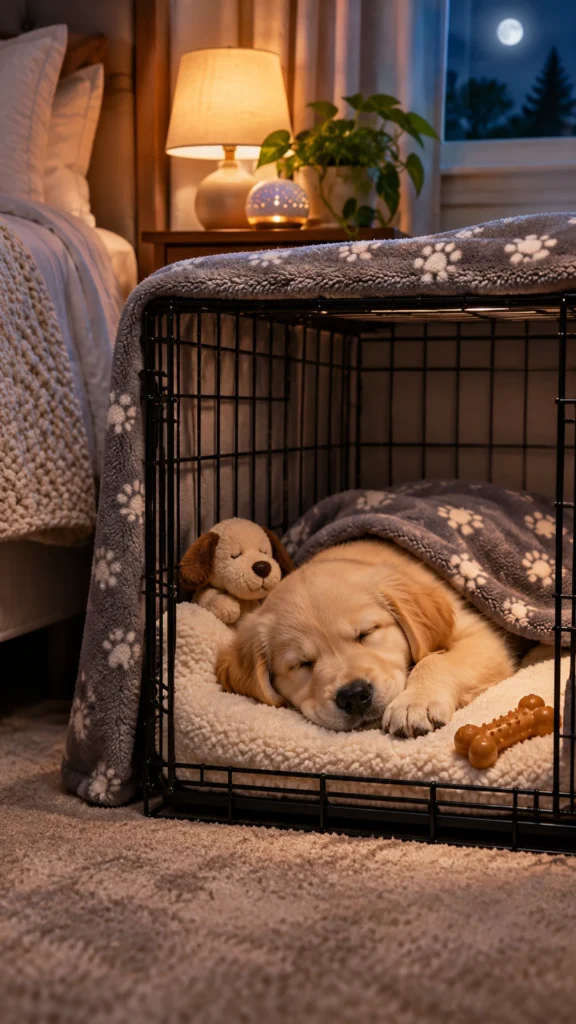
Use washable bedding that your puppy does not shred. Avoid loose cords, plastic packaging, dangling curtain ties, and small objects a puppy could swallow. Remove the collar or harness if it could snag on crate bars. Do not fully wrap the crate in a thick blanket that blocks ventilation or traps heat. If your puppy chews bedding or toys, remove the unsafe item and choose another supervised comfort method.
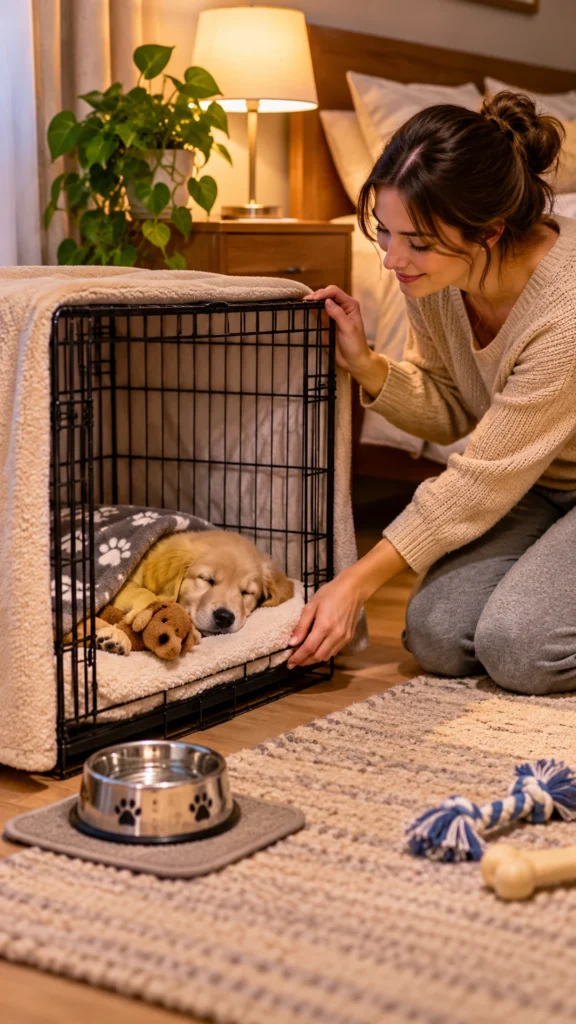
Build a repeatable evening routine
1. Keep meals and water sensible
Offer an age-appropriate feeding routine rather than one very late, heavy meal. Keep fresh water accessible during the day, and do not withhold water excessively to prevent overnight urination. Your veterinarian can advise if thirst, medication, age, or a medical condition changes the plan. If you are still organizing daytime meals, our puppy potty-training guide can help you coordinate meals and toilet breaks.
2. Include a calm afternoon and enough daytime rest
Puppies need generous daytime sleep. Overtired puppies may become nippy, zoom around, and have trouble settling. Short age-appropriate play, gentle training, sniffing, and social time are useful, but an intense chase session immediately before bedtime can make it harder to relax. Our puppy biting guide explains why overtired behavior is common and how to redirect it kindly.
3. Offer a quiet wind-down
About 30 to 60 minutes before sleep, lower activity in the house. Keep lighting softer, offer a short calm interaction, and avoid revving your puppy up with visitors or rough play. You may offer a safe chew or food enrichment while supervised, then remove anything that could be swallowed before leaving the puppy unattended. The purpose is to make the same sequence predictable night after night.
4. Go outside immediately before bed
Take your puppy to the usual bathroom spot on a leash or under close supervision. Wait quietly, reward completion gently, and return indoors without starting another game. A final trip before lights-out is one of the most useful routines for limiting accidents. If your puppy did not eliminate, expect that you might need another short trip sooner.

How to respond when a puppy wakes up at night
Check the possibility of a bathroom need first
If a young puppy wakes after a stretch of sleep, take them outside promptly and quietly. Keep the lights low, speak little, avoid games, give a brief opportunity to eliminate, and return to bed. If nothing happens, do not turn the break into playtime. VCA’s housetraining guidance emphasizes predictable opportunities and consistent supervision.
Reassure without making every wake-up exciting
A brief, calm voice or your presence near the sleeping area may help. New puppies have been separated from littermates, and some need time to feel safe. You can comfort a puppy without treating every whimper as an invitation to play. If the puppy is panicking, drooling heavily, hurting themselves trying to escape, or unable to settle, do not leave them in severe distress and hope they “learn.” Review the setup and seek a veterinarian or qualified positive-reinforcement trainer.
Plan an overnight trip rather than guessing
For very young puppies, a pre-planned boring potty trip can be more successful than waiting for crying to become urgent. Gradually adjust timing as the puppy stays dry and comfortably sleeps longer. Never push a puppy past its individual limits simply to meet an online schedule. Age-based bladder estimates are rough guidelines, not guarantees.

What to do if your puppy cries in the crate
First check whether the puppy needs to eliminate or is uncomfortable: assess room temperature, access to water during waking hours, bedding, and whether the puppy became frightened of the enclosure. If the crate is new, practice voluntary daytime entries with tiny rewards and brief door-closing sessions. Increase duration gradually, allowing the puppy to remain relaxed. See VCA’s positive crate-training guidance for the underlying approach.
Some brief protest sounds may occur as a routine changes, but prolonged distressed crying, frantic scratching, and attempts to escape are not something to ignore. Consider moving the sleep space closer, slowing the training steps, or trying a safer pen arrangement. Puppies need safe practice while awake, not simply longer periods of confinement at night.
Can comfort items help?
A quiet toy or heartbeat-style plush may provide comfort for some puppies, although it is not a treatment and individual responses vary. The Snuggle Puppy heartbeat comfort toy (Amazon) is one optional product to consider under supervision. Inspect seams and removable parts, and keep it out of the unattended sleep area if the puppy chews, shreds, or could swallow pieces. A LickiMat Classic Buddy (Amazon) may be used for supervised pre-bed enrichment; remove it afterward rather than leaving a chewable mat unattended overnight.
Most families do not need to buy an elaborate kit. A safe location, predictable routine, and timely potty trips are more important than products.
A realistic first-week bedtime approach
For the first few nights, keep the routine especially simple: gentle play and dinner earlier, a calm wind-down, a final bathroom trip, and a nearby sleep area. Keep overnight trips quick and predictable. During daytime naps, practice the same sleeping cues and encourage short relaxed periods in the crate or pen. After several nights, look for patterns: is the first stretch longer, is crying less intense, are there fewer accidents? Make gradual changes based on the puppy rather than a strict seven-day promise.
Mistakes that prolong night waking
- Expecting a very young puppy to stay dry for an adult-length night
- Delaying every potty break to “teach independence”
- Letting the puppy become overtired with intense evening play
- Using the crate as punishment or moving confinement too quickly
- Leaving chew hazards, loose collars, or unsafe toys unattended
- Making late-night potty trips into exciting play sessions
- Restricting water excessively instead of seeking veterinary advice
When to contact a veterinarian
Call your veterinarian if urination is unusually frequent, your puppy strains or cries while urinating, has diarrhea or vomiting, drinks dramatically more than usual, seems lethargic, or has a sudden major change in sleep and behavior. These problems may need medical assessment rather than more crate training. Also seek help if intense distress persists despite careful changes. Avoid giving human sleep aids, sedatives, or supplements unless your veterinarian specifically recommends them.
Frequently asked questions
Should my puppy sleep in my bedroom?
Keeping a safe crate or pen nearby for the first weeks can help you hear nighttime potty needs and provide reassurance. You can move it gradually later if that suits your household.
Should I wake my puppy to pee at night?
For a very young puppy who reliably has accidents, a quiet planned trip may help. Older puppies who sleep comfortably and stay dry may not need waking. Follow the individual puppy and your veterinarian’s advice.
Should I ignore whining?
Do not ignore possible potty needs, illness, or panic. Once basic needs are met, respond quietly and work on positive daytime sleep-space training instead of creating an exciting nighttime routine.
Can a puppy sleep through the night without a crate?
Yes. An appropriately puppy-proofed pen or small room can work. The important factors are safety, comfort, supervision plans, and bathroom access.
What if my puppy sleeps all day but is awake at night?
Keep a consistent morning wake time, appropriate play and social activity between naps, and a calm bedtime. Do not deprive a growing puppy of needed daytime sleep.
Final thoughts
A puppy learning to sleep through the night needs patience, a safe resting area, and a realistic plan for potty breaks. Consistency helps, but development happens at different speeds. Keep bedtime calm, respond to genuine needs, and work with your veterinarian if sleep disruption suggests illness or intense anxiety.