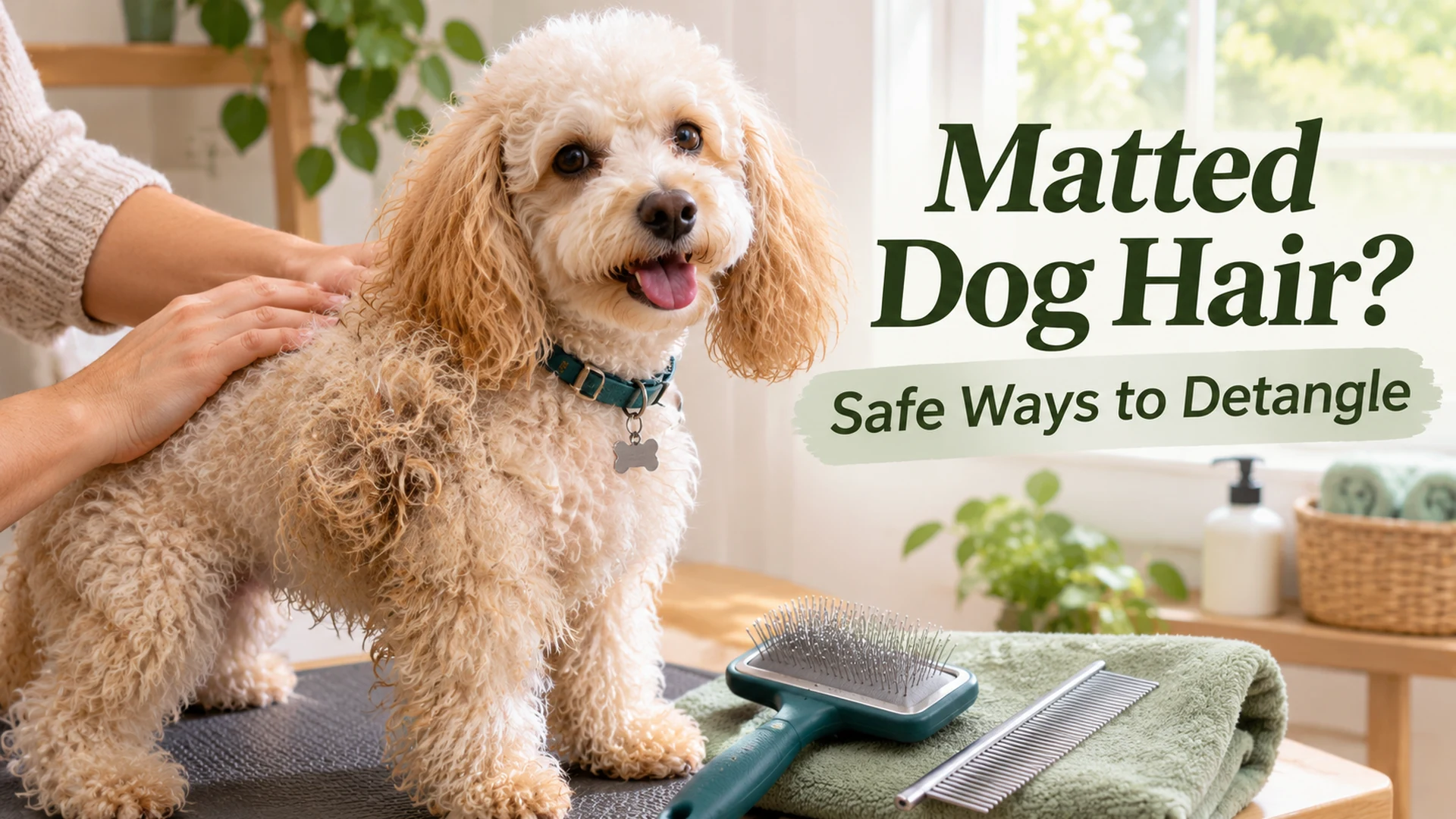
Finding a hard knot in your dog’s coat can be worrying, particularly if the skin underneath is difficult to see. Matted dog hair is more than a cosmetic issue: a tight mat can tug painfully when your dog moves, trap moisture and debris, and conceal irritated skin. But not every knot needs the same response. A loose, small tangle may be gently worked apart; a compact mat close to the skin usually needs professional care.
Quick answer: Check the skin and your dog’s comfort first. If the knot is loose, small, and not attached tightly to the skin, gently separate the outer hairs with your fingers and use an appropriate comb from the hair tips inward, with short breaks. Stop if you meet resistance or your dog reacts in pain. Do not cut mats with household scissors or pull through them with force. For tight, widespread, damp, or painful mats, contact a professional groomer or veterinarian.
Safety note: A dog with painful mats, sores, swelling, odor, or inflamed skin needs an assessment rather than an aggressive home detangling session. Veterinary sources warn that scissors can cut skin hidden inside mats. This guide is educational, not a substitute for veterinary care.
Affiliate disclosure: As an Amazon Associate, we earn from qualifying purchases. This article includes affiliate links; purchases made through them may support Dogs Daily Care at no additional cost to you.
Table of Contents
What counts as matted dog hair?
A tangle is a small knot where strands catch together but the surrounding hair still moves fairly freely. A mat is a denser clump of intertwined hair, often packed with shed undercoat or dirt. As it tightens, it can pull on the skin even when the outer surface looks soft. Sometimes the top layer of the coat appears smooth while a compact layer underneath is matted.
Matting often starts where fur rubs against fur, collars, or harnesses: behind the ears, under the front legs, at the groin, around the tail, and along the legs. Long, curly, wavy, and fine coats are particularly prone to tangles, although any dog with sufficient hair can develop them. Dogs that swim, wear clothing frequently, or spend time outdoors may need additional coat checks.
According to VCA’s grooming and coat care guidance, longer, silkier, and curly coats may need daily brushing and regular attention to vulnerable areas. A brush should move through the entire coat, not merely polish the outer surface.
Before you touch a mat: check whether it is safe to work on
Let your dog stand or lie on a secure, nonslip surface, ideally at a time when they are relaxed. Speak calmly and offer breaks. With your fingertips, separate the surrounding coat without pulling. Look for redness, dampness, a bad smell, cuts, discharge, fleas, or a hard clump that feels stuck to the skin. Notice if the dog flinches, lip-licks, freezes, growls, or tries to leave.
Stop and book a groomer or veterinarian when the mat is skin-tight, widespread, located at a sensitive point, or cannot be distinguished from the skin. Redness, wetness, pain, or an open sore warrants veterinary advice. Some dogs need a professional clip-down to relieve tension safely. A shorter coat after professional removal is preferable to prolonged, painful detangling.
How to detangle a small, loose knot safely
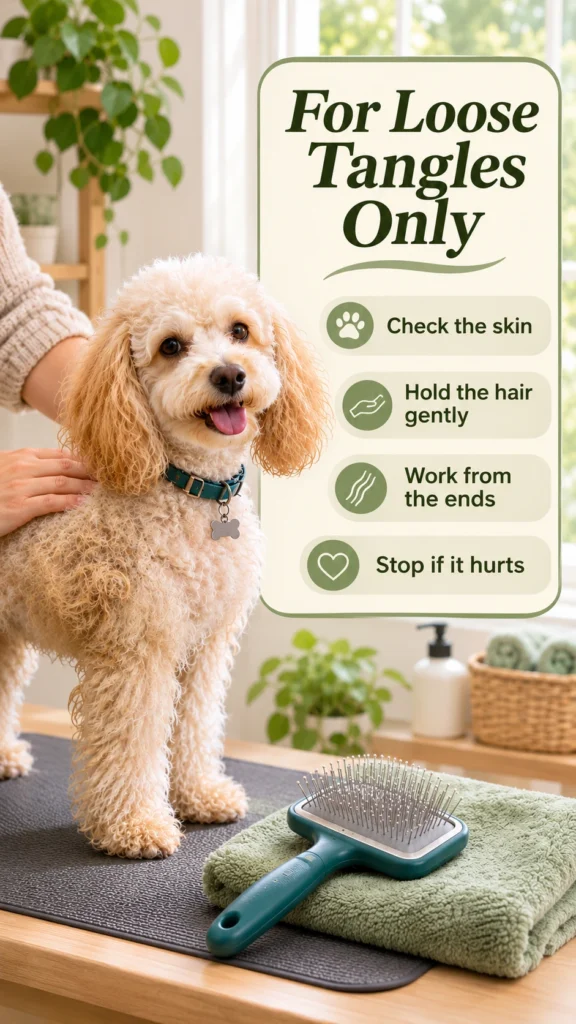
These steps apply only to a minor, loose tangle where your dog remains comfortable and there is no skin irritation. They are not instructions for stripping out severe mats.
Step 1: Prepare a comfortable space and the right tools
Have a non-slip mat, a suitable comb, a soft or appropriately selected slicker brush, and small treats nearby. If your groomer recommends a dog-safe detangling spray for your dog’s coat, follow the label and avoid the eyes, mouth, and broken skin. Do not improvise with harsh chemicals, essential oils, or human products unless your veterinarian advises them.
For help choosing a tool by coat type, see our dog brushing guide. Brush design and pin length should match your dog’s coat; too much pressure can irritate skin.
Step 2: Support the hair near the skin
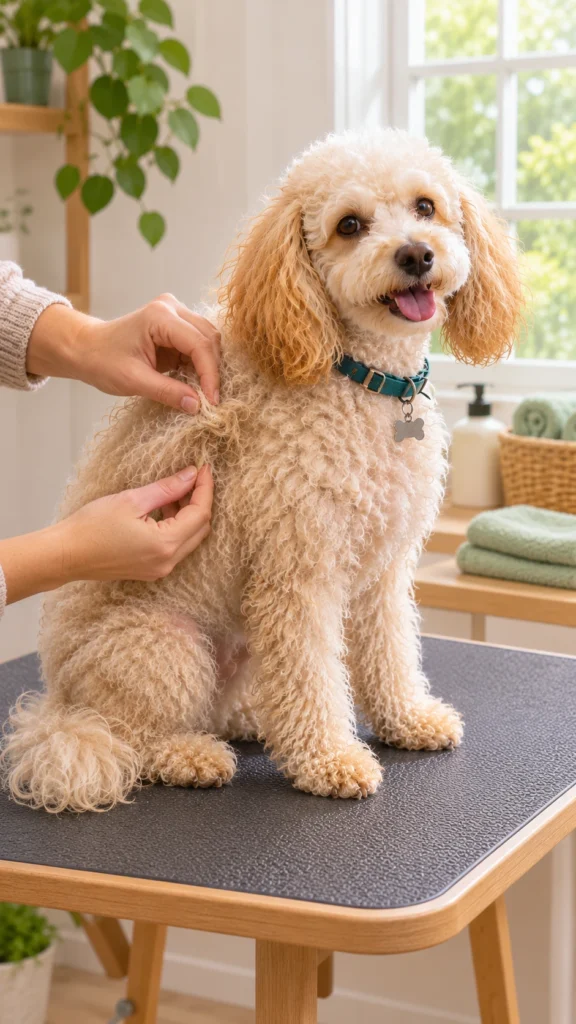
Hold a small section of hair between the knot and the skin. This reduces tugging when you work on the free ends. Do not pinch your dog’s skin. If the knot is so tight that you cannot separate hair from skin confidently, stop and arrange professional removal.
Step 3: Loosen the outermost strands with your fingers
Use a light touch to ease apart only the loose edges. Never yank the knot, twist it hard, or attempt to tear it into pieces. Watch your dog’s face and body language. Even a dog who is normally tolerant may be uncomfortable when a mat pulls.
Step 4: Comb from the ends toward the base, in tiny sections
Starting at the free hair tips, make a few short, gentle passes and gradually work toward the base as the strands separate. A light touch is more important than finishing quickly. If the comb snags repeatedly, stop. The American Kennel Club’s at-home grooming guidance notes that some knots can be worked with fingers, suitable conditioner, and combs, but patience and avoiding injury matter.
Step 5: Recheck the area and reward your dog
Once a minor tangle is loose, gently inspect the skin and run the comb through once without forcing it. If the area feels sore or looks red, finish the session and contact your veterinarian if discomfort persists. Reward your dog and end on a calm note. It is fine to stop before the entire coat is done.
Tools that may help—and what they cannot do
A soft or correctly chosen slicker brush may help maintain a coat and remove small tangles before they become mats. A stainless-steel comb helps check whether brushing has reached beneath the outer layer. Neither tool makes a painful skin-tight mat safe to pull apart. Avoid aggressive dematting blades or scissors as a first-time home solution, especially around delicate skin folds.
For routine coat maintenance on appropriate coats, you can consider the Hertzko Self-Cleaning Slicker Brush (check size and coat suitability on Amazon). Another option is the Chris Christensen Mark II Slicker Brush, small (check exact variant on Amazon). These are maintenance-tool examples, not recommendations to brush a painful mat aggressively. Select tools with a groomer’s advice if your dog’s coat or skin is sensitive; a brush should never scrape or scratch skin.
Some mats require clippers used by a trained professional. The VCA guidance specifically advises clippers rather than scissors for removal and recommends veterinary help when skin irritation is present. Because skin can be pulled into a mat, do not try to slip scissors under it.
When shaving or professional clipping is kinder
A closely matted coat can be painful to detangle strand by strand. Professional clipping may be the most humane option when there is significant matting, particularly where friction from movement keeps tightening knots. Your groomer can inspect the coat, assess whether safe removal is possible, and explain the likely length afterward. If a dog has wounds, extreme sensitivity, underlying illness, or severe distress, a veterinarian may need to guide treatment or coordinate safe grooming.
Tell the professional about skin problems, behavior changes, medications, or any previous grooming injuries. Do not conceal an issue because you feel embarrassed: they need that information to keep your dog comfortable. Expect that a very tight coat may reveal previously hidden irritation once removed. Follow any aftercare advice closely.
Common mistakes that can make mats worse
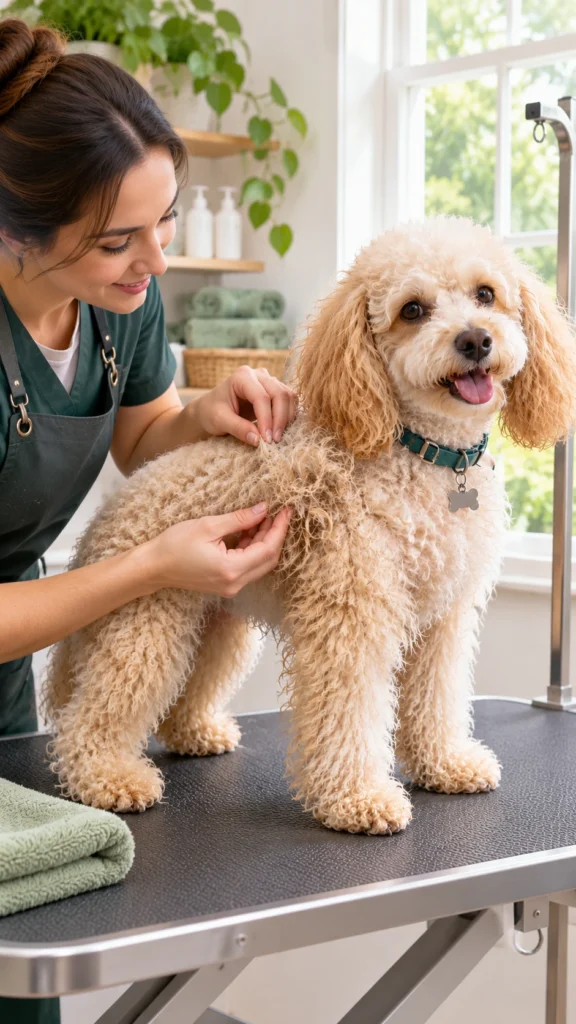
Cutting close to the skin with scissors
Skin can fold up into the tangle, making the boundary impossible to judge. A sudden dog movement can cause a serious cut. Leave close removal to professionals with appropriate tools.
Pulling harder when the comb stops
Repeated dragging can cause pain and skin irritation. If a few gentle passes do not release a knot, end the session and get help rather than escalating force.
Bathing before addressing a badly tangled coat
Wetting and drying a tangled coat without an appropriate plan can compact knots and trap moisture. Ask a groomer how to handle bathing when you already suspect significant matting. For maintenance once the coat is manageable, our guide to how often to bathe a dog explains how routines vary by coat and lifestyle.
Brushing only the outer layer
Long and curly hair may appear fluffy on top while the underlayer tangles. Use a coat-appropriate routine that checks small sections all the way down without scraping the skin, then confirm with a comb.
Forcing a frightened dog to finish
A dog that tries to leave, stiffens, snaps, or cries is communicating discomfort. Stop, reset the training plan, and enlist a cooperative-care groomer, trainer, or veterinarian when necessary. Dogs can learn to accept grooming in short, positive sessions.
Preventing matting after the coat has been safely cleared
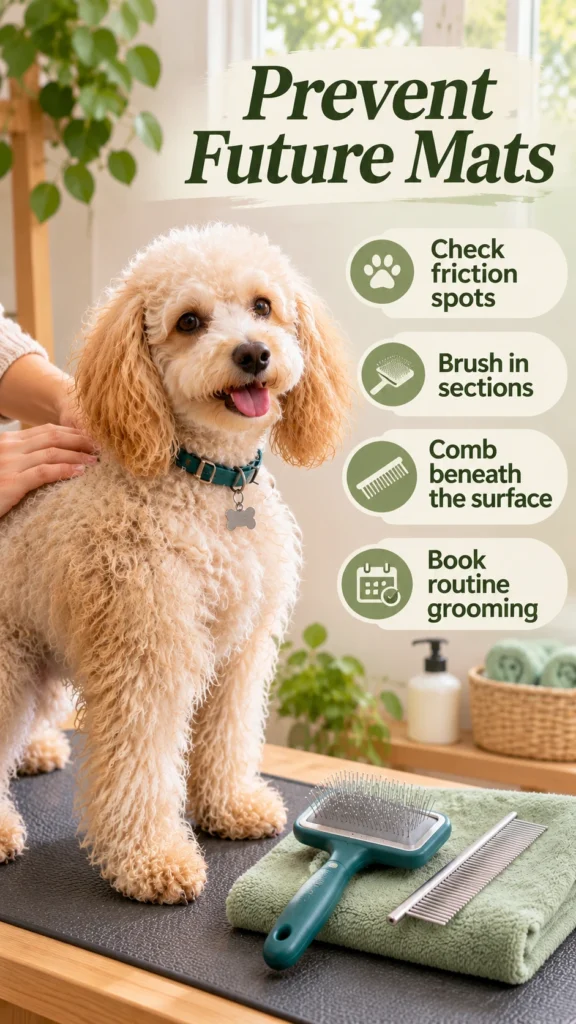
The easiest mat is the one that never forms. For coat types prone to tangles, build a short grooming routine into ordinary life. Check high-friction spots after walks, play, baths, and harness use. Keep the coat fully dry after swimming or getting caught in rain, and ask a groomer what schedule suits your dog’s hair length.
- Choose a brush and comb that match the coat—not merely the most popular tool.
- Inspect behind ears, under armpits, collar area, leg feathering, tail and belly.
- Part longer hair in small sections so hidden knots are not overlooked.
- Use short, rewarded sessions and stop before frustration builds.
- Schedule grooming appointments at intervals suited to the dog’s coat and lifestyle.
- Check skin for redness, discharge, parasites, or changes in smell as you groom.
Our dog dry skin care guide explains when itchiness, scaling, or irritation calls for more than a routine grooming change. Matting and skin disease can occur together, and the cause may need veterinary treatment.
Special situations: puppies, seniors, and sensitive dogs
Puppies: Introduce handling gently. Touch the shoulder, reward, briefly show the brush, reward, then finish. Do not expect a puppy to tolerate an extended detangling session, and consult a groomer about safe coat maintenance during growth.
Senior dogs: Joint pain and frailty may make standing or repositioning difficult. Use a stable, padded setup and keep sessions short. Sudden intolerance of touch deserves veterinary attention.
Dogs with itchy or irritated skin: Avoid wire brushes over inflamed areas. Hair loss, hot spots, sores, or odor are reasons to talk to a veterinarian rather than assume another brushing session will resolve the problem. PetMD’s matting overview also explains why mats can contribute to skin trouble.
Frequently asked questions
Can I untangle matted dog hair at home?
Only a small, loose tangle may be reasonable to work through carefully. A tight mat attached near the skin, a painful area, or widespread matting should be managed by a professional groomer or veterinarian.
Should I put oil or human conditioner on a mat?
Do not use random oils, essential oils, or human grooming products without veterinary or groomer guidance. Some products can irritate skin or be unsafe if licked. The coat may instead require professional removal.
Can I use scissors to remove a dog’s mat?
No. Skin often folds into tight mats. It is easy to cut the dog accidentally, even if you cannot see the skin. Ask a professional groomer or veterinarian about safe clipping.
Will brushing alone fix severe matting?
Usually not safely. Aggressive brushing can pull skin painfully. A professional may recommend clipping so the coat can regrow while you establish a more suitable maintenance routine.
How often should I brush a curly-coated dog?
Many curly or longer coats need brushing daily or every other day, but the right frequency depends on coat length, texture, activity, and grooming schedule. Ask your groomer for a realistic plan and check beneath the surface with a comb.
Final thoughts
Dealing with matted dog hair starts with the dog’s comfort, not a perfect-looking coat. Gentle work on a truly loose tangle can be reasonable, but tight, painful, or skin-level mats need professional attention. Once the coat is comfortable again, a few short, positive grooming sessions and regular checks can make future tangles easier to prevent.
Editorial note: General dog-care education; not veterinarian-reviewed and not a substitute for a diagnosis or individualized veterinary advice.